



Healthy eating plan strategies don’t fail because you’re not disciplined enough; they fail because they’re designed for a version of life that doesn’t exist. Between work, social commitments, and everyday fatigue, sticking to strict rules and complicated meals becomes unrealistic. That’s why so many plans start with motivation and end in frustration. What actually works is a simple, flexible system that allows for real-life interruptions while still helping you make better choices consistently.
In this blog, you’ll learn how to build a healthy eating approach that actually fits your routine without rigid rules or time-consuming prep. We’ll break down why most plans don’t last, and more importantly, show you practical ways to create meals, habits, and systems that are easy to stick to, even on your busiest days.
Listen To The Podcast Now!
Why Most “Healthy Eating Plans” Fail (And What You’ll Do Differently)
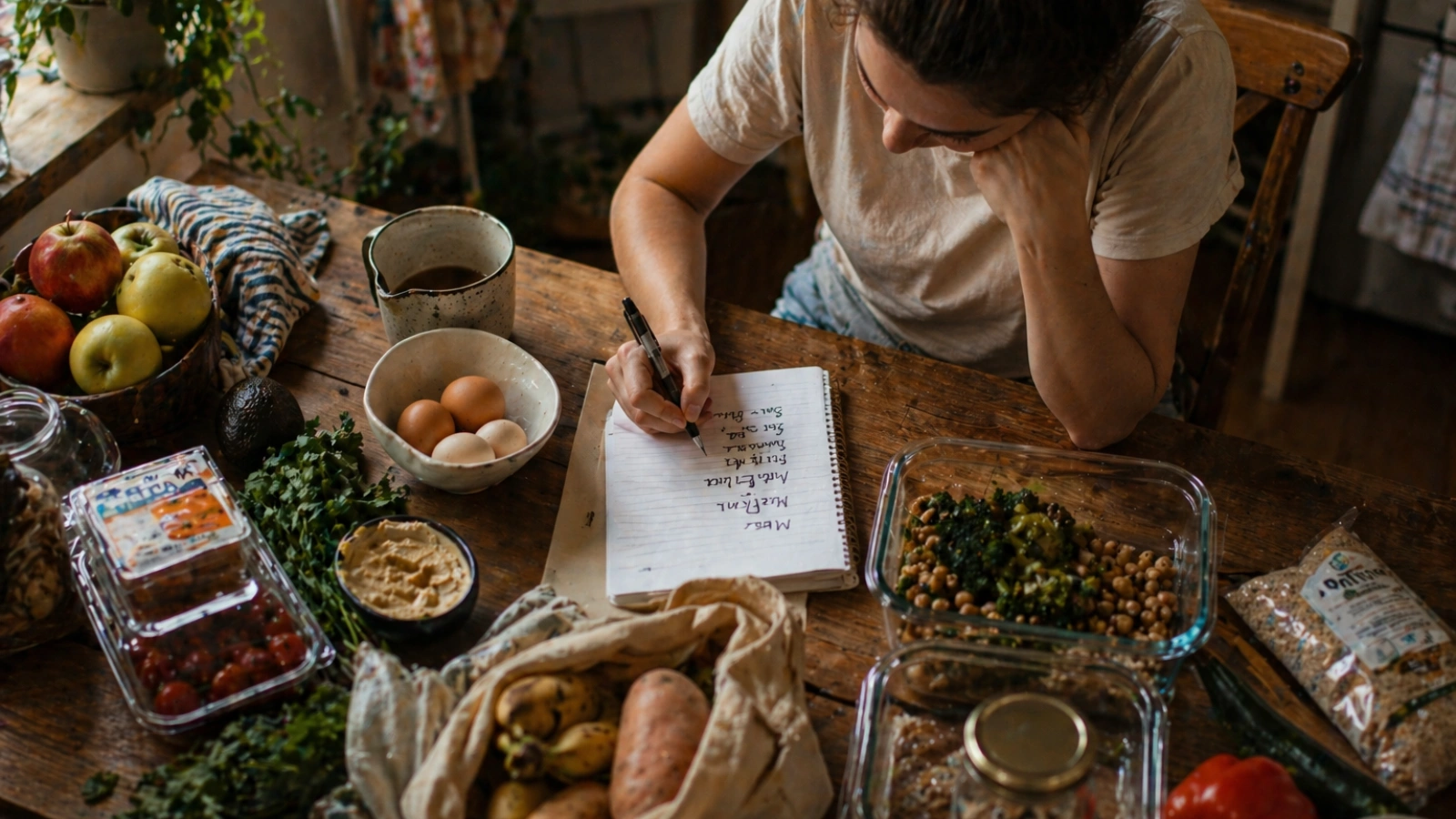
You’ve probably been here before. You find a meal plan online, stock your fridge with kale and quinoa, and feel genuinely excited for about four days. Then life happens. A late meeting. A birthday dinner. A Tuesday where you’re too tired to cook anything that requires more than one pan. And just like that, the plan is abandoned.
This isn’t a willpower problem. Most healthy eating plans fail because they’re designed for ideal conditions that don’t exist in real life. They’re either too restrictive, too complicated, or built around foods you don’t actually enjoy eating.
What you’ll find here is different. No punishing calorie counts, no banned food lists, no meal prep that takes your entire Sunday. Just a practical, flexible system for building a healthy eating plan that works with your life, not against it.
What Is a Healthy Eating Plan for Weight Loss?
A healthy eating plan for weight loss is a consistent, balanced approach to eating that creates a modest calorie deficit while keeping you full, energized, and satisfied. It’s not a crash diet. It’s not a two-week cleanse. Think of it as a repeatable system built around whole foods, portion awareness, and meals you’d actually choose to eat again.
Eat mostly nutrient-dense food, be mindful of how much you’re eating, and do it consistently enough that your body responds over time. No single meal makes or breaks progress. The pattern is what matters.
The Foundation: What a Healthy Eating Plan Really Looks Like
A sustainable, healthy eating plan starts with simple, balanced choices, not strict rules. Here’s how to build a foundation that actually works in real life.
Balance Over Restriction: The 3 Core Food Groups You Need
Forget the idea that good eating means eliminating entire food groups. Protein, carbohydrates, and fat all serve specific roles in your body, and removing any one of them tends to backfire. Cravings intensify, energy drops, and the “forbidden” food becomes all you can think about.
A more useful mental model is the plate method. Fill roughly half your plate with vegetables and fruit, a quarter with lean protein, and a quarter with whole-grain carbohydrates. Add a small amount of healthy fat. It sounds basic, but this simple visual keeps meals balanced without requiring any tracking or math.
Calories Without Obsession: The Simple Way to Stay in a Deficit
Losing weight requires eating slightly fewer calories than your body burns. That’s not a harsh rule, just biology. The keyword is “slightly.” A modest deficit of 300 to 500 calories per day is enough to produce steady, sustainable results without leaving you depleted.
You don’t need to count every gram. General portion awareness is enough for most people. A handful of protein, a fist-sized scoop of carbs, and as many vegetables as you want. If you’re eating mostly whole foods and stopping when you’re full, you’re probably in the right range.
Why Protein, Fibre, and Healthy Fats Matter Most
These three nutrients do the heavy lifting in any effective healthy eating plan. Protein keeps you full longer and helps preserve muscle as you lose weight. Fibre slows digestion, stabilizes blood sugar, and reduces the urge to snack every 90 minutes. Healthy fats, contrary to what decades of diet culture suggested, support hormone balance and help your body absorb fat-soluble vitamins.
When you build meals around these three, you eat less without trying to eat less. That’s the quiet advantage no fad diet will tell you about.
Step-by-Step: How to Build Your Own Healthy Eating Plan
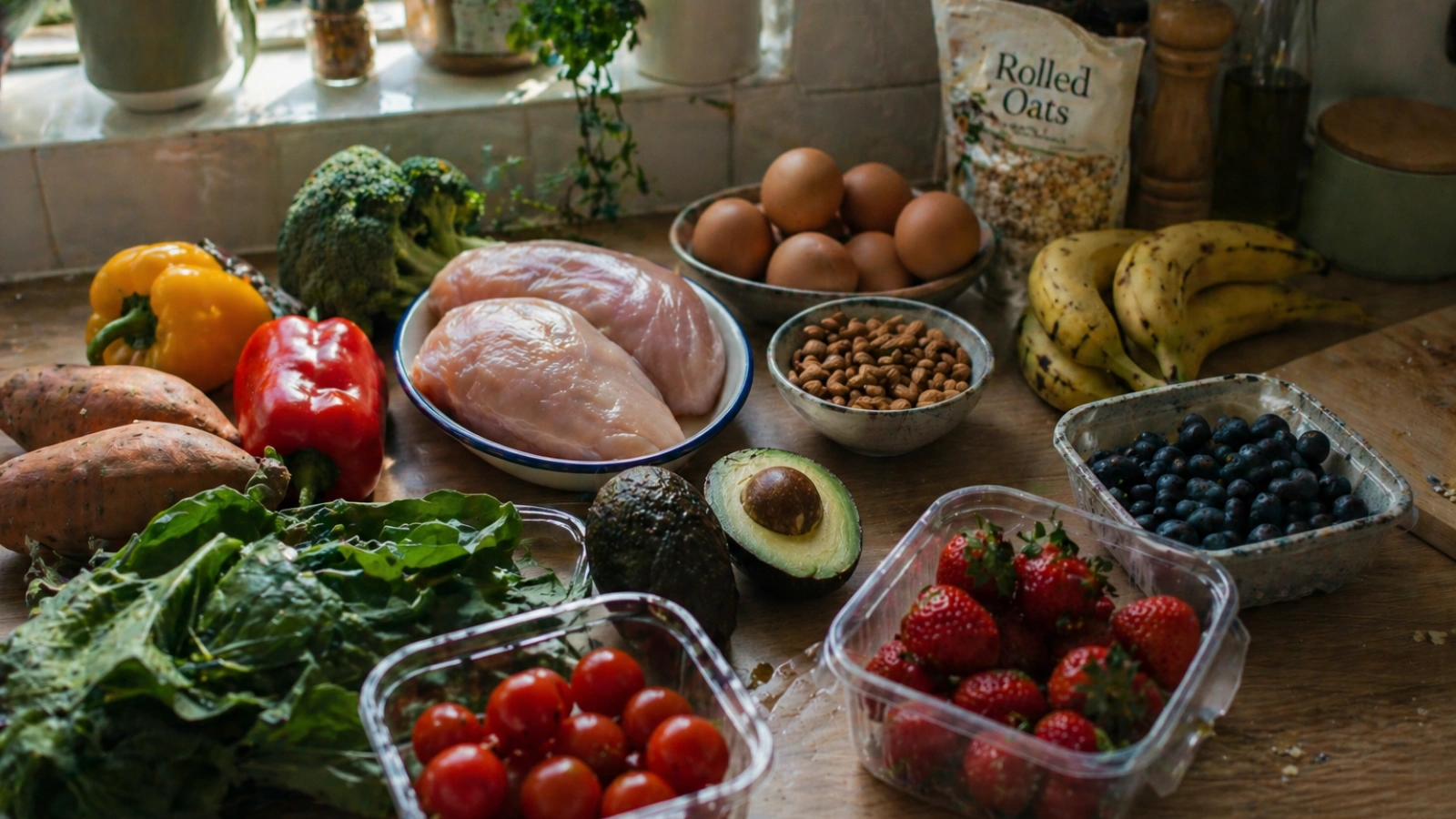
Building a healthy eating plan doesn’t need to be complicated or restrictive. Follow these simple steps to create a system that fits your life and actually lasts.
1. Start With Your Goal (Weight Loss Without Starving)
Before choosing any foods, get honest about what you’re actually trying to achieve and how fast you want to get there. Expecting to lose 10 pounds in two weeks will push you toward aggressive restriction, which almost always ends in burnout and rebound.
Aim for 0.5 to 1 pound per week. That pace might feel slow, but it’s the range where most people can maintain energy, keep muscle, and actually hold onto the results once they arrive. Patience here isn’t a weakness; it’s a strategy.
2. Choose Foods You Actually Enjoy
Here’s a mistake almost everyone makes: building a plan around foods they’ve been told are healthy, rather than foods they like. If you hate brown rice, you will not eat brown rice consistently. Find a different grain. If plain grilled chicken bores you, cook it differently or swap it for something else with similar protein content.
Sustainability matters more than perfection. A diet of foods you enjoy will outlast a perfect diet you resent. Your healthy eating meal plan should look like something you’d choose, not something assigned to you.
3. Structure Your Meals (Without Overplanning)
You don’t need a rigid six-meal-a-day schedule. Most people do well with two to three main meals and one or two planned snacks. The goal is to avoid arriving at dinner so hungry that you eat twice what you intended.
Regularity helps. When your body learns roughly when to expect food, it regulates hunger hormones more effectively. But this doesn’t need to be military-precise. Within an hour or so of your usual times is plenty.
4. Plan Your Week (The Smart Way)
Planning isn’t about cooking elaborate meals. It’s about reducing the number of moments when you’re hungry with nothing ready and a fast food restaurant three blocks away.
Start at the grocery store. Choose proteins, vegetables, and carb sources for the week, then buy only what you’ll use. Batch-cook a few staples on the weekend, like roasted vegetables, a pot of grains, or grilled chicken, and use them across multiple meals. You’re not committing to specific lunches on specific days. You’re just making sure the raw materials are there.
5. Track Lightly, Not Obsessively
Tracking food intake can be genuinely useful, especially at the beginning, when most people are surprised to discover how much they’re eating without realizing it. A few weeks of mindful tracking builds awareness that sticks around even after you stop.
But tracking becomes a problem when it triggers anxiety, guilt, or disordered eating patterns. If logging food makes you feel controlled rather than empowered, let it go. General awareness is enough. Knowing roughly what’s on your plate beats obsessing over individual macros every time.
A Simple 7-Day Healthy Eating Meal Plan (Beginner-Friendly)
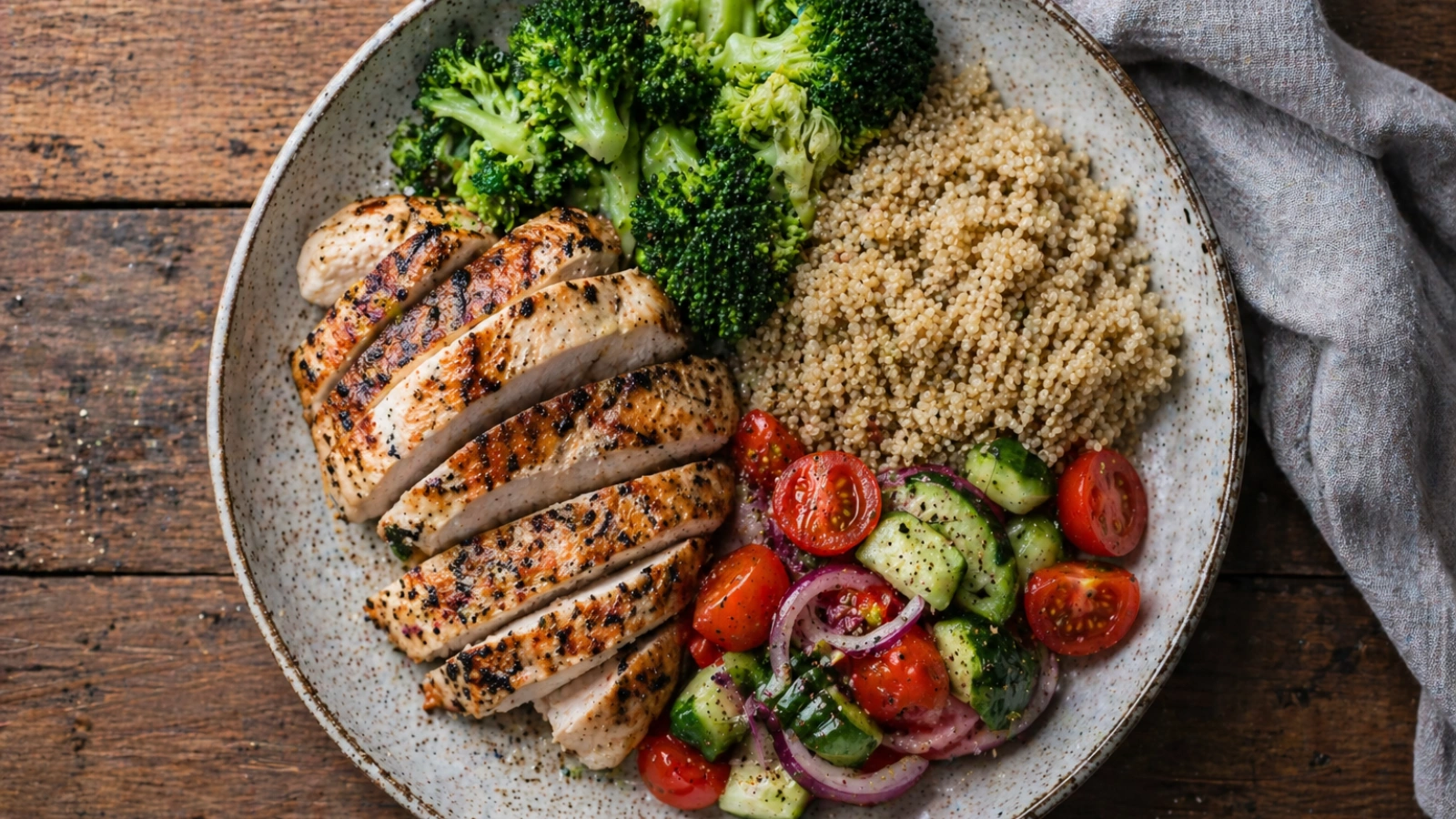
This is a template, not a rulebook. Swap meals, adjust portions, and make it yours.
Monday Breakfast: Greek yogurt with berries and a handful of granola. Lunch: Grilled chicken salad with olive oil and lemon. Dinner: Baked salmon, roasted sweet potato, steamed broccoli. Snack: Apple with almond butter
Tuesday Breakfast: Oatmeal with banana and a sprinkle of chia seeds Lunch: Turkey and avocado wrap on a whole-grain tortilla Dinner: Stir-fried tofu with mixed vegetables over brown rice Snack: A small handful of mixed nuts
Wednesday Breakfast: Two scrambled eggs with spinach and whole-grain toast. Lunch: Lentil soup with a side salad Dinner: Grilled chicken thighs with quinoa and roasted zucchini Snack: Hummus with cucumber slices
Thursday Breakfast: Smoothie made with spinach, frozen mango, Greek yogurt, and water. Lunch: Tuna mixed with olive oil on whole-grain crackers, side of cherry tomatoes. Dinner: Beef and vegetable stir-fry with brown rice. Snack: Low-fat cottage cheese with a few berries
Friday Breakfast: Overnight oats with almond milk, peanut butter, and sliced banana. Lunch: Black bean and vegetable burrito bowl with salsa and a little cheese. Dinner: Baked cod with mashed cauliflower and sautéed green beans. Snack: A small orange and a hard-boiled egg
Saturday Breakfast: Whole-grain pancakes with fresh fruit (no syrup, or just a drizzle) Lunch: Grilled shrimp over a grain bowl with roasted peppers and tahini dressing Dinner: Homemade turkey meatballs with zucchini noodles and marinara sauce Snack: Dark chocolate (one or two squares) with a handful of almonds
Sunday Breakfast: Vegetable omelette with feta and a slice of whole-grain toast. Lunch: Leftover turkey meatballs repurposed in a wrap or on a salad. Dinner: Slow-cooked chicken with root vegetables and a side of whole-grain bread. Snack: Sliced bell peppers with guacamole
This 7-day healthy eating plan covers a range of proteins, vegetables, and carbohydrate sources. None of these meals requires advanced cooking skills. Most take under 30 minutes. That’s the point.
Real Life Matters: How to Stick to Your Plan When Life Gets Messy
Sticking to your plan isn’t about perfect conditions; it’s about handling the moments when everything feels off track. Here’s how to stay consistent, even when life gets unpredictable.
Eating Healthy on a Busy Schedule
The biggest threat to any healthy eating plan isn’t motivation. It’s time. When you’re running late and nothing is prepped, you eat whatever’s available. Combat this by keeping a few no-prep fallbacks on hand: Greek yogurt, canned tuna, pre-washed salad bags, hard-boiled eggs, and nut butter. These aren’t exciting, but they’re vastly better than fast food eaten out of guilt.
What to Do When You Eat Out
Restaurants don’t have to be a problem. Most menus have options that roughly fit a balanced plate. Lean toward grilled over fried, ask for dressings on the side, and don’t stress about perfection. One restaurant meal won’t derail a week of solid eating. Ordering well, even 70% of the time, is enough.
Handling Cravings Without Ruining Progress
Cravings aren’t moral failures. They’re often signals of low energy, stress, boredom, or habit. Before reaching for something impulsively, drink a glass of water and wait five minutes. Sometimes the craving passes. When it doesn’t, eat a smaller portion of what you want rather than white-knuckling through it, which typically ends in eating twice as much later.
Social Events Without Guilt
Social eating is part of life. Skipping every dinner or standing at the snack table eating carrot sticks while everyone else enjoys themselves isn’t sustainable, and it’s not healthy in any real sense. Eat beforehand if you’re worried about overeating at an event. Choose the things you genuinely want, eat slowly, and move on. One evening out won’t make or break a month of consistent choices.
Calories Tracker Buddy: Closing the Gap Between Effort and Results

Even with a solid eating plan, progress can feel inconsistent if you’re not aware of what’s happening day to day. You might be choosing better foods, but are your portions aligned with your goals? That gap between intention and actual intake is where many people get stuck.
This is where Calorie Tracker Buddy fits naturally into your routine. It gives you a simple, clear view of how your food, activity, and habits work together without turning the process into a chore.
Here’s how it supports your routine:
- Snap the Meal
Just point your camera and tap once. Your meal gets scanned for calories, nutrients, and overall balance in seconds—no manual logging required. - Calorie Intake Tracker
Quickly log what you eat and get instant feedback. This helps you stay aligned with your goals without overthinking every meal. - Calorie Burn Tracker
Track calories burned not just from workouts, but from everyday movement too so you get a more accurate picture of your day. - Goal Predictions
See how each meal or snack impacts your progress, helping you make small adjustments that add up over time. - Buddy Motivation
Your virtual buddy grows as you stay consistent, adding a simple but effective layer of motivation on low-energy days. - Social Sharing
Share meals, streaks, or progress with friends for extra accountability when you need it.
Used the right way, a tool like this doesn’t make your plan more complicated—it makes it clearer. And when your choices are clear, consistency becomes much easier.
Also Read:
Common Mistakes That Quietly Ruin Healthy Eating Plans
Most people don’t fail because they’re doing everything wrong; they fail because of a few small mistakes that quietly add up. Avoid these common traps, and your plan becomes much easier to stick to.
Eating “healthy” but still overeating. Almonds, avocado, and whole-grain bread are all nutritious foods. They’re also calorie-dense. Eating unlimited quantities of anything, even good food, can stall weight loss entirely. Portion awareness still applies.
Cutting carbs or fats too aggressively. Both extremes tend to produce the same outcome: short-term results followed by intense cravings and eventual abandonment. Moderate reduction is far more sustainable than elimination.
Chasing trends instead of building consistency. Whether it’s intermittent fasting, keto, or the latest social media approach, most diet trends work for some people, some of the time. None of them is magic. The version of how to start a healthy eating plan that actually works is boring: eat mostly whole foods, maintain a moderate calorie deficit, and repeat consistently.
Expecting results too fast. Two weeks on a new plan tells you almost nothing. Real, lasting changes in body composition take months, not days. Evaluating progress weekly rather than daily removes a lot of unnecessary anxiety.
Lack of planning leads to impulsive eating. This one quietly ruins more plans than any other factor. When there’s nothing ready, you don’t make optimal choices. You make fast choices. Fifteen minutes of planning on Sunday prevents dozens of poor decisions throughout the week.
Conclusion
A healthy eating plan doesn’t need to be perfect to work; it just needs to be repeatable. The real difference comes from small, consistent choices made day after day, not short bursts of extreme discipline.
If you focus on balanced meals, moderate portions, and a system that fits your lifestyle, results will follow over time. There will be busy days, missed meals, and moments that don’t go as planned, and that’s fine. What matters is returning to your routine without overthinking it.
In the end, the best plan isn’t the strictest one; it’s the one you can stick to long enough to see real, lasting change.
FAQ
- How do I know if I’m actually eating in a calorie deficit without tracking?
You don’t need perfect tracking to know you’re in a deficit. If you’re eating balanced meals, controlling portions, and your weight is gradually decreasing over a few weeks, you’re likely in the right range. Consistent progress matters more than exact numbers.
- Why am I not losing weight even though I’m eating healthy?
Eating healthy doesn’t automatically mean eating less. Foods like nuts, avocado, and whole grains are nutritious but calorie-dense. If portions aren’t controlled, you may still be eating at maintenance or above. Awareness, not restriction, is usually the missing piece.
- How do I stay consistent with healthy eating long-term?
Consistency comes from simplicity. Choose foods you enjoy, keep meals easy to prepare, and allow flexibility for real life. The more your plan feels like something you can repeat daily, the more likely it is to stick.
- How do I stop overeating at night?
Night overeating is often caused by under-eating earlier in the day or eating too little protein and fiber. Make sure your meals are balanced and filling. If you’re still hungry at night, plan a controlled snack instead of trying to avoid eating entirely.
- Do I need to track calories to lose weight?
No, but it can help at the beginning. Tracking builds awareness of portion sizes and eating habits. Over time, many people can maintain progress with simple portion control and consistent meal patterns instead of detailed tracking.