


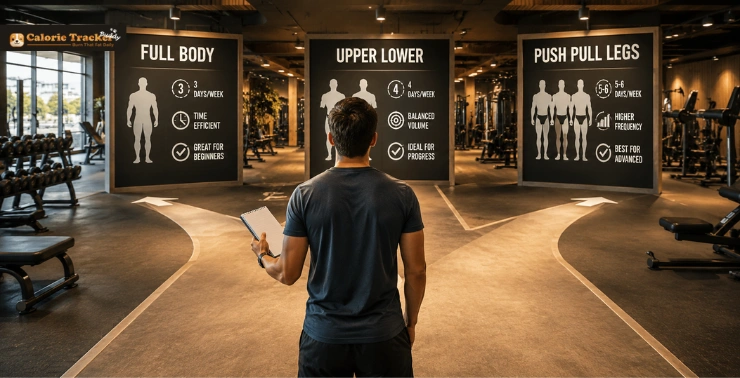
Most people walk into the gym with zero plan. They copy something they saw online, get bored in three weeks, and conclude that fitness “just isn’t for them.” The truth is, they didn’t fail. They just picked the wrong gym routine for who they are right now.
Read Aloud!
The Short Answer: Which Gym Routine Works Best?
The best gym routine depends on your goal, experience level, and the time you realistically have each week. Most beginners see the strongest results with a full-body program three days a week. Intermediate lifters often do better with upper/lower or push-pull-legs splits. There’s no single answer. But there is a right answer for you specifically.
Why Most People Choose the Wrong Gym Routine
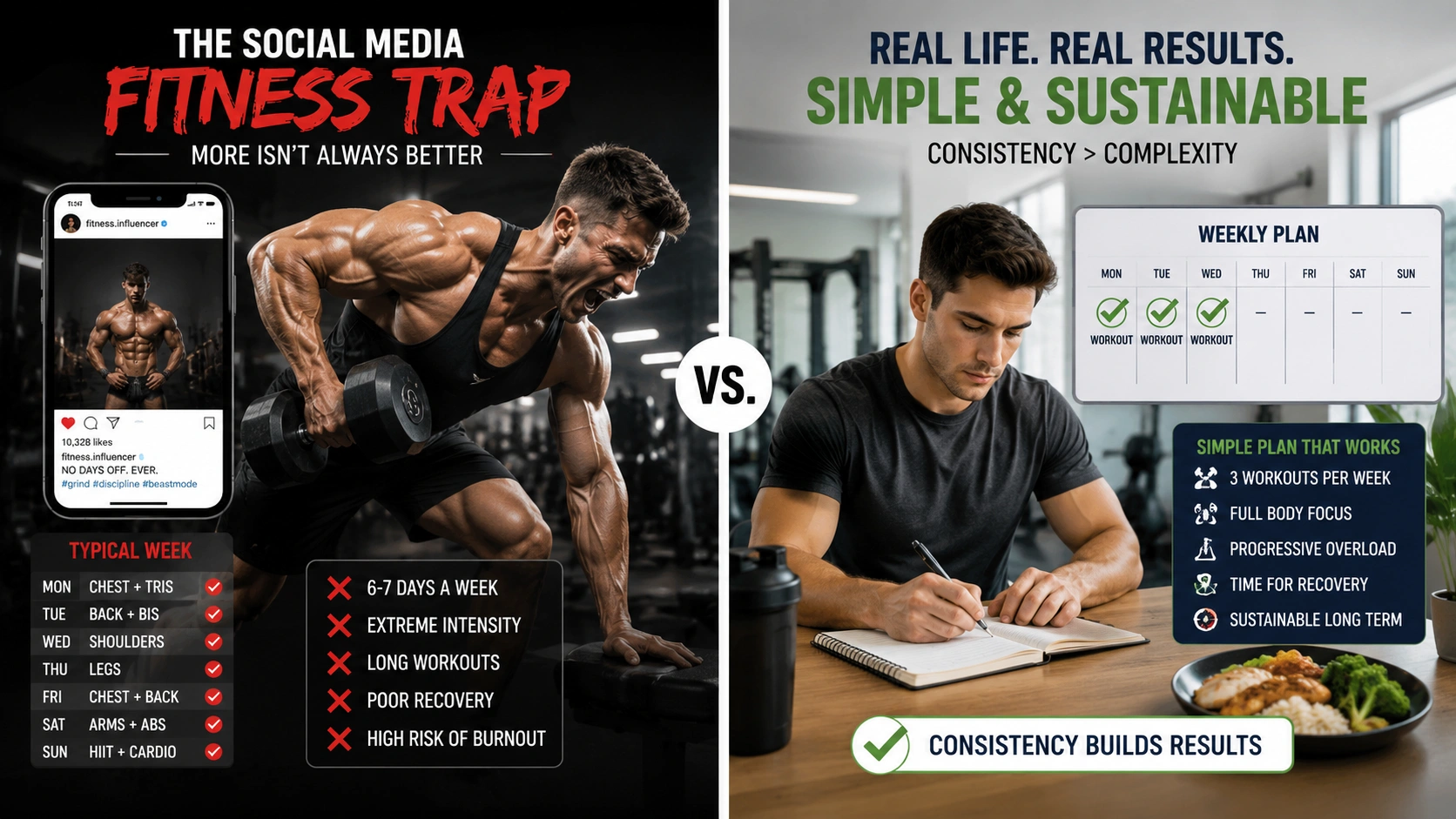
The Social Media Fitness Trap
Scrolling through fitness content makes everything look effortless. You see someone training six days a week, hitting two muscle groups per session, following a plan that took years to earn. Copying that approach as a beginner is like driving a Formula 1 car on your first day behind the wheel.
The problem isn’t motivation. It’s a mismatched complexity.
More Work Doesn’t Always Mean More Results
Recovery is where adaptation actually happens. Muscle grows during rest, not during the workout itself. Training hard every day without adequate recovery leads to fatigue accumulation, not faster progress. Overtraining is less common than people think, but under-recovering is extremely common.
Consistency Beats Complexity
A simple plan followed for six months will always outperform a perfect plan abandoned after six weeks. The best workout routines in practice are the ones people actually show up for.
Start With Your Goal Before Choosing a Routine
If Your Goal Is Fat Loss
Fat loss is primarily driven by a calorie deficit. Training supports it by preserving muscle and increasing total energy output. A combination of three to four strength sessions with daily movement (walking, cycling, light activity) tends to work best. Excessive cardio without strength training often leads to muscle loss alongside fat.
If Your Goal Is Muscle Growth
Muscle growth requires consistent mechanical tension and progressive overload. That means lifting more over time, tracking your sessions, and eating enough protein. Volume matters, but so does recovery. Most people benefit from training each muscle group two times per week.
If Your Goal Is General Fitness
For overall health, the World Health Organization recommends 150 to 300 minutes of moderate activity per week, combined with two strength sessions. You don’t need an elaborate plan. You need a sustainable one.
If You’re Returning After a Long Break
Your muscles have memory, but your tendons and joints need time to catch up. Start lighter than you think you should. Three full-body sessions a week for the first four to six weeks will rebuild your base without injury risk.
Comparing the Most Popular Gym Routines in 2026
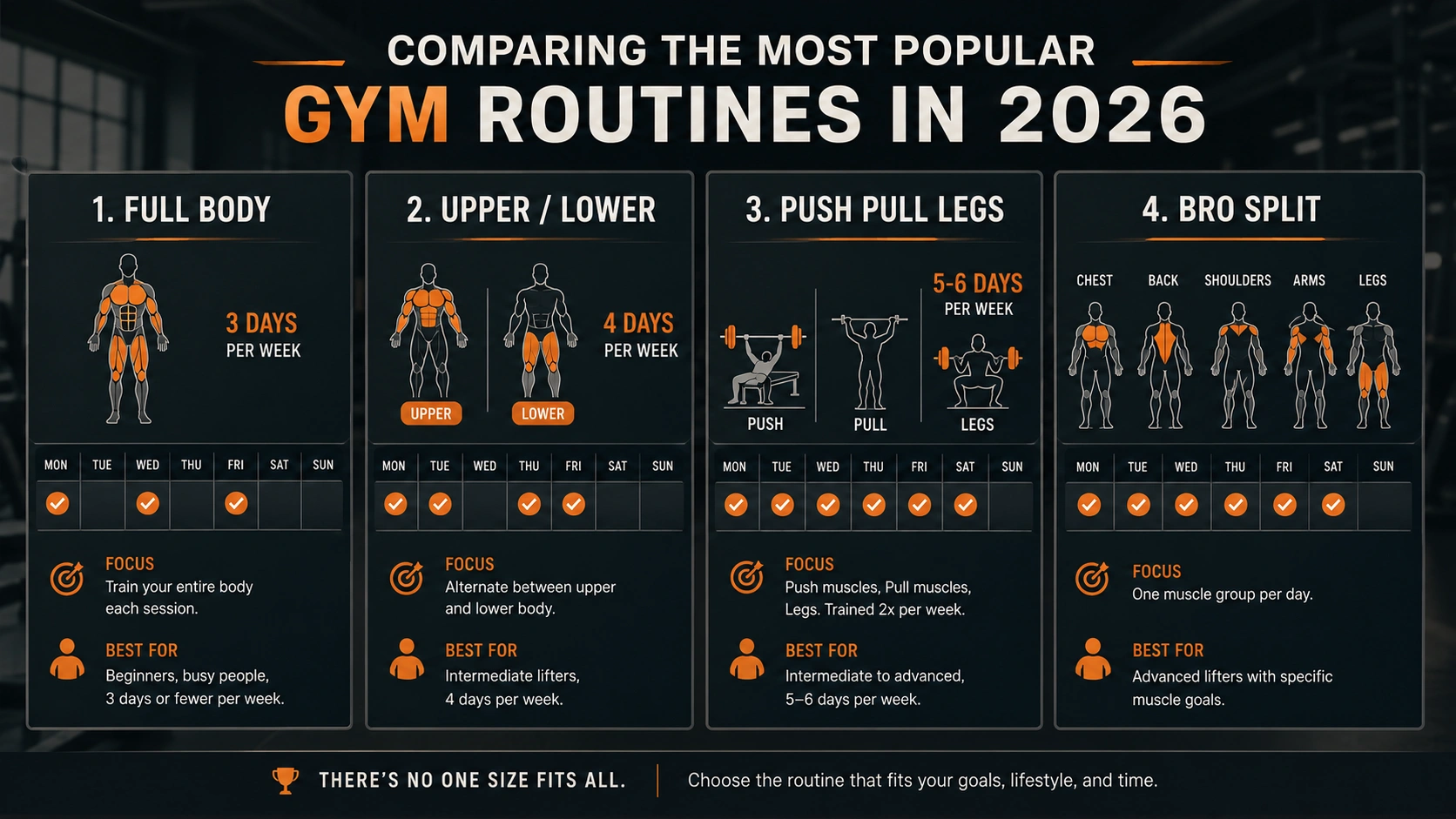
Full-Body Training
Best for: Beginners, busy professionals, people training three days or fewer per week.
Each session works the entire body. This approach gives muscles more frequent stimulation across the week without requiring daily gym visits. Recovery time is built into the structure naturally.
Limitation: As training volume increases, full-body sessions can become long and difficult to manage.
Upper/Lower Split
Best for: Intermediate lifters ready to train four days per week.
You alternate between upper-body and lower-body sessions. This allows higher volume per muscle group while keeping individual sessions manageable. It’s a clean progression from full-body training.
Push Pull Legs (PPL)
Best for: Those who can train five to six days per week consistently.
Push days cover chest, shoulders, and triceps. Pull days focus on the back and biceps. Leg days handle quads, hamstrings, and glutes. The structure is logical and efficient for higher training frequencies.
Limitation: Requires genuine commitment to consistency. Miss two sessions and the weekly structure breaks down.
Body-Part Split (“Bro Split”)
Best for: Advanced trainees with specific muscle development goals.
One muscle group per day, five to six days per week. This approach allows maximum volume for each muscle, but each group only gets trained once weekly. Research suggests twice-weekly frequency produces better results for most people.
Quick Comparison
A Practical Weekly Gym Routine for Most Beginners
This is a gym routine for beginners built around three full-body sessions. Each workout covers the major movement patterns without lasting more than 45 to 60 minutes.
Day 1: Full Body Strength
- Barbell or goblet squat: 3 sets of 8–10
- Push-ups or dumbbell press: 3 sets of 8–10
- Dumbbell rows: 3 sets of 10 each side
- Plank: 3 sets of 20–30 seconds
Day 2: Active Recovery
Light walking, stretching, or mobility work. This isn’t optional; it’s part of the program.
Day 3: Full Body Strength
- Romanian deadlift: 3 sets of 10
- Overhead dumbbell press: 3 sets of 10
- Lat pulldown or assisted pull-up: 3 sets of 8–10
- Dead bug or hollow hold: 3 sets
Day 4: Walking or Mobility
Twenty to thirty minutes of movement. Keep it low intensity.
Day 5: Full Body Strength
- Hip thrust or leg press: 3 sets of 12
- Incline push-up or cable fly: 3 sets of 12
- Seated cable row: 3 sets of 10
- Farmer carry: 3 sets of 30 seconds
Weekend Recovery Strategy
Protect your sleep, eat enough protein (aim for 1.6 to 2.2g per kg of bodyweight), and don’t skip two days of rest in a row if you can help it.
Read More!
7-Day Gym Plan: Best Workout Routines For Muscle Growth
Top 10 Back Exercises For Strength, Muscle, & Better Posture
How to Create a Gym Routine That Fits Your Schedule
Knowing how to create a gym routine is only useful if the structure actually fits your life.
The 3-Day Framework
Ideal for busy professionals or those new to structured training. Full-body sessions, Monday/Wednesday/Friday or any three non-consecutive days.
The 4-Day Framework
Upper/lower split. Train Tuesday, Thursday, Saturday, Sunday or spread across the week with rest days between sessions.
The 5–6 Day Framework
Push-pull-legs or a modified split. Only recommended once you have at least six to twelve months of consistent training experience.
The “Never Miss Twice” Rule
Missing one session happens. Missing two becomes a habit. The goal isn’t perfection; it’s preventing gaps from stretching into weeks. One rule: never miss two sessions in a row. This single behavioral principle has more impact on long-term adherence than any training split.
The Hidden Factor Most Gym Routines Ignore: Nutrition
Why Training Alone Isn’t Enough
You can follow the most well-designed gym routine on the planet and still see disappointing results if your nutrition is inconsistent. Training creates the stimulus. Food provides the raw material. Both need to be addressed.
Calories Drive Most Physical Changes
Fat loss requires eating less than you burn. Muscle gain requires eating at or slightly above maintenance, with adequate protein. Without tracking, most people significantly underestimate their calorie intake.
Protein and Recovery Basics
Protein is the building block of muscle tissue. Most people eating a typical diet consume far less than what research supports for muscle retention and growth. Prioritizing protein at every meal, around 30 to 40 grams, makes a meaningful difference.
How Calorie Tracker Buddy Makes Following a Gym Routine Easier
Why Tracking Matters More Than Guessing
Tracking removes guesswork from the process. When you know how much you’re eating and how it aligns with your goal, you make better decisions automatically.
Features That Support Fitness Goals
Calorie Tracker Buddy is built around the practical needs of people following a structured fitness plan:
- Daily calorie tracking aligned to your specific goal
- Macro tracking for protein, carbohydrates, and fat
- Weight progress monitoring over time
- Goal-based calorie targets that adjust as your weight changes
- Habit consistency tracking to identify patterns
- Simple food logging without tedious portion calculations
- Progress insights that show you what’s working
Who Benefits Most From Using It?
Beginners who don’t yet have an intuitive sense of food portions benefit most. Those targeting fat loss or muscle gain with specific calorie goals also find it essential. Busy professionals who eat irregularly throughout the day find it particularly useful for staying accountable.
Common Gym Routine Mistakes That Slow Progress
Changing Routines Too Frequently
Give any program at least eight to twelve weeks before evaluating it. Switching programs every two to three weeks prevents you from ever adapting to the stimulus. Boredom is not a reason to change routines. Lack of progress after a genuine effort is.
Ignoring Progressive Overload
Adding weight or reps over time is the core mechanism behind muscle growth and strength gains. Without it, your body has no reason to adapt. Track your lifts. Aim to improve something each session.
Skipping Recovery Days
Rest days are not wasted training days. They are when adaptation happens. Removing them from your schedule doesn’t accelerate progress; it delays it.
Doing Too Much Cardio
Cardio has its place, particularly for cardiovascular health and fat loss support. But excessive cardio on top of a full lifting schedule can interfere with muscle recovery and make it harder to eat enough to support muscle growth.
Training Without Tracking Progress
If you’re not recording your sessions, you have no way to confirm you’re improving. A simple notebook or app entry after each workout is enough to give you a clear picture of where you’re going.
The 2026 Fitness Trend Most People Should Pay Attention To
Simpler Routines Are Winning
Recent discussions in exercise science and adherence research increasingly favor the minimal effective dose over elaborate programming. Three well-executed sessions a week with consistent progressive overload outperform six-day programs abandoned within a month. Adherence is the variable most fitness content fails to optimize for.
Why Long-Term Consistency Beats Perfect Programming
Behavioral psychology makes this clear: the harder a habit is to maintain, the less likely it is to stick. Complex routines introduce more opportunities to fail. A gym routine you can sustain for a year will deliver far better results than the optimal program you drop in sixty days.
How to Know Your Gym Routine Is Actually Working
Strength Markers
Are you lifting more than you were six weeks ago? Even small improvements in how many reps you complete at a given weight indicate progress.
Body Composition Changes
Scale weight alone is misleading. Track measurements, how clothes fit, and progress photos every four weeks. These give a clearer signal than daily weigh-ins.
Energy and Recovery Improvements
When training is working well, energy tends to improve over time. Workouts feel productive rather than exhausting. Sleep quality often improves alongside consistent training.
Progress Tracking Checklist
- Weight or reps increased on key lifts?
- Body measurements trending in the right direction?
- Recovering well between sessions?
- Showing up consistently?
If three or four of these are trending positively, your routine is working.
The Best Gym Routine Is the One You Can Sustain
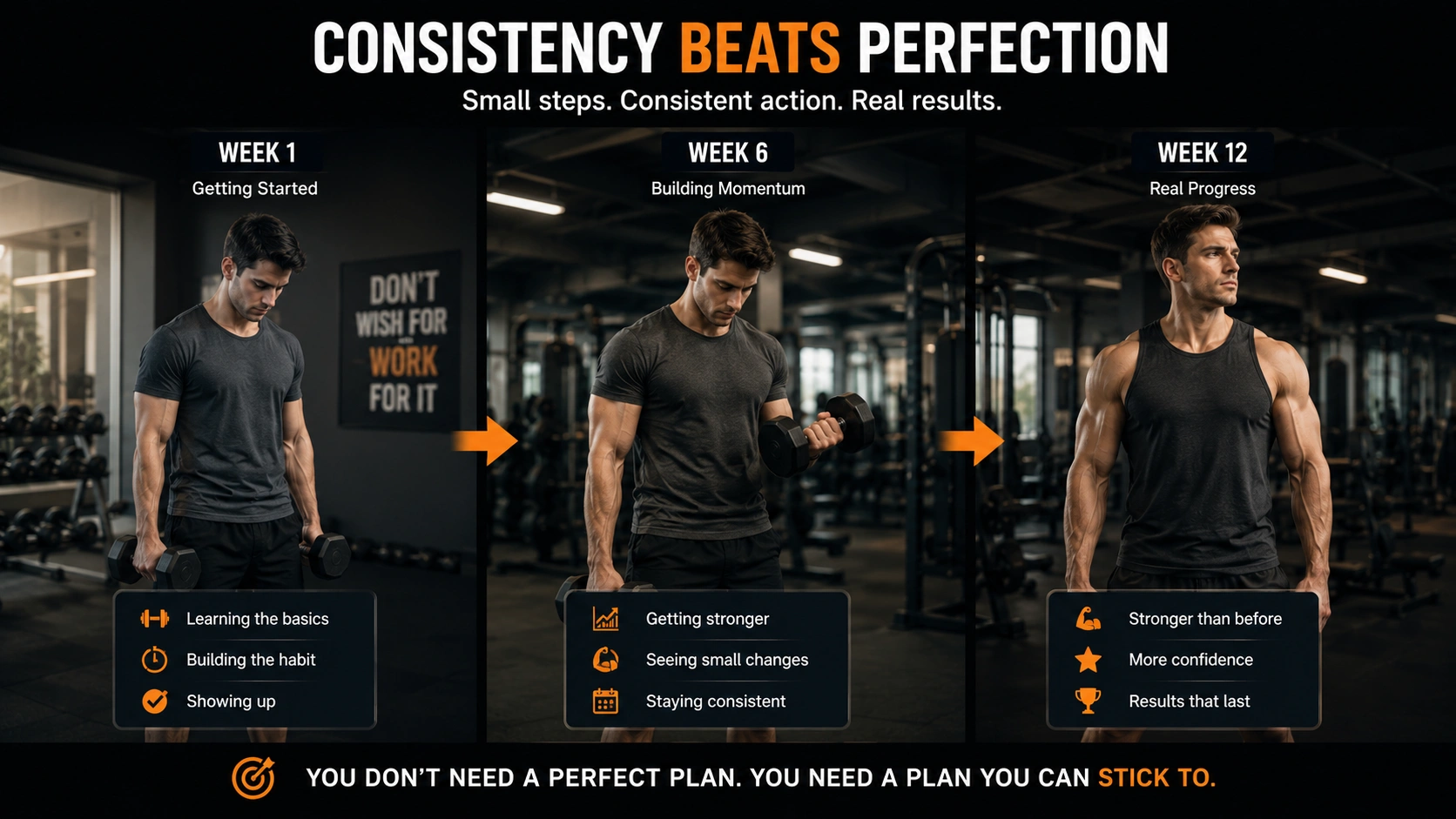
The most advanced gym routine in the world is worthless if you don’t show up. Start with what matches your current goal and time availability. Progress from there. Track your effort and your results. Adjust when the evidence tells you to, not when boredom does.
The best gym routine in 2026 isn’t the most complex plan. It’s the one that fits your schedule, aligns with your goals, and keeps you returning week after week. Start simple. Build habits. Let the results follow.
Frequently Asked Questions
What is the best gym routine for beginners?
A full-body routine three times per week is the most effective starting point. It trains each muscle group frequently, keeps sessions manageable, and builds the movement foundation needed for more advanced splits.
How many days per week should I go to the gym?
Three to four days per week is the sweet spot for most people. It allows sufficient training stimulus and adequate recovery without demanding a schedule most people can’t realistically maintain.
Is a full-body workout better than push-pull legs?
For beginners and intermediate lifters training three to four days per week, full-body or upper/lower splits are typically more effective. Push-pull-legs requires five to six days to work optimally and suits those with consistent training histories.
How long should a gym workout last?
45 to 75 minutes is sufficient for most well-structured gym sessions. Longer workouts don’t necessarily produce better results. Focused training within that window beats two-hour sessions with excessive rest and distraction.
When should I change my gym routine?
After eight to twelve weeks of consistent effort, or when progress has genuinely stalled for more than three to four weeks despite progressive overload attempts. Don’t change because you’re bored. Change when the evidence supports it.