


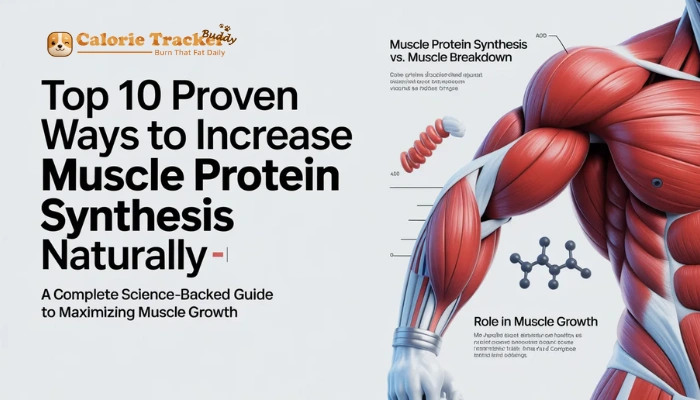
A complete science-backed guide to maximizing muscle growth
Muscle protein synthesis (MPS) is the biological process by which your body builds new muscle proteins to repair and grow muscle tissue damaged during exercise. It is the foundation of every muscle-building goal.
Muscle Protein Synthesis vs. Muscle Breakdown
Your muscles are in a constant state of flux between MPS (building) and muscle protein breakdown (MPB). When MPS exceeds MPB, you gain muscle. When MPB dominates, you lose it. The goal is always to tip the balance in favor of synthesis.
Role in Muscle Growth
Without consistently elevated MPS, muscle growth stalls. Every strategy in this guide targets one goal: keeping protein synthesis elevated and muscle breakdown low.
In a hurry? Listen to the blog instead!
How Muscle Protein Synthesis Works (Science Explained Simply)
The mTOR Pathway
The mTOR (mechanistic target of rapamycin) pathway is the master regulator of muscle protein synthesis. When activated by amino acids and resistance training, mTOR signals the body to produce new muscle proteins. Think of it as the on-switch for muscle growth.
What Triggers MPS
- Resistance training (mechanical tension on muscle fibers)
- Amino acid availability (especially leucine)
- Hormonal environment (testosterone, IGF-1, insulin)
Why Protein For Muscle Building Is Essential For Muscle Protein Synthesis
Protein provides the raw materials (amino acids) your body uses to build new muscle tissue. Without adequate protein, MPS cannot proceed, no matter how hard you train. Leucine, in particular, acts as the key that unlocks the mTOR pathway.
- Protein repairs micro-tears in muscle fibers caused by training
- Essential amino acids (EAAs) cannot be produced by the body
- Leucine is the most potent amino acid for triggering MPS
Top 10 Proven Ways to Increase Muscle Protein Synthesis Naturally
1. Prioritize Resistance Training to Stimulate Muscle Protein Synthesis
Resistance training is the most powerful trigger of MPS. Lifting weights causes mechanical stress on muscle fibers, which activates the mTOR pathway and initiates the rebuilding process.
- Aim for 3-5 strength training sessions per week
- Use progressive overload: gradually increase weight, reps, or sets over time
- Compound movements (squats, deadlifts, bench press) produce the greatest MPS stimulus
2. Consume Enough Protein Intake for Muscle Building Daily
Total daily protein intake is one of the most critical factors for sustained MPS. Research supports a target of 1.4-2.0 g of protein per kg of body weight per day for those focused on muscle building.
- Beginners: 1.4-1.6 g/kg/day
- Intermediate/advanced: 1.8-2.0 g/kg/day
- Spread intake evenly throughout the day for best results
3. Distribute Protein Intake Evenly Across Meals
MPS is not just about total protein – it is also about how you distribute it. Consuming protein evenly across 4-5 meals maximizes the number of MPS spikes throughout the day.
- Target 20-40g of protein per meal
- Eat every 3-4 hours to maintain elevated MPS
- Avoid front-loading or back-loading all protein into one meal
4. Choose Muscle Building High-Protein Foods
Not all protein sources are equal. High-quality complete proteins provide all essential amino acids required for MPS. Prioritize these foods:
- Animal sources: eggs, chicken breast, lean beef, fish (salmon, tuna), Greek yogurt, cottage cheese
- Dairy: whey protein, milk, paneer
- Plant sources: lentils, chickpeas, tofu, tempeh, quinoa, edamame (combine for a complete amino acid profile)
5. Hit the Leucine Threshold in Every Meal
Leucine is the most anabolic amino acid. Research shows that consuming at least 2-3g of leucine per meal is required to fully activate the mTOR pathway and trigger a meaningful MPS response.
- 3 whole eggs provide ~1.5g leucine
- 1 scoop of whey protein provides ~2.5g leucine
- 100g chicken breast provides ~2.0g leucine

6. Optimize Protein Timing Around Workouts
While total daily protein intake matters most, timing can provide an additional edge. The anabolic window post-workout is real, though wider than once believed.
- Consume 20-40g protein within 1-2 hours post-workout
- A pre-workout protein meal also helps sustain amino acid availability
- Do not fast for extended periods immediately post-training
7. Include Fast-Digesting Protein Sources Like Whey
Fast-digesting proteins rapidly elevate blood amino acid levels, making them ideal for a post-workout meal to spike MPS when muscle sensitivity is at its peak.
- Whey protein is the gold standard for post-workout MPS
- Milk, eggs, and lean meats are also fast-absorbing options
- Casein protein (slow-digesting) is ideal before sleep to support overnight MPS
Also Read!
How to Create a Healthy Eating Plan for Weight Loss
How to Create a Perfect Workout Meal Plan (Even If You Have No Idea Where to Start)
8. Maintain a Consistent Calorie Intake for Muscle Growth
MPS requires energy. Insufficient calories force the body into a catabolic state, where muscle is broken down for fuel – directly countering MPS.
- For muscle gain: eat in a slight calorie surplus (200-400 kcal above maintenance)
- For body recomposition: maintain calories at maintenance while increasing protein
- Carbohydrates help spare protein from being used as fuel, supporting MPS
9. Prioritize Sleep and Recovery for Better Muscle Protein Synthesis
The majority of muscle repair and MPS occurs during sleep. Growth hormone, the key anabolic hormone, is primarily released during deep sleep stages.
- Aim for 7-9 hours of quality sleep per night
- Sleep deprivation significantly reduces MPS and elevates cortisol (a catabolic hormone)
- Consider a casein protein intake before bed for overnight muscle repair
10. Train Each Muscle Group Frequently for Sustained MPS
MPS after a workout peaks at 24-48 hours and then returns to baseline. Training each muscle group more frequently (2x per week) keeps MPS elevated more consistently.
- Full body or upper/lower splits work best for frequency
- Train each muscle group 2 times per week, minimum
- Balance volume (total sets) with recovery capacity
Track Your Protein and Calories More Easily
Hitting your daily protein and calorie goals consistently is one of the biggest factors for maximizing muscle protein synthesis. Manually calculating meals every day can be time-consuming, which is why many people use tools like Calorie Tracker Buddy to simplify the process.
It helps you monitor your nutrition, stay consistent with your fitness goals, and make smarter food choices without overcomplicating tracking.
Features of Calorie Tracker Buddy
- Track daily calories, protein, carbs, and fats
- Set custom goals for muscle gain, fat loss, or maintenance
- Monitor your daily protein intake more accurately
- Simple food logging and progress tracking
- Helps maintain consistency for better muscle growth results
- Beginner-friendly and easy to use daily
How Much Protein for Muscle Building? (Simple Calculation Guide)
Your ideal daily protein intake depends on your body weight and training experience. Use the formula below:
| Experience Level | Daily Protein | Example (75 kg) |
|---|---|---|
| Beginner | 1.4–1.6 g/kg | 105–120 g/day |
| Intermediate | 1.6–1.8 g/kg | 120–135 g/day |
| Advanced | 1.8–2.0 g/kg | 135–150 g/day |
Formula: Body weight (kg) x protein factor = daily protein target in grams
Best Muscle Building High Protein Foods (Quick List)
Non-Vegetarian Sources:
- Chicken breast – 31g protein per 100g
- Whole eggs – 6g protein per egg
- Salmon – 25g protein per 100g
- Tuna (canned) – 26g protein per 100g
- Lean beef – 26g protein per 100g
Vegetarian / Vegan Sources:
- Greek yogurt – 10g protein per 100g
- Paneer/cottage cheese – 18-25g protein per 100g
- Lentils – 9g protein per 100g (cooked)
- Tofu – 8g protein per 100g
- Edamame – 11 g protein per 100 g
- Whey protein powder – 20-25g protein per scoop
Common Mistakes That Reduce Muscle Protein Synthesis
Avoid these errors to prevent sabotaging your muscle gains:
- Not eating enough total protein – the single most common mistake
- Poor meal timing – cramming all protein into one meal reduces the number of MPS spikes
- Lack of resistance training – protein without training does not build muscle
- Poor sleep severely limits hormonal support for MPS
- Skipping pre/post-workout nutrition – missing the optimal window for MPS
- Chronic under-eating (calorie deficit) while trying to build muscle
Conclusion: How To Maximize Muscle Protein Synthesis Naturally
Building muscle is not complicated, but it does require consistency across multiple areas. Here is your action plan:
- Lift weights 3-5 times per week using compound movements
- Consume 1.6-2.0 g of protein per kg of body weight daily
- Eat 20-40g protein per meal, spread across 4-5 meals
- Choose leucine-rich, complete protein sources
- Time protein intake around your workouts
- Sleep 7-9 hours for peak hormonal support
- Train each muscle group at least twice per week
Follow these strategies consistently, and you will maximize muscle protein synthesis, break plateaus, and achieve the physique you are working toward.
FAQs About Muscle Protein Synthesis
What increases muscle protein synthesis the most?
The greatest MPS stimulus comes from combining resistance training with adequate leucine-rich protein intake (20-40g per meal). Neither alone is as effective as the two combined.
How long does muscle protein synthesis last?
After a workout, MPS remains elevated for approximately 24-48 hours. After a protein-rich meal, MPS spikes for 2-3 hours before returning to baseline, which is why meal frequency and training frequency both matter.
How much protein per meal is ideal?
Current research suggests 20-40g of high-quality protein per meal maximizes MPS. Smaller amounts may not reach the leucine threshold; larger amounts may not provide proportionally greater benefit.
Does protein timing really matter?
Protein timing matters, but it is secondary to total daily intake. However, consuming protein around your workouts (within 1-2 hours post-training) provides a meaningful additional boost to MPS.
Can you build muscle without enough protein?
No. Without sufficient protein, the body lacks the amino acid building blocks for MPS. Even with perfect training and sleep, inadequate protein will prevent meaningful muscle growth.