

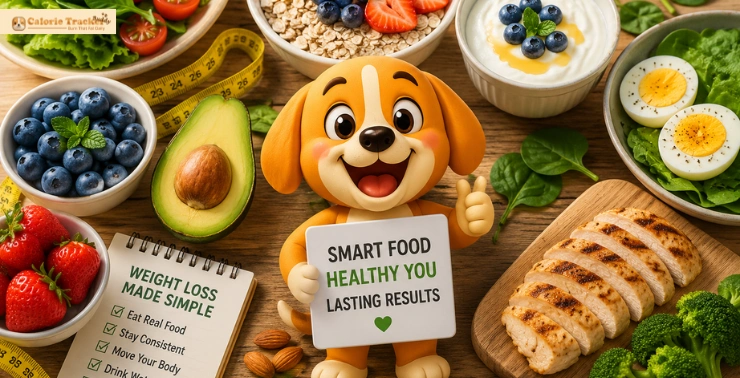
You’ve cut carbs, counted every calorie, and still feel like the scale is mocking you. Here’s the thing most diets get wrong: weight loss isn’t just about eating less. It’s about eating the right things so you’re not fighting hunger every single hour. The right weight loss food does more than cut calories, and choosing the right food for weight loss can make sticking to your goals much easier.
This guide breaks down which foods actually work, why they work, and how to put them together into meals that support real, lasting fat loss.
Read Aloud!
Quick Answer: What Is the Best Weight Loss Food?
The best weight loss food is high in protein, fiber, and nutrients while staying relatively low in calories. Foods like eggs, Greek yogurt, lean meats, beans, leafy vegetables, berries, and oats help control hunger and support steady fat loss without leaving you miserable between meals.
Why Some Foods Make Weight Loss Easier Than Others
Not all foods affect your body the same way. Two meals with identical calorie counts can produce wildly different hunger levels two hours later. Understanding these differences helps you identify the most effective weight loss food choices for long-term success.
The Satiety Factor
Hunger is the real enemy of any weight loss plan. You can have all the willpower in the world, but chronic hunger wears it down. Foods that keep you satisfied longer reduce the urge to snack, overeat at your next meal, or abandon your plan entirely.
The most effective weight loss food options are those that reduce hunger without adding excessive calories.
Protein Helps You Stay Full Longer
Protein is the most filling macronutrient. It triggers satiety hormones, slows digestion, and helps preserve muscle mass while you lose fat. Without enough protein, you risk losing muscle along with fat, which slows your metabolism over time.
That’s why protein-rich meals form the foundation of nearly every successful weight loss food plan.
Fiber Slows Digestion and Controls Appetite
Fiber adds bulk without adding significant calories. It slows the pace at which food moves through your digestive system, which means you stay full longer and avoid the blood sugar spikes that trigger cravings. Aim for a mix of soluble and insoluble fiber across your meals.
Volume Eating Explained
Some foods let you eat a larger physical quantity while keeping calories low. A massive bowl of mixed greens with vegetables can be less than 150 calories. Compare that to a handful of chips at the same calorie count. Volume eating is a legitimate strategy, not a trick; it works because your stomach registers fullness based partly on physical volume.
15 Weight Loss Foods That Deserve a Place on Your Plate
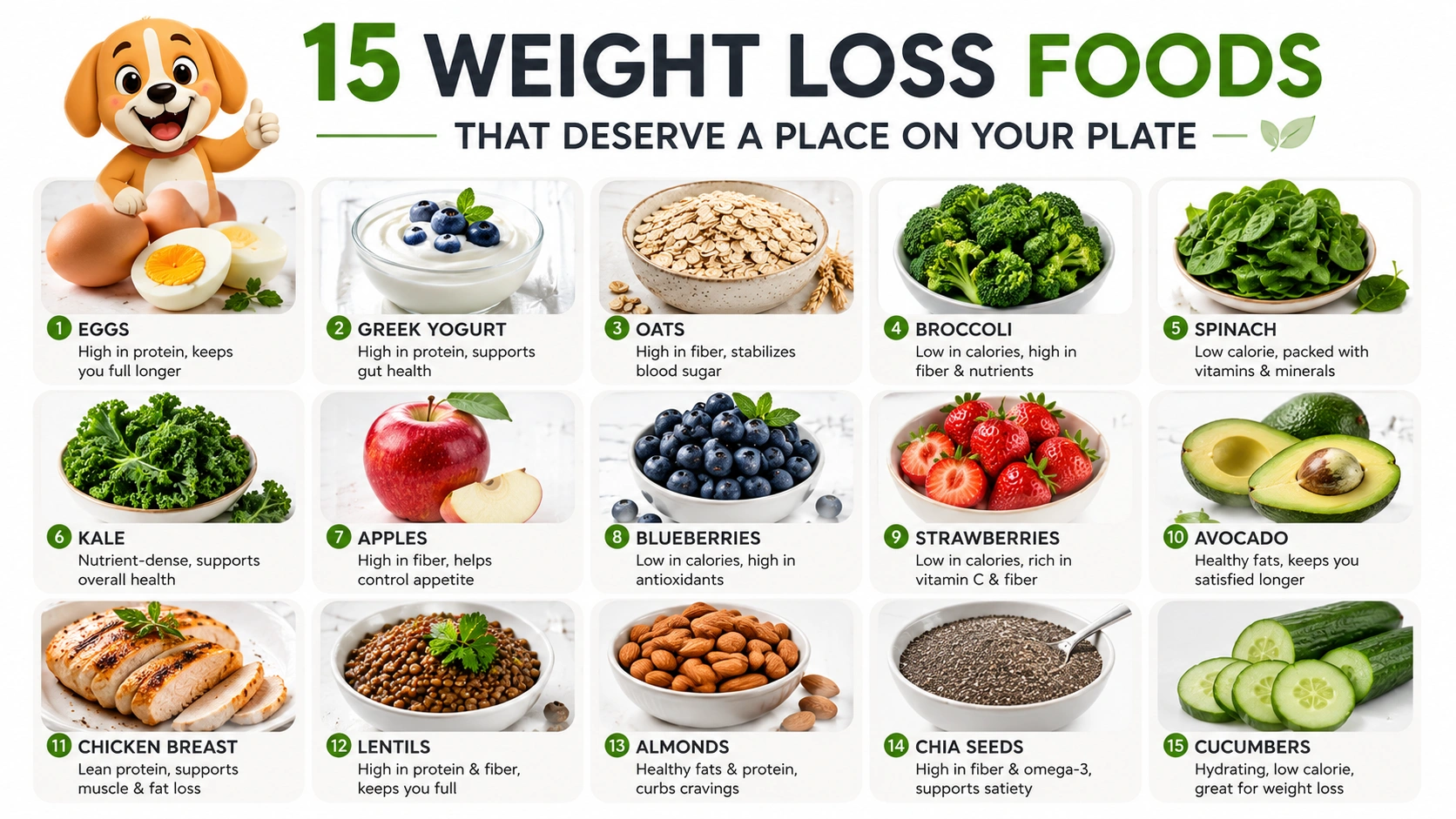
Each weight loss food on this list supports satiety, nutrition, and sustainable fat loss, making it easier to stay consistent with your goals.
Eggs
Key nutrients: high-quality protein and healthy fats. Eggs at breakfast have been shown to reduce calorie intake later in the day. Eat them scrambled, boiled, or poached, avoiding heavy butter or cream sauces.
Greek Yogurt
With nearly twice the protein of regular yogurt, Greek yogurt keeps you full and supports gut health through natural probiotics. Plain versions avoid the added sugars found in flavored options. Add fresh berries and a drizzle of honey if you need sweetness.
Oats
Oats digest slowly thanks to their beta-glucan fiber content, which stabilizes blood sugar and keeps hunger at bay for hours. Steel-cut oats have the lowest glycemic index. Avoid the flavored instant packets loaded with sugar.
Leafy Greens
Spinach, kale, and romaine deliver maximum volume with minimal calories. You can eat a generous portion and barely dent your calorie budget. They’re also rich in vitamins and minerals your body needs during a calorie deficit.
Broccoli
One cup of broccoli has roughly 55 calories and provides both fiber and protein, which is rare for a vegetable. It’s one of the most nutrient-dense foods you can eat. Roast it with olive oil and garlic to make it genuinely enjoyable.
Apples
A medium apple has around 4 grams of fiber and water content that contributes to fullness. The crunch factor also slows down eating, which gives your brain time to register that you’re satisfied. A great portable snack that requires zero prep.
Berries
Blueberries, strawberries, and raspberries satisfy a sweet craving without a massive calorie cost. They’re also high in antioxidants and fiber. Frozen berries work just as well nutritionally as fresh ones.
While no single weight loss food can guarantee results on its own, regularly including these nutrient-dense options in your meals can help reduce hunger, improve nutrition, and support long-term fat loss.
The Weight Loss Plate Formula That Works Better Than Fad Diets
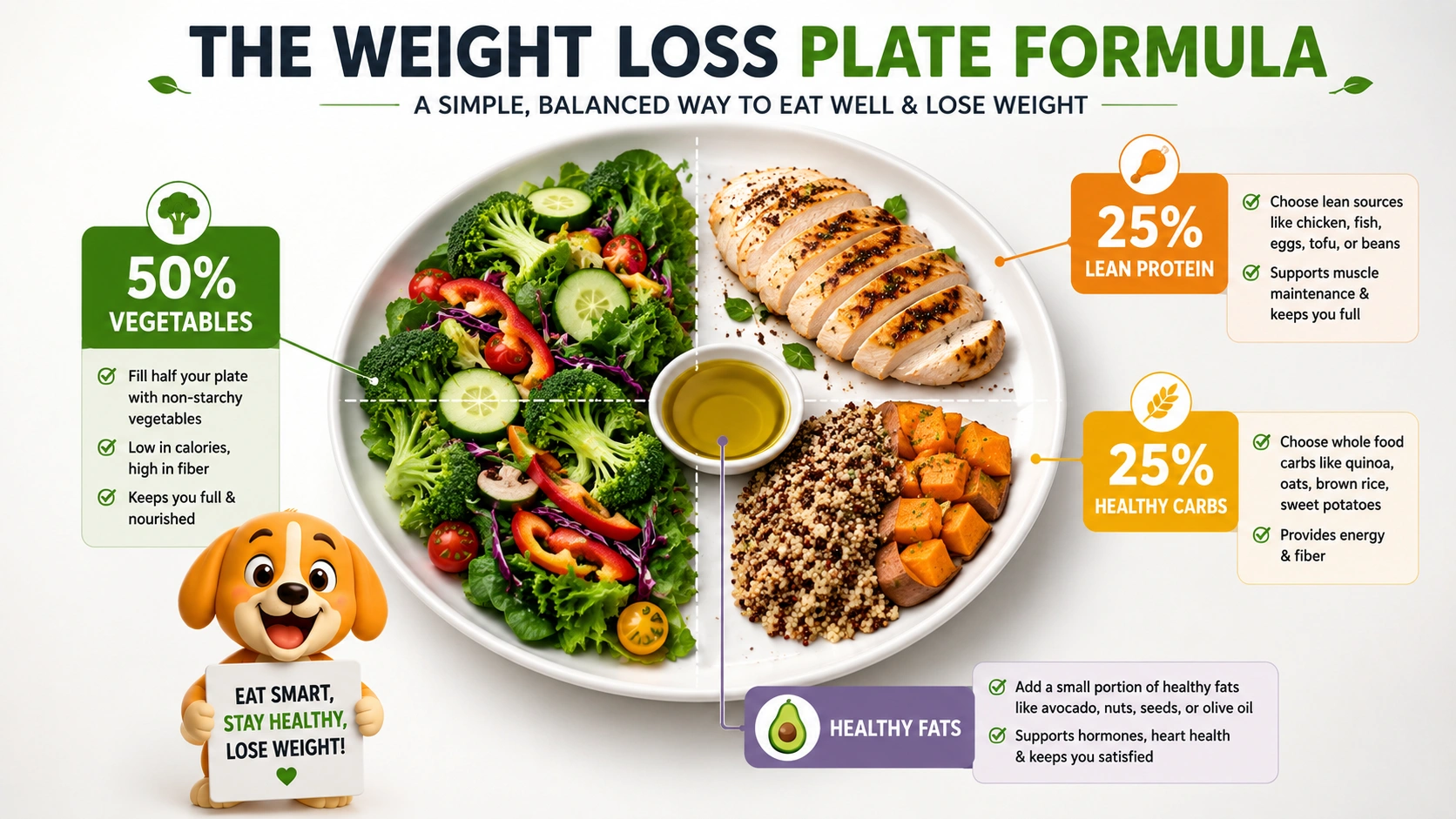
Instead of memorizing food lists, learn to build a plate. This approach works for any meal, any cuisine, and any lifestyle. Even the best food for weight loss becomes more effective when it’s part of a balanced meal rather than eaten in isolation. Building meals around proven weight loss food choices makes healthy eating far easier to sustain.
Fill Half Your Plate with Vegetables
Non-starchy vegetables are low in calories and high in fiber. Filling half your plate with them automatically lowers the calorie density of your meal without requiring any math. Many of the most effective weight loss food options fall into this category because they help you eat more volume for fewer calories.
Add a Palm-Sized Protein Source
Your protein portion should roughly match the size and thickness of your palm. Chicken, fish, eggs, cottage cheese, beans, or tofu all qualify. This portion delivers roughly 20 to 30 grams of protein, which is enough to trigger satiety hormones.
Choose Smart Carbohydrates
A fist-sized portion of oats, sweet potato, brown rice, or legumes provides energy without overwhelming your calorie budget. These carbohydrates digest slowly and pair well with protein to maintain steady energy levels.
Include Healthy Fats in Moderation
A thumb-sized portion of avocado, olive oil, or a small handful of nuts rounds out your plate. Fat slows digestion and helps absorb fat-soluble vitamins from your vegetables. Combining healthy fats with protein and fiber-rich weight loss food choices can help keep hunger under control for longer.
What a Full Day of Weight Loss Food Looks Like
Breakfast
Scrambled eggs with spinach and a slice of whole-grain toast. Or overnight oats with chia seeds, blueberries, and a spoonful of almond butter. Both take under 10 minutes and deliver protein and fiber upfront.
Lunch
A large salad with grilled chicken, chickpeas, cucumber, cherry tomatoes, and olive oil with lemon. Alternatively, lentil soup with a piece of fruit on the side. Both keep you full through the afternoon.
Dinner
Baked salmon with roasted broccoli and a small serving of sweet potato. Or a stir-fry with tofu, mixed vegetables, and a small portion of brown rice. Keep sauces minimal to control hidden calories.
Snack Ideas
Greek yogurt with berries. A small apple with almond butter. Cottage cheese with cucumber. A boiled egg. These options are high in protein or fiber and prevent excessive hunger before your next meal.
Healthy Foods That Can Secretly Slow Weight Loss
Some foods are genuinely nutritious but can stall progress when consumed carelessly. Even a healthy weight loss food choice can slow results if portion sizes and calorie intake aren’t kept in check.
Smoothies Loaded with Calories
A smoothie made with two cups of fruit, nut butter, protein powder, and coconut milk can easily hit 600 to 800 calories. Drinking calories doesn’t trigger the same fullness signals as eating them. Keep smoothies simple and portion-controlled.
Granola and Energy Bars
Most commercial granola is roughly 70 percent sugar and fat. It feels healthy but is calorically dense. Check labels and treat these as occasional snacks, not daily staples.
Flavored Coffee Drinks
A large flavored latte or frappuccino from a coffee chain can contain 400 to 600 calories of mostly sugar and fat. Black coffee or coffee with a small amount of milk is a far better choice.
Oversized Healthy Portions
Even the best food for weight loss can become a problem in large quantities. Avocados, nuts, olive oil, and salmon are nutritious, but they’re calorie-dense. Eyeballing large portions adds hundreds of invisible calories daily.
Mindless Snacking on Nuts
Nuts are an excellent food. But eating them absentmindedly while working or watching television bypasses your fullness signals entirely. Always pre-portion them before eating.
How to Weigh Food for Weight Loss Without Obsessing Over Calories
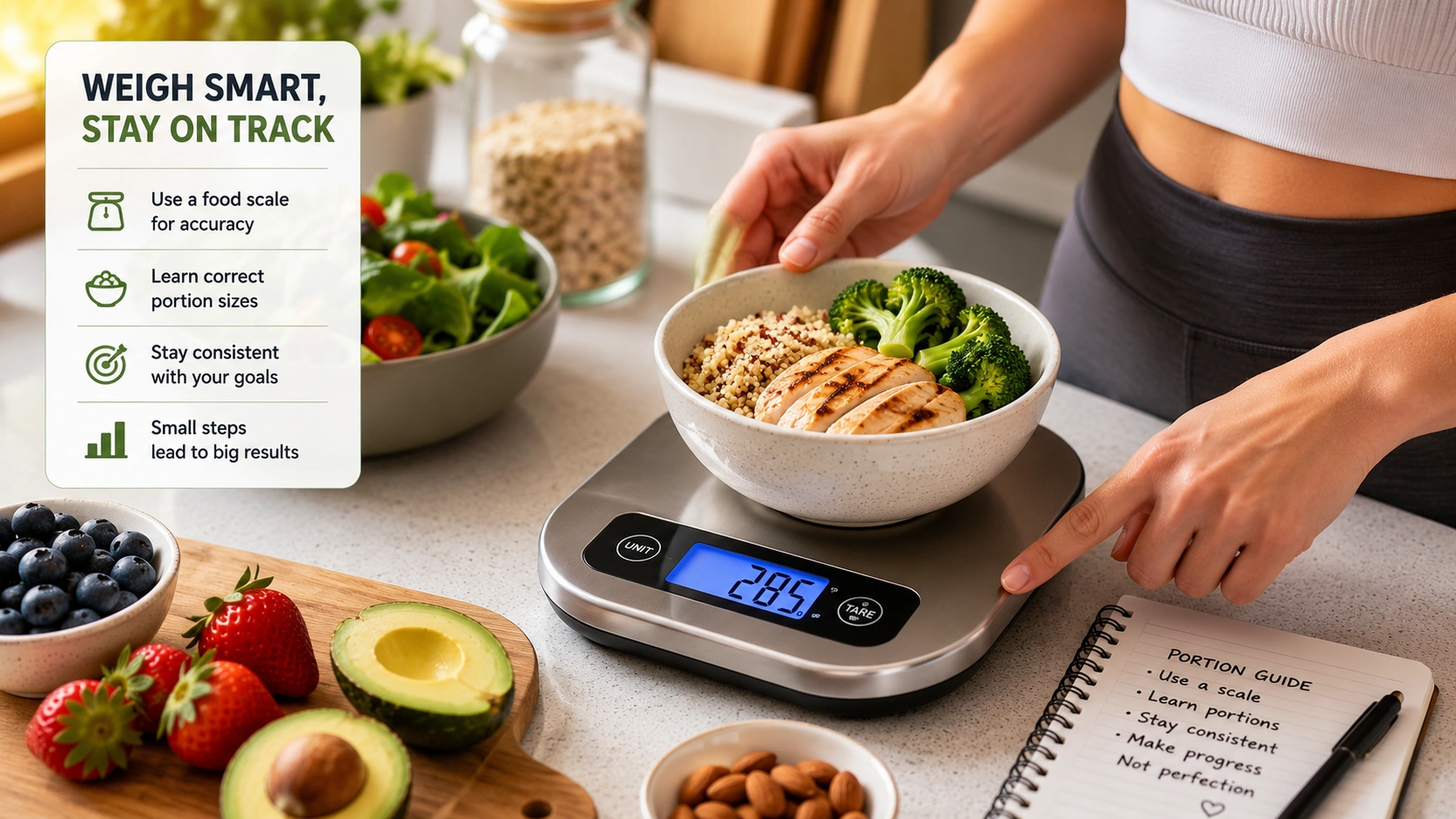
Learning how to weigh food for weight loss isn’t about becoming neurotic; it’s about building awareness. Most people significantly underestimate their portion sizes, which creates a gap between what they think they’re eating and what they’re actually eating.
A simple kitchen scale helps most during the early weeks of changing your eating habits. Weigh calorie-dense foods like nuts, oils, cheese, and grains until you develop an accurate visual sense of what a true portion looks like.
You don’t need to weigh every vegetable or piece of fruit indefinitely. Once you understand portion sizes viscerally, you can rely more on the plate method. The goal is awareness, not perfection.
Make Weight Loss Easier With Calorie Tracker Buddy
Choosing the right weight loss food is important, but staying consistent with your habits is what leads to lasting results. Calorie Tracker Buddy helps you stay on track by making it easier to monitor your meals, understand your calorie intake and expenditure, and stay motivated throughout your journey.
Key Features of Calorie Tracker Buddy
- Snap The Meal – Simply take a photo of your food and get instant insights into calories, nutrients, and overall meal balance.
- Calorie Burn Tracker – Track calories burned through everyday activities and monitor your daily energy expenditure.
- Calorie Intake Tracker – Log what you eat and receive immediate feedback on how your meals align with your calorie goals.
- Goal Predictions – See how your daily food and activity choices impact your progress and help predict your path toward your target.
- Buddy Motivation – Stay encouraged with a virtual buddy that grows and celebrates every healthy choice you make.
- Social Sharing – Share meals, milestones, and progress updates with friends and your community for extra accountability and motivation.
Rather than relying on guesswork, Calorie Tracker Buddy provides a simple way to monitor your eating habits, stay motivated, and make smarter decisions that support your long-term weight loss goals.
The Psychology of Weight Loss Food Most People Ignore
Hunger Is Often a Habit, Not a Need
Your body gets used to eating at certain times. If you’ve always snacked at 3 p.m., you’ll feel hungry at 3 p.m., even if you ate a satisfying lunch. Changing food habits means working with that conditioning, not fighting it blindly.
Food Environment Shapes Decisions
What’s visible in your kitchen determines what you eat far more than willpower does. Keep fruit on the counter. Keep pre-cut vegetables at eye level in the refrigerator. Make healthy choices the path of least resistance.
Small Daily Choices Beat Extreme Diets
No single meal makes or breaks your progress. What matters is the pattern across weeks and months. One large meal won’t derail you. Consistently skipping vegetables or overeating processed food will.
Why Consistency Wins Over Motivation
Motivation fluctuates. Habits don’t. Building simple, repeatable eating patterns around proven foods works better than any restrictive diet that depends on daily enthusiasm.
Read More!
Common Weight Loss Food Mistakes to Avoid
Skipping meals triggers intense hunger later, which almost always leads to overeating. Eating regularly keeps hunger manageable.
Avoiding all carbs is unnecessary and unsustainable. The right carbohydrates, portioned correctly, support energy and satiety.
Not eating enough protein leads to muscle loss, increased hunger, and slower metabolism. Prioritize protein at every meal.
Drinking your calories through juice, soda, alcohol, or sugary coffee drinks bypasses satiety signals and adds significant calories without satisfaction.
Expecting fast results leads to abandoning plans that are actually working. Sustainable fat loss averages 0.5 to 1 pound per week. Slow progress is real progress.
Final Thoughts: Focus on Patterns, Not Perfect Foods
No single food causes weight loss, just as no single meal derails it. What matters is the pattern you build across weeks: enough protein at each meal, plenty of fiber-rich vegetables, smart carbohydrate choices, and awareness of portion sizes.
Start with one meal today. Make your breakfast protein-forward. Add a serving of vegetables to your lunch. Small adjustments, repeated consistently, produce results that no two-week detox ever could.
The goal isn’t a perfect diet. It’s a sustainable one.
Frequently Asked Questions
What is the best weight loss food overall?
There isn’t a single winner. Eggs, Greek yogurt, leafy greens, lean protein, and legumes consistently support fat loss across different dietary approaches.
Which foods help reduce belly fat?
No food specifically targets belly fat. Reducing overall body fat through a calorie deficit, high protein intake, and fiber-rich foods will reduce abdominal fat over time.
Can I lose weight without counting calories?
Yes. Focusing on whole, minimally processed foods, eating adequate protein and fiber, and controlling portions often produces results without explicit calorie counting.
Are fruits good for weight loss?
Yes, especially whole fruits. Berries, apples, and pears are particularly high in fiber. Fruit juice, however, removes fiber and concentrates sugar, so it’s a less ideal choice.
What should I eat at night when trying to lose weight?
Cottage cheese, Greek yogurt, or a boiled egg are solid nighttime options. They’re high in protein, digest slowly, and won’t significantly spike blood sugar before sleep.