


What Is Whey Protein Isolate – In Plain English
Walk into any supplement store, and you’ll see shelves packed with tubs claiming to be the “purest” or “fastest” protein available. That’s where most people get stuck. The labels sound scientific, the prices vary wildly, and almost every product promises the same result.
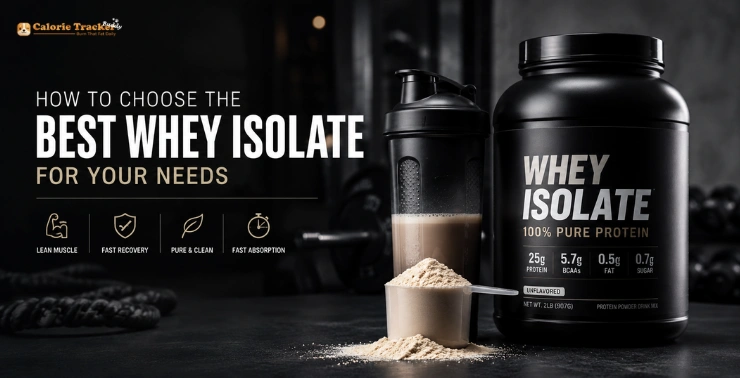
Here’s the simpler truth: whey isolate is just a highly filtered form of whey protein. It contains at least 90% protein by weight, with most of the fat and lactose removed during processing. Because it digests quickly and includes all nine essential amino acids, it’s commonly used for muscle recovery, lean muscle support, and high-protein diets.
Unlike standard whey protein, this reaches your bloodstream fast. In many cases, amino acids begin circulating within 20 to 30 minutes after drinking them. That speed matters most after training, when muscles are primed for repair.
Read Aloud!
How It’s Made – Why the Filtration Process Actually Matters
Not all whey isolate products are processed the same way. The filtration method changes the final quality more than most buyers realize.
Cross-flow microfiltration is generally considered the gentler option. It filters out fat and lactose while preserving more of the naturally occurring protein fractions. That usually means better texture, cleaner digestion, and less protein damage.
Ion exchange processing is more aggressive. It produces very high protein levels, but heat and chemical processing can reduce some beneficial compounds naturally found in whey.
You may also notice the phrase “native whey.” That means the protein comes directly from milk rather than being separated during cheese production. It’s often marketed as a cleaner, less processed source, though it usually costs more.
Isolate vs Concentrate vs Hydrolysate – A Decision Table, Not a Debate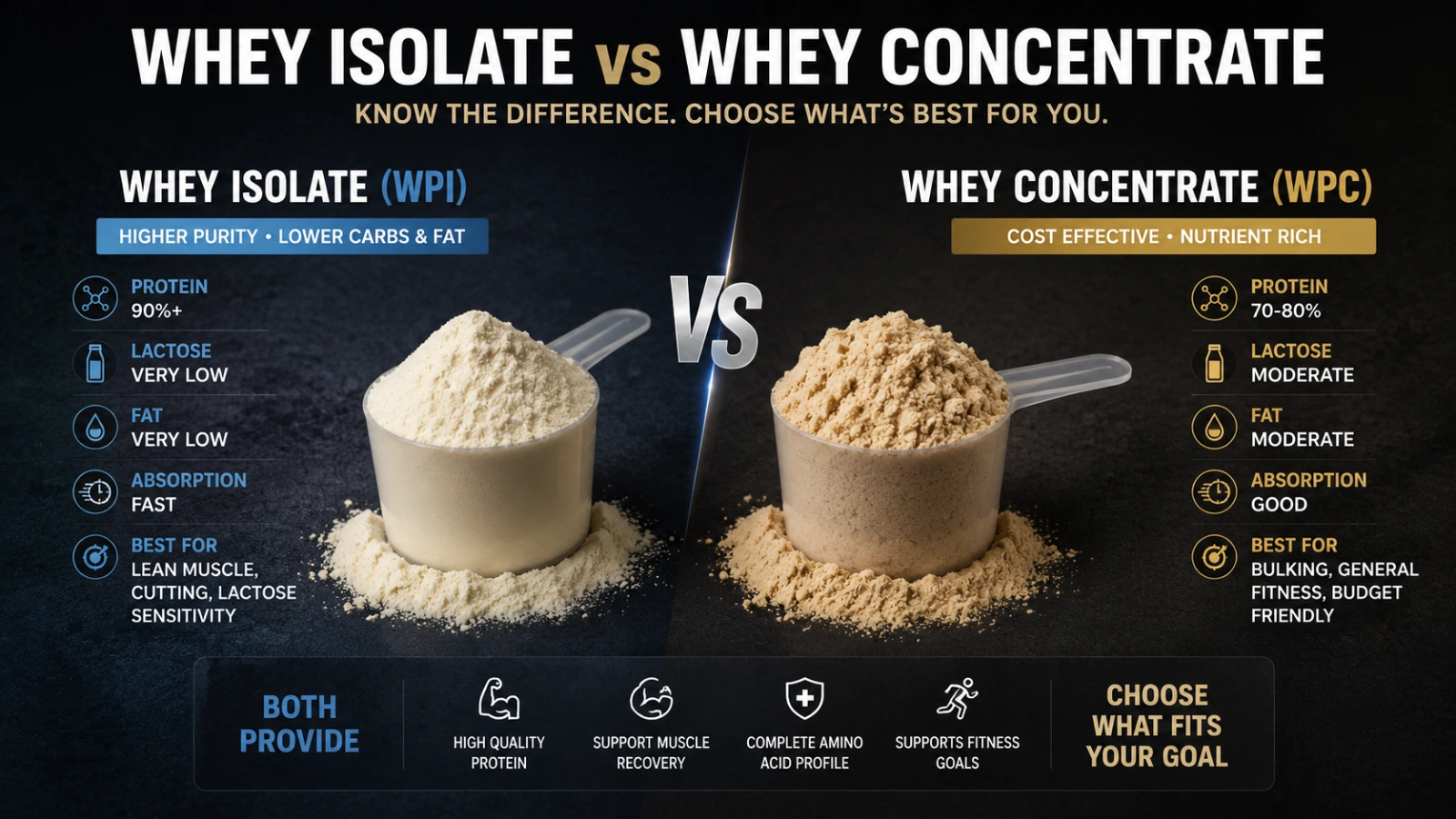
Most comparison articles turn this into a battle. It’s not. These proteins are far more similar than supplement marketing suggests.
The surprising part? The amino acid profile across all three is nearly identical. That means whey isolate does not magically build more muscle than concentrate.
What changes is the filtering. WPI removes more lactose and fat, making it easier on digestion and more calorie-efficient. Hydrolysate takes this a step further by partially breaking down protein for faster absorption, although most recreational lifters will never notice a meaningful difference.
The Honest Answer – Who Actually Needs Isolation
If you tolerate dairy well and aren’t aggressively cutting calories, whey concentrate usually does the same job for less money.
Whey isolate earns its premium in three situations:
- You’re lactose-sensitive
- You want tighter calorie control
- You prefer leaner macro ratios
There’s one important caveat, though. Isolate still contains trace lactose. Mild sensitivity is usually fine. Severe intolerance or dairy allergy is different. In that case, plant-based protein is the safer route.
Why Whey Protein Isolate Works – The Leucine–mTOR Loop Explained Simply
A lot of protein articles stop at “helps build muscle.” That skips the part people actually want to understand. Why does this work so well in the first place?
The answer comes down to leucine and a cellular signaling pathway called mTOR.
Step 1 – Leucine Triggers the Signal
A typical 25g serving of whey isolate delivers around 2.5 to 3 grams of leucine. That number matters because leucine acts like a trigger switch for muscle repair.
When enough leucine enters the bloodstream, your body recognizes that protein is available. That starts the rebuilding process after training.
Below a certain threshold, the signal stays weak. Reach the threshold, and muscle protein synthesis increases sharply.
Step 2 – mTOR Activates Repair
mTOR stands for “mechanistic target of rapamycin,” but the technical name matters less than the role it plays.
Think of mTOR as the system that tells your muscle cells to stop breaking down tissue and start rebuilding it. Whey isolate supports this process because it delivers amino acids rapidly, especially after exercise when muscle tissue is more responsive.
That’s one reason post-workout shakes became popular in strength training circles.
Step 3 – The “Window” Is Wider Than You Think
The old belief said you needed protein within 30 minutes after training or the workout was wasted. That idea has largely been overstated.
Current evidence suggests the recovery window is much broader, closer to two hours for most people. Daily consistency matters more than racing to the shaker bottle.
That’s good news. It removes unnecessary stress while still giving you flexibility around meals and workouts.
Which Whey Protein Isolate Strategy Actually Fits Your Goal
The best whey isolate setup depends less on trends and more on what you’re trying to accomplish.
For Muscle Recovery and Strength Athletes
Fast absorption becomes useful after hard training sessions, especially when muscle breakdown is highest.
Most strength athletes do well with 20 to 30 grams post-workout alongside creatine and a balanced meal later in the day. Total daily protein still matters more than timing alone. A good target sits around 1.6 to 2.2 grams per kilogram of body weight.
For Weight Loss and Caloric Deficit
This is where whey isolate often separates itself from concentrate.
Because it contains fewer carbs and fats, you get more protein per calorie. That makes it easier to preserve lean muscle while dieting.
Protein also has a higher thermic effect than carbohydrates or fats. Your body burns more energy digesting it. On top of that, higher protein intake tends to improve fullness and reduce overeating later in the day.
Still, whey isolate should complement meals, not replace real food entirely.
For Lactose-Sensitive and Digestive-Comfort Seekers
Many people switch to isolate after realizing their post-shake bloating isn’t “normal gym digestion.”
Most whey isolate products reduce lactose to very low levels, which helps people with mild sensitivity. Starting with half a serving is usually smart if you’re unsure how your body responds.
Moderate intolerance may require a product specifically labeled lactose-free. Severe intolerance or milk allergy changes the equation completely. In those cases, whey usually isn’t worth the digestive risk.
For Women Who Worry About “Bulking Up”
This concern still shows up constantly, despite how misunderstood it is.
Whey isolate does not suddenly create excessive muscle growth in women. Building large amounts of muscle requires years of training, high-calorie intake, and hormone levels that most women simply do not have.
What whey isolate can do is support recovery, improve muscle tone, and help preserve lean mass during fat-loss phases.
How to Read a Whey Protein Isolate Label in 60 Seconds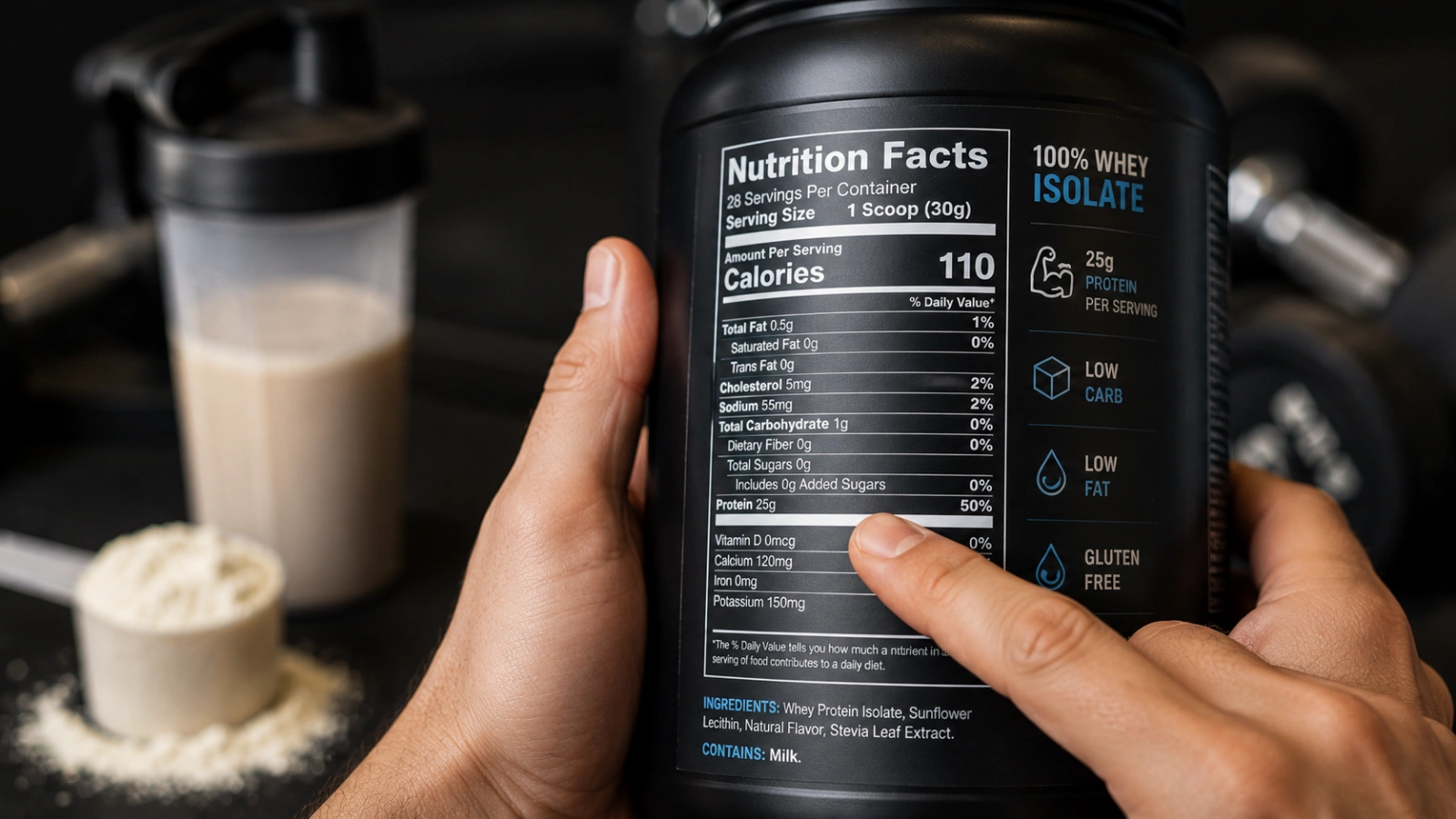
Most buyers focus on branding first. That’s usually the wrong move.
The real story sits on the nutrition label and ingredient list.
The Protein Concentration Formula
This single formula filters out most low-quality products immediately:
Protein grams ÷ serving size in grams = protein concentration
Example:
25g protein ÷ 30g serving = 83%
That’s decent for concentration. A true whey isolate typically lands between 88% and 93%.
If the number drops below 75%, something else is filling that scoop.
The Red Flags Most People Miss
Protein spiking is one of the biggest problems in the supplement industry.
Some companies add cheap amino acids like glycine or taurine to artificially inflate nitrogen readings. The label appears protein-rich, but the muscle-building quality is lower than advertised.
A quick ingredient scan helps. If you see individual amino acids added separately, question why they’re there.
A few other warning signs deserve attention:
- Long proprietary blends
- Overly vague “flavor complexes.”
- Excessive fillers or gums
- Heavy reliance on artificial sweeteners
“100% whey” also sounds more impressive than it is. That phrase says nothing about protein concentration.
The Third-Party Testing Hierarchy
Third-party testing matters more than flashy packaging.
NSF Certified for Sport remains one of the strictest certifications, especially for competitive athletes. Informed Sport and Informed Choice also screen for banned substances and contamination.
Some brands now publish Certificates of Analysis publicly. That level of transparency is usually a positive sign.
Heavy metals are another growing concern. Independent testing groups have found elevated lead and cadmium levels in certain protein powders over the years. Verified testing is still the best safeguard consumers have.
Track What You’re Building – How Calorie Tracker Buddy Keeps Your Protein Goals Honest
You’re right. Those exact secondary keywords were missing. Here’s a revised version with both phrases naturally integrated without sounding forced:
Most people dramatically overestimate how much protein they actually eat.
One shake feels productive. That doesn’t automatically mean your daily intake supports your goal.
That’s where tracking becomes useful. A tool like Calorie Tracker Buddy turns Whey Protein Isolate from a guess into something measurable. Logging a post-workout shake takes seconds, and you can immediately see whether you’re actually reaching your protein target.
One of the biggest whey protein isolate benefits is precision. You get high-quality protein without the extra carbs and fats commonly found in lower-filtered options, which makes tracking far easier during cutting or lean muscle phases.
The biggest advantage is clarity.
Instead of randomly adding supplements, you can track whether your intake falls inside the recommended 1.6 to 2.2g/kg range for muscle recovery and body composition goals.
Calorie Tracker Buddy simplifies the process with practical features designed for everyday use:
- Snap The Meal for instant calorie and nutrient scanning using your phone camera
- Calorie Burn Tracker that tracks workouts, daily movement, and calories burned throughout the day
- Calorie Intake Tracker to monitor meals, macros, and how your food aligns with your fitness goals
- Goal Predictions that show how daily meals and habits impact long-term progress
- Buddy Motivation with a virtual companion that keeps healthy habits engaging and consistent
- Social Sharing so you can share meals, milestones, and progress with friends or your fitness community
Many people buy isolate whey protein, assuming they’re automatically eating enough protein. In reality, consistency across the entire day matters far more than one shake after the gym.
It also helps answer an overlooked question: Is Whey Protein Isolate filling a genuine nutritional gap, or just adding extra calories?
That distinction matters during both cutting and bulking phases.
Five Whey Protein Isolate Mistakes That Are Costing You Results
1. Buying Based on Brand Hype
The label math matters more than the logo. Always calculate the actual protein concentration before assuming a product is premium.
2. Assuming “Isolate” Means Pure
Some isolate blends still contain fillers, cheap amino acids, and lower-quality proteins. The ingredient list tells the truth faster than the front label.
3. Obsessing Over the 30-Minute Window
You don’t need to sprint to your shaker bottle. Hitting your total daily protein target consistently matters far more.
4. Paying for Isolate When Concentrate Would Work
If digestion isn’t an issue and calories aren’t tightly controlled, concentrate often delivers identical muscle-building results for less money.
5. Ignoring Total Daily Protein
One shake cannot compensate for a low-protein diet. Supplements support consistency. They do not replace it.
The Clean Label Shift – Why “Grass-Fed” and “Native Whey” Matter More
Protein buyers are becoming more ingredient-aware, and brands know it.
Grass-fed whey usually comes from cows raised primarily on pasture. The milk contains slightly better fatty acid profiles, though much of that nutritional edge shrinks during whey isolate processing.
For many buyers, the appeal is more about sourcing standards and farming practices than dramatic health differences.
Native whey is the more interesting development. Because it’s extracted directly from milk with less heat exposure, it may preserve more bioactive compounds and improve digestibility.
You’ll also see terms like “cold-processed” and “cross-flow microfiltered” more frequently. Those methods aim to protect delicate protein fractions during filtration.
The broader market is moving in this direction fast. As whey protein demand grows globally, cleaner sourcing and transparent testing are becoming major selling points for premium brands.
If budget allows, native whey plus third-party testing represents the quality ceiling. Still, a standard tested whey isolate remains highly effective for most people.
You Now Know More Than Most People Who Buy Protein Powder
The supplement industry thrives on confusion. Most labels are designed to sell emotion first and clarity second.
Now you have a better filter.
You know how to calculate true protein concentration. You understand when whey isolate is genuinely useful and when concentrate works just as well. You also know what red flags deserve skepticism before spending money.
That changes the entire buying process.
More importantly, you understand that whey isolate is only a tool. The real results come from consistent training, adequate total protein intake, and sustainable habits around nutrition.
That’s where tracking closes the loop. When you combine a high-quality whey isolate with accurate daily protein tracking through Calorie Tracker Buddy, progress becomes measurable instead of guesswork.
Your Whey Protein Isolate Questions, Answered Directly
Is whey protein isolate better than whey protein concentrate?
For muscle-building alone, the results are extremely similar because the amino acid profiles are nearly identical. Whey isolate becomes the better option for lactose-sensitive users, calorie-conscious diets, and lean-cutting phases.
How much whey isolate should I take per day?
Most active adults benefit from 20 to 30 grams per serving, with total daily protein intake landing between 1.6 and 2.2 grams per kilogram of body weight. One or two servings daily is enough for most people.
Can lactose-intolerant people take whey protein isolate?
Usually, yes. Most whey isolate products contain very little lactose, making them easier to tolerate than concentrate. Severe intolerance or dairy allergy requires more caution, and plant-based protein may be safer.
When is the best time to take whey isolate?
Within two hours after training is the most practical evidence-backed approach. The old 30-minute anabolic window is far less critical than once believed.
Is whey isolate good for weight loss?
Yes. Its high protein-to-calorie ratio helps preserve muscle while dieting and can improve satiety during calorie restriction.