


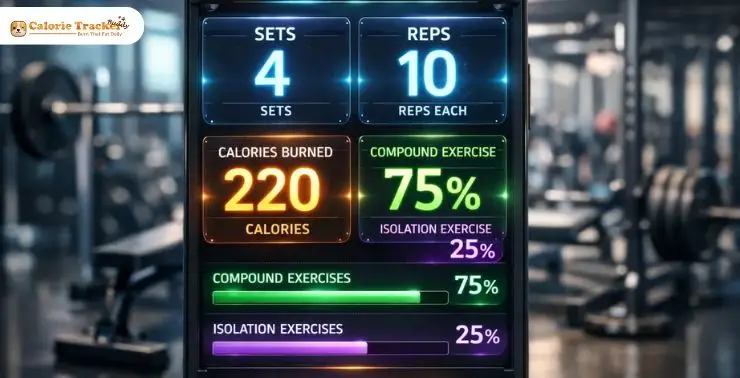
Understanding the difference between compound vs isolation exercise is crucial for anyone looking to achieve their fitness goals efficiently. While both types of exercises are essential, each serves a unique purpose in building strength, shaping muscles, and improving overall fitness.
Many beginners often wonder which one to prioritize: should you focus on compound movements that work multiple muscles at once or isolation exercises that target a single muscle group? The truth is, the best results come from knowing how to combine both strategically.
This blog will explore “what is compound exercise and what is isolation exercise,” their benefits, differences, and how to effectively integrate them into your workout routine. We’ll also discuss how tools like Calorie Tracker Buddy can help you track exercises, sets, and calories burned, making your fitness journey smarter and more measurable.
Listen to the podcast.
What Is Compound Exercise?
A compound exercise is a movement that engages multiple muscle groups and joints at the same time. These exercises are the backbone of most strength training programs because they allow you to lift heavier, burn more calories, and improve overall functional fitness.
How Compound Exercises Work
When performing a compound movement, your body recruits several muscles to work together. For example:
- Squats target your quadriceps, hamstrings, glutes, and lower back.
- Bench press works the chest, shoulders, and triceps simultaneously.
- Deadlifts engage the back, glutes, hamstrings, and forearms.
This multi-muscle engagement not only increases strength but also improves coordination and balance.
Benefits of Compound Exercises
- Builds overall strength faster – multiple muscles working together allow for heavier lifts.
- Burns more calories – larger muscle groups and higher energy expenditure.
- Improves functional fitness – helps in everyday movements like lifting, pushing, and pulling.
- Time-efficient – you get a full-body workout in less time.
In short, compound exercises are ideal for building a strong foundation, improving athletic performance, and maximizing calorie burn.
What Is Isolation Exercise?
An isolation exercise focuses on a single muscle group and usually involves movement around just one joint. Unlike compound exercises that work multiple muscles at once, isolation movements target specific muscles to enhance definition, strength, or address weaknesses.
How Isolation Exercises Work
When performing an isolation exercise, only the intended muscle is activated while supporting muscles remain relatively inactive. For example:
- Bicep curls target only the biceps.
- Leg extensions isolate the quadriceps.
- Tricep pushdowns focus solely on the triceps.
This precise targeting allows for focused muscle development, correcting imbalances, and improving the aesthetic appearance of specific body parts.
Benefits of Isolation Exercises
- Target weak points – ideal for strengthening lagging muscles.
- Muscle shaping and definition – helps improve overall appearance.
- Injury prevention and rehabilitation – strengthens specific muscles without overloading others.
- Complements compound exercises – ensures balanced muscle development.
Isolation exercises are particularly useful for people who want to refine muscle definition, correct imbalances, or focus on specific strength goals.
Isolation vs Compound Exercises: Key Differences
Understanding the difference between isolation vs compound exercises is essential for building an effective workout plan. While both have unique benefits, they vary in muscle engagement, intensity, and purpose.
1. Muscle Groups Worked
- Compound Exercises: Engage multiple muscle groups and joints simultaneously (e.g., squats, bench press, deadlifts).
- Isolation Exercises: Target a single muscle group and joint (e.g., bicep curls, tricep extensions).
2. Intensity and Calorie Burn
- Compound: Burn more calories because larger muscle groups are used, and multiple muscles work together.
- Isolation: Lower calorie burn, but effective for sculpting and targeting specific muscles.
3. Recovery Time
- Compound: May require longer recovery due to the higher overall stress on multiple muscles.
- Isolation: Shorter recovery as only one muscle group is heavily worked.
4. Risk of Injury
- Compound: Slightly higher risk if the form is incorrect due to multiple joints involved.
- Isolation: Lower risk but still requires proper technique.
5. Purpose and Goals
- Compound Exercises: Best for building strength, functional fitness, and full-body development.
- Isolation Exercises: Ideal for muscle shaping, definition, correcting imbalances, or rehab purposes.
Knowing these differences allows you to strategically plan workouts. By combining compound movement vs isolation approaches, you can maximize both strength and aesthetics.
Benefits of Compound Exercises
Compound exercises offer several advantages that make them a cornerstone of most strength training programs. By engaging multiple muscle groups and joints simultaneously, they provide both efficiency and effectiveness in workouts.
1. Builds Strength and Muscle Mass
- Lifting heavier weights across multiple muscle groups promotes overall strength.
- Encourages hypertrophy in multiple areas at once, which accelerates muscle growth.
2. Burns More Calories
- Using large muscle groups increases energy expenditure.
- Ideal for weight loss or maintaining a calorie deficit alongside a structured diet.
3. Improves Functional Fitness
- Mimics real-life movements like lifting, pushing, or pulling.
- Enhances coordination, balance, and mobility, reducing the risk of injuries in daily activities.
4. Time-Efficient
- One compound exercise works several muscles, reducing the need for multiple isolated movements.
- Perfect for those who want a full-body workout in less time.
5. Supports Hormonal Benefits
- Heavy compound lifts stimulate testosterone and growth hormone release.
- Helps in building lean muscle mass and improving metabolic health.
Including compound exercises like squats, deadlifts, and bench presses in your routine ensures a solid foundation of strength, better calorie burn, and functional fitness benefits.
Benefits of Isolation Exercises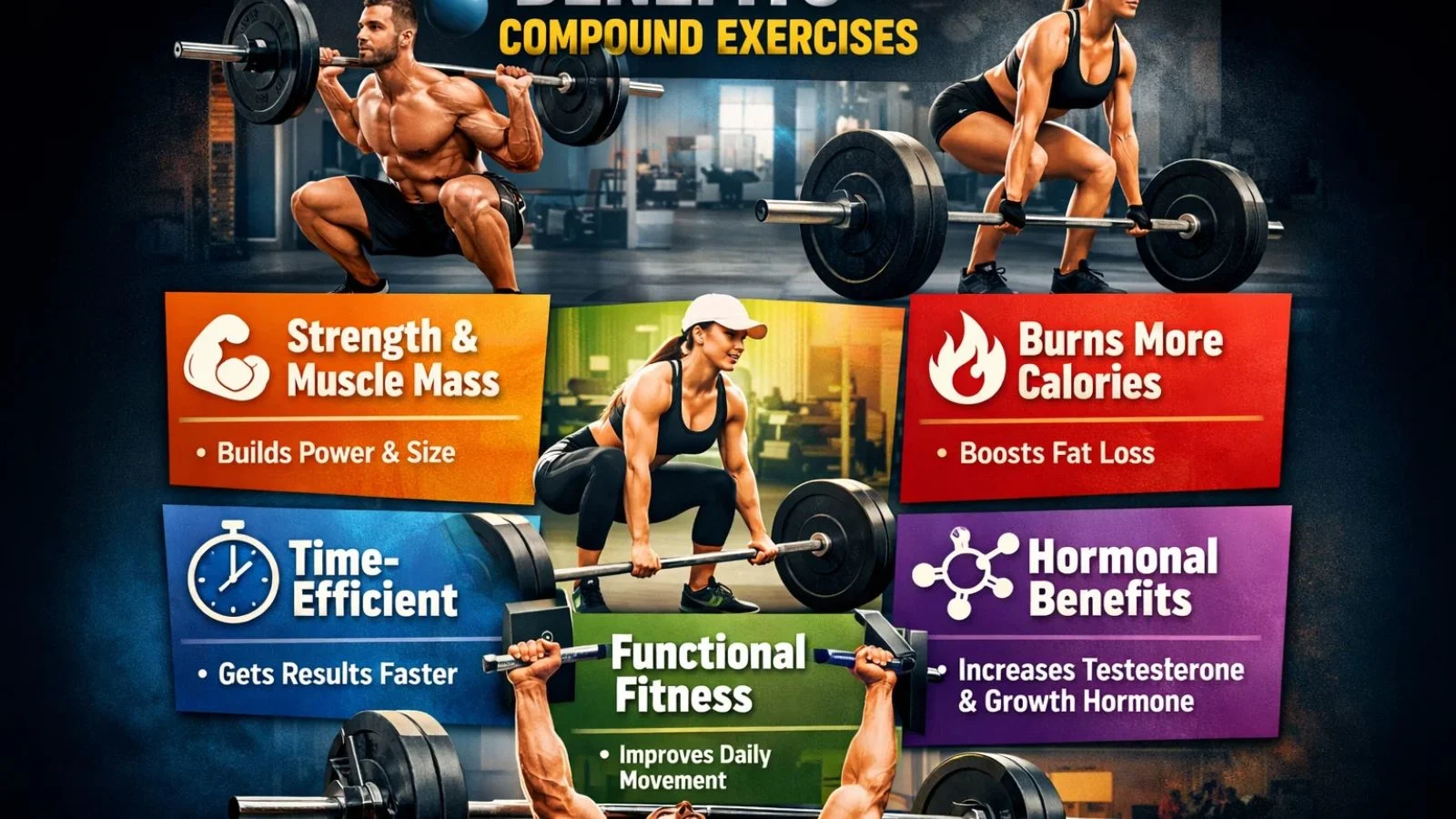
While compound exercises are great for overall strength, isolation exercises play a vital role in refining muscles, correcting imbalances, and targeting specific areas.
1. Target Weak Points
- Isolation exercises allow you to focus on underdeveloped muscles.
- For example, if your biceps are lagging, bicep curls can help bring them up to par with other muscles.
2. Muscle Shaping and Definition
- Helps improve muscle symmetry and aesthetics.
- Ideal for bodybuilders or anyone aiming for sculpted, defined muscles.
3. Injury Prevention and Rehab
- Strengthens specific muscles without overloading others.
- Useful for post-injury recovery or maintaining joint stability.
4. Complements Compound Exercises
- Isolation movements help address weak points discovered during compound lifts.
- Ensures balanced development and prevents muscular imbalances that can affect performance.
By including isolation exercises in your routine, you can fine-tune muscle development, improve symmetry, and target specific goals that compound exercises alone may not fully address.
How to Combine Compound and Isolation Exercises
For optimal results, a well-rounded workout should include both compound and isolation exercises. Combining the two allows you to build strength, improve functional fitness, and target specific muscles for definition.
Tips for Combining Exercises:
- Start with Compound Movements
- Begin your workout with multi-joint exercises like squats, deadlifts, or bench presses.
- These exercises require the most energy and recruit multiple muscles.
- Follow with Isolation Exercises
- After compound lifts, add isolation exercises to target specific muscles.
- Examples: bicep curls, tricep extensions, or leg extensions.
- Balance Push and Pull Movements
- Ensure your routine includes both pushing (bench press and shoulder press) and pulling exercises (rows and lat pull-downs).
- Use isolation exercises to strengthen smaller stabilizing muscles.
- Track Sets and Reps
- Typically, 3–4 sets of 8–12 reps for hypertrophy work well.
- Adjust weights and intensity based on your fitness goals.
- Use Calorie Tracker Buddy
- Log exercises, sets, and calories burned for each session.
- Helps monitor progress, adjust routines, and stay consistent with your training plan.
Combining compound and isolation exercises in this manner ensures you get the best of both worlds: strength, muscle growth, and targeted definition.
Common Mistakes in Using Compound and Isolation Exercises
Even with the best intentions, people often make mistakes when incorporating compound and isolation exercises into their workouts. Avoiding these errors can help you achieve better results and reduce the risk of injury.
1. Overemphasizing One Type
- Focusing only on compound exercises may lead to underdeveloped muscles or poor definition.
- Relying solely on isolation exercises may limit overall strength gains.
- A balanced approach ensures functional strength and targeted muscle development.
2. Poor Form
- Incorrect technique, especially in compound lifts, can lead to injuries.
- Even isolation exercises require proper form to target the right muscle.
3. Overtraining
- Performing too many exercises without proper rest can cause fatigue and reduce performance.
- Allow adequate recovery time between workouts for optimal growth.
4. Ignoring Weak Points
- Skipping isolation exercises can leave lagging muscles underdeveloped, affecting overall performance.
- Identify weak areas and include targeted isolation movements.
5. Neglecting Progress Tracking
- Without monitoring sets, reps, and calories burned, it’s hard to measure progress.
- Tools like Calorie Tracker Buddy make it easier to log workouts and stay consistent.
By avoiding these common mistakes, you can safely and effectively combine compound and isolation exercises for maximum results.
Tracking Progress Effectively
Tracking your progress is a key component of any fitness routine. Whether you focus on compound or isolation exercises, monitoring your performance ensures you stay on track and continue to see results.
1. Keep a Workout Log
- Record exercises, sets, reps, and weights lifted.
- Helps you identify trends, plateaus, and areas needing improvement.
2. Track Strength and Endurance Gains
- Note improvements in how much weight you lift or the number of repetitions you complete.
- Gradually increase intensity to achieve progressive overload.
3. Monitor Muscle Development
- Take measurements or photos to observe physical changes over time.
- Helps ensure balanced growth and identifies muscles that may need more focus.
4. Listen to Your Body
- Track energy levels, recovery times, and soreness.
- Adjust workouts accordingly to prevent overtraining or injury.
5. Set Short-Term and Long-Term Goals
- Define clear objectives for strength, muscle growth, or endurance.
- Regular tracking allows you to celebrate small milestones while staying motivated.
By consistently tracking your workouts, you can make data-driven adjustments, improve efficiency, and maximize the benefits of both compound and isolation exercises.
How Calorie Tracker Buddy Can Help Your Fitness Journey
For anyone serious about tracking progress and achieving fitness goals, a reliable tool can make all the difference. Calorie Tracker Buddy is designed to simplify monitoring your workouts, calories, and overall fitness journey.
Key Features:
- Calorie Tracking
- Monitor calories burned during workouts.
- User-Friendly Interface
- Simple, intuitive design ensures logging workouts and meals is fast and hassle-free.
By using Calorie Tracker Buddy, you can combine structured workouts with data-driven tracking. This ensures that both compound and isolation exercises are utilized effectively, helping you stay motivated, consistent, and on track toward your fitness goals.
Also Read,
Conclusion
Both compound and isolation exercises play important roles in a balanced fitness routine. Compound exercises build overall strength, improve functional fitness, and burn more calories, while isolation exercises help target specific muscles, correct imbalances, and refine definition.
The key to maximizing results is combining both types strategically based on your goals, whether it’s strength, muscle gain, fat loss, or aesthetics. Proper tracking, progressive overload, and consistency are essential to see measurable progress over time.
By understanding the benefits and differences of compound vs isolation exercise, you can create a workout plan that is efficient, effective, and tailored to your personal fitness journey.
FAQ’s
- What is the main difference between compound and isolation exercises?
- Compound exercises work multiple muscle groups at once, while isolation exercises focus on a single muscle.
- Can beginners start with isolation exercises?
- Beginners should start with basic compound exercises to build overall strength and then gradually incorporate isolation exercises.
- How many compound exercises should I include in a weekly routine?
- Typically, 3–5 compound exercises per session, depending on your goals and fitness level, work well.