


When people first hear about Pilates exercises, they often assume it is simply a gentle stretching routine. That idea usually changes after the first real session.
The movements may look simple from the outside. Once you begin practicing them correctly, you quickly realize how much control and awareness they require.
Small adjustments in posture can activate muscles most people rarely notice in daily life. Even subtle movements challenge stability, coordination, and breathing.
After a few sessions, many people start noticing changes. Posture improves, the core feels stronger, and everyday movements feel more balanced.
What makes this training style unique is its focus on movement quality rather than intensity. Instead of pushing the body toward exhaustion, Pilates emphasizes control, alignment, and precision.
Over time, that approach builds flexibility and strength in a way that feels sustainable rather than overwhelming. Understanding a few foundational Pilates exercises can make a meaningful difference for anyone curious about starting.
Read Aloud!
What Pilates Exercises Actually Mean
If someone asks about the Pilates exercises’ meaning, the explanation is fairly straightforward.
Pilates is a system of controlled movements designed to improve strength, flexibility, posture, and coordination. The exercises focus heavily on core stability while encouraging the body to move as one integrated unit.
In this method, the core refers to more than the abdominal muscles. It includes deeper muscles that support the spine, pelvis, and hips.
Joseph Pilates created the system in the early twentieth century. His goal was not simply to build strength but to develop a body that moved efficiently and with control.
Breathing, posture, and alignment were central to his philosophy. Those principles still guide modern Pilates training today.
Why Many People Choose Pilates
Fitness trends change quickly, yet Pilates has remained relevant for decades.
One reason is the wide range of Pilates exercise benefits people experience when they practice consistently. Unlike high-intensity workouts that focus only on burning calories, Pilates focuses on improving how the body moves.
Over time, several improvements become noticeable.
Stronger Core Stability
Pilates emphasizes muscles that support the spine and pelvis. Strengthening these areas improves balance and overall stability during daily activities.
Improved Posture
Many exercises encourage proper alignment of the spine and shoulders. This helps counteract the effects of long hours spent sitting.
Increased Flexibility
Unlike traditional stretching routines, Pilates combines flexibility training with strength development.
Reduced Risk of Injury
Balanced muscle development helps stabilize joints and improve coordination.
Better Body Awareness
Pilates encourages greater awareness of how your body moves and how your breathing supports each movement.
These benefits explain why Pilates is widely used in both fitness programs and physical rehabilitation.
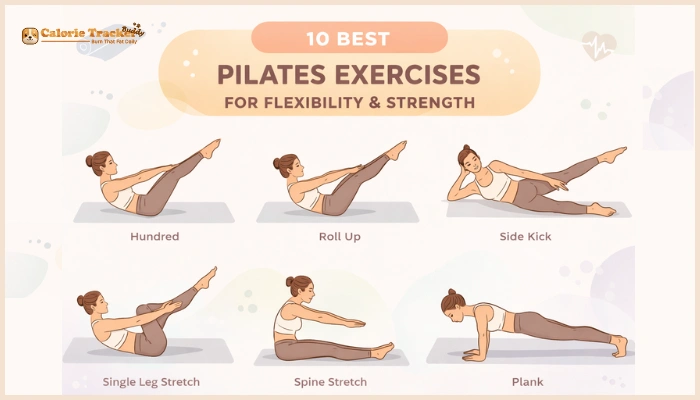
10 Best Pilates Exercises for Flexibility and Strength
A well-designed routine does not require dozens of movements. In fact, many instructors rely on a small group of highly effective Pilates exercises that consistently deliver results.
Below are ten foundational movements that improve both flexibility and strength.
1. The Hundred
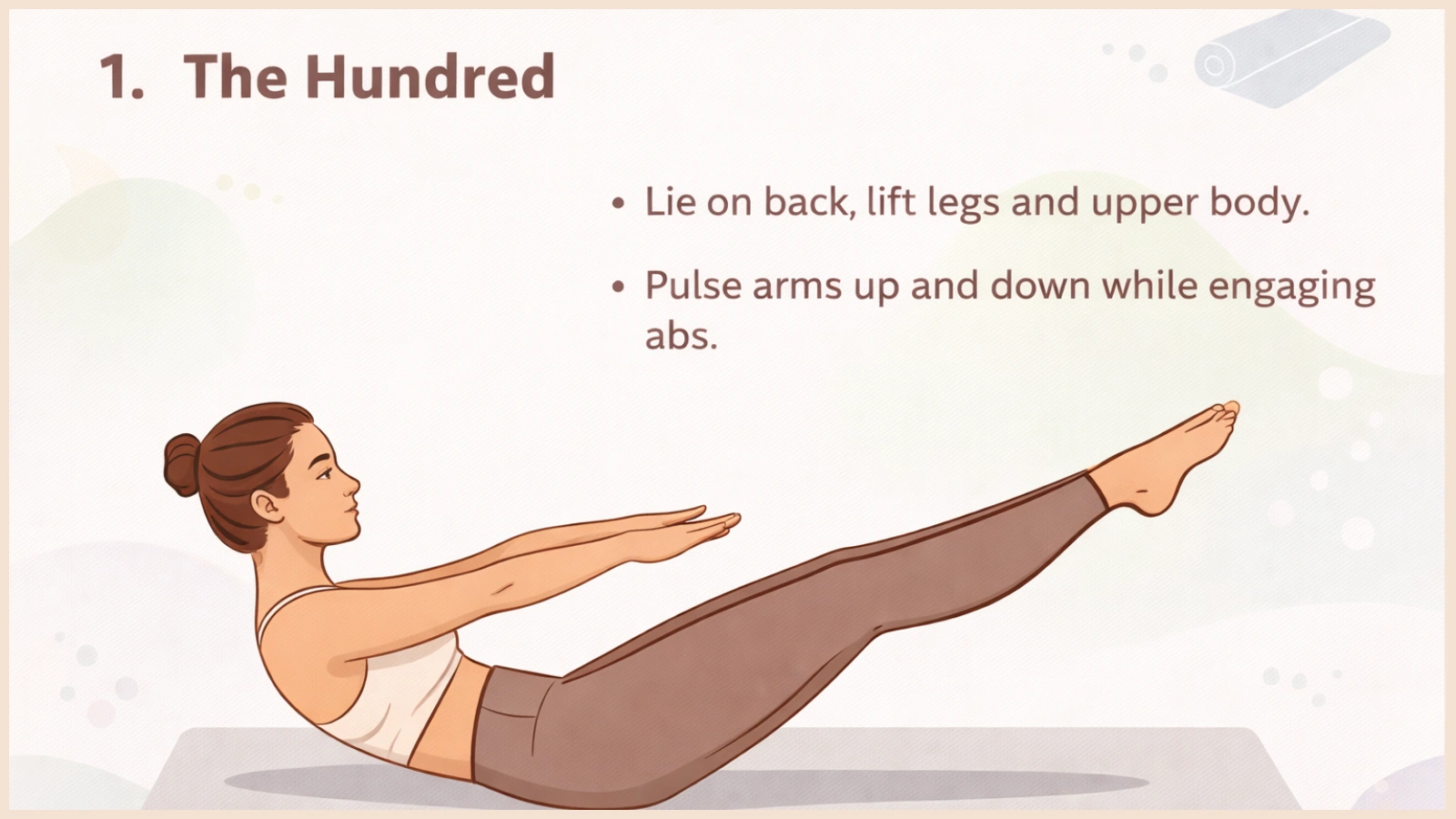
The Hundred often begins a Pilates session because it activates the core and establishes a steady breathing rhythm.
Start by lying on your back with your legs lifted into a tabletop position. Lift your head and shoulders slightly while extending your arms beside your body.
Then pump your arms up and down in small, controlled motions while breathing in for five counts and out for five.
Although the movement looks simple, maintaining control quickly engages the abdominal muscles.
2. Roll Up
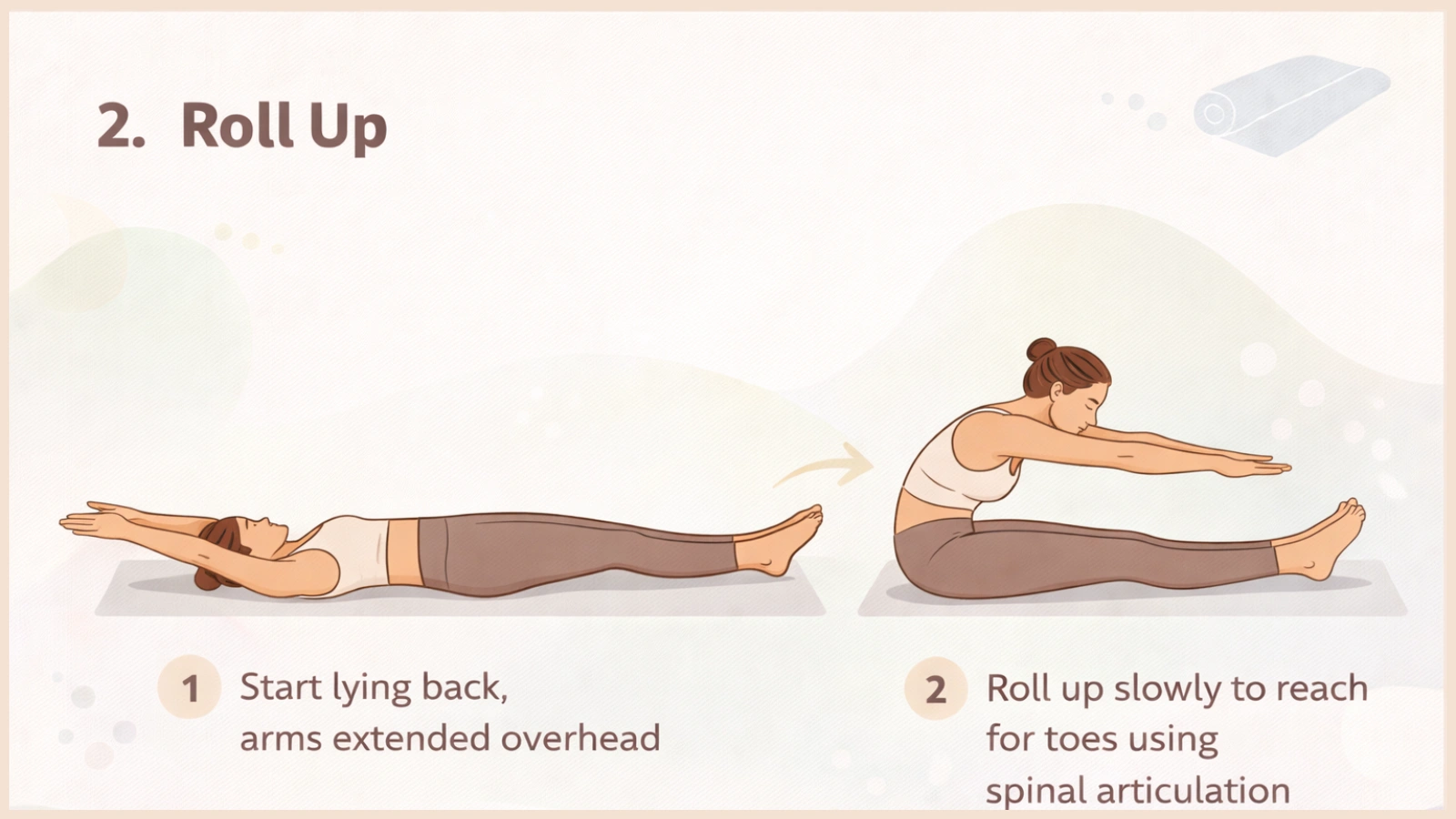
The Roll Up strengthens the core while improving spinal flexibility.
Lie on your back and extend your arms comfortably overhead to start the movement. Slowly lift your arms and torso, rolling up one section of the spine at a time until you reach a seated position.
The focus should remain on smooth control rather than speed.
3. Single Leg Circles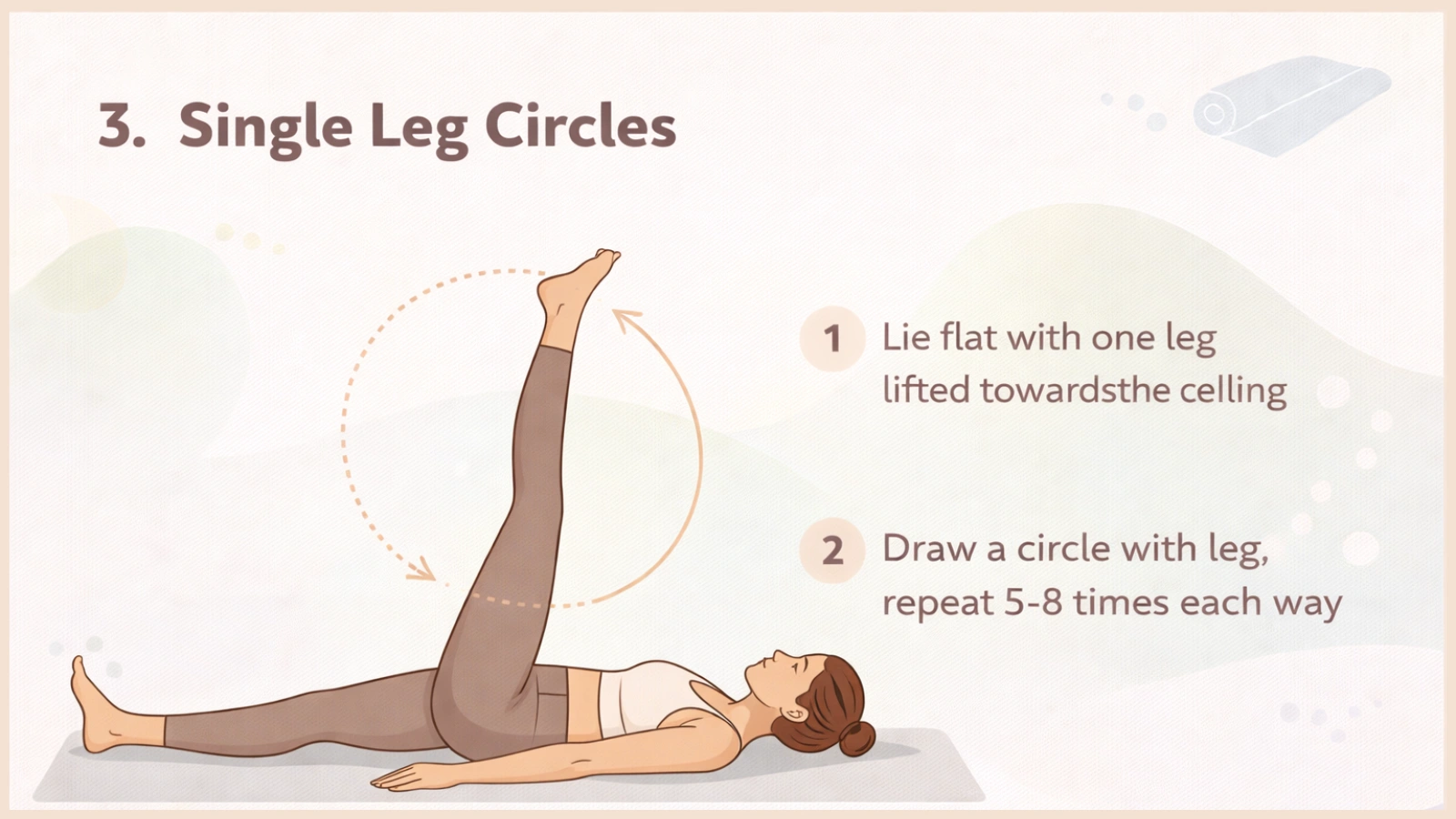
This exercise improves hip mobility while strengthening the core.
Lie on your back with one leg extended along the floor and the other raised toward the ceiling. Slowly draw circles in the air with the lifted leg.
Try to keep the hips stable throughout the movement.
4. Rolling Like a Ball
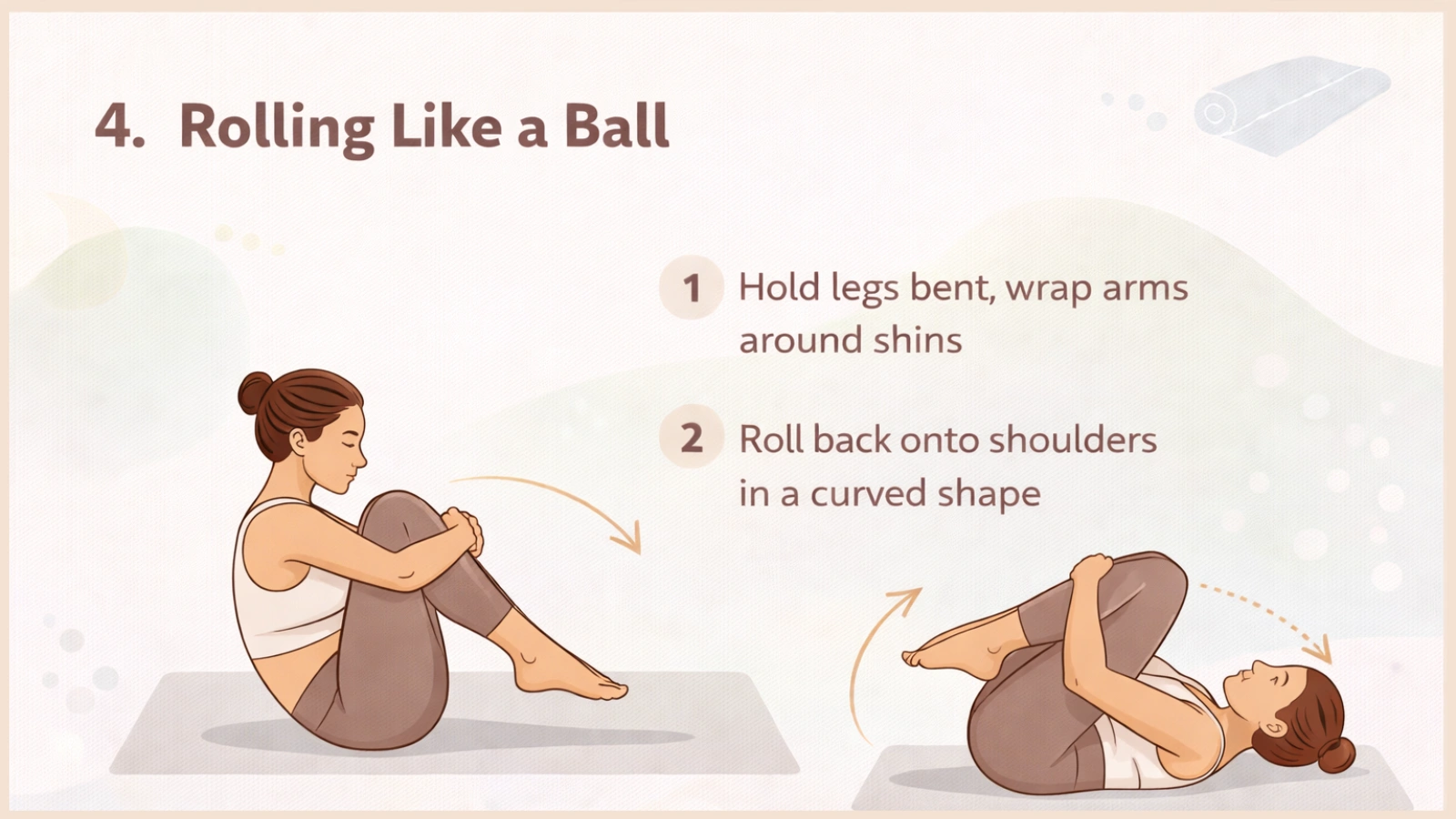
Rolling Like a Ball adds a playful element to the workout while strengthening the abdominal muscles.
Sit with your knees bent and feet slightly lifted from the floor. Hold your legs and round your back.
Roll backward onto your shoulders and then return to the starting position without letting your feet touch the floor.
5. Single Leg Stretch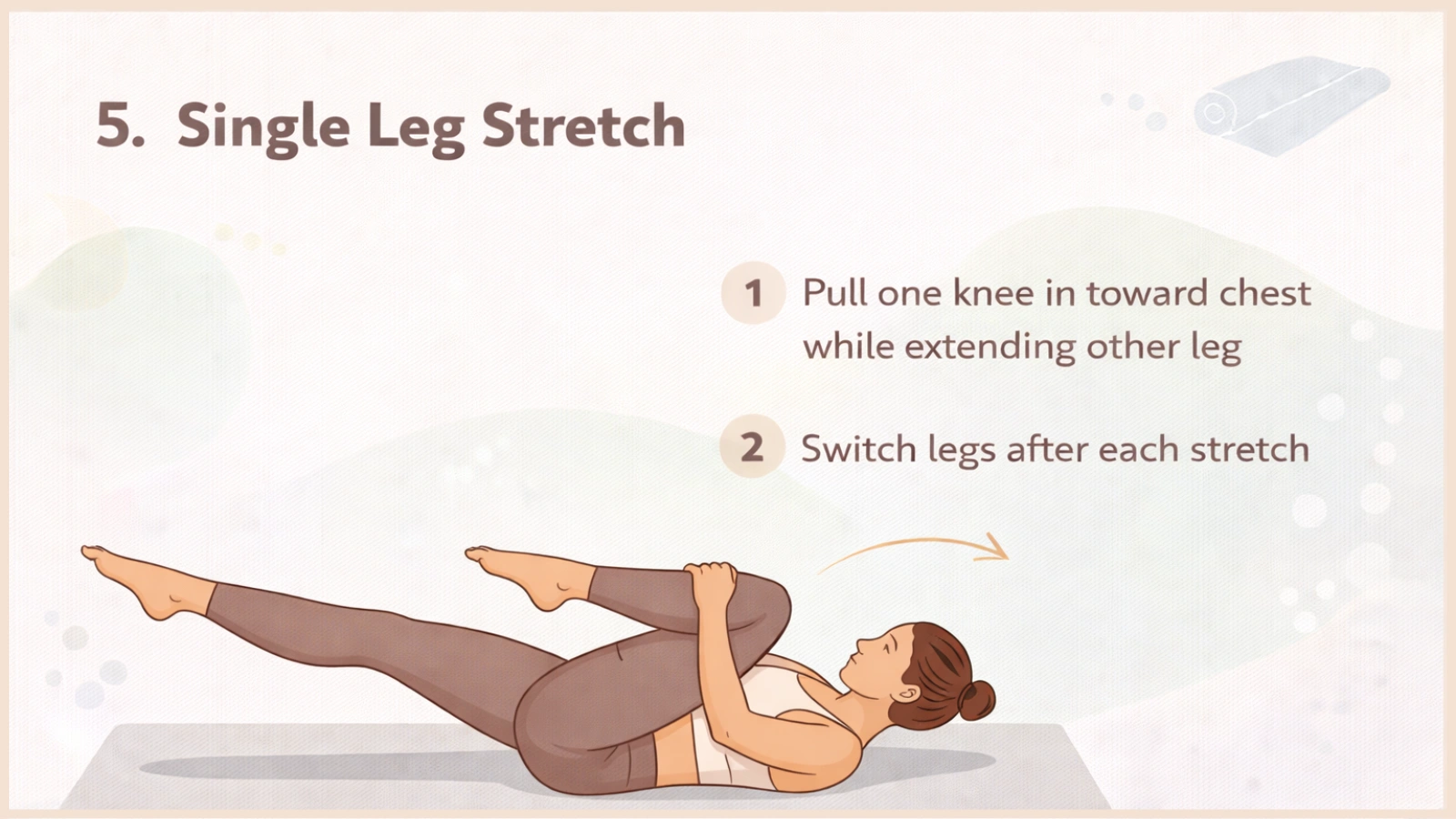
This movement challenges both coordination and core control.
Lie on your back and lift your head and shoulders off the mat. Pull one knee toward your chest while extending the other leg outward.
Switch legs smoothly while maintaining steady breathing.
6. Double Leg Stretch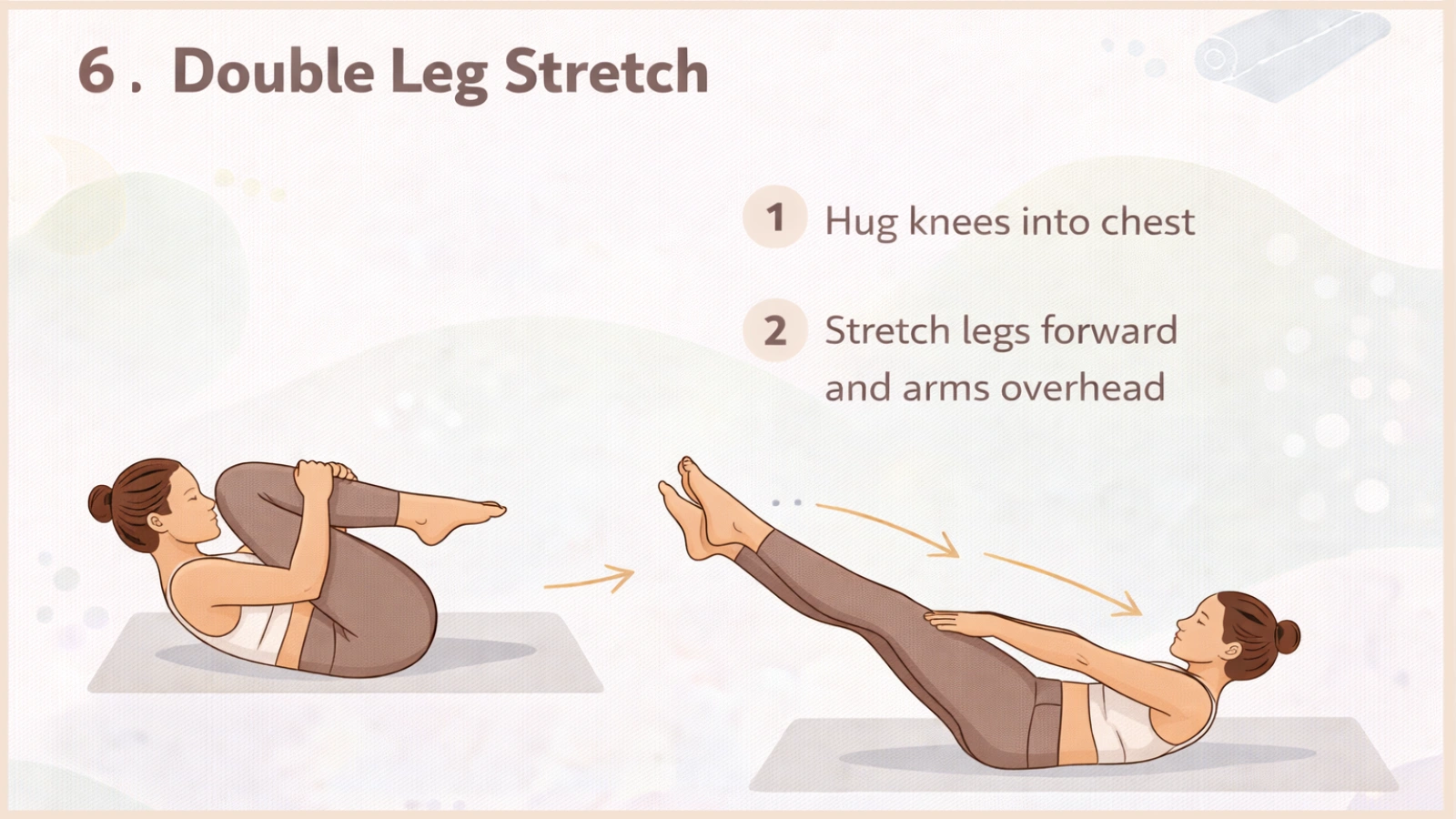
The Double Leg Stretch increases the difficulty by engaging the entire core.
Start with both knees drawn toward your chest. Extend your arms overhead while stretching the legs outward at the same time.
Then circle the arms around and return to the starting position.
7. Spine Stretch Forward
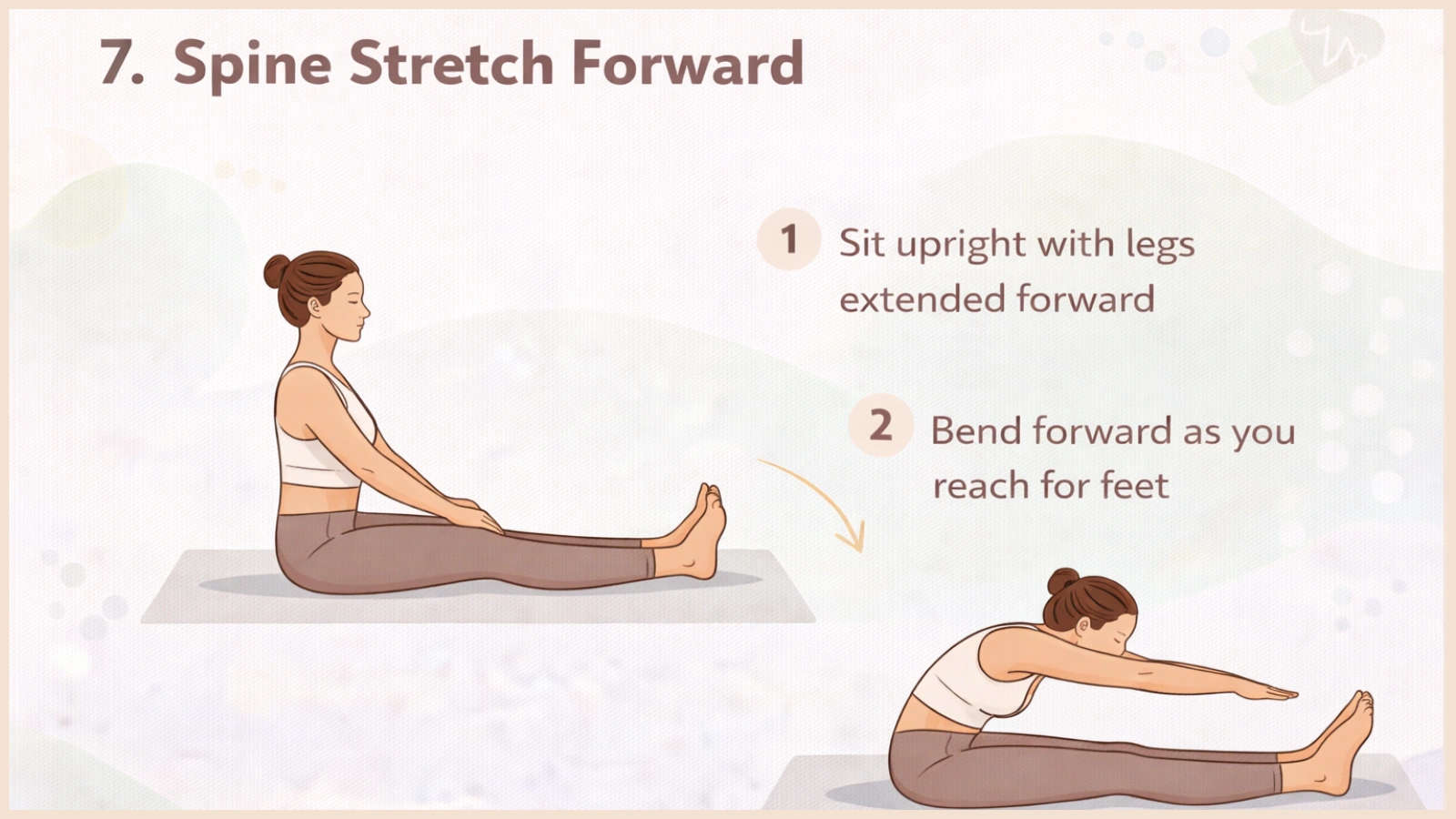
Flexibility is an essential part of Pilates training, and this movement highlights that clearly.
Sit upright with your legs extended slightly wider than hip width.
Reach forward while gently rounding your spine, focusing on lengthening rather than forcing the stretch.
8. Swan 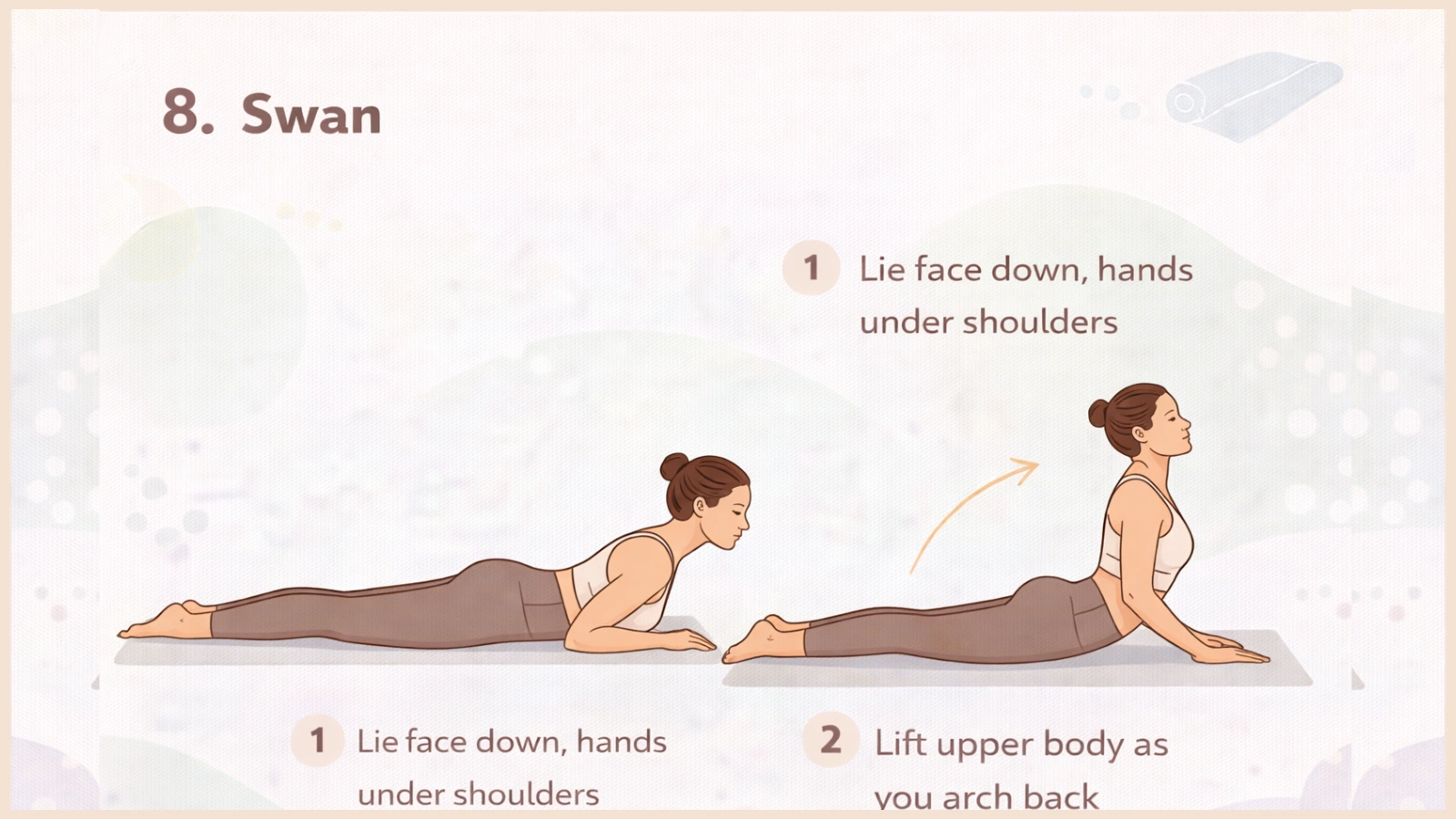
The Swan strengthens the muscles along the back while opening the chest.
Lie face down with your hands beneath your shoulders. Slowly lift your upper body by extending the spine while keeping the hips on the mat.
This movement can be especially helpful for people who spend long hours sitting.
9. Sidekick Series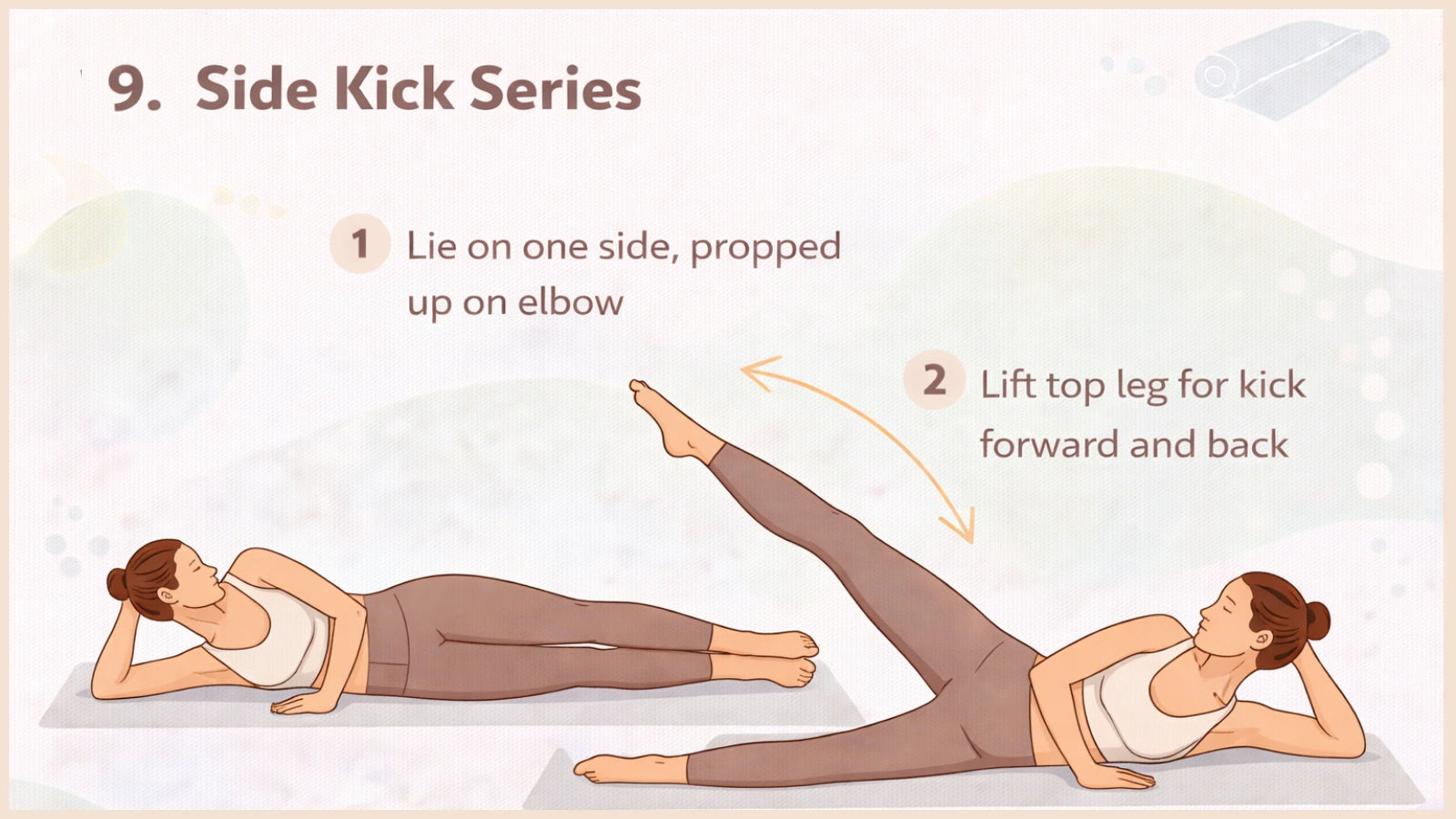
The Side Kick Series strengthens the hips and outer thighs.
Lie on one side with your legs extended. Lift the top leg slightly and move it forward and backward in a controlled motion.
Keeping the torso stable helps activate the core.
10. Plank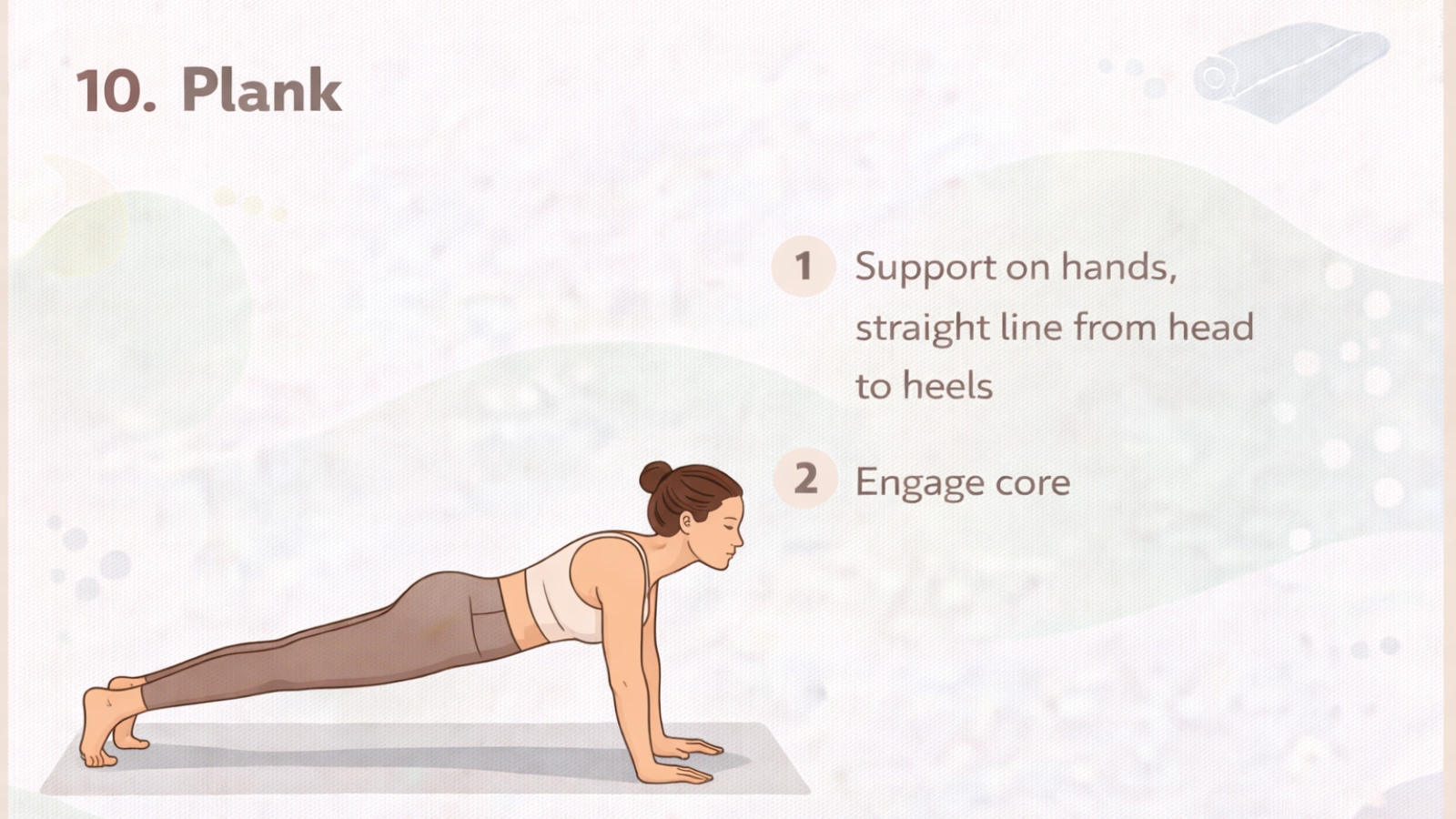
Plank movements are widely used in fitness routines, but they also fit naturally within Pilates exercises.
Position your body in a straight line supported by your hands and toes. Hold the position while engaging the abdominal muscles and stabilizing the shoulders.
Even short holds can strengthen the entire body.
Doing Pilates Exercises at Home
One reason Pilates continues to grow in popularity is how accessible it is. Many Pilates exercises at home require nothing more than a comfortable mat and a small amount of space.
A simple routine may include five or six movements performed slowly with full attention to technique.
For beginners, shorter sessions usually work best. Fifteen to twenty minutes can be enough when the movements are performed with proper control.
Consistency is usually more important than how long each session lasts. Practicing a few times each week tends to produce better results than occasional long workouts.
Pilates Exercises for Beginners
Starting a new routine can feel intimidating, especially when the movements look unfamiliar. Fortunately, Pilates exercises for beginners are designed to build strength gradually.
A few simple habits can make the process easier. Move slowly and focus on maintaining control rather than rushing through the movement.
Pay attention to breathing patterns, since breathing helps activate the core muscles.
Finally, maintain good posture throughout each movement. Small adjustments in alignment often make a noticeable difference.
With regular practice, the exercises begin to feel more natural, and the benefits become clearer.
Supporting Your Routine With Calorie Tracker Buddy

Building a consistent fitness routine takes more than just motivation. It requires structure, awareness, and the ability to stay accountable over time. One of the most effective ways to do this is by tracking both your workouts and your nutrition together, rather than focusing on just one.
Calorie Tracker Buddy simplifies this process by helping you stay on top of your daily nutrition. While regular exercise improves strength, endurance, and overall fitness, your results are heavily influenced by what you eat. Without proper calorie control, it becomes difficult to reach goals like weight loss, muscle gain, or even maintaining a healthy lifestyle.
Some features particularly helpful for Pilates practitioners include
Calorie tracking
The platform monitors daily calorie intake, helping users stay aligned with their fitness goals.
Meal documentation
Meals and snacks can be logged easily, making it simpler to understand how nutrition supports training.
Progress insights
Over time, the system highlights patterns in activity and wellness habits.
Wellness tracking
Fitness and nutrition data remain organized in a single dashboard.
Having a clear record of progress often helps people stay consistent over the long term.
Common Mistakes People Make
Although Pilates appears gentle, small mistakes can reduce its effectiveness.
One common issue is rushing through movements. Pilates works best when exercises are performed slowly and with control.
Another mistake involves ignoring breathing patterns. Breathing plays an important role in stabilizing the core.
Some beginners also focus only on the abdominal muscles. In reality, the entire body contributes to most Pilates movements.
Refining technique gradually leads to much better results.
Also Read!
Why Pilates Remains a Long-Term Fitness Choice
Many workouts feel exciting at first but become difficult to maintain over time. Pilates tends to evolve instead.
Beginners start by learning the basic movements. As experience grows, the focus shifts toward improving precision, control, and balance.
Because the system adapts to different fitness levels, it works well for a wide range of ages and abilities.
More importantly, Pilates focuses on improving how the body moves rather than simply pushing it harder. That approach supports long-term strength and mobility.
Frequently Asked Questions
Are Pilates exercises suitable for beginners?
Yes. Many routines start with simple movements that focus on posture, breathing, and core stability.
How often should someone practice Pilates?
Most instructors recommend two to four sessions per week to build strength and flexibility steadily.
Can Pilates help with weight management?
Pilates primarily improves strength and posture, but it can support weight management when combined with healthy eating and consistent activity.
Do Pilates workouts help with back pain?
Strengthening the muscles that support the spine can improve posture and reduce strain on the back.
How long does it take to see results?
Many people notice improved posture and flexibility within a few weeks, while deeper strength improvements typically develop over several months.