

A practical guide to strength, cardio, and consistency without the one-hour gym routine
If you have ever skipped a workout routine because you did not have a full hour to spare, you’ve been operating on outdated information. The “one-hour gym session or nothing” rule that shaped fitness culture for decades doesn’t hold up the way people once assumed it did.
By 2026, the fitness world will have largely moved on from that model. Hybrid routines that mix short bursts of home training, quick gym visits, and everyday movement have become the norm, not the exception. Micro-workouts, sessions as short as five to fifteen minutes, are now a legitimate training strategy rather than a compromise.
The research backs this up. The American Heart Association has found that shorter bouts of activity, accumulated throughout the day, can deliver comparable cardiovascular and metabolic benefits to one longer session, as long as total weekly volume and intensity are similar. The old idea that a workout only “counts” if it lasts 45 minutes or more simply isn’t supported by the evidence. What matters is consistency and effort, not the length of a single session.
That’s good news if your schedule looks nothing like a fitness influencer’s. Below are ten routines built for real constraints: tight schedules, small spaces, business travel, and the mental fatigue that makes a long gym session feel impossible some days.
In a hurry? Listen to the blog instead!
What Are Some Fast and Effective Workout Routines?
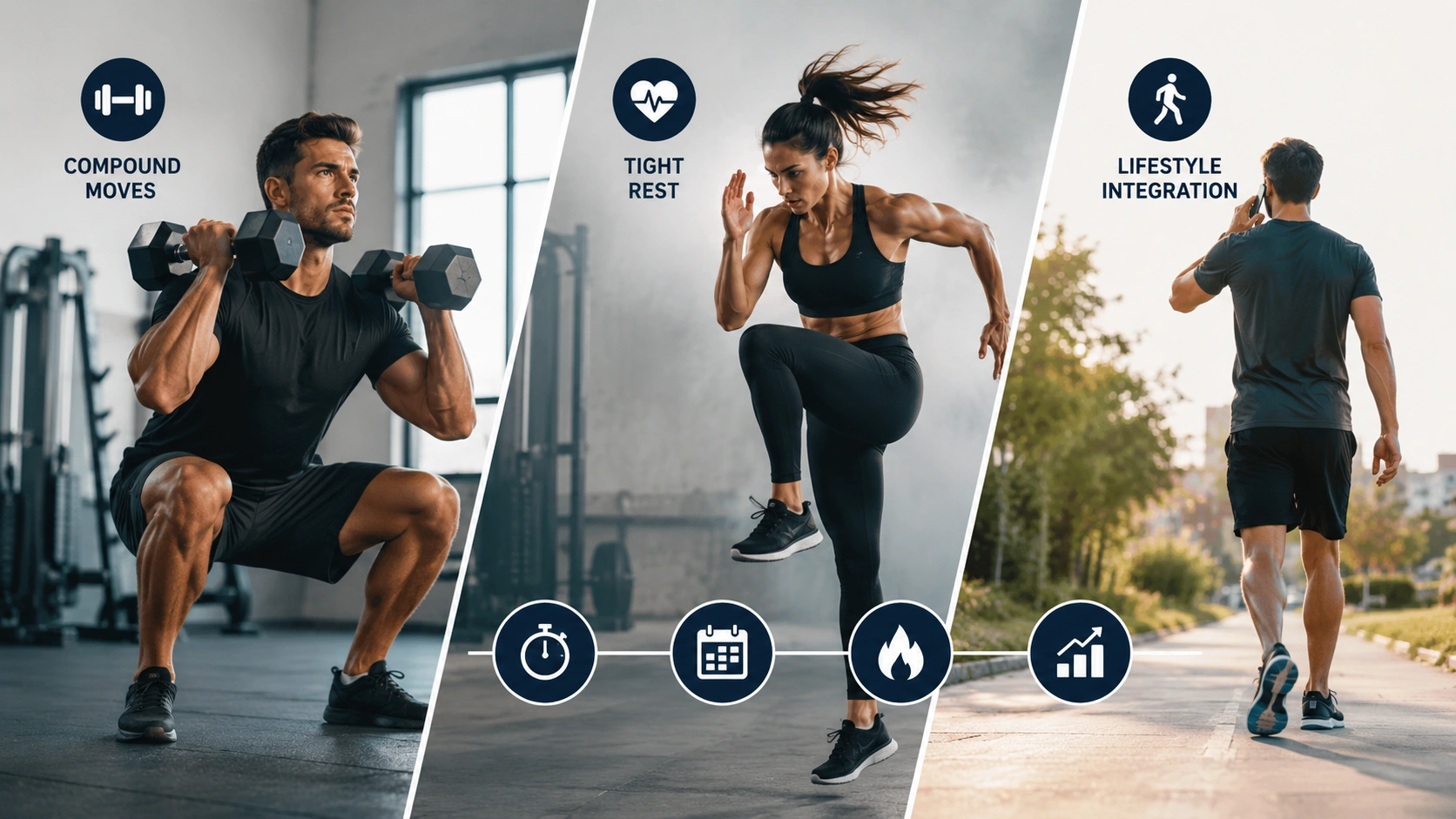
Short workouts work because of how they’re built, not because they cut corners. Three principles make them effective.
Compound movements. Exercises like squats, presses, and lunges engage multiple muscle groups at once, so you get more physiological benefit per minute than you would from isolating one muscle at a time.
Tight rest periods. Cutting rest between sets keeps your heart rate elevated, which turns a short strength session into a cardio session as a side effect.
Format discipline. Most efficient short workouts follow one of three structures:
HIIT (High-Intensity Interval Training): short bursts of maximum effort followed by brief recovery
EMOM (Every Minute on the Minute): a set amount of work completed at the start of each minute, with whatever time is left over serving as rest
Lifestyle integration (“netwalking” and similar): folding movement into tasks you’re already doing, like phone calls or errands
Once you understand these three formats, you can build your own routine in minutes. But here are ten ready-made ones to start with.
The Best Workout Routines at a Glance
| 🏋️ Routine | ⏱ Time Required | 🧰 Space / Equipment | 🎯 Primary Benefit |
|---|---|---|---|
| Desk-Break Flow | 10 min | None | Mobility and improved circulation. |
| Couch Circuit | 12 min | Couch / Chair | Beginner-friendly strength workout. |
| Morning Habit-Stack | 15 min | None | Builds consistency and boosts energy. |
| Tabata Burner | 4 min | None | Improves cardio conditioning quickly. |
| EMOM Dumbbell Circuit | 12 min | Dumbbells | Strength development with measurable progress. |
| Kettlebell Complex | 15 min | Kettlebell | Develops full-body strength and power. |
| Netwalking | 20 min | None | Turns walking into productive networking time. |
| Travel Routine | 10 min | None | Hotel-friendly workout for staying active. |
| Machine Circuit | 20 min | Gym Machines | Easy introduction to resistance training. |
| Mind-Body Reset | 10 min | Yoga Mat (Optional) | Stress relief, recovery, and flexibility. |
Workout Routines for Beginners at Home
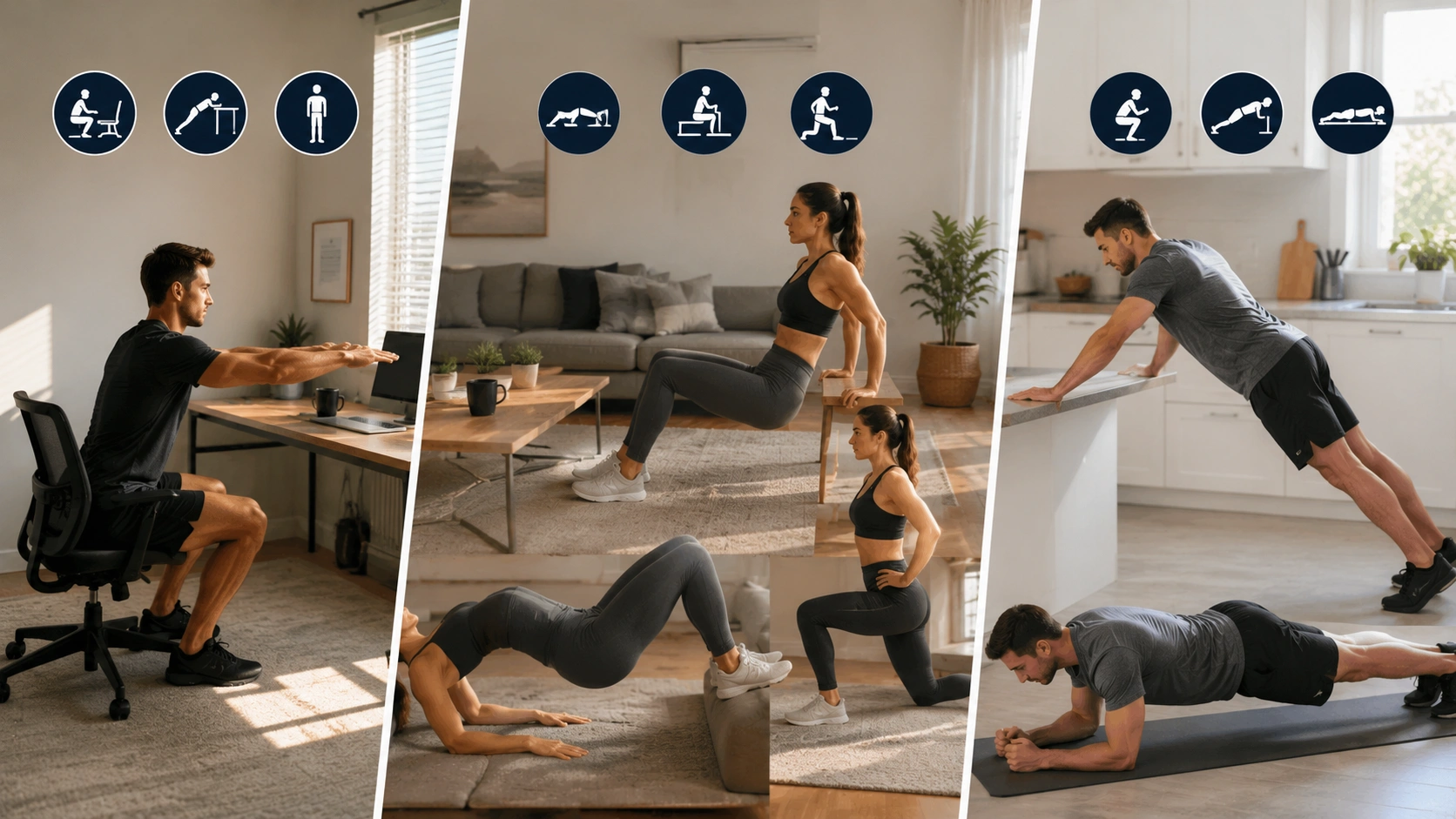
You don’t need equipment or a gym membership to build a real foundation of strength. Consistency beats complexity every time, especially in the first few months.
- The 10-Minute Desk-Break Flow
Best for: remote workers and anyone at a desk most of the day.
The protocol: 3 rounds of 10 chair squats, 10 desk push-ups, and 15 standing calf raises. It takes less time than a coffee run and resets your posture along the way.
- The Living Room Couch Circuit
Best for: true best workout routines for beginners who want a low-pressure entry point.
The protocol: 3 sets of 12 elevated glute bridges (feet on the couch), 10 coffee-table tricep dips, and 12 body-weight reverse lunges.
- The 15-Minute Morning Habit-Stack
Best for: people who want exercise finished before the day has a chance to derail it.
The protocol: Loop continuously for 15 minutes: 10 bodyweight squats, 8 incline push-ups (hands on a counter or wall), and a 30-second plank.
Fast and Effective Workout Routines for Fat Burn and Stamina
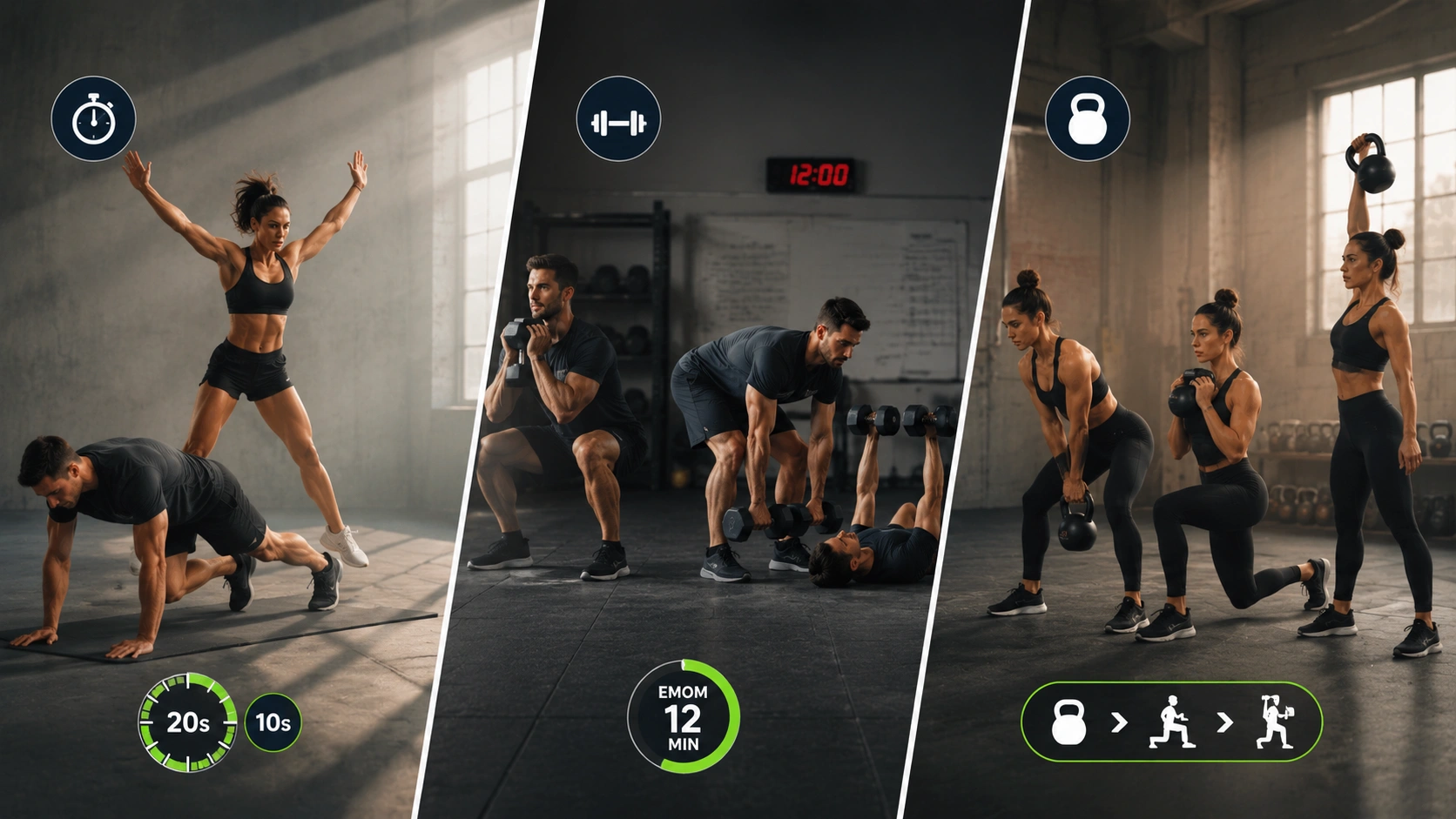
When time is the real constraint, intensity does the heavy lifting.
- The 4-Minute Tabata Burner
Best for: pure cardiovascular conditioning when minutes are all you have.
The protocol: Alternate 20 seconds of maximum effort with 10 seconds of rest for 8 rounds, using jumping jacks and mountain climbers.
- The EMOM Dumbbell Circuit
Best for: tracking progress over time.
The protocol: Every minute, on the minute, for 12 minutes: minute one is 10 goblet squats, minute two is 10 dumbbell Romanian deadlifts, minute three is 10 dumbbell floor presses. Repeat the three-minute block four times.
- The Full-Body Kettlebell Complex
Best for: combining cardio and core strength in one session.
The protocol: 4 rounds of 15 kettlebell swings, 10 goblet lunges, and 8 overhead presses.
Not sure whether hiring a trainer is the right choice? Read our complete guide: Is a Fitness Trainer Worth It? Benefits, Costs & How to Decide
Workout Routines for Beginners in Public Spaces
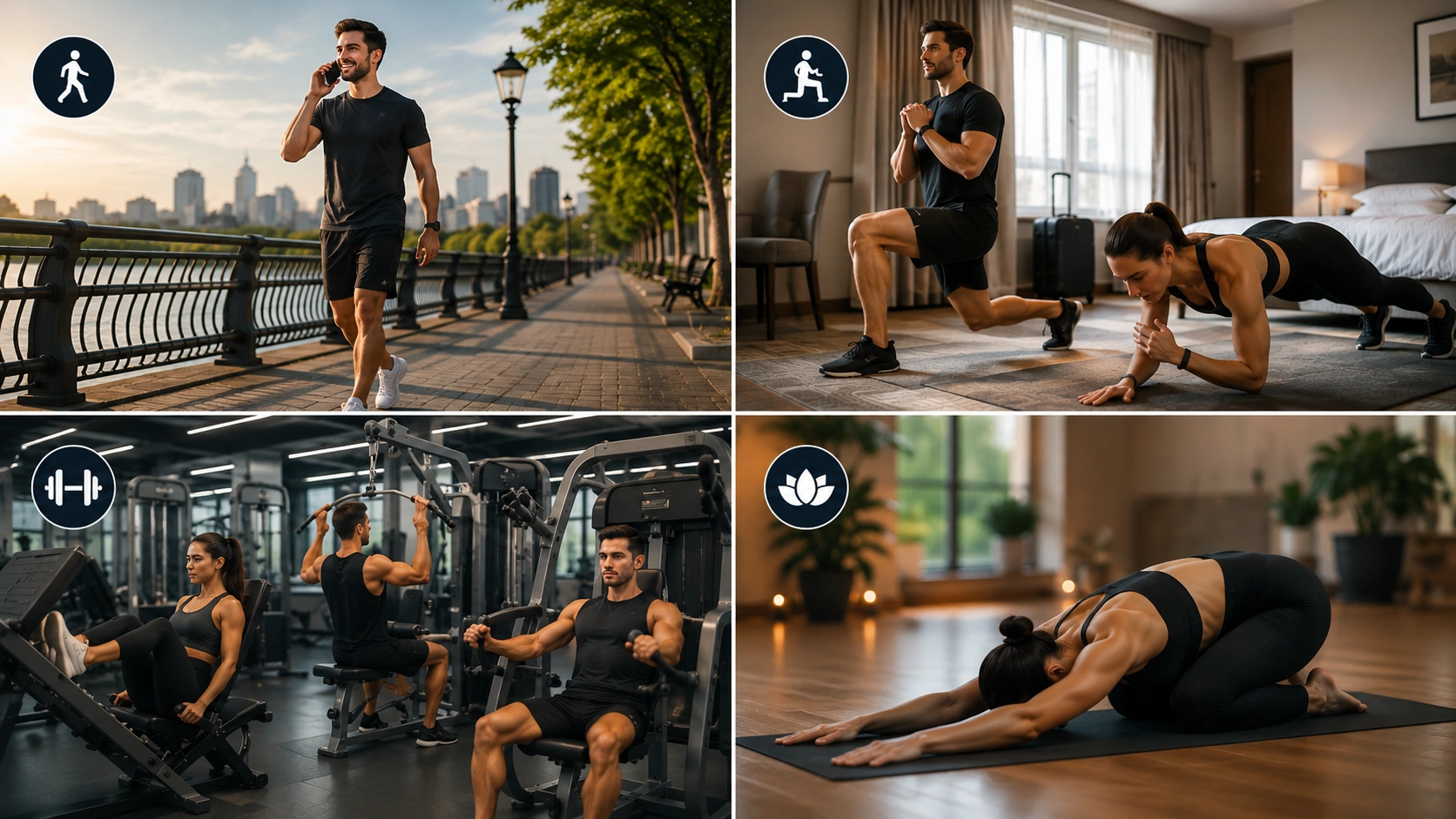
Gyms and outdoor spaces don’t have to be intimidating if you have a clear plan going in.
- Netwalking
Best for: turning passive time into active time.
The protocol: Take phone calls on foot, or add a 20-minute walk after dinner. It’s the lowest-effort routine on this list and one of the easiest to sustain long-term.
- The 3-Exercise Travel Routine
Best for: business trips or busy weekends away from home.
The protocol: 4 rounds of 15 air squats, 12 walking lunges, and a 45-second plank with alternating shoulder taps. No equipment, no hotel gym required.
- The 20-Minute Machine Circuit
Best for: beginners who want to try a gym without navigating barbell technique.
The protocol: 3 sets of 10 reps on the leg press, lat pulldown, and seated chest press machines.
- The Mind-Body Stress Reset
Best for: high-anxiety days when heavy training feels like too much.
The protocol: Spend 10 minutes moving gently through child’s pose, cat-cow stretches, and downward-facing dog. It’s still movement, and some days that’s the win.
Not sure what to look for in a fitness trainer? Read our guide: How to Choose the Right Fitness Trainer for Your Goals
How to Set Up Your Routine to Prevent Burnout
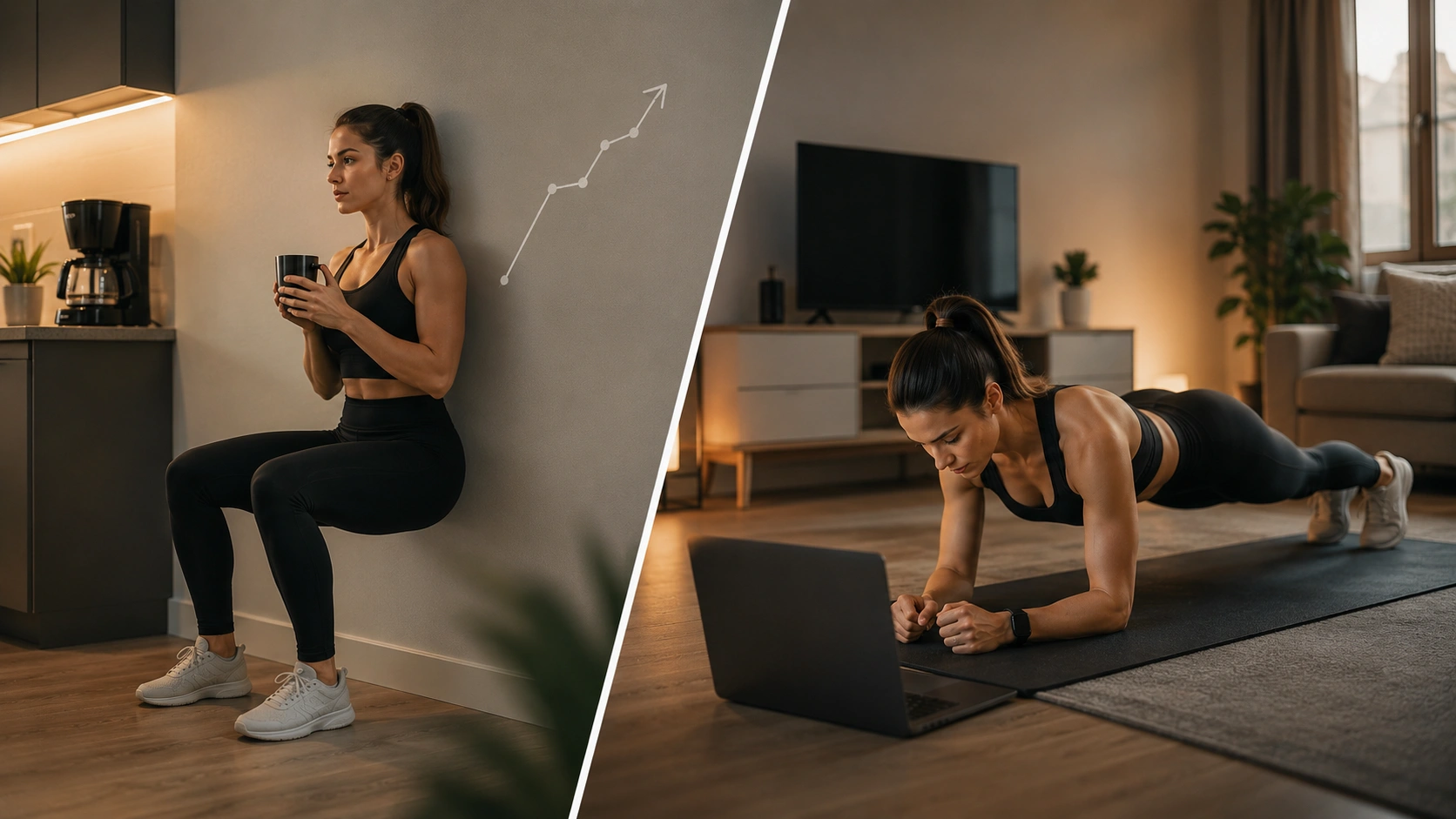
Two habits separate people who stick with short workouts from people who quit after two weeks.
|
The 10% Rule Increase your time, weight, or reps by no more than about 10% at a time. Ramping up too fast is one of the most common reasons people get sore, discouraged, and quit. |
|
Stack Your Habits Attach a new routine to something you already do daily, like doing wall sits while your coffee brews or a plank while a video loads. Anchoring movement to an existing habit makes it far more likely to stick. |
Stay Consistent With the Right Fitness Companion
Building a workout routine is only part of the journey. Sticking to it week after week is what leads to lasting results. That’s where a fitness companion like Calorie Tracker Buddy can help.
Rather than simply counting calories, the app helps you make smarter daily decisions that support your fitness goals. You can quickly log meals, monitor your calorie intake, and understand how your food choices align with your activity level.
One standout feature is the AI Menu Scanner. If you’re eating at a restaurant, simply scan the menu to see estimated calories, macronutrients, ingredients, and healthier alternatives before placing your order. This makes it much easier to stay on track without giving up meals out.
The app also offers access to certified fitness trainers and nutrition experts who are available through chat, voice, or video calls whenever you need personalized advice. Whether you’re just starting a workout routine or working toward a specific goal like weight loss or muscle gain, professional guidance is only a few taps away.
To keep motivation high, Calorie Tracker Buddy includes a virtual wellness companion that celebrates your progress, reminds you to stay active, and encourages healthy habits throughout the day. Combined with meal tracking, calorie insights, and expert support, it creates a practical system for turning occasional workouts into a sustainable lifestyle.
If you’re following any of the workout routines in this guide, pairing them with a tool like Calorie Tracker Buddy can help you stay accountable, make better nutrition choices, and build habits that last well beyond your first few weeks.
The Bottom Line
Real life isn’t going to pause so you can fit in a 60-minute gym session, and it doesn’t need to. A 10-minute routine done consistently will always beat a 60-minute routine you keep skipping. Pick one from this list, do it today, and build from there.
Frequently Asked Questions (FAQs)
1. How many days a week should beginners work out?
Most beginners should aim for 3 to 4 workout sessions per week with at least one rest day between strength-training sessions. This gives your muscles enough time to recover while helping you build a consistent fitness habit.
2. Is it better to work out in the morning or evening?
The best time to work out is the time you can stick to consistently. Morning workouts may help build a routine, while evening workouts can be ideal if you feel stronger and have more energy later in the day.
3. Should I eat before or after a workout?
If you’re exercising for more than 30 minutes or doing high-intensity training, eating a light meal or snack 1 to 2 hours beforehand can improve performance. After your workout, aim to eat a meal with high protein and carbohydrates to support recovery.
4. Can I build muscle without going to the gym?
Yes. Bodyweight exercises, resistance bands, dumbbells, and kettlebells can all help build muscle when you progressively increase the challenge over time and consume enough protein.
5. How long does it take to see results from a workout routine?
Many people notice improvements in energy, mood, and endurance within two to four weeks. Visible changes in strength or body composition typically become noticeable after six to twelve weeks of consistent training and healthy eating.