



Losing weight sounds simple on paper. Eat less, move more, stay consistent. But anyone who has actually tried to lose weight knows the reality is very different.
Many people start with extreme cardio routines, crash diets, or random YouTube workouts hoping for quick results. For a few weeks, motivation stays high. Then exhaustion kicks in, progress slows down, and frustration takes over. The biggest problem is not effort. It is following a plan that is difficult to sustain.
This is where weight training changes the game.
Unlike endless cardio sessions that often leave people tired and hungry, weight training helps your body burn fat while preserving muscle. It improves metabolism, builds strength, shapes your body, and makes long-term weight loss far more realistic.
Whether you are someone trying to lose your first 5 kilos or someone stuck in a frustrating plateau, understanding how weight training works can completely change your fitness journey.
How Weight Training Helps With Weight Loss
 One of the biggest misconceptions about fat loss is believing that sweating more automatically means burning more fat. That is why many beginners spend hours running on treadmills while avoiding weights completely.
The truth is that weight training helps your body burn calories even after your workout ends.
When you perform resistance exercises like squats, push-ups, or dumbbell rows, your muscles require energy not only during the workout but also during recovery. This process increases your resting metabolism, meaning your body continues burning calories throughout the day.
For example, imagine two people trying to lose weight:
- Rahul spends one hour doing only cardio every day.
- Aman combines cardio with weight training three times a week.
Initially, Rahul may lose weight faster because cardio burns calories quickly. However, over time, Aman begins developing muscle mass, which helps him maintain a higher calorie burn throughout the day. His body becomes stronger, leaner, and more toned, while Rahul may struggle with muscle loss and slower metabolism.
This is why many fitness experts recommend strength training for sustainable fat loss instead of relying only on cardio.
Another major benefit is body recomposition. Sometimes the scale may not move dramatically, but your body shape changes significantly. Clothes fit better, posture improves, and body fat decreases even if your weight changes slowly.
Best Weight Training Exercises for Beginners
Starting weight training can feel intimidating, especially for beginners who think lifting weights is only for athletes or bodybuilders. In reality, some of the most effective fat-loss exercises are basic movements that almost anyone can learn.
Squats
Squats are one of the best full-body exercises because they target your legs, glutes, and core simultaneously. Since they involve large muscle groups, they help burn more calories compared to isolated exercises.
A beginner can start with bodyweight squats at home before moving to dumbbells.
Push-Ups
Push-ups strengthen the chest, shoulders, arms, and core. They also improve functional strength, which helps in daily activities.
If standard push-ups feel difficult, knee push-ups or wall push-ups are excellent starting points.
Deadlifts
Deadlifts are powerful for improving posture and overall body strength. They activate multiple muscles together, which increases calorie expenditure.
Beginners should focus on learning proper form first instead of lifting heavy weights immediately.
Lunges
Lunges improve balance, stability, and lower-body strength. They are particularly useful for people who sit for long hours and want better mobility.
Dumbbell Rows
Rows strengthen the back muscles and improve posture. This becomes important because many overweight individuals develop poor posture due to long sitting hours and weak back muscles.
The key for beginners is consistency, not perfection. Starting with simple movements done correctly is far more effective than chasing advanced workouts too early.
Also Read
Cardio vs. Weights: Which Burns More Calories?
Cardio for Weight Loss: Practical Steps to See Real Results Fast
Cardio vs Weight Training: Which Is Better for Fat Loss?
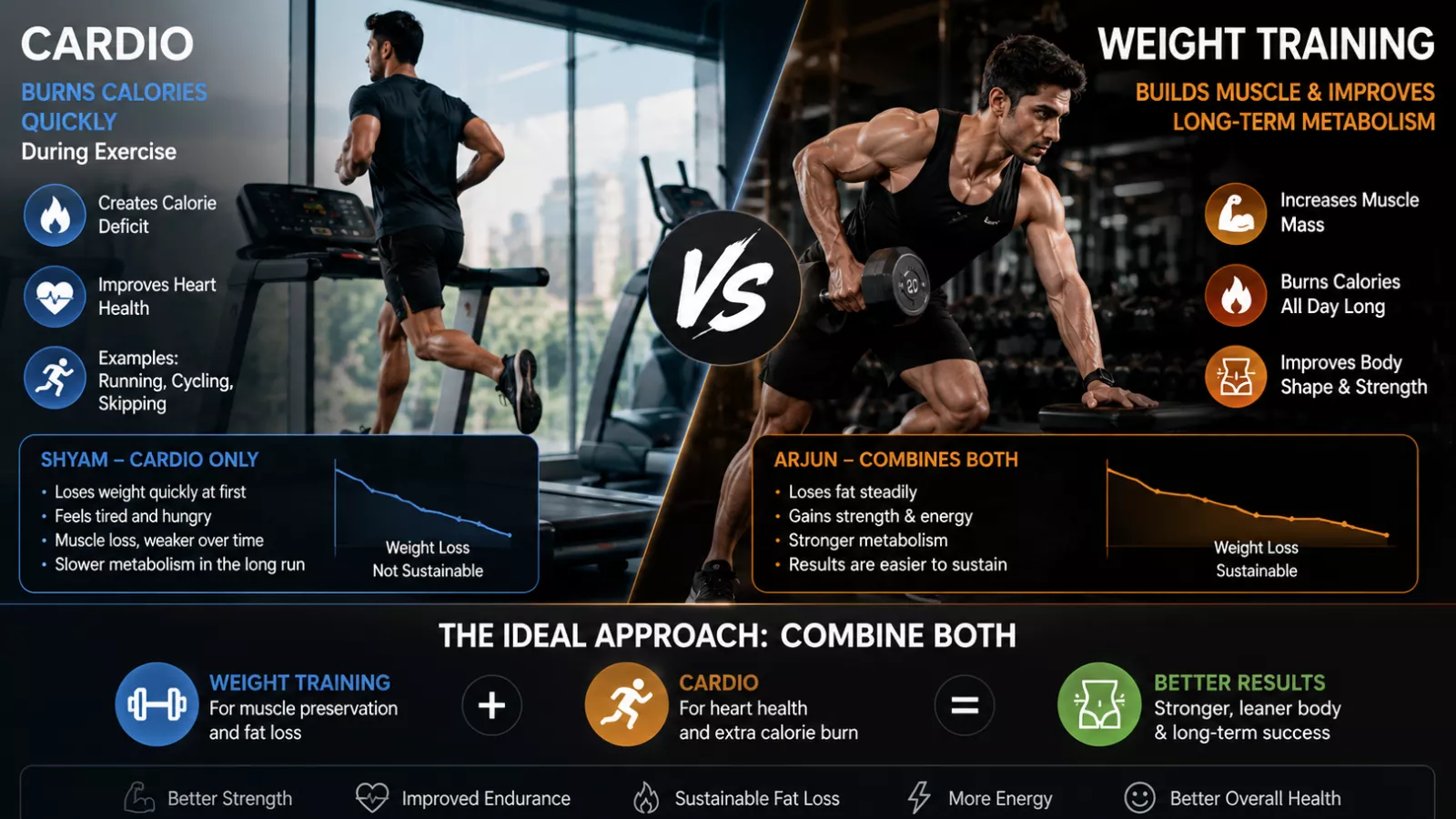 This weight training vs cardio debate has existed for years in the fitness industry.
The answer is not about choosing one over the other. It is about understanding how each works.
Cardio burns calories quickly during exercise. Activities like running, cycling, or skipping can help create a calorie deficit.
Weight training, however, builds muscle and improves long-term metabolism.
Think about it like this:
- Cardio helps you burn calories immediately.
- Weight training helps your body become better at burning calories all day long.
For example:
Shyam spends six days a week only doing cardio. He loses weight initially but eventually feels tired, hungry, and weaker.
Meanwhile, Arjun combines three strength-training sessions with moderate cardio for weight loss. He loses fat more steadily while gaining strength and maintaining energy levels.
Over time, Arjun’s results become easier to sustain because his metabolism remains stronger.
The ideal approach for most people is combining both:
- Weight training for muscle preservation and fat loss
- Cardio for heart health and additional calorie burn
This balance usually produces better long-term results than depending entirely on one method.

Weight Training at Home Without Equipment
A common excuse people give is not having access to a gym. Fortunately, effective weight training does not always require expensive equipment.
Bodyweight exercises can deliver excellent results when done consistently.
Some effective home exercises include:
- Squats
- Push-ups
- Glute bridges
- Lunges
- Planks
- Mountain climbers
The biggest advantage of home workouts is convenience. People are more likely to stay consistent when they remove travel time and gym anxiety.
For example, Priya struggled to maintain a gym routine because of her office schedule. She started doing 30-minute bodyweight workouts at home four times a week. Within three months, she noticed improved stamina, reduced waist size, and better energy levels.
Consistency often matters more than workout location.
Even household items like water bottles or backpacks can act as resistance tools for beginners.
How Often Should You Do Weight Training?
One of the most common beginner mistakes is doing too much too soon.
People often think exercising every single day will produce faster weight loss. In reality, recovery is just as important as training.
For beginners:
- 3 to 4 weight training sessions per week are usually enough.
- Each session can last 45 to 60 minutes.
- Rest days allow muscles to recover and grow stronger.
Overtraining can lead to:
- Fatigue
- Poor sleep
- Increased hunger
- Loss of motivation
- Higher injury risk
A balanced weekly plan might look like this:
- Monday: Full-body strength training
- Tuesday: Walking or light cardio
- Wednesday: Strength training
- Thursday: Rest
- Friday: Strength training
- Saturday: Light cardio or stretching
- Sunday: Recovery
This approach keeps the body active without causing burnout.
Full-Body Weight Training Workout for Fat Loss
A full-body workout is ideal for beginners because it trains multiple muscle groups in one session.
Here is a simple example:
Warm-Up
Start with 5 to 10 minutes of light movement such as jumping jacks or brisk walking.
Workout
Perform:
- 12 squats
- 10 push-ups
- 12 lunges per leg
- 15 glute bridges
- 30-second plank
Repeat the circuit 3 times.
Cool Down
Finish with stretching exercises for flexibility and recovery.
This type of workout improves endurance, strength, and calorie burn without requiring advanced equipment.
Common Weight Training Mistakes to Avoid
Many people quit weight training because they do not see instant results. Often, the problem is not the workout itself but the mistakes surrounding it.
Expecting Fast Results
Fat loss takes time. Social media transformations often create unrealistic expectations.
Healthy progress usually involves gradual improvements over several weeks and months.
Ignoring Nutrition
You cannot out-train poor eating habits. Even the best workout plan struggles against excessive junk food and inconsistent eating patterns.
Skipping Recovery
Sleep and recovery play a major role in fat loss. Poor sleep can increase cravings and reduce workout performance.
Using Incorrect Form
Improper technique increases injury risk and reduces exercise effectiveness. Beginners should focus on learning movements correctly before increasing intensity.
Diet Tips to Support Weight Training
Exercise alone is not enough for sustainable weight loss.
Nutrition determines whether your body receives the fuel needed for fat loss and recovery.
Focus on Protein
Protein supports muscle repair and helps control hunger. Good sources include:
- Eggs
- Chicken
- Greek yogurt
- Lentils
- Paneer
- Fish
Avoid Extreme Dieting
Crash diets may produce temporary weight loss but often lead to muscle loss and rebound weight gain.
A moderate calorie deficit works better long term.
Stay Hydrated
Water affects energy levels, digestion, and workout performance. Many people confuse thirst with hunger.
Plan Meals in Advance
Meal planning reduces impulsive eating and helps maintain consistency.
Why Tracking Calories Makes Weight Loss Easier
 One of the biggest challenges in weight loss is not knowing whether you are actually eating in a calorie deficit.
Many people assume they are eating healthy but unknowingly consume more calories than expected through snacks, sugary drinks, or oversized portions.
This is where Calorie Tracker Buddy becomes genuinely useful for beginners.
Instead of manually searching calorie information for every meal, users can simply click a picture of their food and quickly estimate calorie intake. This makes tracking far easier for people with busy schedules.
The app also helps with:
- Water intake tracking
- Daily step counting
- Monitoring calorie goals
- Building consistency through reminders
One feature that makes the experience more engaging is Buddy, the puppy mascot that motivates users to stay on track.
For example:
Suppose Rohit and Karan both start their weight-loss journey.
Rohit tries doing everything manually. He writes meals in a notebook, guesses calorie counts, and forgets to track water intake regularly. After a few weeks, he becomes inconsistent because the process feels tiring.
Karan uses Calorie Tracker Buddy. He clicks pictures of meals, tracks his daily movement, and receives small motivational reminders from Buddy throughout the day. Because tracking becomes easier and more interactive, he stays consistent longer.
The difference is not motivation alone. It is reducing friction in the process.
Many people fail weight loss not because they are lazy but because the system they follow becomes difficult to maintain. Simpler systems usually create better long-term habits.
How Long Does It Take to See Results?
This is one of the most frequently asked questions in fitness.
The answer depends on:
- Starting weight
- Diet quality
- Workout consistency
- Sleep
- Stress levels
- Overall activity
Most beginners notice:
- Improved energy within 2 weeks
- Better strength within 3 to 4 weeks
- Visible body changes within 6 to 8 weeks
Sustainable fat loss is usually around 0.5 to 1 kilogram per week.
The important thing is understanding that lasting transformation takes time. Quick-fix methods often fail because they are impossible to maintain.
Beginner Weight Training Plan for Weight Loss
A beginner-friendly routine should focus on simplicity and consistency.
Week 1 to 4 Plan
Day 1
- Squats
- Push-ups
- Plank
Day 2
- Walking or light cardio
Day 3
- Lunges
- Glute bridges
- Dumbbell rows
Day 4
- Rest
Day 5
- Full-body circuit workout
Day 6
- Light activity or stretching
Day 7
- Recovery
The goal during the first month is not perfection. It is building the habit of regular movement.
Benefits of Weight Training Beyond Fat Loss
Weight training offers benefits that go far beyond physical appearance.
Better Mental Health
Exercise releases endorphins that improve mood and reduce stress.
Increased Confidence
As strength improves, people often feel more confident in daily life.
Improved Bone Health
Resistance training strengthens bones and reduces future injury risk.
Better Posture and Mobility
Strengthening muscles improves posture, especially for people working desk jobs.
Higher Energy Levels
Many people report feeling more energetic after consistent training compared to feeling exhausted from extreme dieting alone.
Final Thoughts
Weight loss is not just about burning calories. It is about building habits you can maintain for years without feeling miserable.
Weight training offers a sustainable path because it improves strength, metabolism, confidence, and overall health at the same time.
The goal should never be punishing your body. The goal should be creating a healthier lifestyle that feels realistic even on busy days.
Start small, stay consistent, track your progress, and focus on long-term improvement rather than overnight results.
FAQs
Can beginners start weight training for weight loss?
Yes. Beginners can start with bodyweight exercises or light resistance training and gradually increase intensity over time.
Is weight training better than cardio for fat loss?
Both are useful, but weight training helps preserve muscle and improve metabolism, making it highly effective for long-term fat loss.
Can I do weight training at home?
Absolutely. Many effective exercises require little or no equipment.
How many days a week should I train?
Most beginners benefit from 3 to 4 sessions per week with proper recovery.
Will lifting weights make me bulky?
No. Building large amounts of muscle requires years of specialized training and nutrition. Most people become leaner and more toned through weight training.