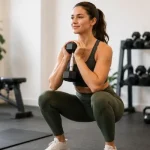


There’s a reason kettlebells have earned a permanent spot in home gyms worldwide: a kettlebell workout, with just one piece of equipment and a few square feet of floor space, gives you everything you need to build strength, improve conditioning, and move better in everyday life.
But picking one up without proper guidance is where most people go wrong. The movements may look simple until you realize your lower back is doing work it shouldn’t.
This guide covers everything you need to start correctly: what a kettlebell is, why it works, how to choose the right weight, the best exercises with proper form, and how to stay safe while training.
You can Listen to this blog here.
What Is A Kettlebell?

A kettlebell is a cast-iron weight with a flat base and a looped handle. It looks like a cannonball with a handle, and that design goes back to 1700s Russia, where similar weights called girya were used to measure grain before becoming part of strength training.
What makes a kettlebell workout different from traditional training is how the weight is distributed. The mass sits below the handle instead of being centered like a dumbbell. This creates an offset load that forces your muscles to stabilize constantly.
That is exactly why a kettlebell workout is so effective for building functional strength and coordination.
Types Of Kettlebells
If you are setting up a kettlebell workout at home, you will find several types available.
Cast Iron Kettlebells
These are the most traditional options. They are strong and long-lasting. The surface can feel rough on the hands and may damage floors if dropped.
Vinyl-Coated Kettlebells
These have a protective layer that makes them more comfortable and safer for floors. They are ideal for most home kettlebell workout setups.
PVC or Sand-Filled Kettlebells
These are affordable and beginner-friendly. However, the handles can become slippery during intense sessions, so they are not ideal long-term.
Adjustable Kettlebells
These allow you to change weights easily, which is helpful if you want to progress your kettlebell workout without buying multiple bells.
Competition Kettlebells
These are designed for professional training with consistent sizing across weights. They are not necessary for most people starting a kettlebell workout.
For most users, a vinyl-coated or adjustable kettlebell works best.
Why Kettlebell Training Works
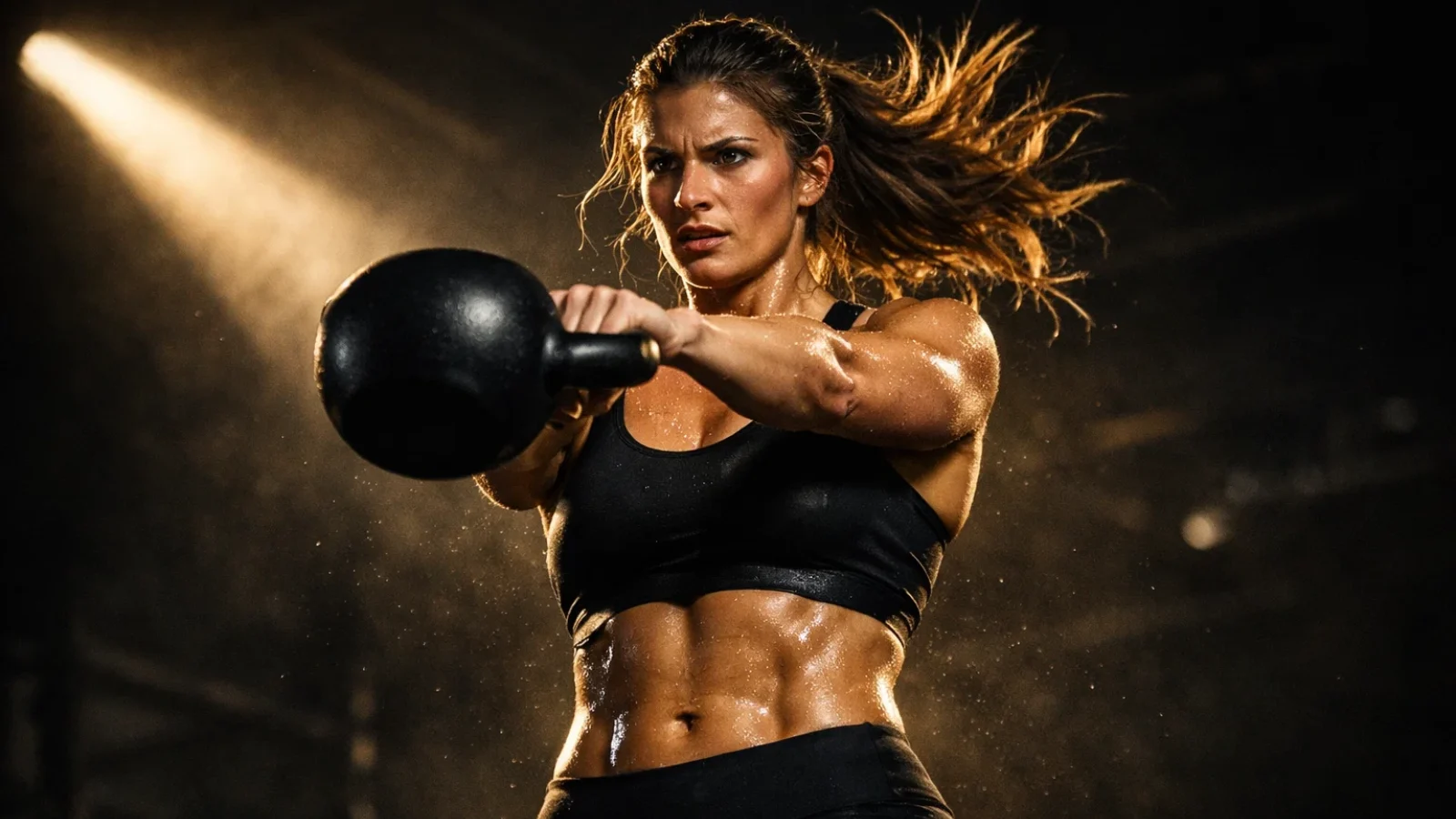
A kettlebell workout trains your body as a complete system rather than isolating muscles.
For example, during a kettlebell swing workout, your hips generate power, your core stabilizes your body, your back supports the movement, and your grip keeps control of the bell. All of this happens in a single movement.
Studies support kettlebell workout benefits, showing improvements in both strength and endurance in a short period of time.
Another advantage is efficiency. A full-body kettlebell workout can deliver strength and cardio benefits together, which saves time.
Kettlebell training also improves grip strength, which supports overall performance and reduces injury risk.
For fat loss, a kettlebell workout for weight loss works well because it combines resistance training with high energy output.
How To Choose The Right Kettlebell Weight
Choosing the right weight is essential for a safe kettlebell workout.
Many beginners either go too light or too heavy. Light weights do not challenge the body, while heavy weights can lead to poor form.
A good starting range is:
- Women: 8 kg to 12 kg
- Men: 12 kg to 16 kg
Hip-based exercises like swings can handle heavier loads. Shoulder movements like presses require more control and lighter weights.
If your last rep looks as strong as your first, you can increase the weight. If your form breaks, reduce the load.
Most people can begin their kettlebell workout with just one bell and progress gradually.
The Best Kettlebell Exercises For Home Training
These exercises form the base of a strong kettlebell workout. Each one targets a key movement pattern, and together they create a balanced routine.
Kettlebell Swing
The kettlebell swing is the most important exercise to master first. It teaches proper hip hinge mechanics and helps develop explosive power.
Stand with your feet slightly wider than hip-width apart. Push your hips back and swing the kettlebell between your legs. Then, drive your hips forward to propel the kettlebell up to chest height.
Tip: Focus on generating power from your hips, not your arms.
Avoid this mistake: Turning the movement into a squat instead of a hinge.
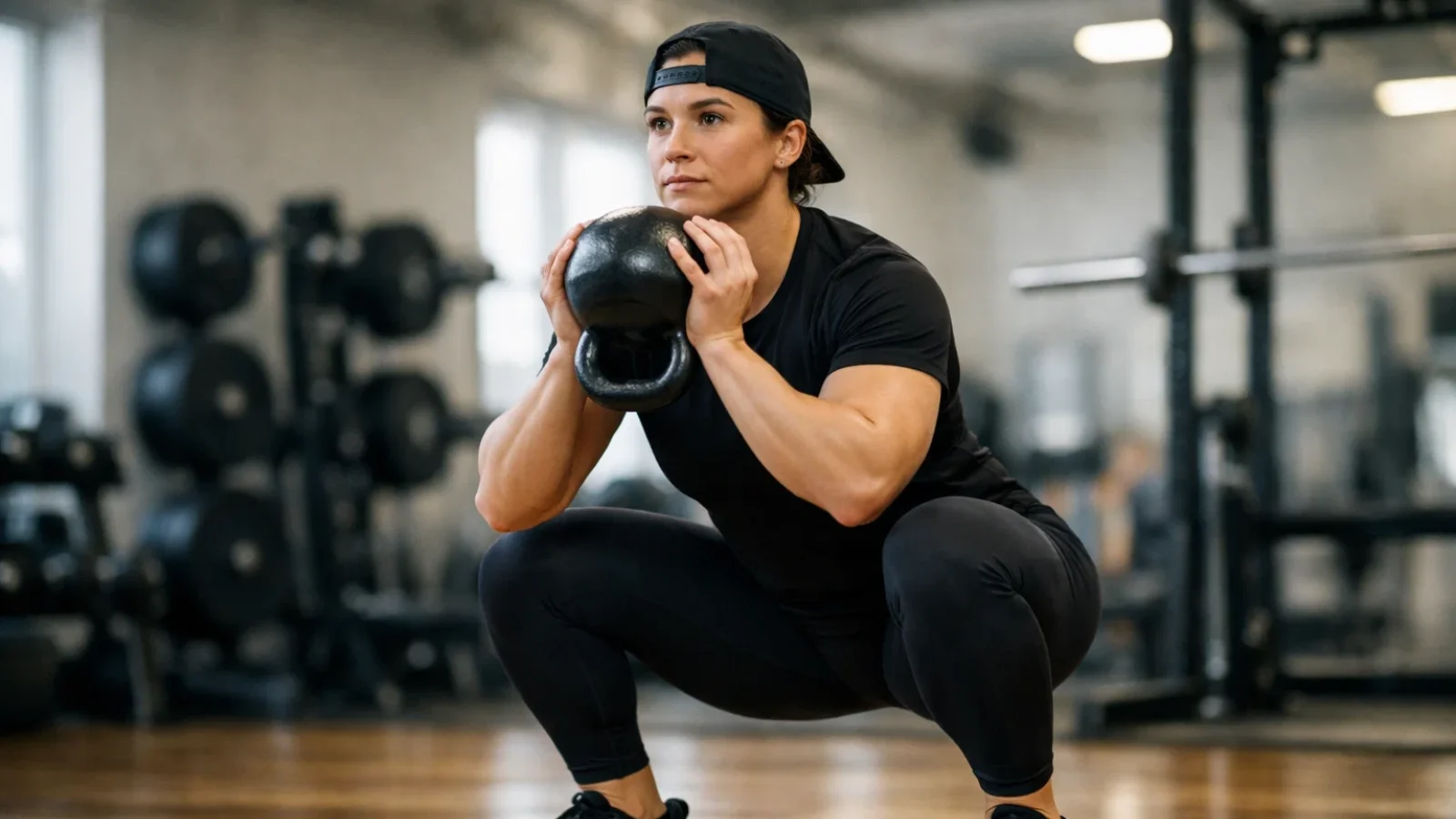
Goblet Squat
This is one of the easiest ways to learn proper squatting in a kettlebell workout.
Hold the kettlebell at chest level. Lower into a squat while keeping your chest upright and knees steady.
Tip: Keep the kettlebell close to your body throughout the movement.
Mistake to avoid: Letting your knees move inward.
Kettlebell Deadlift
The deadlift helps build strength and teaches the hip hinge pattern.
Place the kettlebell between your feet. Bend at the hips, keep your back straight, and lift the weight.
Tip: Push through your heels.
Mistake to avoid: Rounding your lower back.
Kettlebell Clean
This movement brings the kettlebell to shoulder level.
Swing the kettlebell up and guide it close to your body. Rotate your hand so it lands softly on your forearm.
Tip: Keep the kettlebell close.
Mistake to avoid: Letting it hit your wrist hard.
Kettlebell Press
This builds shoulder strength in a kettlebell workout.
Press the kettlebell overhead from the shoulder and bring it back down slowly.
Tip: Keep your core tight.
Mistake to avoid: Bending your wrist backward.
Kettlebell Row
Rows help with posture and strengthen the upper back.
Lean forward slightly and pull the kettlebell toward your body.
Tip: Keep your body stable.
Mistake to avoid: Twisting while lifting.
To better understand how effective your kettlebell workout is, you can use a calorie burn calculator to track how much energy you use during each session.
Kettlebell Halo
This movement improves shoulder mobility.
Move the kettlebell around your head in a controlled circle.
Tip: Keep the movement slow.
Mistake to avoid: Making wide, uncontrolled circles.
Kettlebell Windmill
This exercise improves flexibility and balance.
Hold the kettlebell overhead and lower your body sideways.
Tip: Keep your arm straight.
Mistake to avoid: Letting the kettlebell drift forward.
Kettlebell Turkish Get-Up
This is a full-body movement that builds strength and coordination.
Start lying down with the kettlebell overhead and slowly stand up while holding it steady.
Tip: Move slowly and stay controlled.
Mistake to avoid: Rushing through the steps.
Safety Rules And Common Mistakes
A kettlebell workout is safe when done correctly.
Keep your spine neutral during every movement. Focus on hinging at your hips instead of bending your back.
Stabilize your shoulders before pressing. Use your hips to generate power in swings.
Breathe properly. Exhale during effort and inhale while returning.
One of the biggest mistakes is progressing too quickly. A strong kettlebell workout is built by mastering the basics first.
Where To Start
Start with the swing and practice it for a couple of weeks. Once you feel comfortable, add squats and deadlifts.
A kettlebell workout becomes more effective with consistency. The movements may feel unusual at first, but that is part of the learning process. With time, they become natural and deliver strong results.
If you want better recovery and muscle support during your kettlebell workout, choosing the right protein powder can make a noticeable difference.
Also Read,
Track Smarter With Calorie Tracker Buddy: Your All-In-One Fitness Companion
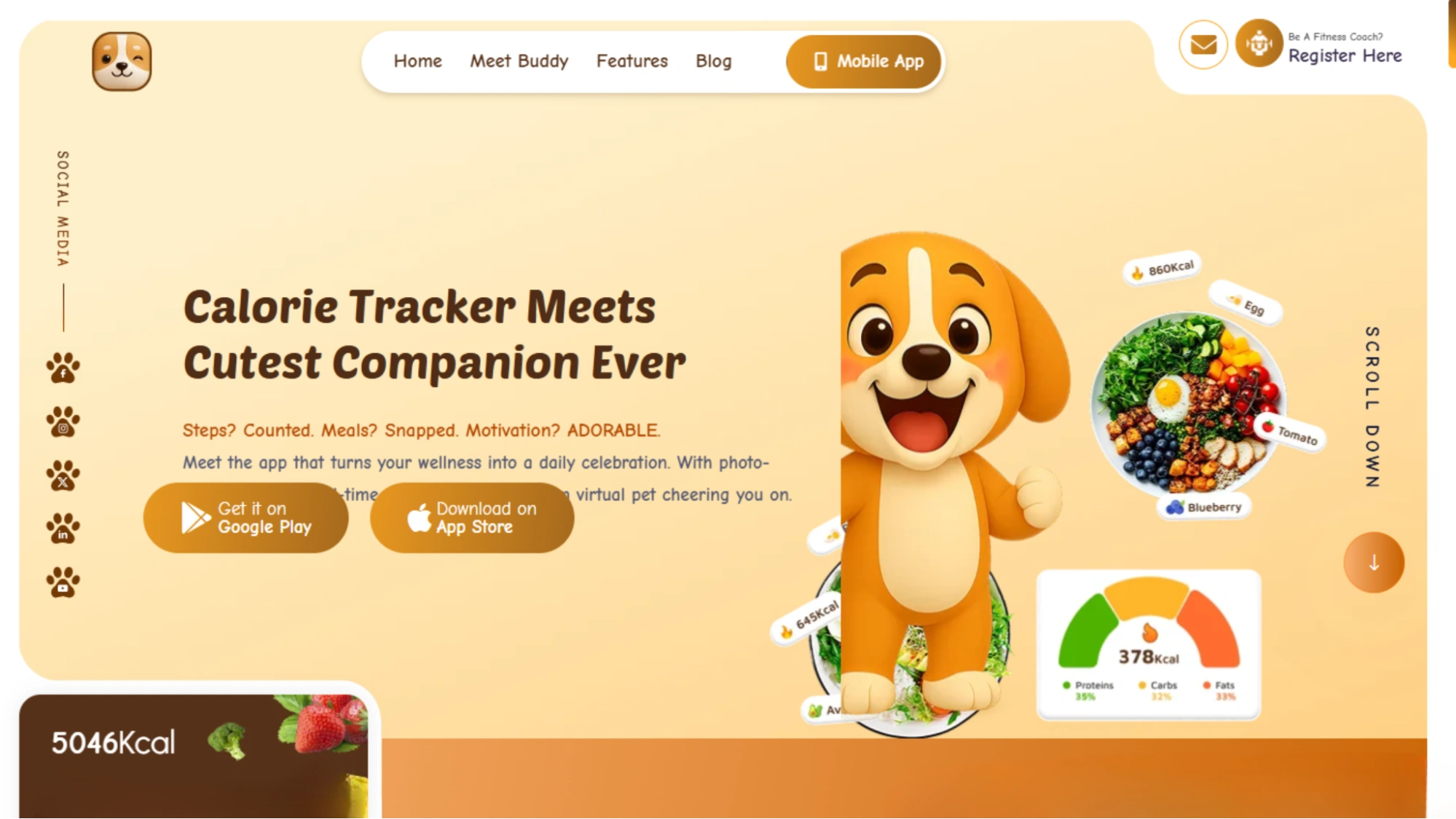
Strength training is only half the equation. What you eat and how well you track it determines whether your kettlebell sessions turn into real, lasting results. That’s where calorietrackerbuddy comes in, an app built to take the guesswork out of your nutrition and keep you accountable every single day.
Here’s what it does for you:
- Snap the Meal — Point your camera, tap once, and your food is instantly scanned for calories, nutrients, and nutritional balance. No guesswork about meal sizes or manual tracking.
- Calorie Burn Tracker — From kettlebell swings to dishwashing, every movement counts. Calorie Tracker Buddy tracks your daily calorie burns so you can watch your effort add up in real time.
- Calorie Intake Tracker — You eat, it calculates. Log what’s on your plate in seconds and get instant feedback on exactly how each meal fits your fitness goals.
- Goal Predictions — Wondering how close you are to hitting your target? Calorie Tracker Buddy shows you how each meal, snack, and sip moves you toward or away from your goal, so you can make smarter choices before they add up.
- Buddy Motivation — Your virtual pet grows with every healthy choice you make. It’s a small touch that delivers a surprisingly powerful daily nudge to stay consistent.
- Social Sharing — Proud of your plate or just loving the progress? Post your meals, share your streaks, and let your community cheer you on.
Pair Calorie Tracker Buddy with your kettlebell routine, and you have a complete system that covers both what you do in your training space and what you put on your plate the rest of the day.
Conclusion
Kettlebell training stands out as one of the few fitness approaches where a single tool, minimal space, and a handful of well-executed movements can genuinely transform how you move, feel, and perform. There’s no gimmick, just sound mechanics, consistency, and progressive challenge.
Start simple. Master the swing. Own the goblet squat. Build a strong deadlift foundation. Then, layer in more complex movements as your body earns them. With just three focused sessions a week, each lasting 20–35 minutes, you can create meaningful progress over time.
Stay patient, prioritize good form, and let consistency do the heavy lifting. Results don’t come from doing more they come from doing the basics exceptionally well, again and again.

Frequently Asked Questions
How many days a week should I train?
Three sessions per week is a good starting point for a kettlebell workout.
How long should each session be?
Most kettlebell workout sessions last between 20 and 35 minutes.
How can I check my form?
Recording yourself helps identify mistakes and improve technique.
Can I build muscle with a kettlebell workout?
Yes, especially in the legs, back, and shoulders.
Is a kettlebell workout female-friendly?
Yes, a kettlebell workout female routine can be adjusted for strength, toning, or fat loss goals.
.