



You can train hard every single day and still make frustratingly slow progress if your nutrition isn’t dialed in. Muscle growth, or hypertrophy, doesn’t just happen in the gym. It happens at the dinner table, in the kitchen, and in the small daily decisions you make about what and how much you eat. That’s where a calorie counter for building muscle becomes one of the most powerful tools in your arsenal. Without tracking, most people either eat too little (not enough fuel to grow) or too much (excess fat gain instead of lean mass). A good tracker removes the guesswork.
In this article, we will break down why calorie tracking matters for muscle gain, what to look for in a tracker, and compare the best options available, including a few you might not have heard of yet.
Listen To Audio
Why Tracking Calories Matters For Muscle Gain
Building muscle requires a calorie surplus, meaning you need to consistently eat more than your body burns. But “more” doesn’t mean “a lot more.” Research suggests a surplus of around 250–500 calories per day is the sweet spot for gaining lean mass while minimizing unnecessary fat gain.
Macronutrients matter too. Protein is the primary driver of calorie counter for building muscle protein synthesis, so hitting your daily protein target (typically 1.6–2.2 g per kg of bodyweight) is non-negotiable. Carbohydrates fuel your training sessions, and dietary fat supports hormonal health. A calorie tracker for muscle gain helps you monitor all three simultaneously.
Think of tracking as a feedback loop. Without data, you’re guessing. With it, you can make precise adjustments, eat a bit more if progress stalls, and pull back if you’re gaining fat too quickly. Consistency and accuracy over time are what separate people who get results from those who spin their wheels.
What To Look For In A Calorie Tracker

Not all trackers are built the same. Here’s what matters when choosing a calorie counter for building muscle gain:
- Accurate macro tracking: You need more than just calories. A solid tracker breaks down protein, carbs, and fat clearly, ideally with a large food database and barcode scanning.
- Ease of use: The best tracker is the one you’ll actually use every day. A clunky interface kills consistency, so simplicity matters as much as features.
- Smart adjustments over time: Your calorie needs change as your bodyweight and activity levels shift. The best tools adapt to your progress rather than giving you a static number forever.
- Fitness integration: Syncing with your workout app or wearable helps give a fuller picture of your daily energy balance.
Best Calorie Trackers For Muscle Gain
Here’s an honest look at the top options, covering what each one does well and who it’s best suited for.
Calorie Tracker Buddy
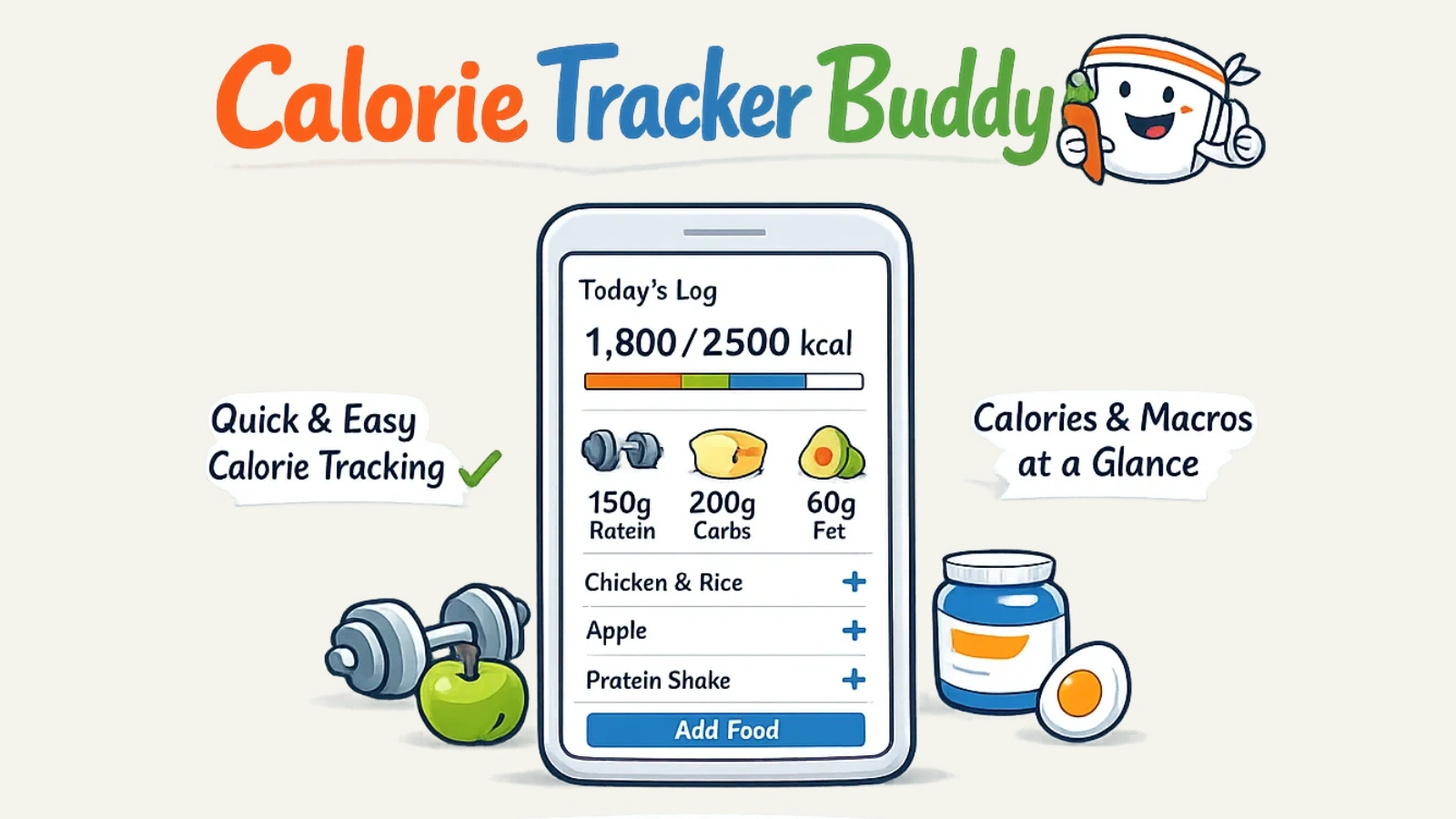
Suppose your calorie tracking feels like too much, with many complications and frictions. Calorie Tracker Buddy is worth a look. It’s built around one core idea: make tracking so simple that you actually stick with it.
There’s no overwhelming dashboard or endless settings to configure. You log what you eat, see your calories and macros at a glance, and move on with your day. For people who’ve tried other trackers and burned out on the complexity, this stripped-back approach makes a real difference to consistency, and consistency is ultimately what drives results.
Best for: anyone who wants a calorie counter for building muscle without the learning curve. Especially useful for beginners or people returning to tracking after a break. Try it at calorietrackerbuddy.com.
MyFitnessPal

MyFitnessPal is the most widely used calorie tracking app in the world, and for good reason. Its food database contains over 14 million items, barcode scanning is fast, and the interface is familiar to most users. It tracks calories and macros clearly, integrates with dozens of fitness test apps, and has a strong community aspect.
Best for: beginners who want a large food database and don’t mind a busy interface. The free tier is functional, though some features require a paid subscription.
Cronometer
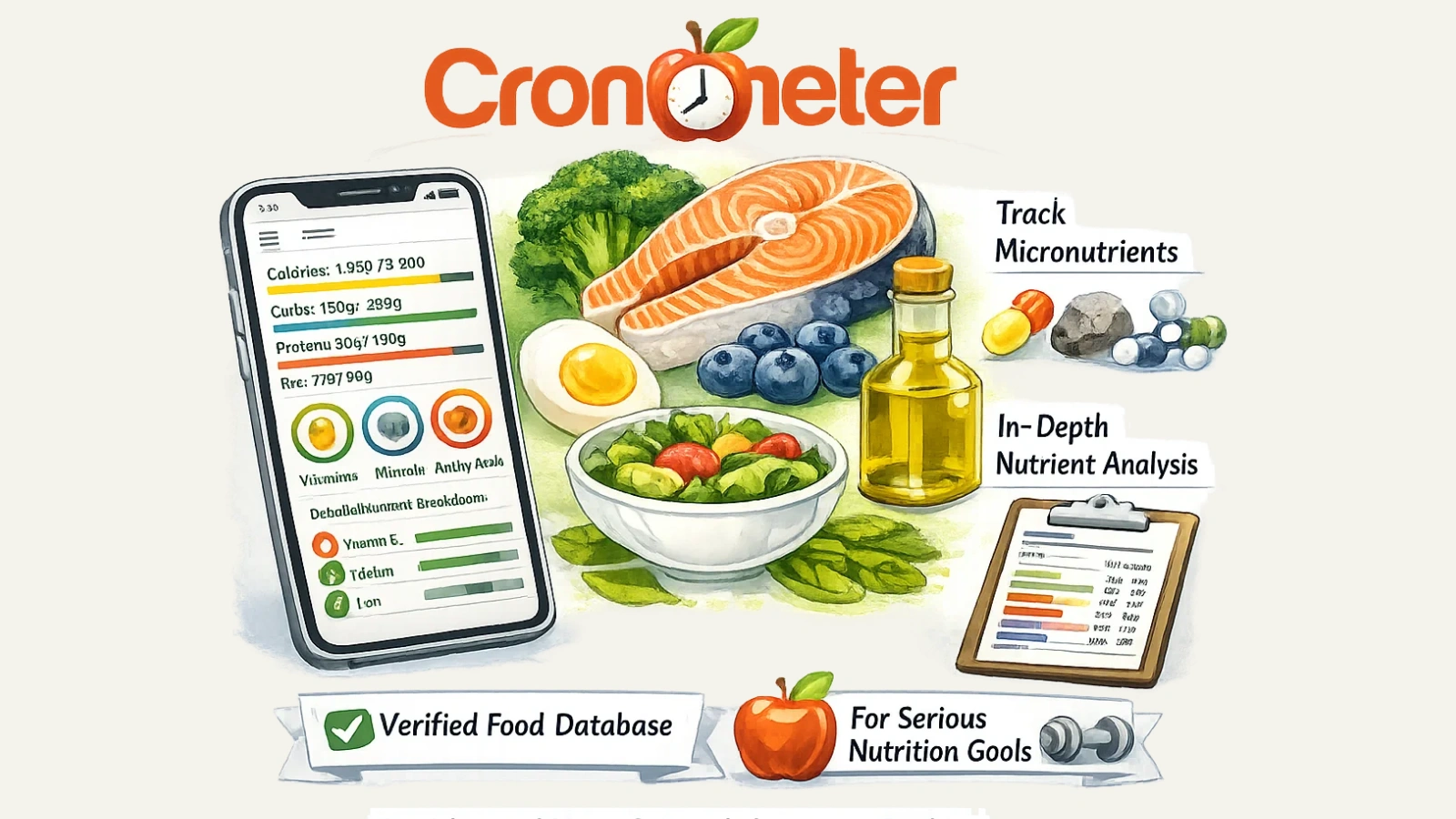
The Cronometer goes deeper than most trackers. In addition to calories and macros, it logs micronutrients, vitamins, minerals, and amino acid profiles, making it popular among people who care about the quality of their diet, not just the quantity. Its food database leans on verified nutritional data rather than user-submitted entries.
Best for: experienced trackers or those with specific dietary goals who want micronutrient visibility alongside their macro targets.
MacroFactor
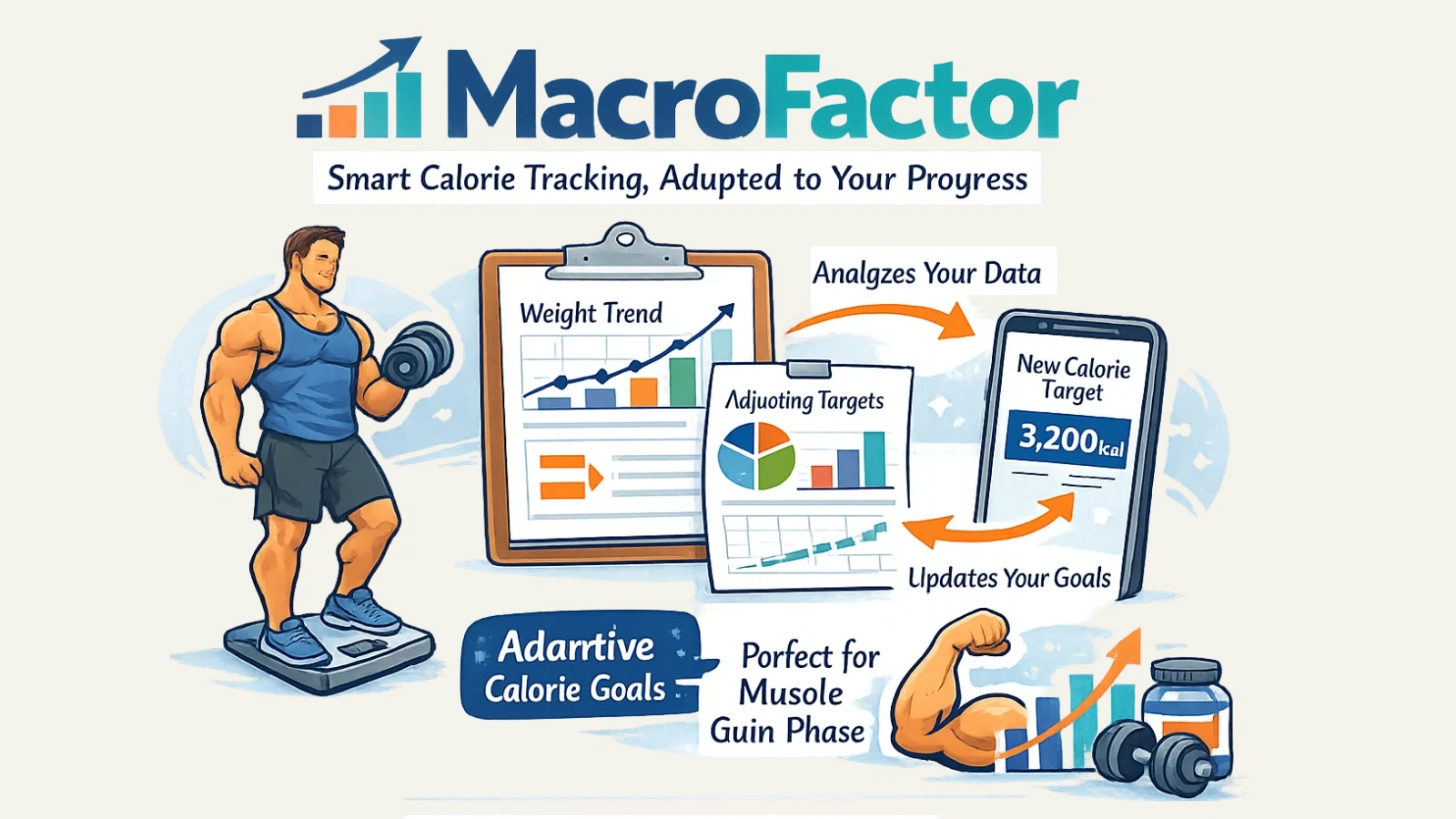
MacroFactor takes a smarter approach to calorie tracking by dynamically adjusting your targets based on your real-world progress. Rather than giving you a fixed calorie goal, it analyses your weight trend and food logs week by week to recalibrate your needs. This makes it particularly well-suited to the calorie counter for building a muscle gain phase, where your needs shift as your weight increases.
Best for: data-driven users who want their tracker to respond to their actual progress rather than generic formulas. Subscription-based.
Fitia

Fitia combines calorie tracking with AI-generated meal planning. After setting your goals, it builds customised meal plans designed to hit your calorie and macro targets, handy if you struggle to plan what to eat, not just how much. It’s a more guided experience than most trackers.
Best for: people who want structure and meal planning built into their tracking experience, rather than just raw logging.
Learn More
11 Calorie Tracking Mistakes to Avoid (And How to Fix Them)
The Bodybuilding Calorie Counter Guide That Actually Works in 2026
How To Use A Calorie Counter To Gain Muscle Effectively

Having the right tool is only half the job. Here’s a straightforward process to make tracking actually work for a calorie counter for building muscle:
Step 1: Calculate your maintenance calories. Use a TDEE (Total Daily Energy Expenditure) calculator to estimate how many calories your body burns in a day. This is your baseline. Most calculators ask for your age, weight, height, and activity level.
Step 2: Add a surplus: For a lean calorie counter for building muscle, add 250–500 calories above your maintenance. The lower end keeps fat gain minimal; the higher end can speed up muscle gain but may add more body fat alongside it.
Step 3, Track daily intake: Log everything you eat, including cooking oils, sauces, and drinks. Small items add up quickly and are the most common reason people wonder why they’re not making progress.
Step 4, Adjust weekly: Weigh yourself at the same time each day (ideally morning, after using the bathroom) and take a 7-day average. If your weight isn’t moving up after 2 weeks, eat a little more. If fat gain feels too fast, pull back slightly.
Pair this with a consistent training programme, compound lifts, progressive overload, and adequate frequency, and you have the full picture. Tracking nutrition and training together is far more effective than either alone.
Common Mistakes (And How To Avoid Them)
Even with a good tracker, certain habits quietly undermine progress. Here are the most common pitfalls:
- Inconsistent logging: Tracking Monday to Friday but going off-piste on weekends means your data is meaningless. Muscle gain requires a sustained surplus over days and weeks, not just on gym days.
- Overestimating calories burned: Fitness trackers and cardio machines notoriously overestimate calorie burn. Don’t eat back all your “exercise calories”, you’ll likely end up in a deficit without realising it.
- Ignoring protein targets: Calories matter, but protein is the make-or-break macro for muscle. If you’re hitting your calorie goal with low protein, you’re not giving your muscles what they need to grow.
- Never adjusting intake: Your metabolism adapts. As you gain weight, your maintenance calories increase. A static calorie goal that worked 8 weeks ago may now be keeping you at maintenance. Review and adjust regularly.
Conclusion
A calorie counter for building muscle gain is not just about how hard you train; it’s also about how well you fuel your body. The right calorie counter for building muscle gives you the visibility to make smarter decisions every day, turning guesswork into a clear, adjustable strategy.
The tools in this list, MyFitnessPal, Cronometer, MacroFactor, and Fitia, are all solid, depending on your needs. But if you’ve tried tracking before and found it too complicated to keep up, don’t write off the habit entirely. Sometimes a simpler tool is all it takes to stay consistent, and consistency is what actually moves the needle.
If that sounds like you, it’s worth giving Calorie Tracker Buddy a try. It’s designed for people who want results without the overwhelm: track your calories, hit your protein, and let the results speak for themselves.

Frequently Asked Questions
1. How many calories should I eat to gain muscle without getting fat?
To maximize muscle growth while minimizing fat gain (often called “lean bulking”), aim for a moderate calorie surplus of 250–500 calories above your maintenance level. This typically results in a weight gain of about 0.25–0.5kg (0.5–1lb) per week. Eating significantly more than this often leads to excess fat storage rather than faster muscle synthesis.
2. Can I build muscle if I don’t track my calories?
It is possible, but much more difficult. Without a calorie counter for building muscle, you are “intuitive eating,” which often leads to under-eating protein or over-eating calories. Tracking provides the data necessary to make small, precise adjustments when your progress stalls.
3. What is the best macro ratio for muscle gain?
While everybody is different, a scientifically backed starting point for muscle hypertrophy is:
- Protein: 1.6g to 2.2g per kg of body weight.
- Fats: 20% to 30% of your total daily calories.
- Carbs: The remainder of your calories to fuel high-intensity training.
4. How long does it take to see muscle growth when tracking calories?
Muscle hypertrophy is a slow process. While you might see changes in strength and “muscle fullness” (due to glycogen) within 2–4 weeks, visible changes in muscle size usually take 8 to 12 weeks of consistent training and calorie tracking.
5. Should I track calories on my rest days?
Yes. Muscle recovery and growth happen primarily on rest days. To ensure your body has the resources to repair tissue, you should maintain your calorie surplus and hit your protein targets even on days you aren’t hitting the gym.