



Most people start an exercise routine with real energy. They map out a plan, buy the gear, maybe even download an app. Then, about three weeks in, the whole thing quietly collapses. Not because they’re lazy, but because the routine was either too complicated, too random, or built around exercises that didn’t actually connect into something meaningful.
Here’s the truth: a solid exercise routine doesn’t need to be elaborate. A handful of well-chosen movements, done consistently, will outperform any overengineered program you follow for two weeks and abandon. This article breaks down the 10 best exercises to anchor your routine and, more importantly, explains how to actually build a plan around them.
Listen To The Podcast Now!
What Are the Best Exercises to Include in an Exercise Routine?

The exercises that consistently deliver results across fitness levels are squats, push-ups, lunges, planks, deadlifts, rows, burpees, glute bridges, shoulder presses, and cardio intervals. These movements work together to form a comprehensive system based on four essential pillars:
- Strength: Compound lifts like deadlifts and squats build the metabolic engine and skeletal support needed for longevity.
- Endurance: Burpees and cardio intervals push your heart rate, ensuring your energy levels remain high throughout the day.
- Mobility: Movements like lunges and glute bridges keep joints functional, ensuring strength is usable and pain-free.
- Recovery: The silent partner that allows the other three pillars to take root and transform your body.
The best routines don’t just pick exercises at random; they blend these pillars to create a balanced physical foundation that prevents plateaus and reduces the risk of injury.
What Makes an Exercise Routine Actually Effective?
Intensity gets most of the attention. Balance deserves more of it.
The most effective routines combine full-body compound movements (exercises that work multiple muscle groups at once) with targeted core and cardio work. This approach burns more calories, builds functional strength, and reduces injury risk all at once.
Progressive overload matters too, and it’s simpler than it sounds: gradually increase the demand on your body over time. Add a rep, add a little weight, reduce your rest period. Small increases compound into significant results.
The 4 Things Every Good Workout Routine Should Include
- Strength training — builds muscle, supports metabolism, and makes daily life easier
- Cardio — improves heart health, burns calories, and boosts mood
- Mobility work keeps joints healthy and prevents stiffness
- Recovery — when adaptation actually happens; skipping it slows progress
10 Best Exercises to Include in Your Routine
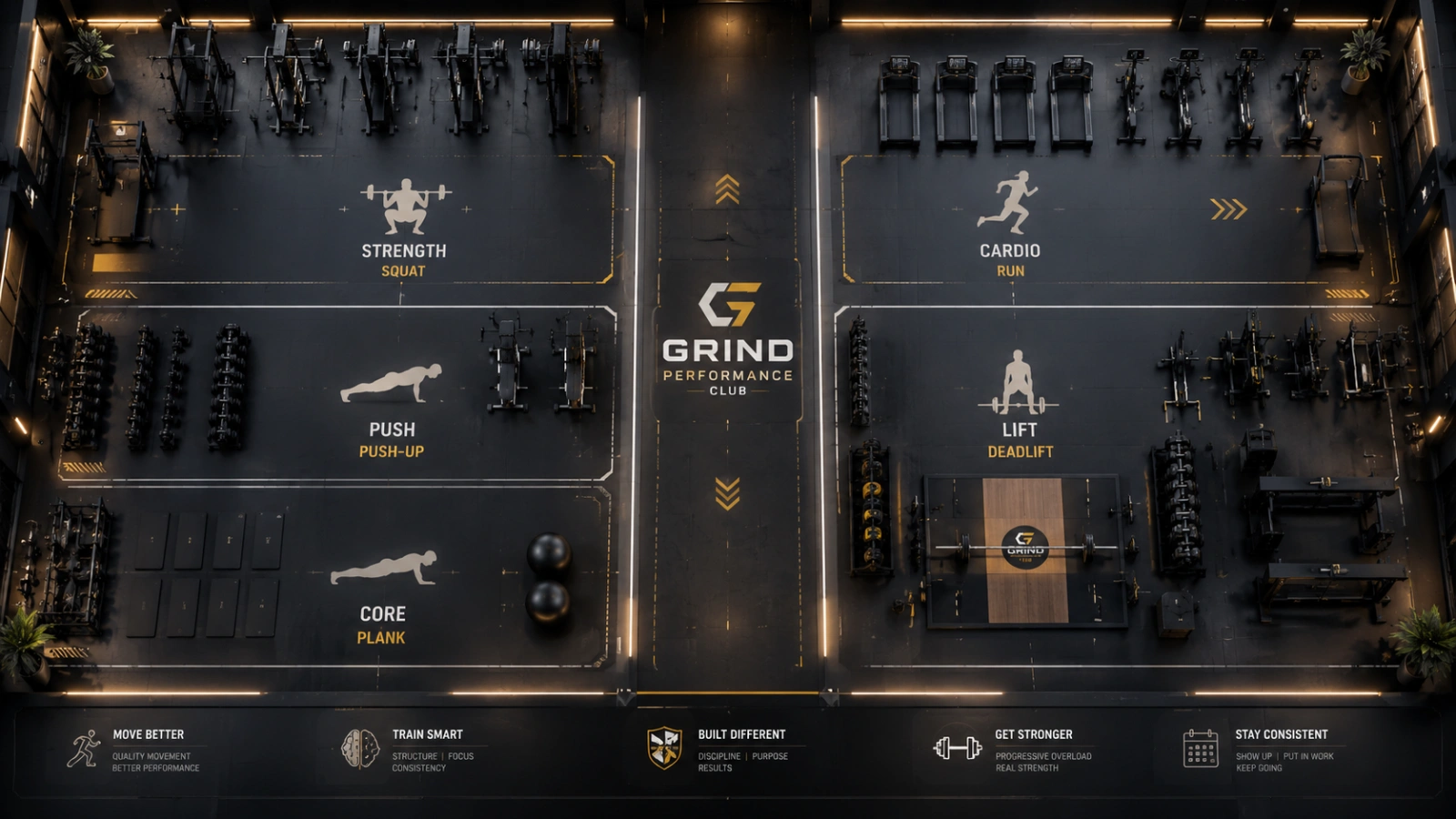
1. Squats: The Foundation of Full-Body Strength
Squats train the legs, glutes, and core simultaneously, making them one of the highest-return movements in any exercise routine. They also mimic real-world mechanics sitting, standing, lifting — which means strength built here carries into daily life.
Beginner tip: Start with bodyweight squats, focusing on keeping your chest up and knees tracking over your toes.
Common mistake: Letting the heels rise or knees cave inward.
Make it harder: Add a barbell, dumbbells, or a resistance band above the knees.
2. Push-Ups — The Ultimate Upper-Body Exercise
Push-ups have been around forever because they work. They train the chest, shoulders, triceps, and core in a single movement — no equipment required. The fact that you’re moving your own bodyweight through space also builds functional pressing strength that machines don’t quite replicate.
Beginner tip: Start with wall push-ups or knee push-ups to build baseline strength.
Common mistake: Letting the hips sag or flaring the elbows too wide.
Make it harder: Elevate your feet, slow the tempo, or add a pause at the bottom.
3. Lunges — Build Balance, Stability, and Strong Legs
Unlike squats, lunges train each leg independently, which exposes and corrects strength imbalances. They also challenge your balance and coordination in a way that bilateral exercises simply can’t.
Beginner tip: Start with stationary lunges before moving to walking lunges.
Common mistake: Letting the front knee shoot past the toes, which loads the joint unnecessarily.
Make it harder: Add dumbbells, try reverse lunges, or use a deficit.
4. Planks — The Core Exercise That Improves Everything
Core training isn’t really about six-pack aesthetics. A strong core protects your spine, improves your posture, and makes every other exercise more effective. The plank builds that foundational stability without putting compression on your lower back.
Beginner tip: Start with 20-second holds and rest. Quality beats duration every time.
Common mistake: Dropping the hips or letting the lower back arch.
Make it harder: Extend the hold time, try a plank with shoulder taps, or move to a side plank.
5. Deadlifts — One Movement That Trains Nearly Your Entire Body
The deadlift is arguably the most complete strength exercise available. It targets the hamstrings, glutes, lower and upper back, and core — all in one lift. Despite a reputation for being dangerous, deadlifts are safe when learned correctly, and the mechanics are essentially just “pick something heavy up properly.”
Beginner tip: Start with Romanian deadlifts using light dumbbells to learn the hip-hinge pattern.
Common mistake: Rounding the lower back under load.
Make it harder: Progress to a barbell or increase the load gradually.
6. Rows — The Exercise Most People Forget
Most people train pushing movements (push-ups, presses) far more than pulling movements. That imbalance contributes directly to the rounded-shoulder posture that comes from hours of sitting and screen time. Rows correct that.
Beginner tip: Resistance band rows are a perfect entry point, adjustable and joint-friendly.
Common mistake: Using momentum and swinging the torso instead of driving with the back.
Make it harder: Move to dumbbell or barbell rows, or try a cable machine.
7. Burpees — A Fast Way to Improve Fitness and Burn Calories
Nobody loves burpees. But very few exercises deliver the same payoff in less time. A burpee combines a squat, a plank, a push-up, and a jump, essentially a full exercise routine compressed into a single movement. That combination makes them exceptionally effective for burning calories and building cardiovascular capacity.
Beginner tip: Remove the jump and the push-up initially. Step back into a plank, step forward, and stand up.
Common mistake: Moving so fast that the form collapses completely.
Make it harder: Add a chest-to-floor push-up and maximize your jump height.
8. Glute Bridges — The Underrated Exercise for Core and Hip Strength
Sedentary lifestyles effectively “switch off” the glutes over time. Glute bridges reactivate them, which has downstream benefits for your lower back, hip mobility, and overall posture. This one is genuinely underrated.
Beginner tip: Focus on squeezing the glutes at the top of each rep and holding for one second.
Common mistake: Driving with the lower back rather than the hips.
Make it harder: Add a resistance band just above the knees, or try single-leg bridges.
9. Shoulder Presses — Essential for Functional Upper-Body Strength
Overhead pressing strengthens the shoulders, triceps, and upper back in a way few other exercises match. It also trains a movement pattern lifting things above your head that most people use constantly in real life.
Beginner tip: Dumbbells are more forgiving on the shoulder joints than a barbell for beginners.
Common mistake: Arching the lower back to compensate for limited shoulder mobility.
Make it harder: Use a single dumbbell, slow the eccentric phase, or press from a standing position.
10. Cardio Intervals — The Secret to Better Endurance Without Long Workouts
Long, slow cardio has its place, but for most people with limited time, intervals offer better return on investment. Alternating between short bursts of effort and recovery trains your cardiovascular system efficiently, burns more calories per minute, and doesn’t require a treadmill.
Beginner example: Walk for 90 seconds, jog for 30 seconds. Repeat 8 times.
Common mistake: Going so hard in the first interval that you can’t sustain the session.
Make it harder: Increase the work-to-rest ratio or add an incline.
How to Turn These Exercises Into a Beginner-Friendly Routine
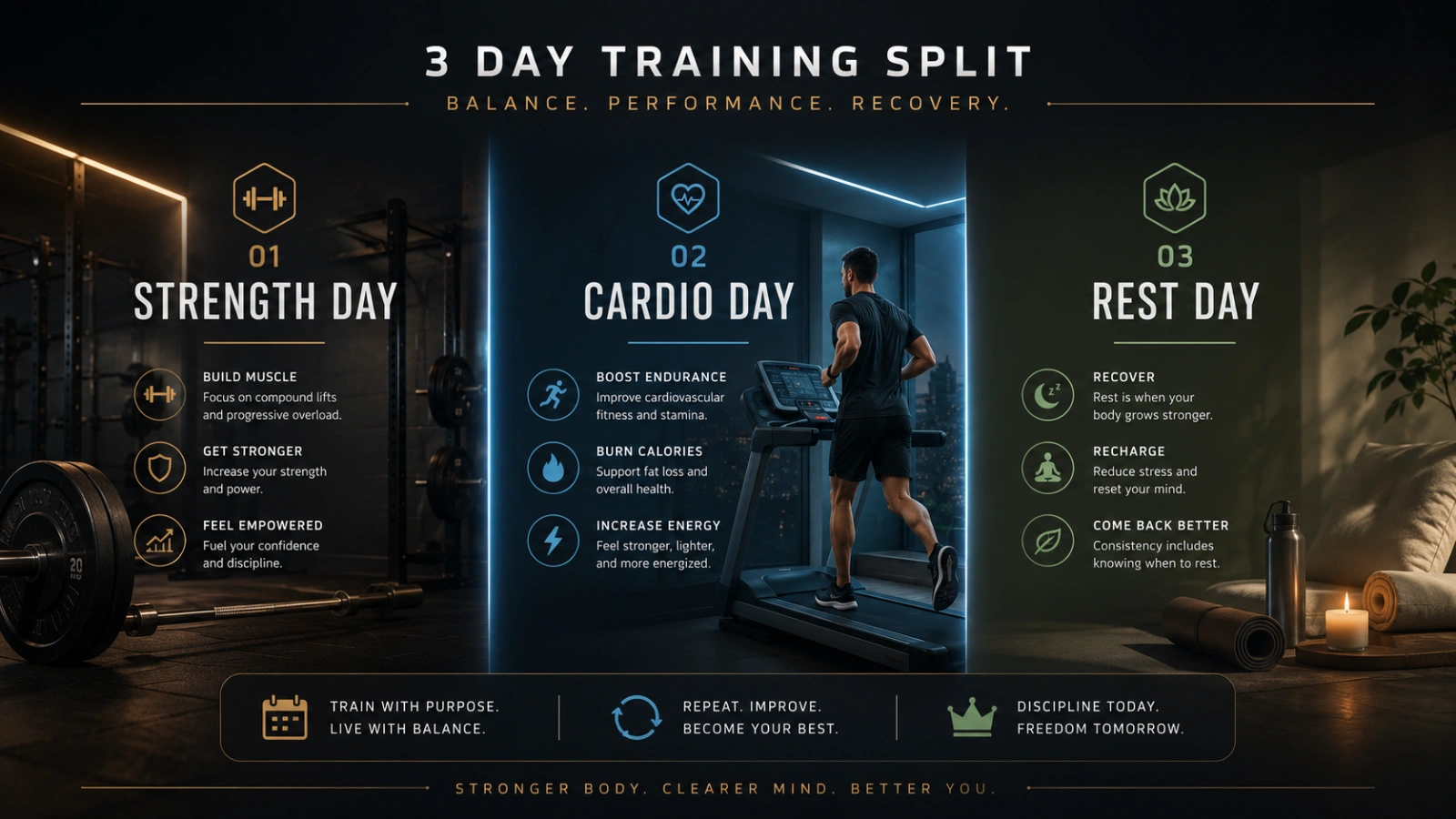
Having a list of great exercises is useful. Having a structure is what makes people actually show up.
Simple 3-Day Beginner Exercise Routine
Day 1 — Full Body A: Squats, push-ups, glute bridges, plank
Day 2 — Rest or light walking
Day 3 — Full Body B: Deadlifts, rows, lunges, shoulder press
Day 4 — Rest
Day 5 — Conditioning: Cardio intervals + burpees + plank
Days 6 & 7 — Rest or active recovery
How Long Should Your Workouts Be?
Twenty to forty-five minutes is enough for most people, most of the time. Longer sessions aren’t automatically better — consistency across weeks and months matters far more than session length.
How to Progress Without Burning Out
Add one small variable each week: one extra rep, slightly more weight, or ten fewer seconds of rest. That’s progressive overload in practice. Recovery isn’t optional; muscles grow during rest, not during the workout itself.
Best Exercise Routine for Weight Loss vs Strength Goals
If Your Goal Is Fat Loss
Prioritize compound movements (squats, deadlifts, burpees) because they burn the most calories per session. Add two or three cardio interval sessions per week. Sustainability matters more than intensity — a routine you maintain for six months will outperform a brutal one you abandon in three weeks.
If Your Goal Is Building Strength
Focus on resistance training three to four days per week. Track your loads and aim to increase them gradually. Allow 48 hours of recovery between sessions targeting the same muscle group.
If You Just Want More Energy and Better Health
A balanced routine — two strength sessions, two cardio sessions, and daily walking — delivers more than most people expect. Mobility work (even just ten minutes of stretching) makes a noticeable difference in how you feel day to day.
How Calorie Tracker Buddy Supports Your Exercise Routine

Sticking to a consistent exercise routine is much easier when you can clearly see what’s actually driving your results. Many people train regularly but still feel stuck because they’re unsure whether their food intake, workout intensity, or recovery is helping or holding them back. Calorie Tracker Buddy helps remove that uncertainty by connecting your daily nutrition with your training progress.
Instead of relying on guesswork, it gives you a clearer picture of how your exercise routine is affecting your overall energy balance and fitness goals.
Why It Helps Your Routine
- Tracks calories consumed and calories burned in one place
- Helps you understand whether your exercise routine supports fat loss, maintenance, or muscle gain
- Makes it easier to spot patterns in progress (or plateaus)
- Encourages consistency by showing real, measurable feedback
How It Fits Into Your Fitness Plan
When used alongside your exercise routine, it helps you make smarter adjustments:
- On strength days, you can ensure you’re eating enough to recover properly
- On cardio or fat-loss days, you can monitor your calorie deficit more effectively
- Over time, it helps you fine-tune both your workouts and nutrition based on real data
The Real Benefit
The biggest advantage is clarity. Instead of wondering if your exercise routine is “working,” you get a simple, ongoing snapshot of your habits and results. That makes it easier to stay consistent, stay motivated, and actually see progress over time.
Also Read
The Ultimate 5 Day Gym Routine For Strength And Muscle Gain
Common Exercise Routine Mistakes That Slow Progress
- Doing too much too soon leads to burnout and injury within the first few weeks
- Skipping recovery — the workout is the stimulus; rest is where results actually happen
- Copying advanced programs — content designed for experienced athletes is rarely appropriate for beginners
- Changing routines constantly — consistency with a decent plan beats novelty with a perfect one
- Ignoring form — poor mechanics limit results and eventually cause injury
- Only doing cardio — strength training is essential for metabolism, posture, and long-term health
- Not tracking progress — without data, it’s impossible to know whether you’re improving
Final Thoughts: The Best Exercise Routine Is the One You Can Stick To
Fitness doesn’t require perfection. It requires repetition. The best exercise routine isn’t the most sophisticated one; it’s the one you actually show up for, week after week.
Pick three or four exercises from this list. Build a simple structure around them. Add a little challenge each week. That’s it. The results will come, not because the plan was perfect, but because you were consistent enough to give it time to work.
A stronger, healthier life is built one workout at a time, not one perfect plan.
FAQs
What is the best exercise routine for beginners?
A three-day full-body routine using compound movements (squats, push-ups, rows, lunges) is the most effective starting point.
How many exercises should be in one workout?
Four to six exercises per session is a practical range for most people.
Is it better to work out every day or rest?
Rest days are not optional — they’re when adaptation occurs. Three to five sessions per week with recovery days are optimal for most.
What exercises burn the most calories?
Compound, full-body movements: burpees, deadlifts, squats, and cardio intervals rank highest.
What is the best exercise routine for weight loss?
A balanced routine usually includes:
- Cardio exercises (walking, running, cycling, skipping)
- Strength training (weights or bodyweight workouts)
- Core exercises
- Flexibility and recovery sessions
A combination of cardio + strength training tends to work best for sustainable fat loss.