


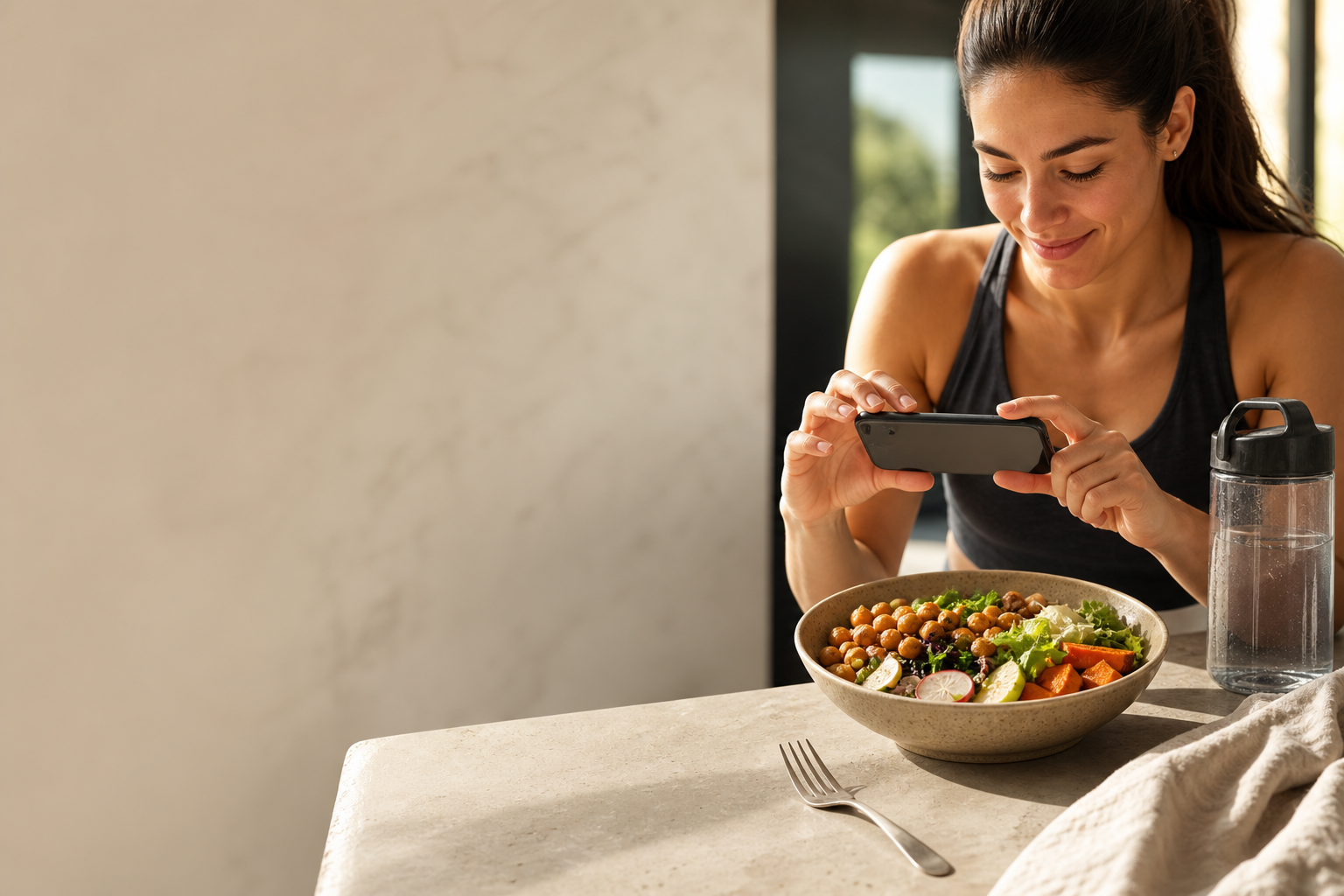
In 2026, AI photo calorie counting has become a must-have for lifters who want speed without sacrificing macro accuracy. This comparison shows where Calorie Tracker Buddy and Lose It! excel for gym-staple meals, fast logging, and staying on plan in real-world training.
**Download free on Android →:
The authority angle also matters: protein timing guidance in this guide references the NIH’s consumer fact sheet on protein linked below so lifters can make decisions grounded in credible basics rather than guesswork.
Trust signals that matter for gym-goers evaluating an app should be explicit. Risk reversal shows up as a free Android download so you can try AI photo calorie counting and the snap-to-log workflow before investing time. Authority is covered by citing the NIH’s consumer fact sheet on protein (see nih. gov) for baseline needs and sources, which keeps fundamentals clear and verifiable.
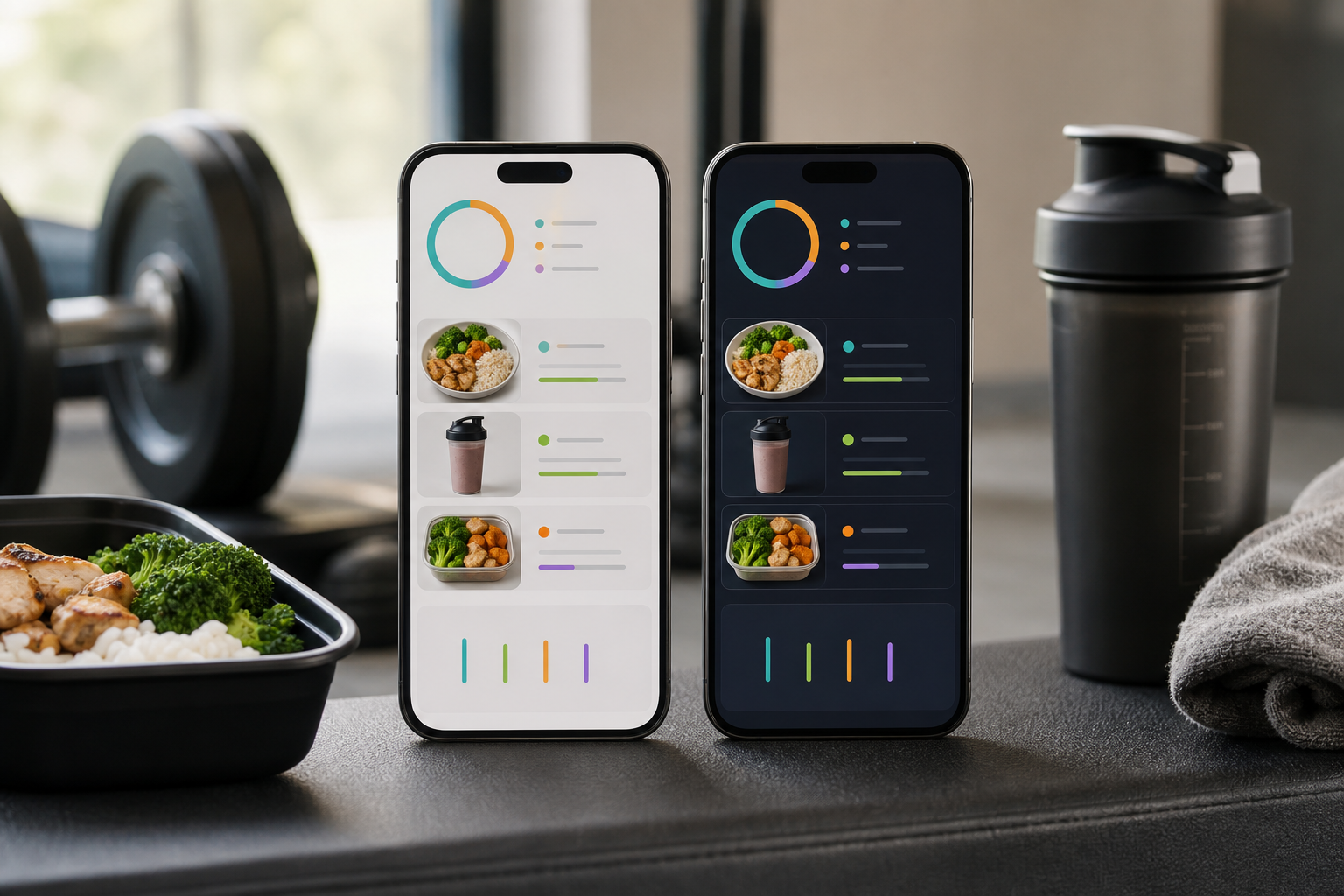
What Gym-Goers Actually Need From a Photo Calorie Counter
If you train hard, the app has one job: keep your intake aligned with your plan without slowing you down. Start with accuracy. You need photo recognition that can handle gym-staple foods: chicken-and-rice bowls, oats with whey, Greek yogurt with fruit, and meal-prepped containers with simple sides. Mixed dishes and odd lighting should not derail logging. If the app guesses wrong, you need a fast way to edit portion sizes and ingredients.
Second, macros matter. Calories alone don’t tell you if you’ll recover well. You want a protein, carb, and fat split on every meal, plus a running daily tally. For lifters, protein timing around workouts can influence recovery and muscle gain.
The NIH’s overview on protein is a solid baseline read on needs and sources (see nih. gov). Even if you keep the same daily calories, shifting a portion of protein toward pre- and post-workout windows can help many gym-goers feel better recovered.
Edit Fast When the Guess Is Close
“Let the camera get you 80–90% there. Then nudge portions or a condiment entry to land your targets.” This keeps logging quick while keeping your program intact.
When you consistently apply this mental model across your week, you minimize cognitive load. Snap the picture, confirm the base foods, and then use your plan to fine-tune grams of protein and carbs. This way, you combine speed with repeatability on the meals you eat most.
Macro Precision, Speed, and Sync
Third, speed. You probably eat four to six times per day on a bulk or cut. Every extra tap adds up.
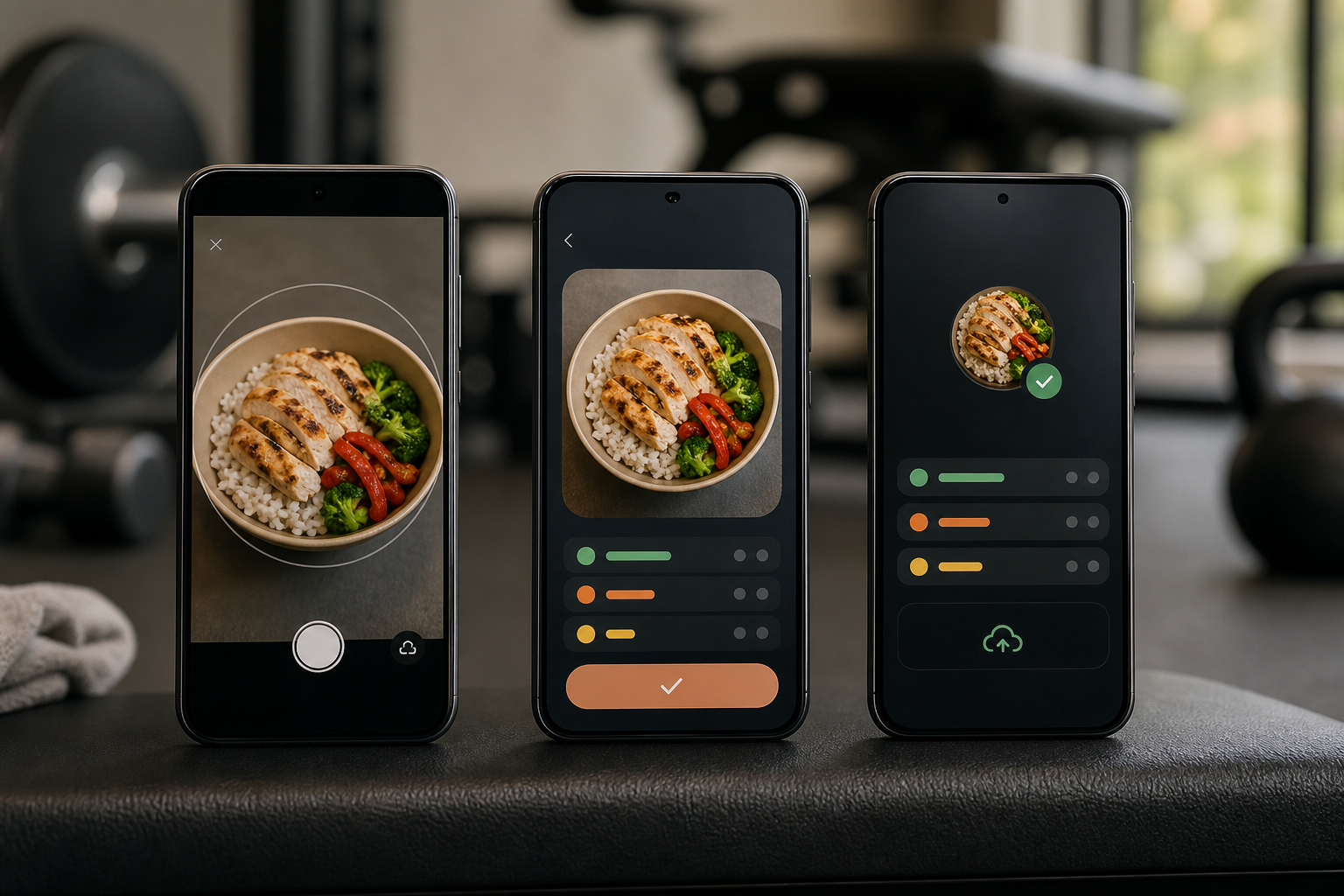
The fastest flows are snap → confirm → logged. Barcode scanning is a bonus for supplements and bars, but it’s not enough if photo logging drags. Ideally, two or three taps per meal, even when the lighting isn’t perfect, keeps you compliant across long training blocks.
For lifters who prep on Sundays, a fast batch workflow also matters. Snapping multiple containers, applying the same template (e. g., “150g chicken thigh + 200g cooked jasmine rice + 5g olive oil”), and saving that pattern for the rest of the week can shave minutes off each day.
Fourth, integrations. Your app should pull steps and heart rate work, and push nutrition to your health hub. Ideally it syncs with your wearable and your phone’s health data so your burn and intake stay in one view. When you review weekly trends, having training load and macros in the same timeline makes it easier to see patterns (e.
, low-carb rest days or higher-carb leg days). Seeing your macro intake aligned with sleep and heart rate variability can also help you decide when to push a session versus back off. The more your nutrition and training data talk to each other, the better your decisions get.
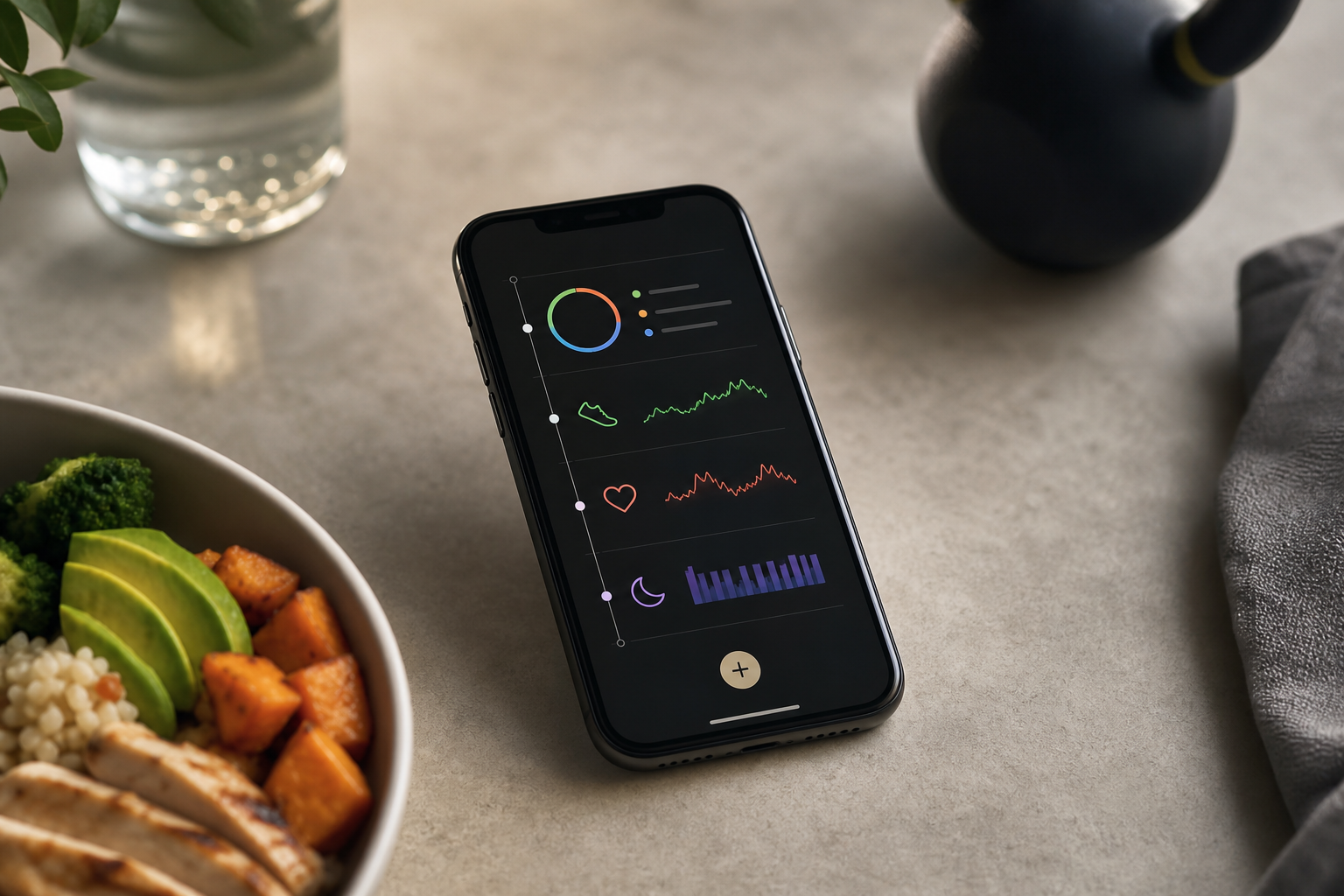
Fifth, exercise tracking that respects lifting. Steps do not reflect a heavy squat session. Your tracker should account for strength training, circuits, and intervals, not just walking. Bonus points if you can tag a workout with RPE or sets/reps so the app doesn’t over-credit “calories burned” for light accessory work. If you’re running DUP or a conjugate approach, being able to separate high-intensity days from recovery days within the same app view reduces the chance that you “earn” extra calories off a pump workout that didn’t materially increase expenditure.
Sixth, offline use. Many gyms are dead zones. You need the app to log meals and workouts with no signal and sync later without data loss.
If ai photo calorie counting fails entirely without a connection, your consistency will suffer the moment you head down to a basement squat rack. Offline-first design also matters for travel. Airport gyms, hotel basements, and concrete garages can kill signal, and you still need your history to stay intact.
To stack the deck in your favor, pre-save the “anchor” meals you return to most often, such as oats with whey, chicken with rice, or Greek yogurt with berries. Use ai photo calorie counting for those anchors to get the bulk of the entry right, then nudge grams up or down so you hit the day’s macro budget cleanly. Keep a small barcode shortlist for your go-to bars, RTDs, and creatine so you can scan when photos aren’t needed. Finally, enable wearable sync so steps, heart rate, and workouts appear beside meals, giving you training context with every entry.
Build Your Mental Scorecard
A practical way to self-audit an app is to translate the usual bullet checklist into a quick narrative you can apply mid-scroll. First, judge accuracy on staple gym meals from photos and make sure the app exposes a full macro breakdown by meal and day so you aren’t flying blind on protein. Next, time the photo-to-log flow and aim for under 10 seconds so compliance stays high across long cycles.
From there, verify the sync story: it should work with your phone’s health hub and, ideally, your wearable so intake and training load live in one timeline. Look for lifting-aware exercise logging rather than steps-only so your hard sets aren’t misrepresented. Finally, test offline logging in a dead-zone gym and confirm that the app auto-syncs cleanly when you’re back online.
Mention ai photo calorie counting at least once when you self-audit an app against these six points so you don’t slip into “calories only” mode. The camera feature is the speed lever, but macro visibility is the results lever. Both have to be present to serve a serious lifter. If an app nails the camera yet hides macros or fumbles offline sync, it won’t stick when training intensifies.
If you want to pressure-test these criteria on your own meals, try Calorie Tracker Buddy free on Android and confirm in practice that meals, water, and exercise land in one view, which keeps you honest on a cut. Fitness Coach mode adds tailored advice, custom challenges, and motivational support for plateaus, so accountability doesn’t rely solely on streaks. There’s also a light social feed where you can share meals and workouts if a touch of public logging helps consistency. Just as important, offline-first behavior for meals and workouts prevents dead zones from breaking your streak, syncing once you’re back online so your history stays intact.
“I’ve been using Calorie Tracker Buddy for five weeks, and I’ve already lost 4kg! It keeps me motivated with my little buddy cheering me on.” — Alex Sim
As a mid-article checkpoint, download Calorie Tracker Buddy on Android and run two snap-to-log tests on meals you prep frequently. That exercise highlights the pros and cons of your current habits versus a camera-first flow. Use that experience alongside your training split to decide which meals should lean on ai photo calorie counting and which still benefit from a kitchen scale plus a quick manual entry when precision matters most.
Practical mid-article checkpoint: set your protein floor (e. g., 1.6–2.2 g/kg/day as a common heuristic many lifters use) and bias intake around the training window so recovery is supported. Choose two daily “anchors” to photo-log automatically, with breakfast and post-workout as strong candidates for repeatability. Finally, make a short decision about snacks: if the label is obvious, go barcode-first so you don’t waste time snapping what a scanner can resolve in a second.
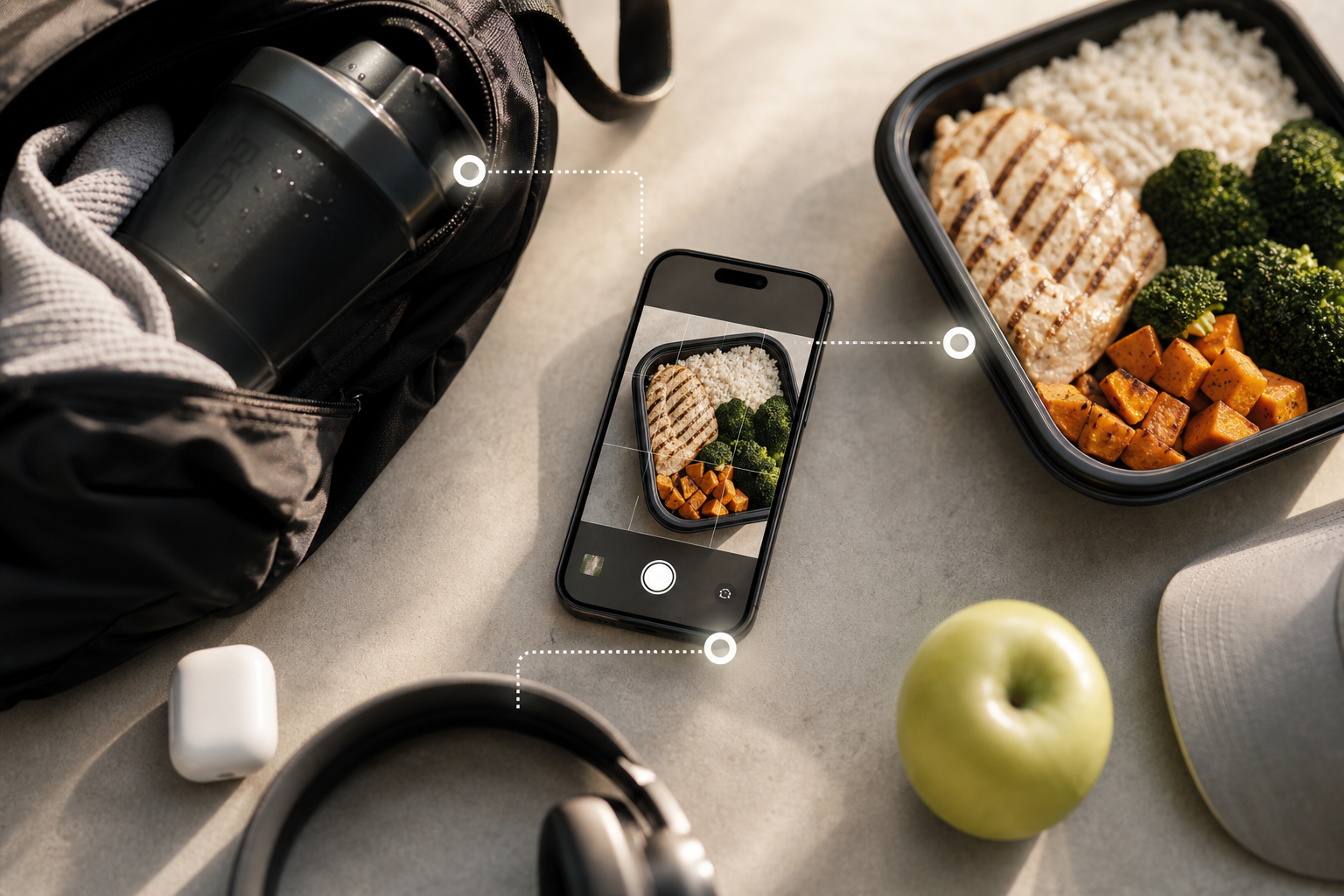
Read the calorie counting app trade-offs guide → to see exactly where scans beat photos and vice versa for gym snacks versus home-cooked meals.
Trust Signals at a Glance
You can move faster when trust is explicit. This comparison includes a testimonial from a real user (Alex Sim), clear risk reversal in the form of a free Android download so you can test ai photo calorie counting without commitment, and an authority reference to the NIH’s consumer fact sheet on protein (see nih. gov) to ground macro-timing concepts in credible guidance. Together, those signals reduce uncertainty so you can focus on accuracy, macros, and consistency rather than marketing claims.
These signals help gym-goers evaluate faster. They reduce uncertainty and keep the focus on accuracy, macros, and consistency.
Also Read!
Best Photo Calorie Counter for Gym-Goers in 2026
Calorie Tracker Buddy vs Lose It! for Beginners: Which Is Better for AI Photo Calorie Counting?
Lose It!: Strengths and Weaknesses for Gym-Goers
Lose It! is a long-time player with a very large, verified food database built over many years. Its Snap It photo recognition has had time to mature, and barcode scanning is excellent for packaged supplements, protein bars, and drinks. If half your snacks are branded items, that scan flow is fast and reliable.
Furthermore, Lose It! connects to a broad health ecosystem. In practice, I’ve synced it with Apple Health on iOS and seen it play well with big wearables like Fitbit and Garmin. If your routine is split across a watch, a bike, and a treadmill brand, that breadth helps keep all your burn data in one place. Its meal planning features also help if you like to map out weekdays.
From a gym-goer’s perspective, those strengths translate into time saved when you’re grabbing a preworkout drink or a convenience-store protein bar. The verified database reduces the need to double-check labels. For lifters who live on structured weekday rhythms, the ability to copy meals forward or plan a week’s worth of lunches can be a meaningful compliance boost.
Real-World Logging Flow
On the other hand, the free tier is limited for gym use. Macro goals and deeper nutrient views tend to live behind Premium, along with some integrations. If you need daily protein targets and macro budgeting, expect to pay.
In my tests, Snap It can misread homemade meal-prep containers, especially mixed bowls with sauces. You can fix entries, but it takes a few more taps. There’s no built-in coaching or challenge system either, so motivation relies on streaks and basic goals. For lifters who find accountability in guided prompts or challenges, that gap might matter during longer cuts or maintenance blocks when motivation dips.
A practical takeaway is that Snap It and barcode scanning shine for branded snacks, shakes, and single-item foods where package data is clear. The watch-out comes with mixed bowls and meal-prep containers, which may require manual edits and a couple of extra taps to nail macros. Motivation can also feel thinner compared to coaching-first tools; without built-in challenges, you’ll lean on your own habits and streaks to stay engaged.
In addition, I have not seen true offline logging from Lose It! during no-signal sessions. Food search and sync expect connectivity, which can slow you down in underground weight rooms.
Community features exist, yet they feel more like static groups than a feed built to share meals and workouts in real time. Depending on how you train, those small frictions can add up. If it takes longer to fix an entry in a busy gym, you may skip logging entirely and lose macro visibility later in the day.
If you’re choosing between barcode-first versus camera-first logging, this practical guide to calorie counting app trade-offs explains where scans beat photos and vice versa for gym snacks versus home-cooked meals. For many lifters, a hybrid approach works well.
Use ai photo calorie counting for simple, home-prepped meals and barcode scans for packaged snacks and shakes. Build your default so you don’t think about it. Photos for your staples, scans for labels, manual grams for sauces and oils.
Mid-article CTA for hands-on testing: try Calorie Tracker Buddy’s camera logging now. Snap a chicken-and-rice bowl, then add sauce or extras by hand to see how fast you can land your macros with a two-step flow. At the same time, keep Lose It! in your toolbox if your diet includes frequent barcodes; it’s still excellent at scanning supplements and branded snacks quickly when labels are king.
Pricing and Premium Considerations
When you evaluate pricing, start with your non-negotiables. If daily protein targets and a visible macro breakdown per meal are essential, confirm whether those features require Premium in Lose It!’s ecosystem and factor that into your decision. Integration breadth is a genuine plus for Lose It!, but note that some device connections and advanced nutrient views may also sit behind the Premium wall and could influence total cost of ownership.
Think about value through the lens of your food pattern. If your day leans heavily on packaged foods and supplements where barcode scanning is the primary accelerator, then Lose It!’s database and scan speed can justify a subscription. If you focus on repeat home-cooked meals and want the fastest possible camera-first speed on anchors, a snap → confirm → logged approach may deliver bigger time savings without gating macro views behind an upgrade.
Value filter: match the paid features to the time you’ll actually save in your most common logging scenarios.
Also Read!
Feature-by-Feature Comparison: Photo Calorie Counting for the Gym
Here’s the head-to-head across seven gym-specific dimensions. I scored each during a push/pull/legs split with two snacks and one shake per day.
| Dimension | Calorie Tracker Buddy | Lose It! | Winner |
|---|---|---|---|
| Photo Recognition Accuracy | Handles simple gym meals well; gives real-time nutritional info from the photo with quick edits for portions. | Mature Snap It; large verified database helps, but homemade meal-prep bowls can take extra edits. | Draw |
| Macro Tracking Depth | Full carbs/protein/fat view per meal and day included; water and exercise shown together. | Detailed macro goals and advanced nutrients require Premium on the free tier. | Calorie Tracker Buddy (free-tier edge) |
| Fitness Tracker Integration | Syncs with Google Fit for steps and workouts. | Broader ecosystem; works with major platforms like Apple Health, Fitbit, and Garmin. | Lose It! |
| Offline Use | Logs meals/workouts offline and auto-syncs later; great for basement gyms. | Expects connectivity; offline food search is limited. | Calorie Tracker Buddy |
| Coaching & Motivation | Fitness Coach mode, custom challenges, personalized tips, and a virtual buddy. | Streaks and basic goals; no built-in coaching system. | Calorie Tracker Buddy |
| Speed of Logging | Fast photo flow; barcode scanning not advertised. | Fast photo plus strong barcode scanning for supplements/bars. | Lose It! (scan edge) |
| Community & Accountability | Social posting for meals, workouts, and wins; lightweight accountability. | Groups/challenges exist; richer features may require Premium. | Calorie Tracker Buddy |
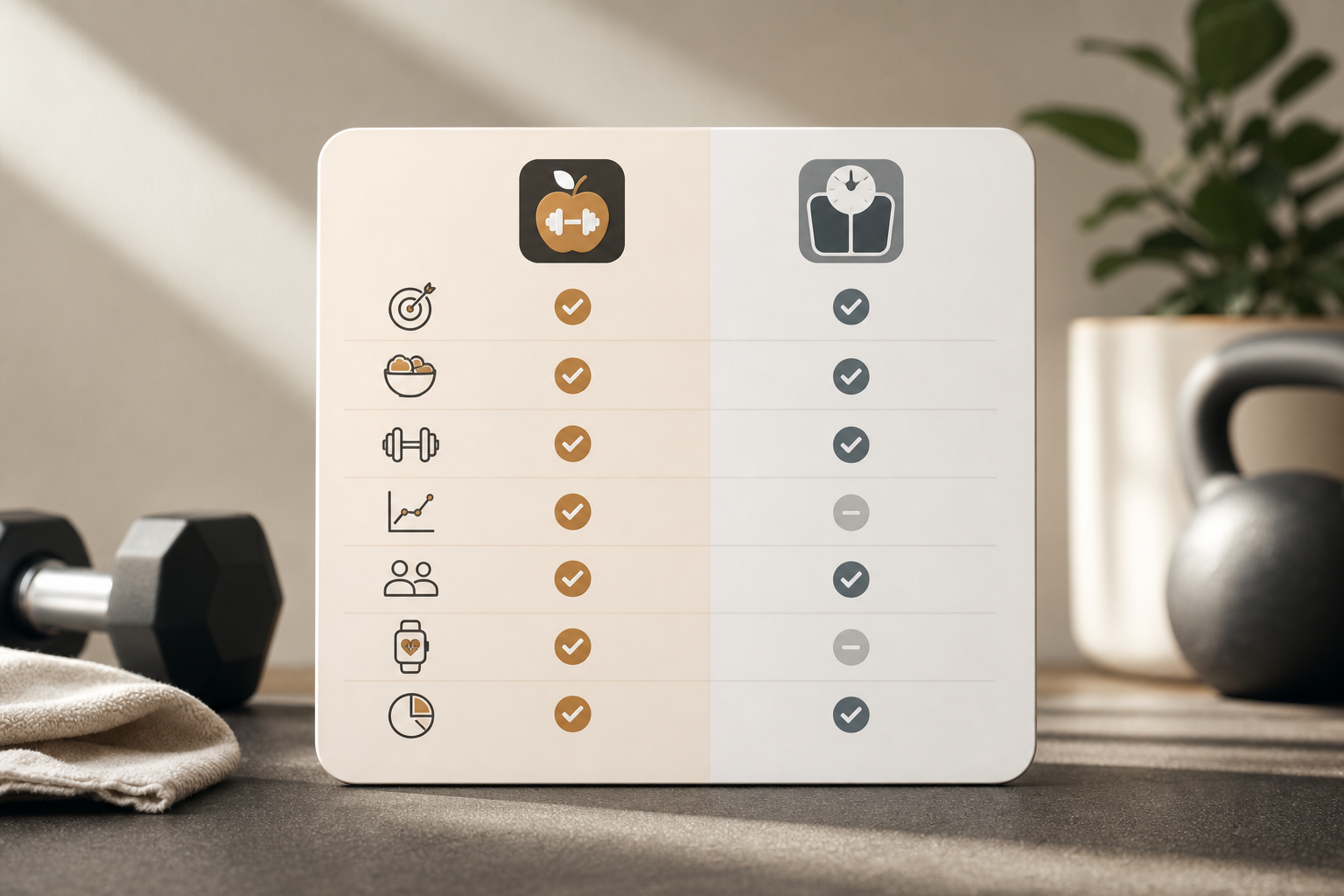
Real-world note: ai photo calorie counting is tightest on simple, high-contrast foods. For mixed bowls, I snap the base (rice/chicken), then add sauce or extras by hand. That two-step flow keeps accuracy high while still saving time.
You can also pre-save a few “anchors” (e. g., 150g chicken + 200g cooked rice) and let the camera pick the base while you choose the closest saved template for speed. Over time, the compound time-savings add up, and you’ll feel less resistance to logging on busy days.
Speed Tips You Can Apply This Week
- Batch your Sunday meal-prep photos and save the template; reuse it daily with minor gram tweaks.
- For shakes, let the app recognize the glass, then scan the tub barcode for unambiguous macro data.
- Save condiment defaults (e. g., 15g sriracha, 10g light mayo) to curb hidden calories.
- Keep offline mode in mind: if your gym is a dead zone, build the habit of snapping and confirming right away and let the sync happen at home.
Try Calorie Tracker Buddy’s camera logging now → Show how to prep entries and batch-scan common meals to speed up both apps. Over a week, shaving even 10–15 seconds per meal compounds into minutes you can put toward training or recovery. If you train five days per week and eat five times per day, saving 10 seconds per meal returns over four minutes a day. You can redirect that time into warm-ups, mobility, or simply finishing your log with less friction.
To round out your evaluation, add a quick self-audit at the end of week one. First, ask whether the photo flow actually reduced taps compared to your previous method and whether you felt less friction while logging. Next, examine macro misses: were protein shortfalls or carb overages lower on days you used photo logging and your saved templates? Then verify whether offline logging prevented missed entries in dead zones and that your wearable/phone integrations consolidated intake and training load into one timeline without duplicates or gaps. Those answers help you decide whether to double down on camera-first logging or keep a hybrid approach for certain meals.
If those answers trend positive, the app’s photo-first workflow is doing its job for a lifter’s routine. If not, adjust the split. Use ai photo calorie counting for breakfasts and post-workout meals. Reserve manual grams or barcode scans for sauces, dressings, and complex dinners until the camera learns your patterns.
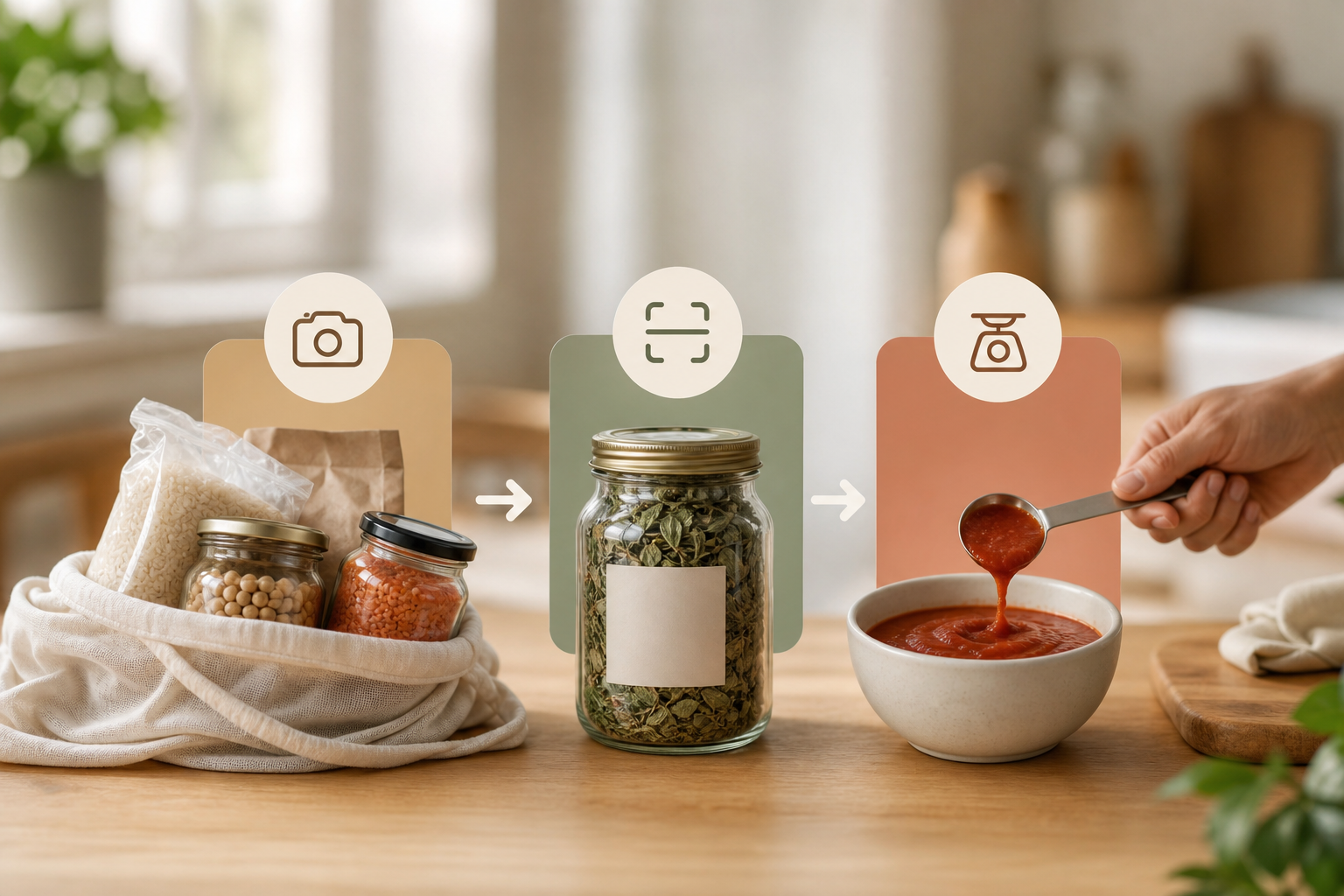
One-Week Trial Plan for Lifters
- Day 1–2 (Setup): Save two anchors. Turn on Google Fit or Apple Health sync where applicable. Practice snapping a chicken-and-rice meal and a yogurt bowl.
- Day 3–4 (Refine): Compare the camera’s macros to your plan. Adjust portions and save templates. Note any friction points during no-signal sessions.
- Day 5–6 (Stress Test): Train at your usual peak-intensity sessions. Log immediately after sets while you rest. Confirm that offline-first behavior preserves entries.
- Day 7 (Review): Open your weekly timeline. Check protein totals, carb timing on training days, and any gaps in logging. Decide whether to keep the flow or tweak which meals use the camera versus a scale.
Key takeaway: Photos for staples. Scans for labels. Manual grams for sauces and oils. This hybrid keeps speed high without losing macro precision.
Extra Macro Timing Notes for Gym-Goers
Protein distribution matters for many lifters. Spreading intake over three to five feedings with 20–40g protein per meal is a common pattern, especially near training. Carbohydrates can be shifted toward pre-workout and post-workout windows for energy and recovery.
Fats can sit in meals further from training to avoid slowing digestion near your session. These are practical levers. They do not require perfection, only consistency day to day.
When you use ai photo calorie counting, let the app handle the repeat items first. Then tweak a single macro lever per meal. Increase protein by 10–15g via yogurt or egg whites.
Nudge carbs up with rice or oats in 25–40g increments. Keep oils measured or templated to prevent silent creep in calories. Over a week, small, consistent adjustments produce cleaner trends than big day-to-day swings.
Aim for consistent patterns over single-day perfection; your progress is built on repeatable meals and quick micro-corrections.
Offline Workflow Playbook
- Before entering a dead zone, open the app once to cache your last meals and templates.
- Snap the meal and save locally even if macro guesses need minor edits. Do the fine-tuning after your session.
- Add a quick text note like “add 10g olive oil later.” It becomes your reminder during sync.
- When back online, review the day’s entries. Confirm macros, then check that steps, HR, and workouts have synced next to meals.
This approach keeps your streak intact. It also protects accuracy when the signal drops in basement gyms, hotel parking-level fitness rooms, or crowded event venues.
Mini FAQ: Photos, Scans, and Lifter-Specific Needs
- How accurate is ai photo calorie counting on mixed meals?
- Best on simple bases with clear visual cues. Use a two-step flow: snap the base, then add sauces and extras manually for precision.
- Do I still need a kitchen scale?
- Yes, for learning true portions and for complex dinners. Over time, you’ll rely on the scale less for staples as templates get dialed in.
- What if lighting is poor in my gym?
- Angle for contrast and avoid heavy shadows. If recognition struggles, fall back to your saved anchors and adjust grams quickly.
Also Read!
Calorie Tracker Buddy: Why It Fits a Lifter’s Routine
Calorie Tracker Buddy focuses on the snap → confirm → logged loop for common gym meals. It shows carbs, protein, and fat per meal and day without locking macro views behind a paywall. The app places meals, water, and exercise in one timeline. That unified view supports real-world decisions during cuts or maintenance blocks.
The Fitness Coach mode adds tailored advice, custom challenges, and motivational nudges. These features help during plateaus or long training cycles. The social posting feed provides lightweight accountability by letting you share meals and workouts with your circle.
For Android users, Google Fit integration consolidates steps and workouts. That helps you interpret intake alongside training and recovery. Offline-first logging protects your consistency in basement gyms or while traveling. Meals and workouts save locally and sync when you reconnect.
Fast start plan: download Calorie Tracker Buddy on Android and immediately save two anchors you eat often. Chicken with rice is a staple for many lifters, and oats with whey is another dependable option for mornings. Try the camera flow on both and confirm the macros against your targets to calibrate expectations. Then set your daily protein target and keep an eye on the running total as you eat, making small adjustments as needed rather than dramatic end-of-day corrections.
“I’ve already lost 4kg in five weeks, and the camera flow keeps me on track even on busy days.” — Alex Sim
Trust recap within this section is straightforward. There’s risk reversal because the Android app is free to download, letting you put ai photo calorie counting through its paces before you commit time to a full migration. There’s clear authority, as macro timing guidance in this guide leans on the NIH’s consumer fact sheet on protein (see nih. gov), which sets a credible baseline for protein needs and sources.
Small Habits That Compound
Treat condiments like macros, not mysteries. Save a few defaults once, say 15g sriracha and 10g light mayo, and reuse them all week so hidden calories don’t creep in. When you’re slammed for time, copy yesterday’s post-workout meal and adjust grams by feel, then confirm against your targets to remain precise without extra taps. If you miss a log in the rush, take a quick photo anyway and use it as your reminder to backfill the entry with accurate macros later the same day. Over time, those tiny actions remove friction and keep your plan resilient during busier training blocks.
Putting It All Together: A Lifter’s Decision Tree
Choose Calorie Tracker Buddy if your non-negotiables include free-tier macro tracking visible by meal and day, offline logging that auto-syncs for dead-zone gyms and travel, and an in-app ecosystem with coaching, challenges, and a friendly accountability loop. Those features minimize friction for lifters who rely on repeatable staples and want their meals, water, and exercise to live in one place for at-a-glance decisions. If you’re on Android and you prize an offline-first design, that combination is hard to beat for daily compliance.
Choose Lose It! if broad device integrations across Apple Health, Fitbit, and Garmin are primary and if elite barcode scanning for supplements, bars, and branded drinks makes up a big chunk of your time savings. A large, verified database remains a powerful asset when your diet skews toward packaged foods, and the matured photo and scan tools can still move quickly when labels are involved. Be prepared to explore Premium if you want detailed macro goals and some deeper nutrient insights on the free tier.
A hybrid approach suits many serious gym-goers. Prefer ai photo calorie counting for home staples you cook and repeat, where the camera plus saved templates will get you logged in seconds. Then rely on barcode scans for snacks and RTDs to remove ambiguity, and keep a kitchen scale handy for sauces and complex dinners until the camera learns your plate patterns. This way, you get the compounding time savings of photos without losing the confidence that comes from precise grams where visuals alone can’t tell the whole story.
To convert this comparison into action, test the camera flow on your next two meals and see how your macro totals look afterward. If it keeps you fast and accurate, you’ve found your daily driver. If not, adjust your mix of photos, scans, and measured grams until each meal type maps to the fastest accurate method.
- Closing CTA (gym-goers): **Download Calorie Tracker Buddy free on Android →
Final trust recap so you can move forward with confidence:
- Risk reversal: Free to download on Android — try the camera-based logging flow without commitment.
- Authority: This article links to the NIH’s protein fact sheet to ground macro-timing concepts in a credible source, not just gym lore.
- Testimonial: Real user feedback from Alex Sim provides context on results and motivation.
If you’re serious about training, align your tools with your goals. Put ai photo calorie counting to work on the meals you repeat. Protect your streak with offline logging. Keep macros visible every time you eat.