


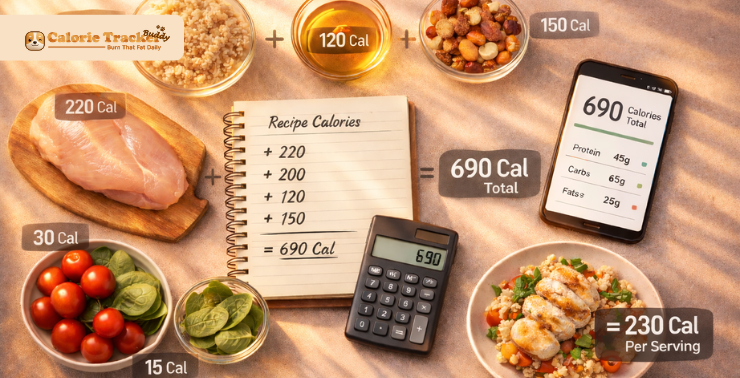
You’ve just finished cooking a homemade meal, and a simple question comes up: how do you calculate the calories in a recipe like this? Packaged foods make it easy, but homemade dishes don’t come with labels. That leaves you estimating or skipping tracking altogether, which can quietly affect your progress over time.
At first glance, the process seems straightforward. Add up the calories from each ingredient and divide by servings. But once you try it, things get confusing. Should you use grams or cups? Do cooking methods change calorie values? And how precise do you really need to be?
For busy professionals managing work, workouts, and meal prep, even small points of friction can break consistency. The good news is that once you understand the basics, the process becomes simple, fast, and easy to repeat.
The good part is this. Once you learn how to calculate calories in a recipe properly, it becomes quick and repeatable. You don’t need perfect numbers. You need a system you can trust.
Read Aloud!
What Does It Mean to Calculate Calories in Recipe?
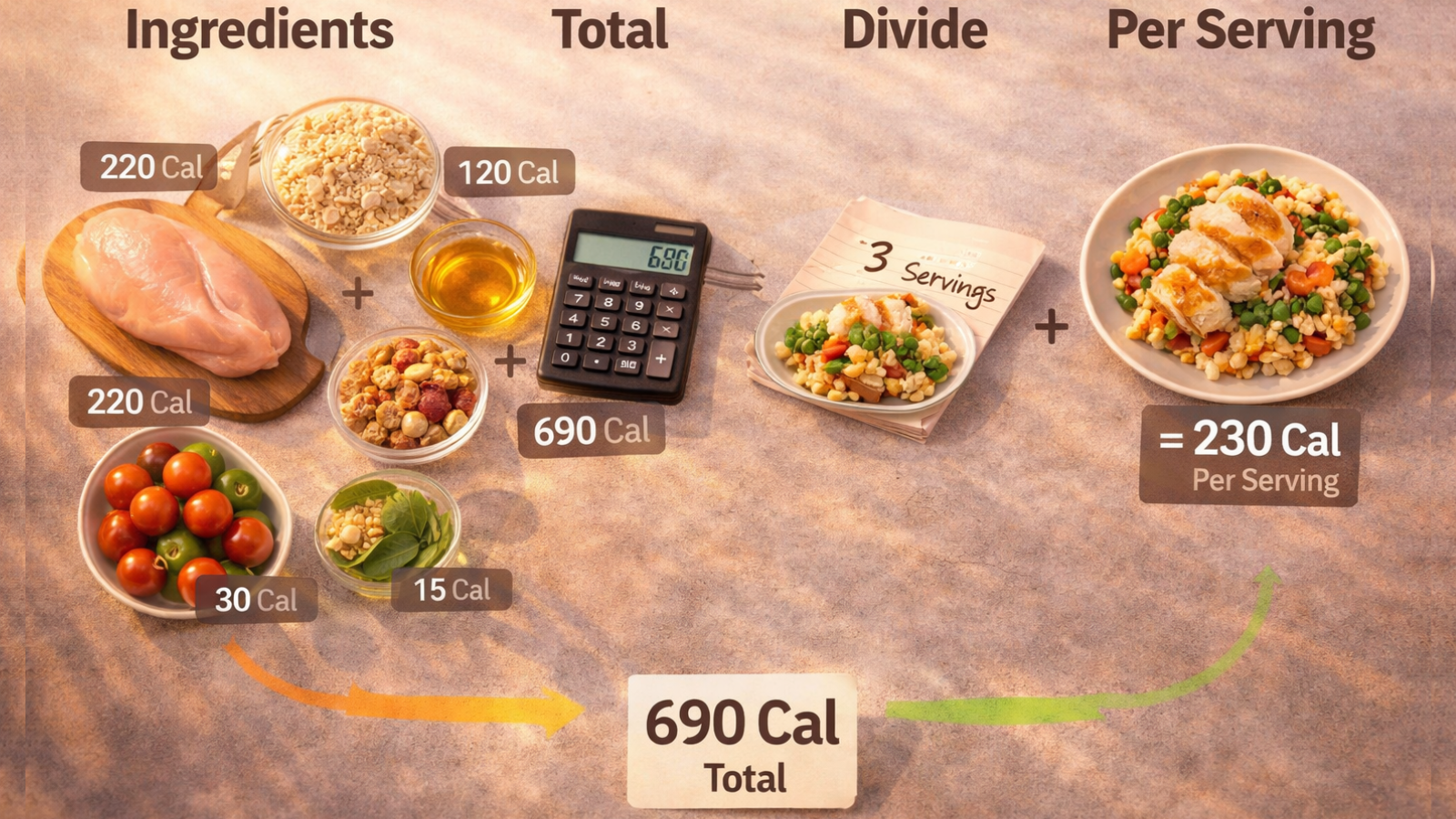
When you calculate calories in recipe, you’re adding up the energy from every ingredient and splitting it into portions you actually eat.
Each ingredient brings its own calorie value. Combine them, and you get the total for the dish. Divide that by servings, and you have something you can track.
This step matters more than most people expect.
If you’re trying to lose weight, small miscalculations can push you out of a calorie deficit. If your goal is muscle gain, underestimating intake can slow progress. Even if you just want better awareness, guessing won’t give you much control.
This approach is especially useful for:
- People tracking calories or macros
- Anyone who meal preps regularly
- Home cooks working on portion control
- Individuals managing specific dietary needs
Here’s the part many beginners overlook. Accuracy does not need to be perfect.
If you’re within 10 to 15 percent of the true value, you’re doing it right. Staying consistent matters far more than chasing exact numbers.
Quick Answer
To calculate calories in recipe:
(1) List all ingredients with exact quantities
(2) Look up each ingredient using a food database or calorie calculator
(3) Adjust calories based on how much you used
(4) Add everything together
(5) Divide by the number of servings
That final number gives you calories per serving.
Understanding Calories and Macronutrients in Homemade Food
Every recipe follows a simple rule. Ingredients contain calories, and those calories add up.
Still, not every ingredient contributes equally.
In most dishes, a few components make up the majority of calories. If you focus on these, calculating becomes much easier.
Oils and fats
These are extremely calorie-dense. One tablespoon of oil has around 120 calories, so even small amounts matter.
Protein sources
Chicken, beef, eggs, and tofu vary in calories, but they usually form a large portion of the total.
Starches and grains
Rice, pasta, and bread often carry a significant calorie load, especially in larger portions.
Measure these well, and you’ve already handled most of the calculation. Smaller ingredients like spices or herbs rarely change the final number in a meaningful way.
There’s also a common misunderstanding worth clearing up.
Cooking does not remove calories. It changes volume.
For example, rice expands when cooked. The calories stay the same, but they’re spread across a larger amount of food. That’s why matching cooked and uncooked values correctly is important when you calculate calories in recipe.
Method 1 – Manual Calculation (The Foundation)
If you want to understand how to calculate how many calories in a recipe step by step, the manual method gives you the clearest picture.
Step 1: List Ingredients with Quantities
Write down every ingredient clearly.
Instead of saying “some oil,” note “2 tablespoons olive oil.”
Instead of “chicken,” write “500 grams chicken breast.”
Small details like this make a big difference in accuracy.
Step 2: Find Calories for Each Ingredient
Use reliable sources such as nutrition databases or food labels.
Make sure the unit matches your measurement. If your recipe uses grams, look for calories per gram or per 100 grams.
Step 3: Adjust for Your Amount
Now scale the numbers.
If 100 grams of chicken has 165 calories, then 500 grams will have five times that. Simple math handles this step.
Step 4: Add Everything Together
Combine all the ingredient calories.
This gives you the total calorie count for the entire dish.
Step 5: Divide by Servings
Split the total based on how many servings you have.
That final number is what you track daily.
The first attempt may take a little time. After a few recipes, you’ll notice the process speeds up naturally.
Method 2 – Using a Calorie Calculator Tool
Manual calculation works well, but it isn’t always practical.
If you cook often, repeating the same process every time can feel tedious. That’s where a calorie calculator becomes useful.
These tools simplify the process. You paste your ingredient list, review the matches, and get instant results.
Why do many people prefer this approach:
- It saves time
- It reduces small calculation errors
- It makes tracking easier to maintain
Most tools follow a similar flow. You input ingredients, confirm quantities, and receive both calorie and macro breakdowns.
A simple strategy works best here. Use the tool for speed, then quickly double-check high-calorie ingredients like oils or meats. This keeps things efficient without losing accuracy.
Simplify Recipe Calculation with Calorie Tracker Buddy

Consistency is often the hardest part of tracking.
It’s not the calculation itself. It’s remembering to do it every single time.
Calorie Tracker Buddy reduces that friction. Instead of turning tracking into a separate task, it fits naturally into what you’re already doing. Whether you’re eating, moving, or just trying to stay aware, the process stays simple.
You don’t have to manually enter everything or overthink portions. A lot of the work is handled for you, which makes it easier to stay consistent over time.
Here’s what actually makes it practical:
- Snap The Meal
Point your camera, tap once, and your food gets scanned for calories, nutrients, and overall balance. It removes the need for manual entry in most cases. - Calorie Intake Tracker
You can quickly log what you eat and see how it fits into your daily targets. The feedback is immediate, so you know where you stand. - Calorie Burn Tracker
It tracks your daily activity, not just workouts. This helps you understand how much energy you’re actually using throughout the day. - Goal Predictions
You can see how your current eating habits are affecting your progress. It gives you a clearer idea of where you’re headed if you stay consistent. - Buddy Motivation
There’s a simple visual layer of motivation built in. Your virtual buddy reflects your progress, which makes the process feel a bit more engaging. - Social Sharing
You can share meals, streaks, or progress with others. For some people, that added accountability makes a real difference.
Think about a typical moment.
You’re about to eat, you scan your meal, and within seconds, you know what it means for your day. No extra steps, no second-guessing.
That shift, from effort to ease, is what makes it easier to stay consistent with tracking over time.
Common Mistakes When Calculating Recipe Calories
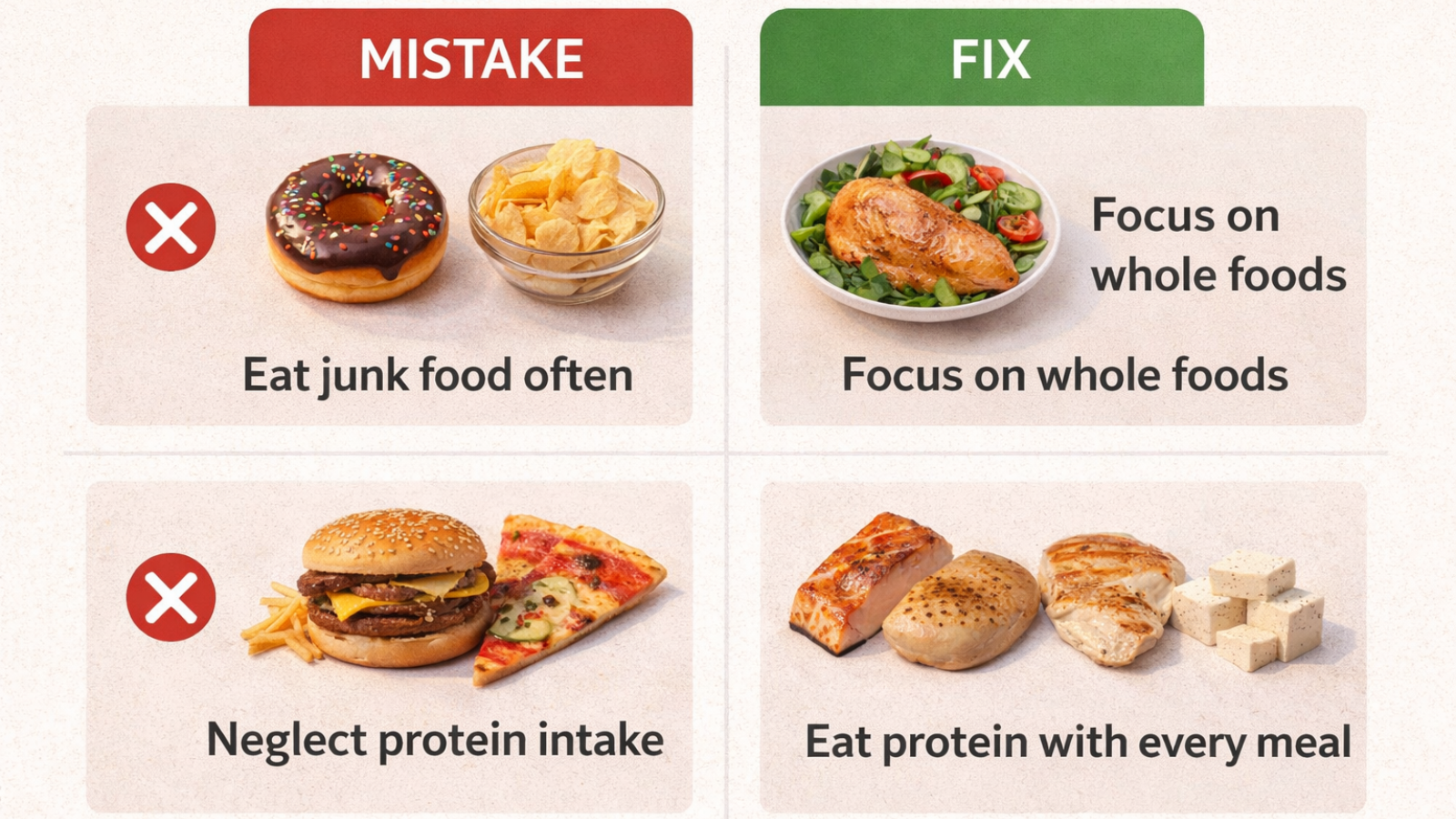
Even small errors can affect your results. Most of them are easy to fix once you know what to watch for.
Mixing Raw and Cooked Values
This happens often.
If a recipe uses cooked rice but you log uncooked values, your estimate will be off. Always match the form of the ingredient.
Ignoring Oil Usage
Oil is easy to overlook but carries a lot of calories.
If you use it, count it. If some remains in the pan, estimate that only part of it was consumed.
Unclear Serving Sizes
“Serves 4” sounds clear, but portions may not be equal.
If one serving is larger than another, your tracking becomes inconsistent. Weighing the final dish and dividing it evenly solves this.
Using Only One Data Source
Calorie values can vary slightly between sources.
For calorie-dense foods like cheese or nut butter, checking more than one source improves accuracy.
Overlooking Volume Changes
Long cooking times reduce water content. This does not remove calories, but it concentrates them.
When you calculate calories in recipe, keep this in mind for soups or stews.
Beyond Calories – Using Macros to Align Recipes with Your Goals
Calories tell you how much energy you’re eating. Macronutrients explain how that energy is distributed.
Protein, carbs, and fat each play a different role in your body.
If your goal is weight loss, higher protein meals can help you feel full longer. Reducing fat slightly can also lower total calories.
For muscle gain, protein remains important, but carbs support energy and recovery.
If your goal is general health, a balanced mix usually works best.
When you calculate calories in recipe, looking at macros adds useful context. It helps you adjust meals based on your goals, not just numbers.
Start Simple, Build Confidence, Track Consistency
At first, the process might feel like extra work. That’s completely normal. After a few tries, it becomes easier. You begin to recognize patterns. You notice which ingredients carry the most calories. Decisions get quicker. The goal is not perfect tracking. It’s better awareness.
Start with one recipe this week. Take a few minutes to calculate the calories in a recipe, save the result, and reuse it later. Then repeat with a couple more meals.
Over time, this builds a simple system you can rely on. Instead of guessing, you’ll know what you’re eating and adjust with confidence.
Frequently Asked Questions About Recipe Calorie Calculation
How accurate do my calculations need to be?
Within 10 to 15 percent is enough. Food naturally varies, so exact precision is not realistic.
Should I measure by weight or volume?
Weight is more accurate, especially for solid foods. A kitchen scale helps a lot.
Do small ingredients matter?
Spices and herbs contribute very little. Oils, sauces, and dressings should always be included.
What if I can’t find an ingredient?
Use a close alternative or check a trusted nutrition source.
Does cooking method change calories?
Most methods do not. Frying adds calories because of the oil.