



Let’s be honest, peanut butter is one of those foods that feels healthy. It’s packed with protein, it’s natural (well, some versions are), and it tastes like pure comfort.
But here’s the part nobody really talks about: peanut butter calories can absolutely derail your diet if you’re not paying attention. One generous spoonful turns into two, then three, and suddenly you’ve added 300+ calories to your day without even realizing it.
So, is peanut butter the enemy?
Not exactly. But it does deserve a second look, especially if you’re working hard to stay in a calorie deficit.
Listen to The Blog Now!
Why Is Peanut Butter So Easy to Overeat?
There’s something almost dangerously satisfying about peanut butter. It’s rich, creamy, and has that perfect balance of salty and sweet. But that satisfaction comes at a cost; peanut butter calories are surprisingly dense. Two tablespoons of standard peanut butter contain around 188–200 calories, with roughly 16 grams of fat.
That’s not bad on its own. The problem is that most people don’t stop at two tablespoons. Studies on food portioning consistently show that people underestimate how much calorie-dense food they consume, and peanut butter tops that list every time.
When you’re tracking your food and wondering why the scale isn’t budging, peanut butter calories are often the hidden culprit lurking in your breakfast smoothie, afternoon toast, or late-night snack.
The Truth About Fat Gain and Nut Butter
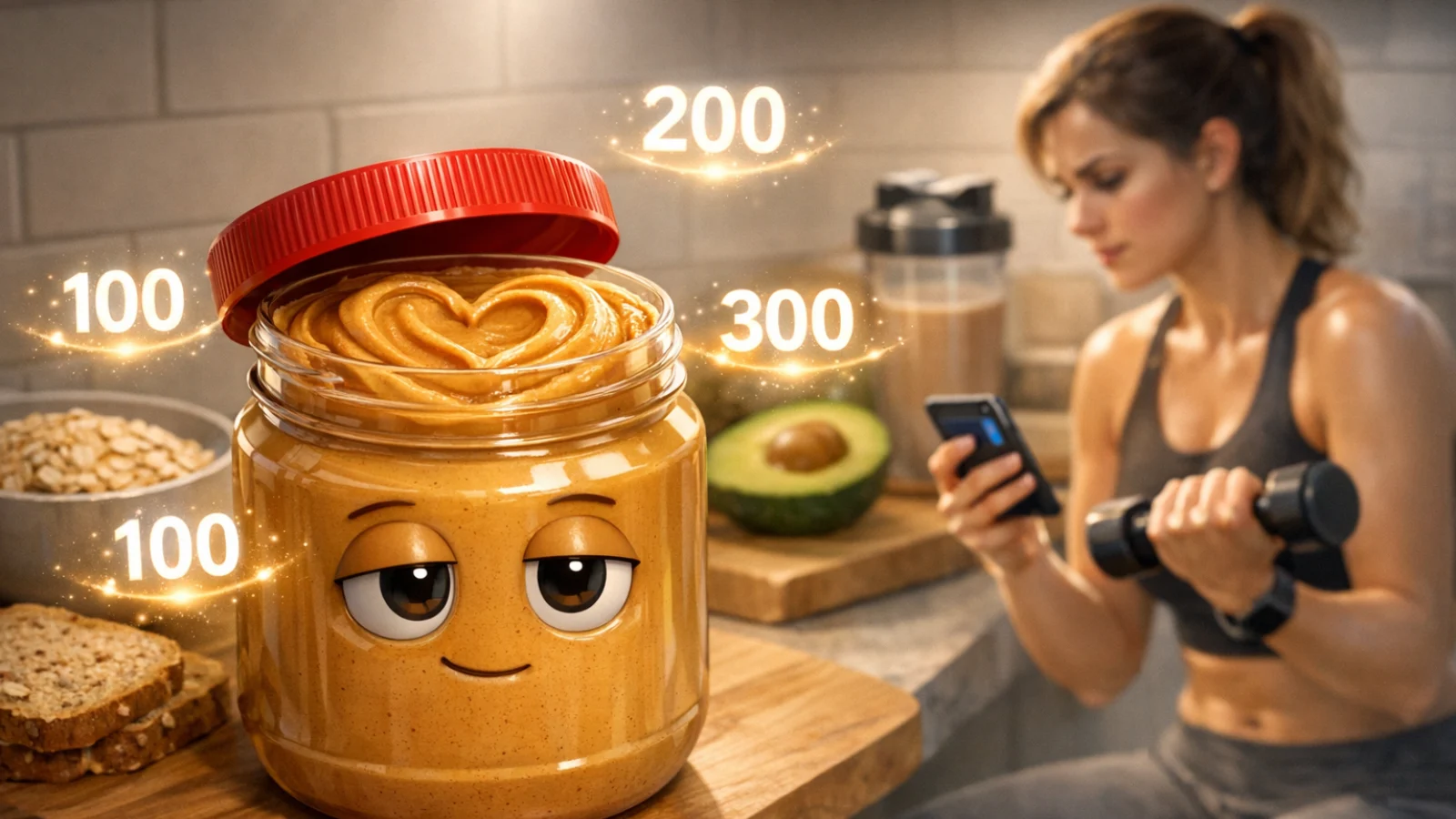
This is a question worth addressing head-on. Is peanut butter fattening? The answer is nuanced. Peanut butter itself doesn’t cause fat gain; excess calories do. Because peanut butter calories come from healthy unsaturated fats and protein, it can actually support satiety and muscle maintenance.
However, if you’re consuming it in large quantities and not accounting for those calories, yes, it can absolutely contribute to a calorie surplus, which leads to weight gain over time.
The fat in peanut butter is mostly monounsaturated, which is the good kind your heart loves. But healthy fat is still calorie-dense.
At 9 calories per gram of fat, peanut butter calories stack up faster than most people expect.
What the Research Actually Says About Peanut Butter and Weight?
Here’s the real question most dieters wrestle with: is peanut butter healthy for weight loss? The short answer is yes, in moderation. Research consistently shows that nuts and nut butters, when portioned correctly, can support weight management by promoting feelings of fullness and reducing overall food intake later in the day.
The key phrase there is “portioned correctly.” Peanut butter calories work in your favor when you’re strategic about when and how much you eat. A single tablespoon stirred into oatmeal or spread thinly on apple slices can keep hunger at bay for hours. But scoop after scoop straight from the jar? That’s where things go sideways.
Peanut butter also contains magnesium, potassium, vitamin E, and niacin, nutrients that support metabolism and overall health. So the food itself isn’t the villain. The portion size is.
Breaking Down Peanut Butter Calories by Serving
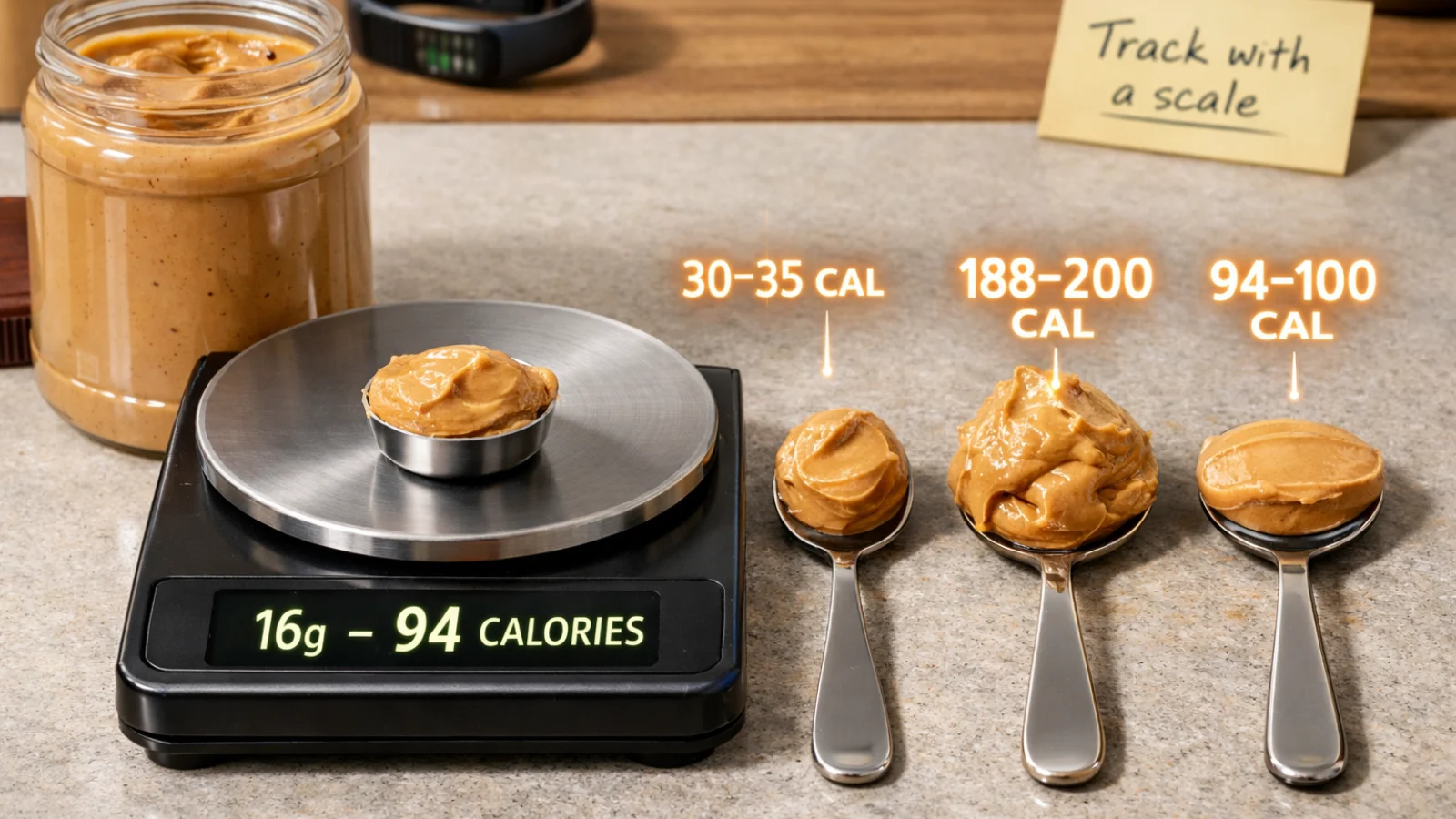
Before you can manage calories, you need to understand them. Here’s a quick reference:
- 1 tablespoon (16g): approximately 94–100 calories
- 2 tablespoons (32g): approximately 188–200 calories
- 3 tablespoons (48g): approximately 282–300 calories
And what about 1 spoon peanut butter calories specifically? If you’re using a standard teaspoon, you’re looking at around 30–35 calories. A tablespoon bumps that to 94–100 calories. The issue is that “a spoon” is wildly inconsistent depending on who’s measuring, and most people are using a heaping tablespoon, not a level one.
This is why food scales matter more than you think. Eyeballing peanut butter portions leads to overconsumption almost every single time.
Timing Your Peanut Butter: Does It Matter for Fat Loss?
Timing matters more than most people realize. Is peanut butter good for weight loss when eaten at specific times of day? The evidence suggests yes, consuming peanut butter in the morning or before exercise tends to yield better results than eating it late at night.
Morning consumption of this nut butter allows your body more time to use that energy throughout the day. Paired with a fiber-rich food like whole-grain toast or oatmeal, those calories become a powerful tool for hunger management rather than a caloric liability.
Eating peanut butter before a workout also makes sense; the protein and fat provide sustained energy without spiking blood sugar the way carbohydrate-heavy snacks can. Post-workout, that protein can help with muscle repair.
Evening consumption, especially when combined with other high-calorie foods, is where your calorie intake becomes more problematic. Your body’s activity level drops at night, meaning those calories are less likely to be burned efficiently.
The Hidden Sources of Peanut Butter Calories in Your Diet
You might be surprised where calories are sneaking into your daily peanut butter intake. Some common culprits:
Smoothies: Many recipes call for two tablespoons of peanut butter, which adds nearly 200 calories to what people often consider a “light” meal.
Sauces and dressings: Thai peanut sauce, peanut salad dressings, and satay sauces can contain significant amounts of peanut butter per serving, dramatically inflating peanut butter calories without you noticing.
Granola and energy bars: Many store-bought bars list peanut butter or peanut paste high on the ingredient list, meaning the calories they contain are substantial.
Baked goods: Peanut butter cookies, brownies, and muffins often contain far more peanut butter than you’d expect, pushing the calories in each serving well above 100.
Start reading labels more carefully. You’ll be shocked at how often peanut butter calories appear in foods you thought were “safe.”
Low-Calorie Swaps That Actually Taste Good
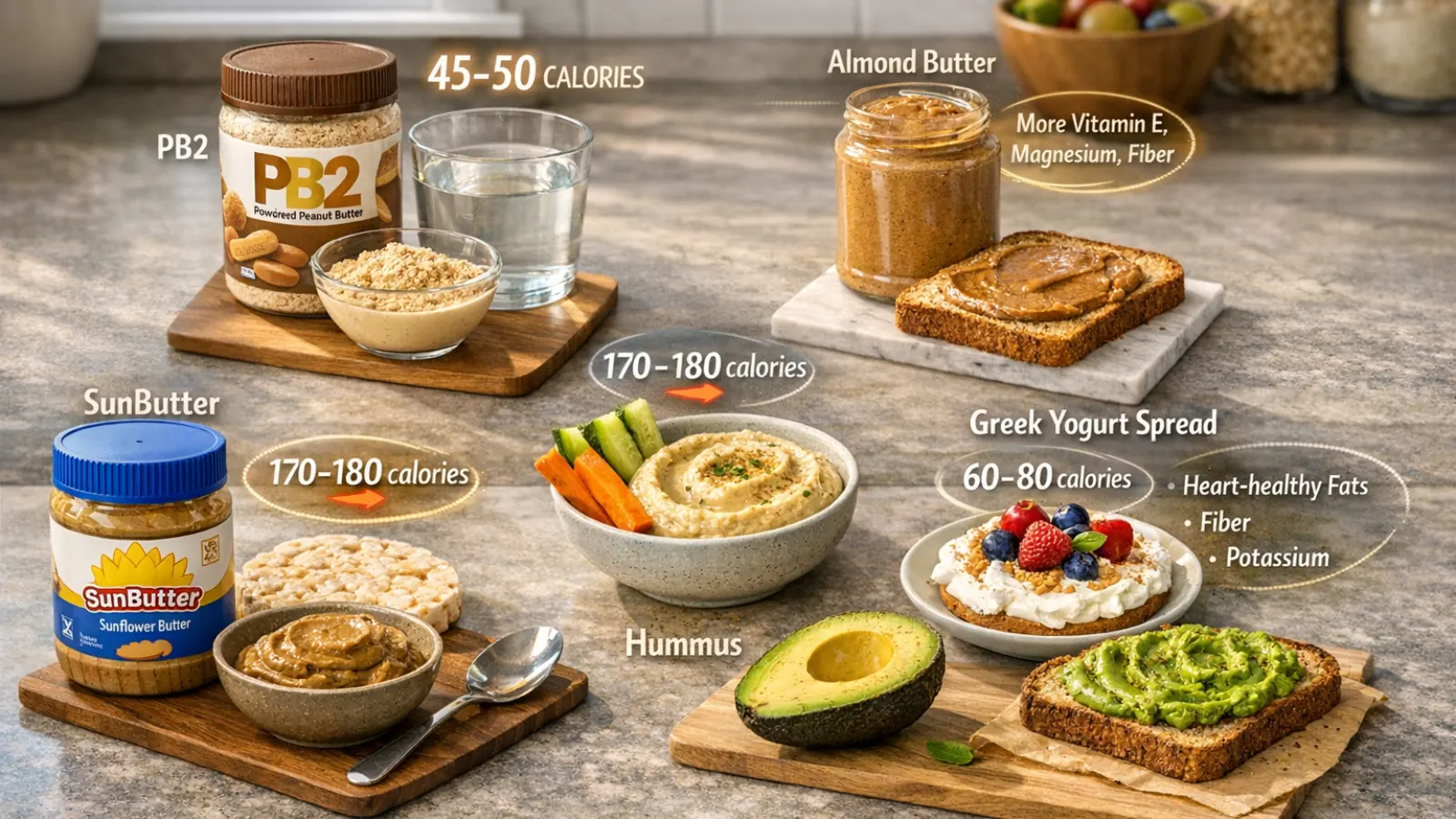
Now for the part you came here for. You don’t have to give up peanut butter entirely, but switching to smarter alternatives can save you 50–100 calories per serving without sacrificing that nutty flavor you love.
|
Alternative |
Calories per 2 Tablespoons | Key Benefits |
| Powdered Peanut Butter | 188–200 | Protein, healthy fats, but calorie-dense. |
| Powdered Peanut Butter (PB2) | 45–50 | Same flavor, fewer calories. |
| Almond Butter | 190–200 | More nutrients (E, magnesium), similar calories. |
| Sunflower Seed Butter | 170–180 | Earthy flavor, lower in calories. |
| Hummus | 50–70 | Lower calories, adds fiber and protein. |
| Greek Yogurt Spread | 60–80 | Creamy, protein-packed, fewer calories. |
| Avocado Spread | 120–130 | Healthy fats, more fiber, slightly higher in calories. |
1. Powdered Peanut Butter (PB2 or Similar)
This is the most popular swap for a reason. Powdered peanut butter is made by pressing most of the oil out of roasted peanuts and dehydrating the result. The outcome is a product that delivers genuine peanut butter flavor at a fraction of the peanut butter calories — usually around 45–50 calories per two tablespoons when mixed with water, compared to 188–200 for regular peanut butter.
It works brilliantly in smoothies, oatmeal, sauces, and baked goods. The texture is slightly different when used as a spread, but for mixed applications, you honestly can’t tell.
2. Almond Butter (Same Calories, More Nutrients)
Almond butter has almost identical peanut butter calories, so it’s not a calorie-saving swap, but it does offer more vitamin E, magnesium, and fiber per serving. If you’re trying to diversify your nutrient intake while keeping your overall calorie intake in check, almond butter is a worthy alternative that still satisfies that nut butter craving.
3. Sunflower Seed Butter
Sunflower seed butter (often called SunButter) runs around 170–180 calories per two tablespoons, saving you a small but meaningful 20–30 calories compared to the calorie count of standard peanut butter. It’s also a great option for those with nut allergies. The flavor is earthier but works well on toast, rice cakes, or blended into smoothies.
4. Hummus
Yes, hummus. When you’re reaching for peanut butter as a dip or spread, consider swapping it out for hummus. Two tablespoons of hummus contain only about 50–70 calories, which is a dramatic reduction from the peanut butter calories in the same portion. You still get protein and healthy fats, plus bonus fiber and a variety of micronutrients from the chickpeas and tahini.
5. Greek Yogurt-Based Spreads
Mixing a small amount of powdered peanut butter into plain Greek yogurt creates a creamy, protein-packed spread that delivers all the nutty flavor without the caloric density of regular peanut butter. This hybrid approach typically yields a spread with 60–80 calories per serving, perfect for toast, fruit dipping, or as a base for overnight oats.
6. Avocado Spread
If you love peanut butter on toast because of its richness and creaminess, avocado is a surprisingly satisfying swap. Half a medium avocado contains around 120–130 calories and offers heart-healthy fats, potassium, and fiber. While it’s not dramatically lower in peanut butter calories than the real thing, the nutrient profile and the volume you get per calorie are significantly better.

Smart Strategies to Keep Peanut Butter Calories Under Control
You don’t have to completely abandon peanut butter to protect your calorie deficit. Here are a few practical strategies that actually work:
Use a food scale. Seriously. This one change alone can cut 50–100 calories of inadvertent peanut butter calories from your daily total.
Buy single-serve packets. Brands like Justin’s and RX Bar sell individual packets of peanut butter in controlled portions. The calorie count is already managed for you, and the convenience removes the temptation to over-scoop.
Dilute it. Mix a tablespoon of peanut butter with a tablespoon of unsweetened cocoa powder and a small splash of vanilla extract. You’ll stretch the flavor (and your overall calories) further without adding much.
Choose natural varieties. Natural peanut butters with no added sugar or hydrogenated oils tend to be slightly lower in peanut butter calories per serving and come without the blood sugar spike that sweetened varieties can trigger.
Pair it intentionally. Pairing peanut butter with high-volume, low-calorie foods, such as celery sticks or sliced cucumbers, lets you enjoy the flavor while keeping your overall calorie count in check.
Read More:
Peanut Butter: Is It Really Good for You?
9+ Magnesium-Rich Foods You Should Add to Your Diet Right Now!
Why Use Calorie Tracker Buddy for Portion Control
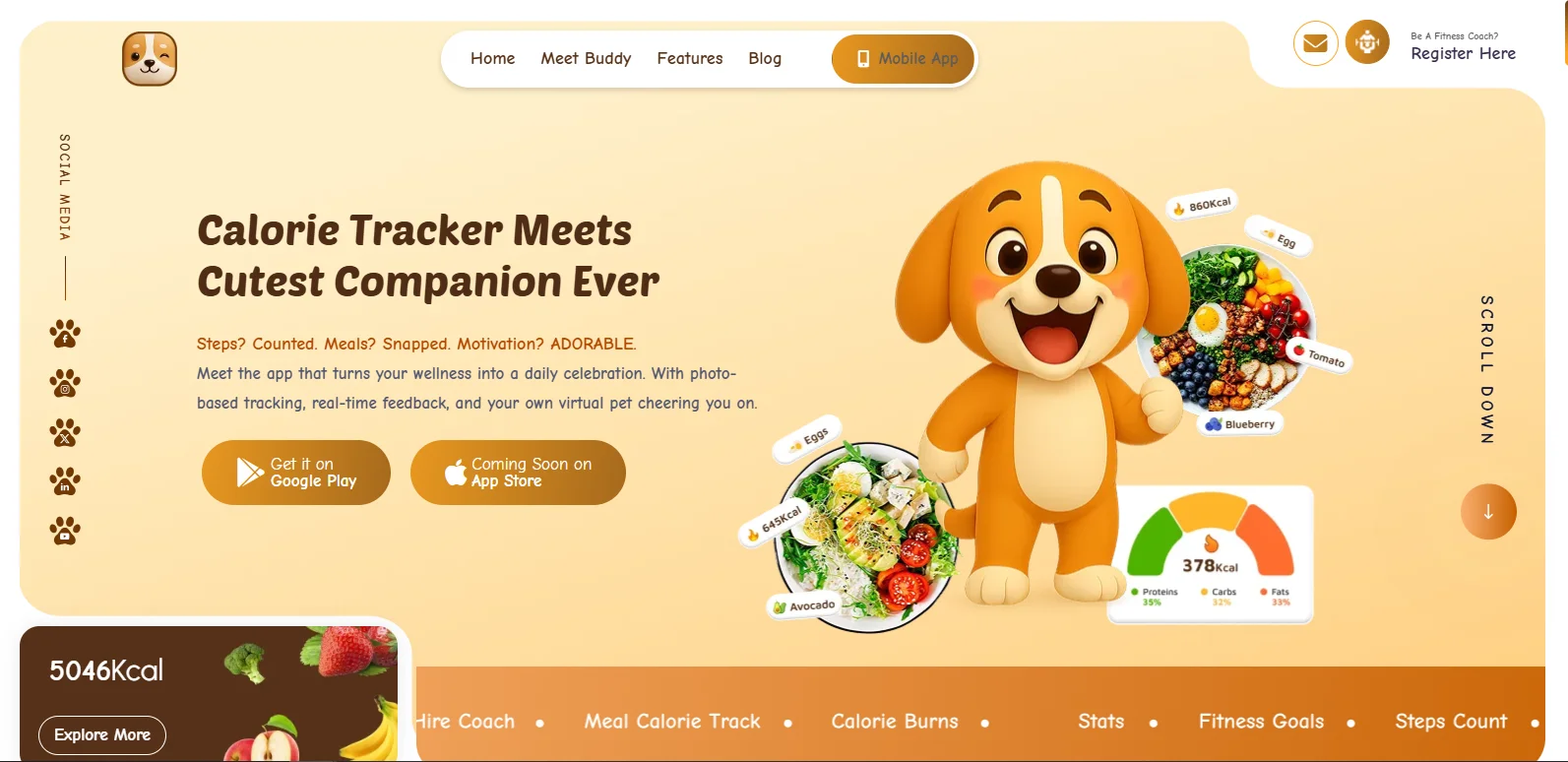
Calorie Tracker Buddy is a user-friendly app designed to help you track your food intake and manage your calories effortlessly. Whether you’re trying to maintain, lose, or gain weight, the app allows you to log meals in real-time and keep a detailed record of your daily calorie consumption.
Key Features:
- Real-Time Tracking: Log each food item as you eat and instantly see your calorie intake for the day.
- Accurate Portion Control: Track specific foods, like peanut butter, and get accurate portion sizes to avoid over-consuming.
- Recipe Integration: Input ingredients and get calorie counts for entire meals or snacks.
- Personalized Goals: Set daily calorie goals based on your health and fitness objectives, and get reminders to stay on track.
- Barcode Scanning: Quickly log packaged foods by scanning the barcode to retrieve nutritional info automatically.
- Nutrient Breakdown: View not only calorie counts but also detailed breakdowns of macros like fat, protein, and carbs.
- Customizable Database: Add your own foods and recipes, making the app highly adaptable to your unique diet.
By using Calorie Tracker Buddy, you can ensure that your food choices align with your health and fitness goals without the stress of overeating. The app makes portion control easy and supports a balanced, calorie-conscious lifestyle.
Peanutty Butter Line
Peanut butter isn’t ruining your calorie deficit; unchecked portions are. Once you understand exactly how peanut butter calories accumulate throughout your day, you gain the power to use this food strategically rather than letting it quietly sabotage your goals.
Use powdered peanut butter for cooking and mixing, practice precise portioning when eating it whole, and consider the lower-calorie swaps above when you’re in a tough stretch and need every calorie to count. Peanut butter can absolutely have a place in a healthy, fat-loss-focused diet; it just needs to earn that spot rather than quietly inflate it.
Track your peanut butter calories honestly, eat them intentionally, and you’ll find that this beloved staple and your weight-loss goals can coexist just fine.
1. Is peanut butter bad for weight loss?
Peanut butter isn’t inherently bad for weight loss, but portion control is key. While it’s packed with healthy fats and protein, it is calorie-dense. Eating it in moderation and tracking your portions can help you enjoy peanut butter without sabotaging your weight loss goals.
2. How many calories are in 1 tablespoon of peanut butter?
One tablespoon of peanut butter typically contains around 94–100 calories. The actual calorie count can vary slightly depending on the brand and whether it’s creamy or chunky.
3. What is a good low-calorie alternative to peanut butter?
If you’re looking for a lower-calorie alternative, powdered peanut butter (PB2) is a great choice, with only about 45–50 calories per 2 tablespoons. Other options like hummus or Greek yogurt-based spreads also offer fewer calories while providing similar creamy textures.