



You have probably heard about the benefits of leafy greens countless times. Still, many people wonder which greens they should actually eat and what those foods do for the body once they become part of a regular diet.
Understanding leafy greens does not need to feel like a nutrition lecture. A simple explanation of what they are, how they differ, and how to use them can make the idea much easier to apply in everyday meals.
Leafy greens are edible plants grown mainly for their leaves. These green leafy vegetables include familiar options such as spinach, romaine lettuce, kale, and arugula. What makes them valuable is their unusually high nutrient density. They deliver vitamins, minerals, fiber, and protective plant compounds while contributing very few calories to a meal.
Listen To The Podcast Now!
Not Every Salad Bowl Is the Same: What Counts as a Leafy Green
A walk through the produce section reveals a surprising variety of greens. Some are delicate and best eaten fresh, while others hold up better when cooked. Knowing the difference helps you decide how to use them.
Most leafy greens fall into three simple groups: salad greens, cooking greens, and stronger-flavored bitter greens.
Salad greens are soft, light, and naturally suited for raw dishes. Cooking greens have thicker leaves and become tender with heat. Bitter greens tend to have stronger flavors but offer impressive nutritional value.
Leafy greens are often grouped into three broad categories based on their texture, flavor, and how they are typically prepared.
Salad greens are the most delicate type. These greens have soft leaves and a high water content, which makes them ideal for eating raw. Common examples include romaine lettuce, arugula, and butter lettuce. They are most often used in fresh salads, layered into sandwiches, or wrapped around fillings in place of bread or tortillas.
Cooking greens have thicker leaves and a slightly firmer structure. Because of this, they hold up well when exposed to heat and often taste better once cooked. Kale, Swiss chard, and collard greens fall into this category. These greens are commonly sautéed, added to soups, or included in stir-fries where they soften and absorb surrounding flavors.
Bitter or robust greens are known for their stronger taste. Mustard greens and dandelion greens are good examples. Their bold flavor can feel intense when raw, so they are usually cooked to mellow the bitterness. Many people braise them slowly or mix them with milder greens in cooked dishes to balance the taste while still enjoying their nutritional value.
Does the Color of Greens Matter?
Color turns out to be a helpful clue when choosing greens. Darker leaves usually contain higher levels of nutrients.
Deep green vegetables like spinach, kale, and collard greens often carry more vitamin K, folate, and beta carotene than pale lettuce varieties. The darker shade comes from chlorophyll, a pigment involved in photosynthesis. Plants rich in chlorophyll tend to carry higher concentrations of other beneficial compounds as well.
Lighter greens, such as iceberg lettuce, still contribute hydration and fiber, but darker greens generally provide a stronger nutritional return.
Is Broccoli a Leafy Green?
Many people assume broccoli belongs in the leafy green category, but technically, it does not.
Broccoli is classified as a cruciferous vegetable because the part we eat is the plant’s flowering head rather than the leaves. It shares the same botanical family as kale and collards, which explains why its nutritional profile is similar. Even though broccoli often appears alongside leafy greens in healthy eating conversations, it belongs to a slightly different vegetable group.
10 Leafy Greens Worth Adding to Your Plate
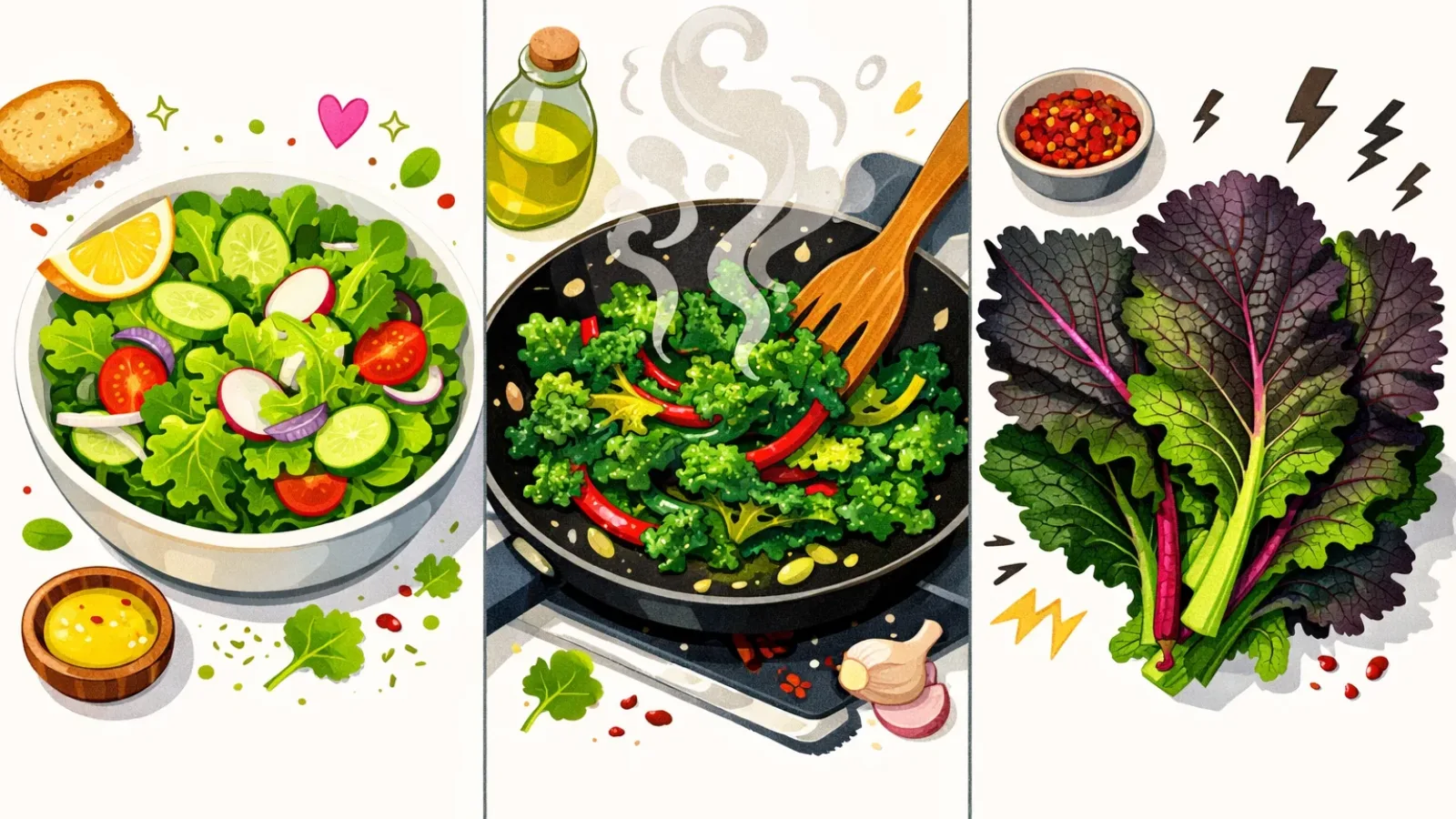
Most people rotate between two or three greens simply because they are familiar. In reality, the produce aisle offers many options that are easy to cook and surprisingly versatile.
Here are ten green leafy vegetables worth knowing and what each brings to the table.
- Spinach: the everyday staple
Spinach is one of the easiest greens to add to meals. Its mild flavor blends well into salads, omelets, pasta dishes, and smoothies.
It supplies iron, vitamin K, folate, and vitamin A. Because it cooks down quickly, a handful added to soups or scrambled eggs can increase the nutrient value of a meal without changing the taste much.
- Kale: sturdy and nutrient-rich
Kale gained popularity for good reason. It is packed with vitamins C and K and holds its structure during cooking.
Raw kale can feel tough at first. Rubbing the leaves with olive oil and a squeeze of lemon for about a minute softens the texture and makes it much easier to enjoy in salads.
- Arugula: a peppery salad favorite
Arugula stands out for its slightly spicy flavor. Even a small handful can transform a plain salad or sandwich.
This leafy green contains vitamin K and folate and works well as a topping for pizza after baking or mixed into grain bowls for extra bite.
- Swiss chard: colorful and versatile
Swiss chard often attracts attention with its vibrant stems in shades of red, yellow, and orange.
The leaves soften beautifully when sautéed and provide vitamins A, C, and K along with magnesium. A quick cook in olive oil and garlic turns it into a simple and satisfying side dish.
- Collard greens: slow-cooked comfort
Collard greens are large, sturdy leaves commonly used in traditional Southern cooking.
They are rich in calcium, vitamin K, and folate. When simmered slowly with onions and seasoning, they develop a tender texture and deep savory flavor.
- Romaine lettuce: crisp and refreshing
Romaine lettuce is often associated with Caesar salads, but it deserves more credit nutritionally.
Compared with iceberg lettuce, romaine contains significantly more vitamin A, vitamin K, and folate. Its crunchy leaves also work well as wraps for tacos or sandwiches.
- Watercress: small leaves with big nutrition
Watercress frequently ranks among the most nutrient-dense vegetables studied.
Its peppery taste adds brightness to sandwiches, soups, and salads. The leaves are particularly rich in vitamin C, vitamin K, and calcium.
- Bok choy: perfect for quick cooking
Bok choy is a type of Chinese cabbage with tender green leaves and crisp white stems.
It cooks quickly and absorbs flavors easily, which makes it ideal for stir-fries or noodle soups. Nutritionally, it provides vitamins A and C along with beneficial antioxidants.
- Mustard greens: bold flavor and strong nutrition
Mustard greens bring a sharp, spicy taste that becomes milder when cooked.
They appear frequently in South Asian and Southern recipes and contain vitamins A, C, and K. Adding them to lentils or stews introduces both flavor and nutrients.
- Beet greens: the part many people overlook
When people buy fresh beets, the leafy tops are often discarded. That is unfortunate because beet greens are highly nutritious.
They cook quickly like spinach and offer iron, potassium, and vitamin K. A quick sauté in olive oil transforms them into an easy side dish in minutes.
What Happens When You Eat More Leafy Greens?

Adding more leafy greens to your meals does more than improve nutrition on paper. Many of the leafy greens’ benefits become noticeable in everyday life.
Digestion often improves
Leafy greens contain fiber and water, a combination that supports healthy digestion. Fiber helps food move through the digestive system, while the water content keeps the process comfortable and regular.
People who begin eating greens daily often notice smoother digestion within a short period of time.
Energy levels become more stable.
Many green leafy vegetables, rich in vitamin K and minerals like magnesium and iron, contribute to normal energy production in the body.
If someone has been running low on these nutrients, increasing leafy greens can gradually reduce those mid-afternoon energy drops.
Skin health can improve over time.
Vitamins A and C support collagen production and skin cell renewal. With consistent intake of leafy greens, some people notice clearer skin and improved hydration after several weeks.
Meals feel more satisfying.
Fiber slows digestion and helps people feel full for longer. A large salad or a meal with cooked greens can provide volume and satisfaction without dramatically increasing calories.
Long-term health benefits accumulate.
Research continues to connect regular vegetable intake with improved long-term health markers. Studies have linked daily leafy green consumption with slower cognitive decline and better heart health outcomes over time.
Raw, Cooked, or Blended: How to Use Leafy Greens
Preparation style can change both the flavor and the nutritional profile of greens.
Raw versus cooked
Tender greens such as arugula, romaine, and watercress work best raw because heat quickly softens them.
Stronger leaves like kale, collards, and Swiss chard benefit from cooking. Heat breaks down their fibers and makes them easier to digest.
Spinach sits somewhere in the middle. It can be eaten fresh or cooked, depending on the dish.
Reducing bitterness
Some leafy greens have a naturally bitter edge. A few simple techniques make them easier to enjoy.
Adding acid, such as lemon juice, balances strong flavors.
Olive oil softens harsh notes and improves texture.
Light cooking or massaging leaves can reduce bitterness significantly.
Storing greens properly
Storage plays a major role in keeping greens fresh.
After washing them, dry the leaves and wrap them loosely in a slightly damp paper towel. Place them in a sealed container in the refrigerator. Stored this way, most greens remain fresh for up to a week.
A Simple Way to Start Eating More Greens
Many people assume they need a completely new diet to eat more vegetables. In reality, small additions work just as well.
Start with mild greens such as spinach or romaine. Once those feel familiar, move on to arugula or Swiss chard. Eventually, stronger greens like kale or collards become easier to enjoy.
Another useful trick is blending greens into meals you already like. Spinach disappears into fruit smoothies. Kale can be stirred into pasta sauce. Bok choy fits easily into instant noodles or stir-fry.
The goal is consistency, not perfection.
How Much Leafy Greens Do You Actually Need?
 Healthy eating advice sometimes suggests large portions of vegetables, but the amount needed to see benefits is smaller than many people expect.
A typical serving
A serving of raw leafy greens equals roughly two cups. Cooked greens shrink during heating, so half a cup after cooking counts as one serving.
Adding a handful of spinach to dinner or eating a small side salad at lunch already contributes toward that daily amount.
A realistic weekly target
Nutrition guidelines often recommend several servings of vegetables each day. For someone beginning to add greens, a practical target is one serving of leafy greens per day.
That equals about seven servings per week, which is achievable without changing your entire diet.
Variety matters more than volume.
Eating different greens across the week provides a wider mix of nutrients.
A week that includes spinach, arugula, kale, and bok choy delivers more nutritional meal diversity than eating only one variety repeatedly. By incorporating a variety of leafy greens into your meals, you ensure a broader spectrum of essential vitamins, minerals, and antioxidants, making your diet not only more interesting but also more beneficial for your health.
Read more!
What Are The Best Tips For Cooking Nutritional Meals?
25 Low-Calories Snacks That Are Actually Healthy And Tasty
Understand What Your Meals Actually Contain
Reading about the nutritional value of leafy greens is useful. The harder part is knowing how much of those nutrients actually show up in your meals from day to day.
Most people eat well most of the time. The gap usually arises during busy weeks when vegetables slowly disappear from the plate without much notice.
Tracking meals does not have to be complicated to be useful. The goal is not to count every calorie precisely. Instead, it helps to have a simple way to see what your meals contain and whether foods like leafy greens are appearing regularly.
A Simple and Smarter Way to Track What You Eat

Tracking daily food intake often feels tedious, especially when it involves manually entering every ingredient. Calorie Tracker Buddy simplifies the entire process by turning something time-consuming into a quick, almost effortless habit.
Here’s a closer look at what makes Calorie Tracker Buddy genuinely useful:
Quick meal logging with camera scanning
Instead of typing out every ingredient, the app allows users to simply scan their meals using their phone’s camera. Within seconds, it identifies the food and logs it, making tracking feel natural rather than like a chore. This is especially helpful on busy days when manual logging would otherwise be skipped.
Instant calorie and nutrient estimation
After scanning a meal, the app quickly provides an estimate of calories along with key nutrients. This immediate feedback helps users understand what they are eating in real time, rather than reviewing everything at the end of the day.
Clear visibility into eating habits
It becomes easier to notice patterns over time. For example, users can quickly see whether nutrient-rich foods like spinach, kale, or arugula are actually part of their routine or just occasional additions. This kind of awareness often leads to more mindful food choices.
Detailed macronutrient tracking
Beyond calories, the app tracks essential macronutrients such as carbohydrates, protein, and fat. This helps users go beyond basic calorie counting and better understand how balanced their meals are.
Daily water intake monitoring
Staying hydrated is just as important as eating well. The app includes a simple way to log and track water intake, helping users build a more complete picture of their daily health habits.
Activity and calorie burn tracking
The app doesn’t just focus on food. It also tracks calories burned through workouts, walking, and everyday movement. This provides a more balanced view of energy intake versus expenditure.
Personalized goals for different needs
Whether the focus is weight management, fitness improvement, or simply building healthier habits, users can set goals that match their lifestyle. Each meal logged shows how it aligns with those goals, making progress easier to measure and adjust.
Simple and user-friendly experience
The interface is designed to be straightforward and easy to navigate. Even users who are new to tracking apps can start using them without feeling overwhelmed.
Overall, Calorie Tracker Buddy makes nutrition tracking feel less like a task and more like a supportive daily habit. It combines convenience with meaningful insights, helping users stay aware of what they eat without adding unnecessary complexity.

Conclusion
Leafy greens may seem simple, but they play an important role in a balanced diet. These vegetables provide a wide range of vitamins, minerals, fiber, and plant compounds that support overall health while adding very few calories to meals. From spinach and kale to arugula and bok choy, each variety offers its own combination of flavor and nutrients.
The most effective approach is to focus on consistency rather than perfection. Adding a small serving of greens to meals throughout the week can gradually build a habit that supports better digestion, steady energy levels, and long-term health. Exploring different varieties also keeps meals interesting while providing a broader mix of nutrients.
Incorporating leafy greens does not require complicated recipes or major dietary changes. Simple additions such as a side salad, sautéed greens, or a handful of spinach in a smoothie can make a meaningful difference over time.
FAQ
Is broccoli a leafy green?
No. Broccoli belongs to the cruciferous vegetable family. The edible portion is the flowering head rather than the leaves, although its nutrition profile is similar to many leafy greens.
What is the healthiest leafy green?
Watercress often ranks highest in nutrient density studies. In everyday life, the healthiest option is the leafy green you enjoy enough to eat regularly.
Are frozen leafy greens still nutritious?
Yes. Greens are usually frozen soon after harvest, which helps preserve most of their nutrients. Frozen spinach and kale work especially well in cooked dishes.
Can leafy greens be eaten every day?
Yes. Regular consumption of a variety of greens is considered safe and beneficial for most people. Individuals taking blood-thinning medications should speak with a healthcare professional because vitamin K intake may need monitoring.
Why do greens sometimes cause bloating?
Leafy greens contain fiber that some digestive systems need time to adjust to. Starting with small portions and increasing gradually usually resolves the issue. Cooking greens can also make them easier to digest.
Do greens lose nutrients when cooked?
Some heat-sensitive vitamins, such as vitamin C, decrease during cooking. At the same time, other nutrients like iron and certain antioxidants become easier for the body to absorb. Eating both raw and cooked greens offers the widest range of nutritional benefits.