


A keto calorie tracker can make or break your results, even if your diet looks perfect on paper. You might be logging every meal and staying consistent, yet nothing seems to change.
That’s where most people get stuck. It’s not about effort, it’s about tracking the wrong things.
Regular apps focus on calories alone, but keto depends on net carbs and macro balance. If your tracker doesn’t reflect that, your data is misleading.
This guide will show you how keto tracking actually works, what to look for in a tool, and how to set it up so your progress finally starts making sense.
Read Aloud!
What is a keto calorie tracker?
A keto calorie tracker is a tool built for people following a ketogenic diet. It tracks calories, macros, and most importantly, net carbs in keto and calorie deficit.
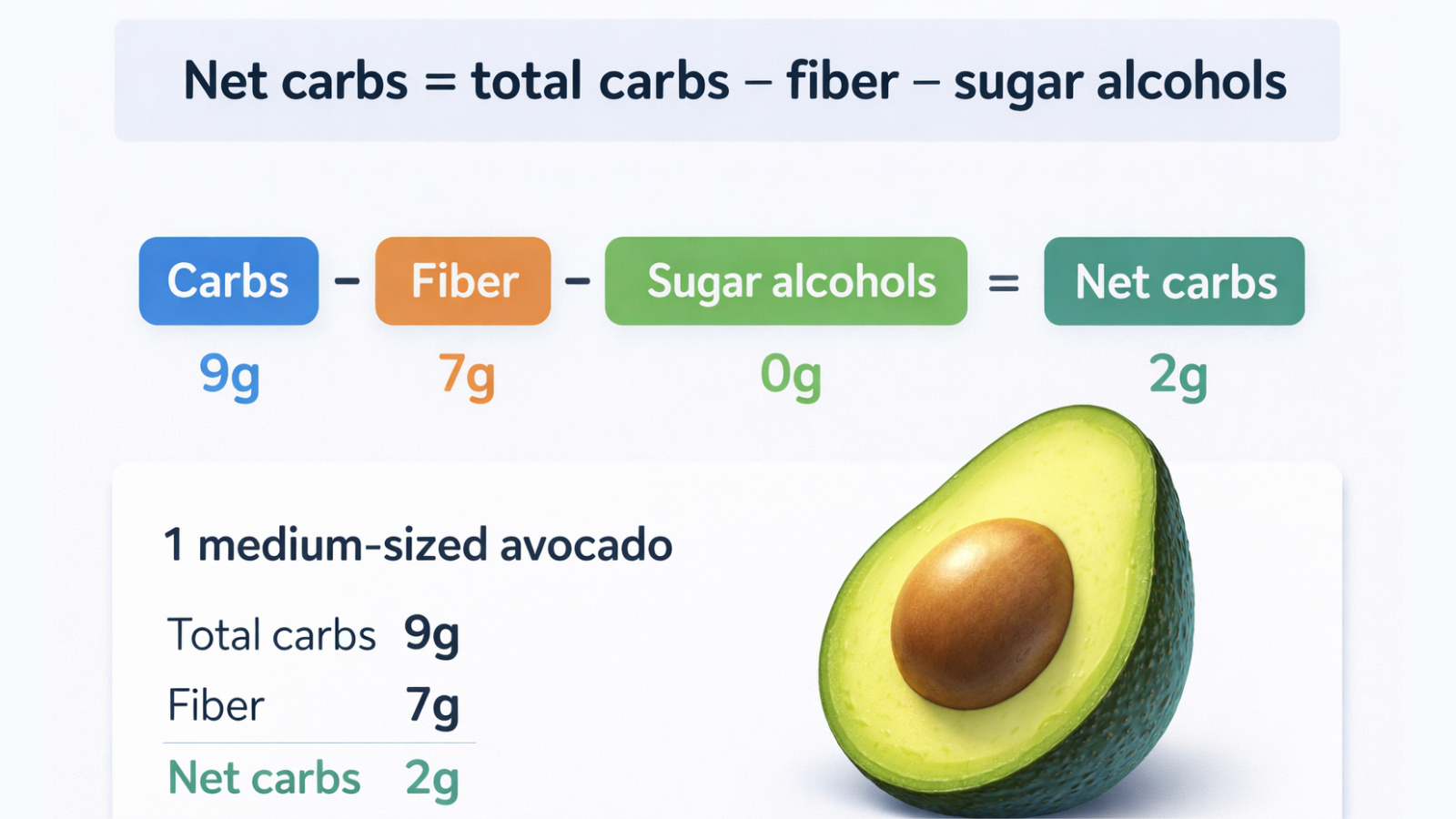
Net carbs are calculated using a simple formula:
Net carbs = total carbs − fiber − sugar alcohols
This matters because ketosis depends on keeping net carbs low. A regular tracker often ignores this, which leads to inaccurate logging and confusion.
What is a keto calorie tracker, and why is a regular app not enough
At first glance, most tracking apps look identical. You log food, see numbers, and try to stay within limits. The difference shows up in what those numbers actually mean.
A keto calorie tracker is designed around a different goal. It helps you manage macros in a way that supports ketosis, not just calorie reduction.
The keto difference: macros over calories
On a typical diet, calories are the main focus. On keto, macros play a bigger role.
Your body shifts from using glucose to using fat as its primary fuel. That only happens when carb intake is low and fat intake is high enough.
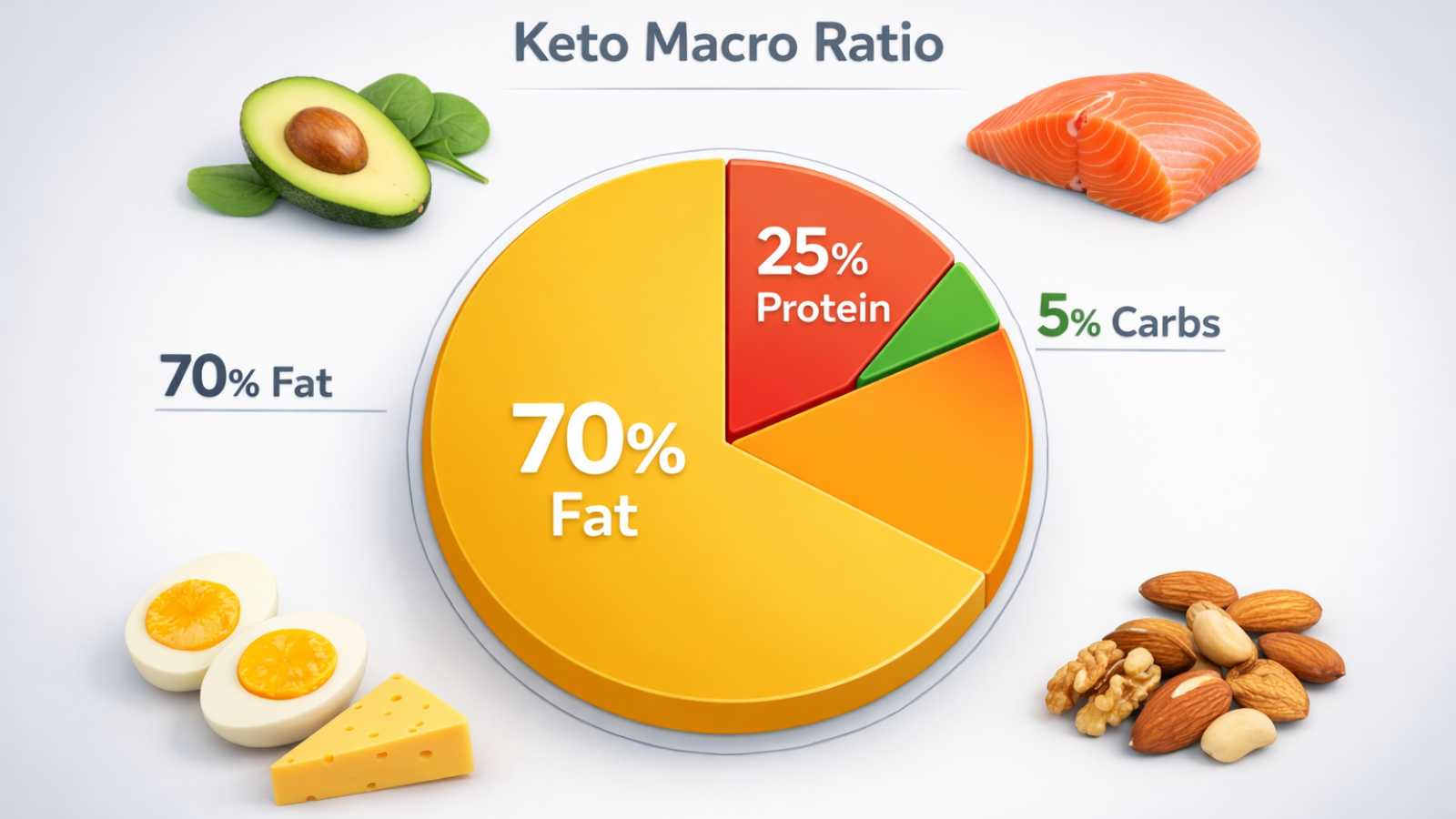
A common starting ratio looks like this:
- 70% fat
- 25% protein
- 5% carbs
Here’s where a regular app can mislead you. A snack might fit your calorie limit but still contain enough carbs to disrupt ketosis.
A keto calorie tracker helps you catch that. It keeps your macro balance in check, so you stay aligned with your goal.
Net carbs explained: the number that actually matters
If keto feels confusing, it usually comes down to this one concept.
Net carbs determine whether your body stays in ketosis. They directly affect blood sugar and insulin levels.
The formula is simple:
Net carbs = total carbs − fiber − sugar alcohols
Take a practical example.
A 100g serving of avocado contains 9g total carbs and 7g fiber. That leaves just 2g net carbs.
On a standard app, it looks high in carbs. On a keto calorie tracker, it fits perfectly.
There’s one detail to watch. Not all sugar alcohols behave the same way.
Erythritol is generally safe to consume. Maltitol can raise blood sugar and should often be counted.
Missing this detail is a common reason people struggle to see results.
Do calories still matter on keto? The honest answer
Calories still matter, but they don’t need to be your starting point.
When you reduce carbs, your appetite often drops. This happens because of hormonal changes, including lower ghrelin levels. As a result, many people naturally eat less without trying.
That’s why some people lose weight on keto without tracking calories closely. A keto calorie tracker still helps, but the focus stays on carbs first.
There’s also a small metabolic effect. Converting protein into glucose requires energy, which can slightly increase calorie burn.
Even so, calories are not irrelevant. If your intake stays higher than your body’s needs, fat loss will slow down.
A practical approach works well:
- Focus on staying within your carb limit
- Let hunger guide your portions early on
- Use a keto calorie tracker to review calories if progress stalls
This keeps things simple at the start and gives you a clear adjustment point later.
What to look for in a keto calorie tracker
Not every app supports keto properly. Some can be adjusted, but many require extra effort to stay accurate.
A good keto calorie tracker should make things easier, not more complicated.
Net carb calculation
This is the most important feature.
If your app only shows total carbs, you’ll either restrict too much or track incorrectly. A keto calorie tracker should calculate net carbs automatically.
Macro ratio tracking
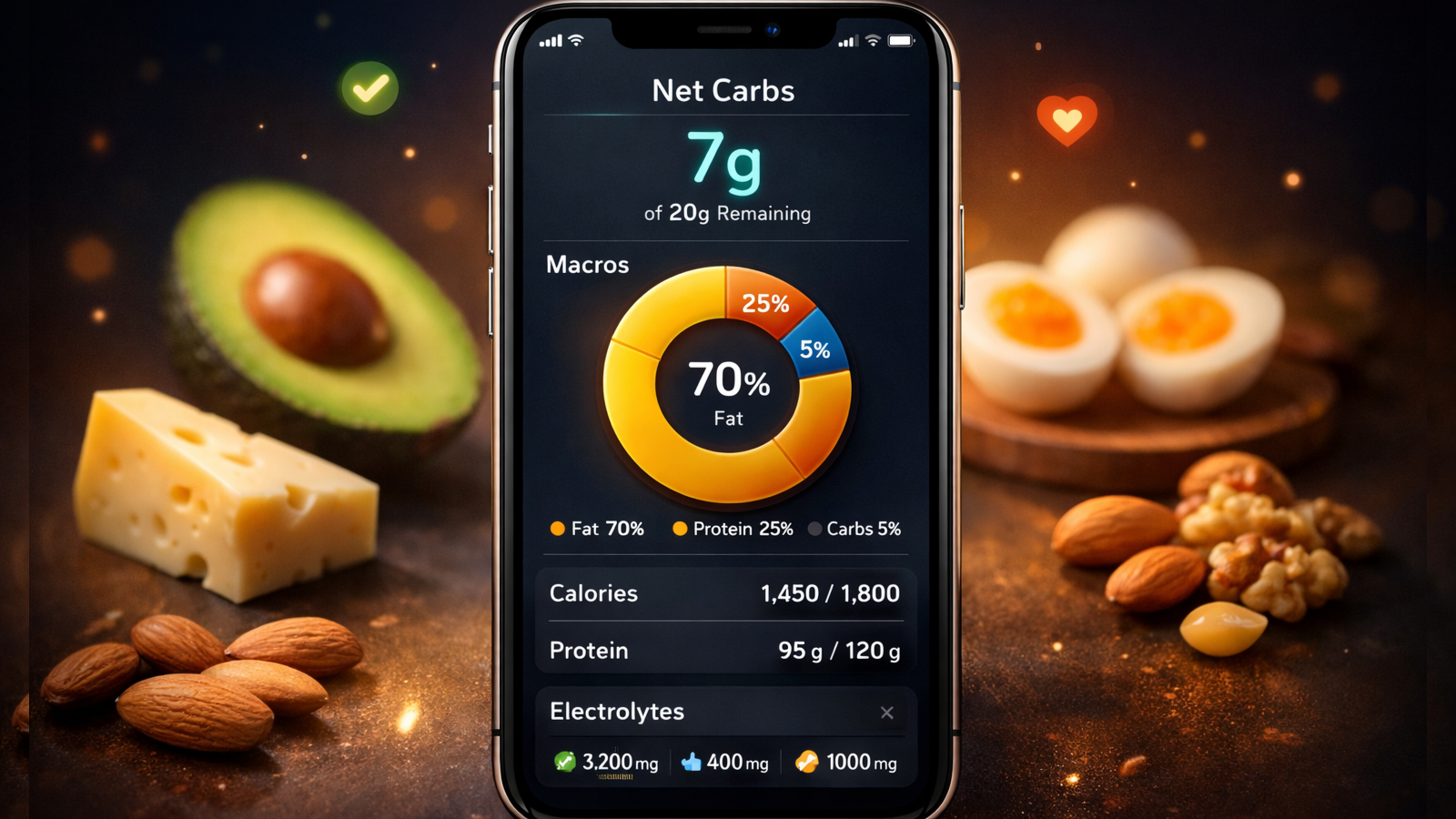
You need a clear view of your fat, protein, and carb split. Seeing percentages helps you stay consistent.
Custom targets also matter. Your needs won’t always match default settings.
Food database and barcode scanner
Tracking becomes difficult when logging takes too long.
A strong database and barcode scanner make a big difference. You can log meals quickly and stay consistent over time.
Electrolyte tracking
This is often overlooked, but it plays a huge role.
When you enter ketosis, your body loses water and electrolytes. Low sodium or potassium can lead to fatigue and headaches.
A keto calorie tracker that includes electrolyte tracking helps you avoid these issues early.
Calorie Tracker Buddy – built for keto from the ground up

Once you understand what actually matters on keto, many apps start to feel restrictive. They track calories well, but miss the details that influence ketosis and long-term consistency.
Calorie Tracker Buddy takes a more practical approach. Instead of forcing a generic system, it focuses on how people actually track food day to day.
A keto calorie tracker like this reduces the need for manual effort and constant corrections.
Here’s what it includes:
- Snap the Meal
You can scan your food using your camera and get an instant breakdown of calories, nutrients, and overall balance. This removes the need for manual entry in many cases. - Calorie Burn Tracker
Tracks daily activity, from workouts to routine movement, and shows how it contributes to your total calorie burn. - Calorie Intake Tracker
Logs what you eat and gives immediate feedback on how it fits into your daily targets. This helps you stay aware without overthinking each entry. - Goal Predictions
Shows how your meals and habits are affecting your progress. Instead of waiting weeks, you get a clearer sense of direction early on. - Buddy Motivation
A built-in system that responds to your habits and gives small nudges to stay consistent. It’s simple, but it helps maintain momentum. - Social Sharing
Lets you share meals, progress, or streaks if that kind of accountability works for you.
It also functions as a low carb tracker, so you’re not locked into strict keto. You can adjust your carb intake over time without changing how you track.
The overall idea is straightforward. Less friction while logging, clearer feedback, and enough structure to stay consistent without feeling overwhelmed.
How to set up your keto macros and start tracking step by step
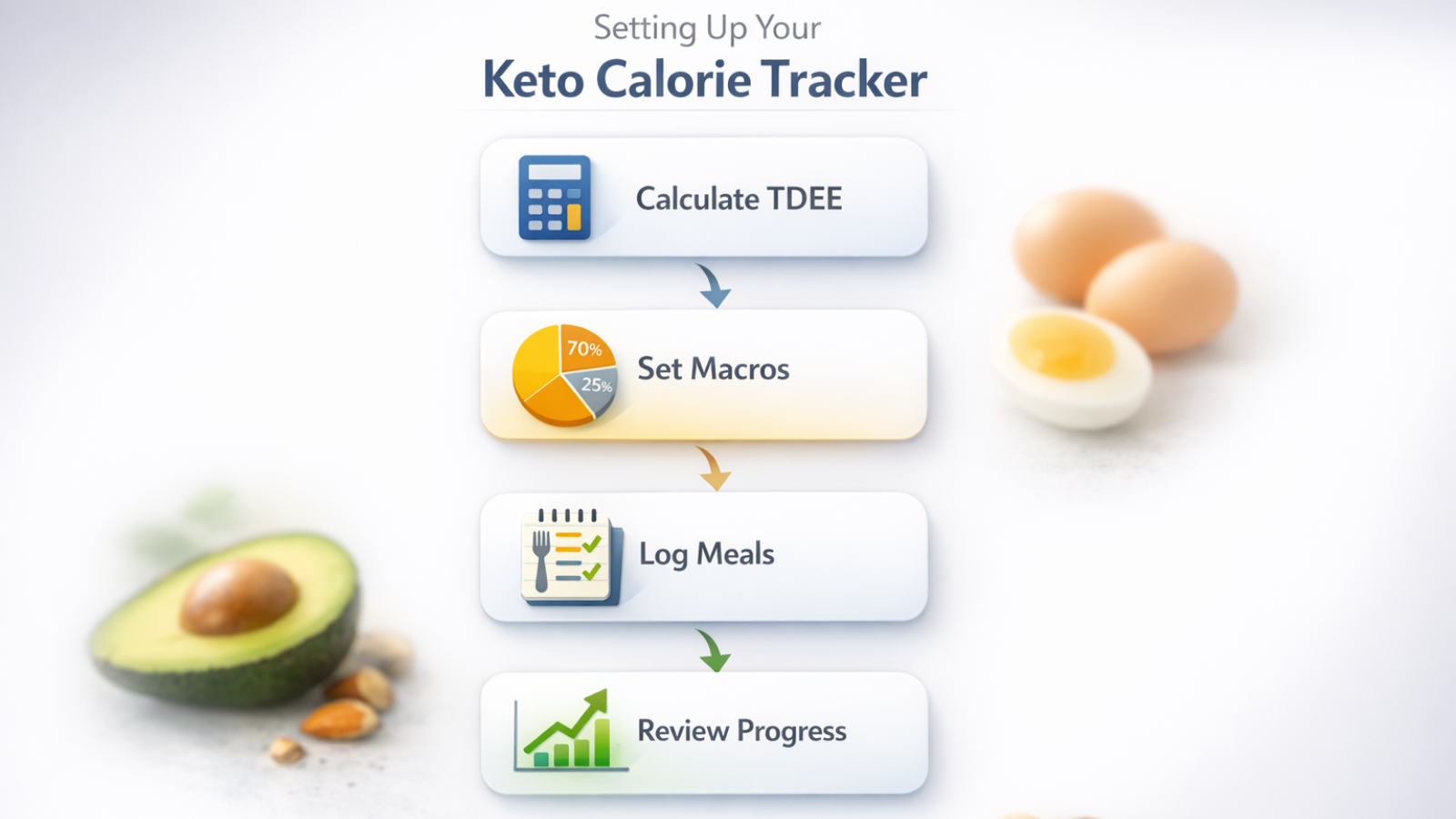
Understanding tracking is one thing. Setting it up correctly is where most people hesitate.
Let’s break it down into simple steps using a keto calorie tracker.
Step 1: Calculate your TDEE
Your Total Daily Energy Expenditure is your baseline.
It represents how many calories your body burns in a day. Most tools calculate this automatically based on your details.
Step 2: Set your macros
Start with a standard keto ratio:
- 70% fat
- 25% protein
- 5% carbs
Keep your net carbs around 20–25 grams per day.
Protein needs can vary. If you exercise regularly, you may need slightly more.
Step 3: log consistently
The first two weeks are about building the habit.
Don’t aim for perfection. Focus on consistency. A keto calorie tracker with a barcode scanner makes this much easier.
Step 4: review and adjust
After a few weeks, take a closer look at your data.
If progress slows, check your calorie intake. Small adjustments can make a noticeable difference.
Common keto tracking mistakes and how to avoid them
Even with a good system, small errors can slow progress.
One common mistake is tracking total carbs instead of net carbs. This often leads to avoiding foods that are actually keto-friendly.
Another issue is ignoring cooking fats. Oils and butter add up quickly and can push you out of a calorie deficit.
Sugar alcohols also confuse. Treating all of them as zero can lead to inaccurate tracking.
Some people stop using their keto calorie tracker when progress slows. That’s usually when it becomes most useful.
Electrolytes are often overlooked, too. Low intake can make the diet feel harder than it is.
Also Read!
Advanced keto tracking when you want more precision
Once the basics feel easy, you can go deeper.
Some people use targeted or cyclical keto, especially around workouts. This requires a keto calorie tracker that allows flexible carb targets.
Protein intake becomes more important over time as well. Too much can affect ketosis for some individuals, so tracking helps maintain balance.
New tools are also making tracking easier. Features like photo-based logging reduce effort and improve consistency.
Less effort usually means better long-term results.
Conclusion: start tracking smarter, not harder
Keto becomes much easier when you track the right things. Net carbs should be your first focus. They determine whether you stay in ketosis.
Calories matter too, but they usually come into play later. A keto calorie tracker helps you adjust when progress slows. Consistency makes the biggest difference. Logging your meals, tracking electrolytes, and making small adjustments over time leads to better results.
Calorie Tracker Buddy brings all of this into one place. You can set your macros, log meals quickly, and track your progress without second-guessing your numbers. That’s what makes the difference. Not just tracking more, but tracking in a way that actually works.
Frequently asked questions
Do I need to count calories on keto or just carbs?
Most people start by tracking net carbs. Keeping them under 20–25 grams per day is usually enough. A keto calorie tracker becomes more useful for calories if progress slows after a few weeks.
What is the difference between a keto tracker and a regular calorie counter?
A keto calorie tracker focuses on net carbs and macro ratios. Regular apps mainly track total calories and follow a balanced-diet approach that doesn’t support ketosis.
How do I calculate net carbs?
Subtract fiber and certain sugar alcohols from total carbs. For example, 10g total carbs with 6g fiber gives you 4g net carbs. A keto calorie tracker usually does this automatically.
How many net carbs should I eat per day on keto?
Most people stay in ketosis at 20–25 grams per day. Some can go higher depending on activity levels. A keto calorie tracker helps you monitor this accurately.
Can I use a keto tracker for a low carb diet that isn’t strict keto?
Yes, a keto calorie tracker can also work as a low carb tracker. You can increase your carb target while still tracking macros effectively.
Why am I not losing weight on keto even though I’m tracking?
Hidden calories, incorrect carb tracking, or excess protein are common causes. A keto calorie tracker helps identify these gaps so you can adjust your approach.