

If you have ever searched for a health app, you have probably come across two very different options: an Intermittent Fasting tracker and a calorie-counting app. Both promise to help you lose weight and build healthier habits, but they work in completely different ways. Choosing the wrong one can leave you confused or just not see results.
Whether you are a beginner exploring your first wellness tool or someone who’s tried a few apps and still hasn’t found the right fit, this guide breaks it all down for you. By the end, you will know exactly which app suits your lifestyle, and maybe even why using both together could be the smarter move.
Listen To The Podcast Now!
What Exactly Is an Intermittent Fasting Tracker?
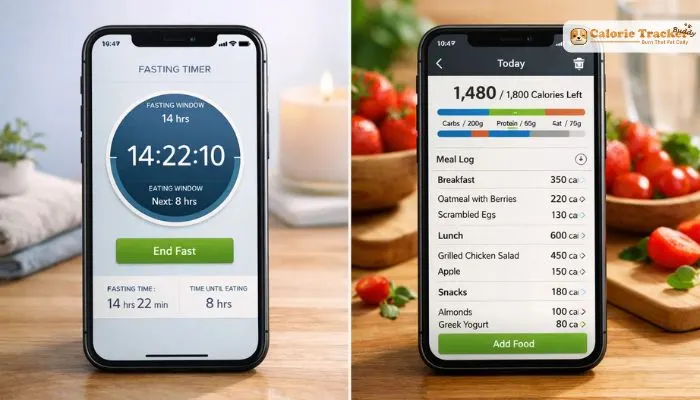
An intermittent fasting tracker is a tool to help you manage your eating and fasting windows throughout the day. Instead of focusing on what you eat, it focuses on when you eat. Most apps in this category let you set a fasting schedule like 16:8 or 18:6, and then track how long you have been fasting in real time.
A good intermittent fasting tracker will send you reminders, display countdowns, and sometimes include insights about your fasting streaks and progress over time. These apps are especially popular with people who find calorie counting tedious and want a simpler approach to managing their diet. The appeal is clear: no food logging, no number obsessing, just sticking to a time window and letting your body do the work.
What Does a Calorie App Actually Do?
A calorie app takes a completely different approach. Instead of tracking time, it tracks food. You log every meal, snack, and drink, and the app calculates how many calories you’ve consumed versus how many you should be eating based on your weight, height, and goals. Most calorie apps also track macronutrients like protein, carbs, and fats, giving you a much more detailed picture of your nutrition.
Unlike an intermittent fasting tracker, a calorie app requires more effort daily; you have to log consistently and accurately for the data to mean anything. But that detail is also its strength. It shows you exactly where your calories are coming from, which can be eye-opening for many users who don’t realize how much they’re actually eating.
How They Work Differently, A Side-by-Side Look?
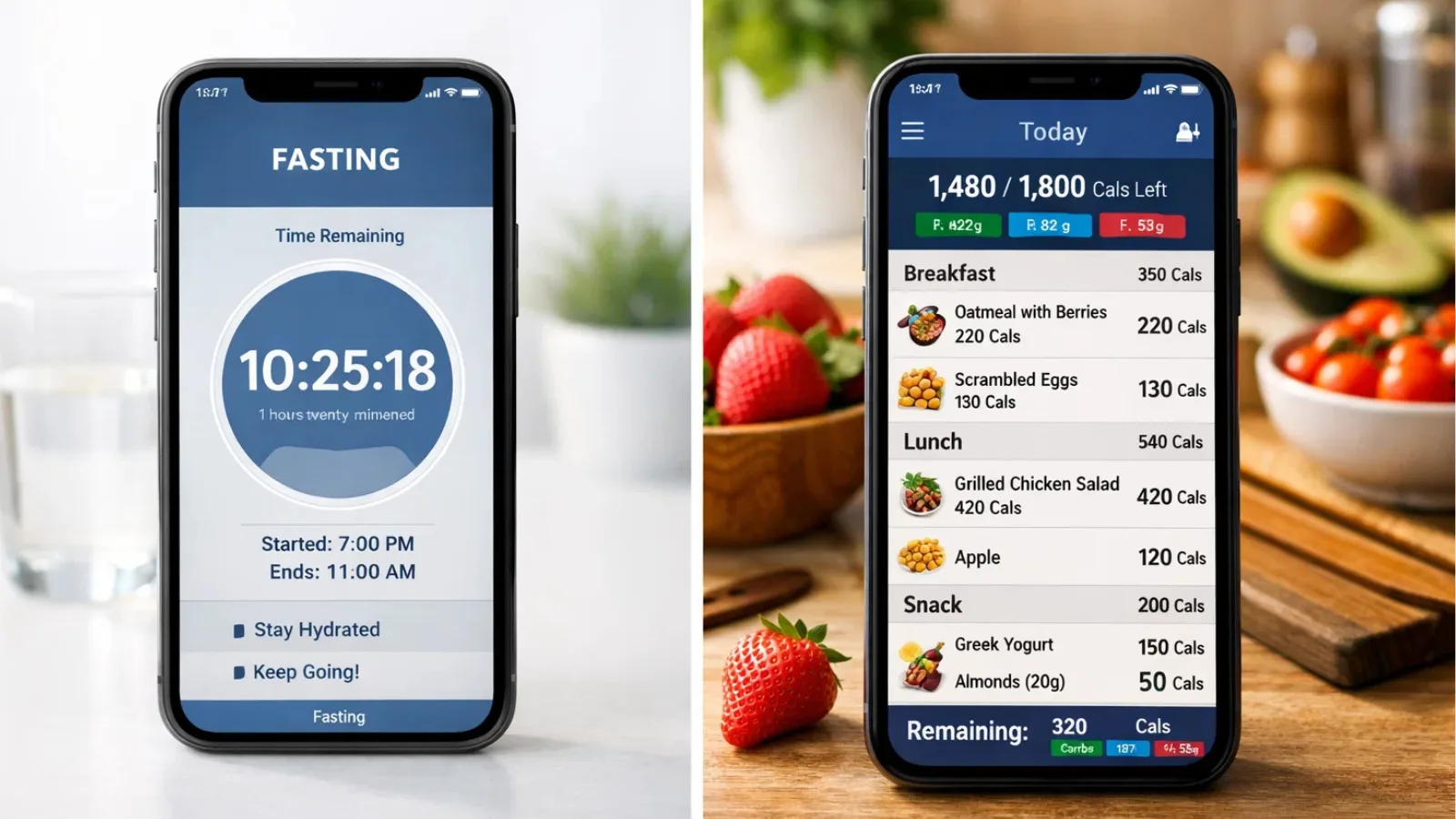
Here’s where things get really interesting. An intermittent fasting tracker is passive once it’s set up. You choose your fasting protocol, start the timer, and the app does the rest. There’s very little daily effort required.
A calorie app, on the other hand, is active; it needs your input every single day. The more accurate you are, the better the results. When comparing both, the intermittent fasting tracker wins on simplicity, while the calorie app wins on detail.
Another key difference is the mindset they promote. Fasting apps encourage discipline around timing, while calorie apps build awareness around food choices. Neither is wrong; they’re just designed for different types of people with different goals and different relationships with food.
Benefits of Using an Intermittent Fasting Tracker:
Using an intermittent fasting tracker regularly comes with some solid, well-documented advantages. First, it simplifies your approach to eating: no food scales, no math, no stressing over every ingredient. Second, fasting within a set window naturally reduces your overall calorie intake for most people, which supports weight loss without active counting. Third, an intermittent fasting tracker builds a routine.
When you follow a consistent eating window, your body adjusts, hunger becomes more predictable, and cravings tend to reduce over time. Many users also report better sleep, improved energy levels, and clearer thinking when they stick to a fasting routine long enough. For people who struggle with obsessive calorie counting or disordered eating thoughts, the intermittent fasting tracker approach can feel far more sustainable and mentally freeing.
Benefits of Using a Calorie App:
Calorie apps give you something that an intermittent fasting tracker simply can’t: nutritional transparency. You see exactly what goes into your body and how each food fits into your daily targets. This is incredibly useful for people working toward specific goals like building muscle, managing a health condition, or following a structured diet plan.
Calorie apps also help you spot patterns you’d never notice otherwise, like the fact that your “healthy” afternoon smoothie is actually adding 400 extra calories to your day. For those who eat at irregular times or have variable schedules, a calorie app offers more flexibility than a time-based approach. You can eat whenever life allows and still stay on track as long as your numbers are right.
Which One Should You Actually Choose?
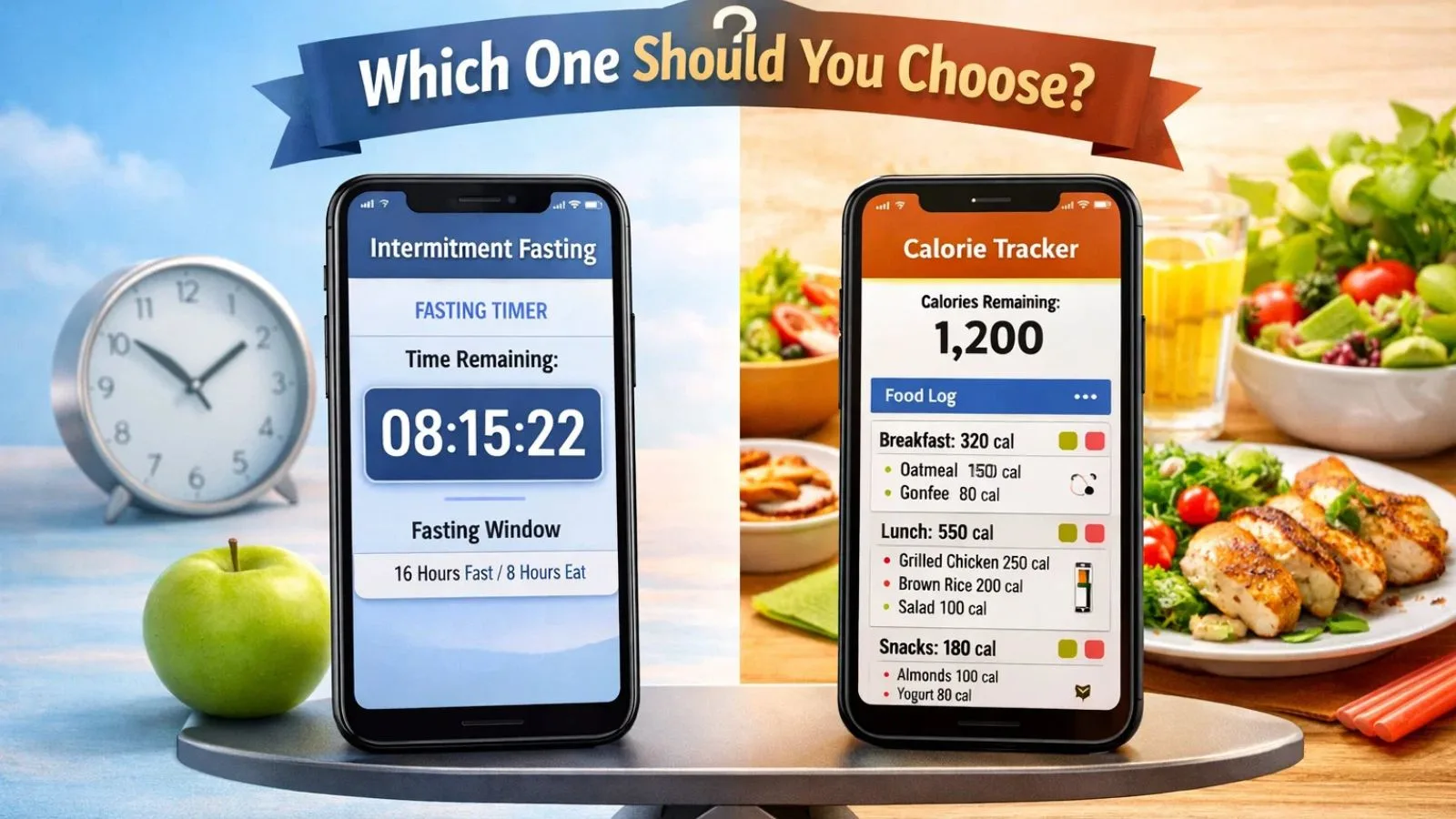
The honest answer depends entirely on your personality and your goal. If you’re someone who finds food logging overwhelming, stressful, or boring, an intermittent fasting tracker is probably your better starting point. It’s low-maintenance, easy to stick with, and still delivers real results.
But if you love data, enjoy knowing exactly what you’re eating, or have specific nutrition targets to hit, a calorie app will serve you far better. The intermittent fasting tracker is also a better choice if you tend to eat healthy foods, but just eat too often or too late. Meanwhile, the calorie app is better if your issue is portion sizes or food quality rather than timing. Think about your biggest eating challenge. The app that addresses that challenge is the right one for you.
Can You Actually Use Both at the Same Time?
Absolutely, and many health-conscious people do exactly that. Combining an intermittent fasting tracker with a calorie app gives you the best of both worlds. You control when you eat and what you eat, which creates a powerful framework for weight management and overall wellness.
For example, you might use an intermittent fasting tracker to maintain your 16:8 eating window and then log your meals in a calorie app to make sure you’re hitting your protein targets and staying within your daily limit.
This dual approach is particularly effective for people who have hit a plateau on one method alone. It takes a bit more effort, but the results are often significantly better. If you’re serious about your health goals, this combination is absolutely worth trying.
Also Read:
Why Calorie Tracker Buddy Is the Smart Choice for Calorie Counting?

If you decide that a calorie app is right for you, or you want to use one alongside your intermittent fasting tracker, Calorie Tracker Buddy is one of the best options available today. Here’s what makes it stand out:
- 📸 Meal Snap Feature: Just take a photo of your food, and the app instantly logs calories, macros, and nutritional balance.
- 📊 Full Macro Tracking, Tracks carbs, protein, fat, and water intake all in one place.
- 🎮 Virtual Buddy System: A gamified companion that grows as you build healthier habits, keeping motivation high.
- 🔥 Calorie Burn Tracking, Logs activity from gym workouts to everyday movement like walking and cleaning.
- 🎯 Goal Predictions: Shows how each meal or snack impacts your overall progress in real time.
- 💡 Personalized Suggestions Offers smart nudges and dietary recommendations tailored to your needs.
It’s fun, accurate, and designed to make healthy living feel rewarding, not like a chore.
Conclusion:
Both the intermittent fasting tracker and the calorie app are powerful tools, but neither is universally better. The right choice comes down to your lifestyle, your goals, and how you naturally relate to food. Try one, stay consistent, and don’t be afraid to combine both if needed.
FAQ’s:
Q1: Can I use an intermittent fasting tracker and a calorie app together?
Ans: Yes! Using both gives you full control over when and what you eat, which often delivers the best results.
Q2: Is an intermittent fasting tracker good for beginners?
Ans: Absolutely. It’s one of the simplest ways to start your health journey without getting overwhelmed by data.
Q3: Does Calorie Tracker Buddy support intermittent fasting?
Ans: Calorie Tracker Buddy focuses primarily on calorie and macro tracking, making it a great complement to any fasting app you already use.
Q4: Which app is better for weight loss?
Ans: Both work; the best one is whichever you’ll actually stick to consistently.