



Water fasting has become one of the most talked-about wellness trends on social media, health blogs, and even in certain medical circles. From dramatic Weight Loss claims to promises of cellular repair and detoxification, it seems like everyone has an opinion about this practice. But how much of what you hear is actually backed by science, and how much is just hype?
In this comprehensive guide, we will take a close, honest look at what water fasting really involves, explore the genuine benefits, acknowledge the real risks, and help you decide whether this approach makes sense for your health journey. Our goal is simple: give you the facts so you can make an informed decision.
Listen To The Podcast Now!
What Is Water Fasting?
So, what is water fasting exactly? In the simplest terms, it is a type of fast where you consume nothing but water for a set period, typically ranging from 24 to 72 hours. Unlike intermittent fasting or juice cleanses, water fasting eliminates all caloric intake.
Some people attempt longer durations, but medical supervision becomes essential beyond three days. The concept has roots in ancient spiritual and healing traditions, but modern interest in water fasting has surged due to emerging research on autophagy, metabolic health, and longevity. Understanding the basics is the first step before you consider trying it.
How Does Water Fasting Work in the Body?
When you begin a water fast, your body goes through a series of metabolic shifts. During the first 12 to 24 hours, your glycogen stores are gradually depleted, and your body starts transitioning to fat as its primary fuel source. This process, known as ketosis, is a central mechanism behind many of the claimed benefits of water fasting.
After approximately 24 to 48 hours, a process called autophagy may begin, where your cells start breaking down and recycling damaged components. Researchers believe autophagy plays a role in reducing inflammation, supporting immune function, and potentially slowing the ageing process. However, much of this evidence comes from animal studies, and human research is still limited.
Water Fasting Benefits: What the Research Shows:
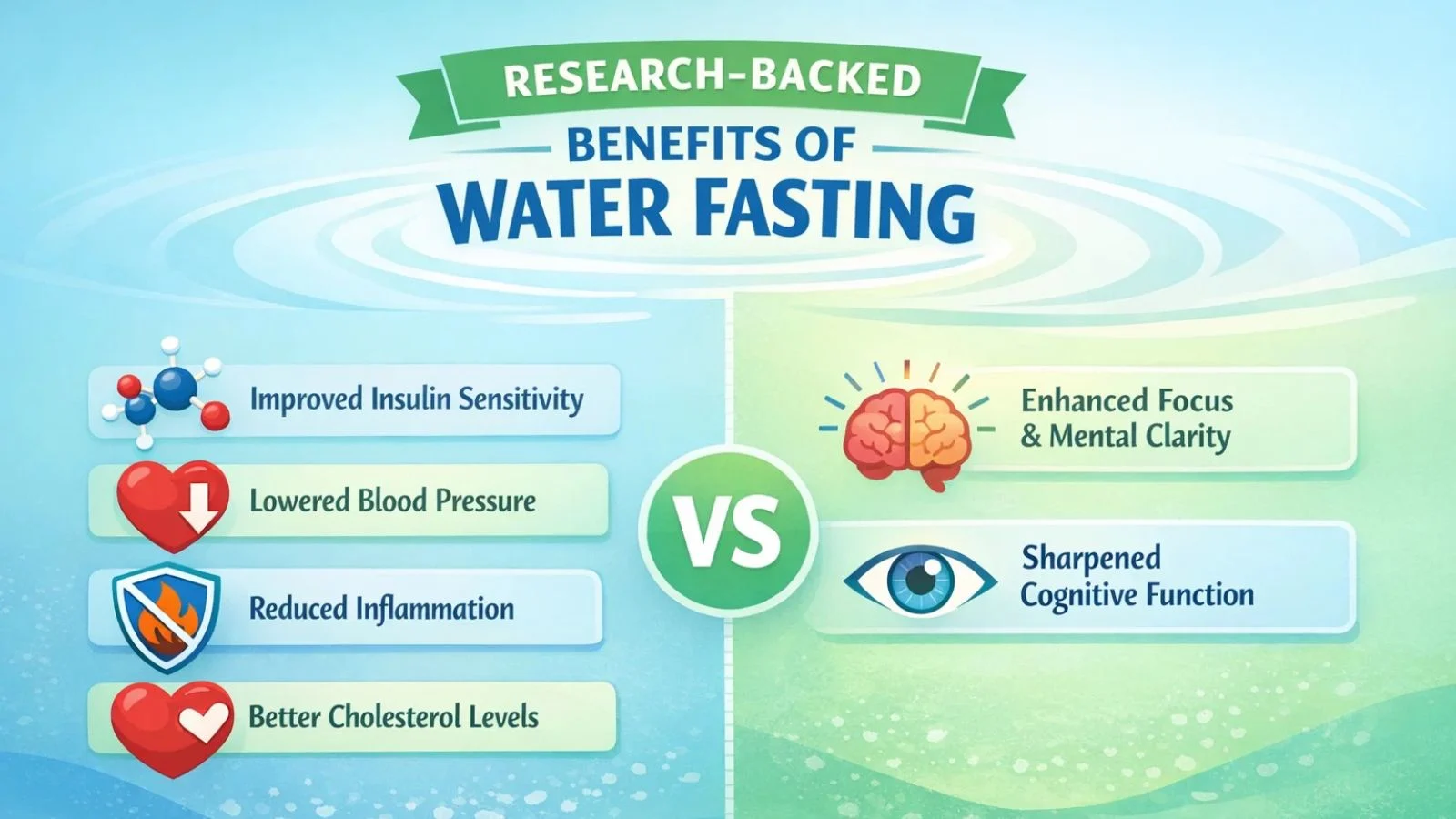
There are several water fasting benefits that have attracted scientific interest. Studies suggest that short-term fasting can improve insulin sensitivity, help lower blood pressure, and reduce markers of inflammation.
Some research also points to improved cholesterol profiles and better blood sugar regulation following a supervised water fast. Additionally, many people report heightened mental clarity and improved focus during fasting periods, which some researchers attribute to the release of brain-derived neurotrophic factor (BDNF).
Water fasting may also support weight loss in the short term by creating a significant calorie deficit. That said, it is important to approach these findings with a balanced perspective, as most studies involve small sample sizes or controlled clinical settings.
Water Fasting Risks You Should Know About:
Despite the potential upsides, water fasting risks are very real and should not be overlooked. Dehydration is a common concern, since a significant portion of our daily water intake actually comes from food. Electrolyte imbalances can occur, leading to dizziness, headaches, muscle cramps, or, in severe cases, heart irregularities.
People with diabetes, eating disorders, kidney problems, or those on medications should avoid water fasting without medical guidance. Refeeding syndrome is another serious risk when breaking a longer fast, as reintroducing food too quickly can cause dangerous shifts in electrolyte levels. The bottom line is that water fasting is not appropriate for everyone, and consulting a healthcare professional beforehand is essential.
Who Should Avoid Water Fasting?
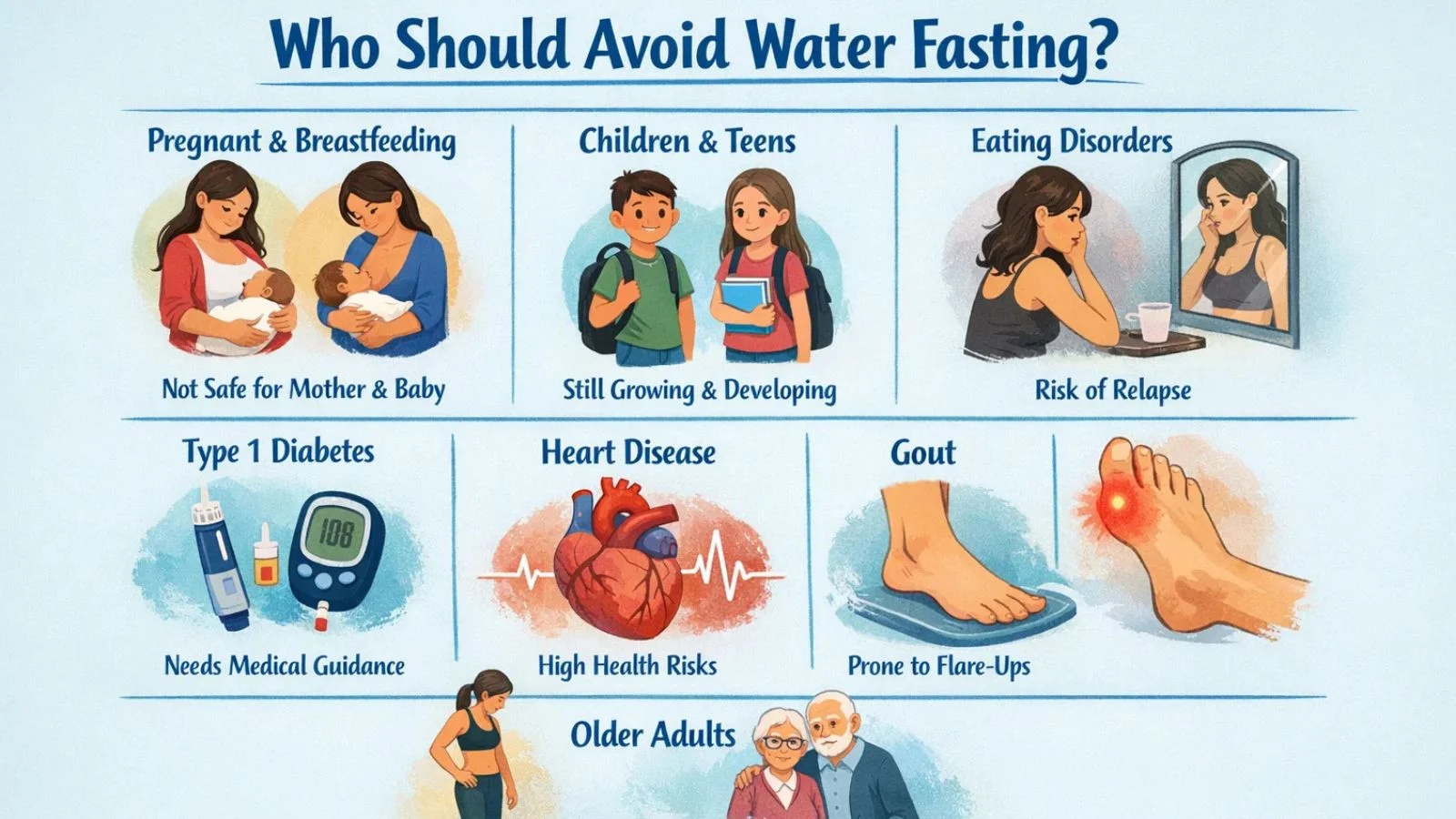
Water fasting is not a one-size-fits-all practice. Pregnant or breastfeeding women should never attempt it, as both mother and child need consistent nutrition. Children and teenagers, whose bodies are still growing and developing, should also stay away. If you have a history of eating disorders, water fasting can trigger harmful patterns and should be avoided entirely.
People with chronic conditions like type 1 diabetes, heart disease, or gout should consult their doctors before even considering a fast. Older adults and individuals who are underweight are also at higher risk of complications. Always prioritise safety over trends.
Tips for a Safer Water Fasting Experience:
If you have spoken with a healthcare provider and decide to try water fasting, there are ways to do it more safely. Start with shorter fasts of 12 to 24 hours before attempting anything longer. Gradually reduce your food intake in the days leading up to your fast so the transition is less of a shock to your system.
Stay hydrated throughout, and listen to your body carefully. If you experience severe dizziness, confusion, or chest pain, break the fast immediately. When it is time to eat again, start with small, easily digestible meals and reintroduce solid foods slowly over one to two days. Planning makes the entire process smoother and reduces risk significantly.
Also Read:
Track Your Nutrition Journey With Calorie Tracker Buddy:
Whether you are preparing for a water fast, recovering from one, or simply building healthier eating habits, having the right tool makes all the difference. Calorie Tracker Buddy is a fun, easy-to-use app that helps you stay on top of your nutrition goals every single day. Here is what makes it stand out:
- Snap-a-Meal Tracking: Just photograph your food and get instant calorie and nutrient breakdowns.
- Calorie Burn & Intake Monitoring: Track everything from daily meals to steps and exercise in one place.
- Goal Predictions: See real-time insights on how each meal impacts your health goals.
- Virtual Buddy Motivation: A cute virtual pet that grows as you make healthier choices, keeping you motivated daily.
- Social Sharing: Share your streaks, meals, and progress with friends for extra accountability.
Download Calorie Tracker Buddy from the Google Play Store or App Store and take control of your nutrition before, during, and after any fasting journey.
Water Fasting vs. Intermittent Fasting: A Quick Comparison:
Many people confuse water fasting with intermittent fasting, but they are quite different. Intermittent fasting involves cycling between periods of eating and fasting, usually within a daily window such as 16:8 or 18:6. You still consume food every day, just within restricted hours.
Water fasting, on the other hand, means zero caloric intake for an extended period. Intermittent fasting is generally considered safer for long-term use and easier to maintain as a lifestyle habit. Water fasting tends to be more intense and is typically done as an occasional reset rather than a daily routine. Both approaches have their place, but understanding the differences helps you choose what aligns with your goals.
Conclusion:
Water fasting can offer some legitimate health benefits when done correctly and under appropriate guidance. However, it is not a magic solution, and the risks are real for many people. The key takeaway is to approach water fasting with a clear understanding of both its potential and its limitations. Always consult a healthcare professional before starting, especially if you have any underlying health conditions. Making informed decisions, rather than following trends blindly, is the best path to lasting wellness.
FAQ’s:
Q1: How long should a beginner do a water fast?
Ans: Beginners should start with a 12 to 24-hour water fast. This allows your body to adjust gradually without significant risk. Always consult a doctor before attempting anything longer.
Q2: Can you exercise during water fasting?
Ans: Light movement, like walking, is generally fine, but intense exercise is not recommended during a water fast. Your body has limited energy reserves, and pushing too hard can lead to fatigue or injury.
Q3: What should you eat after breaking a water fast?
Ans: Start with small portions of easily digestible foods like broth, fruits, or steamed vegetables. Avoid heavy, processed, or sugary meals immediately after fasting to prevent digestive distress.
Q4: Is water fasting safe for everyone?
Ans: No. Water fasting is not recommended for pregnant women, children, people with eating disorders, or those with chronic health conditions. Always seek medical advice before starting any fast.