

Most smoothies taste great. Very few actually keep you full for hours. That gap is exactly why so many people go searching for protein smoothie recipes that do more than just taste good.
Whether you need a fast breakfast, a way to recover after training, or a snack that curbs hunger without wrecking your calorie goals, the right blend of ingredients makes all the difference. A smoothie can be a full meal or a light boost, depending on what goes into the glass and why you’re drinking it.
This guide walks through practical, ready-to-use protein smoothie recipes, a simple framework for building your own, and the small details that separate a forgettable drink from one that actually supports your goals.
Read Aloud!
Protein Smoothie Recipes at a Glance
A protein smoothie combines protein-rich ingredients like Greek yogurt, milk, cottage cheese, tofu, seeds, or protein powder with fruits and healthy fats. The result is a balanced, filling drink suitable for breakfast, recovery, or even a meal replacement when you’re short on time.
Why Protein Smoothie Recipes Are More Than Just a Gym Drink
People tend to associate smoothies with gym bags and post-workout routines. That’s fair, but it’s only part of the story.
Longer-lasting fullness
Protein slows digestion, which means you stay satisfied instead of getting hungry an hour later.
Muscle recovery
After a workout, your muscles need amino acids to rebuild. A smoothie delivers them quickly, without needing to cook anything.
Weight management
Protein has a higher satiety value than carbs or fat- gram for gram, which naturally helps with portion control.
Easy nutrition
You can pack fruit, greens, healthy fats, and protein into one glass in under five minutes.
Convenient breakfast
Mornings are rushed. A smoothie fits into that chaos better than a sit-down meal ever could.
How to Build the Perfect Protein Smoothie Recipes
Before jumping into these protein smoothie recipes, it helps to understand the framework behind them. Once you know this, you can create your own combinations without following a recipe card at all.
Choose Your Protein
Greek yogurt, cottage cheese, protein powder, tofu, and milk are the most common bases. Each brings a slightly different texture and flavor, so it’s worth experimenting.
Add Smart Carbs
Banana, oats, berries, and mango add natural sweetness along with fiber and quick energy.
Include Healthy Fats
Peanut butter, almond butter, chia seeds, and flaxseed slow digestion and make the smoothie more satisfying.
Boost Flavor Naturally
Cinnamon, cocoa, vanilla, and coffee turn a basic blend into something you’ll actually look forward to drinking.
12 Best Protein Smoothie Recipes for Every Goal
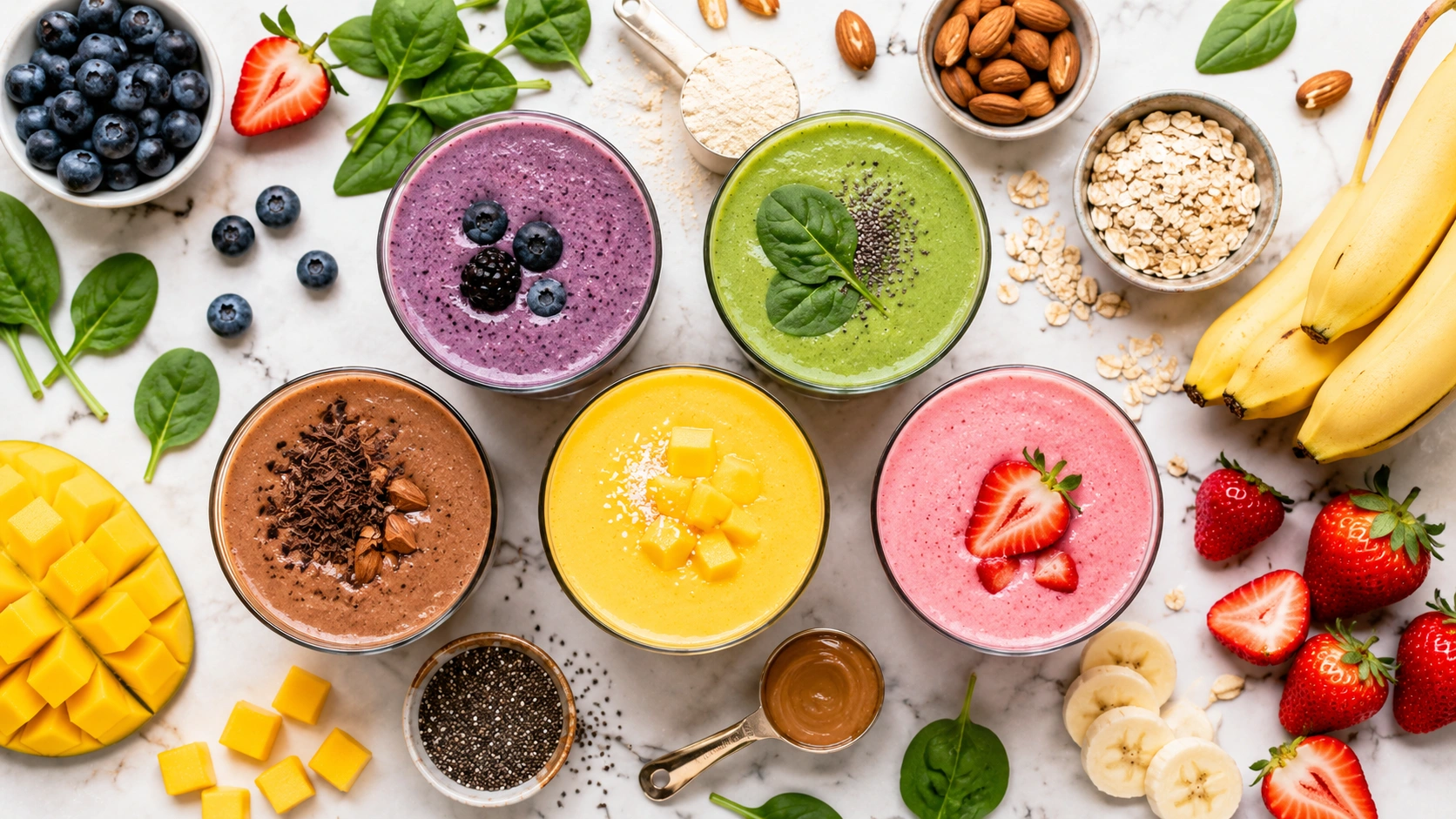
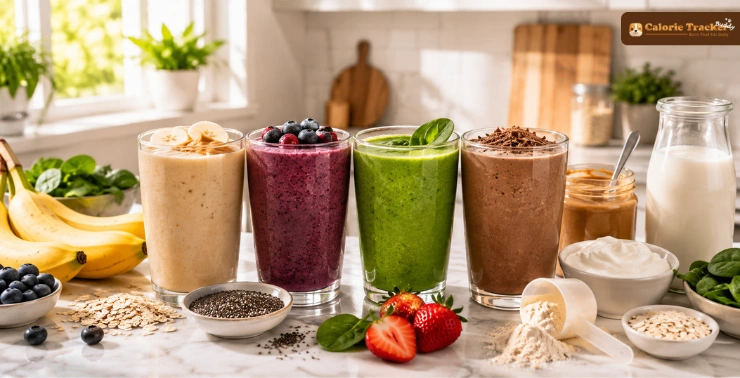
Here are twelve high protein smoothie recipes, each built for a slightly different goal. Adjust portions based on your own calorie needs.
Classic Peanut Butter Banana
Best for: Muscle gain.
Blend banana, peanut butter, milk, and protein powder. Around 30g protein, 380 calories. Swap peanut butter for almond butter if needed.
Mixed Berry Greek Yogurt
Best for: Weight loss.
Blend Greek yogurt, mixed berries, and a splash of almond milk: about 22g protein, 210 calories. Use frozen berries for a thicker texture.
Chocolate Oat Smoothie
Best for: Breakfast.
Blend oats, cocoa powder, banana, and milk. Roughly 20g protein, 320 calories. Add protein powder for an extra boost.
Coffee Protein Smoothie
Best for: Morning energy.
Blend cold coffee, banana, protein powder, and milk. Around 25g protein, 250 calories. Decaf works fine for an evening version.
Tropical Mango Coconut
Best for: Post-workout.
Blend mango, coconut milk, Greek yogurt, and protein powder. About 28g protein, 300 calories.
Strawberry Cheesecake
Best for: A treat that still fits your goals.
Blend cottage cheese, strawberries, vanilla, and a touch of honey. Around 24g protein, 260 calories.
Green Spinach Smoothie
Best for: Added nutrients.
Blend spinach, banana, protein powder, and milk. Roughly 22g protein, 230 calories.
Apple Cinnamon
Best for: A cozy breakfast alternative.
Blend apple, cinnamon, Greek yogurt, and oats. About 20g protein, 270 calories.
Blueberry Almond
Best for: Brain-friendly antioxidants.
Blend blueberries, almond butter, milk, and protein powder. Around 26g protein, 310 calories.
Chocolate Cherry Recovery
Best for: Post-workout recovery.
Blend cherries, cocoa, protein powder, and milk. About 27g protein, 290 calories.
Vegan Peanut Butter Smoothie
Best for: Plant-based diets.
Blend tofu, banana, peanut butter, and oat milk. Roughly 24g protein, 320 calories.
Cottage Cheese Vanilla Smoothie
Best for: Meal replacement.
Blend cottage cheese, vanilla, banana, and milk. Around 30g protein, 300 calories. Add ice for a thicker, milkshake-like texture.
Which Protein Smoothie Recipes Fit Your Goal?
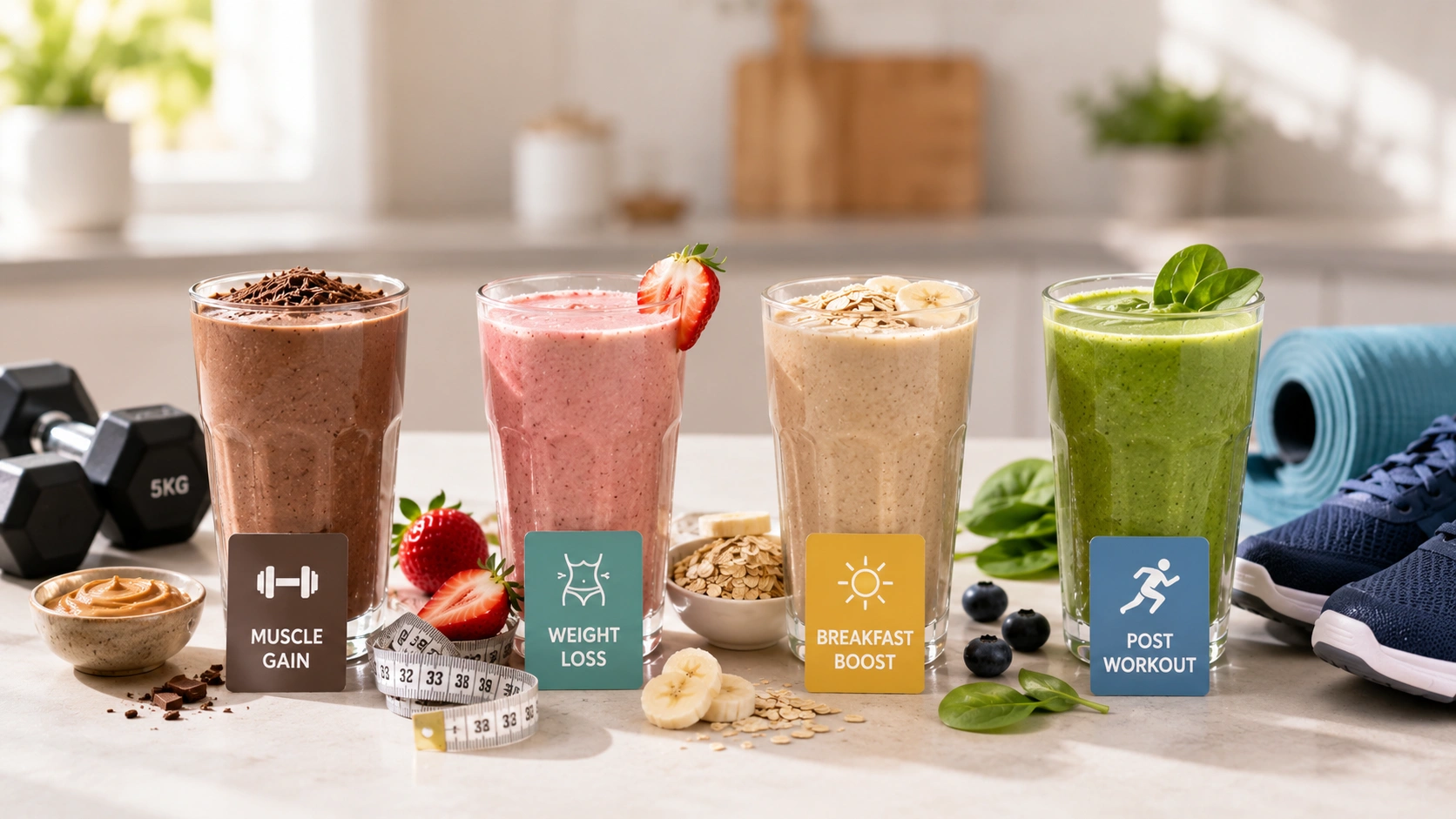
Easy Ways to Customize Any Smoothie
For Weight Loss
Cut the fruit slightly and add more greens or ice to reduce calories without losing volume.
For Muscle Gain
Add an extra scoop of protein powder or a tablespoon of nut butter for more calories.
For Higher Fiber
Toss in oats, chia seeds, or flaxseed. They also help thicken the texture.
For More Protein
Use two protein sources, like Greek yogurt plus protein powder, instead of relying on one.
For Dairy-Free Diets
Swap milk and yogurt for oat milk, almond milk, or coconut yogurt.
Common Protein Smoothie Mistakes to Avoid
Even simple recipes go wrong in predictable ways.
Too much fruit
It’s easy to load up on sugar without realizing it.
Too little protein
A smoothie without enough protein is basically a sugary drink.
Missing fiber
Fiber slows sugar absorption and keeps you fuller longer.
Hidden sugars
Flavored yogurts and juices sneak in more sugar than expected.
Oversized portions
A smoothie meant as a snack can accidentally become a 700-calorie meal.
Skipping healthy fats
Fat helps with satiety and nutrient absorption, so don’t leave it out.
Make Tracking Your Protein Smoothie Recipes Easier with Calorie Tracker Buddy
A nutrition tracker can make it much easier to enjoy your favorite smoothies while staying aligned with your health and fitness goals.
How Calorie Tracker Buddy Helps
- Serving Size Adjustments: Instantly recalculate nutrition when you change portion sizes.
- Snap The Meal: Log meals by taking a photo for faster food tracking.
- Calorie Intake Tracker: Monitor your daily calorie intake and stay within your target.
- Goal Predictions: See how your current eating habits align with your weight and nutrition goals.
- Buddy Motivation: Stay consistent with reminders and motivational insights.
- Social Sharing: Share recipes and progress with friends or your fitness community.
With the right recipes and an easy way to track them, building a sustainable high-protein routine becomes much simpler.
Read More!
Advanced Insight: Why the Best Protein Smoothies Balance More Than Protein
It’s tempting to think more protein automatically means a better smoothie. That’s not quite right.
Protein paired with fiber creates a stronger sense of fullness than protein alone. Fiber slows how quickly sugar hits your bloodstream, which helps keep energy and blood sugar more stable through the morning.
Timing matters too. Drinking a smoothie within a couple of hours after training supports recovery, but the exact window is more flexible than people assume. What matters most is consistency, not perfect precision.
This is why the best protein smoothie recipes rarely rely on protein powder alone. They combine protein, fiber, and healthy fat, which outperforms a protein-only drink in both fullness and steady energy.
Conclusion
There isn’t one single “best” protein smoothie. The right choice depends on whether you’re aiming for weight loss, muscle gain, a quick breakfast, or post-workout recovery.
Try a few different combinations from these protein smoothie recipes, pay attention to how they make you feel, and build two or three go-to recipes for different parts of your week. Once you understand the framework behind healthy smoothie recipes, you won’t need to follow a recipe card at all. You’ll just know what works for you.
Frequently Asked Questions
Can I drink protein smoothies every day?
Yes, as long as the ingredients fit your overall diet and calorie needs.
Are protein smoothie recipes good for weight loss?
They can be, especially when they replace higher-calorie meals or snacks and include enough fiber.
What is the best protein for smoothies?
Greek yogurt, cottage cheese, and protein powder are all reliable choices. The best one depends on your taste and dietary needs.
Can I make protein smoothies without protein powder?
Yes. Greek yogurt, cottage cheese, tofu, and milk all provide protein without needing a powder.
Are frozen fruits healthy in smoothies?
Yes, frozen fruit retains most of its nutrients and also makes smoothies thicker and colder.
Can protein smoothies replace breakfast?
They can, especially when they include protein, fiber, and healthy fat for lasting energy.