



Quick Answer: Why Are Vitamins and Supplements Important
Vitamins and supplements support essential body functions, including immunity, energy production, bone strength, brain health, and cellular repair. While food should ideally provide most of your nutrients, supplements can help fill the gaps left by deficiencies, aging, lifestyle demands, or specific health conditions. They’re not a cure-all, but used correctly, they play a meaningful role in maintaining overall health.
Read Aloud!
What Exactly Are Vitamins and Supplements?
Vitamins and supplements play a key role in supporting your body’s daily functions, from energy production to immunity and overall well-being. Understanding what they are and how they differ helps you make smarter, more informed nutrition choices.
What Are Vitamins?
Vitamins are organic compounds your body needs in small amounts to function properly. It cannot produce most of them in sufficient quantities on its own, so you get them through food or supplementation. They fall into two categories: fat-soluble vitamins (A, D, E, and K), which are stored in body tissues, and water-soluble vitamins (C and the B group), which are not stored and need regular replenishment.
Each vitamin has a specific role. Vitamin C supports immune defense. B vitamins power your metabolism. Vitamin A is critical for vision and skin health. The body’s systems are interdependent, and a shortage of even one vitamin can create downstream effects that are easy to overlook.
What Are Supplements?
Supplements are a broader category. They include vitamins, minerals, herbal extracts, amino acids, protein powders, and fitness supplements. Some people use them to address deficiencies. Others use them to support athletic performance or manage stress. They come as capsules, powders, gummies, and liquids, but the delivery format matters far less than the quality of the ingredient inside.
Vitamins vs. Supplements: What’s the Difference?
All vitamins are supplements, but not all supplements are vitamins. A protein powder, for example, is a supplement but not a vitamin product. Pure vitamins and supplements are a subset of the larger market, focused specifically on essential micronutrients rather than performance enhancers or herbal blends. Knowing this distinction helps you shop more intentionally.
The Real Reason Your Body Depends on Vitamins

Your body relies on vitamins and minerals to carry out essential processes that keep you energized, protected, and functioning properly.
Energy Production and Metabolism
B vitamins are the engine room of your metabolism. Thiamine, riboflavin, niacin, B6, and B12 all play roles in converting food into usable energy at the cellular level. When these are insufficient, tiredness isn’t just a feeling. It’s a biochemical reality. Your cells simply cannot generate energy efficiently without them.
Immune System Support
Among the many vitamins and supplements people use, Vitamin C, Vitamin D, and zinc are most commonly associated with immune health. Vitamin D is particularly interesting because it acts more like a hormone than a traditional nutrient. Its receptors exist on immune cells throughout the body, and deficiency has been linked to increased susceptibility to infection. Most people in northern climates, and many who work indoors, are deficient without knowing it.
Strong Bones and Muscles
Calcium gets all the credit for bone health, but it needs Vitamin D to be absorbed and magnesium to be properly utilized. Without that triad working together, calcium supplementation alone does relatively little. This is why choosing vitamins and supplements as a package, rather than isolating a single nutrient, often produces better outcomes.
Brain Function and Mental Performance
Vitamin B12 and omega-3 fatty acids are closely tied to cognitive function. B12 deficiency, which is especially common in older adults and people on plant-based diets, can cause memory issues, mood changes, and neurological problems. These aren’t just long-term risks. Even a mild deficiency can affect focus and mental clarity in the short term.
Cell Repair and Healthy Aging
Vitamins C and E, along with beta-carotene, function as antioxidants. They neutralize free radicals, which are unstable molecules that damage cells and accelerate aging. This isn’t abstract science. It’s one of the clearest mechanisms by which nutrition influences how well and how long your body holds up over time.
Why Food Alone Isn’t Always Enough Anymore
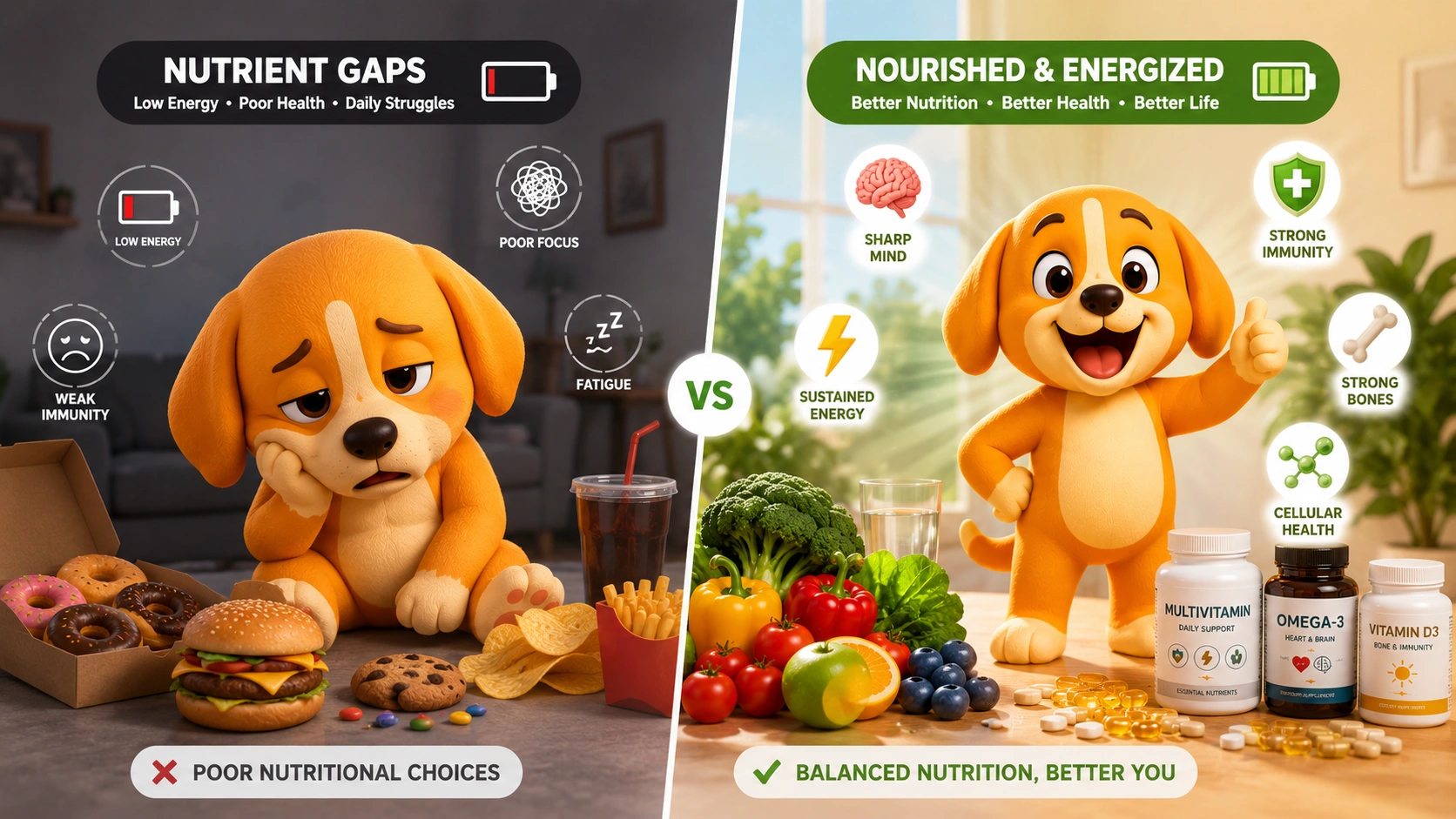
Modern diets have a nutrient gap problem, and it’s more common than most people assume. Calorie intake has not declined significantly in many populations, but nutrient density has. Highly processed foods are calorie-dense and nutrient-poor, which means people can be overfed and undernourished at the same time. This is one of the main reasons vitamins and supplements have become an important part of many people’s health routines.
Common Reasons Nutrient Gaps Happen
Stress depletes B vitamins and magnesium faster than people realize. Restrictive diets cut out entire food groups, often removing key micronutrient sources with them. Cooking methods matter too. Boiling vegetables can strip water-soluble vitamins significantly. Add in soil depletion, which affects the nutrient content of crops, and the picture becomes clearer.
Groups Most Likely to Need Supplements
Certain groups benefit more from vitamins and supplements because their nutrient needs or absorption rates differ from those of the general population. Older adults absorb B12 and Vitamin D less efficiently as digestive function changes with age. Vegans and vegetarians often need B12, iron, zinc, and omega-3s because these are concentrated in animal products. Pregnant women require higher folate and iron. Athletes, particularly those training at high intensity, burn through magnesium, zinc, and electrolytes faster than sedentary individuals do.
The Most Common Vitamins and Supplements People Take
Vitamins and supplements come in many forms, but some are recommended more frequently than others based on common nutrient deficiencies and health needs. Vitamin D is consistently among the most recommended due to widespread deficiency and its broad role in immunity, bone health, and mood regulation.
Vitamin B12 is essential for nerve function and red blood cell production. Deficiency is slow to develop but serious when it does.
Magnesium supports over 300 enzymatic processes and is chronically low in most Western diets due to soil depletion and food processing.
Iron is critical for oxygen transport. Deficiency is particularly common in menstruating women and can cause fatigue that’s often mistaken for other conditions.
Omega-3 fatty acids support cardiovascular health, brain function, and inflammation control. Most people don’t eat enough oily fish to meet optimal levels.
For people who train regularly, fitness supplements like protein powders and creatine are evidence-backed options for supporting muscle recovery and performance. If you’re exploring pre-workout options, pre workout supplements, and other pre-workout products vary widely in ingredient quality. Reading labels carefully matters more than brand marketing.
Signs Your Body Might Be Missing Essential Nutrients
Persistent fatigue is the most common signal, but it’s easy to attribute to stress or poor sleep. Hair loss, brittle nails, slow wound healing, frequent illness, muscle cramps, brain fog, and mood instability can all be tied to micronutrient gaps. None of these symptoms are proof of deficiency on their own, but patterns matter.
The responsible approach is testing. A simple blood panel can identify Vitamin D, B12, iron, and other levels directly. Self-diagnosing and supplementing without guidance can sometimes create imbalances rather than fix them.
How to Choose Vitamins and Supplements Without Wasting Money
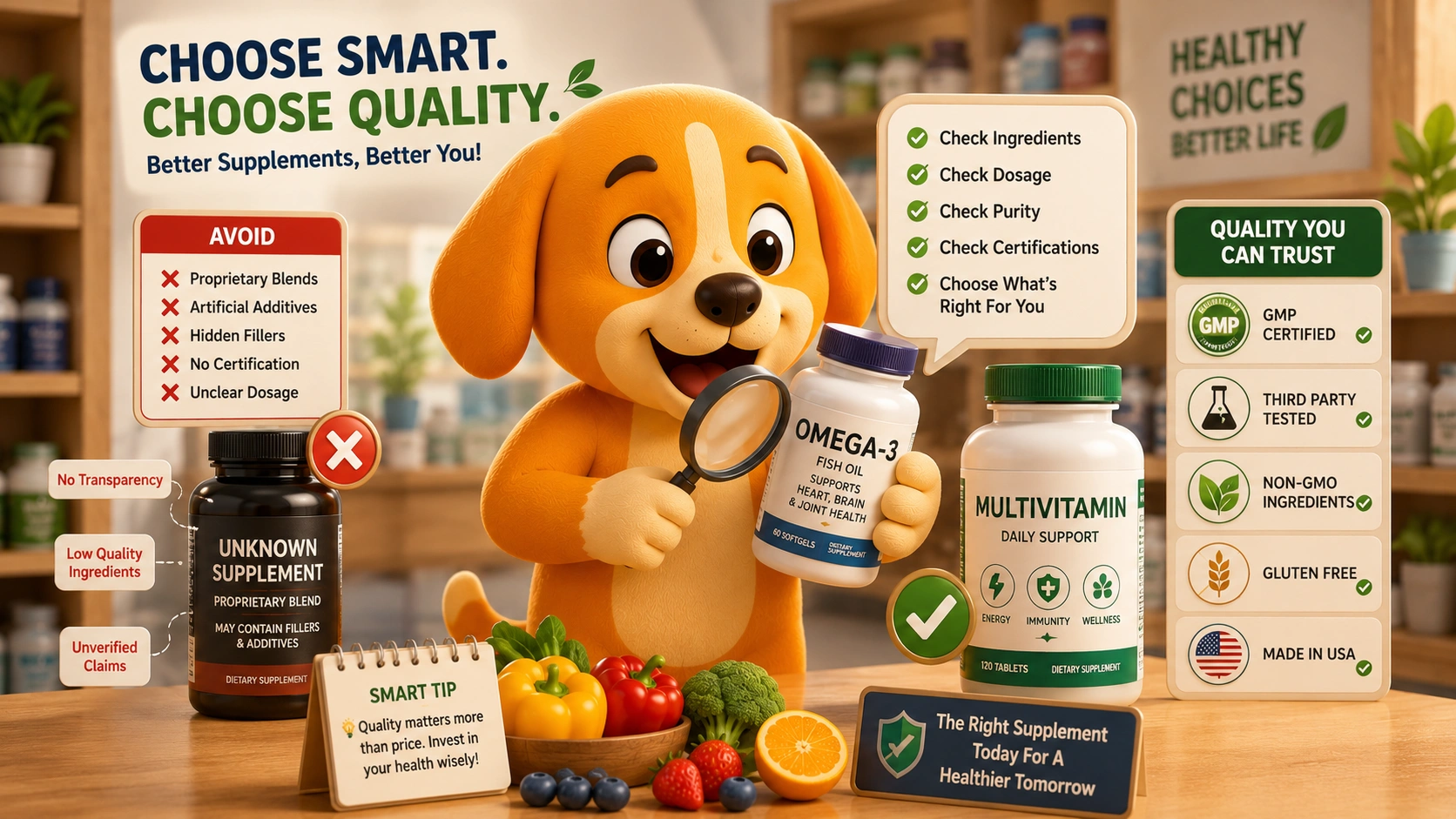
Choosing vitamins and supplements wisely is less about buying more and more about understanding what your body actually needs.
A structured approach helps you avoid unnecessary spending while focusing only on nutrients that truly support your health.
The 4-Step Supplement Decision Model
- Assess your diet. Before buying anything, look honestly at what you eat regularly. Gaps often become obvious at this stage.
- Identify deficiency risk. Consider your age, lifestyle, diet type, and health conditions. These are the strongest predictors of which nutrients you’re likely to lack.
- Verify with professional guidance. A doctor or registered dietitian can order blood work that gives you actual data rather than guesswork.
- Supplement only where needed. Targeted supplementation based on identified needs is more effective and safer than stacking products out of habit.
Look for third-party tested products. Labels like USP, NSF, or Informed Sport indicate independent verification of purity and potency. Avoid supplements making dramatic health claims, as strong clinical evidence tends to be modest and specific.
Read More!
Common Myths About Vitamins and Supplements
Many people misunderstand how vitamins and supplements actually work, leading to unnecessary or even risky use. Separating fact from myth is essential if you want to support your health safely and effectively.
Myth: More is always better. Fat-soluble vitamins accumulate in tissues and can become toxic at high doses. Even water-soluble vitamins can cause harm in excess. Vitamin B6 toxicity is a real and underreported issue.
Myth: Supplements can replace healthy eating. They can’t. Whole foods contain fiber, phytonutrients, and compounds that work synergistically in ways no supplement can fully replicate.
Myth: Natural means risk-free. Herbal supplements interact with medications. St. John’s Wort, for example, affects the metabolism of several prescription drugs, including antidepressants and contraceptives.
Myth: Everyone needs a multivitamin. If your diet is genuinely varied and nutrient-dense, a multivitamin adds little value. Targeted supplementation based on real gaps is a smarter strategy.
How Calorie Tracker Buddy Supports Smarter Nutrition Decisions

Understanding what you eat daily is the foundation that makes supplementation actually useful. Key Features of Calorie Tracker Buddy
- Track daily calorie intake with real-time logging
- Monitor eating habits and nutritional consistency over time
- Set personalized health, fitness, or weight-management goals
- Gain better visibility into food choices and portion sizes
- Identify patterns that may contribute to nutrient gaps
- Support healthier decision-making through data-driven insights
- Track progress toward wellness and fitness objectives
- Build sustainable nutrition habits with long-term trend monitoring
Rather than adding vitamins and supplements based on marketing or vague health goals, you start from a clearer picture of what your diet already provides and what it doesn’t.
Final Thoughts: Supplements Should Support Health, Not Replace It
Food is still the foundation. Real, varied, minimally processed food provides nutrients in forms the body is built to absorb efficiently. Supplements work best when they fill genuine gaps, not when they substitute for dietary effort. The most effective approach is personal, built around your actual diet, health status, and lifestyle, rather than generic recommendations.
Understanding your nutritional baseline first is the smartest move you can make before spending money on any supplement. Start there, and the decisions that follow become much clearer.
FAQs
1. What are vitamins and supplements used for?
They help support essential functions such as immunity, energy production, bone health, and overall wellness.
2. Do I need them if I eat healthy?
A balanced diet should provide most nutrients, but supplementation may help fill nutritional gaps caused by lifestyle, age, or dietary restrictions.
3. What are the most important vitamins and supplements to take?
Commonly recommended options include Vitamin D, Vitamin B12, magnesium, iron, and omega-3 fatty acids, depending on individual needs.
4. Can taking too many supplements be harmful?
Yes. Excessive intake of certain vitamins and minerals can cause side effects or health complications, so proper dosage is important.
5. How do I choose the right vitamins and supplements?
Start by evaluating your diet, identifying potential nutrient gaps, and selecting quality products that match your specific health goals.