



You finished a tough workout. Now your muscles are sore, stiff, and screaming. That’s your body telling you something important: muscle recovery has begun.
Whether you’re a gym beginner or a seasoned athlete, understanding how muscle recovery works and how to make it faster can completely transform your results. In simple terms, muscle recovery is the process your body uses to repair, rebuild, and strengthen muscle tissue after exercise. It involves micro-tears healing, inflammation settling, protein synthesis kicking in, and your glycogen stores refilling. Get it right, and you grow stronger. Get it wrong, and you stay stuck or worse, get injured.
Listen to the podcast
What Is Muscle Recovery?

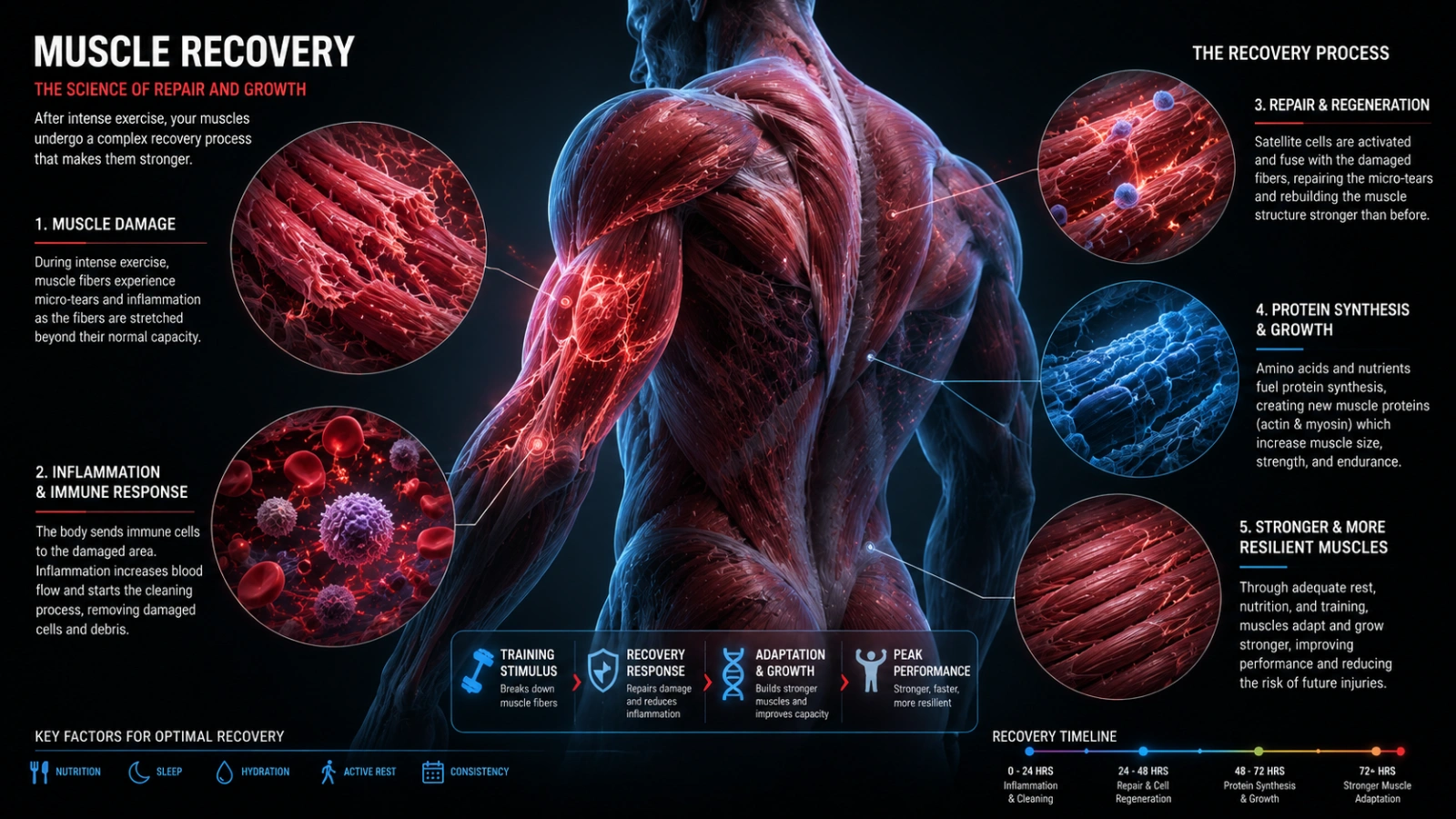
Muscle recovery is your body’s natural repair process after physical stress. When you exercise, especially during strength training or high-intensity workouts, you create tiny tears in your muscle fibers. This sounds scary, but it’s completely normal and actually necessary for muscle growth.
Muscle recovery and muscle growth are not the same thing. Recovery is the repair phase. Growth (hypertrophy) happens during recovery, when your body builds the muscle back slightly stronger than before.
You’ve also probably experienced DOMS Delayed Onset Muscle Soreness. That deep achiness you feel 24–48 hours after a workout? That’s DOMS, and it’s a normal part of muscle recovery. It’s different from a muscle strain, which is an actual injury where muscle fibers or tendons are torn more severely. Knowing the difference matters, and we’ll cover that shortly.
How Muscle Recovery Works in the Body

Your body is incredibly smart. After every workout, it launches a precise, multi-step repair process.
Micro-Tears and Muscle Stress
When you lift weights or push your body hard, your muscle fibers develop small microscopic tears. This is called exercise-induced muscle damage, and it’s the trigger for everything that follows in muscle recovery.
Inflammation and Immune Response
Right after exercise, your body sends blood flow and immune cells rushing to the damaged area. This causes temporary inflammation that familiar warmth, tightness, and soreness. While inflammation gets a bad reputation, in moderate amounts it’s actually essential to kick off proper muscle recovery.
Muscle Protein Synthesis (MPS)
This is the big one. Your body uses amino acids from dietary protein to repair and rebuild the damaged fibers. This phase of muscle recovery is called Muscle Protein Synthesis (MPS), and it’s where real strength gains are made. Without enough protein in your diet, MPS slows dramatically.
Glycogen Restoration
Intense exercise depletes your muscle glycogen (stored carbohydrate energy). Refilling these stores is a crucial and often overlooked part of muscle recovery. Eating carbohydrates after training helps restore glycogen faster, so you’re ready for your next session.
The 24–72 Hour Recovery Cycle
Full muscle recovery typically takes between 24 and 72 hours, depending on the intensity of your workout and the muscle groups involved. Larger muscle groups like legs and back often need closer to 48–72 hours, while smaller muscles may recover faster.
What Is Muscle Strain and How Does It Affect Recovery
A muscle strain is not the same as normal soreness. Soreness is expected. A muscle strain is an injury.
Strains happen when a muscle is overstretched or forced to contract too forcefully, often from lifting too heavily, using improper form, or skipping a warm-up. They range from mild (Grade 1: minor fiber tearing) to moderate (Grade 2: partial tear) to severe (Grade 3: complete rupture).
A mild muscle strain may only add a few extra days to your muscle recovery timeline. A severe strain can sideline you for weeks or months.
Signs of a strain include sharp pain during movement, swelling, bruising, and weakness in the affected area, all notably different from typical post-workout soreness.
How to Speed Up Muscle Recovery Naturally
There’s a lot you can do to support faster muscle recovery without reaching for a single pill.
Sleep Optimization
During deep sleep, your body releases growth hormone, the primary driver of muscle repair and recovery. Aim for 7–9 hours of quality sleep every night. Poor sleep doesn’t just make you tired; it directly slows down muscle recovery and increases your injury risk.
Active Recovery
Light movement on rest days, such as walking, yoga, and swimming, increases blood flow to sore muscles without adding stress. This gentle circulation helps flush out metabolic waste and speeds up muscle recovery more effectively than total rest.
Hydration and Electrolytes
Muscles are about 75% water. Even mild dehydration impairs muscle recovery. Drink consistently throughout the day and after intense sessions, and replenish electrolytes (sodium, potassium, magnesium) to support cellular repair.
Nutrition Strategy: Protein and Carbs Timing
Eat a protein-rich meal or snack within 30–60 minutes after exercise to maximize Muscle Protein Synthesis. Pair it with carbohydrates to restore glycogen. A simple example: Greek yogurt with fruit, or a chicken sandwich. This window is one of the most powerful tools for accelerating muscle recovery.
Supplements for Muscle Recovery (Evidence-Based)
The market for supplements for muscle recovery is huge and, honestly, pretty noisy. Here’s what the science actually supports:
Protein Powders (Whey or Plant-Based): The most well-supported muscle recovery supplement. If you’re not hitting your daily protein targets through food, a shake fills the gap efficiently.
Creatine: One of the most researched sports supplements. Creatine supports strength output and has shown benefits for reducing muscle damage and supporting muscle recovery between sessions.
Omega-3 Fatty Acids: Anti-inflammatory properties make omega-3s a useful addition. They can help reduce muscle soreness and support the inflammatory phase of muscle recovery.
Magnesium: Plays a role in muscle contraction and relaxation. Deficiency is surprisingly common, and supplementing may reduce cramping and support overnight muscle recovery.
Tart Cherry and Curcumin: Both have solid evidence for reducing DOMS and inflammation. Tart cherry juice is particularly popular among endurance athletes for muscle recovery support.
Do Muscle Recovery Supplements Really Work?
Let’s be honest about this. The term muscle recovery supplement covers a wide range of products, and quality varies enormously.
Strong evidence: Protein, creatine, omega-3s, tart cherries.
Moderate evidence: Magnesium, curcumin, BCAAs (most useful if protein intake is already low).
Overhyped: Many proprietary blends, “recovery formulas,” and products with tiny doses of multiple ingredients. These often look impressive on a label but deliver minimal real-world benefit.
The bottom line: supplements for muscle recovery work best as support tools, not shortcuts. No supplement replaces adequate sleep, nutrition, and smart training.
How to Speed Up Muscle Strain Recovery Safely
If you’re dealing with an actual muscle strain (not just soreness), the approach to muscle recovery changes.
R.I.C.E. Method in the first 48–72 hours:
- Rest – Stop the activity causing pain.
- Ice – Apply ice for 15–20 minutes at a time to reduce inflammation
- Compression – Wrap the area to limit swelling
- Elevation – Raise the injured limb above heart level
After the acute phase, gentle movement and gradual loading help the muscle rebuild properly. Jumping back too soon is the most common mistake people make with muscle strain recovery.
Knowing when to see a doctor is important. Seek medical attention if you experience severe pain, significant swelling or bruising, inability to bear weight, or a “pop” sensation at the time of injury. These may indicate a Grade 2 or Grade 3 strain that needs professional assessment.
Common Mistakes That Slow Recovery
Even with the best intentions, people sabotage their own muscle recovery constantly.
Overtraining is the biggest culprit. Training the same muscle groups every day doesn’t make you grow faster it actually prevents muscle recovery and increases injury risk.
Poor sleep cuts into your growth hormone output and extends the muscle recovery timeline significantly.
Low protein intake means your body doesn’t have the raw materials to rebuild. Most active individuals need 1.6–2.2g of protein per kg of bodyweight daily to support optimal muscle recovery.
Ignoring pain signals — pushing through sharp or joint pain rather than genuine muscle soreness is how minor issues become major injuries.
Muscle Recovery vs Muscle Growth
Here’s something worth understanding clearly: you don’t grow during training. You grow during recovery.
Training creates the stimulus. Muscle recovery is where the actual adaptation happens. Growth occurs during the rest phase, when MPS rebuilds damaged fibers slightly thicker and stronger than before.
This is exactly why rest days aren’t optional; they’re productive. Skipping recovery doesn’t mean more gains; it means you’re constantly breaking down without ever fully rebuilding.
How Long Does Muscle Recovery Take?
There’s no universal answer, but here are general benchmarks:
- Light workouts (cardio, light resistance): 24–48 hours
- Moderate training (typical gym sessions): 48–72 hours
- Heavy training (max effort, high volume): 72+ hours
- Muscle strain (injury): Days to weeks, depending on severity
Larger, more powerful muscle groups like legs, back, and chest need more time. Smaller muscles like arms and shoulders tend to recover faster.
Also Read,
The Role of Calorie Tracking in Muscle Recovery
This connection is underrated. You can have the perfect training plan and sleep eight hours a night, but if your nutrition is off, muscle recovery suffers.
Why Nutrition Tracking Impacts Muscle Recovery
Muscle recovery is a calorie-costly process. Your body needs enough energy to fuel repair. Undereating, even unintentionally, is one of the most common reasons people plateau or stay chronically sore. On the flip side, the balance between protein, carbs, and fats directly determines how efficiently your body rebuilds after training.
How Calorie Tracker Buddy Helps Improve Recovery

Calorie Tracker Buddy takes the guesswork out of recovery nutrition. By logging your meals, you can:
- Ensure you’re hitting your daily protein targets for muscle repair.
- Balance macros (protein, carbs, fats) around your training schedule
- Avoid under-recovery caused by chronic undereating.
- Track patterns over weeks to see what’s working
Whether your goal is muscle gain or fat loss, knowing your numbers is a game-changer for muscle recovery consistency.
Why Tracking Tools Matter for Consistency
Most people dramatically underestimate or overestimate their intake. A tracking tool creates real awareness, not obsession, just clarity. That clarity is what separates people who make steady progress from those who feel like they’re always one step behind in their muscle recovery.
Simple Recovery Nutrition Tracking Workflow
- Log your post-workout meal immediately after training.
- Check your protein — have you hit your target for the day?
- Adjust carbs based on how intense your session was (heavier sessions need more)
- Review weekly — are your recovery patterns consistent?
This simple habit, done consistently, can noticeably accelerate muscle recovery and reduce the frequency of heavy soreness.
Conclusion
Muscle recovery is not just a passive resting phase; it is the biological engine behind strength, endurance, and long-term fitness progress. Every workout creates microscopic stress in your muscle fibers, and it is during recovery that your body repairs this damage, restores energy stores, and builds stronger tissue through muscle protein synthesis.
The speed and quality of your muscle recovery depend on a combination of factors: proper sleep, adequate nutrition, smart training load, hydration, and consistent lifestyle habits. While supplements for muscle recovery such as protein, creatine, and omega-3s can provide additional support, they cannot replace the fundamentals of recovery.
It is also important to distinguish between normal muscle soreness and muscle strain. Soreness (DOMS) is a natural response to training, while a strain is an injury that requires careful management. Knowing how to respond to each determines whether you progress safely or risk setbacks.
Ultimately, the goal is not to eliminate soreness completely but to optimize recovery so your body adapts efficiently. When you recover well, you train better, perform stronger, and reduce injury risk over time. In fitness, recovery is not the opposite of progress—it is the condition that makes progress possible.
Frequently Asked Questions
- What is muscle recovery and why is it important?
Muscle recovery is the process by which your body repairs damaged muscle fibers after exercise. It is important because it allows muscles to rebuild stronger, improves performance, and reduces the risk of injury and overtraining.
- How long does muscle recovery usually take?
Muscle recovery typically takes 24–72 hours depending on workout intensity, fitness level, and muscle group. Larger muscle groups like legs and back usually take longer to recover compared to smaller muscles.
- What is the fastest way to speed up muscle recovery?
The fastest way to speed up muscle recovery is through quality sleep, proper hydration, balanced nutrition (especially protein and carbs), and active recovery like light movement or stretching.
- What is the difference between muscle soreness and muscle strain?
Muscle soreness (DOMS) is a normal post-exercise response caused by micro-tears in muscle fibers. Muscle strain is an injury where muscle fibers are overstretched or torn, often causing sharp pain, swelling, and limited movement.
- Do supplements for muscle recovery actually help?
Yes, but only as support tools. Supplements for muscle recovery like protein, creatine, omega-3s, and magnesium can improve recovery efficiency. However, they work best when combined with proper sleep, nutrition, and training habits, not as replacements.