


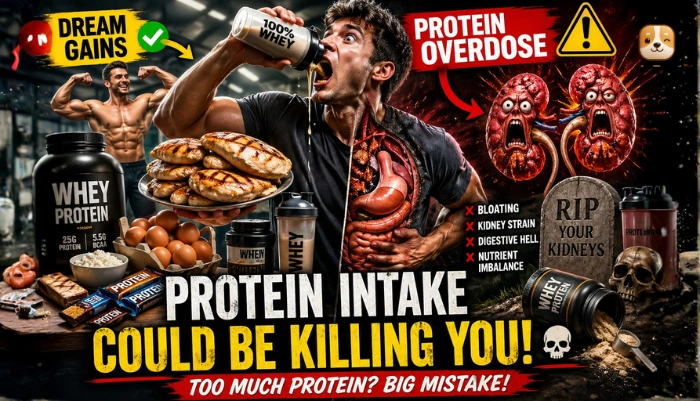
There is a man out there right now eating his 11th boiled chicken breast of the day. His coworkers have filed a noise complaint about the high-protein meal prep sounds; his wallet is in intensive care. And, his kidneys are writing a strongly worded letter to his biceps. This man believes he is being healthy.
Every gym has one. The guy who treats protein like it’s currency and he’s going bankrupt. The one who mixes three scoops of whey into his morning coffee “just to hit macros.” The one whose lunch, dinner, and midnight snack are all variations of chicken and quiet suffering.
Here’s what no fitness influencer with 2 million followers and suspiciously perfect lighting will tell you: too much protein intake isn’t gains. It’s war. On your own body.
Let’s get into it, properly, with facts, some light chaos, and zero gym bro mythology.
In a hurry? Listen to the blog instead!
How Much Protein Do You Actually Need?
Before your body starts sending you passive-aggressive signals.
The average sedentary adult needs about 0.8g of protein per kg of body weight per day. That’s your daily protein intake if you walk to your car and call it a workout.
For those who actually train, the numbers shift. Knowing how to calculate protein intake for your specific goal is where most people go wrong:
- Muscle gain: 1.6 to 2.2g per kg of body weight per day. Yes, there’s a ceiling. A real one.
- Weight loss with muscle preservation: 1.2 to 1.6g per kg. Enough to keep your muscle, not enough to stress your kidneys.
- General fitness: 1.0 to 1.2g per kg works excellently for most people living normal human lives.
- Endurance athletes: Around 1.2 to 1.4g per kg. Marathons demand carbs more than anything else, by the way.
Protein intake per day beyond these ranges? Your body doesn’t store it as extra muscle. It converts the excess to glucose or fat, taxes your kidneys to excrete the nitrogen byproduct, and leaves you wondering why you spent a small fortune on whey powder to feel worse.
Meet Raj. Raj wanted to get shredded. Raj found a YouTube channel. Raj turned his kitchen into a chicken processing facility. Raj wakes up at 6am to pre-cook 2kg of breast meat. Raj hasn’t eaten a vegetable since March. Raj is not well. Don’t be Raj.
Signs Your Protein Intake Has Gone Completely Off Script
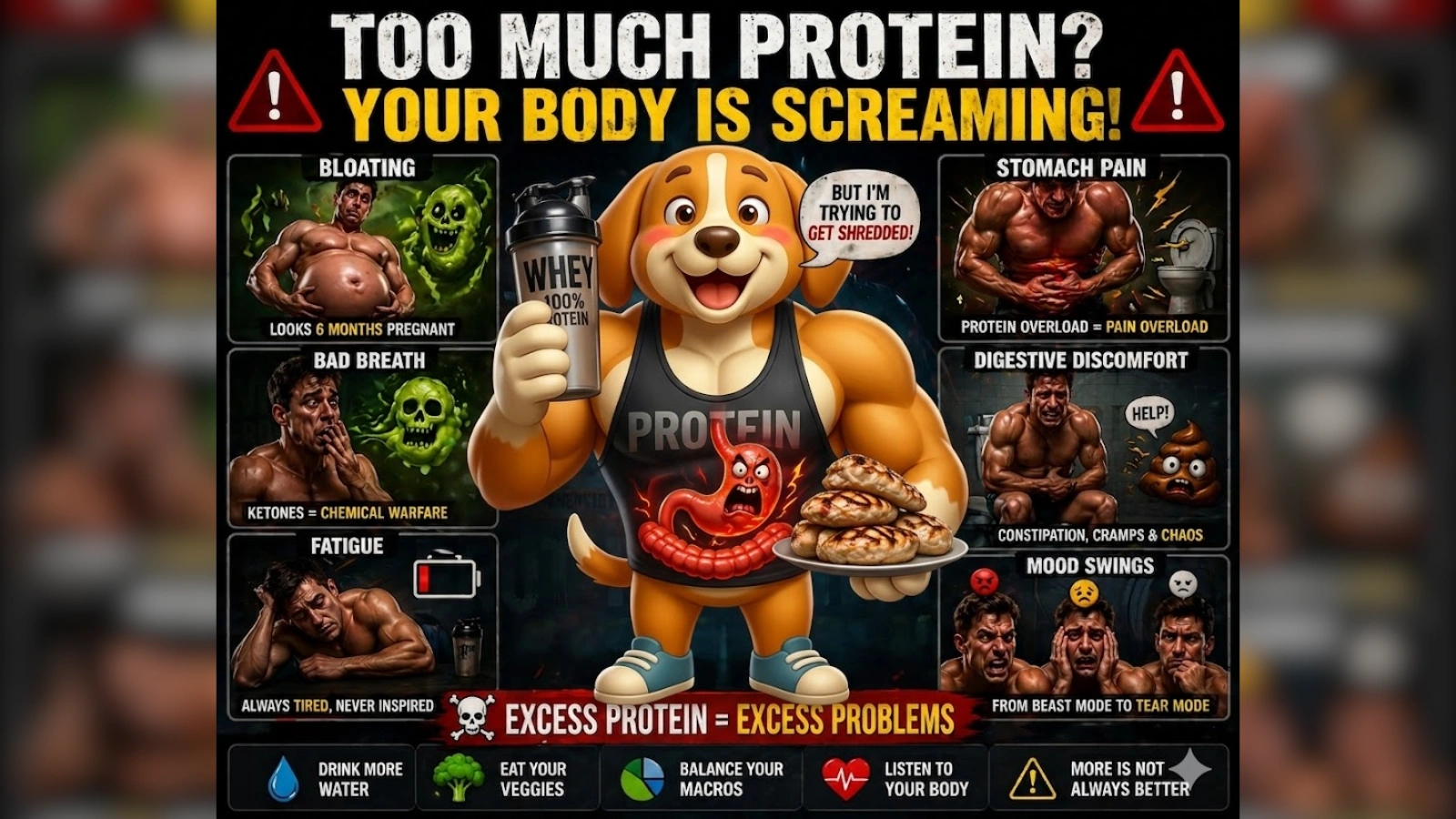
Your body gives warnings. It’s very communicative about this.
When protein intake shoots past what your body can actually use, things get uncomfortable. Here’s what “too much” looks like in practice:
- Breath that clears the room: High-protein, low-carb eating sends your body into ketosis. The byproduct is ketone breath, specifically acetone. Your mouth will smell like a science lab. Not the fun kind.
- Digestive discomfort: Excess protein is hard on your gut lining and digestive enzymes. Bloating, cramping, and general internal unhappiness become your daily companions.
- Persistent fatigue and dehydration: Excreting excess nitrogen requires a significant amount of water. Your kidneys pull from your body’s reserves. You feel tired, headachy, and foggy, and you blame your pre-workout for it.
- Mood swings and mental fog: Your brain runs on carbohydrates. Cutting them entirely to “make room for protein” and your focus and mood take a noticeable hit.
- Unexplained weight gain: Protein has 4 calories per gram. Eating 300g a day means 1,200 calories from protein alone, before a single proper meal. Excess calories, regardless of source, go to fat storage.

What Too Much Protein Actually Does to Your Body
Separating gym mythology from real science.
The kidney conversation: For healthy people with no pre-existing conditions, high protein intake is unlikely to cause kidney disease on its own. However, it does increase the workload on your kidneys significantly. For people with existing kidney issues, diabetes, or hypertension, high protein intake can accelerate damage significantly. The “protein is fine for everyone in any amount” advice was written with healthy 25-year-old athletes in mind. It was not written for everyone else.
- Kidney strain is real for at-risk groups: People with chronic kidney disease, Type 2 diabetes, or high blood pressure should keep protein intake moderate and always consult a doctor before following any high-protein protocol.
- Bone health: Very high protein intake increases calcium excretion through urine. Over the years, this may contribute to reduced bone density if calcium intake doesn’t compensate.
- Liver stress: The liver processes amino acids and manages nitrogen waste. Chronic overloading isn’t consequence-free. It’s a slow and quiet cost.
- Cardiovascular risk from protein sources: The problem isn’t always the protein itself. It’s what it comes packaged in. Processed meat heavy in saturated fat, eaten daily to “hit your protein goals,” carries real cardiovascular risk over time.
- Nutrient displacement: When protein dominates every meal, other things get crowded out. Fiber, vitamins, antioxidants, and the variety your body genuinely needs all take a back seat.
The Most Common Protein Mistakes People Make
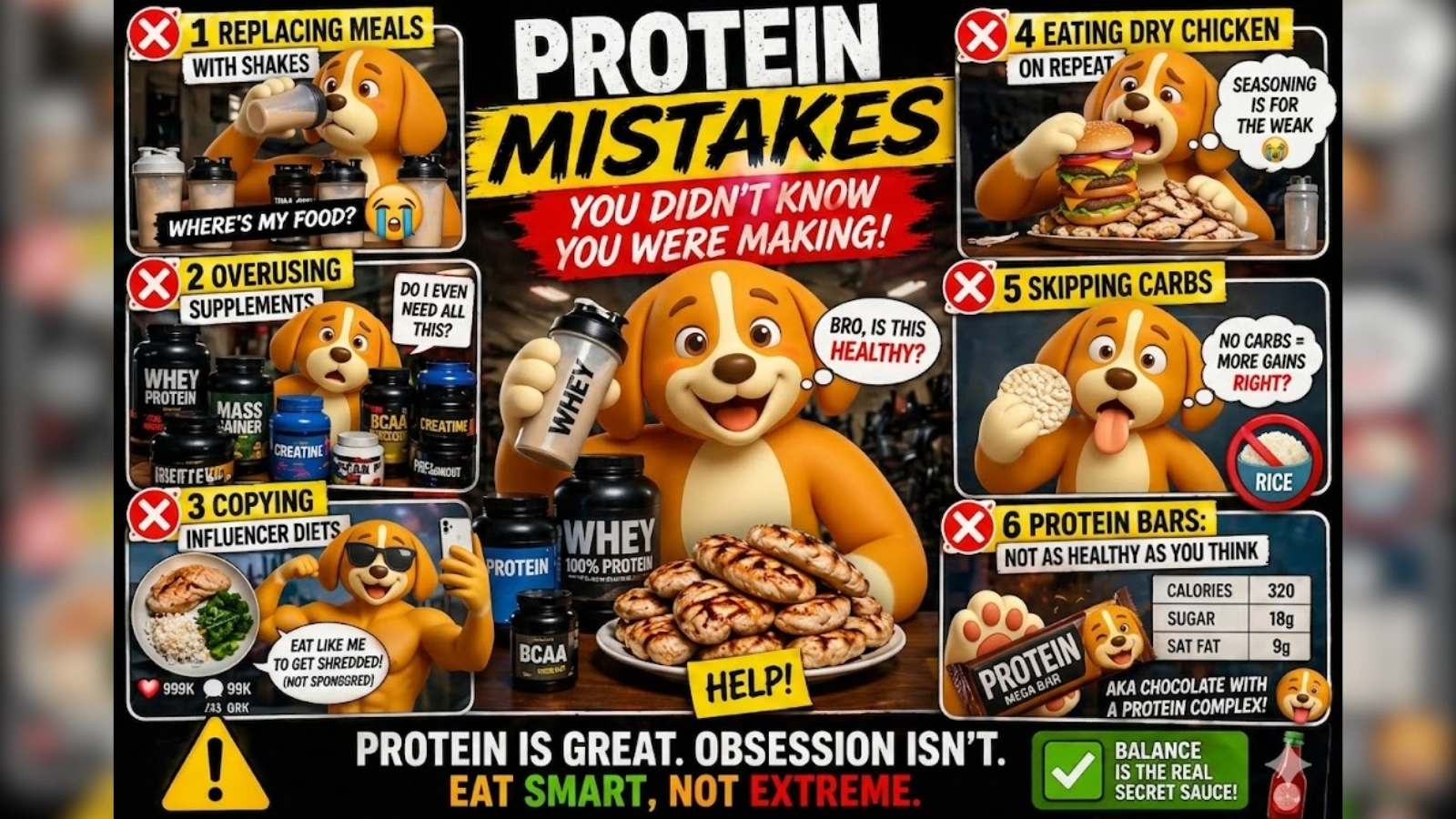
A catalog of well-intentioned chaos.
- Replacing meals with shakes: Protein shakes are supplements. The word “supplement” means it adds to a diet, not replaces one. Relying on them as primary nutrition deprives your body of the micronutrients, fiber, and food diversity it actually needs.
- Copying influencer diets without context: The influencer eating 300g of protein per day weighs 105kg, trains twice daily, and has a team of nutritionists. Their protein intake is not your protein intake. Context is everything.
- Eliminating carbs and fats entirely: Protein cannot do its job well without carbohydrates to spare it for muscle synthesis. Dietary fat is required for hormonal function, including the hormones that build the very muscle you’re optimizing for.
- Eating the same thing every single day: Dietary variety is not a luxury. It supports gut health, micronutrient intake, and long-term adherence. Diverse protein sources serve your body better than a single repeated one.
- Treating protein bars as health food: Read the label before you trust the marketing. Many popular protein bars contain as much sugar as a chocolate bar, with the added bonus of ingredients your digestive system will need time to process.
From enthusiastic protein warrior to confused and exhausted is a journey many people take without realizing it. Week one feels incredible. By week four, the fatigue, the cravings, the mood swings, and the complete loss of joy around food tell a different story. The banana someone offers you in week five tastes like the greatest thing ever eaten. The banana was right all along.
Protein for Weight Loss: Real Benefits, Real Limits
It works. Until you misuse it and wonder why nothing is working.
High protein intake genuinely supports weight loss, and this is backed by solid research. It increases satiety hormones like GLP-1 and PYY while reducing ghrelin, the hormone responsible for hunger signals. It also has a higher thermic effect, meaning your body uses more energy to digest it compared to fat or carbs.
- Satiety: A high-protein breakfast consistently reduces total calorie intake across the day in clinical studies. This is reliable and well-documented.
- Muscle preservation during a deficit: Without adequate protein, weight loss includes muscle loss alongside fat. This slows metabolism over time and undermines long-term results.
- The calorie reality: Adding protein to your diet without adjusting overall calories simply adds calories. Protein is not a metabolic loophole. Total intake always matters.
- The protein bar trap: A product labeled “high protein” with 20g of protein and 28g of sugar is a confectionery item with good PR. Marketing language and nutritional reality are very different things.

Protein Needs Vary Significantly by Person
One size does not fit all, and copying someone else’s plan can do more harm than good.
Daily protein intake recommendations shift considerably based on age, health status, activity level, and life stage:
- Older adults (65+): Actually need slightly more protein than younger sedentary adults, around 1.0 to 1.2g per kg, because aging reduces the body’s efficiency at using protein for muscle maintenance. This is a real physiological process called anabolic resistance.
- Pregnant women: Require an additional 25g per day above baseline during the second and third trimesters. Quality and variety of protein sources matters as much as quantity here.
- Teenagers: Growing bodies need adequate protein, but adult bodybuilding protocols are not designed for developing physiology. The two should not be treated as interchangeable.
- People with kidney disease: Often need to restrict protein significantly, sometimes as low as 0.6g per kg, and always under direct medical supervision.
- Recreational gym-goers: The protocols designed for competitive athletes preparing for events are built around training volumes and body compositions that most recreational gym-goers simply don’t have. Applying them without that context tends to create problems rather than solve them.
Best Protein Sources, Actually Ranked
Not by aesthetics or sponsorship deals. By what your body does with them.
Understanding how to calculate protein intake only gets you halfway there. Knowing which sources serve your body well completes the picture:
- Eggs: Complete protein containing all nine essential amino acids. High bioavailability, affordable, and genuinely versatile. The most dependable protein source most people already have access to.
- Chicken breast: A reliable staple for good reason. Lean, high in protein, and widely available. Season it. Please.
- Lentils and beans: Genuinely underrated. Lentils provide 18g of protein per cooked cup alongside fiber, iron, folate, and potassium. Affordable, filling, and excellent for gut health.
- Greek yogurt: Around 17g of protein per 170g serving, plus probiotics that support digestive health. A strong addition to any diet.
- Fatty fish (salmon, mackerel, sardines): Protein combined with omega-3 fatty acids that reduce inflammation and directly support muscle recovery. A two-in-one that earns its place.
- Tofu and tempeh: Complete protein, highly versatile in cooking, more affordable than meat over a full week, and free of the hormonal concerns that gym culture has incorrectly attached to them.
- Protein powder: A useful convenience supplement for people who genuinely struggle to meet protein targets through food. Not a meal replacement. Not a dietary foundation. A supplement, used as intended.
Track Your Protein Before It Starts Tracking You
Calorie Tracker Buddy: The Smartest Way to Manage Your Protein Intake
 Here’s the honest truth about protein intake per day: most people are either significantly under or dramatically over. Very few are accidentally getting it right. The people who get it right consistently are almost always the ones who actually track it.
Tracking isn’t obsessing. It’s knowing. There’s a real difference between anxiety-driven food monitoring and simply spending a few minutes a day confirming you’re in the right range for your goals.
Calorie Tracker Buddy takes the guesswork out of it:
- Log your daily protein intake quickly and without complexity
- Get a clear view of your macros, not just your calories
- Set targets based on your actual body weight, goal, and lifestyle
- Track consistently and build the habits that produce real long-term results
Because building your protein strategy around gym reels and rough estimates is, statistically speaking, not the most reliable approach.
Stop Letting Fitness Culture Turn Protein Into a Personality

The most important thing about protein intake is also the least exciting thing to say: balance consistently beats obsession.
Your optimal daily protein intake is achievable through varied, whole-food eating for the vast majority of people. It doesn’t require extreme protocols, expensive supplements, or the complete elimination of every other macronutrient. It requires knowing your numbers, eating a variety of good sources, and tracking it well enough to stay consistent.
Protein is one of the most valuable nutritional tools available to you. Treated with some basic respect for how the body actually works, it supports muscle, metabolism, satiety, and long-term health in genuinely meaningful ways.
Eat smart. Track smarter. And remember: a sustainable diet that you can maintain for years will always outperform an extreme one that lasts six weeks.
The lentil was always worth your time. It was just waiting for you to notice.