

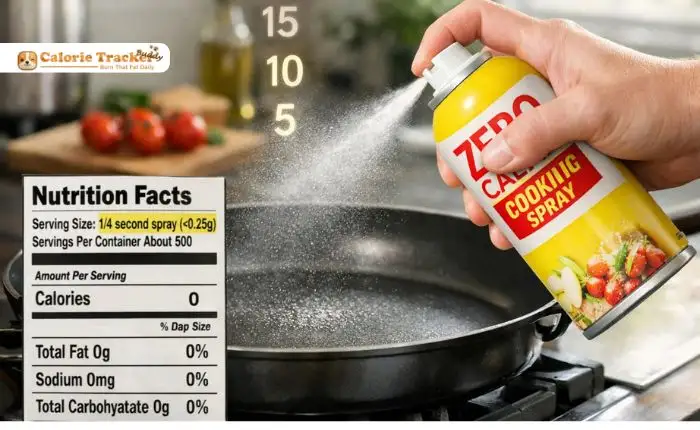
You grab your cooking spray, glance at the label, and it says zero calorie. Sounds perfect, right? But here’s what most people don’t realize: that claim comes with a catch. The FDA allows manufacturers to round down any product with fewer than 5 calories per serving to zero. Since a “serving” of cooking spray is just a fraction of a second spray, those calories can quietly stack up. If you’re tracking your intake seriously, ignoring zero calorie cooking sprays could be silently sabotaging your progress. In this guide, we’ll break down exactly what’s in your cooking spray, how many calories you’re actually getting, and how to track it properly.
Listen To The Podcast Now!
What Makes a Cooking Spray “Zero Calorie”?
The term “zero calorie” on cooking spray labels is technically a legal loophole, not a nutritional fact. The FDA defines one serving as approximately one-third of a second spray, which contains about 0.25 to 0.5 calories. Since that falls under 5 calories, brands can legally round it down to zero. In reality, most people spray for 2 to 5 seconds when coating a pan.
That means you could be adding 10 to 20 real calories without even realizing it. For someone eating 1,500 to 1,800 calories a day, these small hidden amounts can genuinely slow down fat loss or quietly break a calorie deficit. What looks like a zero-calorie shortcut is actually a tracking blind spot that can make it harder to stay consistent, especially when you’re trying to Stop Food Cravings For Weight Loss and manage your intake with precision.
What’s Actually Inside the Can?
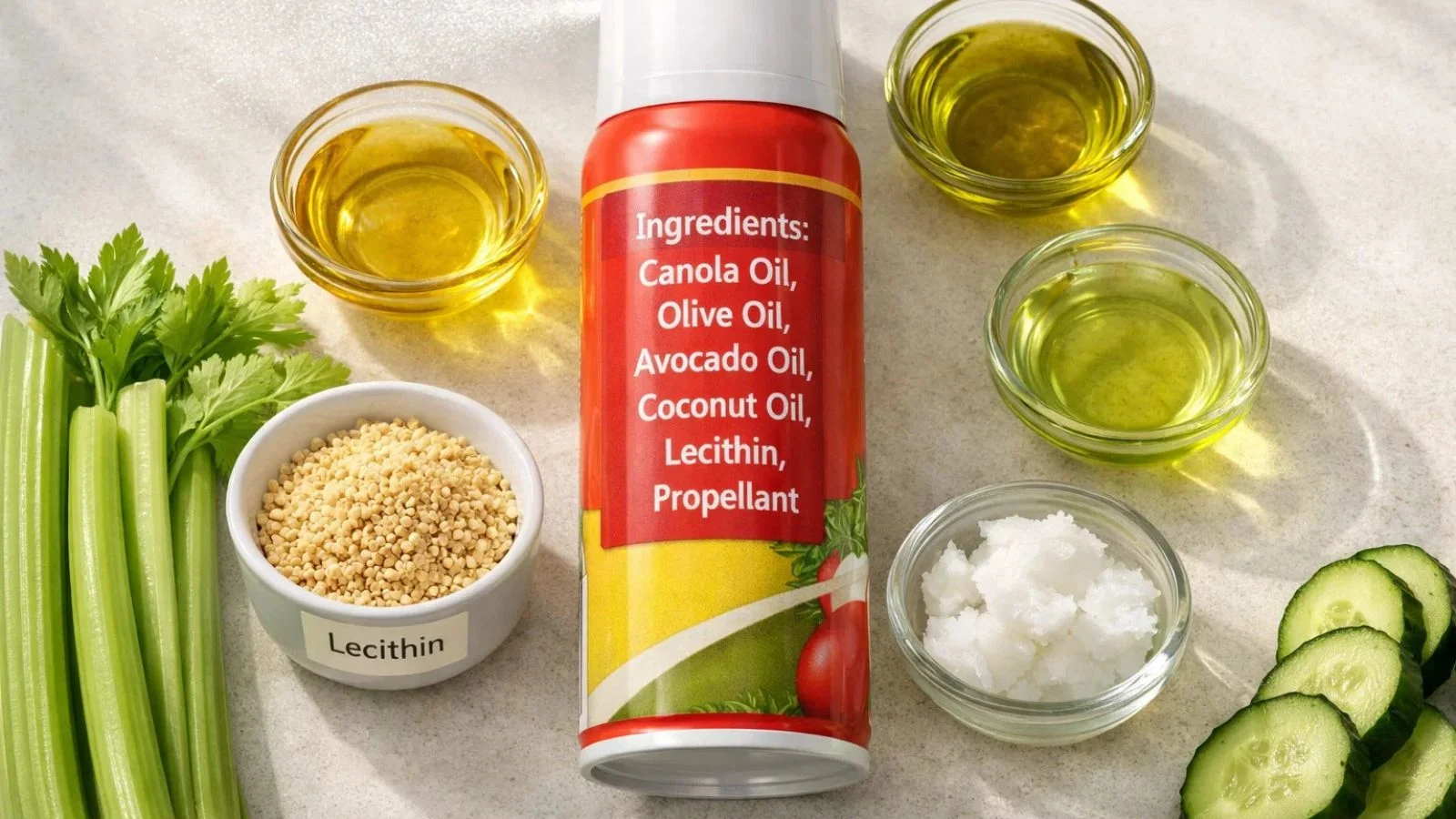
Most cooking sprays are made from oils like canola, olive, coconut, or avocado, all of which contain fat and calories. A typical spray contains around 7 calories per second of use, along with a small amount of fat. Some brands also add lecithin (an emulsifier) and propellant gases. The ingredients themselves are not bad for you; in fact, these are the same oils you’d use normally. The issue is purely about awareness. When you know that zero calorie foods like celery or cucumber are truly near-zero, you develop a habit of trusting such labels. But cooking spray is a processed product where serving size manipulation hides the real numbers. Understanding this is the first step to tracking it accurately.
How Many Calories Are You Actually Using?
Here’s a practical breakdown to give you a realistic picture: A 1-second spray delivers approximately 7 calories. A light 2-second coating of a small pan gives you around 14 calories. Covering a large skillet for 3–4 seconds adds up to 21–28 calories. If you cook three meals a day using spray, you could easily be consuming 40–80 hidden calories daily without logging a single one. Over a week, that’s 280–560 untracked calories. Over a month, that could be nearly 2,000 extra calories. This is why health-conscious people who use zero calorie drinks like sparkling water and track everything else precisely still struggle to see consistent results; the spray is the gap in their data.
How to Track Cooking Spray Accurately?
The good news is that tracking cooking spray doesn’t have to be complicated. Here are the most practical methods:
- Use a kitchen scale: Weigh your spray bottle before and after cooking. The difference in grams multiplied by roughly 9 (calories per gram of fat) gives you a close estimate.
- Use timed sprays: Count your spray duration. Most brands list calories per serving on the label if you look closely. A 2-second spray equals about 14 calories.
- Log it as oil: If your tracking app doesn’t have a spray entry, log 1 teaspoon of the equivalent oil (canola, olive, etc.) for a 2–3 second spray. This is close enough for accurate tracking.
- Replace spray with measured oil: Use a small measuring spoon of oil instead. It takes the guesswork out completely and gives you exact calorie data.
Zero Calorie Foods vs. Zero Calorie Sprays: Know the Difference:
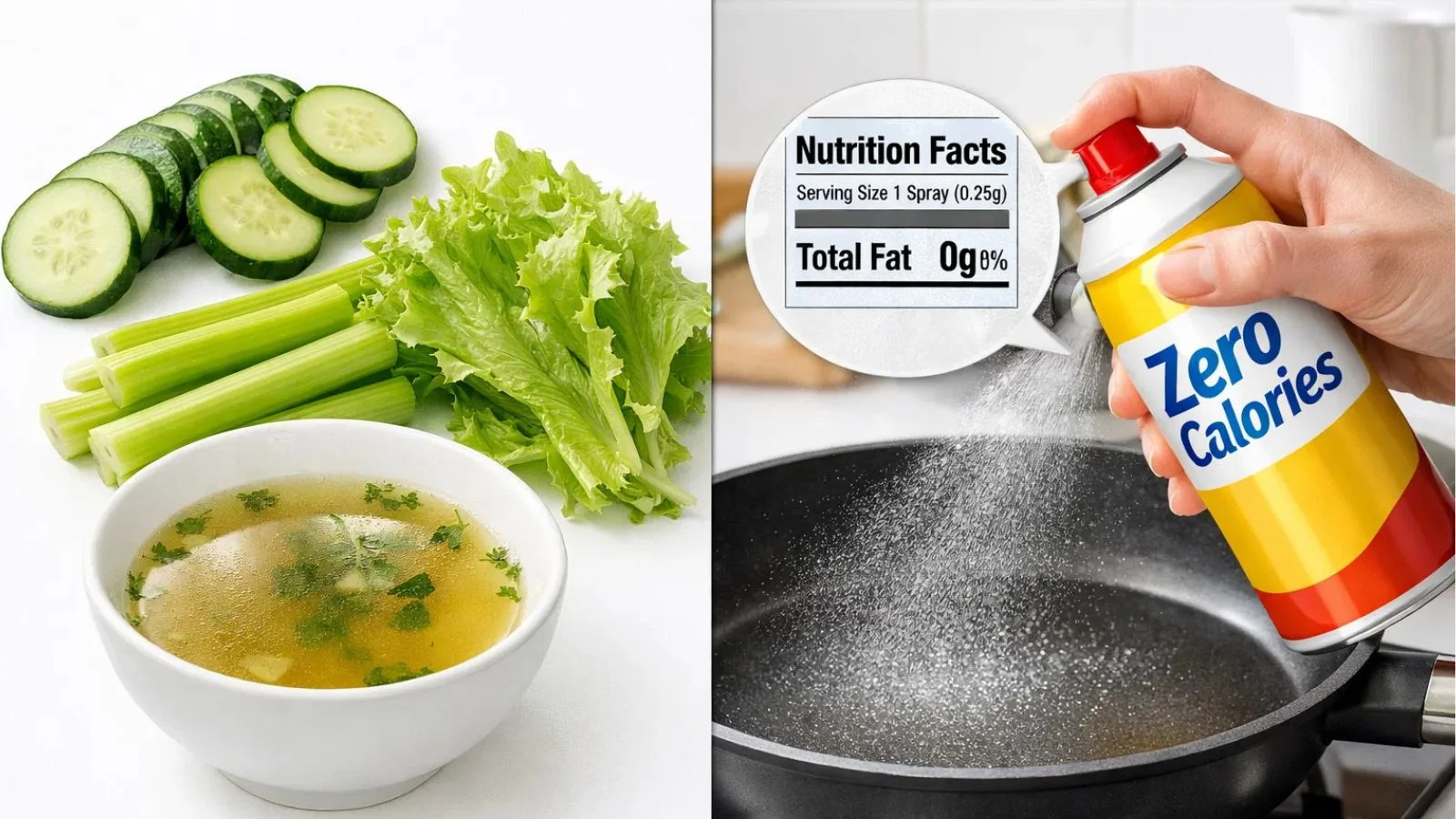
Many people researching what are zero calorie foods often include cooking spray in that mental category, which can be misleading. True zero calorie foods include things like cucumber, lettuce, celery, and broth-based soups, foods with so little caloric density that digestion itself burns most of the energy they provide. Cooking spray is not in that category. It’s an oil-based product with real macros, specifically fat.
When people ask which food has zero calories, the answer almost always involves whole, minimally processed plant foods, not manufactured aerosol sprays. Making this distinction matters especially if you follow a strict tracking protocol or are in a competitive fitness phase. Similarly, zero calorie drinks like black coffee, plain tea, and water have no caloric content at all. When you understand what’s genuinely zero and what’s just labeled that way, your tracking becomes much more precise and trustworthy.
Also Read:
Track Smarter With Calorie Tracker Buddy:
This is exactly the kind of sneaky calorie trap that Calorie Tracker Buddy helps you catch. Available on both the App Store and Google Play, Calorie Tracker Buddy is built for people who want accurate, effortless tracking without the frustration of hidden calories slipping through.
Here’s how it helps you stay on top of everything, including tricky items like cooking spray:
- 📸 Snap the Meal: Point your camera at your food, a nd the app instantly identifies it and calculates calories and nutrients.
- 📊 Calorie Intake Tracker: Log what’s on your plate in seconds and get real-time feedback on how it aligns with your goals.
- 🎯 Goal Predictions: See exactly how each meal, snack, or spray impacts your daily progress.
- 🐾 Buddy Motivation: Your virtual pet grows healthier with every smart choice you make, keeping you accountable and engaged.
- 🔥 Calorie Burn Tracker: Track your daily activity and see how your burns balance your intake.
- 📱 Social Sharing: Share your meals and streaks with friends for extra motivation.
Whether you’re tracking zero calorie cooking spray or a full meal, Calorie Tracker Buddy makes the process fun, simple, and surprisingly accurate.
Tips to Reduce Hidden Calories From Cooking Spray:
Now that you know cooking sprays aren’t truly zero calorie, here are some smart habits to adopt. Switch to a refillable oil mister and fill it with your oil of choice. This lets you control exactly how much you use. Use parchment paper or a silicone mat for baking instead of spray. Choose non-stick cookware that requires minimal or no oil.
When you do use spray, count it even if an estimate is better than zero in your log. Also consider that even Coke Zero’s calories, while genuinely zero, still affect your hunger and cravings in indirect ways. The lesson is the same: pay attention to what you’re consuming, even when labels seem reassuring. Small habits and small inaccuracies compound in both directions.
Conclusion:
Zero calorie cooking sprays are a smart kitchen tool, but only when you know what’s actually in them. The labeling rules allow manufacturers to hide real calories behind tiny serving sizes. By learning to track cooking spray accurately, using timing, weight, or oil equivalents, you gain a clearer picture of your true intake. Combined with a tool like Calorie Tracker Buddy, you’ll never have to guess again. Real progress comes from real data.
FAQ’s:
Q1: Is cooking spray actually zero calorie?
Ans: No. It contains roughly 7 calories per second of use. The zero calorie label is based on an unrealistically small serving size defined by FDA rounding rules.
Q2: How should I log cooking spray in a calorie app?
Ans: Log it as 1 teaspoon of the equivalent oil (canola, olive, etc.) per 2–3 second spray, or weigh the bottle before and after use.
Q3: Are there truly zero calorie foods?
Ans: Yes, foods like cucumber, celery, and leafy greens are so low in calories that they’re considered functionally zero calorie. Cooking spray does not belong in this category.
Q4: Does cooking spray affect weight loss?
Ans: It can if you’re not accounting for it. Consistently untracked calories from spray can add up to hundreds of extra calories per week, enough to stall progress.