

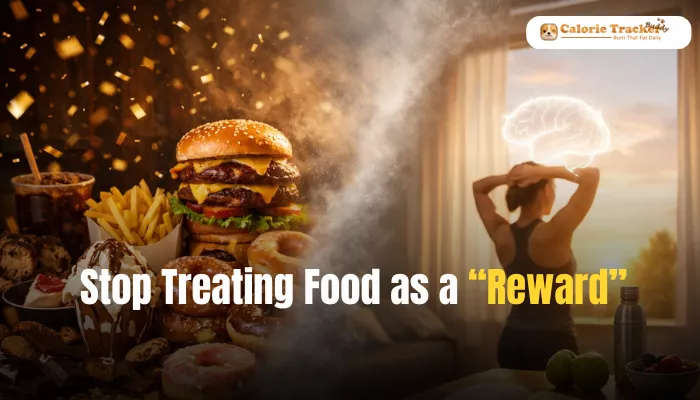
Let me start with something honest.
I used to be that person.
“Finished a tough workout? Let’s grab pizza.”
“Long stressful day? I deserve dessert.”
“Hit a milestone? Time for a cheat meal.”
It sounded harmless. It felt normal. Everyone does it.
But over time, I realized something uncomfortable: I had wired my brain to believe that food reward = emotional relief + celebration + motivation.
And that wiring? It sticks.
Today I want to talk about the psychology behind food reward, why it quietly sabotages your goals, and how you can build a healthier system — without feeling deprived or boring.
And yes, I’ll also talk about smarter alternatives (including how I personally use tracking tools to break this pattern).
Let’s get into it.
Listen To The Podcast
The Psychology Behind Food Reward (It Starts Early)
 Research has shown that when parents use food as a reward for behavior, it can shape how children relate to food long-term. A large longitudinal study published in Pediatric Obesity, based on data from the Generation R Study, found something fascinating.
When children were rewarded with food:
- They showed higher levels of emotional overeating later.
- They became more reactive to food cues.
- The pattern often became cyclical.
In simple words?
If you teach the brain:
“Good behavior = sweets”
“Comfort = sugar”
“Achievement = treats”
The brain listens. And remembers.
Fast forward to adulthood and it becomes:
“Stress = fries”
“Breakup = ice cream”
“Promotion = cake”
See the loop?
That’s the hidden food reward drive, a mental association that keeps reinforcing itself.
Why Food as a Reward Feels So Powerful
Let’s be real. Food works.
Sugar lights up reward pathways in the brain. Fat and salt amplify satisfaction. It’s immediate. It’s accessible. It doesn’t require planning.
Compare that to:
- Journaling
- Meditation
- Reading
- Calling a friend
Which one gives faster dopamine?
Exactly.
But fast dopamine isn’t the same as long-term fulfillment.
The problem with using food reward repeatedly is that it disconnects hunger from eating. You stop eating because you’re hungry. You start eating because you “earned” it.
And that’s where goals quietly collapse.

The Sneaky Trap: Fast Food Birthday Reward Culture
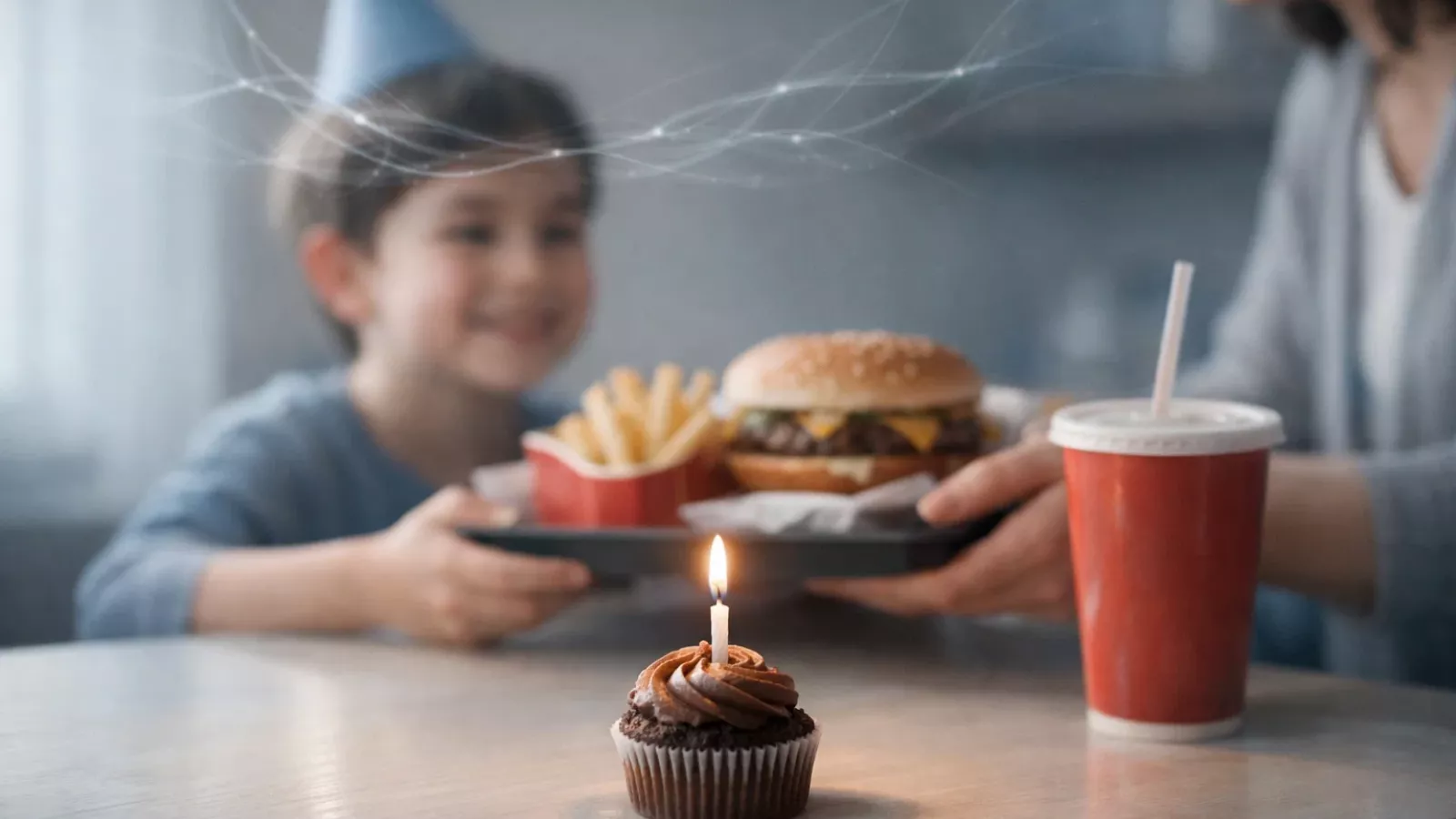
Let’s talk about something normalised everywhere the fast food birthday reward.
Free donuts, burgers. dessert apps. milkshakes.
Brands know exactly what they’re doing. They’re attaching celebration to calorie-dense foods.
Now don’t get me wrong. Enjoying your birthday is not the enemy.
But if every milestone automatically equals a food splurge, the pattern deepens.
The message becomes:
“Celebration = overeating.”
That’s conditioning.
And conditioning is powerful.
Also Read
I Had to Ask Myself This Question
Do I want food to be:
- Fuel?
- Experience?
- Emotion regulator?
- Achievement trophy?
When food becomes all four at once, it carries too much responsibility.
I realized something:
If I keep using food reward as motivation, my discipline becomes fragile. Because once the reward is gone, so is the drive.
That’s when I started exploring alternatives.
How To Reward Yourself Without Food (Yes, It’s Possible)
Let’s make this practical.
If you’re wondering how to reward yourself without food, here are options that actually worked for me:
1. Upgrade Your Environment
Buy a new book. Get better headphones. Improve your workspace.
Progress should upgrade your life, not your waistline.
2. Experience Rewards
Movie night. Solo café time. A long walk somewhere new.
Experiences stick longer than sugar rushes.
3. Skill-Based Rewards
Finished 30 days of workouts? Enroll in a new class.
Hit a weight loss goal? Try a dance workshop.
4. Time Rewards
Give yourself permission to do nothing. No guilt. Just recovery.
5. Gamified Health Rewards
This is where tracking tools changed the game for me.
Instead of rewarding myself with food, I started rewarding consistency.
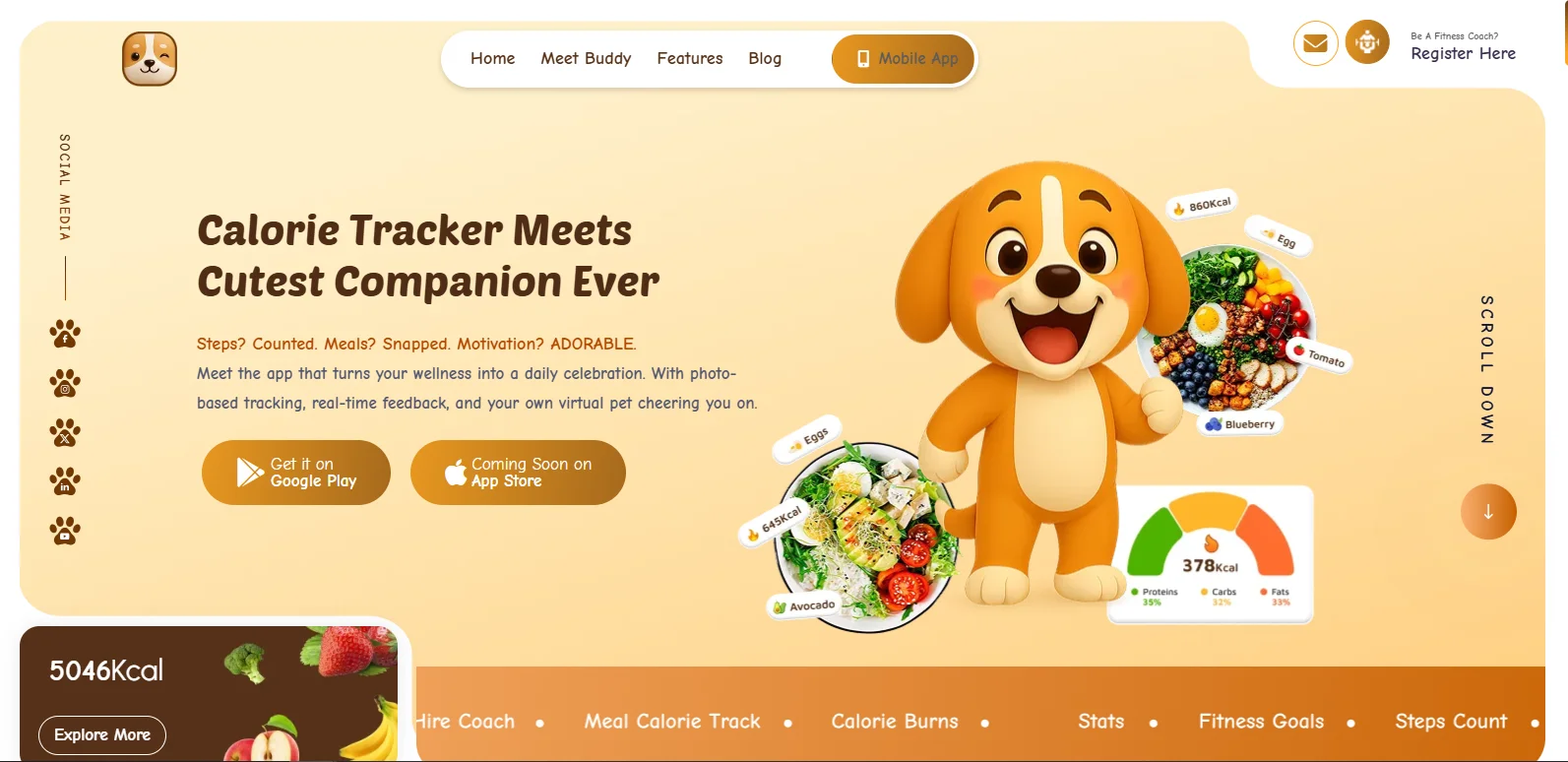
And that’s where I began using Calorie Tracker Buddy for calorie counting.
Breaking The Food Reward Cycle With Calorie Tracker Buddy
Here’s the thing.
Motivation fades. Systems don’t.
If you rely on “I deserve this treat,” you’ll always battle cravings. But if you track progress visually and emotionally, you reduce the need for edible trophies.
Here’s how I personally use Calorie Tracker Buddy to stay aligned.
📸 Snap the Meal
Instead of emotional eating, I do this:
Point my camera. Tap once. Boom.
My food is scanned for calories, nutrients, and balance instantly.
When you visually see what you’re about to eat, it interrupts impulse. It forces awareness.
That one pause has saved me from countless “reward” binges.
🔥 Calorie Burn Tracker
I used to think:
“Today I worked out hard. I earned pizza.”
Now?
From dance moves to dishwashing, every step gets counted.
Tracking daily burn makes progress visible.
When I see my consistency stack up, I don’t want to sabotage it for temporary taste.
🍽️ Calorie Intake Tracker
You eat. It calculates.
Tracking intake in seconds changed how I view food reward.
Instead of:
“I deserve extra.”
It becomes:
“How does this fit my goal?”
And that question alone shifts behavior.
🎯 Goal Predictions
This feature hit different.
Wondering how close I am? It shows exactly how each meal, snack, and sip impacts my journey.
That transparency kills emotional eating impulses.
Because now I see consequences in real-time.
🐾 Buddy Motivation
Okay, this one is low-key genius.
Your virtual buddy grows with every healthy choice.
So instead of rewarding myself with junk, I reward my consistency by leveling up something positive.
It sounds small. It works big.
📲 Social Sharing
Food reward often happens in isolation.
But when I post my meals, share streaks, and let friends hype me up — the reward becomes community recognition.
That social validation replaces sugar dopamine.
And it lasts longer.
What About “Best Food Reward Apps”?
Now here’s the twist.
Most best food reward apps out there are designed to give you points for ordering more food.
Think loyalty programs. Cashback deals. Birthday coupons.
They gamify spending and eating not health.
The real question shouldn’t be:
“Which app gives me more free fries?”
It should be:
“Which system helps me build a better relationship with food?”
There’s a difference.
One deepens food reward drive.
The other rewires it.
Does This Mean You Can Never Enjoy Food?
Absolutely not.
Food is culture. Celebration. Memory. Connection.
But there’s a difference between:
- Enjoying food
and - Using food as emotional currency
If your first instinct after success is always edible, you’re strengthening dependency.
Balance means:
- Eating birthday cake because it’s your birthday
Not because you survived Monday.
The Hidden Long-Term Effect of Food Reward
Let’s zoom out.
Repeated food reward can:
- Increase emotional overeating tendencies
- Increase food responsiveness
- Blur hunger cues
- Create guilt cycles
Even when BMI doesn’t spike immediately, habits form quietly.
And habits are harder to break than calories to burn.
That’s why awareness now saves frustration later.
Rewriting the Reward System
Here’s the mindset shift that helped me:
Instead of:
“I’ll eat this because I earned it.”
I ask:
“Will this move me closer to or further from who I’m becoming?”
Sometimes the answer is yes, enjoy it.
Sometimes it’s no.
But now it’s intentional.
Not automatic.
That’s the difference.
Final Thoughts
Food reward isn’t evil.
It’s just overused.
We’ve turned every milestone into a menu.
If you want a stronger body, stable energy, and mental clarity — start separating achievement from appetite.
Use systems. Track progress. Build visual accountability.
Celebrate yourself in ways that expand your life, not your cravings.
And trust me — once you break the food reward loop, discipline feels lighter.

FAQs
1. Is using food as a reward always bad?
Not necessarily. Occasional celebration meals are normal. The issue arises when food reward becomes your primary motivation tool or emotional coping strategy.
2. What is food reward drive?
Food reward drive refers to the psychological tendency to associate food with achievement, comfort, or validation. Over time, this can reinforce emotional eating patterns.
3. How can I reward myself without food?
You can reward yourself through experiences, hobbies, environment upgrades, relaxation time, skill development, or gamified progress tracking like health apps that reinforce consistency.
4. Are fast food birthday reward programs harmful?
They’re not inherently harmful, but they reinforce the association between celebration and high-calorie foods. Being mindful of frequency and intention matters.