


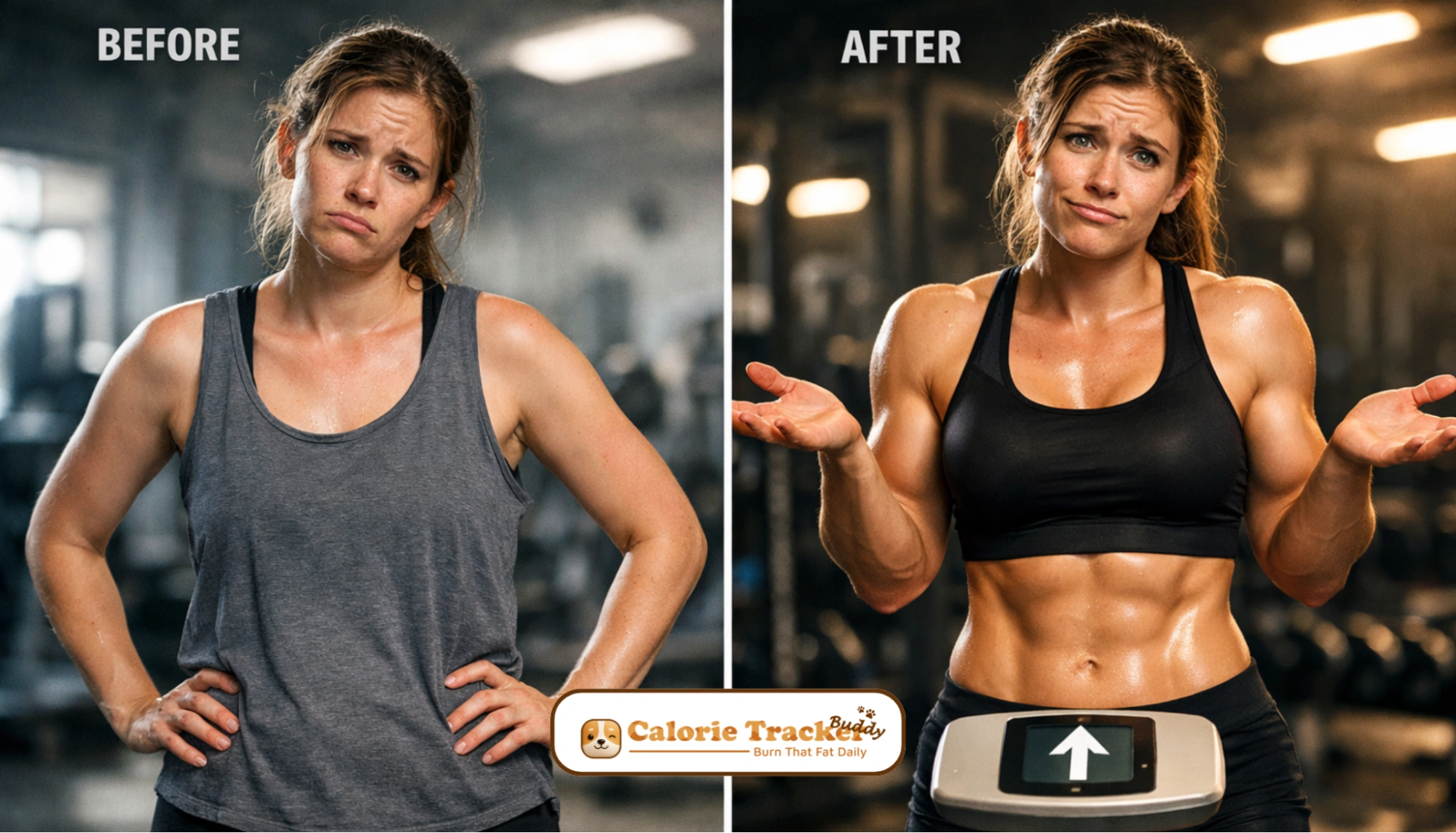
You started working out, you’ve been consistent, and yet, the scale is larger than when you began. If you’ve gained weight after starting to exercise, you’re not alone, and you haven’t done anything wrong. This is one of the most common and most misunderstood experiences in fitness, and it causes a lot of people to quit a routine that was actually working.
The frustrating truth is that weight gain after exercise is often a sign that your body is responding correctly. Muscle repair, fluid shifts, increased energy storage, and hormonal changes can all push the number on the scale up in the short term, even as your body composition is quietly improving. Understanding what’s actually happening makes it much easier to stay the course.
This guide breaks down every major reason why you may have gained weight after starting to exercise, how long each type of gain typically lasts, and what to track instead of the scale to get a true picture of your progress.
🎧 Listen to the blog:
Is It Normal to Gain Weight After Starting to Exercise?

Yes, and it’s far more common than most people expect. Studies suggest that a meaningful percentage of people who begin a new exercise program see an initial increase on the scale within the first few weeks, even when they’re eating the same amount or less. This is particularly true for beginners, people returning to exercise after a long break, and those starting strength or resistance training for the first time.
The key distinction is between temporary weight gain and actual fat gain. Temporary weight gain after exercise is driven by physiological changes, fluid retention, glycogen storage, and muscle tissue repair, which have nothing to do with accumulating body fat. Actual fat gain happens when you consistently consume significantly more energy than you burn over an extended period.
The clearest signs that what you’re experiencing is temporary rather than fat gain: your clothes are fitting the same or better, you’re getting stronger or fitter week over week, and your body is visibly changing shape even if the number on the scale isn’t dropping. These are the signals worth paying attention to.
Water Retention From Muscle Repair
How Exercise Creates Micro-Tears in Muscles
When you exercise, particularly with strength training or high-intensity interval training, you create microscopic tears in muscle fibers. This sounds alarming, but it’s the intended mechanism of muscle growth. The damage triggers a repair response that, over time, makes those fibers thicker and stronger. The soreness you feel one to two days after a hard workout, known as delayed onset muscle soreness, is the physical experience of this process.
Why the Body Holds Water to Heal
Muscle repair requires inflammation, your body’s built-in response to tissue damage. As part of that inflammatory process, your body directs fluid to the affected muscles to support healing and nutrient delivery. This fluid retention is temporary, but it adds real weight. A hard leg session can add one to three pounds of fluid weight that disappears over the following few days as the repair process completes.
This is one of the primary reasons people who have just gained weight after starting to exercise see the most pronounced scale increases in the days immediately following intense workouts. It’s not fat, it’s biology doing exactly what it’s supposed to do.
Read more:
Glycogen Storage and Water Weight Explained
What Is Glycogen and Why Does It Increase?
Glycogen is the form in which your body stores carbohydrates for use as fuel. It lives primarily in your muscles and liver. When you start exercising regularly, your body recognizes an increased demand for readily available energy and responds by storing more glycogen, essentially expanding your fuel tank to meet the new workload.
The Glycogen and Water Connection
Here’s the part most people don’t know: every gram of glycogen stored in muscle tissue binds with approximately three grams of water. So as your muscles expand their glycogen storage capacity in response to regular exercise, they also hold significantly more water. A meaningful increase in glycogen stores, which is a positive adaptation, can add two to four pounds of scale weight that has nothing to do with fat.
This glycogen-driven weight gain is one of the fastest to appear and one of the most misleading. It can show up within the first week of a new exercise program and persist for several weeks as your body continues adapting to the new energy demands.
Muscle Gain, The ‘Good’ Weight Increase
Muscle tissue is denser than fat tissue, meaning a pound of muscle takes up less physical space than a pound of fat. This is why two people can weigh the same but look completely different, and why someone who has gained weight after starting to exercise often notices their clothes fitting better even as the scale moves up. The weight distribution has changed even if the total number hasn’t dropped.
Body Recomposition: Losing Fat While Gaining Muscle
Body recomposition, simultaneously losing fat and gaining muscle, is particularly common in beginners and people returning to training after a break. When it happens, the scale can stay flat or even rise slightly while your body is genuinely changing for the better. Fat is decreasing; muscle is increasing; net weight stays similar. This is one of the most positive outcomes possible from a fitness program, and it’s completely invisible to anyone who only tracks scale weight.
How Long Does Temporary Weight Gain After Exercise Last?
The duration depends on which type of temporary weight gain you’re experiencing. Water retention from muscle repair typically resolves within three to seven days of a given workout as the inflammation subsides. Glycogen-related water weight takes longer; most people see it stabilize after two to four weeks as the body reaches a new glycogen equilibrium.
Overall, most people who have gained weight after starting to exercise find that the initial scale increase levels off within three to six weeks, after which weight either stabilizes or begins to decline as fat loss becomes the dominant effect. Staying consistent through those first weeks is the critical variable; most people who quit do so precisely when the temporary gain is at its peak.
How Long Does Temporary Weight Gain After Exercise Last for Women?
Women often experience more pronounced temporary weight gain after starting exercise, and for longer, due to hormonal factors that amplify fluid retention. Estrogen and progesterone both influence how the body manages water, and their fluctuation across the menstrual cycle can add two to five pounds of fluid weight at certain points, most notably during the luteal phase in the week before menstruation.
Women also tend to see stronger initial muscle adaptation responses to strength training than is commonly assumed, which means the water retention associated with muscle repair can be more significant. The combination of hormonal fluid fluctuation and training-related inflammation can make the scale particularly unreliable in the first four to eight weeks of a new program. Body measurements, how clothes fit, and performance improvements are far more useful progress indicators during this period.
Increased Appetite and Calorie Intake
Exercise Can Make You Significantly Hungrier
One of the less discussed reasons people gain weight after starting to exercise is straightforward: exercise increases appetite, and many people eat more in response without realizing it. This is partly a physiological response, your body is trying to replace the energy it’s expended, and partly psychological, the sense that a workout “earns” more food.
Overestimating Calories Burned
Fitness trackers and cardio machines are notoriously unreliable at measuring calorie counting; research suggests they can overestimate by 20 to 90 percent, depending on the device and the activity. If you’re eating back calories based on what your tracker says you burned, you may be consuming significantly more than you actually need, which contributes toa real calorie surplus over time.
Post-Workout Reward Eating
Post-workout smoothies, protein shakes, sports drinks, and recovery snacks are a common source of untracked calories. A large protein smoothie with fruit, nut butter, and milk can easily contain 500 to 700 calories, more than many of the workouts that prompted it. These additions often feel like a healthy part of a fitness routine without being recognized as a significant calorie contribution.
Cortisol, Stress, and Fluid Retention

Intense exercise, particularly high-intensity interval training and heavy strength sessions, temporarily raises cortisol, the body’s primary stress hormone. This is a normal response to physical exertion. In the short term, elevated cortisol contributes to the fluid retention described above and can add scale weight that disappears within a day or two of recovery.
The important framing here is that exercise-induced cortisol elevation is temporary and self-resolving with adequate rest. It becomes a concern only in cases of chronic overtraining, exercising intensely every day without sufficient recovery time, where cortisol stays persistently elevated. For the vast majority of people beginning a new exercise routine, cortisol-related fluid retention is minor, temporary, and not a reason to exercise less. Adequate sleep and rest days are the most effective management tools.
Other Reasons You May Have Gained Weight After Exercising
A few additional factors are worth being aware of:
Increased water intake, drinking more water, which is recommended when exercising, adds measurable scale weight. A liter of water weighs approximately one kilogram.
Creatine supplementation causes muscles to retain water as part of its performance-enhancing mechanism. An initial weight gain of one to three pounds from creatine supplementation is expected and well-documented.
Increased sodium intake, sports drinks, protein bars, and post-workout foods often contain significant sodium, which promotes fluid retention.
Poor sleep, inadequate sleep, elevates cortisol, increases hunger hormones, and impairs fat metabolism, all of which can contribute to scale weight increases even in people exercising regularly.
How to Track Progress Beyond the Scale
The scale measures total body weight, bones, organs, muscle, fat, fluid, and the contents of your digestive system at the moment of weighing. It’s a blunt instrument for measuring fitness progress, particularly in the early weeks of a new program when temporary changes are dominating the numbers. These methods give a much more accurate and motivating picture.
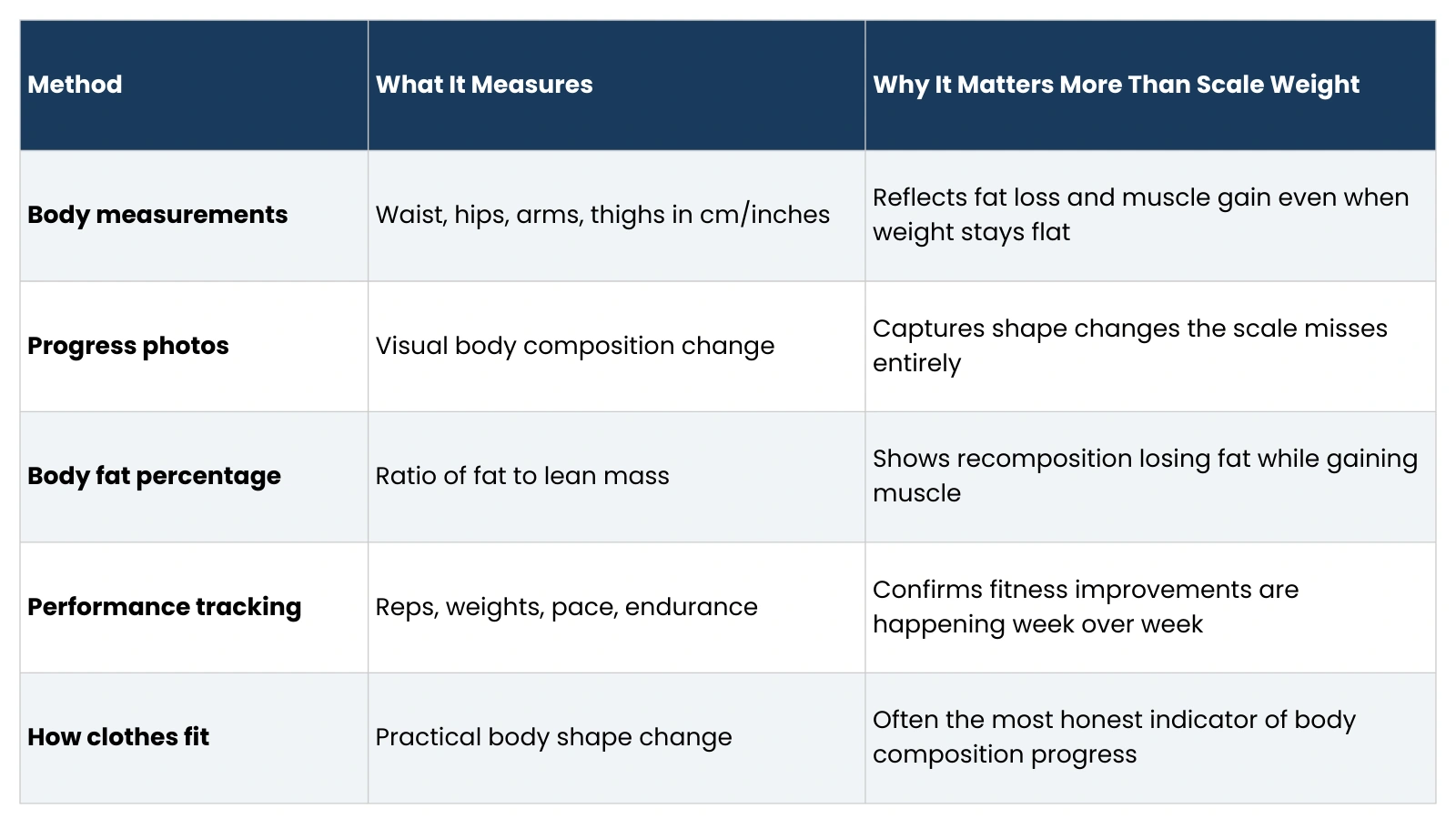
If you’re going to use the scale, weigh yourself at the same time each day (morning, after using the bathroom, before eating), and track weekly averages rather than individual readings. Daily fluctuations of one to three pounds are normal and tell you nothing meaningful about fat loss or gain.
When Weight Gain After Exercise Might Be a Red Flag
Most weight gain in the first four to six weeks of exercise is temporary and explainable by the factors above. But there are situations where persistent weight gain warrants a closer look.
- Weight has continued to rise steadily for more than six weeks without any change in body composition, measurements, or how clothes fit
- You are eating significantly more than before starting exercise, and haven’t accounted for that increase
- You’re experiencing other symptoms alongside the weight gain, fatigue, hair loss, cold sensitivity, irregular periods, which can indicate thyroid dysfunction or hormonal conditions such as PCOS
- You’ve been diagnosed with a condition that affects metabolism or fluid balance
If any of these apply, a conversation with a GP or registered dietitian is a sensible next step. Weight gain that persists beyond the initial adaptation period and isn’t accompanied by any positive body composition changes is worth investigating.
Tips to Manage Temporary Weight Gain After Exercise
- Stay hydrated. Counterintuitively, drinking enough water helps your body release retained fluid rather than holding onto it
- Prioritize sleep, seven to nine hours supports cortisol regulation, muscle recovery, and healthy appetite hormones
- Balance your nutrition, adequate protein (around 1.6 to 2.2 grams per kilogram of body weight) supports muscle repair without excessive calorie surplus
- Avoid weighing yourself daily during the first four to six weeks, as the fluctuations will be misleading and discouraging
- Focus on consistency over perfection. Showing up regularly is the variable that produces results, not how the scale reads this week
A Simple Way to Track Your Progress
If you have gained weight after exercising, one of the biggest questions is whether it’s temporary body changes or increased calorie intake. Because while water retention and muscle repair are common, eating more than your body needs can also push the scale up over time.
This is where a tool like Calorie Tracker Buddy can help.
It gives you a clear picture of how much you’re actually eating without making tracking complicated or overwhelming. Even using it for a few weeks can help you understand whether your weight gain after exercise is a normal adaptation or a nutritional imbalance.
Key Features
- Quick and easy meal logging
- Daily calorie tracking
- Protein and macro monitoring
- Simple dashboard view
- Weekly intake insights
The goal is not to track forever. It’s to remove guesswork. When you know your intake is balanced, it becomes much easier to stay consistent without stressing over temporary scale changes.
Conclusion: Don’t Let the Scale Discourage You
If you’ve gained weight after starting to exercise, the most important thing to understand is that the scale is almost certainly not telling you the full story. The physiological changes that drive temporary weight gain, muscle repair, glycogen storage, fluid retention, and increased water intake are all signs that your body is adapting positively to the demands you’re placing on it.
The people who see the best long-term results from exercise are the ones who push through the first four to six weeks without letting a misleading number derail their consistency. Measure your progress in strength gained, energy improved, endurance extended, and how your clothes fit. Those markers tell you what’s actually happening, and they’re far more motivating than a scale that doesn’t understand what your body is going through.
Frequently Asked Questions
Why did I gain weight after working out for a week?
Weight gain in the first week of exercise is almost always temporary. The most common causes are water retention from muscle repair, inflammation, and the initial increase in glycogen storage in your muscles. Both add real scale weight without any increase in body fat, and both resolve within one to three weeks as your body adapts.
Is weight gain after exercise a sign it’s working?
Often, yes. Temporary weight gain after starting exercise frequently indicates that your muscles are responding to training, repairing and growing, storing more glycogen, retaining fluid for recovery. None of these are negative outcome. Focus on performance improvements and body composition changes rather than the scale number during the early weeks.
How long does it take for exercise-induced weight gain to go away?
Water retention from individual workouts typically resolves within three to seven days. Glycogen-related water weight stabilizes after two to four weeks. Most people find that overall temporary weight gain levels off or begins declining after four to six weeks of regular exercise, once the initial adaptation phase is complete.
Why do women gain more weight when starting to exercise?
Women tend to experience more pronounced temporary weight gain after starting exercise due to hormonal factors; estrogen and progesterone influence fluid retention throughout the menstrual cycle, adding a layer of fluctuation on top of training-related changes. This makes the scale particularly unreliable for women in the first several weeks of a new program. Body measurements and how clothes fit are much more reliable progress indicators.