


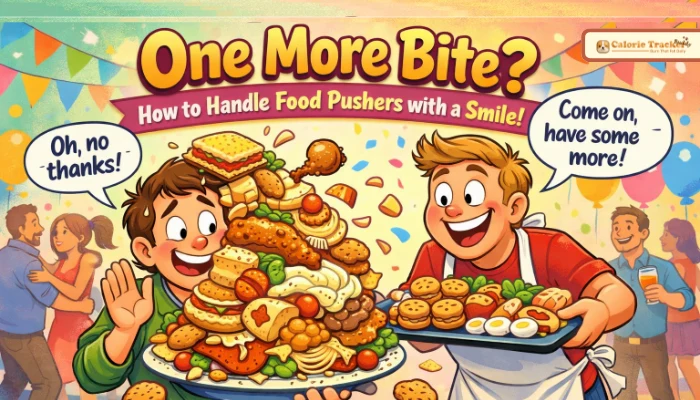
Food Pushers.
We’ve all encountered them at parties, right? Those well-meaning people who just can’t seem to take no for an answer when it comes to offering you more food. Whether it’s family gatherings, office parties, or even casual get-togethers, these individuals want to make sure you’re fed, sometimes to the point of overwhelm. But what happens when you’re full or simply don’t want to eat anymore? How can you politely decline without feeling rude or awkward?
Let’s explore some ways to handle pushers at parties with tact, kindness, and a dash of humor.
Listen to this blog now!
Why Do People Become Food Pushers?
Before we discuss how to handle food pushers, it’s important to understand why some people do this. Food pushers usually mean well. For many, offering food is a way to show kindness and make guests feel welcome. its’s either an all-or-nothing diet for them. For others, it could be part of their culture or personal habits, where feeding others is seen as a sign of love or generosity.
The psychology of food pushers isn’t about trying to annoy you. It’s often about wanting to be a good host or share something they’re proud of, like a home-cooked meal or a new recipe. While their intentions are good, it can feel overwhelming when you don’t want to eat more.
Why Food Pushers Can Be Annoying..
We get it. While coercive feeders typically have good intentions, their repeated insistence can quickly turn from kindhearted to a little frustrating. It can feel like they’re not respecting your personal boundaries or, even worse, that you’re being forced to eat more than you’d like.
In some cases, food pushers can be genuinely unaware of your discomfort. For others, it may come from a desire to “get you to try something new” or to celebrate their cooking skills. Either way, it’s important to remember that their persistence doesn’t necessarily mean they’re trying to upset you; it’s often a simple lapse in social awareness.
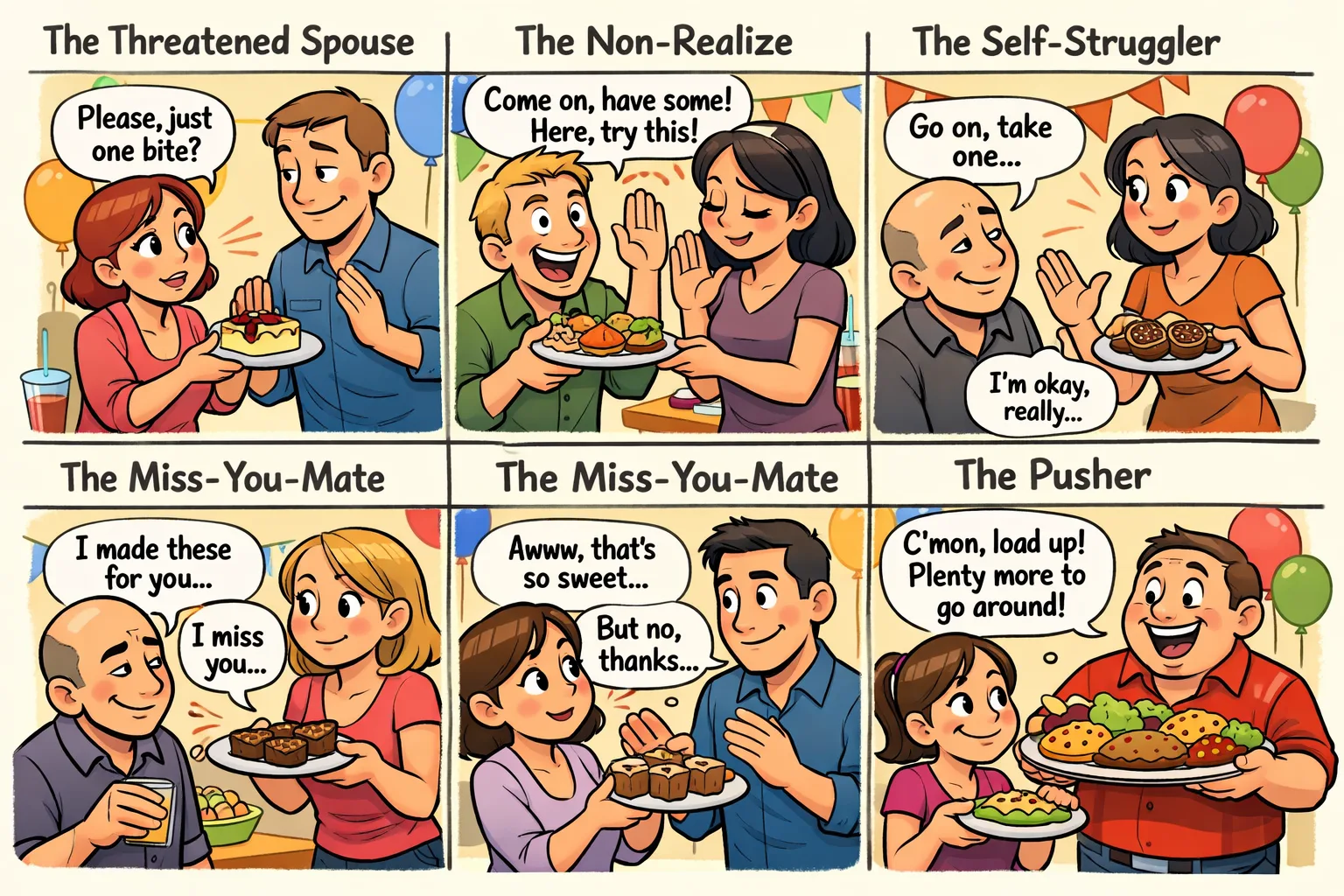
Here are five common types of food pushers, each with its own motivations and behaviors:
-
The Threatened Spouse
A person who feels insecure or jealous in a relationship often pushes affection or food to keep control and reassure themselves.
-
The Non-Realize
Someone unaware of how their actions affect others. They may push food without realizing it’s unwanted, acting out of habit or good intentions.
-
The Self-Struggler
A person battling internal issues or insecurities often pushes food or acts in ways to distract from their emotional struggles or to connect with others.
-
The Miss-You-Mate
Someone who feels emotionally disconnected or lonely and uses food or gestures to fill that void or to bond with others.
-
The Pusher
A person who persistently offers food or experiences, often to make others feel comfortable, but may overstep boundaries due to a desire to please.
How to Say No to Food Without Guilt?
Saying no to food can feel difficult, especially when someone is pushing it toward you with enthusiasm. You might worry about offending the host, making the situation awkward, or appearing ungrateful. But here’s the truth: It’s perfectly fine to say no and you don’t need to feel guilty about it. Here are some ways to politely handle food pushers without feeling like you’ve hurt their feelings.
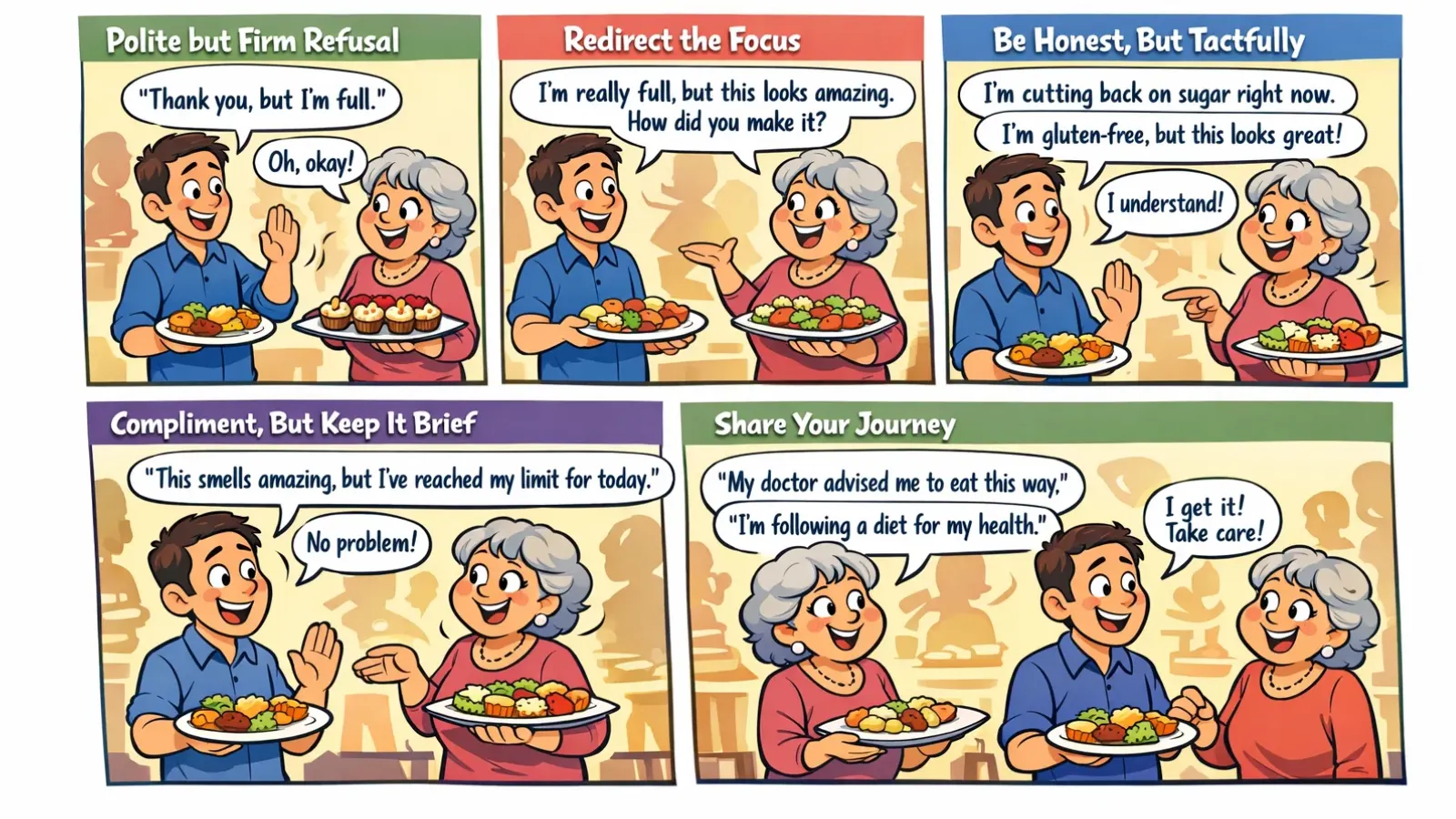
1. Polite but Firm Refusal
The key here is to be kind but assertive. A simple “Thank you, but I’m full” or “I appreciate the offer, but I’m going to pass for now” can do wonders. Don’t overcomplicate it with excuses or guilt. Keep it short, sweet, and to the point.
It’s important to remain firm, though, because if you’re too wishy-washy, the food pusher might feel encouraged to try again. Stick to your guns and resist the pressure to take more than you need.
2. Redirect the Focus
If you’re worried about being rude, try redirecting the conversation. Compliment their cooking or ask them more about the dish they’ve prepared. A comment like, “I’m really full, but this looks amazing. How did you make it?” or “I’m on a break from eating right now, but I’d love to hear more about how you made that!” shows appreciation without needing to consume more food.
By focusing on their effort or creativity, you’re acknowledging their hospitality without committing to another serving.
3. Be Honest, But Tactfully
In some cases, honesty is the best policy. If you’re avoiding certain foods due to health reasons, dietary restrictions, or preferences, simply explain it. Something like, “I’m cutting back on sugar right now,” or “I’m gluten-free, but this looks great!” can help the food pusher understand your boundaries.
Honesty can actually be a relief, and it can also help educate others about your preferences, so they don’t push food in the future.
4. Compliment, But Keep It Brief
If you want to show appreciation for the food but not take more, you can always offer a compliment: “This smells amazing, but I’ve reached my limit for today.” A brief compliment, followed by your decision not to eat, helps reinforce your message while respecting the effort the host put into preparing the meal.
4. Share Your Journey
If you’ve been advised by one of your doctors, dietitians, or healthcare providers to make healthy lifestyle changes, share this with the food pusher.
Sometimes saying
“My doctor advised me to follow this plan.”
or
“I’m following a specific diet to manage my health.”
Will be taken more seriously than just saying you’re not hungry. This can also serve as a gentle reminder that your food choices are about your well-being, not about rejecting their hospitality.
By sharing your health goals, you’re helping them understand that your choices are intentional, and it may make them more supportive of your decisions. It’s a respectful way of setting boundaries while giving them insight into why you may not be indulging in seconds.
Track Your Healthy Goals with Calorie Tracker Buddy (CTB)
If you’re making changes to your diet for health reasons, consider using Calorie Tracker Buddy (CTB) to stay on track with your goals.
It helps you monitor your calorie intake, track nutrients, and make sure your meals align with your health objectives. Whether you’re following a specific diet, managing a medical condition, or simply aiming to eat more mindfully, Calorie Tracker Buddy is a fantastic tool for ensuring you stick to your plan.
When you share with food pushers that you’re using it to manage your health and track calories of your meals, it adds an extra layer of credibility to your boundaries. It shows them that your choices are based on thoughtful planning and that you’re committed to your personal health journey. You can even mention that using Calorie Tracker Buddy helps you ensure you’re eating balanced meals and not overindulging.
When a Baby Food Pusher Is Involved…
Sometimes, the food pusher might be a family member or a friend who insists on feeding you because they love you. Often, this is seen with parents or relatives who want to make sure you’re well-fed. These are the people who offer you food repeatedly, even if you’ve already eaten. They might say something like,
“Oh, just a little more, you’re looking so skinny!”
or
“You need to eat more!”
Dealing with a baby food pusher requires a bit more sensitivity. In this situation, it’s best to respond kindly but assertively.
For example, you could say,
“I know you want me to eat, and I appreciate it, but I’m really not hungry anymore.”
A gentle response helps convey that you’re not rejecting them, but rather just respecting your own needs.
How to Politely Disengage Without Creating Awkwardness?
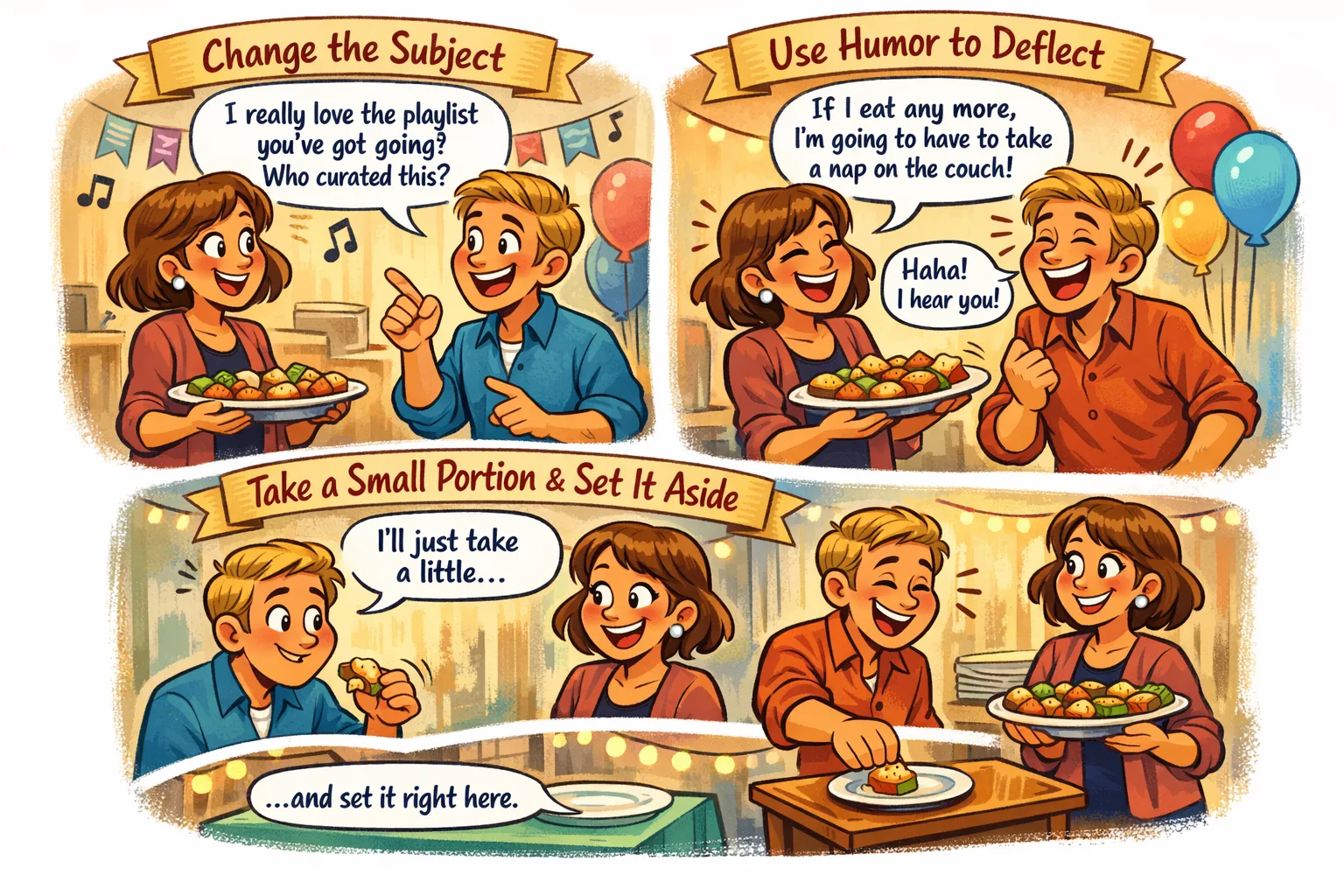
If the food pusher isn’t taking no for an answer, it may be time to disengage politely. This can be uncomfortable, but with a little tact, you can manage the situation without causing any drama.
1. Change the Subject
If the food keeps coming your way, simply change the topic of conversation. Compliment the host’s other aspects, maybe their home decor or the music playing in the background. When you shift the focus, it signals to the pusher that you’re not interested in talking about food anymore.
For example: “I really love the playlist you’ve got going! Who curated this?”
This redirects their attention and buys you some space away from food-related topics.
2. Use Humor to Deflect
Humor is a great way to lighten the mood and gently deflect any more food offerings. You could say something like, “If I eat any more, I’m going to have to take a nap on the couch!” or “I think I’ve hit my food limit for the day, I’ll need a little food coma break soon!” Humor makes the situation feel more relaxed, and it lets the food pusher know you’re not being rude, just managing your intake.
3. Take a Small Portion and Set It Aside
If you’re feeling particularly uncomfortable about saying no outright, you can take a small portion of food and simply set it aside. This way, you’re still acknowledging the offer without feeling pressured to eat more than you want.
Be mindful not to take too much, though, as that might send the message that you’re willing to eat more later. The goal is to keep it low-key and polite.
How to Handle Overzealous Food Pushers at Large Gatherings?

At large gatherings, you might find it easier to just avoid food pushers altogether by subtly signaling your preferences early on. When you arrive at the party, you can let the host know that you’re not particularly hungry or that you’ll be pacing yourself throughout the evening.
This heads-up will help the food pusher understand that you’re not rejecting their food, but you’re managing your own eating habits.
In large groups, it can also help to focus on the social side of the gathering. Engage in conversation, ask about others’ experiences, and share stories, anything to keep the attention off food and back onto the fun.
Read More!
How To Track Calories While Living In A Dorm Or Hostel
Family and Close Friends Who Are Food Pushers
When dealing with family or close friends who are food pushers, it’s important to communicate clearly and respectfully. Since you have a relationship with them, you can have a more open discussion about your boundaries. For example, you could say, “I know you love to feed me, but I’m really trying to watch what I eat,” or “I appreciate the offer, but I’ll pass on the dessert this time.”
By having an honest conversation before the event, you can set expectations early on, and they’ll know that it’s not about them; it’s about your personal choice.
Setting Boundaries Without Feeling Guilty
It’s important to remember that setting boundaries isn’t rude; it’s simply about prioritizing your own well-being. You have every right to choose when and how to say no to food, especially if you don’t want to overeat or if you have dietary restrictions. Navigating food pushers can be tricky, but it’s all about balancing kindness and assertiveness.
Being firm but polite, redirecting the conversation, and using humor when needed are all great tools to handle food pushers without causing a fuss. And most importantly, don’t feel guilty for prioritizing yourself; after all, your well-being comes first.
Packing It Up!
Handling food pushers doesn’t have to be stressful or awkward. By understanding why they act the way they do and using some simple strategies, you can politely decline more food while still being considerate of their feelings. Whether it’s a baby food pusher or someone who’s just enthusiastic about feeding you, a few kind words and clear boundaries will help you navigate the situation with ease.
So the next time you find yourself at a party with an overzealous food pusher, you’ll know just how to handle it with grace, humor, and confidence!
1. Why do people become food pushers?
Food pushers often act from a place of kindness and hospitality. Offering food is their way of making guests feel welcome and cared for. It can also be linked to cultural norms or personal habits, where feeding others is seen as an expression of affection or generosity.
2. How can I politely refuse food without offending anyone?
To refuse food politely, you can use a simple but firm response like “Thank you, but I’m full” or “I appreciate the offer, but I’m going to pass for now.” You can also redirect the conversation, compliment their cooking, or be honest about your dietary restrictions, all while maintaining a friendly tone.
3. What if a family member is the food pusher?
When dealing with a family member, it’s best to respond kindly but assertively. You can say, “I know you want me to eat, and I appreciate it, but I’m really not hungry anymore.” Being clear about your boundaries while showing gratitude helps maintain the relationship without feeling pressured.