


Sunflower seeds may look simple, but they’re packed with nutrients that support overall health when eaten in moderation. These small seeds come from the sunflower plant (Helianthus annuus) and are commonly enjoyed as a snack or added to everyday meals for extra crunch and nutrition.
Encased in black-and-grey striped shells, sunflower seeds have a soft bite and a mild, nutty taste. You can enjoy them raw, roasted, or mixed into various dishes. For anyone tracking calories or focusing on mindful eating, understanding both the benefits and limits of sunflower seeds is important.
Let’s take a closer look at their nutrition, health benefits, side effects, and recommended daily intake.
Listen to The Podcast Now!
Nutritional Value Of Sunflower Seeds
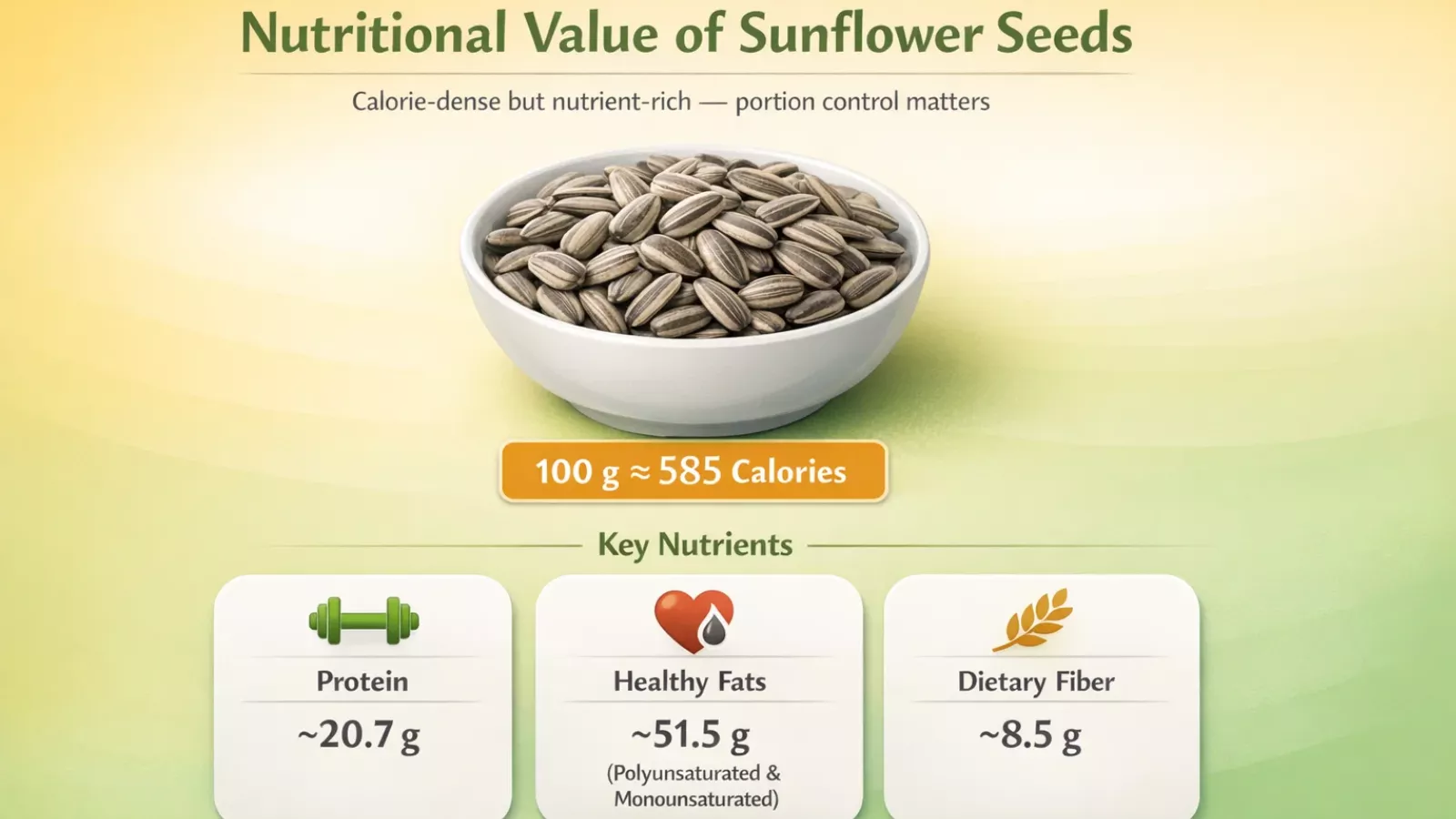 Sunflower seeds are calorie-dense but nutrient-rich. About 100 grams of sunflower seeds provide roughly 585 calories, making portion control essential.
Key Nutrients in Sunflower Seeds
- Protein: ~20.7 g
- Fats: ~51.5 g (mostly healthy polyunsaturated and monounsaturated fats)
- Dietary fiber: ~8.5 g
They are also rich in essential vitamins, including:
- Vitamin E
- Thiamine (Vitamin B1)
- Riboflavin
- Niacin
- Pantothenic acid
- Folate
- Vitamin B6
- Vitamin C
In terms of minerals, sunflower seeds provide:
- Calcium
- Iron
- Magnesium
- Phosphorus
- Potassium
- Zinc
- Manganese
They also contain plant compounds like flavonoids and phenolic acids, which act as antioxidants and help protect cells from oxidative stress.
Thanks to sunflower seed protein and healthy fat content, sunflower seeds can support muscle health and sustained energy. However, if you’re calorie-conscious, it’s important to account for sunflower seed calories when adding them to your diet.
Types Of Sunflower Seeds
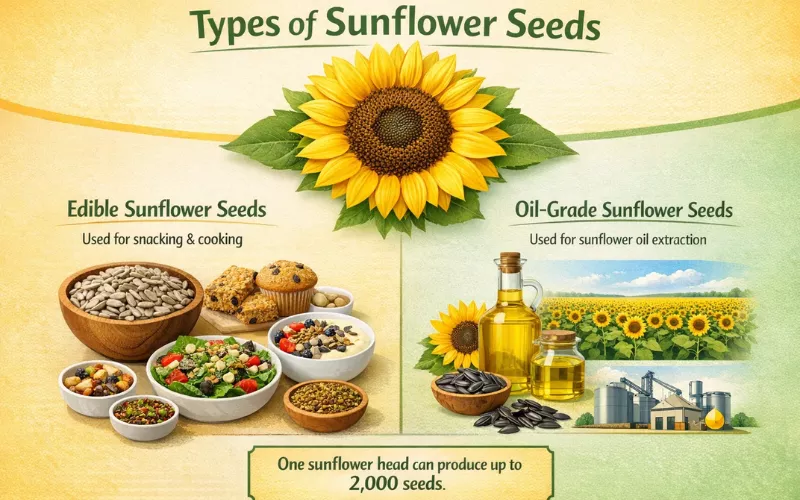 There are two main types of sunflower seeds:
- Edible sunflower seeds – commonly used for snacking and cooking
- Oil-grade sunflower seeds – mainly used for sunflower oil extraction
A single sunflower head can produce up to 2,000 seeds. Edible sunflower seeds are versatile and can be added to:
- Nutrition bars
- Bread and muffins
- Yogurt bowls
- Salads and stir-fries
- Trail mixes
- Traditional mouth fresheners (mukhwas)
They can also be ground into sunflower seed butter, a nut-free alternative to peanut butter.
Health Benefits Of Sunflower Seeds
1. Supports Immune Health
Sunflower seeds contain vitamin E, zinc, and selenium, which play an important role in maintaining immune function. These nutrients help protect cells from damage and support the body’s natural defense system.
2. Supports Heart Health
Sunflower seeds are low in saturated fat and rich in oleic and linoleic acids, along with magnesium and fiber. These nutrients support healthy cholesterol levels and blood pressure when sunflower seeds are consumed in moderation as part of a balanced diet.
3. Suitable for Blood Sugar Management
Sunflower seeds may be helpful for people managing type 2 diabetes when eaten in controlled portions. Their combination of protein, fiber, and healthy fats slows digestion, which may help prevent sudden spikes in blood sugar.
4. Supports Brain Function
Vitamin B6 found in sunflower seeds supports brain health by contributing to better mood, focus, and cognitive function. Some people also find sunflower seeds helpful in managing symptoms associated with premenstrual discomfort.
5. Helps with Weight Management
Sunflower seeds are filling due to their fiber and protein content. When eaten in small portions, they can help reduce hunger and prevent overeating, making them suitable for a calorie-tracked or weight-conscious diet.
6. Provides Quick Energy
Sunflower seeds are a natural source of thiamine (Vitamin B1), which helps the body convert carbohydrates, fats, and proteins into energy. A small handful can provide a quick energy boost, especially during busy days.
7. Supports Skin Health
Vitamin E and healthy fatty acids like oleic and linoleic acid contribute to skin health. These nutrients help maintain skin elasticity, support wound healing, and protect the skin from environmental stressors.
8. Helpful During Pregnancy
Sunflower seeds contain folate and vitamin E, both of which are important nutrients during pregnancy. When eaten in moderation, they can support prenatal nutrition as part of a balanced diet.
9. May Help Reduce Inflammation
The antioxidants and plant compounds in sunflower seeds may help manage chronic inflammation. Adding small amounts to meals like salads, cereals, or soups can contribute to an anti-inflammatory eating pattern.
Some research also suggests that the minerals in sunflower seeds — such as magnesium, phosphorus, and calcium — may help support bone health.
Possible Side Effects of Sunflower Seeds
While sunflower seeds are nutritious, overconsumption can lead to side effects:
- Excess intake may cause stomach discomfort, constipation, or nausea
- High calorie content may contribute to weight gain if portions aren’t controlled
- Allergic reactions, though uncommon, may include rashes, itching, swelling, or breathing issues
- Sunflower seeds contain trace amounts of cadmium, which may affect kidney health if consumed excessively over time
- Contaminated sprouted seeds may carry harmful bacteria such as Salmonella
For most people, these risks are minimal when sunflower seeds are eaten in reasonable amounts. That’s why mindful portion control and awareness matter — especially with calorie-dense foods like sunflower seeds — and having the right tool can make healthier choices easier to manage.
How Calorie Tracker Buddy (CTB) Helps You Eat Smarter
Eating healthy isn’t just about choosing nutritious foods — it’s about understanding how they fit into your daily goals. That’s where Calorie Tracker Buddy (CTB) makes the process simple, intuitive, and motivating.
Whether you’re tracking snacks like sunflower seeds or full meals, CTB helps you stay aware without stress.
Key Features of Calorie Tracker Buddy
📸 Snap the Meal
Just point your camera and tap once. CTB scans your meal instantly and shows calorie count, nutrient breakdown, and balance — no manual searching needed.
🔥 Calorie Burn Tracker
From workouts to everyday activities like dancing or dishwashing, CTB tracks calories burned throughout your day so you can see your progress clearly.
🍽️ Calorie Intake Tracker
Eat your meal, and CTB does the math. Log foods in seconds and get instant insights into how they align with your goals.
🎯 Goal Predictions
Curious how close you are to your target? CTB shows how every meal, snack, and drink impacts your progress — in real time.
🐾 Buddy Motivation
Your virtual buddy grows as you make healthier choices. Daily encouragement keeps motivation high and habits consistent.
📲 Social Sharing
Share your meals, streaks, or progress with friends. Celebrate wins, stay accountable, and let your community cheer you on.
Recommended Daily Intake
For healthy adults, sunflower seeds should be limited to about 30 grams (one small cup or handful) per day. This amount allows you to enjoy their nutritional benefits without excessive calorie intake.
If you have a medical condition, food allergy, or are pregnant, it’s best to consult a healthcare professional before adding sunflower seeds regularly to your diet.
Final Thoughts
Sunflower seeds are a nutrient-dense snack that can support immunity, heart health, energy levels, and overall nutrition when eaten mindfully. They’re versatile, satisfying, and easy to include in meals — but portion control is key, especially if you’re tracking calories.
When enjoyed in moderation, sunflower seeds can be a smart addition to a balanced, health-focused lifestyle.
Frequently Asked Questions (FAQs)
Are sunflower seeds healthy for daily consumption?
Yes, sunflower seeds can be healthy when eaten in moderation. They provide protein, healthy fats, fiber, and antioxidants. Limiting intake to about 30 grams per day helps you enjoy the benefits without excess calories.
How many calories are in sunflower seeds?
Sunflower seeds are calorie-dense. Roughly 100 grams contain around 585 calories, while a small handful (about 30 grams) provides approximately 165–180 calories, depending on preparation.
What are the benefits of sunflower seeds for skin?
Sunflower seeds benefit skin health due to their high vitamin E and healthy fat content. These nutrients help protect skin cells from damage, support natural glow, improve elasticity, and aid in faster healing by supporting collagen production.
What are the benefits of sunflower seeds for hair?
Sunflower seeds support hair health by providing vitamin E, zinc, and healthy fats that help nourish the scalp, improve blood circulation, and strengthen hair follicles. Regular, moderate intake may contribute to reduced hair breakage and healthier hair growth.
Are sunflower seeds safe for people with diabetes?
Yes, sunflower seeds may be suitable for people managing diabetes when eaten in controlled portions. Their fiber, fat, and protein help slow digestion and may prevent rapid blood sugar spikes.