


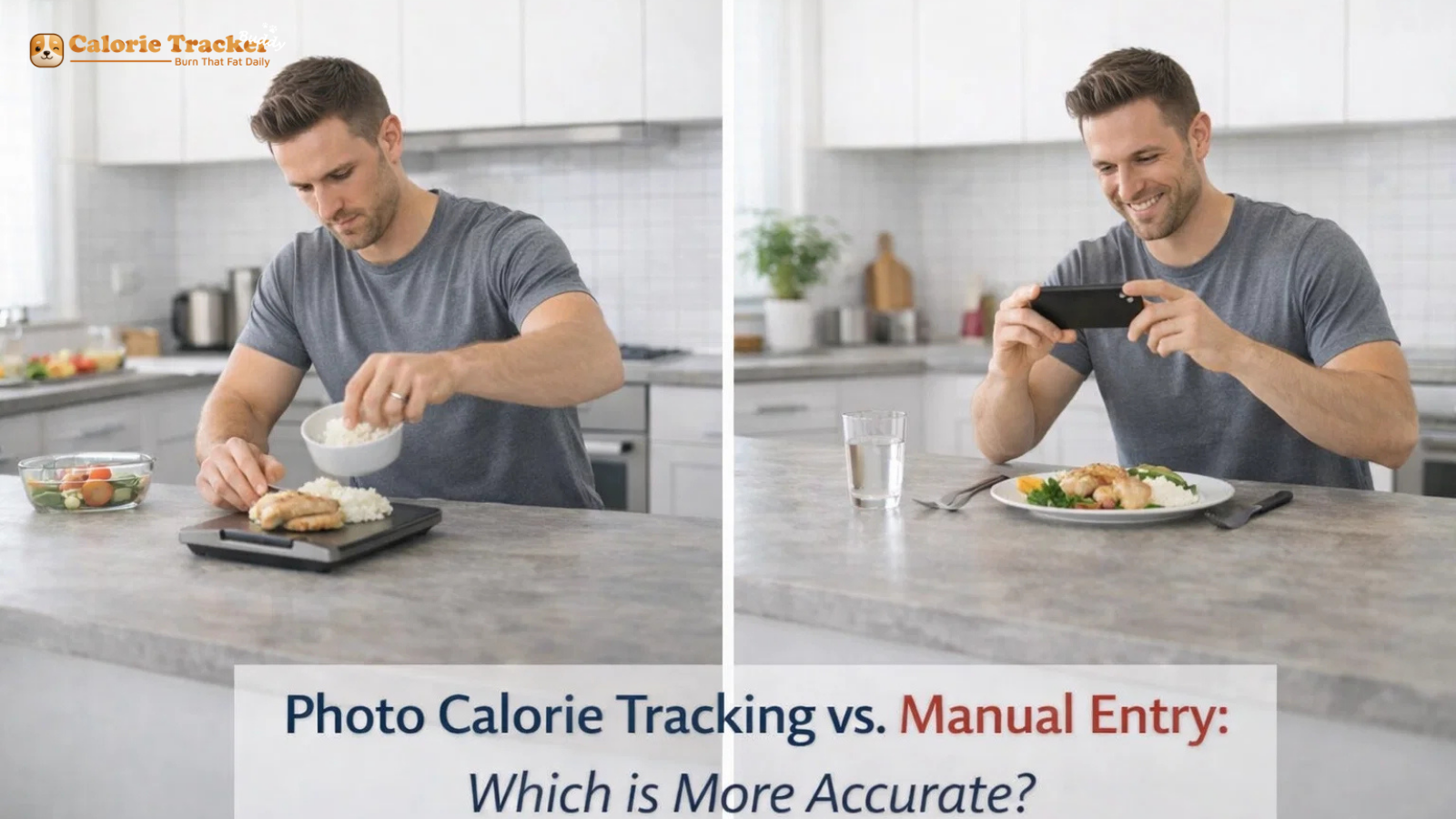
You’re about to eat.
Your plate is ready. The food smells incredible. Hunger is kicking in.
And then that familiar thought appears.
Do you grab the food scale and start weighing everything carefully?
Or do you just snap a quick photo and let AI handle the rest?
It seems like a tiny decision. But repeat that choice three or four times a day, for months, and it can completely shape your progress.
The rise of the Photo Calorie counter has transformed the way people track nutrition. What once required patience, measuring cups, and database searches can now be done in seconds with a single image.
It feels effortless. Modern. Almost revolutionary.
But convenience and accuracy are not always the same thing.
So let’s settle this properly.
Is photo calorie tracking accurate enough to rely on? Or is manual entry still the gold standard?
In a hurry? Listen to the blog instead!
Why Photo Calorie Tracking Feels So Appealing
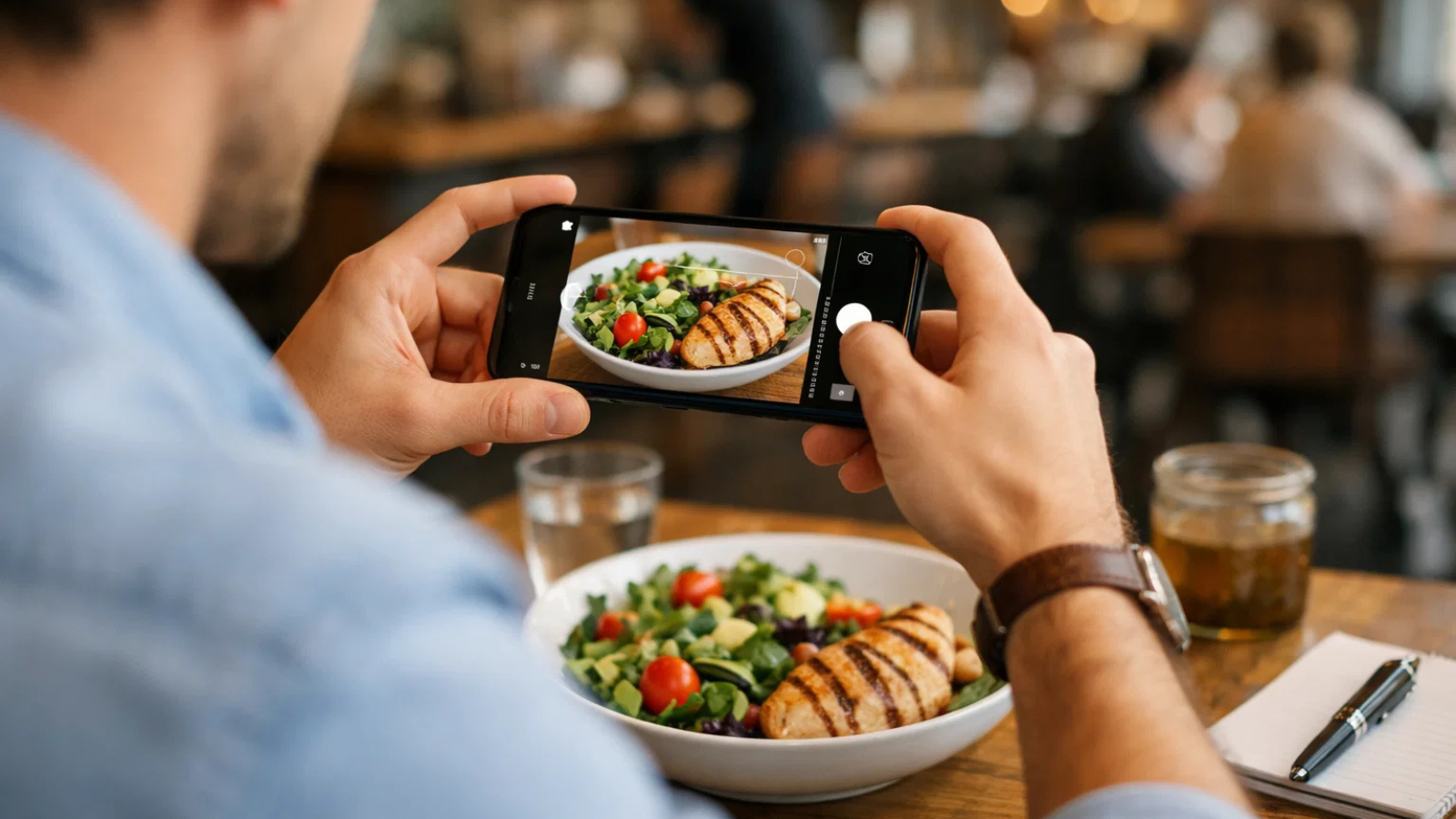
There’s a psychological reason the Photo Calorie counter is exploding in popularity.
It removes resistance.
Traditional tracking demands discipline. You weigh ingredients. Search for specific food entries. You adjust portion sizes. You double check values. It works, but it takes effort.
Photo tracking simplifies that entire process. With an app that counts calories with photo, you take a picture and receive an instant estimate of calories and macros.
For people with busy schedules, this feels like freedom.
- No more scrolling through endless food databases.
- No more typing long meal descriptions.
- No more interrupting conversations to measure food.
It’s no surprise that searches for a photo calorie counter app free continue to rise. People want tools that fit into their lifestyle, not tools that dominate it.
And in today’s fast paced world, speed wins attention.
The Technology Behind an AI Photo Calorie Counter
An ai photo calorie counter uses computer vision and machine learning to analyze your meal. It attempts to identify food items, estimate portion sizes, and calculate calorie values based on large food databases.
The technology is impressive.
But here’s the truth.
It’s still making educated guesses.
AI can recognize grilled chicken fairly well. It can identify rice, vegetables, pasta, and common dishes with reasonable accuracy. However, it struggles with:
- Cooking oils hidden in preparation
- Sauces and dressings
- Mixed ingredients inside casseroles
- Portion distortions caused by camera angle
Lighting, shadows, and plating style can also affect detection.
Most AI systems estimate within ten to twenty percent of actual calorie values.
For many people, that level of accuracy is completely sufficient.
But not for everyone.
Manual Entry: The Precision Advantage
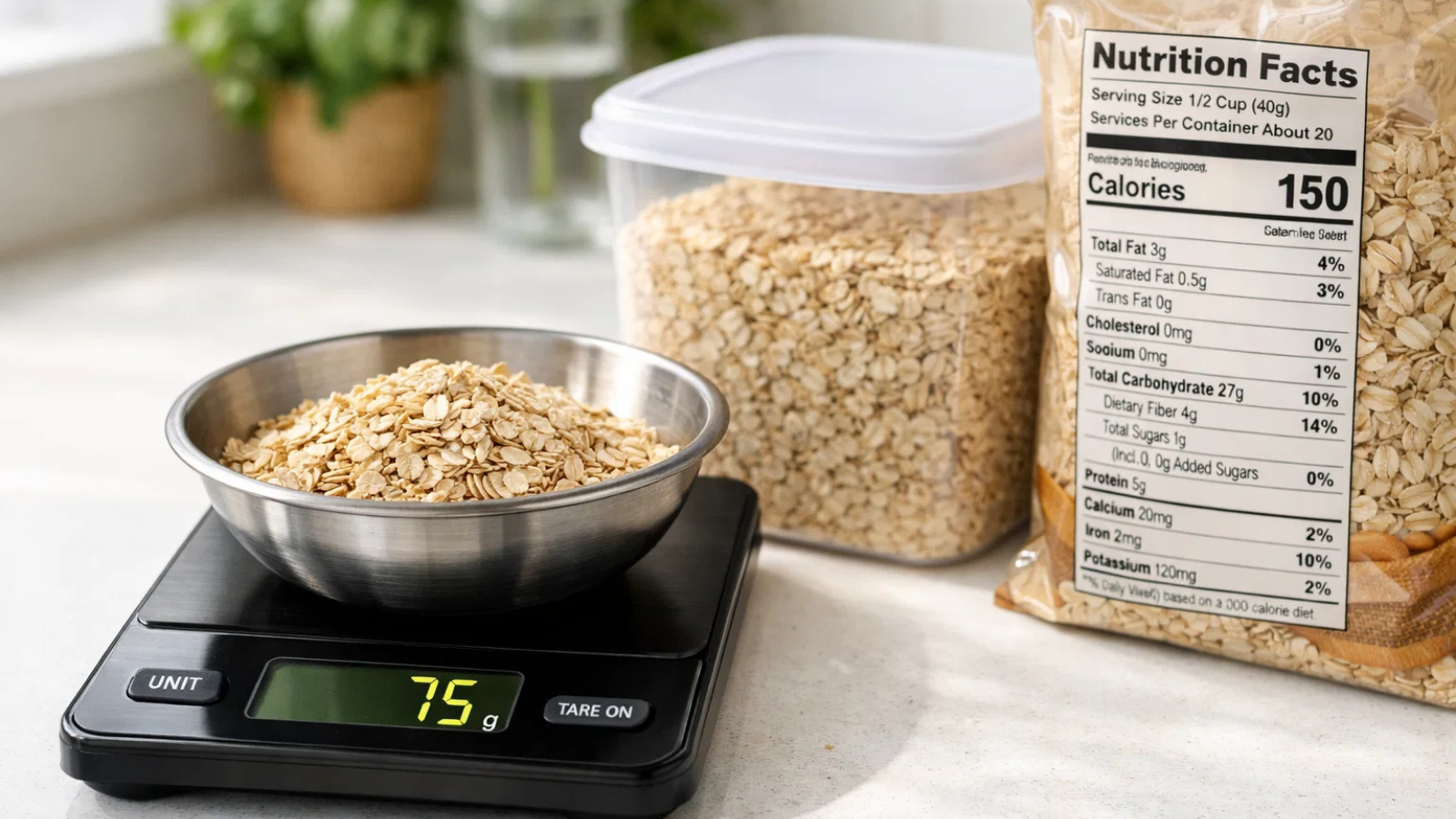
Manual tracking is straightforward.
You weigh your food using a scale.
You enter exact gram amounts.
You select specific brands or scan barcodes.
There’s no visual estimation involved.
When you log 100 grams of oats, you know it’s 100 grams. In fact, when you scan a packaged snack, you’re using manufacturer-provided data.
This level of precision makes manual entry the most accurate option available to everyday users.
It’s especially valuable for:
- Bodybuilding competition prep
- Strict macro based diets
- Clinical nutrition monitoring
- Detailed meal prepping
Manual tracking gives you full control.
But control requires time and consistency.
The Problem No One Talks About: Tracking Fatigue
Here’s what usually happens.
Someone starts manual logging with motivation. They weigh everything. Enter every ingredient. They feel disciplined.
Then life gets busy.
Measuring every meal becomes exhausting. Logging feels like a chore. Motivation fades.
And eventually, tracking stops.
This is where the Photo Calorie counter quietly wins.
Because even if it’s slightly less accurate, it dramatically lowers mental load. It makes tracking feel lighter and less obsessive.
Eighty percent accuracy every day beats one hundred percent accuracy that lasts two weeks.
Long term consistency changes bodies. Not short bursts of perfection.
Where Photo Tracking Performs Best
Photo tracking shines in real life scenarios where manual entry becomes unrealistic.
- Eating at restaurants.
- Attending family gatherings.
- Traveling for work.
- Grabbing lunch between meetings.
You’re not pulling out a scale at a dinner party.
An app that counts calories with photo allows you to estimate quickly without disrupting your social environment. It keeps you accountable without turning tracking into a spectacle.
In particular, for beginners, this ease reduces overwhelm. Instead of navigating a complex database, they can focus on building awareness.
Where Manual Logging Is Non Negotiable
Despite its convenience, a Photo Calorie counter has limitations.
- If you’re preparing for a bodybuilding show, ten percent variance can matter.
- If you’re following a strict macro split, precise carb and fat counts are important.
- If you consume many packaged foods, barcode scanning provides unmatched accuracy.
In these situations, manual entry remains superior.
No AI currently matches the reliability of physically weighing ingredients.
The Hybrid Strategy That Makes the Most Sense
Many experienced trackers don’t choose sides.
They combine methods.
- Manual logging at home when cooking and meal prepping.
- Photo tracking when eating out or short on time.
This balanced approach maintains accuracy where possible and preserves consistency when life gets hectic.
The best ai photo calorie counter apps allow editing after scanning. That means you can snap a photo, then manually adjust portions if needed.
- Precision when you have time.
- Speed when you don’t.
That’s sustainable tracking.
But here’s the bigger question.
What if you didn’t have to choose between accuracy, convenience, and motivation at all?
What if your Photo Calorie counter could scan your meals, track your steps, predict your progress, and actually make the process enjoyable?
That’s where the next evolution of calorie tracking comes in – The Calorie Tracker Buddy
Calorie Tracker Buddy: The Smarter Photo Calorie Counter
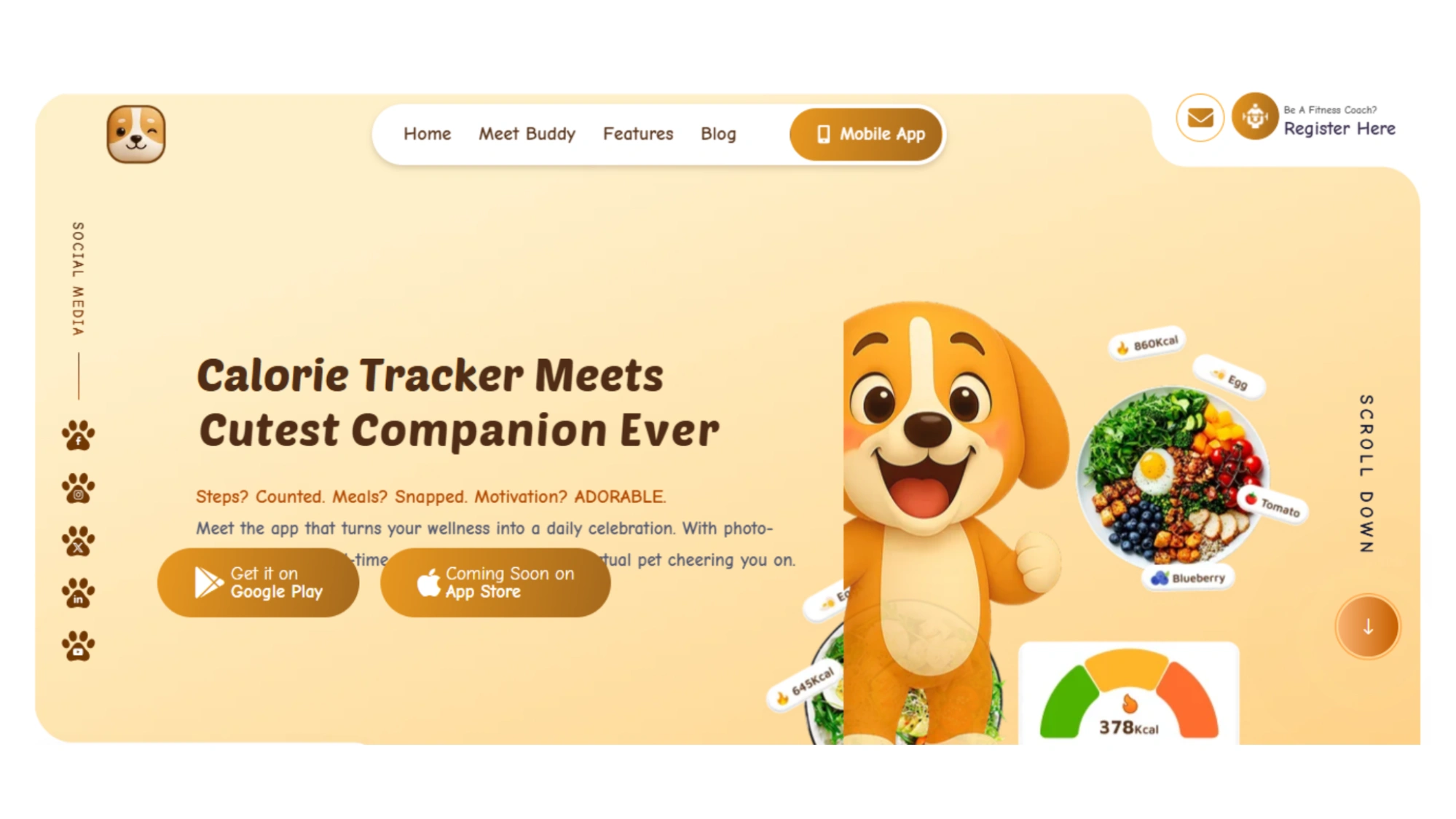
If you’re leaning toward photo tracking for convenience, the app you choose makes all the difference.
Calorie Tracker Buddy is an AI-powered Photo Calorie counter designed to make calorie tracking simple, motivating, and sustainable. Moreover, it combines smart meal scanning, real-time feedback, and habit-building features — so you can stay consistent without feeling overwhelmed.
Because tracking only works if you actually stick to it.
What It Does
Calorie Tracker Buddy brings everything into one streamlined system:
- Snap & Scan Meals
Take a photo of your food and instantly receive calorie and nutrient estimates — no weighing or manual searching required. - Track Intake and Burn Together
Monitor both the calories you eat and the calories you burn, including daily steps and activity. - Show Real-Time Goal Impact
See how each meal, snack, or workout affects your fat loss or fitness progress. - Keep You Motivated Daily
Your virtual buddy grows as you make healthier choices — turning tracking into something rewarding instead of restrictive.
Instead of juggling multiple tools, you get one smart, easy-to-use app built around consistency.
Ready to Make Tracking Effortless?
If you want a Photo Calorie counter that blends AI convenience with real motivation, Calorie Tracker Buddy delivers exactly that.
Snap your meals.
Track your progress.
Build habits that last.
👉 Download Calorie Tracker Buddy and start today.
Is Photo Tracking Reliable for Beginners?
For beginners, the biggest barrier is overwhelm.
Manual tracking can feel complicated. Portion sizes are confusing. Food databases are intimidating.
An ai photo calorie counter simplifies that learning curve. It offers a starting point instead of demanding perfection.
However, beginners should gradually learn portion awareness. The best systems combine:
- AI photo recognition
- Verified food databases
- Manual editing options
- Voice or list entry tools
Relying solely on automation without understanding basics can create dependency. But using AI as a support tool can accelerate learning.
Accuracy vs Behavior: What Actually Drives Results
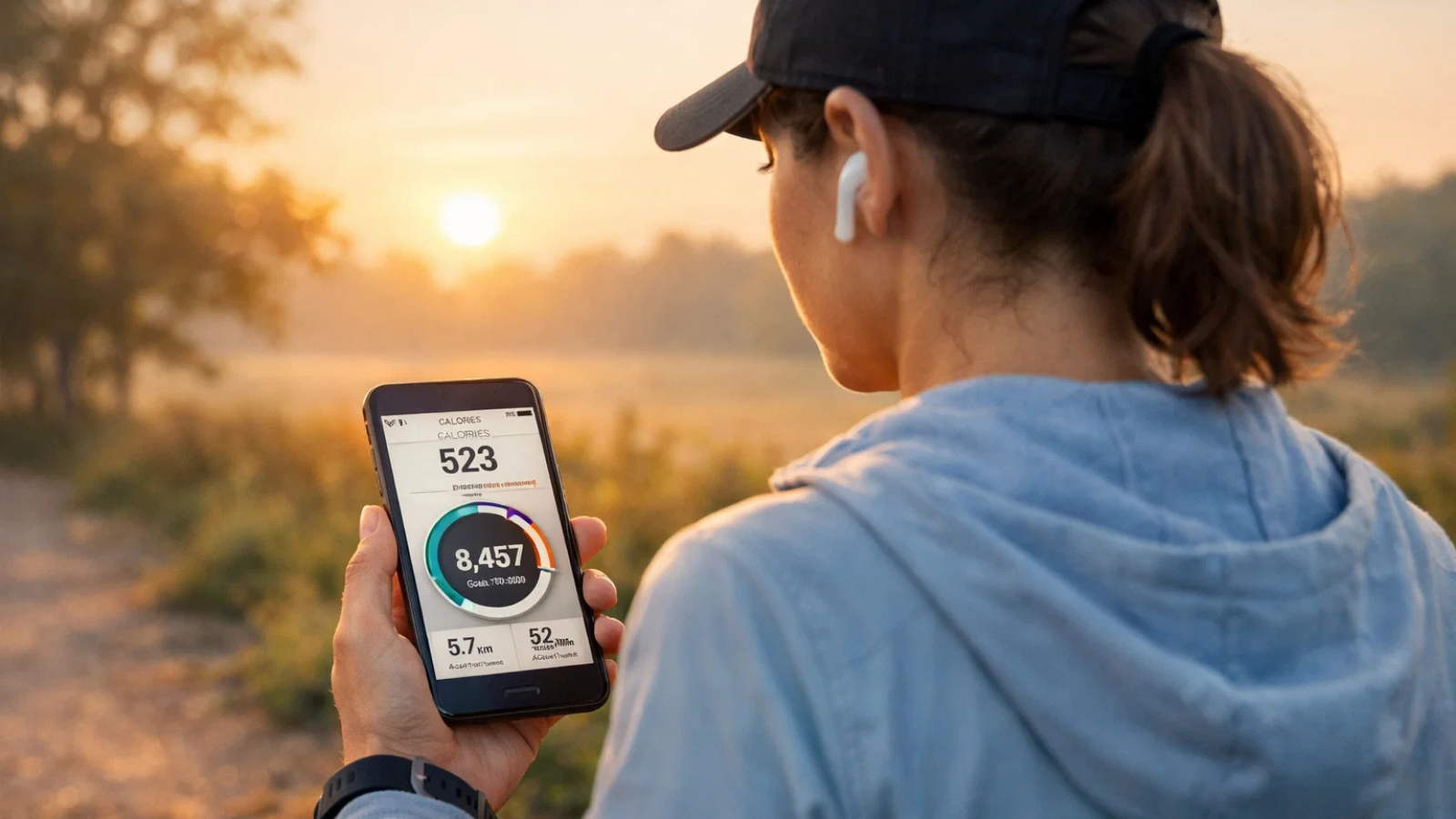
Let’s zoom out.
Fat loss and muscle gain are not won or lost by minor calorie variances alone.
They are driven by consistent habits over time.
If manual tracking feels overwhelming, you won’t maintain it.
If photo tracking feels effortless, you’re more likely to log daily.
That behavioral advantage often outweighs slight differences in measurement precision.
When people search for a photo calorie counter app free, they’re not just looking for technology. They’re looking for simplicity.
And simplicity drives repetition.
Read More:
Privacy Considerations
One factor worth considering is data privacy.
An ai photo calorie counter often processes images in the cloud. That means your food photos may be analyzed on remote servers. Always review app permissions and privacy policies before committing.
Manual logging stores mostly text based entries, which some users may find more comfortable.
Therefore, trust in your tracking tool matters. If you don’t feel secure, you won’t stick with it.
Final Verdict: Which Is More Accurate?
In strict measurement terms, manual entry is more accurate.
There’s no denying that weighing food provides greater precision than visual estimation.
But accuracy alone doesn’t determine success.
If you can maintain manual tracking long term, it’s the best option for precision focused goals.
If you struggle with consistency, a Photo Calorie counter may deliver better real world results simply because you actually use it.
In reality, for most people aiming for sustainable fat loss or general health improvement, the difference between perfect precision and close estimation is smaller than they think.
The smartest choice is not about which tool sounds more advanced.
It’s about which tool fits your lifestyle.
Use manual entry when precision matters most.
Use photo tracking when life gets busy.
Stay consistent.
Ultimately, because the method you follow every day will always outperform the method you follow perfectly for a short time.
FAQs: –
1. Is a Photo Calorie counter accurate enough for weight loss?
Yes. While manual weighing is slightly more precise, a Photo Calorie counter is accurate enough for sustainable fat loss — especially when used consistently.
2. Why are more people switching to an AI photo calorie counter?
Because it removes friction. An ai photo calorie counter saves time, reduces tracking fatigue, and makes logging effortless — which improves long-term consistency.
3. Is there a reliable photo calorie counter app free?
Yes. Many platforms offer a photo calorie counter app free with core AI scanning features, making it easy to start without commitment.
4. What makes the best AI photo calorie counter different?
The best ai photo calorie counter combines smart image recognition, editable portions, and a strong food database — giving you speed without sacrificing control.
5. Can an app that counts calories with photo replace manual tracking?
For most people, yes. Meanwhile, an app that counts calories with photos delivers practical accuracy while being far easier to maintain daily than manual logging.