



You have probably heard it before.
“Don’t eat after 8 p.m. if you want to lose weight.”
But is late night actually to blame here, or is it just another diet myth that refuses to disappear?
If you often deal with late night cravings, you are not alone. As the day proceeds, many people struggle with hunger or emotional eating. The real question is this: is timing the only factor causing fat gain, or is there more going on behind the scenes?
Let’s break it down.
Listen To The Podcast!
What Really Causes Weight Gain?
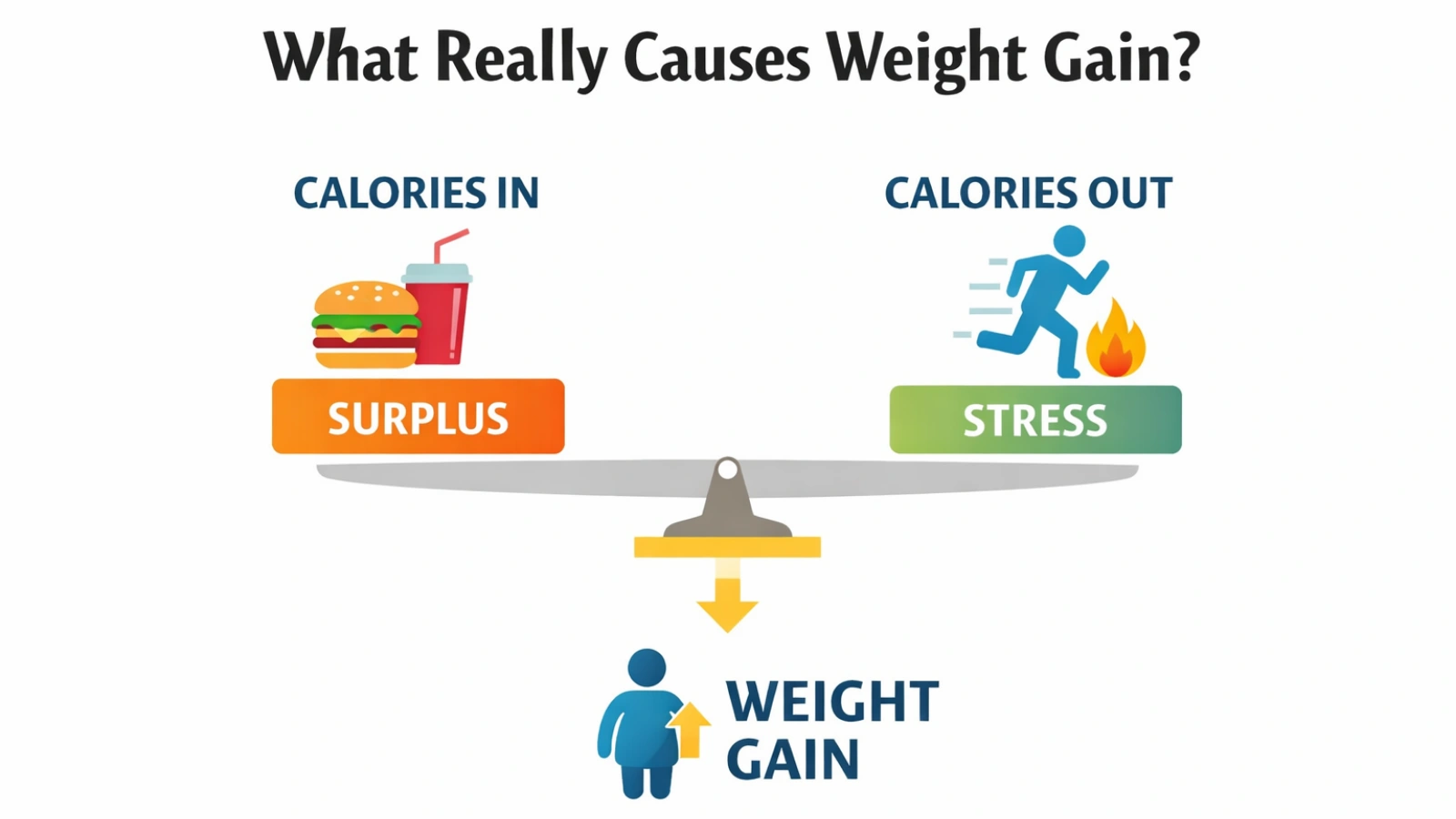
The foundation of weight gain is when you consistently consume more calories than your body burns. It does not matter if those calories come at 9 a.m. or 11 p.m. If you are in a calorie surplus, weight gain can occur.
That said, late night eating can indirectly lead to weight gain for several reasons. It is rarely just about the clock.
Often, nighttime meals are:
- Larger than planned
- Less nutritious
- More processed
- Emotion-driven rather than hunger-driven
So, while timing is not the only factor for fat gain, the habits surrounding late night eating often contribute to it.
Is It Bad to Eat Late at Night?
A lot of people wonder whether eating late at night is unhealthy, but the answer isn’t as straightforward as a simple yes or no.
Eating late is not naturally bad. The body continues to digest food and use energy while you sleep. Metabolism does not shut off at night.
However, there are certain factors make late night eating more problematic:
- Reduced physical activity before bed
- Mindless snacking while watching screens
- Poor sleep quality
- Emotional eating patterns
When food becomes a coping tool for stress or boredom, calorie intake can quietly increase over time.
So the issue is not the hour but the unhealthy eating pattern.
Why Late Night Cravings Happen
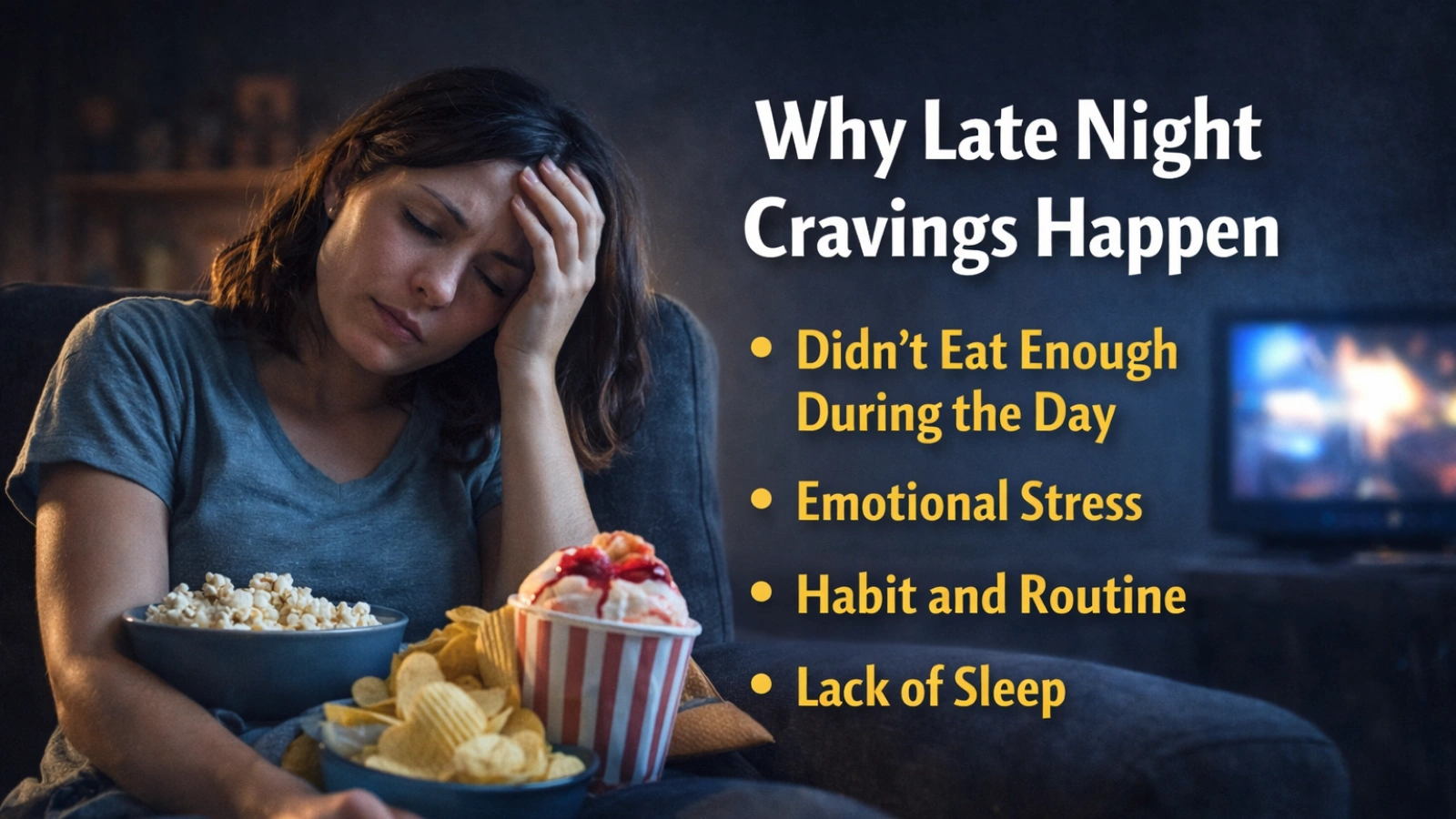
Understanding late night cravings can help you manage them better.
Here are a few common causes:
1. Not Eating Enough During the Day
If you under-eat earlier, your body compensates later. This oftentimes can result in intense late-night eating.
2. Emotional Stress
After a long day, food can feel comforting. Nighttime offers privacy, making it easier to indulge without judgment.
3. Habit and Routine
If you always pair TV with snacks, your brain associates the two. This creates automatic late night cravings.
4. Lack of Sleep
Sleep deprivation affects hunger hormones. Ghrelin increases and leptin decreases, making late night eating more likely.
Recognizing the factors that trigger these cravings is the first step toward control.
Does Metabolism Slow Down at Night?
This is one of the biggest myths around late night eating.
Your metabolic rate slightly decreases during sleep, but not enough to suddenly convert food into fat. Your total daily calorie intake matters far more than meal timing.
However, studies have shown that eating very large meals right before bed may affect blood sugar regulation and digestion. Over time, this could influence weight and metabolic health.
That does not mean every small snack is harmful. It means consistency and portion size matter.
The Behavioral Side of Late Night Eating
The strongest connection between late night eating and weight gain is behavioral.
Nighttime often lowers discipline. You are tired. Decision-making is weaker. Highly palatable foods become harder to resist.
Common late night eats include:
- Chips
- Ice cream
- Sugary cereal
- Leftover takeout
These foods are calorie-dense and easy to overconsume.
When late night eating becomes a daily routine, even a few hundred extra calories can add up quickly over weeks and months.
How Late Night Eating Affects Sleep

Another overlooked factor is sleep quality.
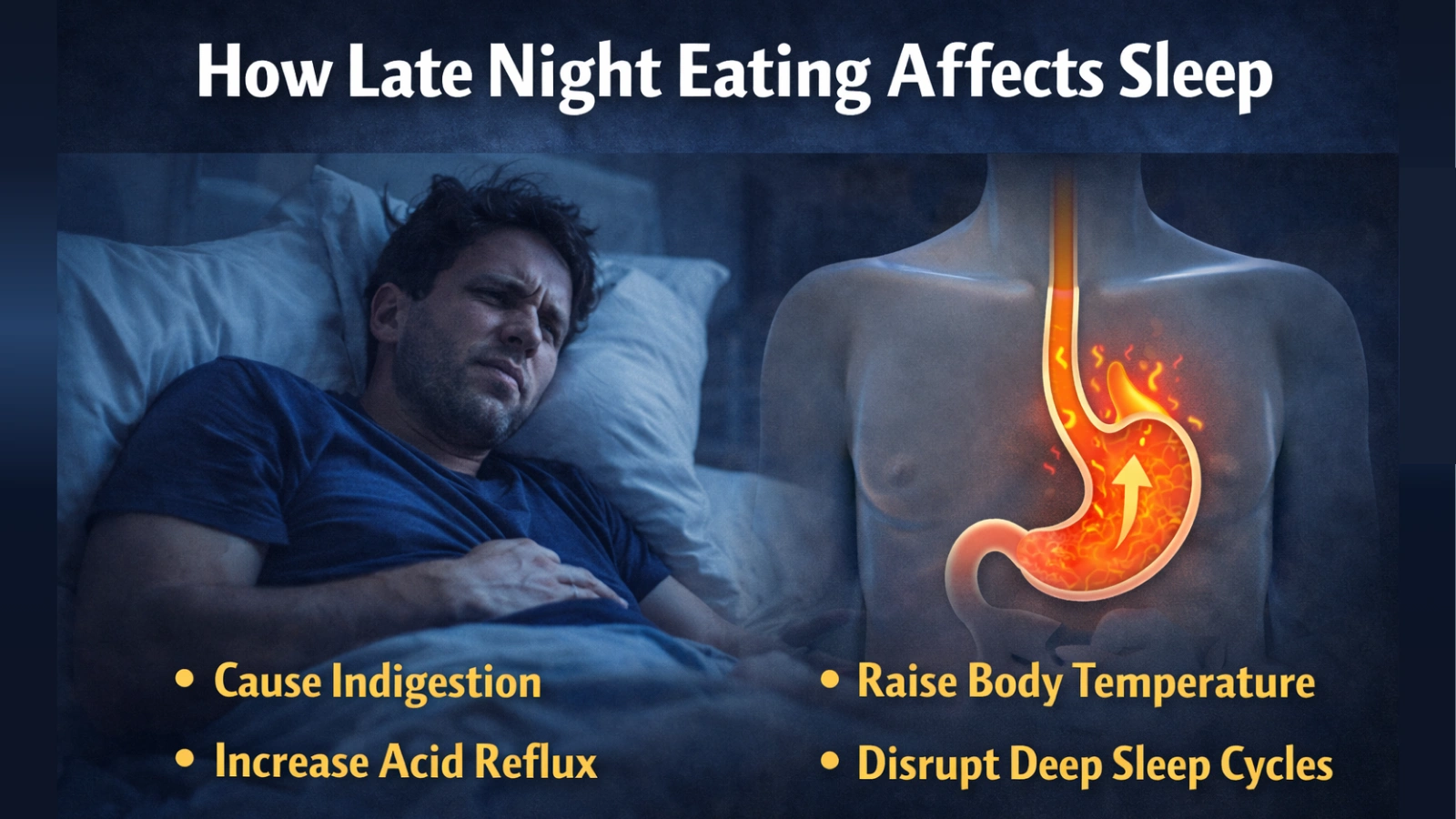
Heavy bedtime snacking habits can:
- Cause indigestion
- Increase acid reflux
- Raise body temperature
- Disrupt deep sleep cycles
Poor sleep then increases hunger the next day. This creates a cycle that reinforces more late night cravings.
Improving sleep hygiene often reduces the urge for unnecessary nighttime snacking.
When Late Night Eating Is Not a Problem
It is important not to defame food timing.
For some people, bedtime snacking habits can be practical and harmless. Examples include:
- Shift workers
- Athletes with high calorie needs
- People who train in the evening
- Individuals who prefer smaller meals during the day
Eating late does not gain weight automatically if total calories are balanced and food choices are mindful. The key is awareness.
Smart Strategies to Manage Late Night Eating
If you struggle with late night cravings, here are practical solutions:
1. Eat Balanced Meals During the Day
Include protein, fiber, and healthy fats. This helps in stabilizing blood sugar and reducing nighttime hunger.
2. Plan Your Late Snack
If you know you enjoy eating before bed, plan a controlled portion. Greek yogurt, cottage cheese, or fruit are good options.
3. Create a Kitchen “Closing Time”
Set a realistic boundary, like 9:30 p.m., and brush your teeth afterward. This signals the end of eating.
4. Manage Stress Differently
Try journaling, stretching, or a short walk instead of turning to eating before bed.
5. Track What You Eat
Awareness changes behavior. Many people underestimate their nighttime calories.
This is where tools like Calorie Tracker Buddy can quietly make a big difference.
How Calorie Tracker Buddy Helps Without Restriction

Controlling late night eating is not about implementing drastic measures or setting very strict food cut off times. It is more about being aware, having a plan, and being flexible. And that’s precisely what Calorie Tracker Buddy aims to deliver.
Instead of guessing whether nighttime snacking are affecting your progress, the app gives you clear, real-time insight into your daily intake and patterns.
Key Features of Calorie Tracker Buddy
- Real-Time Calorie Tracking
Log meals quickly and instantly see how they fit into your daily calorie target. Whether it is breakfast, dinner, or late night eats, everything counts transparently. - Daily Calorie Overview Dashboard
A clean dashboard shows how much you have consumed and how much remains for the day. This helps you decide whether a nighttime snack fits your plan without guilt or confusion. - Meal Pattern Insights
Track your eating habits over time and identify trends:
- Are you skipping lunch?
- Do stress-heavy days lead to late night cravings?
- Are weekends higher in calories?
Instead of guessing, you see the data clearly.
- Portion Awareness Tools
Understand serving sizes and calorie density so that common late night eats do not quietly push you into a surplus. - Progress Tracking
Monitor trends over weeks and months to see how small habits impact long-term results. Consistency becomes measurable.
Calorie Tracker Buddy is not about punishment. It is about clarity. When you consistently track, nighttime snacking becomes a conscious decision instead of an automatic habit.
That awareness creates balance. And balance creates sustainable change.
The Psychological Trap of “Food Cut-Off Times”
Being way too strict and having rigid rules may backfire.
Labeling late night eating as forbidden may intensify the cravings. Restriction might increase desire.
A more effective mindset is moderation. You can balance the If you truly feel hungry at night, honor that hunger with a balanced choice.
Ask yourself:
- Am I physically hungry?
- Or am I bored, stressed, or tired?
This small pause can interrupt automatic nighttime snacking habits.
What Research Suggests About Timing
A few of the research suggests that consuming a large amount of calories very late at night may slightly increase fat storage. Though, these effects are modest compared to total calorie balance.
Some studies indicate that eating a large amount of calories late at night can slightly increase fat storage. The problem is that these changes are small when compared to the overall calorie intake.
In practical terms, the main reason that nighttime snacking leads to weight gain is the foods chosen for this time are usually more calorie dense. Also there is an emotional component involved, rather than a metabolic shutdown of some sort.
That distinction matters.
So, Does Eating Late at Night Actually Cause Weight Gain?
The honest answer: not directly but it does.
Weight gain comes from consistently eating more than you burn. However, late night eating often makes that surplus easier to reach.
If your nighttime snacks push you beyond your daily needs, weight gain can happen. If they fit within your calorie balance, they likely will not.
A Practical Perspective
Instead of asking, “is it bad to eat late at night?” try asking:
- Does this fit my daily intake?
- Is this driven by hunger or habit?
- How do I feel the next morning?
When you approach late night eating with awareness rather than fear, you regain control.
Calorie Tracker Buddy can support that awareness without turning food into the enemy. Small insights lead to sustainable results.
Read More!
Best Low Calorie Late Night Snacks Under 200 Calories – Calorie Tracker Buddy
How To Get Rid Of Overnight Weight Gain? – Calorie Tracker Buddy
Final Thoughts
Late night eating is not automatically the villain of your weight loss journey. The real driver of weight gain is consistent overconsumption.
However, nighttime habits can quietly increase calorie intake through emotional eating, larger portions, and mindless snacking.
If you struggle with late night cravings, focus on:
- Balanced daytime meals
- Better sleep
- Stress management
- Intentional tracking
You do not need to eliminate late night eats completely. You just need to understand them.
When you combine self-awareness with smart tracking tools like Calorie Tracker Buddy, you create flexibility instead of frustration.
And that is what long-term success really looks like.
FAQs
1. Does eating protein at night help with muscle recovery?
Yes. Consuming protein before bed may support overnight muscle repair, especially if you exercise in the evening.
2. Can drinking water reduce late night cravings?
Sometimes. Thirst can be mistaken for hunger, so drinking water first may help reduce unnecessary snacking.
3. Are certain foods worse for digestion at night?
Spicy, fatty, and highly acidic foods may increase reflux and discomfort before sleep.
4. How long before bed should I stop eating?
For most people, finishing meals one to two hours before sleep improves comfort and digestion.
5. Can irregular meal timing affect metabolism long term?
Inconsistent eating patterns may disrupt hunger hormones and circadian rhythms, which can indirectly influence weight management.