



Every carefully planned food routine hits a wall the moment a social dinner invitation arrives. You know your kitchen & know your portions. You know exactly what goes into every meal you prepare. But a friend’s house operates by entirely different rules: unfamiliar recipes, generous servings, and the social pressure to eat what lands on your plate without question.
The desire to count calories at a friend’s house is not obsessive. It is practical. Anyone who works toward a fat loss or maintenance goal knows that one untracked evening can easily add 800 to 1,200 calories beyond their daily target without a single moment of carelessness. The challenge is not willpower, it is information. You cannot measure, weigh, or fully control what someone else cooks.
This guide gives you a clear, workable approach to count calories at social meals without awkwardness, restriction, or anxiety. The tools and strategies here work whether your friend cooks a simple pasta or a full three-course spread.
In a hurry? Listen to the blog instead!
The Real Challenge Behind Counting Calories At Social Meals
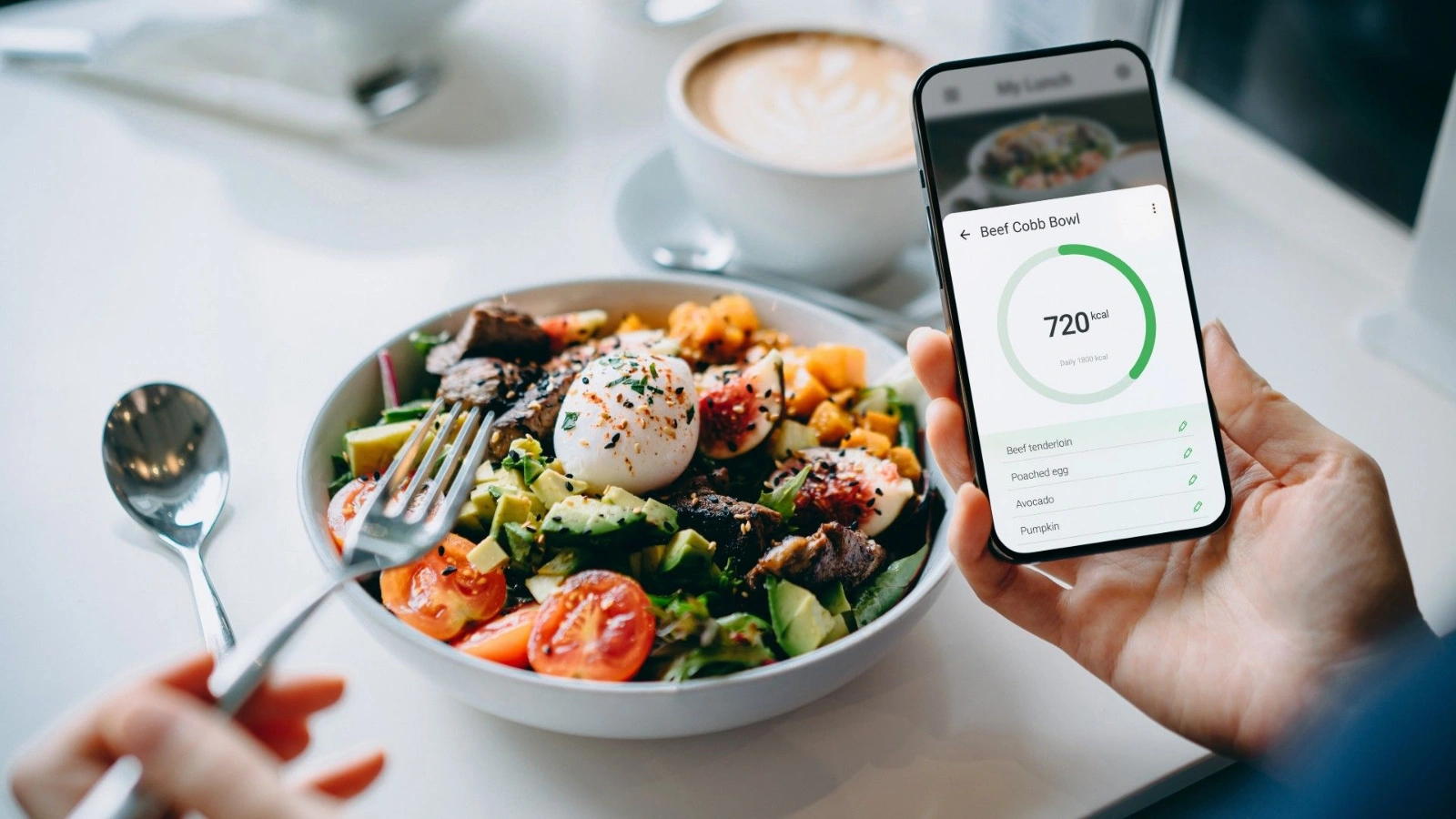
The difficulty at social dinners goes beyond not having a food scale. Several layers of complexity stack on top of each other simultaneously.
First, the recipes are unknown. A homemade lasagna from one kitchen carries entirely different calorie levels than the same dish from another — butter quantity, meat fat percentage, cheese volume, and sauce richness all shift the number dramatically. There is no label to read and no standard serving to reference.
Second, portion control becomes socially complicated. Hosts express care through food. Accepting a second helping feels polite. Leaving food on your plate can feel rude. These social dynamics push people toward eating more than they planned, even when they set firm intentions before arrival.
Third, the environment itself encourages mindless eating. Conversation, laughter, and relaxed surroundings lower the awareness that keeps portion sizes in check at home. People count calories successfully in controlled environments and completely lose track the moment the setting turns social.
Recognizing these layers does not solve them immediately — but it does make the right strategies far easier to apply.
How To Estimate Calories When You Cannot Measure Anything?
The most valuable skill for anyone who wants to count calories at social meals is visual estimation. This skill takes practice, but it produces reliable results once it becomes second nature.
Use your hand as a reference guide. A palm-sized portion of protein chicken, fish, or meat represents roughly 120 to 150 calories depending on preparation. A fist-sized portion of starchy food like rice, pasta, or potatoes carries approximately 150 to 200 calories. A thumb-sized amount of fat butter, oil, or dressing contributes around 100 to 120 calories.
Scan the dish before you serve yourself. Identify the main components — the protein, the carbohydrate, the fat source, the vegetables — and estimate each separately. Add those estimates together for a reasonable total. This approach will not produce a perfect number, but it will produce a number far closer to reality than logging nothing at all.
Build a mental library of common dishes. Knowing that a standard slice of homemade pizza carries roughly 250 to 350 calories, or that a generous bowl of creamy pasta sits around 500 to 700 calories, gives you a framework that applies across dozens of social eating situations.
Smart Portion Strategies That Work At Any Dinner Table
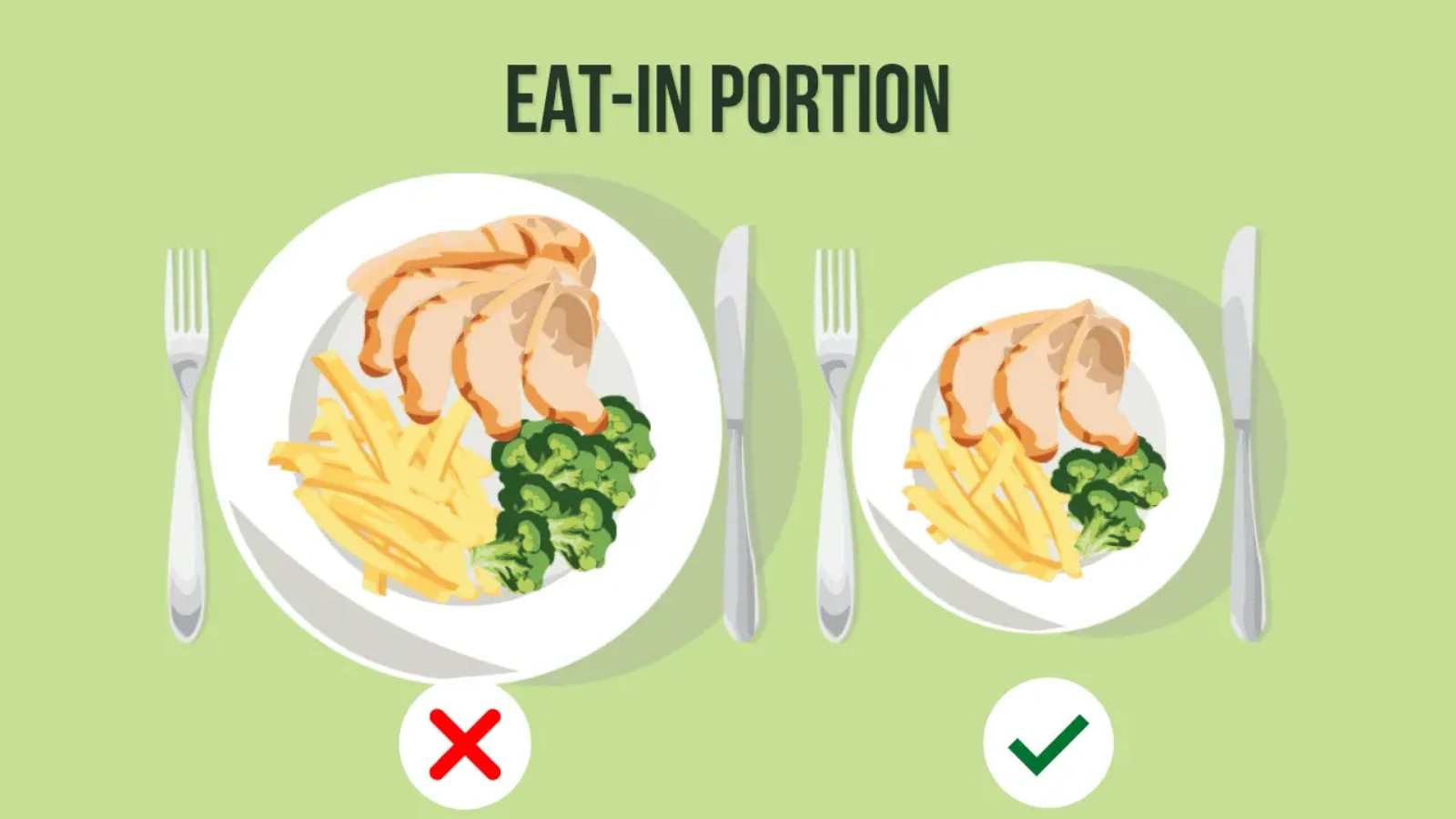
You do not need to announce your goals to count calories at a friend’s house. These simple strategies keep your plate in check without changing the social dynamic.
- Serve yourself first — Self-served portions run smaller and more controlled than host-served ones.
- Fill half your plate with vegetables — Less space for high-calorie items without any obvious refusal.
- Put your fork down between bites — Slowing your pace helps you count calories consumed before reaching for more.
- Use conversation to pace yourself — A thirty-minute meal leaves far less room for overconsumption than one finished in ten.
- Pause before accepting seconds — A simple “I am still working through this” satisfies the host without an extra serving.
- Estimate each component separately — The easiest way to count calories on an unfamiliar plate is to break it into protein, carbs, and fat and log each part.
- Never arrive hungry — Hunger overrides every strategy. Eat a light snack beforehand so you count calories from a calm, controlled state rather than a starving one.
How To Read A Plate Like A Calorie And Weight Loss Calculator?
A calorie and weight loss calculator works by breaking a meal into its parts and assigning a value to each. You can apply the same logic to a plate of food at a social dinner with nothing more than your eyes and your existing knowledge of food composition.
Look at the plate and divide it mentally into sections. Identify what percentage of the plate each component occupies. A plate that is roughly half pasta, one quarter meat, and one quarter salad with a visible oil dressing gives you a clear breakdown to estimate from.
Cross-reference each component against your mental calorie library. A half-plate of pasta in a cream sauce at a standard dinner plate size represents roughly 350 to 450 calories. A quarter-plate of grilled chicken adds around 150 calories. A quarter-plate of dressed salad contributes 80 to 150 calories, depending on dressing volume.
This mental process functions as a portable calorie and weight loss calculator that requires no phone, no app, and no awkward moments at the table. It takes thirty seconds and produces a usable estimate that keeps you informed without disrupting the evening.
That said, mental math has its limits, especially across a full multi-course meal. That is exactly where Calorie Tracker Buddy steps in. Simply snap a photo of your plate, and the app breaks down calories, nutrients, and balance in seconds,s giving you the precision of a calorie and weight loss calculator without the mental effort. Your estimate becomes a confirmed number, your log stays complete, and your goals stay on track, all before the next course arrives.
Also Read:
Calorie Tracker Buddy: Best Calorie Counting Apps To Track Your Nutrition
Weight Loss Supplements: Are They Worth Adding to Your Routine?
How Calorie Tracker Buddy Helps You Count Calories Away From Home?
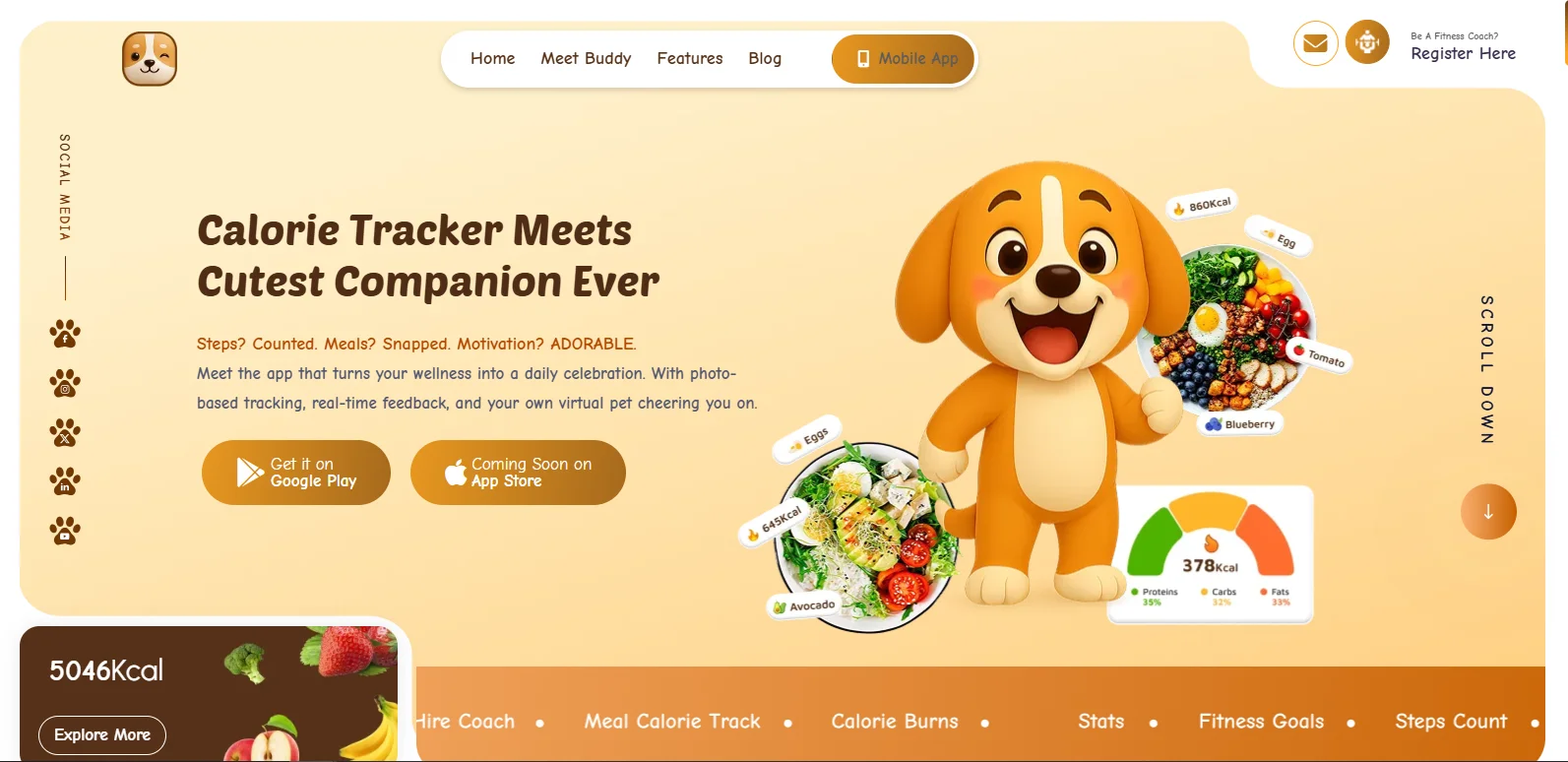
Social eating presents a unique tracking challenge, and Calorie Tracker Buddy meets it directly with features built for real-world situations not just controlled kitchen environments.
- Snap the Meal: Point your camera at the plate, tap once, and the app scans the food for calories, nutrients, and balance instantly. No descriptions to type, no ingredients to search just a photo and a result. At a friend’s dinner table, this feature works quietly and quickly without drawing attention.
- Calorie Intake Tracker: Log what lands on your plate and receive instant feedback on how it fits your daily goals. Calorie Tracker Buddy calculates in real time, so you always know where you stand before deciding whether to accept a second serving.
- Goal Predictions: The app shows how each meal, snack, and sip affects your progress trajectory. When you count calories at a social dinner and log an estimate, you see immediately whether the evening pushes you over your target or keeps you comfortably within range.
- Online Calorie Calculator Built In: Search thousands of foods, build custom meals, and estimate dishes from their ingredients all within the app. This built-in function replaces the need for a separate online calorie calculator and keeps every estimate in one place, tied to your personal goal data.
- Buddy Motivation: Your virtual buddy grows with every consistent choice. Even on social eating nights, logging an honest estimate rather than skipping the entry entirely earns progress. The buddy keeps the habit alive through positive reinforcement rather than guilt.
Calorie Tracker Buddy works as a free calorie counter app that fits seamlessly into social situations fast enough to use at the table, smart enough to handle the complexity of home-cooked meals, and supportive enough to keep you consistent even when the environment is entirely outside your control.
How A Free Calorie Counter App Saves You At Social Dinners?
A free calorie counter app removes every practical barrier to logging food away from home. No subscription fee means no reason to skip using it. No complicated interface means you can log an estimate in under a minute without excusing yourself from the table.
The real value of a free calorie counter app at social dinners lies in the habit it maintains. People who track consistently, even with imperfect estimates, achieve better results than those who track perfectly only in controlled settings and abandon the habit the moment the environment changes. An honest 80 percent accurate log beats a zero entry every single time.
Use the app before the meal to build your estimate, during the meal to snap a photo of your plate, and after the meal to confirm your total and check your remaining daily budget. This three-step process takes less than three minutes across the entire evening and keeps your data continuous rather than full of gaps that make the numbers unreliable.
Common Mistakes People Make When Tracking Social Eating
Social dinners are where even the most consistent trackers lose their streak. A relaxed environment, unfamiliar food, and social pressure create the perfect conditions for logging errors that quietly add up. Here are the most common mistakes to watch out for.
- Skipping the log entirely.
- Underestimating home-cooked food.
- Forgetting drinks.
- Letting one untracked meal become an untracked week.

Final Thoughts
The ability to count calories at a friend’s house is not about perfection. It is about staying informed enough to make better choices across the full week rather than treating every social event as an unavoidable setback.
Visual estimation, pre-meal planning with an online calorie calculator, smart portion habits, and a reliable calorie counter app cover every practical situation a social dinner can present. None of these tools requires announcing your goals, refusing hospitality, or sitting at the table with a food scale.
Enjoy the meal. Stay present in the conversation. Count calories with the tools you have, log your best estimate, and move forward. Consistency across weeks and months is what produces results, and consistency includes the evenings when the kitchen belongs to someone else.
FAQs
Q1: Can I realistically count calories at someone else’s house?
Yes. Visual estimation combined with a calorie counter app gives you a reliable enough figure to maintain your tracking habit. Perfect accuracy is not the goal; consistent awareness is.
Q2: How do I use an online calorie calculator for unknown recipes?
Search the main ingredients individually, use moderate portion estimates, and add the components together. This method produces a reasonable total even when the exact recipe remains unknown.
Q3: What is the easiest way to count calories at a social dinner without being obvious?
Use the meal snap feature in Calorie Tracker Buddy. One photo taken casually logs the meal instantly without requiring any visible interaction with your phone beyond a single tap.