


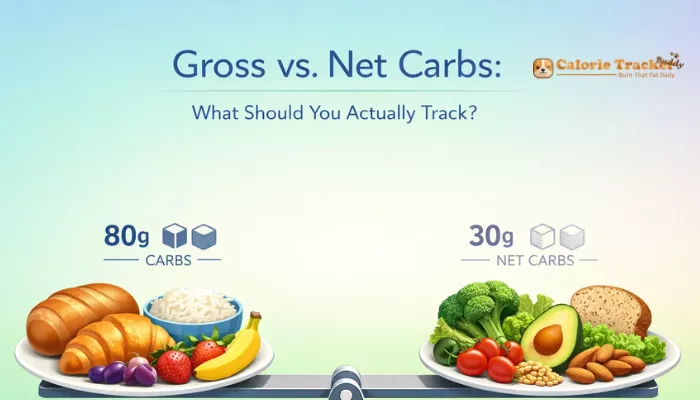
There’s a moment in every health journey when numbers start to feel confusing.
You check a food label, see total carbohydrates, then hear someone say “just track net carbs.” Suddenly, the rules seem unclear. Should you count everything, or only what “impacts” your body?
This confusion isn’t accidental. With the rise in popularity of low carb diets, the term “net carbs” became a household name; however, most people have no clear definition of what “net carbs” are and therefore end up misusing this term when tracking their carbohydrate intake.
People misinterpret and use “net carbs” because they don’t fully understand what the term means or the different types of carbs. The misunderstanding of “net carbs” is the reason why many people fail to track carbohydrates accurately or make food choices that align with their goals.
Listen To The Podcast Now!
What Is Net Carbs?
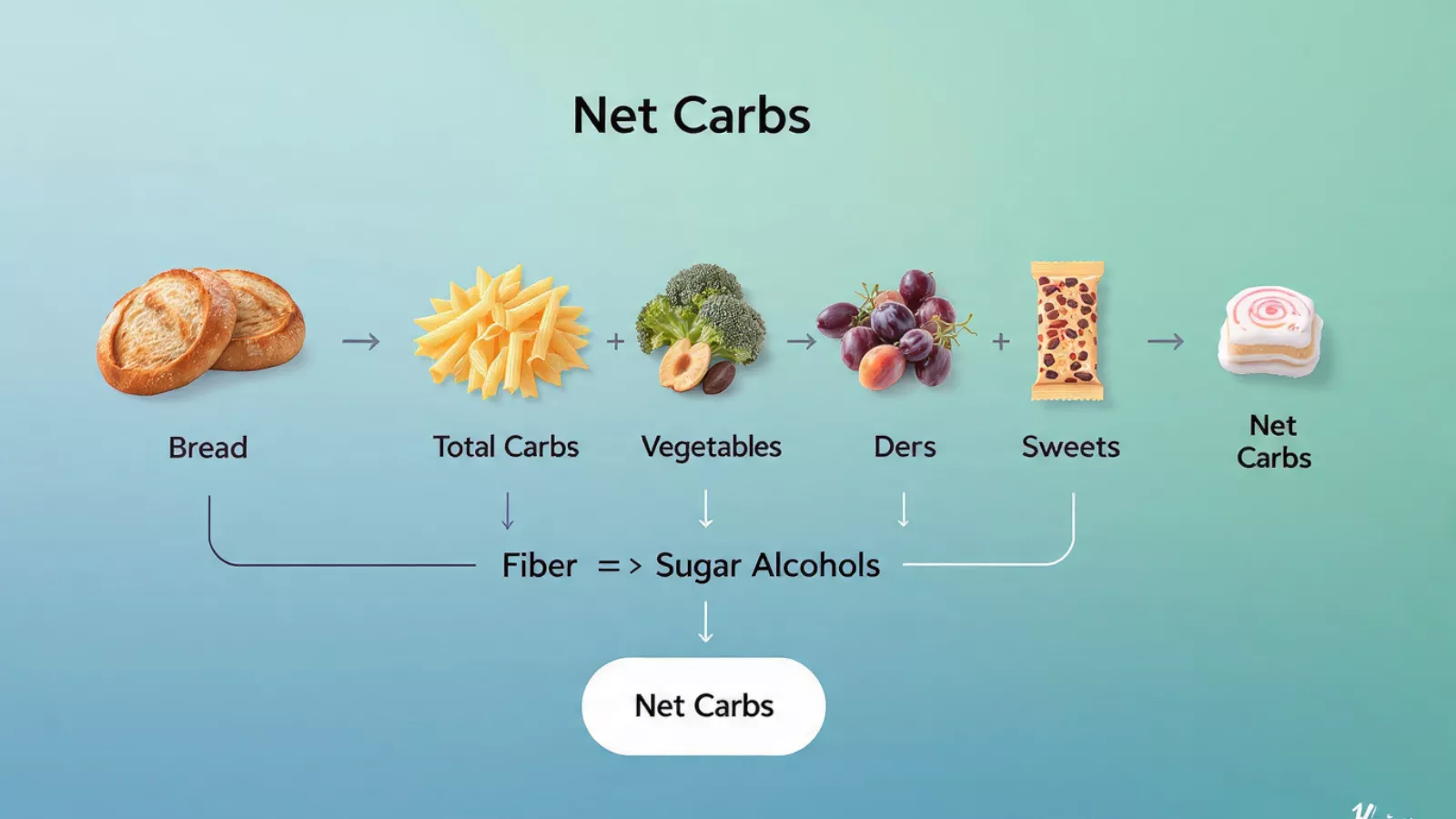 To understand this properly, you need to start with the basics of what is net carbs.
It refer to the carbohydrates that your body actually digests and converts into energy. These are the carbs that directly affect blood sugar levels.
The idea behind the net carbs meaning is simple:
Net Carbs = Total Carbohydrates – Fiber – Certain Sugar Alcohols
Not all carbs behave the same way inside your body. Some are quickly absorbed, while others pass through your system with minimal impact.
That difference is exactly why usable became a popular concept, especially in low-carb and ketogenic diets.
But here’s where things start to get interesting.
What Are Gross Carbs?
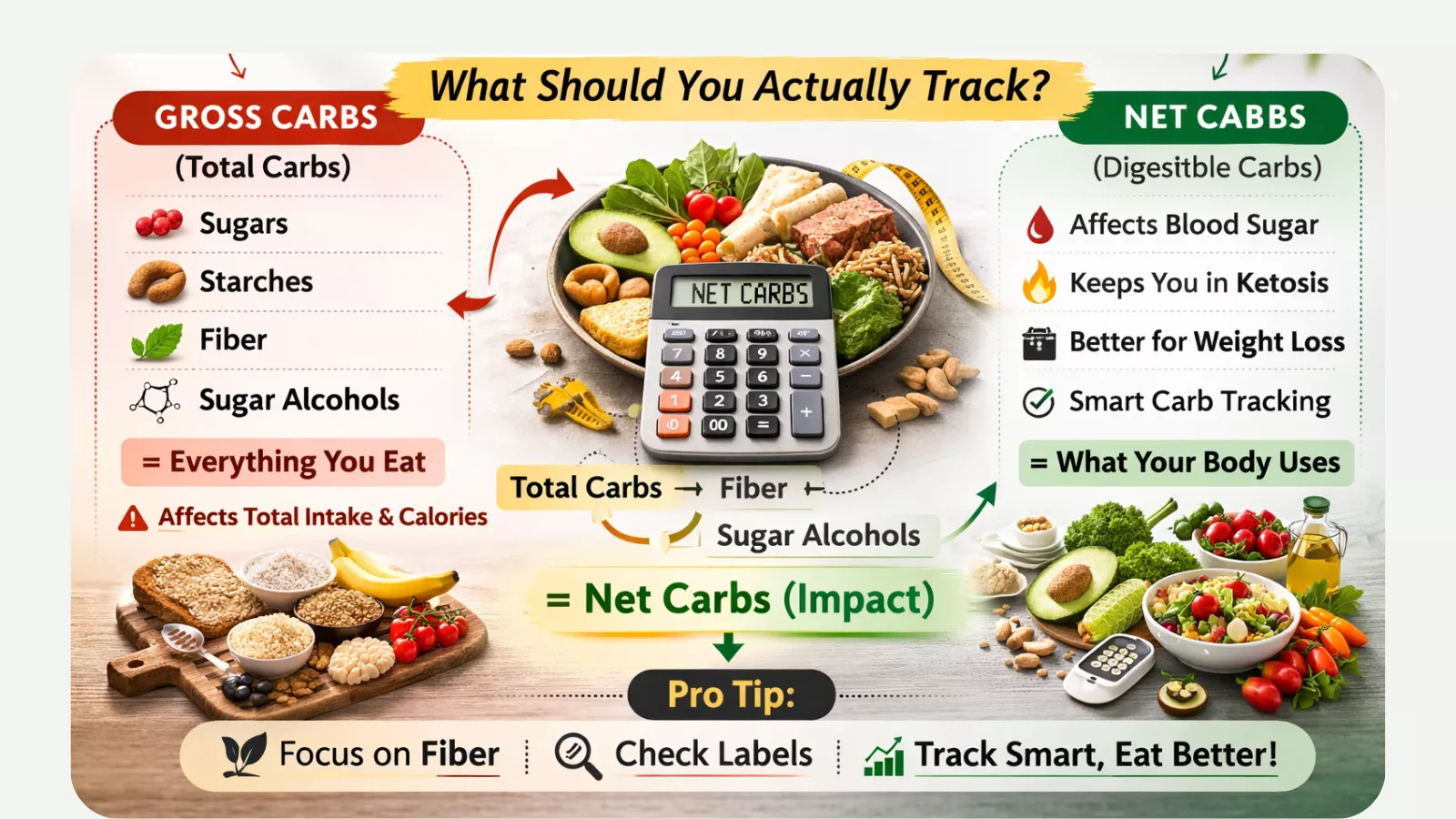
Gross carbs, also known as total carbs, include everything:
- Sugars
- Starches
- Fiber
- Sugar alcohols
This number is always listed on food labels and gives you the complete carbohydrate content of a product.
Unlike net carbs, gross carbs do not differentiate between what affects your blood sugar and what doesn’t.
At first glance, this seems less useful. But in reality, it provides a more transparent and consistent measure.
And that leads us to the real debate.
Gross vs Net Carbs: What’s the Real Difference?
The difference between Gross vs Net Carbs comes down to how your body processes them.
Gross carbs show the total intake. Net carbs attempt to show the “impact” carbs.
Here’s a simple way to understand it:
- Gross carbs = everything you eat
- Net carbs = what your body actively uses
Fiber plays a key role here. Since fiber isn’t fully digested, it doesn’t spike blood sugar the way sugars and starches do.
Similarly, some sugar alcohols have minimal impact, which is why they’re often subtracted.
However, this is not always as straightforward as it sounds.
Why Net Carbs Became Popular
Net carbs gained traction mainly because they offer flexibility.
Instead of cutting out entire food groups, people could subtract fiber and still stay within their carb limits. This made diets feel less restrictive.
It also aligned well with ketogenic diets, where maintaining low digestible carbs is essential.
But there’s another side to this.
Food manufacturers quickly adopted the term to market products as “low carb,” even when total carbohydrates were high.
And since “net carbs” is not strictly regulated, the calculation can vary between products.
That’s where many people get misled.
The Problem With Relying Only on Net Carbs
While tracking usable carbs can be helpful, relying on them blindly can create issues.
First, not all sugar alcohols behave the same way. Some can still raise blood sugar levels, even if they’re subtracted in calculations.
Second, focusing only on usable carbs can make you ignore calorie intake.
A snack might show low net carbs but still contain high calories. Over time, that can affect weight management.
There’s also the digestive factor. Consuming large amounts of sugar alcohols can lead to discomfort for some people.
So while usable carbs simplify things, they don’t always tell the full story.
High Fiber Carbohydrates and Net Carbs
This is where things start working in your favor.
High fiber carbohydrates net carbs are usually lower because fiber gets subtracted from the total.
Foods like:
- Vegetables
- Whole grains
- Seeds
- Legumes
These provide nutrients, improve digestion, and help maintain steady energy levels.
Instead of avoiding carbs entirely, focusing on high-fiber options allows you to eat smarter without feeling restricted.
This approach creates balance, which is often missing in extreme dieting.
Also Read
Keto Vs. Calorie Deficit: Do You Really Need To Cut Carbs?
Types Of Carbs: A Complete Beginner’s Guide
Should You Track Gross Carbs or Net Carbs?
The answer depends on your goal.
If you are following a strict ketogenic diet, tracking usable carbs makes sense because staying in ketosis requires controlling digestible carbs.
But if your goal is general weight management or better eating habits, tracking gross carbs along with calories gives a clearer picture.
A balanced approach often works best:
- Use net carbs to understand impact
- Use gross carbs to stay aware of total intake
- Always consider calories and food quality
Because no single number tells the whole story.
Calorie Tracker Buddy: How to Track Carbs Without Overthinking It
 Tracking doesn’t need to feel like a math problem.
This is where tools can simplify everything.
Instead of manually calculating every meal, you can rely on smarter systems that do the work for you.
Snap the Meal
Point your camera. Tap once. Boom. Your food is scanned for calories, nutrients, and balance instantly.
Calorie Intake Tracker
You eat, it calculates. Track what’s on your plate in seconds and understand how it fits your daily goals.
Calorie Burn Tracker
From workouts to daily chores, everything counts. See how your activities contribute to your progress.
Goal Predictions
Every meal matters. Get a clear view of how your choices impact your journey over time.
Buddy Motivation
Stay consistent with a virtual companion that grows as you make healthier choices.
Social Sharing
Celebrate progress. Share meals, streaks, and milestones with others who keep you motivated.
When tracking becomes simple, consistency becomes easier.
Common Mistakes People Make
Even with the right information, small mistakes can lead to confusion.
Many people:
- Ignore hidden sugars in processed foods
- Assume all sugar alcohols are harmless
- Focus only on usable carbs and forget calories
- Avoid all carbs instead of choosing better ones
These mistakes don’t just slow progress. They make the process harder than it needs to be.
Understanding how carbs actually work helps you avoid these traps.
What Actually Matters More Than Carbs
Carbs matter, but they’re not everything.
What truly affects your progress includes:
- Total calorie intake
- Food quality
- Consistency
- Activity levels
You can track net carbs perfectly and still struggle if the bigger picture is ignored.
That’s why focusing on habits instead of just numbers leads to better results over time.
Conclusion
The debate between gross and usable carbs isn’t about choosing one and ignoring the other.
It’s about understanding both.
It help you measure impact. Gross carbs help you stay aware of total intake.
When you combine both with mindful eating and consistent tracking, everything starts to fall into place.
Because in the end, it’s not about chasing perfect numbers.
It’s about building a system you can actually stick to.
FAQs: Gross vs Net Carbs
What is net carbs in simple terms?
Usable carbs are the carbohydrates your body actually digests and uses for energy. They are calculated by subtracting fiber and certain sugar alcohols from total carbohydrates.
What is the difference between net carbs and total carbs?
Total carbs include all carbohydrates in a food, such as sugars, starches, fiber, and sugar alcohols. It only include the carbs that impact blood sugar, making them more relevant for low-carb diets.
Should I track usable carbs or gross carbs for weight loss?
For weight loss, tracking both calories and total carbs is often more effective. Usable carbs can help, but relying only on them may lead to overlooking calorie intake.