

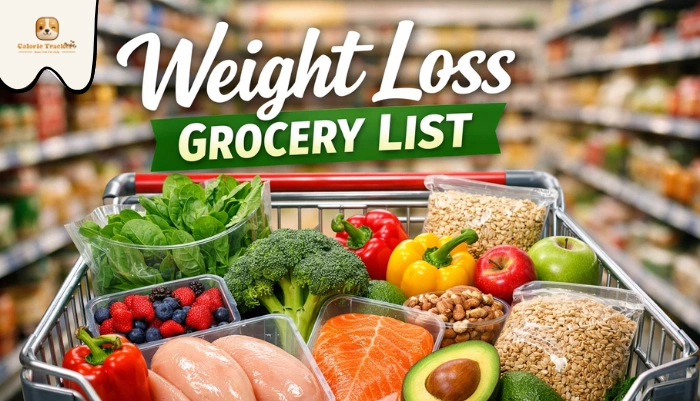
Eating healthy does not start in the kitchen. It starts in the supermarket aisle.
What you put in your cart decides what ends up on your plate. And what’s on your plate decides how you feel every single day. Tired or energetic. Bloated or light. Confident or frustrated.
That’s why having a clear grocery shopping list matters so much.
Many people think weight loss means giving up rice, roti, or everything they love. Not true. Real progress comes from smart swaps. Better portions. Balanced meals. A practical weightloss grocery list helps you choose foods that keep you full, reduce cravings, and support your goals without feeling deprived.
When you walk into the store with a planned grocery shopping list, you avoid impulse buys. No random snacks. No “buy one get one” temptations. Just simple, wholesome foods that work for your body.
For Indian families, weight loss is not about eating fancy imported items. It’s about choosing the right dals, vegetables, fruits, grains, and proteins. Everyday foods. Smarter choices.
This ultimate guide will help you build a kitchen that supports your goals. Simple. Affordable. Sustainable.
Because weight loss is not about perfection. It’s about consistency.
Listen To The Podcast Now!
Why a Grocery Shopping List Changes Everything?

Most people eat unhealthily, not because they want to, but because they do not have the right food at home. When you are hungry at 8 PM, and there is nothing healthy in the fridge, you will order whatever is fastest. That is not a willpower problem. That is a planning problem.
A good grocery shopping list removes the guesswork from eating well. It saves you time, reduces food waste, saves money, and — most importantly — keeps you aligned with your weight loss goals all week long.
Here is what a structured weightloss shopping list does for you:
- Stops impulse buying of chips, biscuits, and sweets
- Ensures your fridge and pantry are always stocked with nutritious options
- Makes meal prep faster and less stressful
- Helps you stick to a calorie goal without feeling restricted
Building a basic grocery shopping list is a skill. And once you learn it, healthy eating becomes the easy choice — not the hard one.
3 Tips Before You Start Shopping
Before we get into the actual weight-loss grocery list, here are three habits that make a big difference. These are simple steps that take less than 15 minutes — and they will completely change how you shop.
- Plan Your Meals for the Week
Sit down on Sunday and decide what you will eat for breakfast, lunch, and dinner through the week. You do not need to be rigid about it. Even a rough plan helps. Once you know your meals, building a grocery shopping list becomes straightforward. You buy what you need and nothing extra.
- Check Your Kitchen First
Before heading out, open your fridge and pantry. Check what is already there. This prevents buying a second packet of chana when you already have one sitting at the back of the shelf. It also helps you avoid wasting food, which means you save money too.
- Never Shop on an Empty Stomach
This one is tried and tested. If you go grocery shopping when you are hungry, you will come back with things that were never on your list. Have a small healthy snack before you leave. A handful of roasted chana or a banana is enough to keep you focused and on track.
The Complete Weight Loss Grocery List
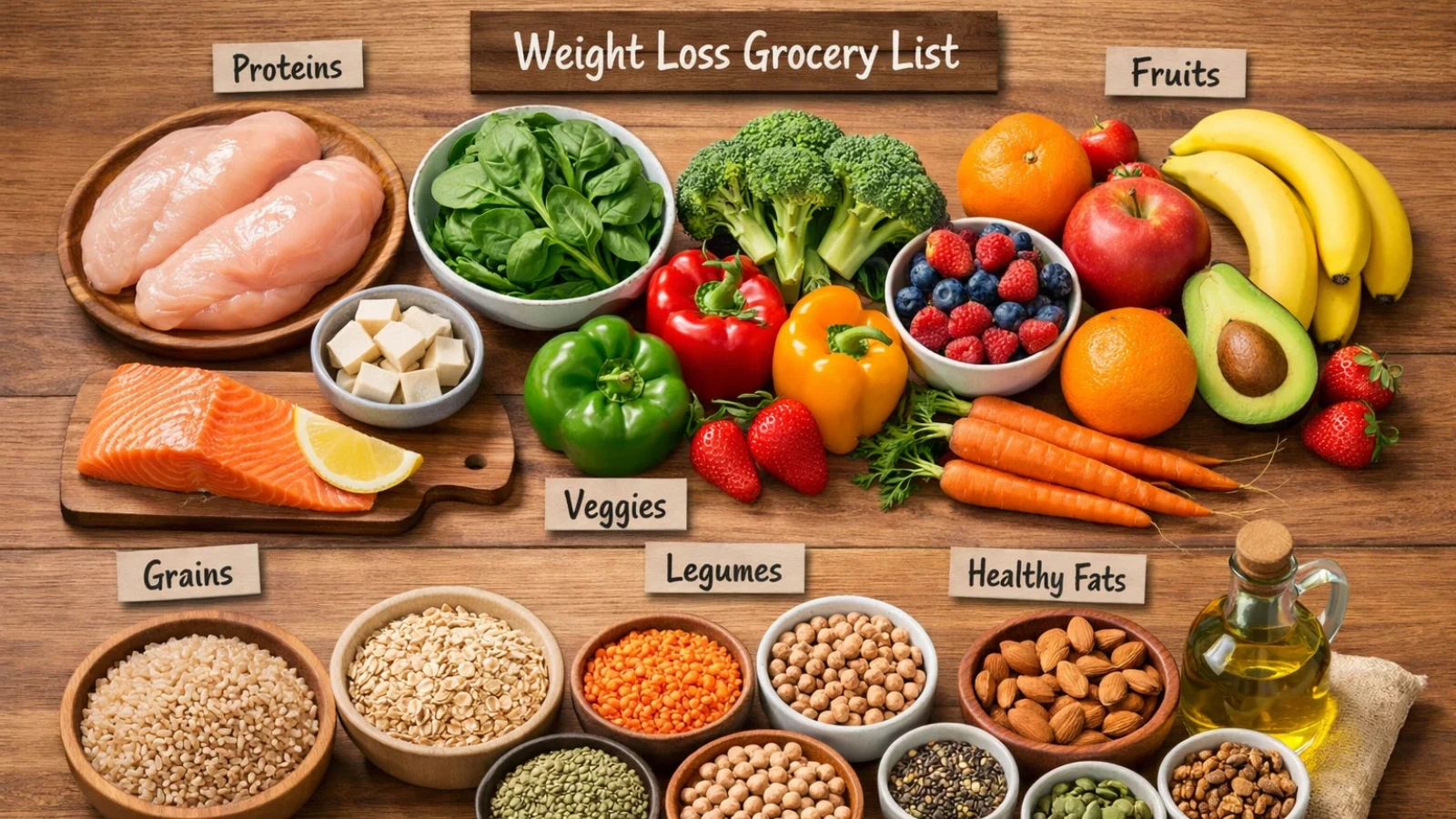
Now let us get into the heart of this guide. A strong grocery shopping list is built around five key food groups: lean protein, vegetables, fruits, healthy fats, and complex carbohydrates. Everything here is easy to find in Indian markets and budget-friendly.
1. Lean Protein — The Foundation of Every Meal
Protein is the most important nutrient when you are trying to lose weight. It keeps you full for longer, reduces cravings, helps you maintain muscle while you lose fat, and supports your metabolism. Every weightloss shopping list should have protein at the top.
Aim for at least 80 to 100 grams of protein per day. Here is what to add to your grocery shopping list:
- Eggs — affordable, versatile, and packed with protein
- Skinless chicken breast or lean chicken pieces
- Fish — rohu, surmai, pomfret, or canned tuna
- Paneer (low-fat) — a staple Indian protein source
- Dal — moong, masoor, chana, arhar — all excellent plant proteins
- Rajma and chole — great for sabzi and rice bowls
- Tofu — a good option for vegetarians wanting variety
- Low-fat curd (dahi) — helps digestion and adds protein
- Whey or plant-based protein powder — for shakes and smoothies
💡 Pro Tip: Moong dal is one of the best weight loss foods in India. It is high in protein, easy to digest, and low in calories. Add it to your list every week without fail.
2. Vegetables — Fill Half Your Plate, Every Plate
Vegetables are the backbone of any healthy diet. They are low in calories, high in fibre, rich in vitamins, and incredibly filling. When your grocery shopping list is full of vegetables, you will find it much easier to stay in a calorie deficit without feeling hungry.
India has one of the most diverse ranges of vegetables in the world. Use that advantage. Here are the best vegetables for your weightloss shopping list:
- Palak (spinach) — iron, folate, and very low calories
- Methi (fenugreek leaves) — excellent for blood sugar control
- Broccoli and cauliflower — high fibre and incredibly filling
- Bhindi (okra) — great for gut health and digestion
- Karela (bitter gourd) — known to support blood sugar regulation
- Tinda, turai, lauki (bottle gourd) — light and weight-loss friendly
- Bell peppers (shimla mirch) — low calorie and high in Vitamin C
- Cabbage and kale — fibre-rich and budget-friendly
- Gajar (carrots) and beetroot — natural sweetness with great nutrients
- Sweet potato (shakarkandi) — a healthy complex carb
- Onion and garlic — essential flavour bases with gut health benefits
- Tomatoes — antioxidant-rich and add flavour without calories
💡 Pro Tip: Roast your vegetables with a little mustard oil, turmeric, and jeera for a delicious, oil-light side dish that takes under 20 minutes.
3. Fruits — Natural Sweetness That Supports Your Goals
Fruits give you natural sugar, fibre, hydration, and important micronutrients. They satisfy sweet cravings without the damage of processed snacks. The key is to choose whole fruits instead of packaged juices — juices remove the fibre and spike your blood sugar much faster.
Add these to your grocery shopping list every week:
- Guava (amrood) — one of the highest-fibre fruits available in India
- Papaya — aids digestion and is extremely low in calories
- Jamun — great for blood sugar and loaded with antioxidants
- Berries — blueberries, strawberries — available in metro cities and great for weight loss
- Apples and pears — filling, fibrous, and naturally sweet
- Oranges and mosambi — rich in Vitamin C and hydrating
- Bananas — ideal before a workout for quick energy
- Watermelon and muskmelon — incredibly hydrating with low calories
💡 Pro Tip: Keep a bowl of washed fruit on your kitchen counter or at the front of your fridge. Visible, easy-to-grab fruit gets eaten. Hidden fruit gets forgotten.
4. Healthy Fats — Do Not Fear the Fat
Fat has a bad reputation, but not all fats are created equal. Healthy fats are essential for brain function, hormone production, and absorbing fat-soluble vitamins like A, D, E, and K. They also make your meals more satisfying so you are less likely to overeat.
Healthy fats are calorie-dense, so a little goes a long way. Add these to your weight-loss shopping list:
- Cold-pressed mustard oil or groundnut oil — ideal for Indian cooking
- Extra virgin olive oil — for salads and light cooking
- Almonds, walnuts, and pistachios — unsalted, a small handful as a daily snack
- Peanuts and peanut butter (natural, no added sugar)
- Chia seeds and flaxseeds (alsi) — add to smoothies, curd, or roti dough
- Pumpkin seeds and sunflower seeds — great for snacking
- Coconut — use in moderation, especially in South Indian cooking
- Dark chocolate (70% cocoa or higher) — a small piece satisfies sweet cravings
💡 Pro Tip: Swap your regular namkeen snack with a small mix of nuts and seeds. You will feel fuller, eat less overall, and give your body genuinely useful nutrition.
5. Complex Carbohydrates — Energy the Right Way
Carbohydrates have been unfairly demonised. The truth is that the right carbs are essential — they fuel your brain, support your workouts, and keep your digestion healthy. The trick is to choose complex carbohydrates over refined ones.
Complex carbs digest slowly, release energy gradually, and keep you full much longer than white rice or maida. Here is what belongs on your grocery shopping list:
- Brown rice — swap white rice a few times a week
- Whole wheat atta — for chapatis and parathas
- Oats (steel-cut or rolled) — ideal for breakfast
- Quinoa — complete protein and complex carb in one
- Jowar, bajra, and ragi — traditional Indian millets that are nutritional powerhouses
- Whole grain sooji (semolina) — for upma and dhokla
- Lentils and legumes — already listed under protein, but they are excellent carbs too
- Poha (flattened rice) — light, easy to prepare, and a great breakfast
💡 Pro Tip: You do not have to give up rice or roti. Just reduce portions slightly and increase the vegetables on your plate. The balance is what matters, not elimination.
📱 Track Smart with Calorie Tracker Buddy
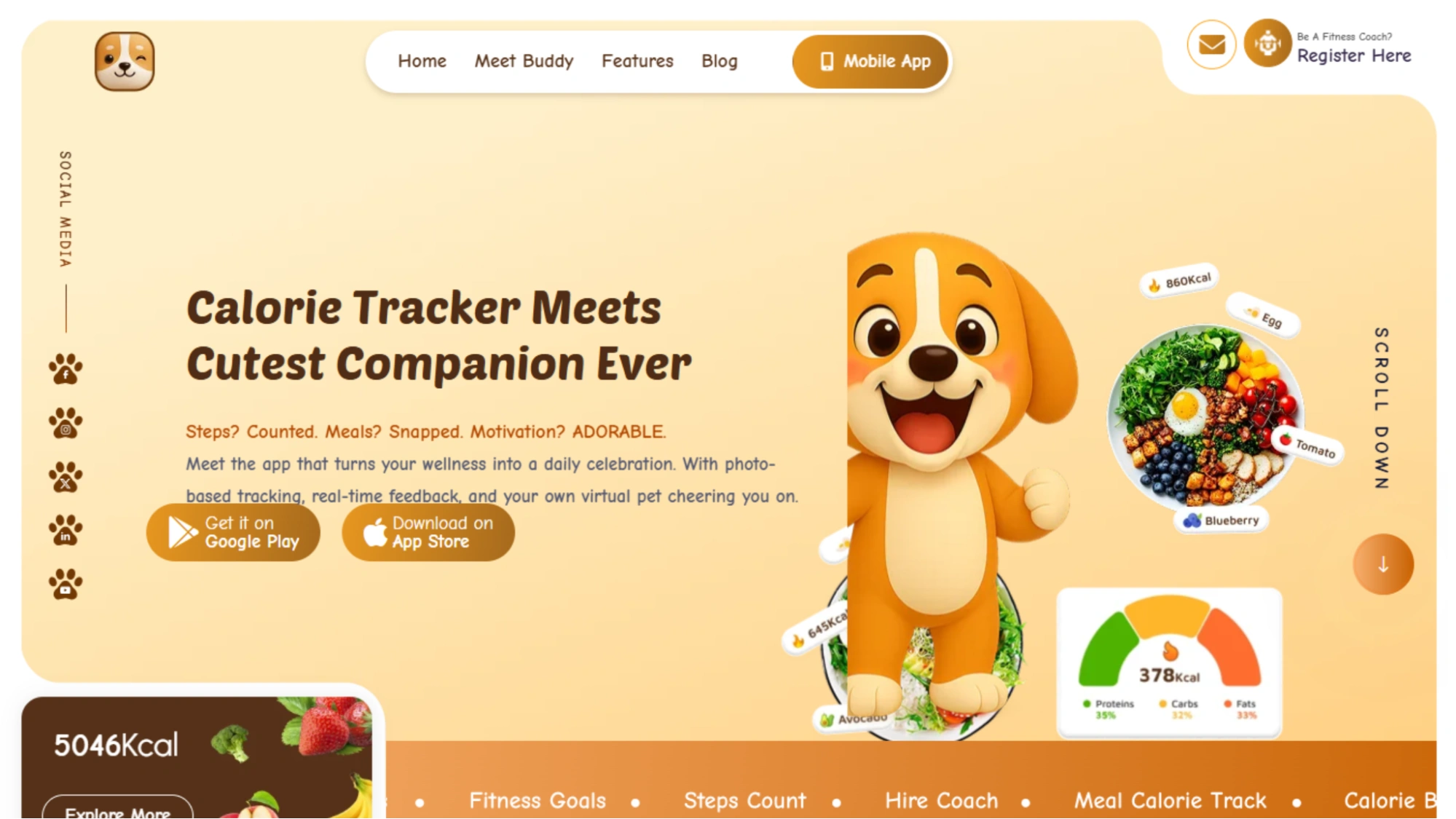
Managing portions and grocery choices gets even easier with Calorie Tracker Buddy. Simply snap a photo of any grocery item, and the app will instantly tell you if it fits your weight loss goals or if you should rethink it.
From checking complex carbs like brown rice and oats to proteins and healthy fats, this tool helps you shop smarter, avoid impulse buys, and stay on track effortlessly. No more second-guessing or guessing portion sizes — just quick, precise guidance to keep your weight loss journey smooth.
Tip: Combine your grocery shopping list with Calorie Tracker Buddy for a foolproof system: plan, shop, and track in minutes. Your cart will be packed with exactly what your body needs, every time.
Read More:
Dairy and Healthy Alternatives
Dairy is a fantastic source of calcium, protein, and gut-friendly probiotics. Indian cooking is full of wonderful dairy options. Here is how to make smart choices on your weight-loss shopping list:
- Low-fat dahi (curd) — have with every meal for digestion and protein
- Chaas (buttermilk) — hydrating, cooling, and excellent for gut health
- Low-fat paneer — protein-rich and very versatile
- Skim milk or toned milk — lower in fat but still nutritious
- Unsweetened plant-based milk (almond or oat milk) — for smoothies and tea
Avoid full-fat flavoured yogurts and sweetened lassi — they can contain as much sugar as a dessert. Stick to plain, unsweetened options and add your own fruit if you want sweetness.
Smart Pantry Staples for Your Basic Grocery Shopping List
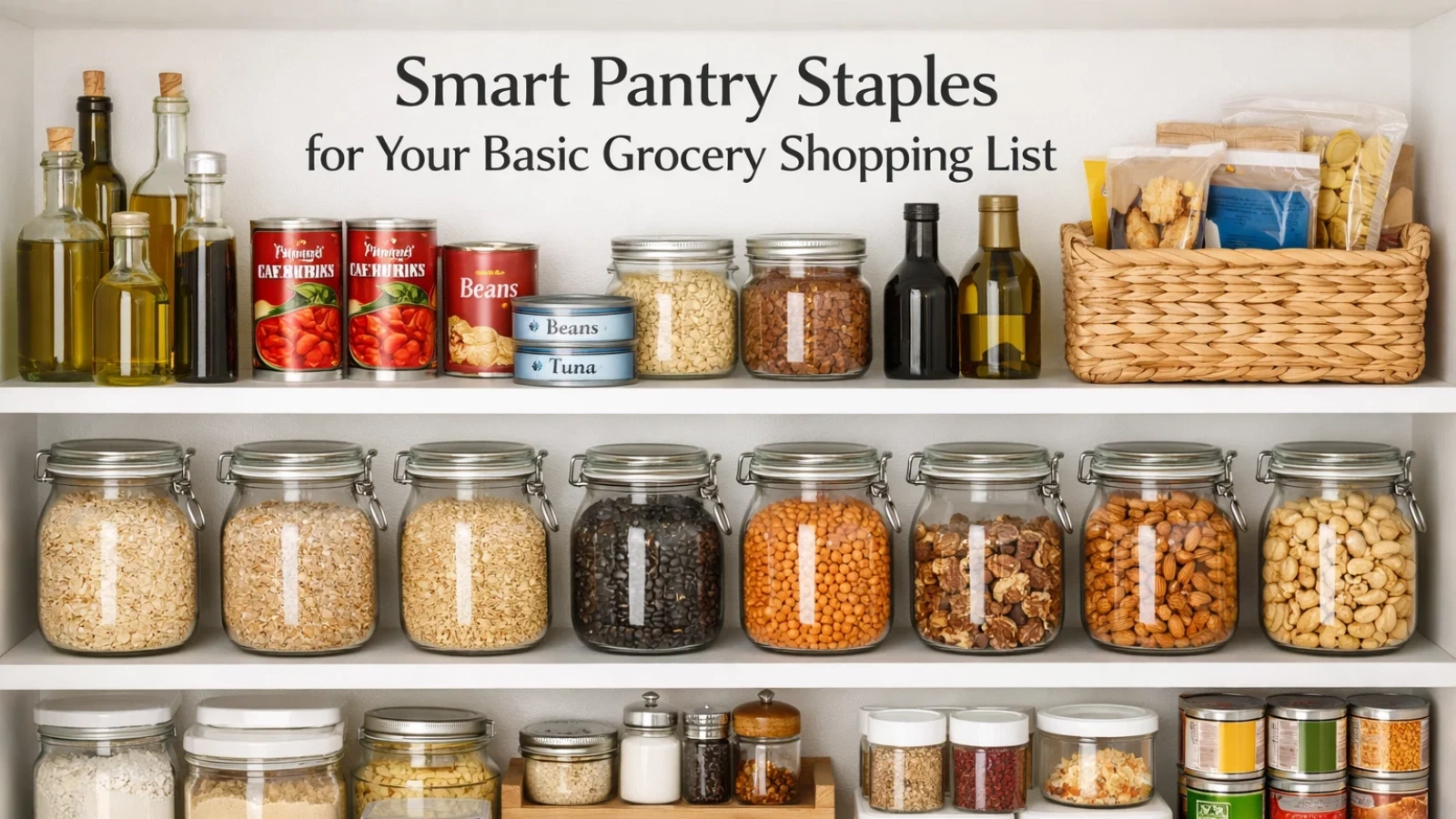
A well-stocked pantry is your secret weapon on busy weekdays. When you have the right basics at home, you can always pull together a healthy meal in under 20 minutes. These staples are the difference between ordering pizza and making a quick bowl of rajma rice.
Stock up on these items for your basic grocery shopping list:
- Low-sodium chicken or vegetable broth — for soups and cooking grains
- Canned or packaged chickpeas and kidney beans — for quick curries
- Whole grain bread or multigrain rotis
- Rice cakes or multigrain crackers for light snacking
- Kokum, tamarind, and dried tomatoes — natural flavour without extra calories
- Spices: haldi, jeera, dhania, hing, red chilli, garam masala — your weight loss allies
- Apple cider vinegar — great for salad dressings and digestion
- Low-sugar protein bars for days you are rushing
Spices deserve a special mention here. Turmeric is anti-inflammatory. Jeera supports digestion. Cinnamon helps regulate blood sugar. These are not just flavour enhancers — they are functional foods that support your weight loss journey every single day.
What NOT to Put in Your Cart
Knowing how to build a weight-loss grocery list also means knowing what to leave on the shelf. These foods tend to derail even the best intentions — not because they taste good, but because they are engineered to make you eat more.
Learn to read nutrition labels. Avoid products that are:
- Ultra-processed with long ingredient lists full of chemicals you cannot pronounce
- High in added sugar — hidden under names like maida syrup, glucose, dextrose, or corn syrup
- Loaded with refined carbohydrates — white bread, maida biscuits, namkeens
- High in trans fats — vanaspati, dalda, and many packaged bakery items
- Full of sodium — packaged soups, instant noodles, and most ready-to-eat meals
This does not mean you can never have a biscuit again. But it should be a conscious choice, not a default snack, because there was nothing else in the kitchen. Your grocery shopping list controls that.
Beyond the Grocery Store: Habits That Amplify Your Results
Your weight-loss grocery list is the foundation. But weight loss works best when you pair good nutrition with a few other consistent habits. Here is what makes the biggest difference:
- Drink at least 2.5 to 3 litres of water every day — replace chai overload and cold drinks with water and nimbu pani
- Move your body for at least 30 minutes daily — walking counts, and it is free
- Sleep 7 to 9 hours every night — poor sleep increases hunger hormones and slows your metabolism
- Manage stress — chronic stress raises cortisol, which increases fat storage, especially around the belly
- Track what you eat — awareness is the most powerful weight loss tool available
On tracking: most Indians underestimate how many calories they eat. A small katori of ghee, extra servings of rice at dinner, and those small bites here and there add up quickly. Using an app like Calorie Tracker Buddy to log your meals for just two to three weeks can completely change how you understand your own eating patterns.
The Bottom Line
Weight loss does not require expensive supplements, complicated diets, or giving up everything you love. It starts with a simple, well-planned grocery shopping list — one that you actually follow when you walk into the store.
Use this guide as your foundation. Pick lean proteins, load up on vegetables, choose whole fruits, keep healthy fats in check, and swap refined carbs for complex ones. This is how to build a grocery shopping list that truly works.
Start small. Even making five better swaps this week — buying dahi instead of flavoured yogurt, choosing whole wheat atta over maida, adding one extra vegetable to your meals — creates real momentum. These small changes, repeated consistently, lead to lasting results.
Your weight-loss shopping list is not about perfection. It is about progress, one shopping trip at a time.
Frequently Asked Questions
1. Can I really lose weight just by changing my grocery list?
Yes, more than you think. What you bring home determines what you eat all week. A smart grocery list reduces temptation, controls portions, and makes healthy meals easier. Weight loss often starts in the shopping aisle, not the gym.
2. Do I have to stop eating rice and roti to lose weight?
Absolutely not. You don’t need to eliminate them — just manage portions and pair them with protein and vegetables. Balance works better than restriction, especially for long-term results.
3. What’s the biggest grocery shopping mistake that ruins weight loss?
Shopping while hungry. It leads to impulse buys, extra snacks, and high-calorie foods that weren’t part of your plan. Going in prepared makes a huge difference.
4. Are “healthy” labeled foods always good for weight loss?
Not always. Many products labeled “low-fat” or “healthy” are packed with hidden sugars and additives. Always check the ingredient list and nutrition label before adding them to your cart.
5. How can I make sure what I’m buying actually fits my weight loss goals?
Use a tracking method. Apps like Calorie Tracker Buddy let you quickly log foods and monitor calories, protein, and portions. Staying aware of what you buy makes staying consistent much easier.