

When most people hear the phrase “good morning exercise,” they picture a gentle stretch to shake off sleep. In the fitness world, good morning exercise is also known as the hip-hinge movement, which specifically targets the hips and your overall posterior chain. It is one of the best exercises for athletes and those who want to gain strength and stability in their back.
In this blog, we’ll break down what the good morning exercise is, its benefits, proper form, variations, tips for doing it at home, and even the best foods to eat before your workout.
What Is the Good Morning Exercise?
The good morning exercise is a hinge movement that mimics the act of bowing forward while keeping your back straight. It’s called “good morning” because the starting motion looks similar to the gesture of bowing to say hello.
At its core, the exercise is a hip hinge movement—the same movement as deadlift. You can strengthen your lower back by hinging at the waist, which is one of the important lower-body muscles for lower-body power and core stability.
How To Do The Good Morning Exercise Properly?
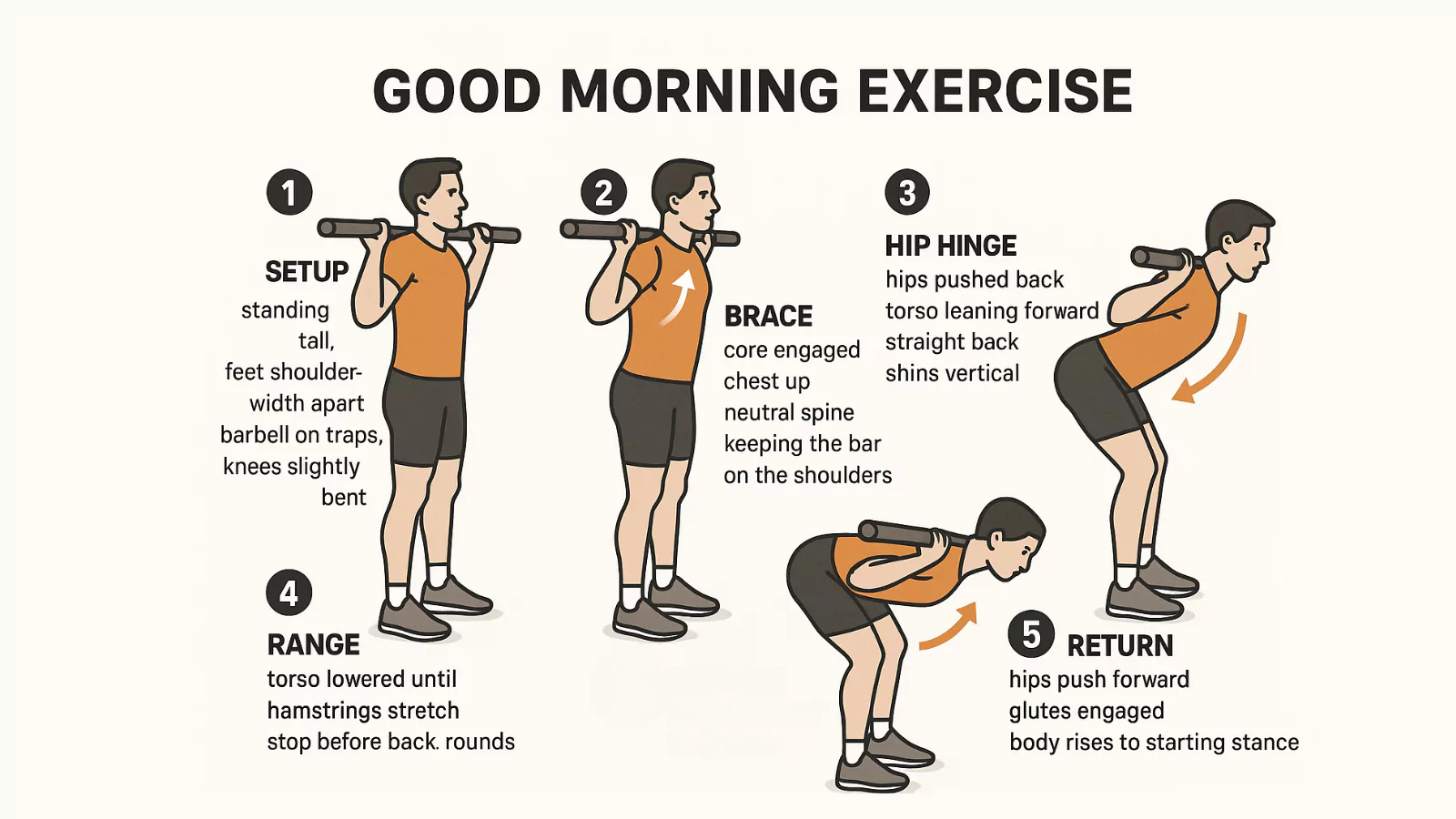
Performing the good morning exercise with proper form is essential to avoid straining your back. Here’s a step-by-step guide:
Step-by-Step Guide
- Setup: Stand tall with your feet about shoulder-width apart, keeping a slight bend in your knees. Place a barbell (or broomstick if you’re practicing) across your upper back, resting on your traps—not on your neck.
- Brace: Take a deep breath and engage your upper back for stability by maintaining a neutral spine.
- Hip Hinge: Think as if you are pushing a car door through your hips, and push your hips ( do not squat or sit)
- Range: Feel the stretch and lower your body as far as you can, and stop if your back starts rolling.
- Return: As you rise back up, drive your hips forward and engage your glutes to return to the starting stance and squeeze your glutes.
Good Morning Exercise At Home
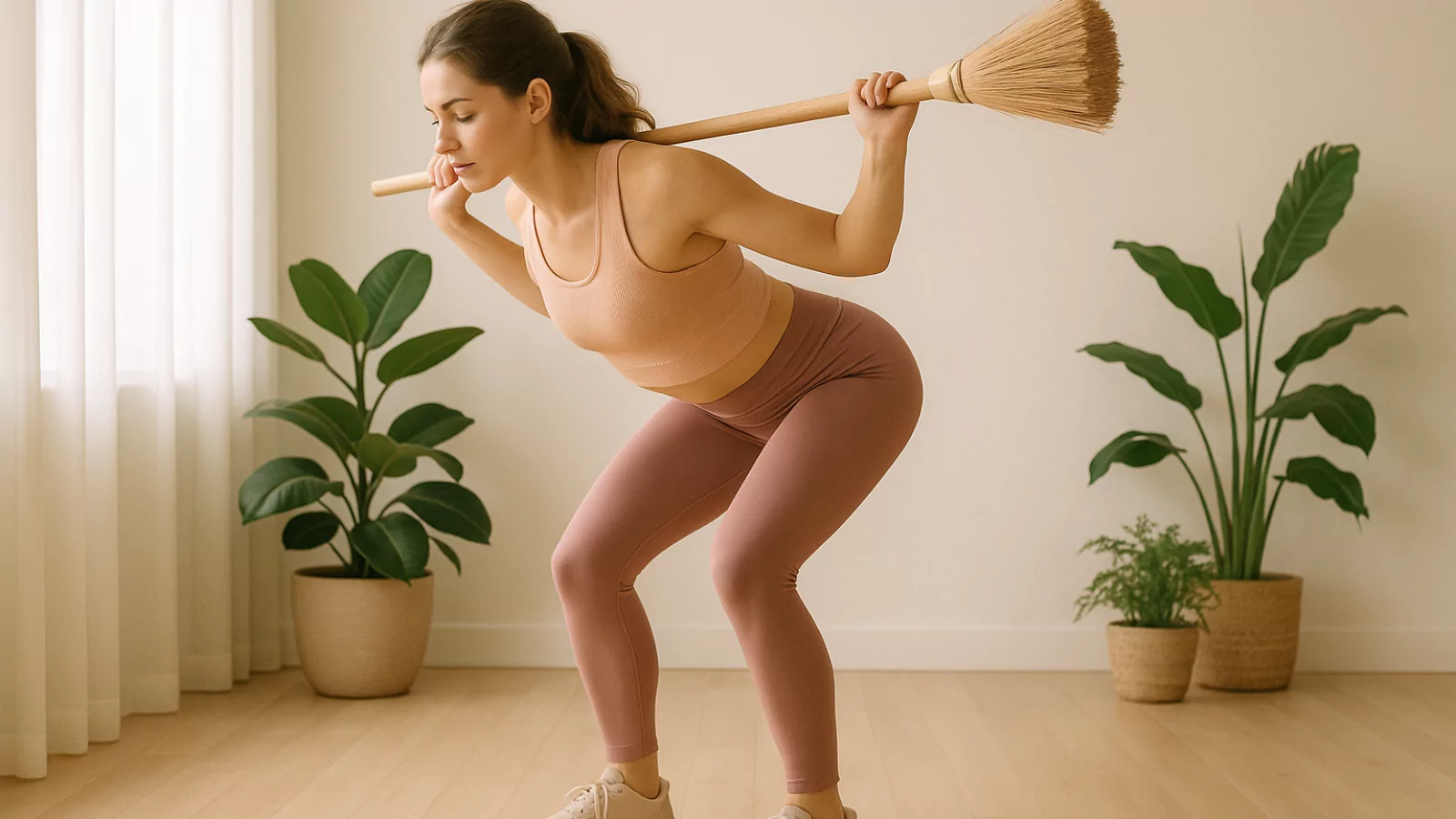
No barbell? No problem, this movement works just as well. Here are simple home variations:
- Bodyweight Good Morning: Place your hands behind your head, hinge forward, and return to standing.
- Broomstick Good Morning: Use a stick across your shoulders to mimic the barbell setup.
- Resistance Band Good Morning: Place your feet on the band, bring the other end over your shoulders, and bend forward at the hips.
These are excellent ways to learn how to do good morning exercise at home before progressing to heavier weights.
Good Morning Workout: Muscles Worked
Muscles Targeted
- Hamstrings: Primary movers during the hinge.
- Glutes: Assist with hip extension as you stand tall.
- Erector Spinae: Keep your spine neutral and stable.
- Core & Obliques: Stabilize your torso throughout the movement.
Now that you know the target muscles, it’s time to explore the good morning exercise benefits/tips.
Good Morning Exercise Benefits
- Builds Posterior Chain Strength: Works the hamstrings and glutes to improve overall lower-body strength and athletic performance.
- Improves Posture: Reinforces proper spinal alignment and reduces slouching.
- Increases Hip Mobility: Supports flexibility and reduces stiffness.
- Supports Other Lifts: Enhances performance in squats, deadlifts, and running.
- Core Activation: Builds strong stabilizers, protecting your lower back.
Whether you’re training for sports or daily strength, a good morning workout is one of the most effective posterior chain moves.
Good Morning Exercise Tips For Better Form
To make the most of this exercise, master the hip hinge first, it’s the key to proper form and protecting your back. Follow these tips:
- Keep the barbell on your shoulders, not your neck.
- Drive your hips backward instead of simply bending forward at the waist.
- Maintain a neutral spine—never round your back.
- Begin with minimal or no weight until your technique is well-established.
- Use a slow, controlled tempo, especially on the descent.
These small adjustments make a big difference in maximizing the good morning exercise benefits.
Variations Of The Good Morning Workout
Want to mix things up or scale difficulty? Try these variations:
- Seated Good Morning: Focuses more on core stability.
- Wide-Stance Good Morning: Emphasizes glutes.
- Narrow-Stance Good Morning: Puts more tension on hamstrings.
- Single-Leg Good Morning: Builds balance and coordination.
- Resistance Band Good Morning: A beginner-friendly version for home workouts.
Common Mistakes To Avoid
Like any technical movement, good mornings can be risky if performed incorrectly. Avoid these common errors:
- Overloading weight: Start light; strength will build with consistency.
- Rounding your back: While doing this movement, you need to keep your back straight to reduce the risk of injury.
- Skipping warm-up: Cold muscles are more prone to strain.
- Ignoring mobility limits: Only go as far as your body allows and avoid pushing beyond your natural range of motion.
Best Foods To Eat And Drink Before A Workout
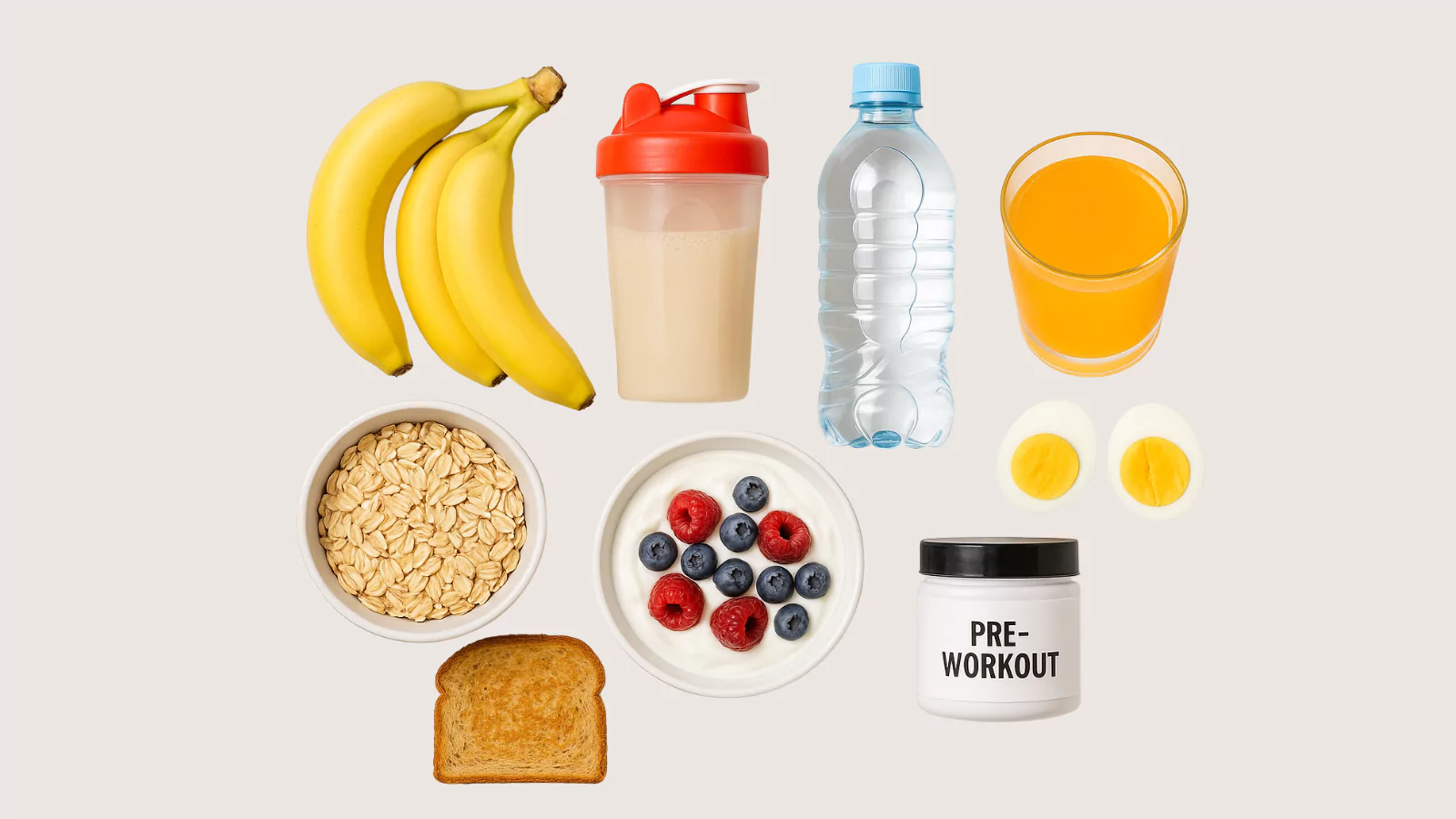
Fueling your body matters, especially before strength training. Pair your good morning exercise with smart nutrition:
Carbs: Bananas, oats, or whole-grain toast for quick energy.
Protein: Greek yogurt, eggs, a protein shake, or even a quality protein supplement to support muscle repair.
Hydration: Water or an electrolyte-rich drink to stay energized.
Supplements: A light pre-workout supplement can give you an extra boost of energy and focus if needed.
Pre-workout Snack Idea: A banana with peanut butter or a bowl of oatmeal with berries can give you the energy you need for your workout while keeping your taste buds happy.
Eating the right foods before a workout is key to boosting performance and supporting recovery. But here’s the tricky part—taking too many calories can weigh you down, while too few might leave you drained.
But how can you determine the right amount of fuel your body requires? That’s where a calorie tracker comes in handy. If you’ve been searching for a simple tool to guide you, meet your new workout partner—Calorie Tracker Buddy.
Let’s break it down in the next section.
How Does Calorie Tracker Buddy Keep You On Track?
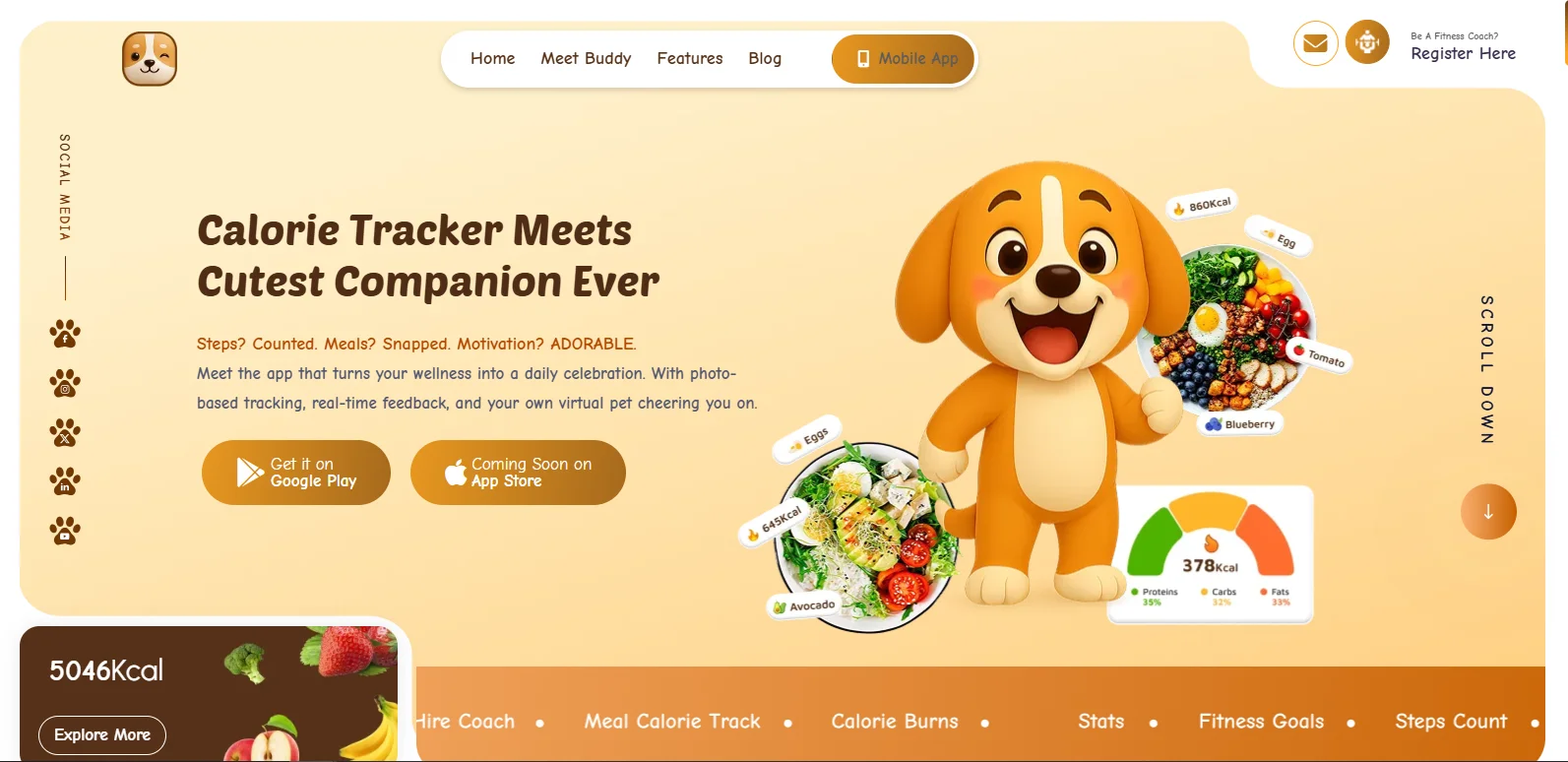
Counting calories can be extremely challenging and time-consuming. This is why Calorie Tracker Buddy comes into the game. With this app, you are not just logging your meals; you are making good lifestyle choices. Calorie Tracker Buddy is your own pocket-friendly nutrition coach, which guides your daily meal intake, calories, and helps you count calories with just an easy snapshot. Now let us explore buddy’s some exciting features:
Here’s how it makes tracking simple (and even a little fun):
-
A Food Library That Gets You
Whether it’s a quick homemade lunch, your go-to takeout, or a packaged snack, the app’s huge database makes logging simple. Just type it in, and your nutrition details show up in seconds. -
Snap and Go
No time to type? Take a photo of your plate. The smart scanner breaks down the calories instantly—no manual entry needed. -
Don’t Forget the Calories You Burn
It’s not only about food. Log your workouts or connect your fitness device, and the app automatically tracks the calories you’ve burned. -
A Clear Picture of Balance
See your calories in vs. calories out at a glance, so you’ll know if you’re on track or need a small adjustment. -
Guidance That Feels Personal
The app learns your habits over time. Expect friendly nudges when you’re close to your daily limit or simple suggestions when your meals are on the heavier side. -
Smarter Planning
By recognizing your patterns—like weekend splurges or busy-day missed meals—the app helps you plan ahead instead of scrambling. -
Progress That Shows
Daily and weekly reports give you a real snapshot of your eating and activity trends. Small wins stand out, keeping you motivated while showing where you can improve. -
Motivation That Sticks
More than just counting numbers, the app helps you stay mindful, make better choices, and actually enjoy building healthier habits.
How To Add the Good Morning Exercise to Your Routine
The good morning exercise works best as an accessory lift rather than a main movement. Here’s how to integrate it:
- Beginners: 3 sets of 8–10 reps with light weights or bodyweight.
- Intermediate/Advanced: 3–4 sets of 5–8 reps with moderate to heavy weights.
- Frequency: Once per week to avoid overloading the lower back.
- Pairing: Combine with squats, deadlifts, or lunges for a complete lower-body workout.
Safety And Precautions
While effective, this movement requires caution:
- Always warm up before lifting.
- Avoid heavy weights if you’re pregnant, injured, or recovering from surgery.
- Wear stable footwear and ensure proper footing.
- Work with a coach or trainer if you’re new to barbell training.
- Stop immediately if you feel sharp pain in your hamstrings or lower back.
Final Thoughts
Although less popular than squats or deadlifts, the good morning exercise is a highly effective move for building strength in the hamstrings, glutes, and core. From improving posture to boosting athletic performance, the benefits are too good to ignore.
Whether you perform the good morning exercise at home with resistance bands or add it to your barbell routine, practicing proper form and fueling your body with the best foods, eating before a workout ensures you train more effectively and reduces the risk of injury.
With Calorie Tracker Buddy, you can also log your workouts, track calories burned, and monitor progress to ensure your fitness goals stay on track.