


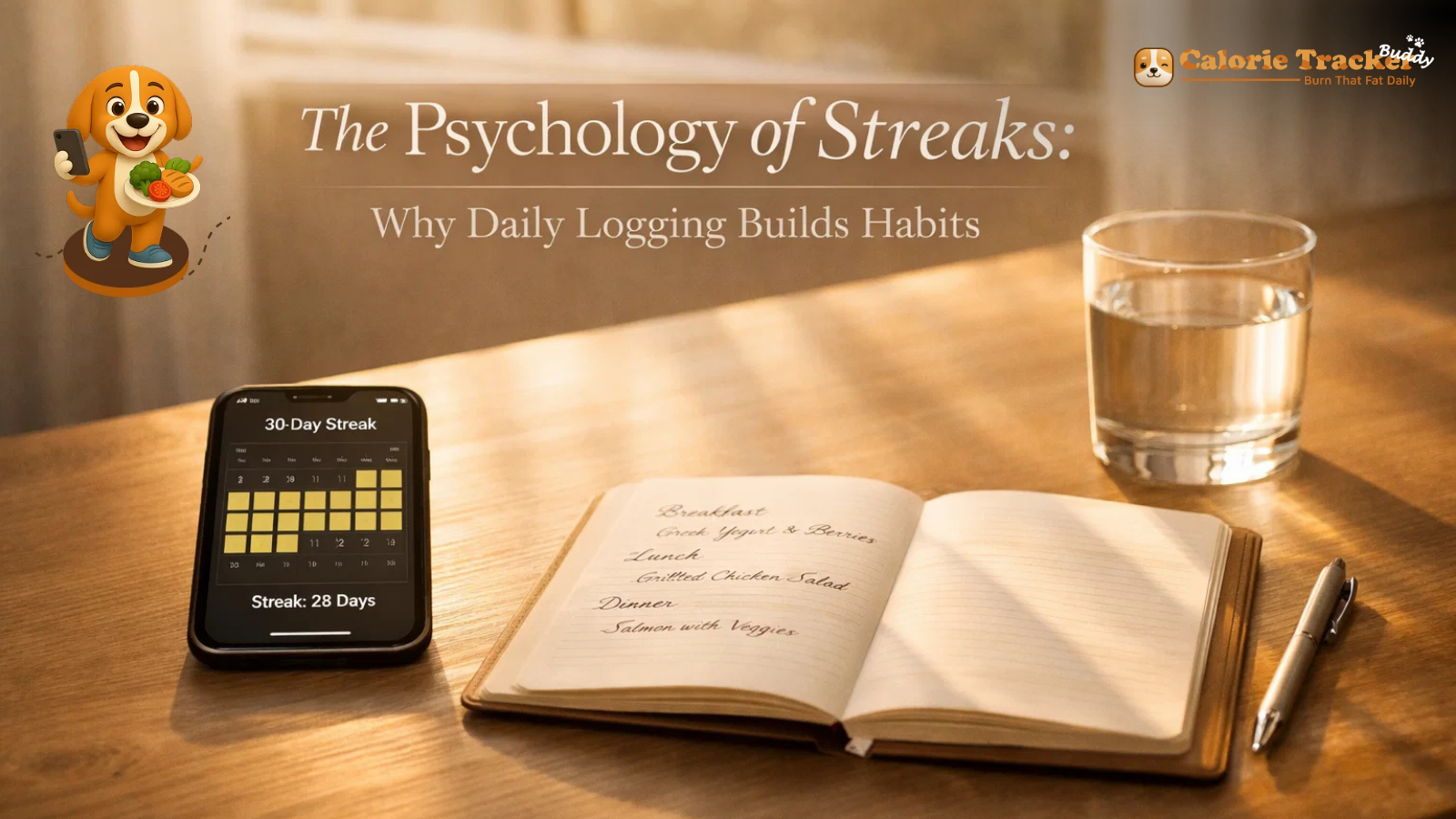
You’ve felt it before.
Day one of a new health goal feels electric. You download an app, promise yourself this time will be different, and start tracking everything you eat. Breakfast? Logged. Lunch? Logged. Even that tiny handful of chips? Logged.
Around day four, things start feeling a little heavier.
After about a week, motivation begins to drop.
By the tenth day, many people quietly stop using the app.
So what separates the people who quit from the ones who quietly transform their habits?
Progress isn’t powered by willpower alone.
Success isn’t built on discipline alone.
What keeps things going isn’t motivation either.
It’s streaks.
More specifically, it’s what happens in your brain when you build a food log streak — day after day after day.
Let’s unpack why daily logging works so well, why perfection actually kills progress, and how a simple streak can turn into one of the most powerful behavior-change tools you’ll ever use.
Listen To The Podcast Now!
What Is a Logging Streak (And Why It Feels So Good)?
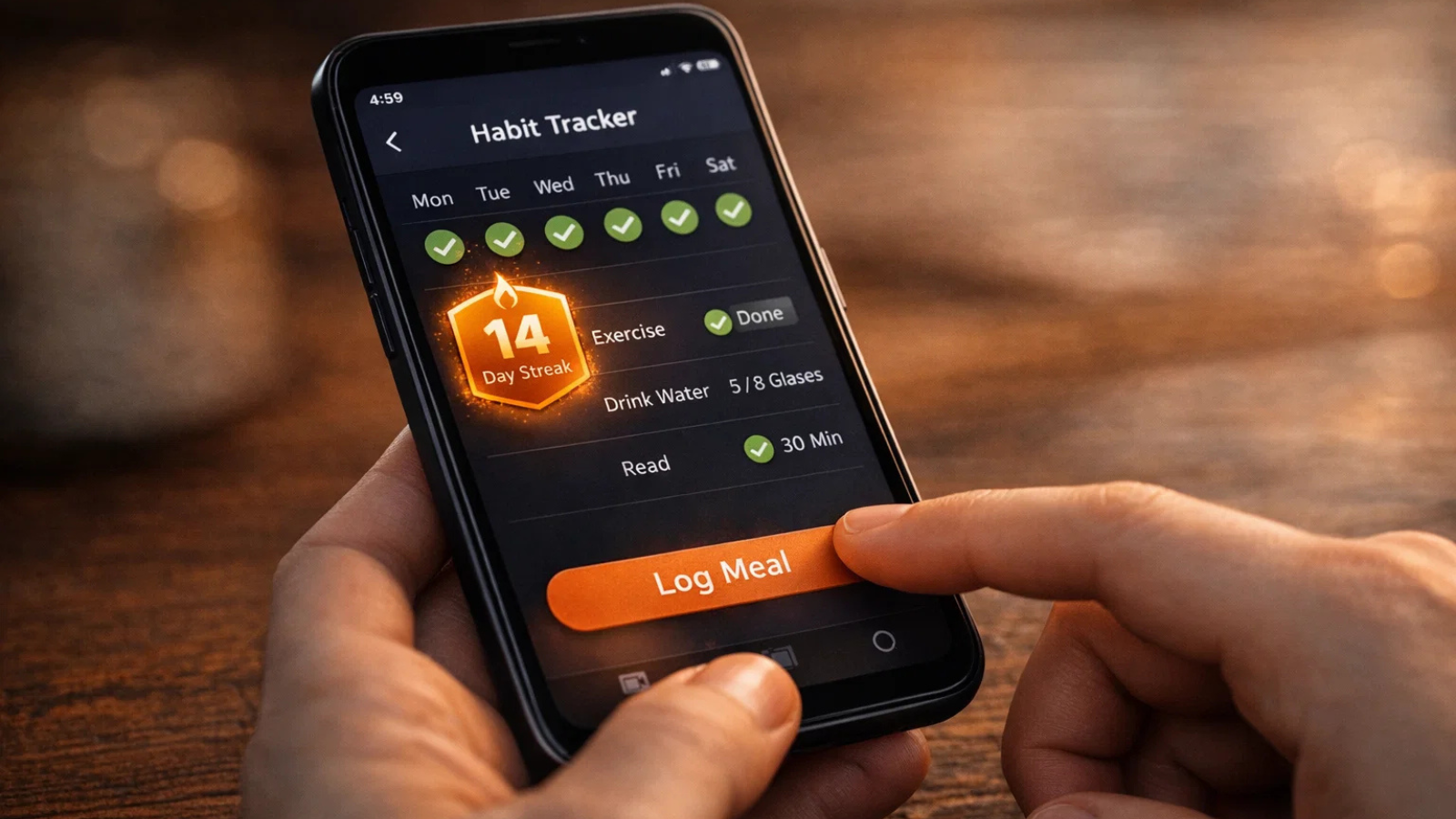
A logging streak is simply the number of consecutive days you track a behavior — in this case, your meals.
That’s it.
But psychologically? It’s much bigger than that.
Each day you complete your food log through photo in your device, your brain registers a small win. A checked box. A visible sign of consistency. And humans are wired to crave completion.
We like seeing progress stack up.
We hate breaking a chain.
We’re surprisingly loyal to numbers that represent effort.
That growing streak becomes a quiet commitment to yourself.
Not “I must eat perfectly.”
Just:
“I show up.”
And that shift changes everything.
Why a Food Log Builds Stronger Habits
Most people think food tracking is about calorie tracking.
It’s not.
It’s about awareness.
When you keep a food log, something subtle happens: you pause. You think. You notice. That moment of awareness interrupts autopilot eating — and autopilot is where most unhealthy habits live.
Psychologists call this behavioral reactivity — the simple act of observing a behavior changes it.
Research consistently shows that people who log their meals regularly lose more weight than those who don’t. But here’s the important detail: it’s not perfect loggers who succeed.
It’s consistent ones.
Logging 80% of your meals for six months will beat logging 100% for two weeks every single time.
Consistency builds identity.
Perfection builds burnout.
The Dopamine Effect: Why Streaks Feel Addictive
Ever notice how satisfying it feels to keep a streak alive?
That’s dopamine at work.
Dopamine isn’t just a “pleasure chemical.” It’s a motivation chemical. It spikes when we anticipate progress and rewards.
When your food log shows:
Day 3
Day 7
Day 14
Day 30
Your brain starts associating logging with achievement. That growing number becomes emotionally rewarding.
You’re no longer logging because you “should.”
You’re logging because it feels good to protect the streak.
And that emotional reward is what turns actions into habits.
The Perfectionism Trap (And Why It Destroys Logs)
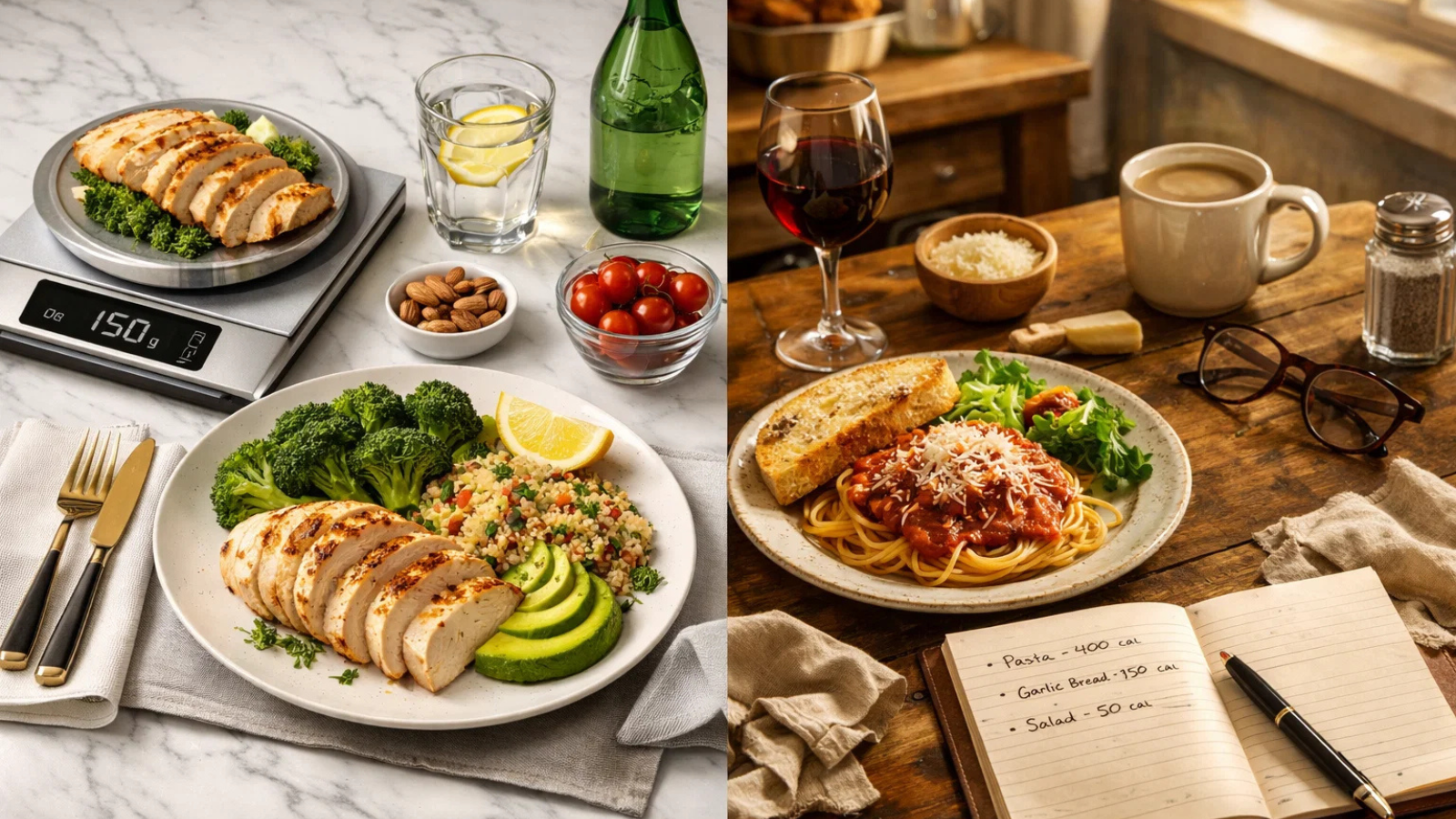
Here’s where most people go wrong.
They believe their food log must be flawless.
Weigh every gram.
Track every condiment.
Know every macro.
Miss one meal?
“Forget it. Today doesn’t count.”
This is all-or-nothing thinking. And it’s the fastest way to kill a streak.
Your brain interprets “missed entry” as failure — and failure reduces motivation.
But here’s the truth: a rough estimate is infinitely better than a blank day.
A streak survives on consistency, not precision.
Think of it this way:
- Logging imperfectly for 180 days = massive insight
- Logging perfectly for 10 days = almost no long-term change
Your food log is data, not judgment.
The goal is awareness, not control.
Why Daily Logging Works Even When You Don’t “Diet”
Here’s something fascinating: studies show that simply tracking food intake can reduce calorie consumption by around 15% — even if you’re not trying to eat less.
Why?
Because awareness influences behavior.
When you know you’ll log something, you naturally pause before overeating.
Not always.
Not perfectly.
But often enough to matter.
That tiny pause is powerful.
Over weeks and months, those small adjustments compound.
And suddenly, your streak isn’t just a number — it’s momentum.
The Identity Shift: “I’m Someone Who Tracks”
Habits last when they become part of who you are.
Not:
“I’m trying to lose weight.”
But:
“I’m someone who logs my food.”
Daily use of a food log reinforces that identity.
Every time you log, you cast a vote for the type of person you want to be: consistent, aware, intentional.
And once your identity shifts, behavior becomes easier.
You don’t debate whether to log.
You just do it — because that’s who you are.
What’s the Best App to Keep a Daily Food Log?
A common question people ask is: what’s the best app to keep a daily log?
The honest answer?
The one you’ll actually use.
The most accurate tracking system in the world is useless if it creates friction.
If logging feels complicated, slow, or overwhelming, your brain will resist it.
The best tools make logging:
- Fast
- Simple
- Flexible
- Non-judgmental
And this is where modern tools are changing the game.
Instead of manually typing every ingredient, some apps now use photo-based logging, instant calorie estimates, step tracking, hydration reminders, and — most importantly — built-in streak systems that make consistency feel rewarding.
One standout example is Calorie Tracker Buddy (https://calorietrackerbuddy.com/).
Calorie Tracker Buddy: Where Streaks Meet Motivation
If streak psychology works because of visibility and emotional reward, then Calorie Tracker Buddy leans into that beautifully.
Instead of feeling like a spreadsheet, it feels like a companion.
Here’s what makes it different:
📸 Snap the Meal
Just point your camera, tap once, and your meal is scanned for calories, nutrients, and balance. No endless searching. No database frustration. Your food log updates in seconds.
🔥 Real-Time Feedback
You eat, it calculates. Instantly. You see how each meal fits your goal without overthinking it.
🐾 A Virtual Buddy That Grows With You
Here’s where psychology kicks in.
Every healthy choice helps your virtual pet grow stronger. Skip a snack attack? Your buddy levels up. Eat well? Your buddy thrives.
It’s subtle, but powerful.
You’re not just protecting a streak.
You’re protecting your buddy.
That emotional connection taps into the same dopamine loop we talked about earlier:
Log → Buddy reacts → You feel good → You log again.
Consistency becomes craveable.
🚶 Steps, Hydration & Burn Tracking
Track your daily movement, water intake, and calories burned in one place. Whether it’s hitting 10,000 steps or drinking 2.5 liters of water, you can see your full progress.
🎯 Goal Predictions
Wondering how much progress you’ve actually made? The app shows how each meal, snack, or sip affects your progress in real time.
The result? Clear direction. Less overthinking.
And when tracking feels simple, your streak naturally lasts longer.
Level Up Now – Download Calorie Tracker Buddy.
Why We Protect Streaks So Fiercely
There’s a psychological principle called loss aversion.
We feel the pain of losing something more intensely than the joy of gaining something.
When your food log streak hits 25 days, breaking it hurts.
That emotional resistance actually works in your favor.
You think twice before skipping a day.
You log something — even roughly — just to keep the chain alive.
That’s not weakness.
That’s behavioral design working exactly as intended.
The 80% Rule: The Secret to Long-Term Logging
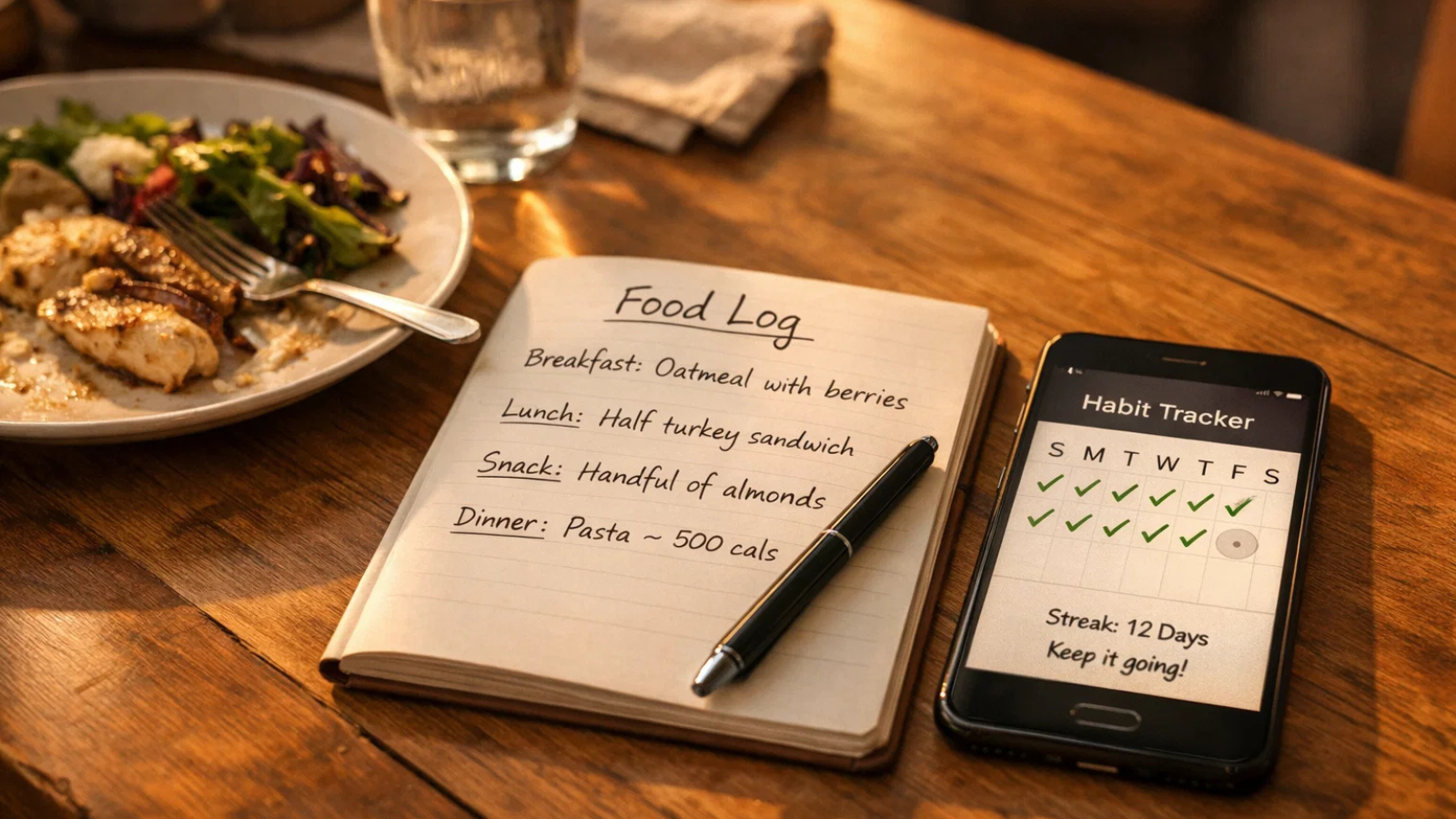
If there’s one takeaway from this article, make it this:
Aim for consistency, not perfection.
The 80% rule changes everything.
Log most of your meals.
Miss one? Log it later.
Can’t find exact nutrition info? Estimate.
Busy day? Write a quick summary.
Your daily food log doesn’t need to be perfect to be powerful.
It just needs to exist.
Because habits form through repetition — not precision.
Why “Bad Days” Matter Most
The days you least want to log are the most important ones.
A stressful Wednesday.
A late-night pizza binge.
A holiday dinner.
These are the days people skip.
But those entries hold the most insight.
When you review your food log, patterns emerge:
- Stress eating after meetings
- Weekend overeating
- Skipping breakfast leading to late-night snacking
Without logging, those patterns stay invisible.
With logging, they become manageable.
And awareness creates choice.
Also Read: –
Reducing Tracking Fatigue
Let’s be honest: logging can feel tiring.
Decision fatigue is real. After a long day, estimating portions feels like mental work.
So make it easier.
- Batch log at night instead of after every meal.
- Use saved meals for repeat foods.
- Accept approximations.
- Choose simpler meals when busy.
Lower the friction.
The easier your food log feels, the longer your streak lasts.
And longevity is what builds results.
Streaks Create Momentum

Momentum is psychological gold.
The first few days of logging require effort.
By week two, it feels normal.
By month two, it feels automatic.
That’s habit formation in action.
Streaks make progress visible. And visible progress builds belief.
You start thinking:
“If I can log for 30 days, I can keep going.”
Confidence grows.
Not from perfection.
From proof.
The Real Goal of a Food Log
Here’s the mindset shift that changes everything:
A log is not about restriction.
- It’s about gaining meaningful information.
- Tracking food isn’t about punishing yourself for what you ate.
- The real goal is to understand why you made those food choices.
- Striving for perfect numbers is not the objective.
- The focus is on identifying clear behavioral patterns.
When you detach logging from judgment, it becomes sustainable.
And sustainability is what leads to transformation.
Final Thoughts: Show Up, Don’t Be Perfect
If you’ve struggled with tracking before, you’re not alone.
Most people quit because they try to be perfect.
Instead, try this:
Log something today.
Tomorrow, log again.
Protect your streak, not your ego.
Your daily food log doesn’t have to impress anyone.
It just has to exist.
Because every entry is a small act of self-awareness.
And self-awareness — repeated daily — builds habits that last.
Not because you forced them.
But because you showed up.
Again.
And again.
And again.
FAQs: –
- How long does it take for a food log to become a habit?
For most people, daily log tracking starts feeling natural within 2–4 weeks. The key isn’t perfection — it’s consistency. - Can a food log really help with weight loss?
Yes. Research shows people who consistently use logging food are more likely to lose weight because tracking increases awareness and reduces mindless eating. - What if I miss a day in my food log streak?
Missing one day won’t ruin progress. The goal of a logging food is long-term consistency, not flawless tracking. - Is calorie counting necessary in a food log?
Not always. Even basic meal logging without exact calories can improve eating habits by increasing awareness. - What’s the easiest way to maintain a daily food log?
Choose a tool that makes logging fast and friction-free. Apps like Calorie Tracker Buddy simplify tracking with quick meal logging and built-in streak motivation, making it easier to stay consistent.