



When people talk about protein, they are actually talking about amino acids.
These tiny organic compounds are the building blocks of protein and play a crucial role in nearly every biological function inside your body. From muscle growth and tissue repair to hormone production and immune support, protein components are involved in processes that keep you alive and functioning properly.
But not all protein components are the same.
You’ve probably heard the terms essential amino acids and non essential amino acids, especially if you are into fitness, nutrition, or weight management. The difference between them matters because it determines how you plan your diet and whether your body gets what it needs to perform at its best.
Understanding the classification of Protein component can help you make smarter food choices, improve recovery, and support overall health. In this guide, we’ll break down the science in simple language so you can clearly understand how essential and non essential amino acids work, where to find them, and why they matter.
You can listen to this Blog here.
What Are Amino Acids?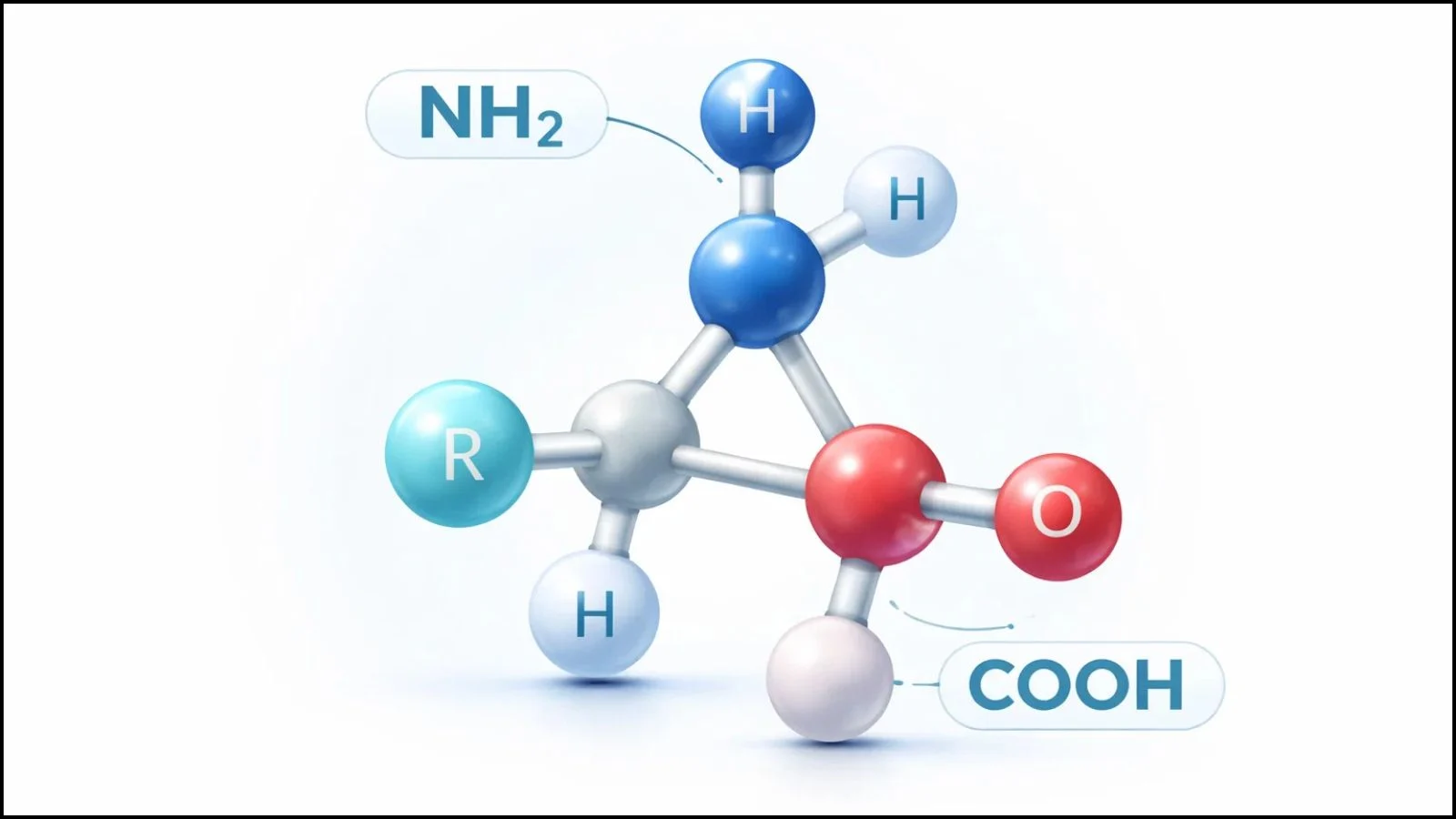
At their core, protein components are organic molecules that combine to form proteins. Every time you eat protein-rich food like eggs, lentils, chicken, or tofu, your body breaks those proteins down into individual Protein components.
There are 20 standard Protein components that your body uses to build and repair tissues. These amino acids differ slightly in structure, which gives each one a unique function.
Some help build muscle.
Some support brain function.
Some regulate metabolism.
Others assist in immune defense.
This is where the classification of Protein components becomes important. Based on how the body obtains them, they are divided into:
- Essential Protein components
- Non-essential Protein components
- Conditionally essential Protein components
What Are Essential Amino Acids?
Essential amino acids are the ones your body cannot produce on its own.
That means you must obtain them through food. If your diet lacks even one of these, your body may struggle to build proteins efficiently, which can affect muscle repair, immunity, and overall metabolic health.
There are nine essential amino acids, and each has a specific function:
- Leucine – Supports muscle growth and repair
- Isoleucine – Helps regulate energy levels
- Valine – Assists in muscle metabolism
- Lysine – Important for collagen production and immunity
- Methionine – Supports metabolism and detox processes
- Phenylalanine – Plays a role in neurotransmitter production
- Threonine – Contributes to skin and connective tissue health
- Tryptophan – Helps produce serotonin, influencing mood and sleep
- Histidine – Supports tissue growth and repair
These essential Protein components are commonly found in:
- Eggs
- Dairy products
- Meat and poultry
- Fish
- Soy products
- Quinoa
Plant-based eaters can still meet their needs by combining different protein sources. For example, rice and beans together provide a more complete amino acid profile.
Understanding essential and non-essential Protein components helps you evaluate whether your daily diet is truly balanced or just calorie-rich.
What Are Non Essential Amino Acids?
Unlike essential Protein components, non-essential amino acids are produced naturally by your body.
This means you do not necessarily have to get them directly from food because your body can synthesize them from other nutrients. However, that does not make them less important. They still play critical roles in maintaining overall health.
There are 11 non essential Protein components, including:
- Alanine
- Asparagine
- Aspartic acid
- Glutamic acid
- Serine
- Glycine
- Proline
- Cysteine
- Tyrosine
- Glutamine
- Arginine
Some of these are sometimes called conditionally essential because, during illness, stress, or intense exercise, your body may not produce enough of them.
For example:
- Glutamine supports gut health and immune function.
- Arginine helps with blood flow and wound healing.
- Glycine plays a role in collagen production and sleep regulation.
The key takeaway is that while your body can create non essential Protein components, proper nutrition still supports optimal production. A diet lacking in overall protein can affect the balance of both essential and non essential amino acids.
Understanding this difference helps clarify the classification of Protein components and why both groups are necessary for strength, recovery, and metabolic health.
Essential Amino Acids vs Non Essential Amino Acids: Key Differences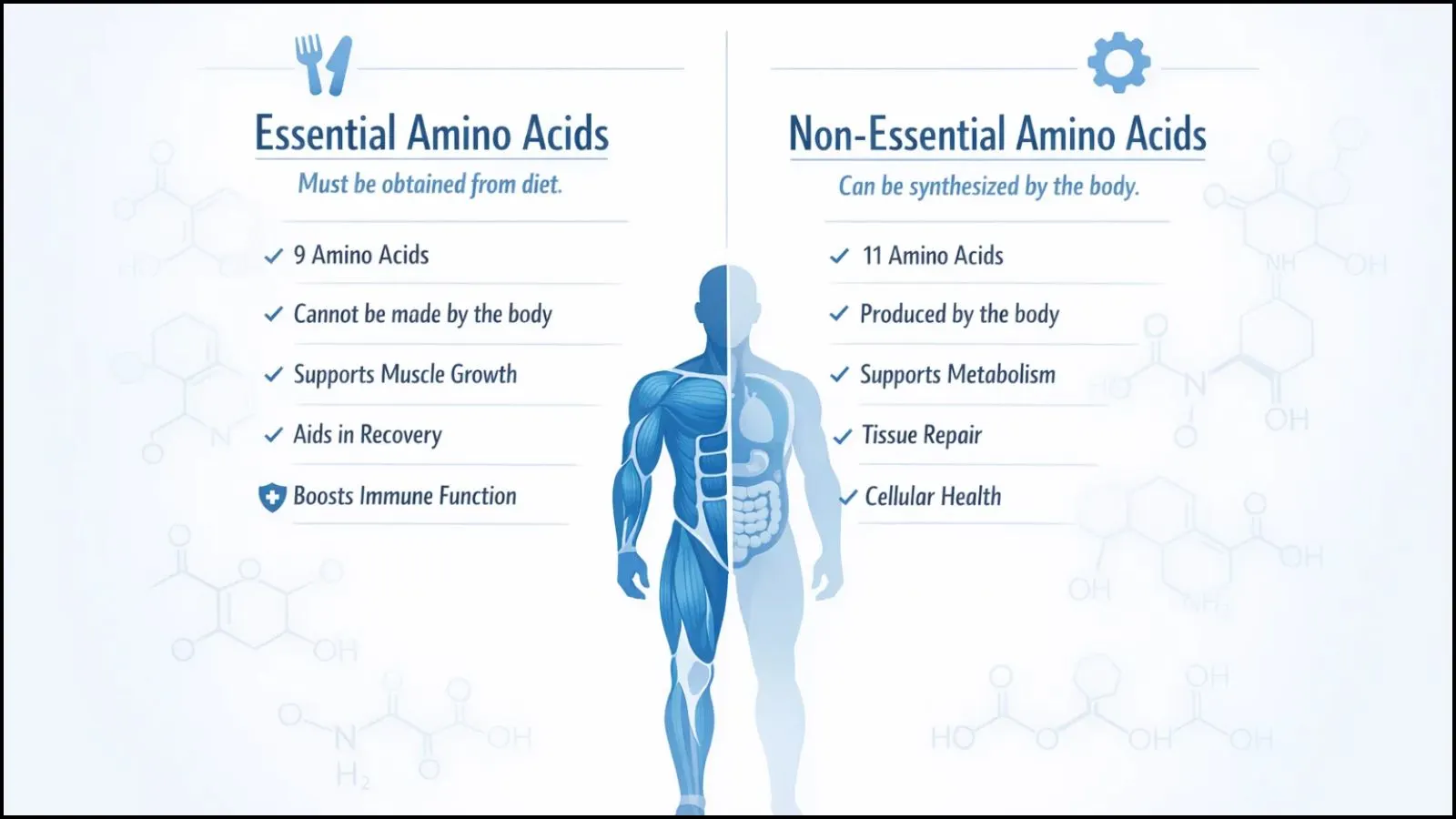
Now that you understand both categories, let’s directly compare essential and non essential amino acids.
The main difference lies in how your body obtains them.
🔹 1. Production Source
- Essential amino acids must come from your diet because your body cannot produce them.
- Non essential amino acids are synthesized internally using other nutrients.
This single difference defines the entire classification of Protein components into these two primary groups.
🔹 2. Dietary Importance
While all Protein components are important, essential Protein components require more attention in meal planning. If your diet lacks even one essential protein component, protein synthesis can slow down.
Non essential Protein components, on the other hand, are usually produced sufficiently unless your body is under stress, illness, or intense physical activity.
🔹 3. Role in Muscle Growth
For fitness enthusiasts, essential Protein components, especially leucine, play a major role in stimulating muscle protein synthesis.
However, non essential Protein components also support recovery, tissue repair, and collagen formation, making them equally important in the bigger picture.
🔹 4. Food Planning Strategy
If you consume complete protein sources like eggs, dairy, fish, or soy, you are likely covering all essential Protein components.
If you follow a plant-based diet, combining different protein sources becomes important to ensure you get a complete profile of Protein components.
Tracking your daily protein intake can help maintain balance between essential and non essential amino acids, especially if you have specific health or fitness goals.
Classification of Amino Acids
Beyond essential and non essential Protein components, scientists group Protein components based on their chemical structure and function. This broader classification of amino acids helps explain how they behave inside the body.
Here are the main categories:
🔹 1. Based on Nutritional Requirement
- Essential
- Non essential
- Conditionally essential
This is the most common way Protein components are classified in nutrition.
🔹 2. Based on Chemical Structure
- Acidic Protein Components
- Basic Protein Components
- Neutral Protein components
These groups affect how proteins fold and function.
🔹 3. Based on Side Chain Properties
- Hydrophobic (water-repelling)
- Hydrophilic (water-attracting)
- Polar
- Non-polar
This structural classification of Protein components is important in biochemistry because it determines protein stability and activity.
While this may sound technical, the key point is simple: different Protein components have different roles because of their unique structures.
Why Amino Acids Matter for Muscle and Metabolism
Protein components are central to muscle repair, energy production, and metabolism.
When you exercise, your muscle fibers experience small tears. Protein components help rebuild and strengthen those fibers. Without enough essential amino acids, recovery slows down.
They also:
- Support enzyme production
- Regulate hormones
- Maintain immune function
- Aid in nutrient absorption
If your goal is fat loss, muscle gain, or overall wellness, maintaining proper protein intake becomes crucial.
Tracking protein intake with tools like Calorie Tracker Buddy can help ensure you consistently meet your nutritional targets without guessing.
How Calorie Tracker Buddy Helps You Balance Amino Acids
Understanding amino acids is one thing. Making sure you actually consume enough of them daily is another.
Many people assume they are eating enough protein, but they often fall short on essential Protein components due to poor food combinations or inconsistent intake. This is especially common in plant-based diets, calorie-restricted plans, or busy lifestyles.
This is where Calorie Tracker Buddy (CTB) becomes valuable.
Calorie Tracker Buddy helps you:
- Track daily protein intake accurately
- Monitor total calorie consumption
- Plan meals more effectively
When you consistently track your intake, you can ensure you are consuming enough complete protein sources to cover all essential Protein components.
Smart tracking turns nutrition knowledge into practical results.
Also Read,
Conclusion
Amino acids are the foundation of life. Every protein in your body is built from these small but powerful compounds.
The key difference between essential Protein components and non-essential Protein components lies in production. Essential ones must come from your diet, while non-essential ones are made internally. However, both groups are vital for muscle repair, immune function, metabolism, hormone regulation, and overall health.
Understanding the classification of Protein components helps you move beyond basic protein counting and think more strategically about nutrition.
Whether your goal is muscle growth, fat loss, improved recovery, or long-term health, ensuring proper protein intake should be a priority.
And that is where practical tools matter.
By using Calorie Tracker Buddy to monitor protein intake and meal composition, you can confidently support your body with the right balance of essential and non-essential Protein components every single day.
FAQ’s
1. How many amino acids does the human body need?
The body uses 20 standard amino acids to build proteins. These are divided into essential, non-essential, and conditionally essential categories.
2. What are essential amino acids?
Essential Protein components are those that the body cannot produce on its own. They must be obtained through food sources such as eggs, dairy, meat, fish, soy, and certain plant combinations.
3. What are non-essential amino acids?
Non-essential amino acids are produced by the body internally. Even though they do not need to come directly from food, they are still crucial for metabolism, immunity, and recovery.