


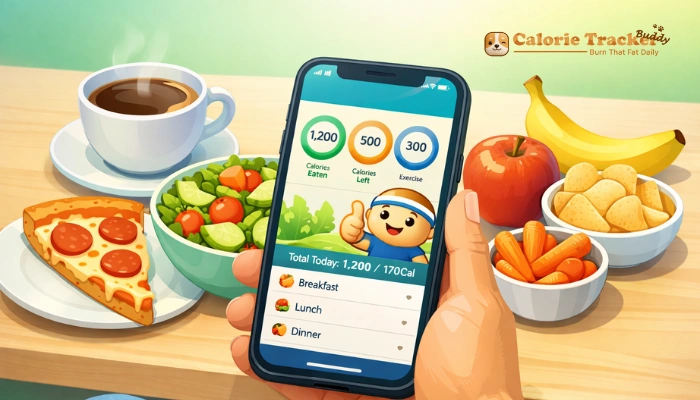
When first starting with calorie tracking, it may feel like all your friends are gym freaks, but tracking calories is a practical way of knowing what you are eating. A daily calorie tracker (usually an app) makes it easy to keep a log of the foods that you eat, how many calories you consume, and how to stay focused on your individual goals (whether they be weight loss, muscle gain, or simply figuring out why your weight keeps fluctuating). It really clarifies meal consumption in terms of the calories you eat.
The best part about using a daily calorie tracker is that you don’t have to be perfect. You can have delicious and enjoyable foods without being stressed or obligated to check every single bite. You simply need a system that is easy to use daily.
In this guide, we will cover:
- How a daily calorie tracker functions
- How to create a daily calorie counter calculator to achieve your goals
- How to do daily calorie counts without making it complicated
- How to maintain consistent calorie tracking (regardless of your busy agenda or lack of motivation).
So let’s simplify, speed up, and finally make calorie tracking a reality.
In a hurry? Listen to the blog instead!
What Is a Daily Calorie Tracker?
A daily calorie tracker is actually a very sophisticated way of keeping a record of everything you have eaten. Instead of estimating that you are eating too excessively or too restrictively, it provides a comprehensive view of your food intake, data collected over multiple days. For example, once you start tracking your foods using a daily calorie tracker app, you will be able to analyse:
- Why do I find myself hungrier at night than during the day?
- How many calories do I get from snacking without realizing it
- Why do several “healthy” foods have relatively high calories as a result?
The objective of a calorie tracker is quite simple: to set your diet into numbers that can easily be understood.
The difference between a “Daily Calorie Counter” and a “Daily Calorie Tracker.”

Both apps do a good job at counting your total calorie intake; there is a small but significant distinction between them:
Daily Calorie Counter app – provides only the calorie totals for all meals eaten
Daily Calorie Tracker – generally contains many more features, such as a collection of all meals eaten throughout the week, comparison to previous weeks, and cumulative calorie totals for protein / macro nutrients (optional)
If you want to gather a comprehensive nutritional overview of your meals and understand how they are constructed, including protein, carbohydrates, fats, and calories per meal, for a better understanding of tracking nutrition and calorie tracking, then you will benefit from using the Daily Calorie Tracker app.
What Data Can You Capture on a Daily Calorie Tracker App?
Most apps have some similar features, which allow you to log things like:
- Breakfast
- Lunch
- Dinner
- Snacks
- Water (if applicable)
- Calorie Totals By Meal
- Protein / Carbohydrate / Fat Totals By Meal if completed.
When consuming food from packages, you can take advantage of scanning features available via an app that allows for a quick way to log what you are eating.
It simply reflects the reality of what you are eating, so that you can make changes if needed.
Why Use A Daily Calorie Counter Every Day?

Guessing does not work because the person is unable to consistently determine their calories and portion sizes of food. People are often overweight or unable to maintain their weight for reasons other than being lazy or lacking discipline. They are simply not aware of how much they are eating. A daily calorie counter will allow the person to be more aware of their intake.
1) It PAUSES Your Overeating Activity Without Your AWARENESS.
You can eat “normal” foods yet still exceed your caloric limits very easily!
For example…
- The extra spoon of oil, random chips during your YouTube time, i.e., cold coffee juice.
- How many times have you had “just one more” biscuit?
A food log allows you to see where your calories are actually coming from.
2) It Simplifies Weight Loss and Weight Gain
Simple, but NOT Easy.
When you are trying to lose fat, using a tracking tool allows you to maintain a calorie deficit without resorting to “extreme dieting”.
When you are trying to build muscle, using a tracking tool ensures that you consume enough calories and protein (many people believe they consume “huge” quantities of food, when in actuality, they do not).
Read More!
Post Workout Recovery: Why It Matters More Than Your Workout?
3) Tracking Your Calories Aids In Keeping With The Plan (Even With Normal Foods)
Just because you track calories does not mean you cannot have your favourite foods. Tracking calories assists in finding a way to make these foods fit in successfully. You will no longer say, “I can’t eat pizza:-(; you will say, “Alright, I am going to have a lighter lunch and eat pizza at night”. This type of thought process helps a person to stay committed to sticking with their plan longer.
4) Discover Which Foods Are Filling
Tracking daily is underrated. Once you start tracking your intake daily, patterns emerge:
- Certain foods will keep you feeling satisfied for several hours
- Certain foods have high caloric values, but they won’t satisfy you.
After a while, you begin to make better choices about what you eat naturally, as opposed to trying to force yourself.
5) Knowledge of Which Foods Provide Satiety
This is a point that is often overlooked.
When you have tracked over a period of days, you will start to see patterns.
For example, certain foods will keep you satisfied for several hours. Certain fitness foods may have high calorie counts, but do not provide a sense of fullness.
With this information in mind, you will start to make better choices naturally.
6) Control Without Stressing Out
Many people believe tracking calories is a stressful task; in most cases, it is quite the opposite.
You will stop asking yourself such questions as: “Why am I gaining weight?” and instead will realise: “I am eating more than my target calories, so I need to correct this,” and move forward to rectify it.
Simple.
Daily Calorie Counter Calculator: Find Your Daily Calorie Goal

To track your calories correctly, the only thing you need is what’s called your daily calorie goal.
This is a number that tells you how many calories you should consume in a day based on your body and the amount of physical activity you do. You do NOT have to be a science nerd to do this!
Step 1: Determine Your Daily Calorie Maintenance Amount (Caloric Requirement)
Your maintenance calorie level is defined as the amount of calories you require to maintain your current bodyweight. To maintain calories, all daily calorie calculator options require the following inputs:
- age
- height
- Weight
level of physical activity (the amount of movement or exercise you do daily)
Once the inputs have been entered, the calculator will provide you with your daily maintenance calorie amount.
Example (simplified):
Maintenance Calories = 2200 calories/day
If you eat approximately this daily amount of calories, you will generally maintain your body weight.
Step 2 of this Program Begins with Setting Your Daily Caloric Intake to Achieve Your Desired Bodily Composition.
Your Daily Caloric Intake Should Be Changed Based on Your Goal.
For Individuals Wanting To Lose Weight (Fat Loss):
Eat 300-500 Calories Under Maintenance Calorie Amount.
Example: If Your Maintenance Calorie Amount Is 2200, Then You Will Eat Between 1700-1900 Calories To Lose Fat.
For Individuals Wanting To Gain Weight (Muscle Gain):
Eat 300-500 Calories Over Maintenance Caloric Amount.
Example: If Your Maintenance Caloric Amount Is 2200, Then You Will Eat Between 2500 and 2700 Calories To Gain Muscle.
Avoid Making Any Extreme Cuts Or Crazy Bulks; Take The Slow And Steady Approach To Achieving Your Goal.

Stage 3: Choose a Number that is Realistic for You (Not Ideal)
This step is critical.
Don’t select the lowest possible number solely for the sake of increasing your weight loss speed.
You would likely experience:
- Fatigue/Low Energy
- Ineffective Exercise Sessions
- Increased Binge Eating Frequency
Choose a target weight that you can realistically maintain daily.
Stage 4: Your caloric goal is not a permanent fixture.
After 2 to 3 weeks of monitoring your calories:
If there is no change in your body weight: Revise your caloric intake 100 to 200 calories up or down, depending on your individual body.
Having low energy or inadequate energy levels, increase your caloric intake a little bit.
If you have had success with your diet/lifestyle progress, continue doing what you have been doing.
Your caloric goal should be viewed as a base starting point and not a strict guideline.
Calorie Tracker Buddy: Best Calorie Tracker App

Calorie Tracker Buddy is a fun way to track how many calories you eat each day. This app was created to make tracking calories enjoyable, with a virtual buddy encouraging you every time you log your food!
Calorie Tracker Buddy stands out from similar apps for several reasons.
Quick and easy photo-based meal logging — With just one photo taken of your meal, you’ll get instant feedback about how many calories and nutrients you are consuming!
Track everything in one spot – Calorie intake and calories burned through exercise can easily be recorded on the same app.
Virtual exercise buddy – Calorie Tracker Buddy uses a friendly character that grows along with you while you log meals/drink lots of water, and/or reach daily goals.
Goals with personalized suggestions — The goal features provide users with an idea at the end of the day as to how much they need to do to reach their goal.
Reminds you to stay hydrated — Calorie Tracker Buddy reminds you to drink plenty of water throughout the day to remain healthy and balanced.
Fast entry speeds – Everything entered into Calorie Tracker Buddy is entered quickly, allowing the user to consistently log all aspects of healthy eating.
Share progress, compete with friends, and hold each other accountable!
Conclusion
A daily calorie tracker is about awareness, control, and making informed choices that actually fit your lifestyle. If your goal is weight loss, muscle gain, or simply gaining a better understanding of your eating habits, tracking calories provides clarity rather than confusion.
By using a daily calorie counter or calorie tracker app, you can start seeing real practices in your meals, portions, and food choices. Over time, this awareness naturally leads to better decisions, improved consistency, and sustainable results rather than extreme ones.
When paired with a realistic calorie goal and a simple tracking system, calorie counting becomes easy to maintain even with a busy schedule. Tools like Calorie Tracker Buddy take this a step further by making the process more engaging and less stressful through smart logging, reminders, and motivation.
Calorie tracking is not a short-term fix. It is a practical skill that helps you build a healthier relationship with food, stay accountable, and move steadily toward your fitness goals without giving up the foods you enjoy.
Frequently Asked Questions (FAQs)
How long should I track my calories?
There is no fixed timeline. Many people track for a few weeks to understand portion sizes and food habits, while others continue longer for structure and accountability. You can stop once you feel confident managing your intake intuitively.
Do I need to track calories on weekends?
Yes, if possible. Weekends often include higher-calorie meals, eating out, or social events. Tracking on weekends gives a more accurate picture of your overall intake and prevents unintentional overconsumption.
Is calorie tracking suitable for beginners?
Absolutely. Beginners often benefit the most because tracking highlights hidden calories and common eating patterns. Modern apps make the process simple, even if you have no nutrition knowledge.
Can calorie tracking work without exercise?
Yes. Calorie tracking focuses on food intake, which plays a major role in weight management. While exercise improves health and fitness, calorie control alone can still support weight loss or maintenance.