


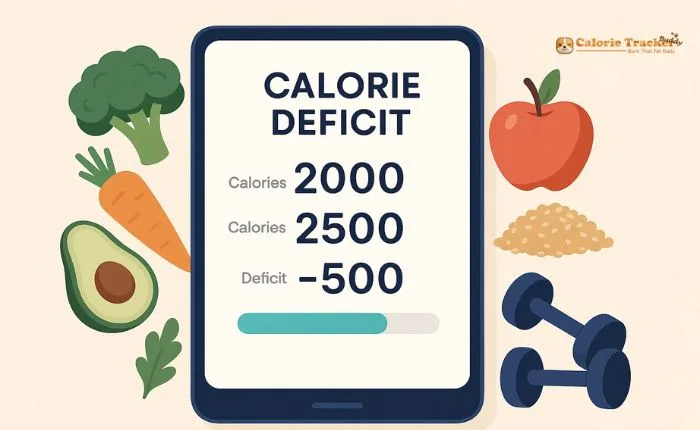
If you’ve ever struggled with weight loss, you’ve probably heard the phrase “calories in versus calories out.” But here’s the truth: understanding this concept and actually applying it are two very different things. That’s where a calorie deficit calculator becomes your best friend. This simple yet powerful tool takes the guesswork out of weight loss by showing you exactly how many calories you need to eat each day to reach your goals. Whether you’re just starting your fitness journey or you’ve hit a frustrating plateau, a Calorie Calculator provides the clarity and direction you need to move forward with confidence.
Listen To The Podcast Now!
Understanding the Basics: What Is a Calorie Deficit?
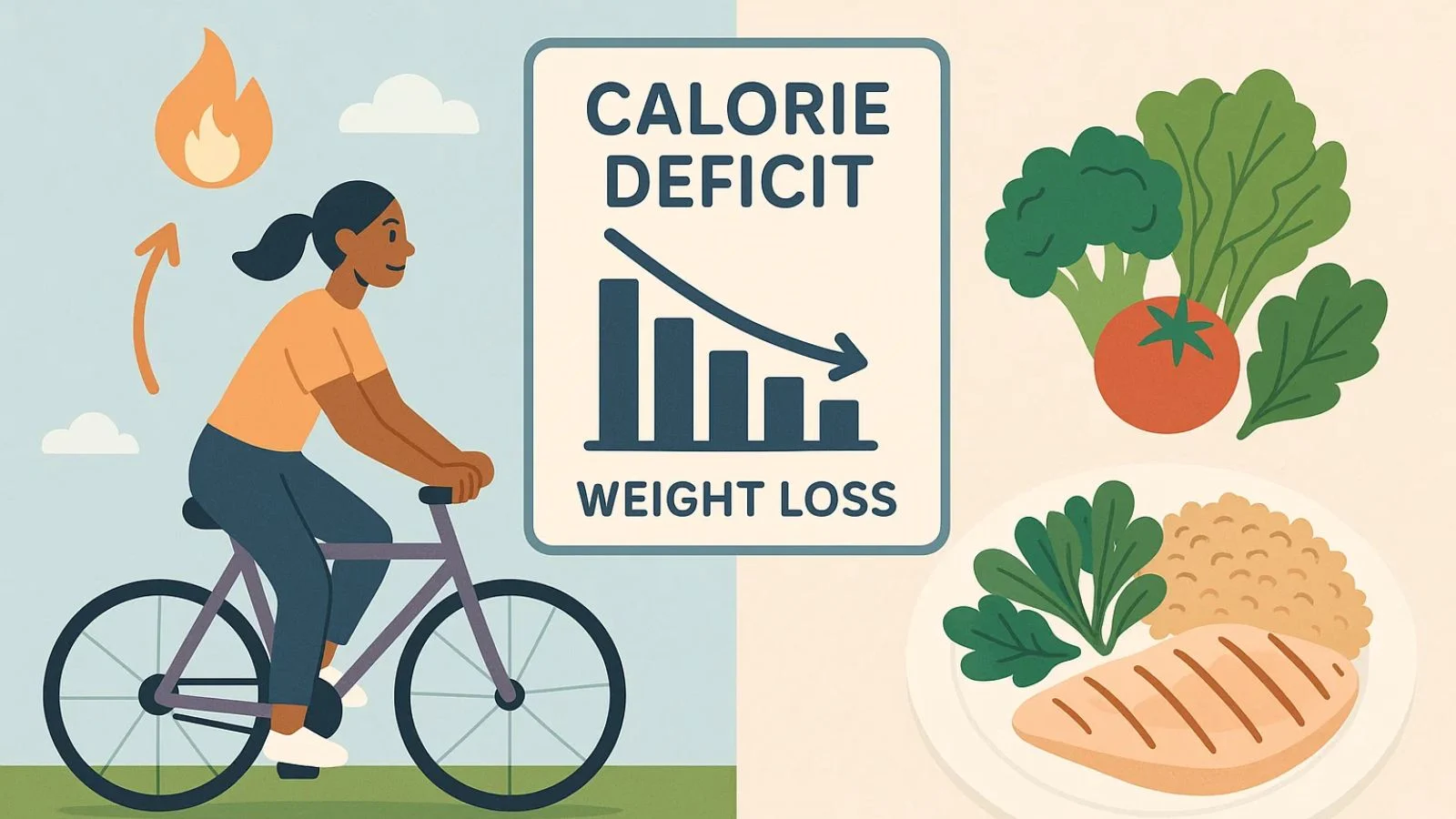
Before diving into calculators and numbers, let’s break down what a calorie deficit actually means. Your body burns a certain number of calories every day just by existing. This includes everything from breathing and pumping blood to thinking and moving around.
When you consume fewer calories than your body burns, you create a deficit. This forces your body to tap into stored energy (fat) to make up the difference, resulting in weight loss. The magic number for safe, sustainable weight loss is typically a deficit of 500 to 750 calories per day.
This translates to losing about 1 to 1.5 pounds per week, which health experts consider ideal. Losing weight too quickly can lead to muscle loss, nutritional deficiencies, and that dreaded rebound effect where the weight comes rushing back.
Why You Need a Calorie Deficit Calculator?
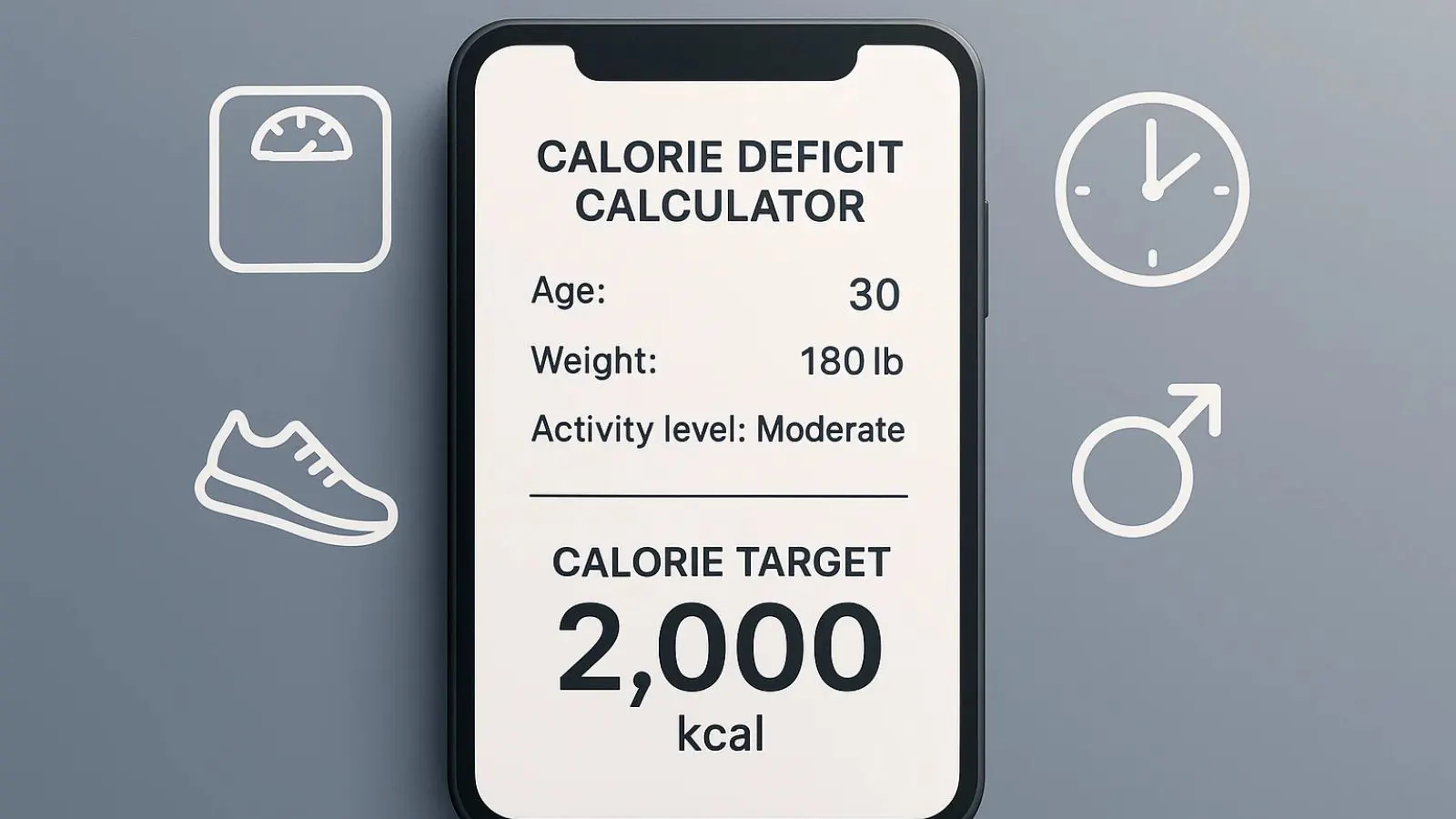
Here’s where many people go wrong: they guess their calorie needs or follow generic advice that doesn’t account for their unique body and lifestyle. A calorie deficit calculator eliminates this problem by considering multiple factors specific to you.
These calculators take into account your age, gender, current weight, height, and activity level to determine your Total Daily Energy Expenditure (TDEE). This is the number of calories your body burns in a typical day. From there, the calculator subtracts an appropriate amount to create your deficit, giving you a personalized daily calorie target.
Without this personalized approach, you might eat too little (slowing your metabolism and making you miserable) or too much (wondering why the scale isn’t budging). A calorie deficit calculator finds that sweet spot where you’re losing weight steadily without feeling like you’re starving.
How Does a Calorie Deficit Calculator Work?
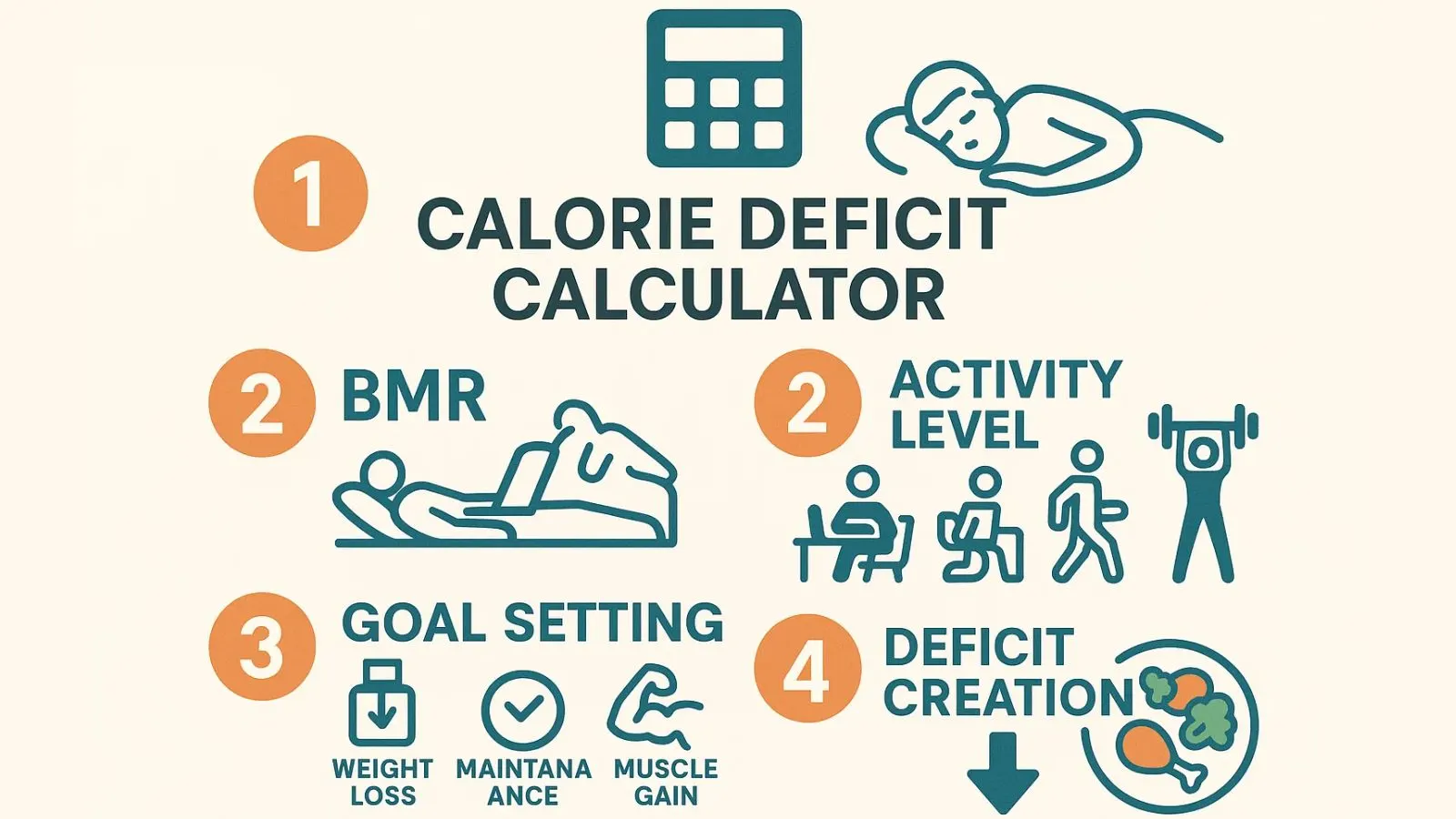
The science behind a calorie deficit calculator is straightforward but incredibly effective. Here’s the step-by-step process:
Step 1: Calculate Your Basal Metabolic Rate (BMR):
This is the number of calories your body needs at complete rest. Even if you stayed in bed all day, your body would burn this many calories keeping your organs functioning and maintaining basic life processes.
Step 2: Factor in Your Activity Level:
Are you sedentary, lightly active, moderately active, or very active? This multiplier is crucial because someone who works a desk job needs far fewer calories than someone who’s on their feet all day or hitting the gym regularly.
Step 3: Determine Your Goal:
Do you want to lose weight, maintain your current weight, or gain muscle? A calorie deficit calculator adjusts your numbers based on your specific goal.
Step 4: Create the Deficit:
The calculator subtracts the appropriate number of calories (usually 500-750) from your maintenance calories to give you your daily target for weight loss.
The Components That Make Your Calculation Accurate:
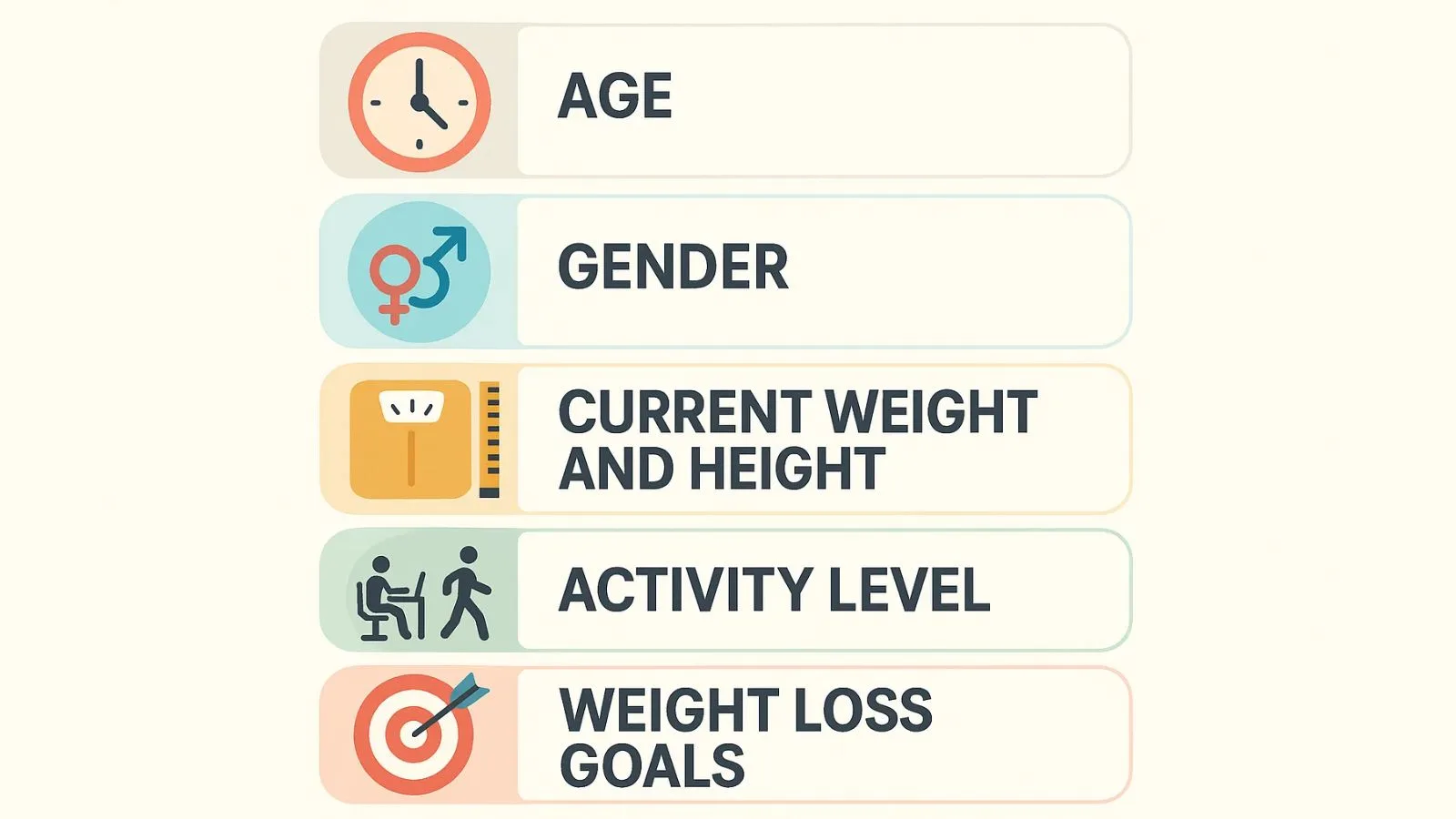
Not all calorie deficit calculators are created equal. The best ones consider these essential factors:
- Age: Your metabolism naturally slows as you age, meaning you burn fewer calories at 50 than you did at 25.
- Gender: Men typically have more muscle mass and higher metabolic rates than women, affecting calorie needs.
- Current Weight and Height: Larger bodies require more energy to function, so your starting point matters significantly.
- Activity Level: This is often where people miscalculate. Be honest about your actual activity, not what you aspire to do.
- Weight Loss Goals: How much weight you want to lose and by when affects the deficit size the calculator recommends.
Common Mistakes People Make With Calorie Deficit Calculators:
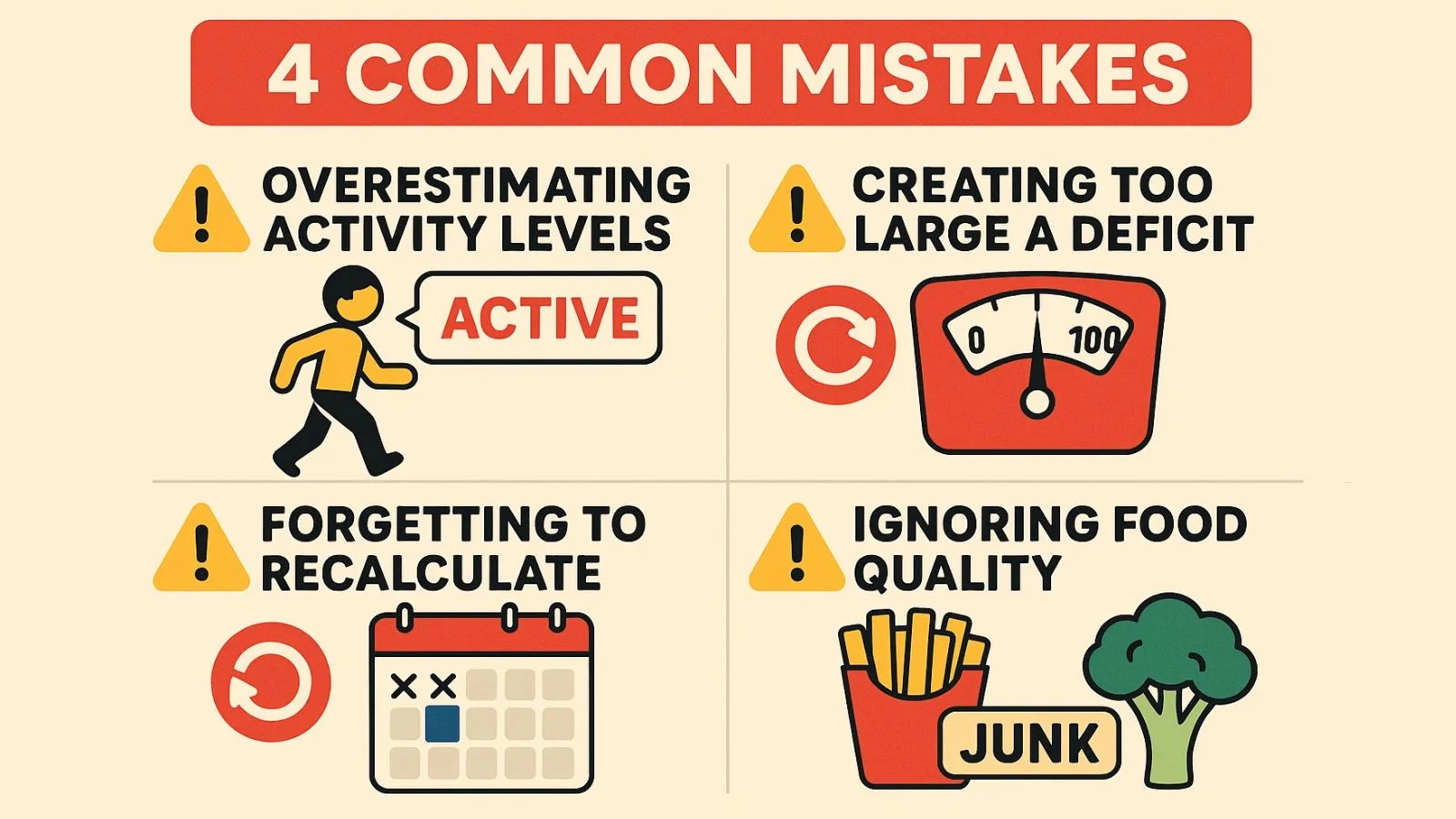
Even with the right tool, people can derail their progress. Here are the most common pitfalls:
- Overestimating Activity Levels: That 30-minute walk three times a week doesn’t make you “very active.” Be realistic.
- Creating Too Large a Deficit: Eating 1,200 calories when you should be eating 1,800 will backfire. Your body will slow down, you’ll feel terrible, and you’ll likely binge later.
- Forgetting to Recalculate: As you lose weight, your calorie needs change. Update your numbers every 10-15 pounds lost.
- Ignoring Food Quality: Yes, calories matter, but 1,500 calories of vegetables, lean protein, and whole grains will make you feel dramatically different than 1,500 calories of processed junk.
Making Your Calorie Deficit Calculator Work for Real Life:

Numbers on a screen mean nothing if you can’t translate them into actual meals and daily habits. Here’s how to bridge that gap:
Start by tracking everything you eat for a few days using your target calorie number. This isn’t about restriction yet, it’s about awareness.
You’ll quickly discover where your calories are actually going. That innocent coffee with cream and sugar? It might be 200 calories. The “small” handful of nuts from the break room? Another 150 calories.
Once you know your patterns, you can make strategic swaps. Replace calorie-dense foods with more filling options. A huge salad with grilled chicken, loaded with vegetables and dressed with vinegar, will keep you satisfied far longer than a small sandwich, yet might contain fewer calories.
Prioritize protein at every meal. Protein keeps you full, preserves muscle mass during weight loss, and actually burns more calories during digestion than carbs or fats. Aim for about 0.7 to 1 gram of protein per pound of body weight.
Also Read:
How Calorie Tracker Buddy Simplifies Your Journey:

While understanding your calorie deficit is crucial, tracking your daily intake can feel overwhelming. This is where Calorie Tracker Buddy becomes an invaluable companion in your weight loss journey.
Calorie Tracker Buddy takes the hassle out of daily tracking with its intuitive interface and comprehensive food database. Instead of manually calculating every meal, you can quickly log your food and instantly see how you’re tracking against your calorie deficit calculator targets. The app remembers your frequent meals, making logging faster each day.
What sets Calorie Tracker Buddy apart is its visual progress tracking. You can see your daily deficit at a glance, watch your weekly patterns emerge, and celebrate your consistency. The app sends gentle reminders to log meals, ensuring you stay accountable without feeling nagged.
The barcode scanner feature is particularly helpful when you’re shopping or eating packaged foods. Simply scan, and Calorie Tracker Buddy automatically adds the accurate nutritional information to your daily log. No more squinting at tiny labels or guessing portion sizes.
Perhaps most importantly, Calorie Tracker Buddy integrates seamlessly with the calorie targets from your calorie deficit calculator. You input your daily goal, and the app shows you in real-time how many calories you have remaining.
This prevents that end-of-day surprise where you’ve accidentally gone over your target. The app also tracks your weight trends over time, helping you see the correlation between your calorie deficit and actual results. When you’re having a tough week, looking back at your progress chart can provide the motivation you need to keep going.
Conclusion:
A calorie deficit calculator removes the mystery from weight loss, replacing guesswork with personalized, science-backed targets. By understanding your unique calorie needs and creating an appropriate deficit, you set yourself up for steady, sustainable progress. Remember, this isn’t about perfection, it’s about consistency. Use your calculator to establish your baseline, pair it with tools like Calorie Tracker Buddy to simplify daily tracking, and adjust as you progress. Your weight loss journey is uniquely yours, and with the right tools and mindset, you absolutely can master it.
FAQ’s:
Q1: Is a free calorie deficit calculator accurate?
Ans: Yes, most free calorie deficit calculators use established formulas like the Mifflin-St Jeor equation, which is scientifically validated and highly accurate for the general population.
Q2: How do I use a calorie deficit diet calculator effectively?
Ans: Input your accurate information, be honest about your activity level, and recalculate every 10-15 pounds lost. Consistency in tracking matters more than perfection in numbers.
Q3: What’s the best calorie deficit to lose weight calculator recommends?
Ans: Most calculators suggest a 500-750 calorie deficit daily, resulting in 1-1.5 pounds of weight loss per week, which is considered safe and sustainable by health professionals.
Q4: Can I trust what is calorie deficit calculator results?
Ans: These calculators provide excellent estimates based on scientific formulas. However, individual metabolism varies, so treat the results as a starting point and adjust based on your actual results over 2-3 weeks.