



Let’s be real, nobody wants to be that person at the table squinting at their phone, logging every topping while everyone else is laughing and eating. Eating out is supposed to be fun. And the good news? You don’t have to choose between enjoying yourself and staying on track with your goals.
Here’s what most people get wrong: they think calorie tracking at restaurants requires either perfect precision or giving up entirely. Neither is true. Being within 10–20% of reality is more than enough to make consistent progress over time. A rough idea of what’s on your plate is genuinely all you need, and this guide focuses specifically on pizza calories and burger calories, two of the most popular things people stress about when eating out, and the easiest to estimate once you understand what to look for.
Listen To The Podcast
Why Pizza Calories and Burger Calories Are Tricky to Nail
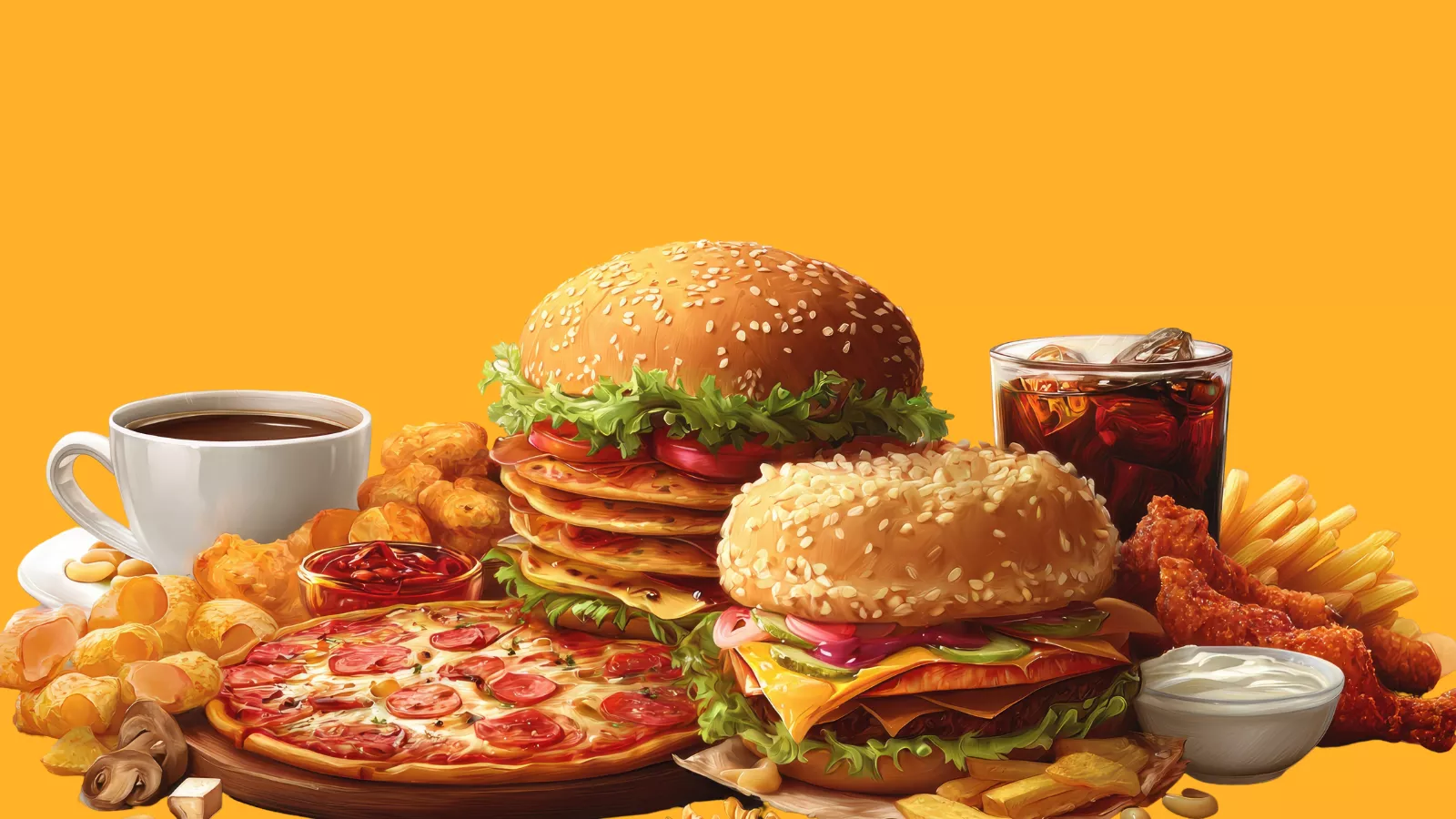 The honest reason people undercount restaurant meals isn’t laziness, restaurant portions are genuinely unpredictable. Pizza calories at one place look completely different from the same-sounding pizza two streets away because of size, crust thickness, and cheese load. A sit-down burger and a fast-food burger can share the same name while differing by 400 calories.
Most of the variation doesn’t come from the main ingredients anyway; it comes from the extras. The oil brushed on the crust, the generous handful of cheese, the sauce applied with a heavy hand. These “invisible” additions are where most estimates fall apart. A glossy shine on your pizza means extra oil, which bumps pizza calories higher than they look. A creamy sauce on your burger bun means more calories than the label suggests. Understanding the nutritional factors behind each ingredient, fat content, cooking method, and portion size gives you far more accuracy than memorizing specific numbers. Once you understand the logic, you can estimate confidently at any restaurant.
How Many Calories Are in a Pizza? A Realistic Breakdown
Pizza calories get a worse reputation than they deserve. The range is genuinely wide a single slice can land anywhere from 200 to 450 calories and the spread comes down to a handful of factors that are easy to read once you know what to look at.
Crust thickness is the first thing to assess. A thin-crust slice from a standard pizzeria runs 200–300 calories per slice. A thick, deep-dish, or stuffed crust jumps to 350–450 calories per slice before any toppings. The base alone accounts for more of the total than most people assume, which is why two pizzas with identical toppings can have very different pizza calorie counts.
Toppings are where pizza calories diverge most. A simple cheese or margherita pizza sits at the lower end of any range. Add pepperoni, sausage, or a second layer of cheese and you’re adding 50–100 extra calories per slice. A heavily loaded meat pizza can push each slice to 400–500 calories.
A simple guide for how many calories are in a pizza slice:
- Thin crust, simple toppings: 200–280 calories
- Regular crust, moderate toppings: 280–350 calories
- Thick crust, heavy toppings: 350–450+ calories
Most people eat 2–3 slices at a sitting. Two thin-crust cheese slices comes in around 400–600 calories, completely reasonable. Three slices of thick-crust loaded pizza can hit 1,200. Neither is a disaster; it’s just useful to know where your pizza calorie total is landing before you order rather than after.
If you’re at a chain restaurant, check the app or website: chains standardize their recipes, which means their listed pizza calories are actually reliable and worth using.
How Many Calories Are in a Burger? What the Numbers Look Like
Burgers follow a similar pattern to pizza calories: the base isn’t the problem, it’s everything that gets stacked on top. A simple single-patty burger with light sauce is a genuinely reasonable meal. The version that arrives at most restaurant tables is often a different story.
Start with the patty. A standard 4-oz single patty contributes roughly 250–300 calories before anything else. A double patty doubles that. Leaner ground beef or turkey sits at the lower end; a fattier smash-style patty sits higher.
The bun matters more than people expect. A standard bun is 120–150 calories. A brioche bun the kind most sit-down restaurants use runs 200–250 calories because of its butter and egg content. Not a reason to avoid it, just worth knowing.
Toppings and sauces are where burger calories really climb. Cheese adds 80–120 calories per slice. Bacon adds 80–100 per strip. A generous spread of mayo or special sauce adds 100–200 calories easily. Avocado or guacamole brings another 80–150. None of these are bad choices individually, but stacking several of them is how a 500-calorie burger becomes a 1,000-calorie burger without it feeling like you ordered anything excessive.
The honest range for how many calories are in a burger:
- Basic single patty, light sauce: 400–550 calories
- Standard with cheese and sauce: 600–750 calories
- Loaded (double patty, bacon, extra cheese, aioli): 900–1,200 calories
A fast food burger meal with medium fries typically lands in the 900–1,100 calorie range. A gourmet restaurant burger with sides can push past 1,200–1,400 depending on portion size.
Also Read
Smart Ways to Estimate Without Tracking Everything
Understanding pizza calories and burger ranges gives you the foundation now it’s about applying that knowledge quickly at the table. These practical methods work even when you have zero access to nutritional information.
Use your hand as a built-in portion guide. Your palm (without fingers) represents roughly 3–4 oz of protein about 150–250 calories depending on fat content. A thumb-sized amount of sauce or mayo is approximately 80–120 calories. Once you start mentally measuring rather than eyeballing the whole plate, your estimates for pizza calories and burgers improve significantly.
Anchor to something familiar. If you know a Big Mac is around 550 calories, use it as a reference point. A gourmet burger that’s clearly bigger with more toppings? Probably 800–900. A simple grilled option that’s leaner? Maybe 400–500. The same anchoring works for pizza if you know a standard slice at your local chain is 280 pizza calories, a slice at a new place with similar toppings is a reliable starting point.
Consider the cooking method. For the same portion of food, a fried version typically carries 1.5–2 times the calories of a grilled one. Choosing between a grilled chicken burger and a crispy fried version of similar size? That difference is roughly 200–300 calories.
When you’re unsure, lean slightly high. Restaurant kitchens use more oil and sauce than home cooking because it tastes better. If your estimate sits between two numbers, take the higher one. Adding 10–20% to your rough calculation is usually more accurate than assuming the conservative figure.
Where Estimation Ends And Smarter Tracking Begins
All of this works. If you understand pizza calories, burger portions, and the impact of toppings, you can walk into almost any restaurant and make a solid estimate without stress.
But estimation has its limits. Some days you’re guessing between two numbers. Some meals are harder to break down. And over time, those small gaps can add up especially if you’re eating out regularly.
That’s where using a tool designed for real-life eating habits makes a noticeable difference. Not something complicated or time-consuming, but something that fits into your routine as easily as the methods you’re already using.
What Makes Calorie Tracker Buddy Actually Useful

If you want to go from rough estimates to confident tracking without turning meals into a math problem, Calorie Tracker Buddy is built exactly for that middle ground. It keeps things simple, fast, and realistic while still giving you the clarity you need.
Here’s how it fits into everyday eating:
Snap Your Meal, Skip the Guesswork
Instead of mentally breaking down every ingredient, you can just take a quick photo. The app scans your meal and gives you a calorie and nutrition estimate in seconds. It’s especially useful when you’re dealing with mixed meals like pizza slices or loaded burgers where exact tracking is usually a hassle.
Track What You Eat Without Slowing Down
Whether it’s a quick lunch or a full dinner outing, logging your food takes seconds. You get instant feedback on how your meal fits into your daily intake, so you’re not left wondering if you went over or stayed on track.
See How Your Day Balances Out
Tracking isn’t just about what you eat it’s about how everything adds up. From workouts to everyday movement, your calorie burn is automatically considered, giving you a clearer picture of your overall balance.
Understand Progress Without Overthinking It
Every meal you log updates your daily progress. Instead of guessing whether one burger “ruined” your plan, you can see exactly where you stand and adjust your next meal accordingly.
Built-In Motivation That Doesn’t Feel Forced
Consistency is the hardest part of tracking. That’s why the app adds a simple layer of motivation, your in-app companion grows as you stay consistent, making the process feel a bit more rewarding without being distracting.
Share Progress If You Want To
Some people stay consistent by keeping things private. Others do better with accountability. If you’re in the second group, you can share meals, streaks, and progress with others or just keep it to yourself.
Conclusion
Eating pizza and burgers while working toward your health goals isn’t a contradiction it just requires knowing roughly what you’re working with. Pizza calories and burger calories both follow predictable patterns once you understand what drives them: crust thickness, patty size, and the extras that quietly add up.
Keep those factors in mind and you can estimate your totals at virtually any restaurant without stress or guilt. A few consistent habits around estimation, applied most of the time, are worth far more than perfect tracking on some days and complete abandonment on others. Enjoy the meal, make a reasonable call on the pizza calories or burger count, and get back on track just as easily with the next one.
FAQs
How does a Recipe Calorie Calculator App improve accuracy compared to manual tracking?
A Recipe Calorie Calculator App fits naturally into the idea discussed in this blog—reducing effort while improving consistency. Instead of manually estimating every ingredient or relying on rough guesses, the app calculates the full meal for you and breaks it down per serving. This saves time and removes the friction that often slows people down when tracking food.
Does thin-crust pizza actually save a significant number of calories compared to thick crust?
Yes, meaningfully so. Thin-crust pizza calories typically run 200–280 per slice compared to 350–450 for a thick or deep-dish slice with similar toppings. Over a 3-slice meal, that’s a potential difference of 400–500 calories enough to matter if pizza is a regular part of your week. The trade-off is that thin crust tends to be less filling, so some people end up eating more slices. Total intake still wins over crust choice alone.
Are veggie toppings on pizza actually lower calorie, or does preparation matter?
Plain vegetable toppings mushrooms, peppers, onions, spinach, add minimal pizza calories compared to meat toppings. However, if those vegetables have been sautéed in oil before being added (common in restaurant kitchens), the oil itself adds meaningful calories. A pizza marketed as “loaded with veggies” can still have higher pizza calories than expected if the toppings look glossy or oily. If that’s the case, add an extra 50–100 calories to your estimate.
How much do burger sauces and condiments actually matter?
More than most people expect. A generous spread of mayo alone is 100–150 calories. Special sauces, aioli, and chipotle-style spreads are equally calorie-dense and are typically applied more generously in restaurant kitchens than at home. If your burger arrives with a clearly saucy, glossy bun, it’s reasonable to add 150–200 calories to your base estimate just for the condiments. Asking for sauce on the side gives you full control without losing any of the flavor.
How can I calculate calories in rice when eating out or estimating meals?
To calculate calories in rice, you don’t need exact measurements. A standard cup of cooked white rice typically contains around 180–220 calories, but this can increase if oil, butter, or ghee is added.