


Has your weight loss come to a sudden stop even after doing everything right?
Are you wondering if you’ve hit a weight loss plateau?
This stage can feel confusing and frustrating. You are eating the same foods and exercising consistently, but the result remains stagnant.
The truth is that a weight loss plateau is normal. And it can be fixed without having to starve yourself or cut calories dramatically.
In this guide, you will learn “what is a weight loss plateau,” how many weeks is considered a weight loss plateau, and how to break a weight loss plateau without starving yourself.
🎧 Listen to the blog:
What Is a Weight Loss Plateau?
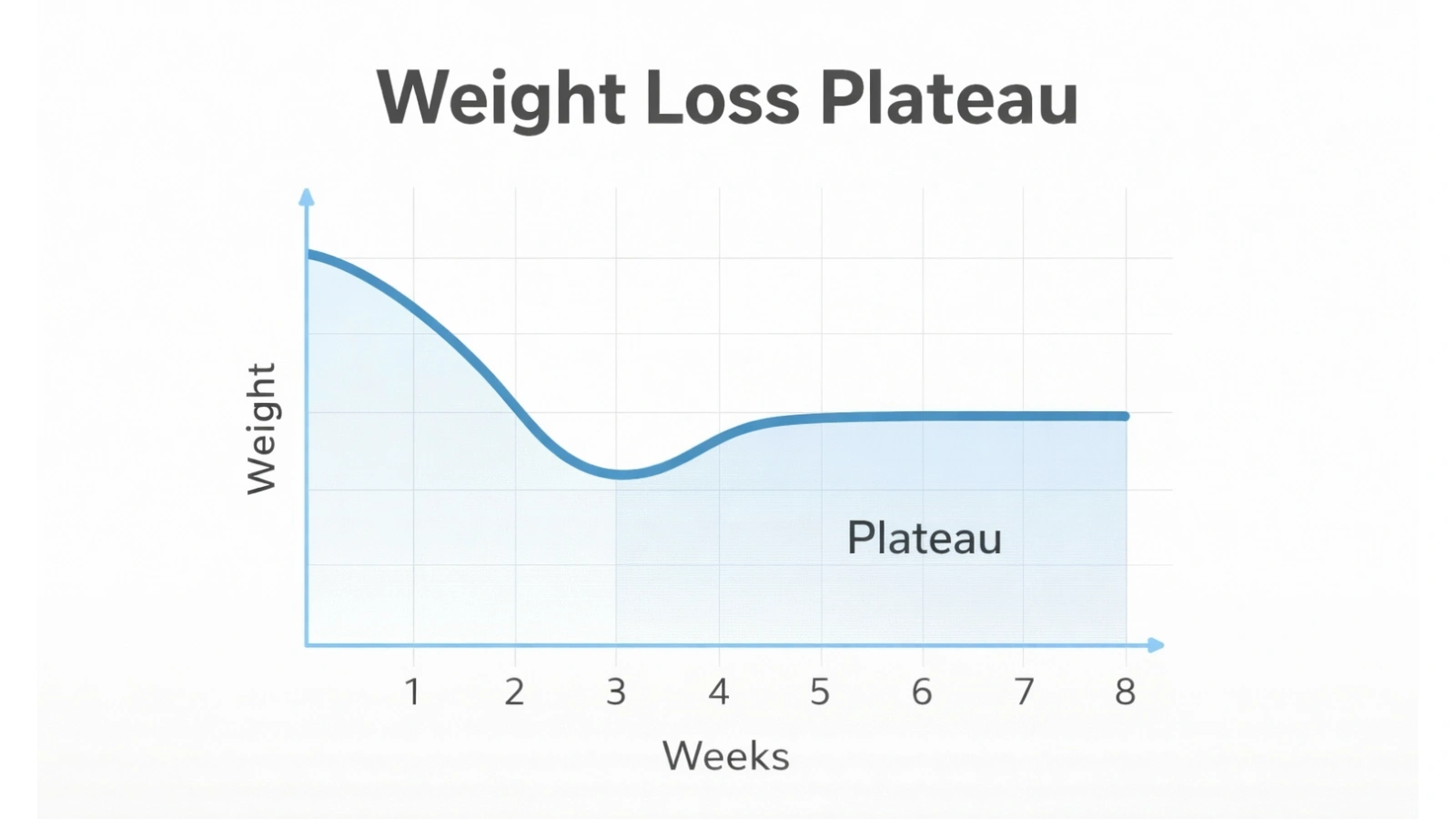
So, what is a weight loss plateau exactly?
When your body stops losing weight despite maintaining your calorie deficit and exercise routine, this phenomenon is called a weight loss plateau. During a weight loss plateau, the scale does not move for several weeks.
The weight you lose at the start of your journey is rapid and mostly black water weight.
As dieting continues, your metabolism adapts.
This adaptation often triggers a weight loss plateau.
Your body becomes more efficient.
It burns fewer calories for the same activity. This is a survival mechanism.
Your body wants stability, not continuous fat loss.
Understanding this makes a weight loss plateau less alarming.
How Many Weeks Is Considered a Weight Loss Plateau?
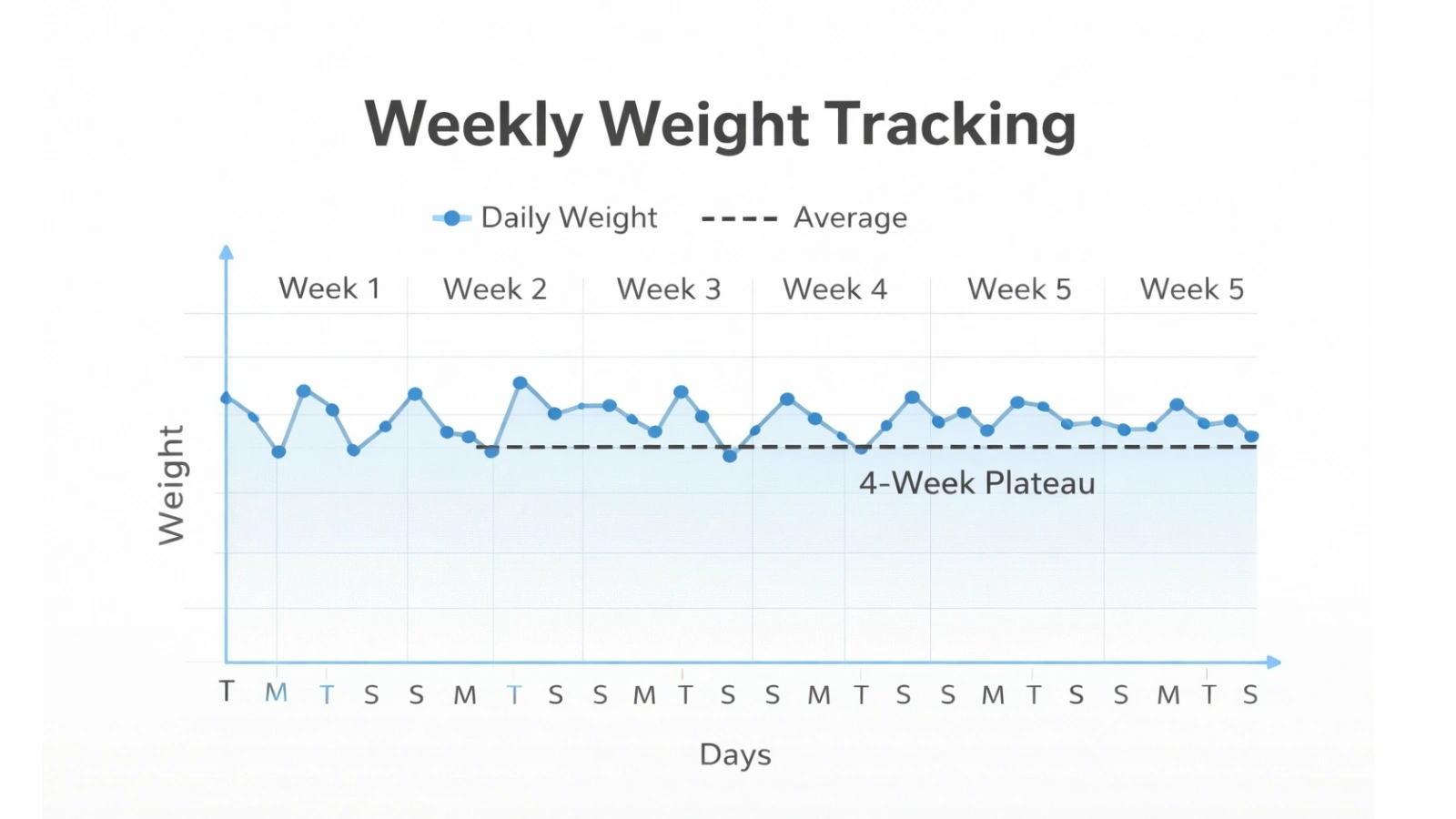
A common assumption among people is thinking they hit a weight loss plateau after a few days of following plans and still seeing no change. But daily fluctuations are normal.
A few of the key factors affecting weight loss are water retention, sodium intake, and hormones.
So, is there a certain time period after which you can consider your plan a weight loss plateau?
If your weight has not changed for three to four consecutive weeks, despite consistent tracking and training, you are likely experiencing a true weight loss plateau.
Anything shorter may not be a real weight loss plateau.
Looking at weekly averages instead of daily numbers is ideal. Patience prevents unnecessary adjustments.

Why Does a Weight Loss Plateau Happen?
A weight loss plateau usually has valid reasons.
Here are the most common factors of a weight loss plateau.
1. Your Calorie Needs Decreased
As you start to lose weight, your body requires fewer calories. A smaller body burns less energy.
If you keep eating the same amount, your calorie deficit shrinks.
This often leads directly to a weight loss plateau.
2. Tracking Became Less Accurate
Portions slowly increase over time.
Extra bites and drinks go unnoticed.
Hidden calories can eliminate your deficit.
Many cases of weight loss plateau are simply tracking inconsistencies.
3. Reduced Daily Movement
During long dieting phases, people subconsciously move less. This reduces daily calorie burn.
Lower activity can trigger a weight loss plateau even if workouts stay consistent.
4. Muscle Loss
Muscle mass decreases if protein intake is low and there is limited strength training.
Less muscle slows metabolism, and slower metabolism results in a weight loss plateau more likely.
5. Stress and Sleep Issues
High stress is the core reason for raised cortisol levels, and poor sleep disrupts hunger hormones.
Both make a weight loss plateau harder to overcome.
Read more:
Is the “Carnivore Diet” Safe? A Calorie Perspective
Weight Loss Goals: Set Realistic Targets and Achieve Them
How to Calculate Calorie Deficit Accurately
You have to make sure you are truly in a calorie deficit to overcome a weight loss plateau.
Here is how to calculate calorie deficit properly.
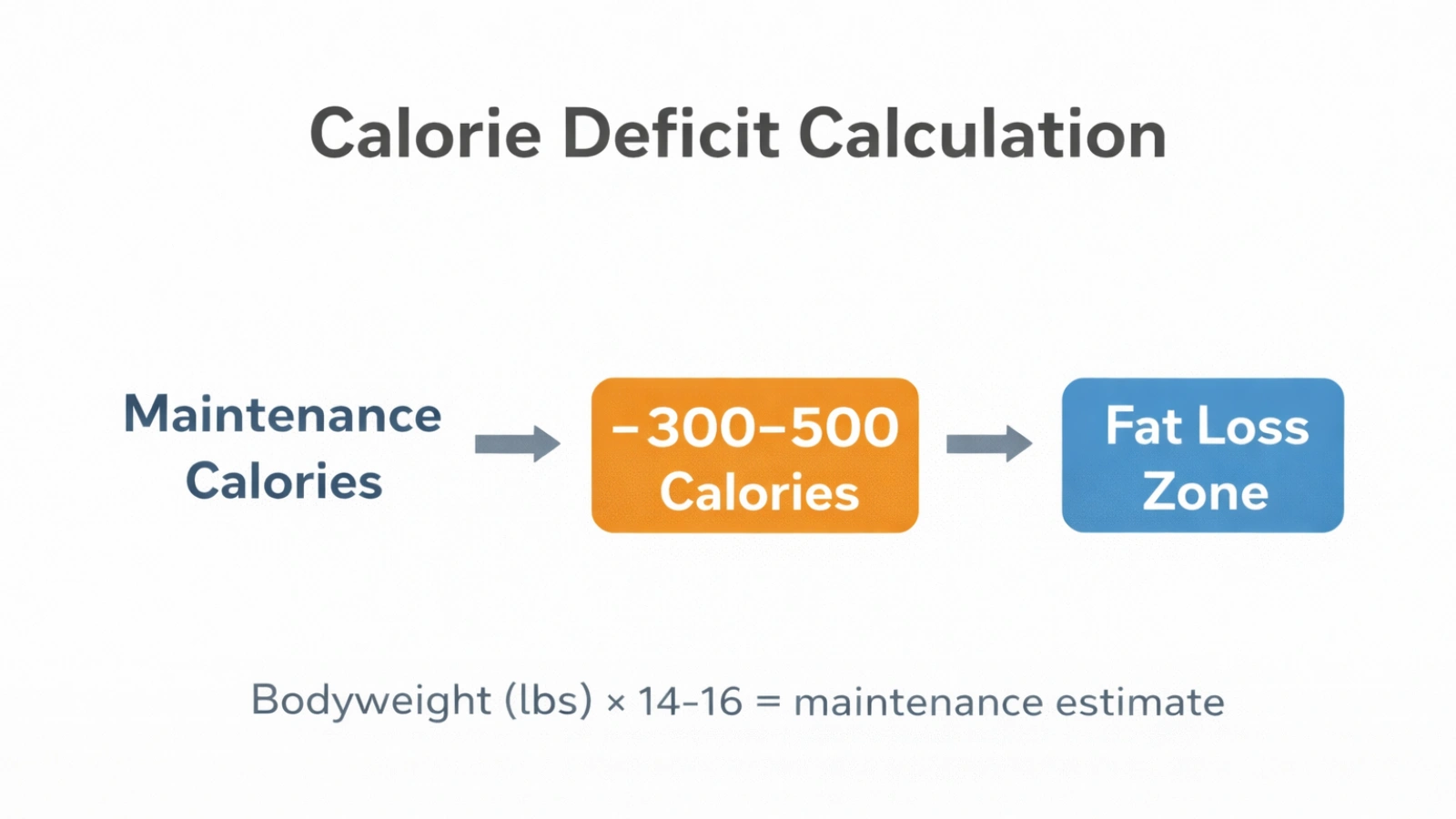
Step 1: Monitor And Estimate Maintenance Calories
Maintenance calories are the calories that are needed by the body for basic functions.
A quick estimate is multiplying your body weight in pounds by 14-16.
Less active individuals stay near 14.
More active individuals move closer to 16.
Step 2: Create a Moderate Deficit
Subtract 300-500 calories from maintenance.
This is for supporting sustainable fat loss.
You should not follow extreme cuts as it can worsen a weight loss plateau by slowing metabolism further.
Step 3: Track Consistently
Tracking your progress removes guesswork. When people experience a weight loss plateau, inaccurate logging is often the hidden cause.
Using a structured system helps reveal patterns.
Many people find that tools like Calorie Tracker Buddy simplify this process. Logging meals consistently makes it easier to see whether your weight loss plateau is caused by improper calorie intake or metabolic adaptation.
The goal is clarity, not obsession. When you understand your numbers and patterns, breaking a weight loss plateau becomes strategic instead of emotional.
How To Break a Weight Loss Plateau Without Starving Yourself
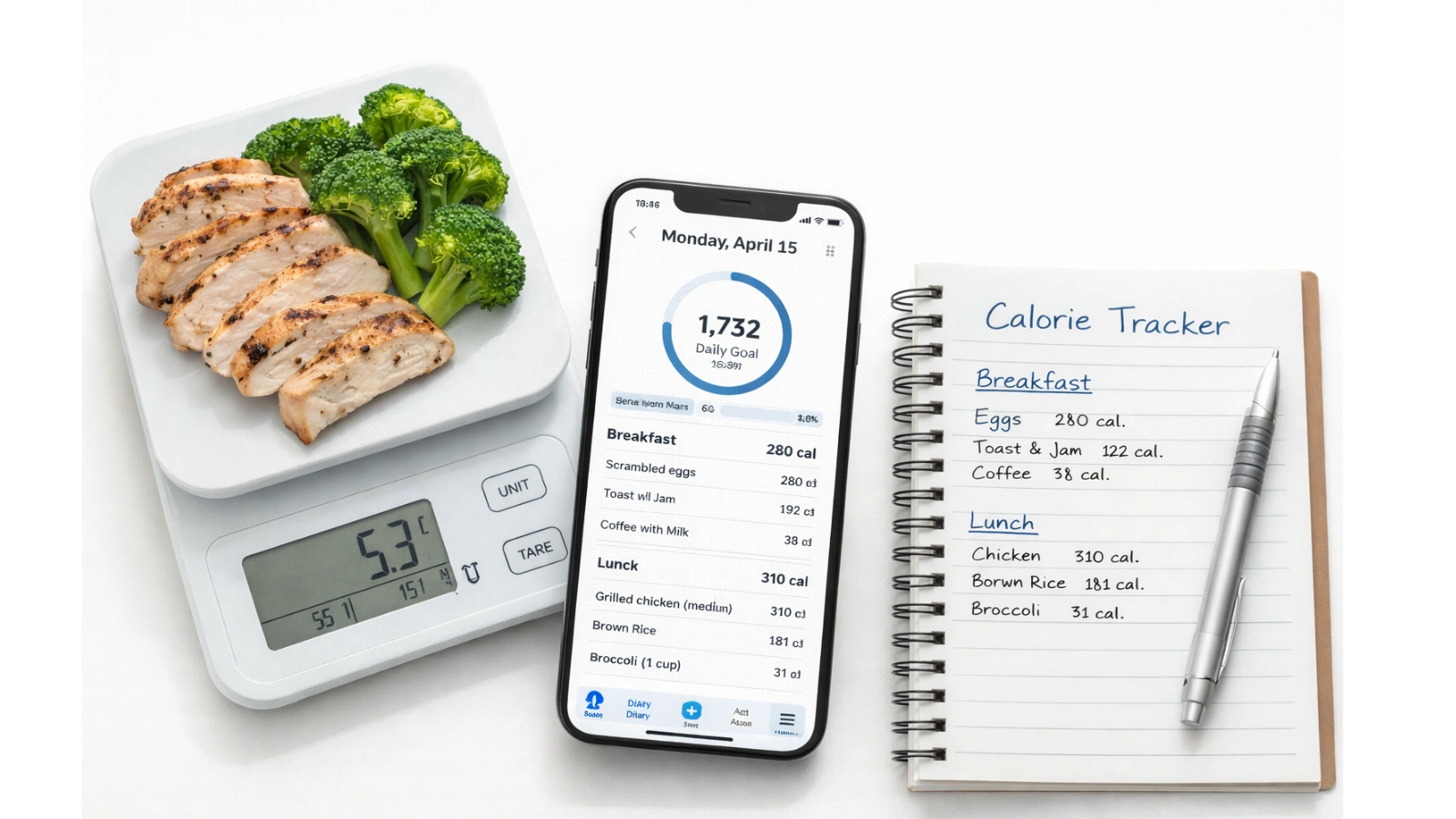
Now let’s go through some practical solutions. Here is how to break a weight loss plateau safely.
1. Recalculate Your Calories
If you lost 10–20 pounds, your maintenance calories changed. Recalculate and adjust slightly. Even a small change of 100–150 calorie reduction can break a weight loss plateau.
Small changes often restart fat loss.
2. Increase Protein Intake
Protein preserves muscle mass. Increasing protein intake makes you feel full longer and supports metabolism.
Higher protein intake helps prevent muscle loss during a weight loss plateau.
Aim for 0.7–1 gram per pound of body weight.
3. Prioritize Strength Training
Lift weights at least three times per week on average. Strength training signals your body to preserve muscle.
Maintaining muscle helps resolve a weight loss plateau more effectively than excessive cardio vs weight training.
4. Increase Daily Step count
Non-exercise movement matters. You should at least have 8,000–10,000 steps daily.
Increasing daily movement often helps overcome a weight loss plateau without cutting more calories.
5. Take a Short Diet Break
You can sometimes get through a weight loss plateau by eating at maintenance for one to two weeks, this relieves some of the stress of dieting or stress on your hormones.
After taking that time off, return to eating at a moderate calorie deficit. This helps effectively in resolving long-standing weight loss plateaus.
6. Improve Sleep
Sleep regulates hunger hormones.
Aim for 7–9 hours nightly.
Better recovery supports progress beyond a weight loss plateau.
7. Manage Stress
Chronic stress can be a crucial factor in making a weight loss plateau harder to fix.
Simple habits like walking outdoors or deep breathing reduce cortisol levels and lower stress improves consistency.
How To Overcome Weight Loss Plateau Without Extreme Dieting
Panic is the worst response to a weight loss plateau. Drastically cutting calories increases fatigue and cravings.
It often can worsen weight loss plateau.
Instead, follow this structured approach:
- Verify tracking accuracy.
- Recalculate maintenance calories.
- Adjust calories slightly.
- Increase protein intake.
- Add strength training.
- Improve sleep and stress management.
This systematic strategy works better than drastic restriction.
Fat loss is not linear.
A weight loss plateau is part of the process, not the end of it.
Signs Your Weight Loss Plateau Is Temporary
Oftentimes a weight loss plateau gets hidden and is not visible in progress.
You may notice:
- Smaller waist measurements
- Increased strength
- Clothes fitting better
- Visible muscle definition
These are signs of body recomposition.
The scale may pause, but fat loss can continue during a weight loss plateau. You should track multiple indicators, not just weight.
Final Thoughts
A weight loss plateau feels discouraging and demotivating. But a weight loss plateau is simply feedback from your body not the result of your complete efforts.
Now you understand:
- What is a weight loss plateau
- How many weeks is considered a weight loss plateau
- How to calculate calorie deficit properly
- How to break a weight loss plateau without starving yourself
- How to overcome weight loss plateau strategically
Instead of starving yourself, adjust intelligently. Recalculate your numbers, track your calories consistently. Lift weights and move daily.
A weight loss plateau is temporary when your strategy evolves.
Stay patient.
Stay consistent.
And your progress will continue.
FAQs
Can a weight loss plateau last for months?
Yes, if no changes are made, a weight loss plateau can definitely last for several months. If calorie intake, activity levels, and recovery stay the same, your body is likely to hold on to the current weight.
Can a weight loss plateau be a sign that metabolism is damaged?
A weight loss plateau does not mean that your metabolism is damaged. It is completely normal for metabolism to get adjusted during dieting. It is only a temporary change and not permanent damage.
Can hormonal changes cause a weight loss plateau?
Yes, stress, menstrual cycles, thyroid function, or prolonged dieting, hormonal fluctuations can affect one’s weight. Nevertheless, the main factor for fat loss is still calorie balance.
Is it possible to gain muscle during a weight loss plateau?
Yes, especially for beginners or those returning to training. You may lose fat while gaining muscle, which can make the scale appear unchanged despite body composition improvements.