


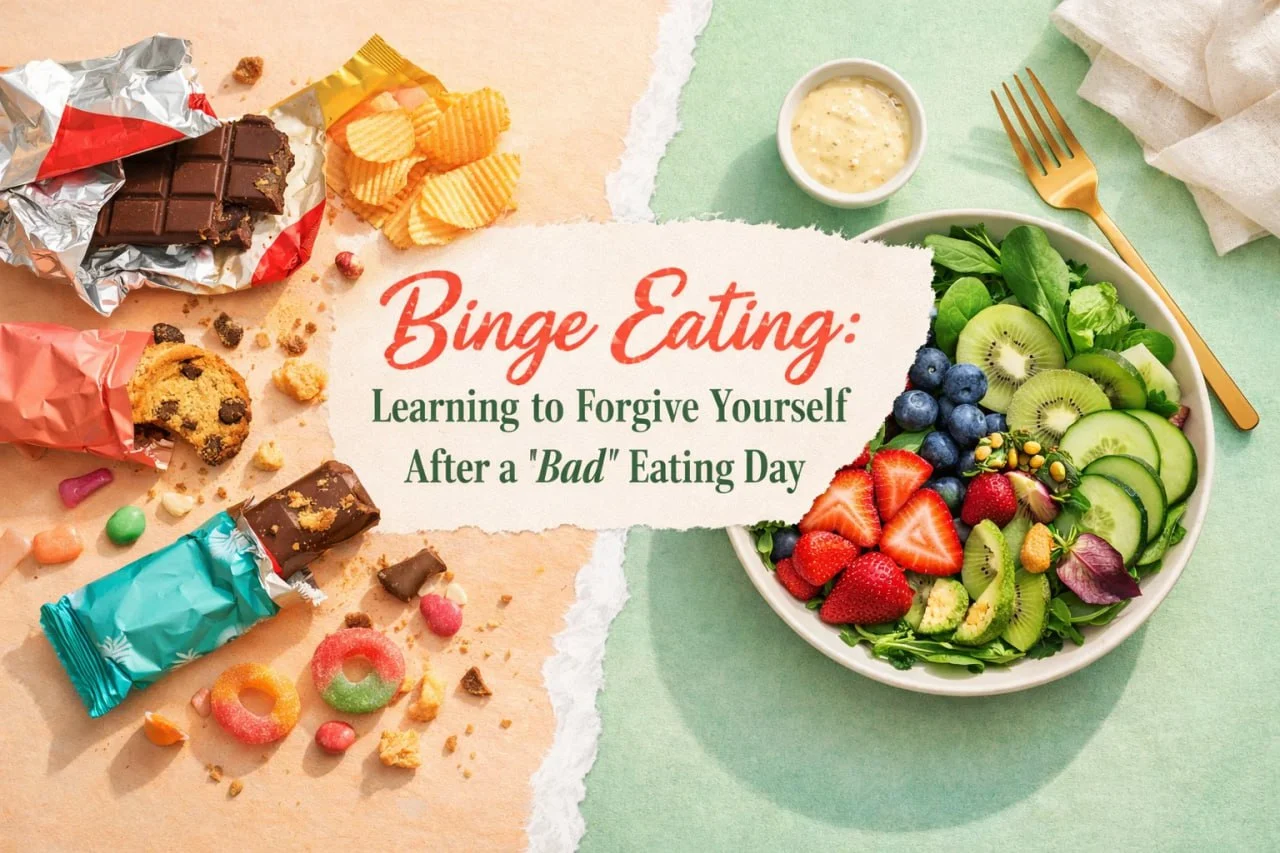
Binge eating can feel like a personal failure, particularly when it occurs after a day that felt like a setback. Whether you overindulged in comfort foods or let stress guide your food choices, the emotional burden of overeating can be overwhelming.
The most important step after a “bad” eating day is learning to forgive yourself. Bad Eating Day is not a moral failing; it’s a behavior that many people struggle with, and it’s possible to heal from it.
In this blog, we’ll explore how to overcome the guilt, shame, and self-criticism that often accompany eating episodes.
By understanding the root causes and offering compassionate self-care, you can learn to handle eating with grace and work toward a healthier, more balanced relationship with food.
Listen to this blog now!
What’s Really Happening When We Overeat?
Binge eating typically involves consuming large amounts of food in a short period, often coupled with feelings of losing control. While occasional overeating happens, It is a more frequent behavior, often driven by emotional distress. It’s not about the food itself but the inability to stop eating excessively once you start.
Many people turn to food as a way to cope with emotions like stress, anxiety, loneliness, or sadness. Although a “bad” eating day might provide temporary relief, it often leads to guilt once the episode ends. Recognizing that a diet setback day is a coping mechanism rather than a reflection of your character can be liberating.
One day of overeating doesn’t undo your progress or make you less worthy of self-care. Instead, it’s an opportunity for growth and reflection.
Why Do We Binge Eat?
To truly forgive yourself after a binge eating episode, it’s helpful to understand why Overeating occurs in the first place. For some individuals, it’s linked to a psychological or emotional trigger. It might be stress at work, a difficult relationship, or even a negative body image that leads to a binge.
Binge Eating Disorder (BED) is a medical condition where individuals experience repeated episodes of uncontrollable overeating. Those with BED may feel helpless, even when they recognize the harm it causes.
But not all compulsive eating is tied to a clinical disorder. Sometimes, it’s simply an unhealthy response to a difficult situation. If you’ve had a “bad eating day,” it’s important to acknowledge the emotional triggers behind the binge without judgment. Understanding these triggers helps you build healthier coping strategies for the future.
Why Is Self-Forgiveness Crucial After a “Bad” Eating Day?

A “bad” eating day doesn’t define who you are. It’s simply a moment, and it doesn’t reflect your ability to succeed or your worth.
After binge eating, feelings of guilt and shame often follow, but these emotions can lead to a cycle of self-punishment, making things worse by triggering more eating as a way to cope. The key to breaking this cycle and moving forward is self-forgiveness.
Forgiving yourself doesn’t mean excusing your behavior; it means accepting that binge eating is a pattern that can be understood and changed. One overeating episode doesn’t erase your progress or make you less deserving of self-love. In fact, practicing self-forgiveness helps you let go of guilt, find peace, and turn the experience into an opportunity for growth.
The harsh thoughts that often follow eating, like “I have no willpower” or “I’m weak,” can reinforce the idea that it is a moral failure. This is far from the truth. Instead of labeling yourself as “out of control,” try viewing the experience as a chance to grow. Reflect on what led to the binge: “What caused this behavior?” and “How can I handle similar emotions in the future?”
By shifting your mindset from self-criticism to growth, you can focus on learning from the experience, not punishing yourself.
Remember, binge eating isn’t about lacking willpower—it’s often a response to stress, anxiety, or emotional triggers. With self-compassion, you can break the cycle and build a healthier relationship with food.
How to Handle a “Bad” Eating Day?
We all have days when our eating habits don’t align with our goals, and it’s essential to respond to these days with kindness. Here are some practical tips for moving past a “bad” eating day:
1. Acknowledge the Emotion
Instead of dismissing the experience, acknowledge the feelings behind the binge. Were you feeling stressed? Lonely? Bored? By addressing the emotion behind the binge, you can better understand your triggers.
2. Practice Mindfulness
Mindfulness is a powerful tool for managing binge eating. By practicing mindfulness, you can slow down and reflect on your eating habits without judgment. Instead of focusing on what you ate, focus on how the food made you feel. Was it comforting? Did it bring momentary relief?
Mindful eating encourages you to experience food with full awareness, which can help prevent overeating in the future.
3. Focus on Your Health, Not Your Mistakes
A “bad” eating day is just that, a day. It’s not a reflection of your long-term health or progress. Instead of obsessing over the binge, focus on your overall health and wellness goals. Treat your body with the respect it deserves by nourishing it with nutritious meals moving forward.
4. Re-establish Healthy Routines
The key to breaking free from binge eating is consistency. After a binge, it’s essential to get back on track with your regular eating routine. While it’s tempting to skip meals or engage in restrictive behaviors after overeating, this can lead to further binge episodes. Instead, focus on balanced meals and snacks throughout the day.
5. Seek Support
If excessive eating is something you struggle with regularly, it might be helpful to seek support from a counselor, therapist, or support group. Working through binge eating with a professional can help you develop healthier coping strategies and address underlying emotional triggers.
Role Of “Eating Once a Day” Or “Eating One Meal a Day”
There is a trend among some people to practice extreme eating behaviors, such as eating once a day or eating only one meal a day. While some individuals find this approach works for them, it can also lead to feelings of deprivation, which may trigger overeating or binge-eating episodes.
If you’re struggling with binge eating, it’s essential to recognize that restrictive eating behaviors, like eating once a day, can exacerbate the problem. Your body needs regular nourishment to function properly, and cutting back too severely can leave you feeling deprived and more likely to binge later. Instead of focusing on extreme eating patterns, aim for a balanced approach that nourishes both your body and mind.
4 Practical Steps to Handle a “Bad” Eating Day

Overcoming binge eating and developing a healthier relationship with food is a process that takes time and patience. It involves not only forgiving yourself after a “bad” eating day but also learning to nurture yourself with love and care.
Here are some strategies for creating a sustainable, healthy relationship with food:
1. Learn to Listen to Your Body
Your body is your best guide when it comes to eating. Pay attention to hunger and fullness cues, and eat when you’re genuinely hungry rather than as a response to emotions or stress. By tuning into your body’s signals, you’ll develop a healthier, more intuitive relationship with food.
2. Avoid Dieting Mentalities
Fad diets and restrictive eating plans may promise quick results, but they often lead to binge eating and unhealthy eating behaviors. Instead of dieting, focus on making balanced food choices that support your overall health and well-being.
3. Practice Self-Compassion
Be kind to yourself, especially after a binge eating episode. Treat yourself the way you would treat a friend who was going through a tough time. Instead of focusing on guilt or shame, remind yourself that you are worthy of love and respect, no matter what you eat.
4. Celebrate Small Wins
When you experience progress, no matter how small, celebrate it! Whether it’s eating a balanced meal without feeling guilty or going a day without binge eating, every step forward is a success. Recognizing these wins will help build your confidence and motivation to continue making positive changes.
Read More…
How To Get Back On Track After A Week Of Binge Eating?
Intuitive Eating Vs. Calorie Tracking: Can They Work Together?
Averaging It Out: A Flexible Approach to Handling Binge Eating

One of the most effective strategies when dealing with binge eating is to practice averaging your calories and macros over the course of the week. Here’s how it works:
Imagine you’re following a cutting diet aiming for 1800 calories a day. If you hit your targets for the first two days, but on the third day you eat 2400 calories, don’t panic. Instead of letting the guilt take over, simply reduce your intake by 150 calories over the next four days. By the end of the week, your average is still on track, and the “bad” day won’t hurt your progress.
Here’s an example:
-
Monday: 1800 calories
-
Tuesday: 1800 calories
-
Wednesday: 2400 calories
-
Thursday: 1650 calories
-
Friday: 1650 calories
-
Saturday: 1650 calories
-
Sunday: 1650 calories
This weekly averaging strategy helps you stay on track even after a setback, preventing you from spiraling into a binge cycle.
Calorie Tracker Buddy to Heal from a “Bad” Eating Day
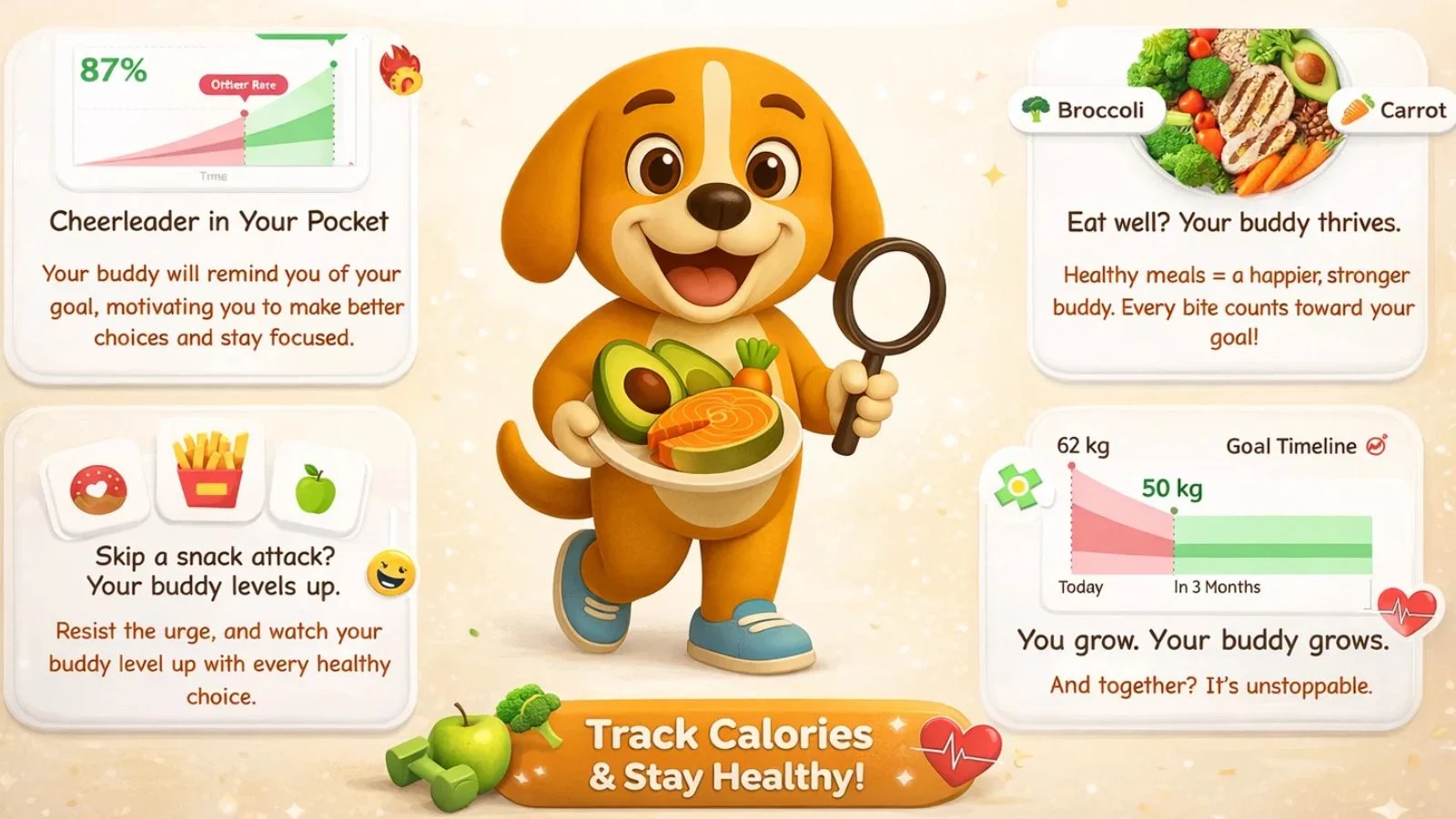
Tracking your food intake with tools like Calorie Tracker Buddy can be a valuable step toward building a healthier relationship with food. After a “bad” eating day, it’s easy to feel disconnected from your goals, but using a calorie tracking app can help you regain control and make healthier choices moving forward.
Calorie Tracker Buddy allows you to monitor your food intake, track your nutritional goals, and identify patterns in your eating habits. By logging your meals and snacks, you can gain insight into your eating behaviors and how they align with your health goals. This practice doesn’t just help you manage your calorie intake; it also supports mindful eating, helping you stay aware of your body’s needs and emotional triggers.
Using Calorie Tracker Buddy can be especially helpful when dealing with overeating, as it allows you to track progress and set realistic, sustainable goals. The app helps you stay accountable without feeling restricted, as it encourages balanced eating rather than drastic dietary changes. It can serve as a tool for reflection, helping you understand how to nurture your body with the right foods and avoid emotional eating triggers.
How Calorie Tracker Buddy Can Help You Rebuild After a “Bad” Eating Day?
- Track and Reflect: After a binge, instead of beating yourself up, use the app to log what you ate. Reflecting on the foods you consumed can help you identify any emotional or physical triggers and guide you toward healthier choices in the future.
- Set Manageable Goals: Set daily or weekly calorie goals that are achievable and balanced. Rather than focusing on restriction, the app helps you build a positive relationship with food by encouraging gradual progress.
- Mindful Eating: Use the app’s features to track not just calories but also nutrients, allowing you to focus on nourishing your body. This can help you develop more mindful eating habits, making it easier to move past feelings of guilt after a binge.
- Celebrate Small Wins: Every time you successfully meet your nutritional goals or make a healthier food choice, celebrate it! With Calorie Tracker Buddy, small victories can build momentum and improve your confidence in making lasting changes.
A Fresh Start: Forgiving Yourself and Embracing Progress
Binge eating is a complex issue that often involves emotional triggers, stress, and unhealthy coping mechanisms. If you’ve had a “bad” eating day, it’s important to practice self-forgiveness, reflect on the emotional causes, and develop healthier habits moving forward.
Remember, a “bad” eating day is not a moral failure; it’s a behavior that can be addressed with time, patience, and support. Learning to forgive yourself after a binge eating episode is a crucial step in healing and building a positive relationship with food. By focusing on self-compassion, making mindful eating choices, and seeking support when needed, you can move beyond compulsive eating and work toward a healthier, happier life.
1. What should I do after a binge eating episode?
After a binge eating episode, the most important thing is to practice self-forgiveness. Acknowledge the emotional triggers behind the binge and focus on returning to your regular eating routine. Consider tracking your meals with tools like Calorie Tracker Buddy to stay on track with your health goals. Avoid extreme restriction or guilt, and aim for balance moving forward.
2. How can I stop feeling guilty after overeating?
To stop feeling guilty after overeating, focus on reframing the experience as an opportunity for growth, rather than a failure. Recognize that one “bad” eating day does not undo your progress. Practice self-compassion, identify the emotional triggers, and work towards healthier coping strategies to prevent future binge episodes.
3. Can I still lose weight if I have a “bad” eating day?
Yes! If you have a “bad” eating day, it doesn’t mean you’ve ruined your progress. Using strategies like averaging your calories over the week can help. For example, if you go over your calorie target one day, simply adjust your intake on other days to balance out the week. The key is consistency and staying on track with your overall goals.