

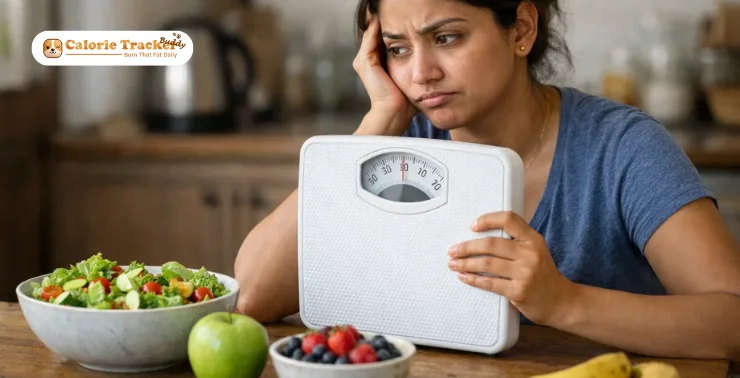
You’ve been doing everything right. Eating clean, cutting carbs, staying consistent, and still seeing no real change.
That’s where PCOS weight loss starts to feel frustrating, not just slow. It stops feeling like a process and starts feeling like something isn’t working at all.
The problem isn’t effort. It’s that your body isn’t responding the way most weight loss advice assumes it will.
PCOS affects how you process food, how your hunger signals work, and how easily your body stores fat. So when you follow the usual rules and see little to no progress, it’s not surprising. It’s expected.
This article breaks down why PCOS weight loss feels so difficult and what actually makes a difference when your body operates differently.
Hit ‘Play’ Button & Tune Into The Blog!
Why PCOS makes weight loss genuinely harder
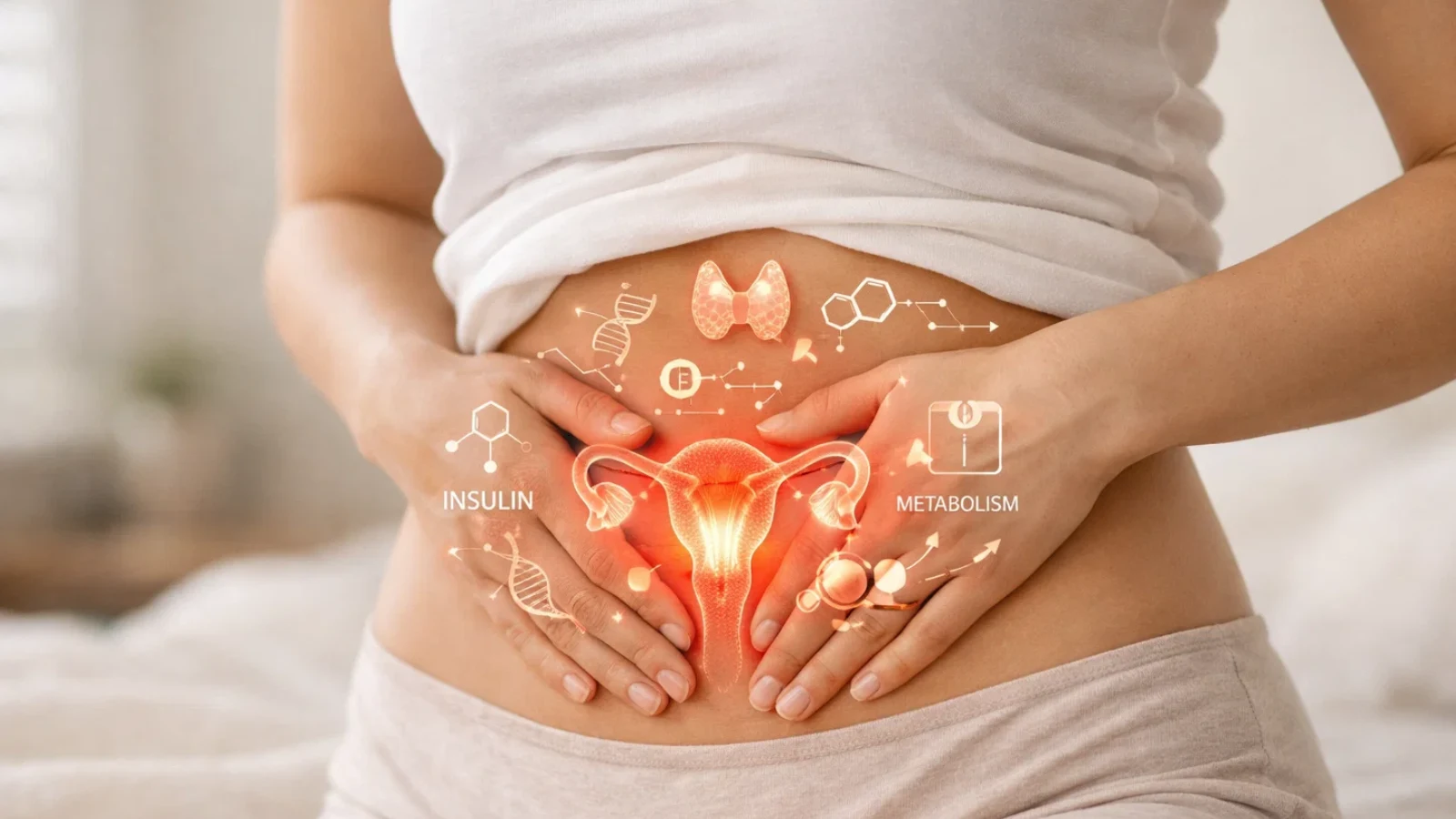
PCOS weight loss is harder because your body behaves differently when it comes to fat storage, hunger, and energy use.
Here’s what’s happening:
- Your body stores fat more easily.
Even with normal eating, your body is more likely to store fat, especially around the stomach. - It’s harder to burn stored fat.
Once fat is stored, your body doesn’t access it easily for energy, which slows down weight loss. - Hunger feels stronger or more frequent.
You may feel hungry sooner or not feel fully satisfied after meals. - Cravings increase
Your body pushes you to eat more, especially quick-energy foods like carbs. - Stress slows everything down.
Poor sleep, strict dieting, or intense workouts can make your body hold onto fat instead of losing it.
PCOS weight loss isn’t just about eating less. Your body is working differently, which is why the usual advice often doesn’t work the same way.
Why Most PCOS Weight Loss Efforts Fail (And What to Focus on Instead)

Most PCOS weight loss advice focuses on eating less and tracking calories. The problem is that’s not what actually drives results. When you shift your focus from numbers to how your body responds to food, things start to make more sense. Here’s where most people get it wrong:
The focus is on calories, not impact
Most people approach PCOS weight loss by trying to eat less and stay under a fixed number. It feels logical, but it overlooks how your body actually reacts to food.
The real issue isn’t just how much you eat, but what happens after you eat it. Two people can eat the same number of calories and get completely different results depending on how their bodies process those meals. With PCOS, that response matters more than the number itself.
Calorie restriction ≠ calorie awareness
- Calorie restriction: eating less, chasing a lower number, staying under a limit
- Calorie awareness: understanding how food affects your energy, hunger, and stability throughout the day
Calorie restriction focuses on control and often leads to frustration or burnout.
Calorie awareness focuses on feedback. It helps you notice how different meals actually make you feel, which is far more useful for long-term progress.
Standard apps oversimplify everything
Most calorie tracking apps give you a daily target and treat all calories as equal. Once you hit that number, the job is considered done.
But your body doesn’t work that way. Food quality changes how your body responds.
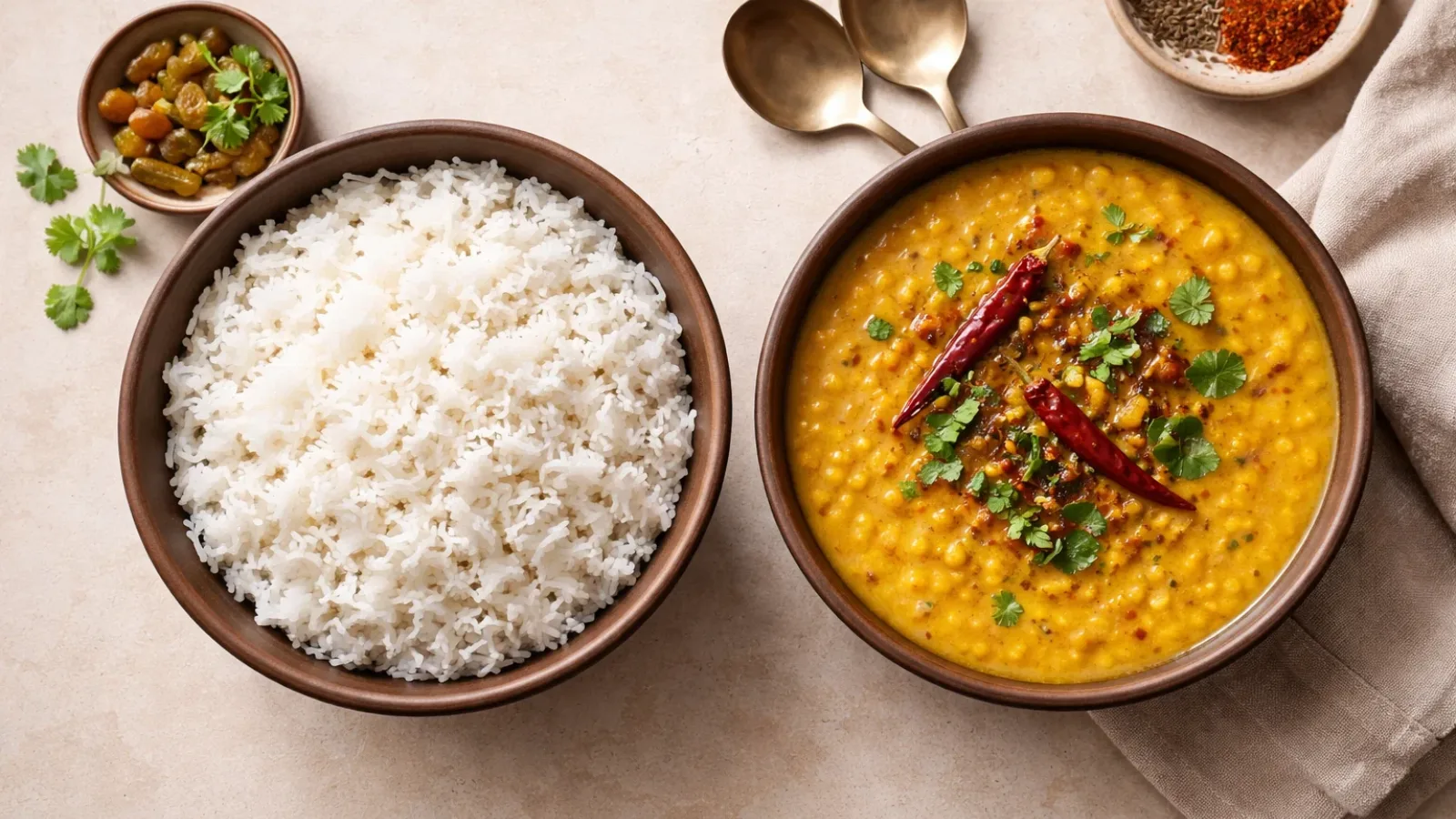
- A bowl of white rice and a bowl of lentils may have similar calories.
- But one may leave you hungry again quickly, while the other keeps you full and steady.
That difference affects your cravings, energy levels, and how easily you stick to your routine. And that’s exactly what PCOS weight loss depends on.
This is exactly why a pcos friendly calorie tracker can be more useful than a generic one, because it helps you focus on how meals affect your hunger, energy, and consistency, not just the total calories.
The real shift: from quantity to response
Instead of asking “How much am I eating?”, the better question is:
“What happens after I eat this?”
This shift changes everything. You start paying attention to how meals actually affect you.
Focus on:
- Protein in each meal to help with fullness
- The type of carbohydrates you’re choosing
- The balance of fats that slow down digestion
- How long do you stay full, steady, and satisfied after eating
Over time, this gives you clear patterns instead of guesswork.
It’s about patterns, not perfection
You don’t need to hit perfect numbers or follow a strict plan every day. That approach usually leads to inconsistency.
What actually matters is noticing patterns over time:
- Which meals keep you full for longer
- Which ones lead to quick hunger or cravings
- Which ones leave you feeling stable versus tired or drained
This kind of awareness builds naturally when you pay attention, and it’s far more sustainable than trying to control everything perfectly.
How to Start Tracking Food for PCOS (Without Obsessing Over Numbers)
Tracking can be one of the most useful tools for PCOS weight loss, but it’s also one of the easiest to misuse.
The problem isn’t tracking itself. It’s how people start. Most try to change everything at once: a new app, strict calorie targets, higher protein, cutting sugar, all in the same week. That usually leads to overwhelm, not clarity.
A better approach is simpler and more structured.
Step 1: Start with a baseline, not a goal
Before changing anything, spend one week logging your food exactly as it is. The goal isn’t to eat perfectly, but to see what’s actually happening. Most people discover a gap between what they think they’re eating and what they actually eat, whether that’s undereating or relying heavily on carb-based meals with very little protein.
This clarity matters. Once you understand your baseline, you can make small, realistic adjustments. A moderate calorie deficit of around 250–350 calories is far more sustainable than aggressive cuts that feel overwhelming and rarely last.
Step 2: Focus on macros before calories
In the beginning, it’s more useful to focus on what your meals are made of rather than the total number of calories. Pay attention to whether you’re getting enough protein and whether your carbohydrate sources are balanced and steady.
This approach helps you build better eating patterns without becoming overly focused on hitting a perfect number. Over time, you’ll start to notice which types of meals keep you full and stable, which is far more valuable than simply staying under a calorie limit.
Step 3: Pay attention to how your body responds
The scale doesn’t always reflect what’s happening in your body, especially in the short term. Instead of relying only on weight, start noticing how you feel after meals and throughout the day.
Your energy levels, hunger patterns, cravings, sleep, and even cycle regularity can give you early signs of whether your approach is working. These signals often shift before any visible change in weight, making them a more reliable guide in the early stages.
Step 4: Give your body time before making changes
PCOS weight loss takes time, and quick adjustments often create more confusion than progress. Instead of reacting to daily fluctuations, give your approach at least a few weeks before evaluating it.
When you do make changes, keep them small and adjust one thing at a time. This makes it easier to understand what’s actually helping. Consistency over time gives you clear feedback, while constant changes make it harder to see what’s working.
A Smarter Way to Track Your Meal With Calorie Tracker Buddy
Most calorie trackers focus on strict numbers and daily limits. That can quickly turn into pressure, especially with PCOS, where the goal is to understand patterns, not chase perfection.
That’s where Calorie Tracker Buddy works differently. It acts more like a pcos friendly calorie tracker, helping you log meals, notice patterns, and stay consistent without turning tracking into a strict numbers game.
If you’re going to track your food, the tool you use should make things easier, not more stressful. That’s exactly where Calorie Tracker Buddy comes in.
What it does
At its core, the app simplifies tracking so you can stay consistent without overthinking:
- Snap & log meals instantly
Just take a photo of your food. The app estimates calories and nutrients in seconds. - Tracks intake and burn together.
You can see what you’re eating alongside your daily movement, steps, and activity. - Gives real-time feedback
It doesn’t just log food. It shows how each meal fits into your day and your goals. - Builds daily awareness
Over time, you start seeing patterns in your eating, hunger, and energy. - Adds motivation through your “buddy.”
A virtual pet grows and reacts based on your habits, giving you a small but consistent push to stay on track.
Common Mistakes That Slow Down PCOS Weight Loss (And How to Fix Them)
Sometimes progress stalls not because you need a new strategy, but because something in your current approach is working against you. These are the patterns that most often get in the way.
Cutting calories too aggressively
It can feel productive to go all-in and drastically reduce calories, but this usually backfires. When you eat too little, your body shifts into a protective mode where it holds onto fat instead of letting go of it.
Instead of speeding things up, extreme restriction often slows progress and makes it harder to stay consistent. A smaller, steady calorie deficit works far better over time and is much easier to maintain.
Relying on standard calorie calculators without adjusting
Most calorie calculators are based on general averages and don’t account for how PCOS affects metabolism. This means the number you’re given is often lower than what your body actually needs.
If you start reducing calories from an already underestimated number, you end up eating too little without realizing it. A better approach is to slightly increase the estimated maintenance level before creating a small deficit, so you’re not unintentionally over-restricting.
Skipping meals to “save” calories
Skipping meals might seem like an easy way to reduce calories, but it often leads to stronger hunger later in the day. This can make it harder to control portions or choose balanced meals.
Eating regular, balanced meals spaced throughout the day tends to work better. Including protein in those meals helps keep you full and reduces sudden hunger spikes.
Measuring progress only by the scale
The number on the scale doesn’t just reflect fat loss. It also changes based on water retention, hormonal shifts, digestion, and even sleep.
This is one of the biggest reasons why extreme approaches like a strict low-calorie diet for PCOS often fail to support sustainable PCOS fat loss.
Instead of focusing only on weight, pay attention to other signs of progress like steady energy, fewer cravings, better sleep, improved mood, and more regular cycles. These often improve before the scale shows any real change.
Also Read:
What’s New in PCOS (Latest Research and Approaches)
PCOS weight loss research has evolved quickly in recent years. The focus has shifted from just diet and calories to a more complete approach that considers how your body responds to food, how you train, and how sustainable your routine is over time.
GLP-1 medications
Medications like semaglutide and tirzepatide, originally used for diabetes, are now being explored for PCOS weight loss, especially when lifestyle changes alone haven’t been enough. Research shows meaningful weight loss in many cases, with a large number of people reaching even modest but impactful goals like 5% body weight reduction.
These medications can also help reduce appetite and improve how your body handles food. They’re not meant for everyone, but they are a legitimate option to discuss with a doctor if you’ve been consistent with diet and exercise and still aren’t seeing progress.
Resistance training is now a priority.
Strength training is no longer optional in PCOS weight loss. Research shows it can be just as effective as cardio, and combining both gives even better results.
Building muscle helps your body use energy more efficiently and increases how many calories you burn at rest. This is especially useful in PCOS, where metabolism can feel slower. Even adding two resistance sessions per week can improve long-term progress and make fat loss more sustainable.
Mental health is part of the plan.
PCOS management now includes emotional well-being as a core part of treatment. Many women with PCOS experience higher levels of stress, anxiety, and frustration around weight loss, which can directly affect consistency and habits.
Addressing these factors isn’t optional. It plays a real role in how sustainable your routine is. When your approach feels manageable mentally, it becomes much easier to stay consistent and see results over time.

Frequently Asked Questions (FAQs)
What are the best PCOS weight loss foods?
The best PCOS weight loss foods are those that keep your energy steady and reduce cravings. This includes high-protein foods like eggs, chicken, lentils, and Greek yogurt, along with low-glycemic carbs like oats, brown rice, and sweet potatoes. Healthy fats like nuts and olive oil also help support hormone balance.
What should a PCOS weight loss meal look like?
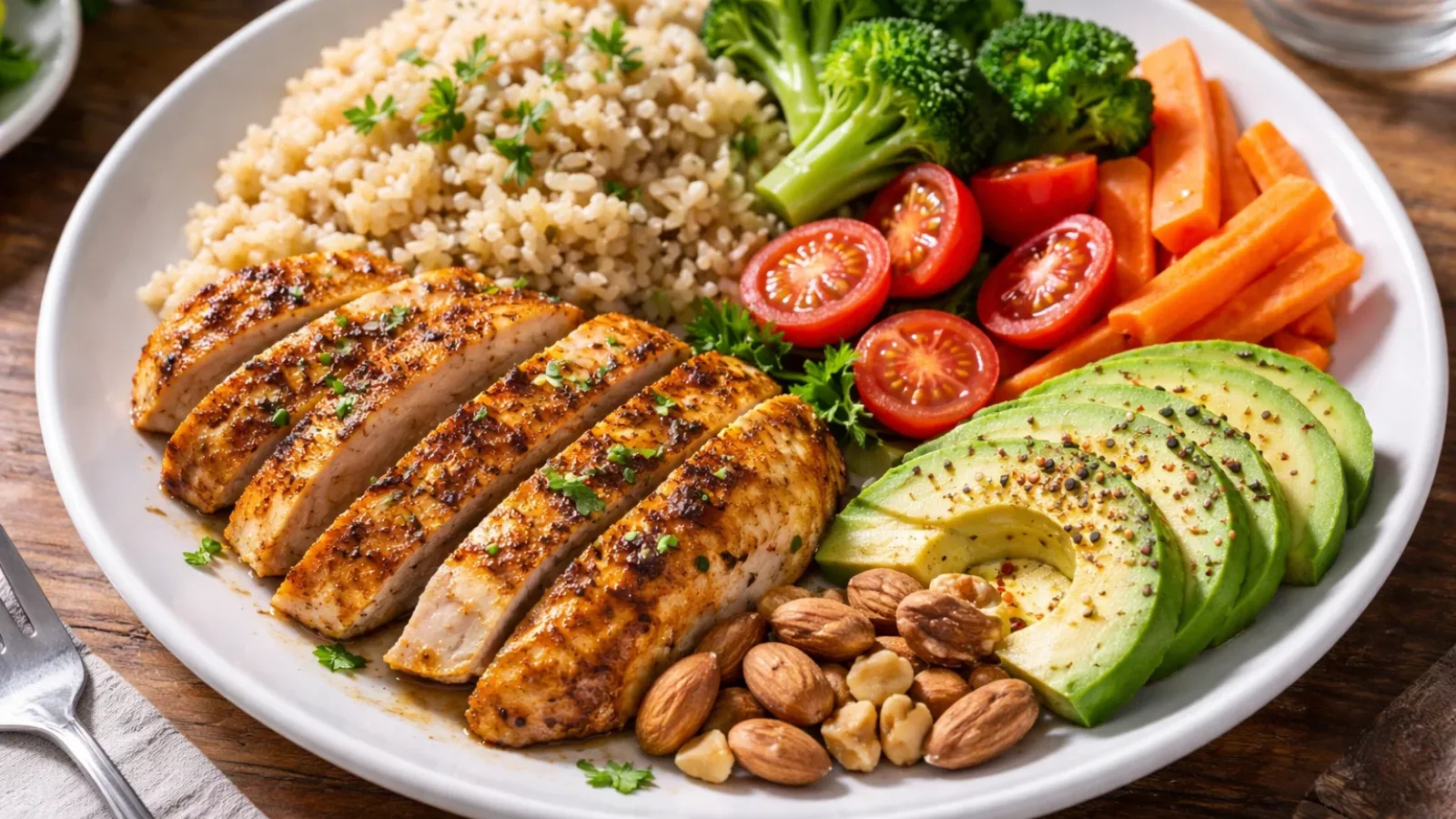
A balanced PCOS weight loss meal should include protein, slow-digesting carbohydrates, and healthy fats. For example, a simple meal could be grilled chicken, brown rice, and vegetables with a drizzle of olive oil. The goal is to stay full and avoid energy crashes.
Can I eat carbs with PCOS and still lose weight?
Yes, carbs are not the problem. The type of carbs matters. Choosing slow-digesting carbs like whole grains, oats, and legumes helps manage hunger and supports PCOS weight loss better than refined carbs like white bread or sugary foods.
How many meals should I eat for PCOS weight loss?
Most people do well with 3 balanced meals and 1–2 small snacks if needed. The key is to avoid long gaps without food, as this can increase hunger and make it harder to make balanced choices later.
Why am I not losing weight even with healthy meals?
PCOS weight loss can be slower because your body processes food differently. Even with healthy meals, factors like low protein intake, irregular eating patterns, stress, or poor sleep can affect progress. Consistency and balance matter more than perfection.
Are there specific foods I should avoid with PCOS?
Instead of completely avoiding foods, it’s better to limit highly processed foods, sugary drinks, and refined carbs. These can increase hunger and make it harder to stay consistent with PCOS weight loss.