


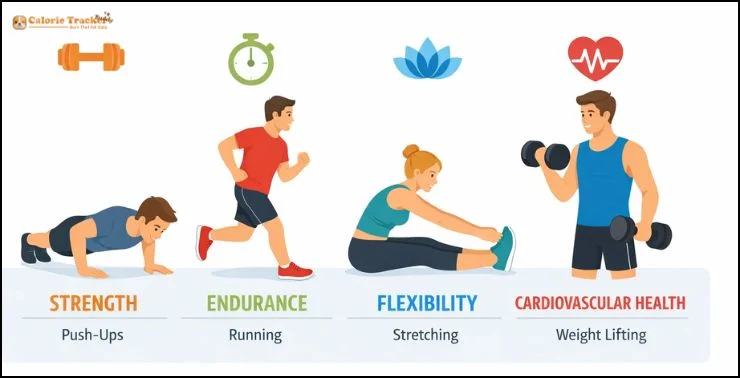
Before jumping into any fitness test, it’s important to understand what is fitness. Fitness is not just about having visible abs or lifting heavy weights. It refers to your body’s ability to perform daily activities efficiently without fatigue and with enough energy left for leisure and emergencies.
Your overall fitness level includes multiple components: strength, endurance, flexibility, and cardiovascular health. Many people assume they are fit simply because they are not overweight, but true fitness goes much deeper.
The good news is that you don’t need expensive gym equipment or lab-based assessments to evaluate your condition. A simple fitness test at home can give you a clear idea of where you stand.
You can listen to this Blog here.
What Is a Fitness Test?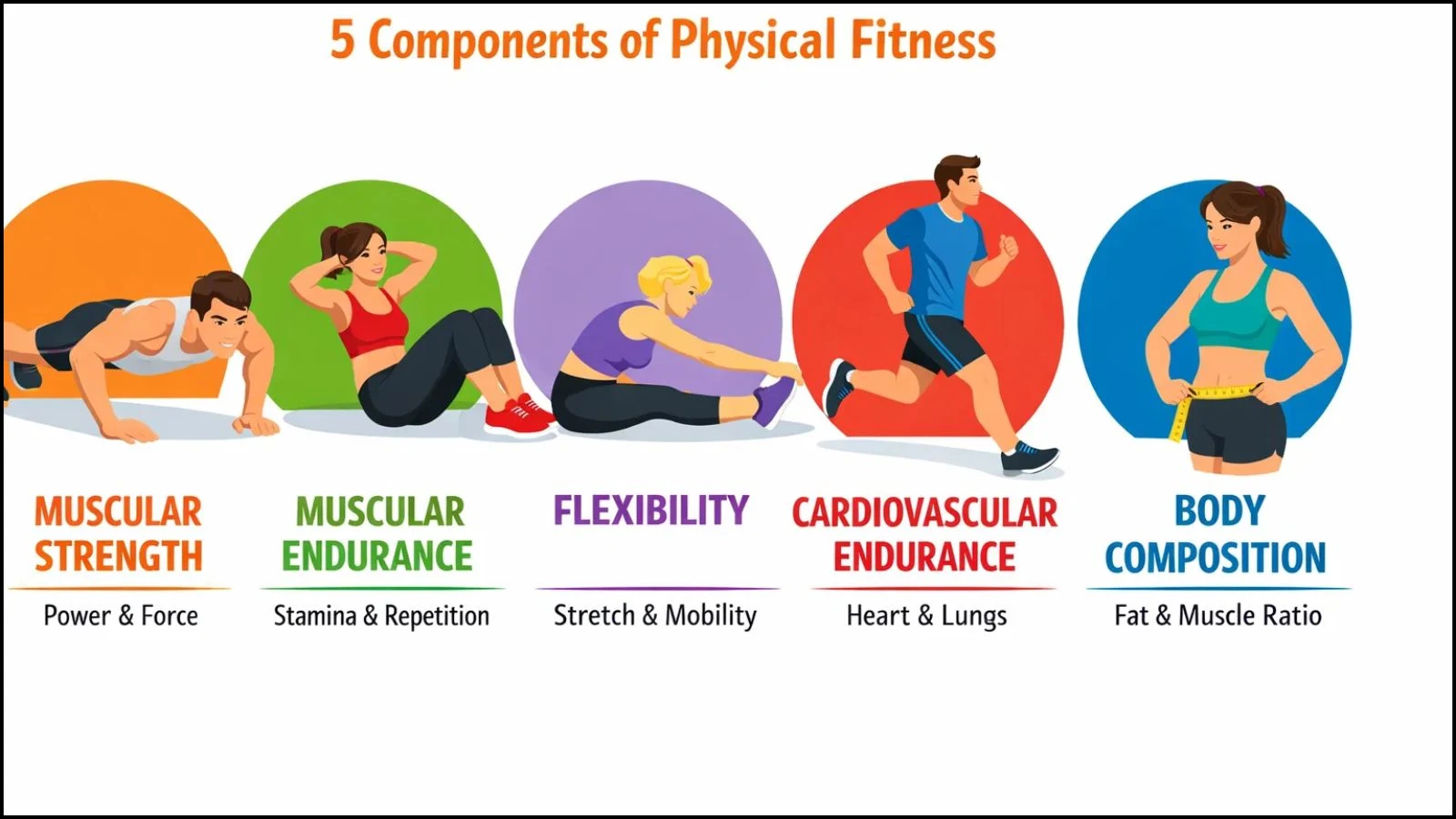
A fitness test is a structured way to measure your physical performance. It gives you measurable fitness results instead of assumptions.
Physical fitness testing typically evaluates:
- Muscular strength
- Muscular endurance
- Flexibility
- Cardiovascular endurance
- Body composition
These elements together determine your overall fitness level.
Instead of comparing yourself to athletes, focus on tracking your personal progress.
Understanding Your Current Fitness Level
Your fitness level reflects how well your body performs in different areas. Someone may have good strength but poor endurance. Others may have strong cardio but limited flexibility.
Before starting, ask yourself:
- Do I get tired quickly?
- Can I perform bodyweight exercises easily?
- Is my heart rate recovering quickly after activity?
These questions help set expectations before you begin your fitness test.
Cardiovascular Fitness Test You Can Do at Home
A cardiovascular fitness test measures how efficiently your heart and lungs deliver oxygen during activity.
🔹 3-Minute Step Test
What you need:
- A sturdy step or stair
- Stopwatch
Step up and down at a steady pace for 3 minutes. After finishing, measure your heart rate for one full minute.
Lower heart rate recovery indicates better cardiovascular health.
🔹 1-Mile Walk Test
Time yourself walking one mile at a brisk pace. Record:
- Completion time
- Heart rate immediately after
This gives insight into your endurance and aerobic capacity.
Cardio endurance is one of the strongest indicators of long-term health.
Strength Test: Pushup Benchmarks
Strength is a key part of any fitness test. One of the simplest assessments is pushups.
Many people ask about the average amount of pushups a man can do. On average:
- 20–29 years: 20–30 pushups
- 30–39 years: 15–25 pushups
- 40+ years: 10–20 pushups
For women, averages are generally lower but still vary by age.
To perform the test:
- Do as many pushups as possible without stopping.
- Maintain proper form.
This measures upper-body muscular endurance and core strength.
Flexibility and Mobility Check
Flexibility affects injury risk and movement quality.
🔹 Sit-and-Reach Test
Sit with legs extended. Reach forward toward your toes.
- If you reach beyond toes → Excellent flexibility
- Touch toes → Average
- Cannot reach toes → Needs improvement
Flexibility is often overlooked but essential for a balanced fitness level.
Core and Endurance Test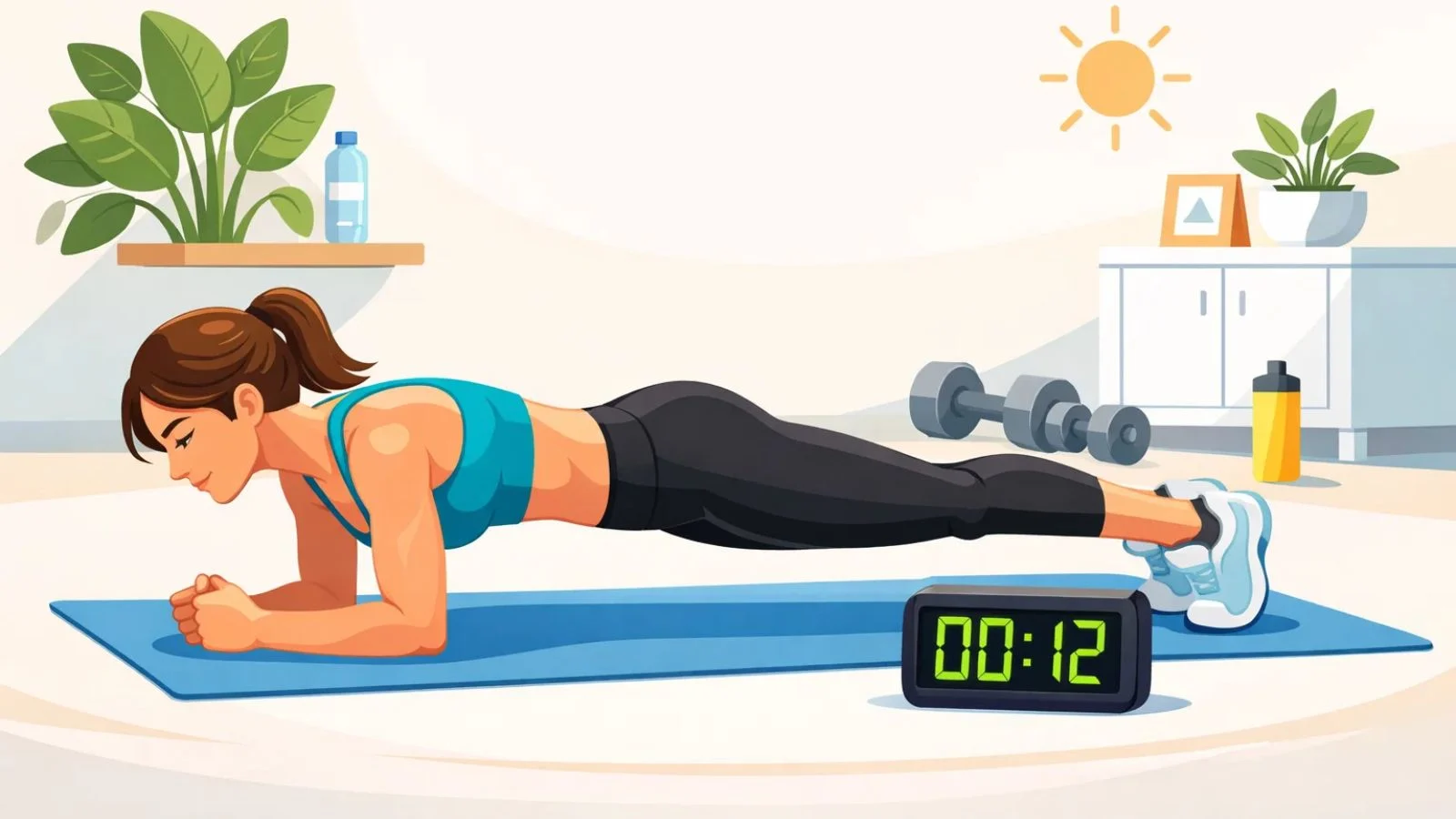
🔹 Plank Hold
Hold a plank position for as long as possible.
- 30 seconds → Beginner
- 60 seconds → Average
- 90+ seconds → Strong core endurance
Core stability supports nearly every physical movement.
Bodyweight Squat Test
Squats measure lower-body strength and endurance.
Perform as many controlled squats as possible in one minute.
Strong legs support balance, posture, and overall mobility.
How Often Should You Do Physical Fitness Testing?
Physical fitness testing should be done:
- Every 4–6 weeks
- Under similar conditions
- At the same time of day
Consistency ensures accurate comparison.
Avoid testing daily. The goal is progress tracking, not constant measurement.
Tracking Progress with Calorie Tracker Buddy
A fitness test gives you numbers. But progress happens between tests.
Calorie Tracker Buddy helps you:
- Monitor daily calorie intake
- Track workouts
- Log weight changes
- Analyze performance trends
By combining structured testing with nutrition tracking, you create measurable improvement. Data-driven fitness produces faster results.
Instead of guessing whether your fitness level is improving, you’ll see clear patterns over time.
Common Mistakes to Avoid
When performing a fitness test at home, avoid these mistakes:
- ❌ Skipping warm-up
- ❌ Comparing yourself to others
- ❌ Ignoring recovery time
- ❌ Poor form during exercises
- ❌ Testing inconsistently
Your only competition is your previous performance.
How to Interpret Your Results Correctly
After completing your fitness test, numbers alone don’t tell the full story. Interpretation matters.
For example:
- If your pushup count is lower than average, it may indicate weak upper-body endurance.
- If your heart rate takes a long time to recover after a cardiovascular fitness test, your aerobic conditioning may need improvement.
- If flexibility is limited, mobility training should be prioritized.
Your goal isn’t to feel discouraged. Instead, use results as feedback. Weak areas highlight where improvement is possible. Strong areas show what you’re doing right.
Track results in a simple chart so you can visually see improvement over time.
Setting Realistic Fitness Goals
Once you understand your current fitness level, the next important step is setting clear and meaningful goals. Effective fitness goals should be specific, measurable, time-bound, and realistic so that you can track your progress and stay motivated over time. Instead of setting a vague goal like “I want to get fit,” it is far more useful to define exactly what improvement you want to achieve and within what timeframe.
For example, you might say, “I want to increase my pushups from 12 to 20 within the next 6 weeks,” or “I want to reduce my heart rate recovery time by 10 beats.” Goals like these give you a clear direction and make it easier to measure progress.
Ultimately, long-term transformation in fitness comes from small, consistent improvements over time, because consistency always matters more than short bursts of intense effort.
Designing a Weekly Improvement Plan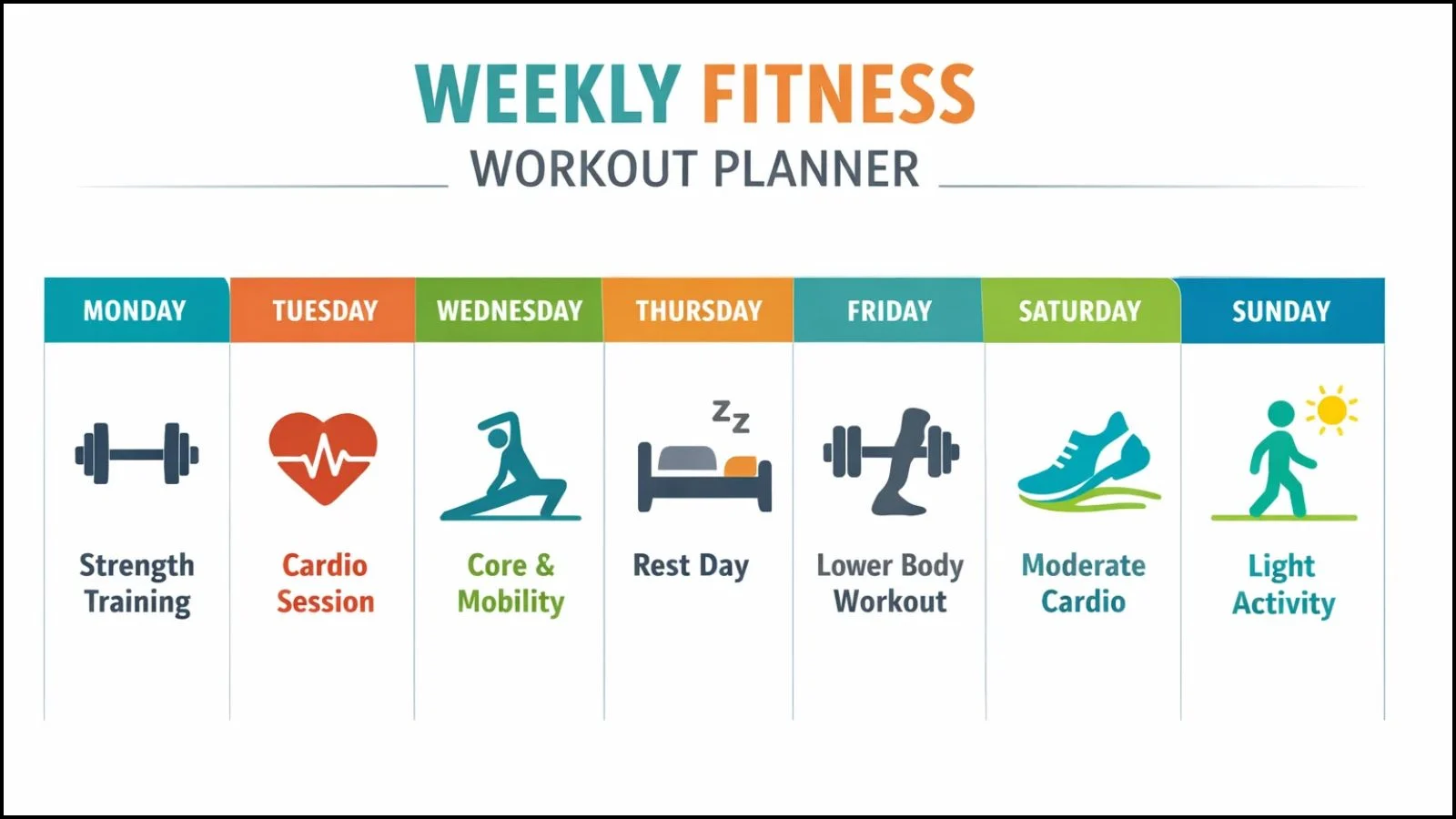
After physical fitness testing, structure your week based on weaknesses.
Example weekly structure:
Day 1: Strength training (upper body)
Day 2: Cardio session
Day 3: Core and mobility
Day 4: Rest
Day 5: Lower body strength
Day 6: Moderate cardio
Day 7: Rest or light activity
Balanced programming ensures steady progress without burnout.
Tracking workouts alongside nutrition using Calorie Tracker Buddy helps maintain alignment between effort and results.
Signs Your Fitness Level Is Improving
Sometimes improvement isn’t just numbers. Look for these signs:
- Faster heart rate recovery
- Increased stamina during daily activities
- Improved posture
- Better sleep quality
- More energy throughout the day
When your body feels stronger and more capable, your training is working.
Retest every 4–6 weeks and compare performance. Improvement doesn’t happen overnight, but measurable progress builds motivation.
Also Read,
Conclusion
A fitness test at home is one of the simplest ways to understand your physical condition. It gives you clarity about your strength, endurance, flexibility, and heart health.
By regularly performing physical fitness testing, you gain measurable insights into your progress. Whether you’re checking your pushup capacity, performing a cardiovascular fitness test, or evaluating flexibility, each assessment builds awareness.
Understanding what fitness is goes beyond looks. It’s about functionality, stamina, and long-term health.
Start with simple tests. Track your results. Improve gradually. And use tools like Calorie Tracker Buddy to support consistent progress.
Fitness is not about perfection. It’s about progress.
FAQs
2. How do I know my fitness level?
By performing strength, cardio, and flexibility tests regularly and tracking results over time.
3. What is the average amount of pushups a man can do?
For most adult men, 15–30 pushups is considered average, depending on age.
4. What is a cardiovascular fitness test?
It’s a test that measures how efficiently your heart and lungs work during physical activity, such as a step test or timed walk.