



Chronic inflammation is one of the most significant and underappreciated drivers of serious disease. Heart disease, type 2 diabetes, rheumatoid arthritis, certain cancers, and persistent fatigue have all been linked to long-term, low-grade inflammation running silently in the body. Unlike the temporary inflammation that helps you heal a cut or fight off an infection, chronic inflammation is slow, sustained, and damaging over time.
The good news is that diet is one of the most powerful tools available for managing inflammation. Research consistently shows that certain foods contain compounds that actively reduce inflammatory markers in the body, and that eating more of them consistently makes a measurable difference. This guide covers what inflammation actually is, how to reduce it naturally, and the ten best anti-inflammatory foods to add to your daily diet.
In a hurry? Listen to the blog instead!
What Is Inflammation, And What Does It Do In the Body?
Inflammation is the immune system’s natural response to injury, infection, or threat. When your body detects damage or a foreign invader, a pathogen, a splinter, or a toxin, it triggers a cascade of immune activity designed to neutralize the threat and begin repair. Blood flow increases to the affected area, immune cells flood in, and the process produces the familiar signs of acute inflammation: redness, heat, swelling, and pain.
This acute form of inflammation is essential and beneficial. It’s what allows cuts to heal, infections to be fought off, and damaged tissue to repair. The problem arises when the inflammatory response doesn’t fully switch off.
Chronic inflammation is a low-grade, persistent state of immune activation that continues in the absence of an acute threat. The body remains in a mild but ongoing state of alert, producing inflammatory molecules, including cytokines like interleukin-6 and C-reactive protein (CRP), that, over time, damage healthy tissue and contribute to disease progression.
Common Symptoms Of Chronic Inflammation
Chronic inflammation often goes unnoticed because its symptoms are nonspecific and easy to attribute to other causes. Common indicators include:
- Persistent fatigue or low energy not explained by sleep quality
- Joint pain, stiffness, or swelling that lingers
- Digestive issues, including bloating, gas, or irregular bowel movements
- Skin conditions such as eczema, psoriasis, or persistent acne
- Frequent illness or slow recovery from infections
Lifestyle factors that contribute to chronic inflammation include poor diet, physical inactivity, chronic stress, inadequate sleep, smoking, and excessive alcohol consumption. Diet is one of the most modifiable of these and one of the most impactful.
How To Reduce Inflammation In The Body Naturally
Reducing inflammation doesn’t require medication or dramatic lifestyle overhauls. Research supports several evidence-based approaches that, combined, produce meaningful reductions in inflammatory markers.
- Adopt an anti-inflammatory diet, prioritize whole foods, omega-3 fatty acids, fiber-rich vegetables, and polyphenol-rich fruits. Minimize processed foods, refined sugar, and industrial seed oils.
- Exercise regularly; moderate physical activity reduces CRP and other inflammatory markers. Aim for 150 minutes of moderate exercise per week. Overtraining can have the opposite effect, so recovery matters.
- Prioritize sleep; inadequate sleep elevates inflammatory cytokines. Seven to nine hours per night supports the body’s natural anti-inflammatory regulation.
- Manage chronic stress; prolonged psychological stress elevates cortisol and promotes inflammatory signaling. Practices including mindfulness, breathing exercises, and time in nature have documented effects on inflammatory markers.
- Avoid processed foods, refined carbohydrates, trans fats, processed meats, and added sugars, which are among the most reliably pro-inflammatory dietary components.
The ten foods below are the most evidence-supported additions to an anti-inflammatory diet. Each contains specific compounds with documented effects on inflammatory pathways.
10 Best Anti-Inflammatory Foods To Add To Your Diet Today
1. Fatty Fish (Salmon, Sardines, Mackerel)
Active compound: Omega-3 fatty acids (EPA and DHA).
Fatty fish are among the most potent anti-inflammatory foods available. EPA and DHA, the long-chain omega-3 fatty acids found in oily fish, are directly incorporated into cell membranes and converted into anti-inflammatory molecules called resolvins and protectins. Multiple studies have shown that regular fatty fish consumption reduces CRP, interleukin-6, and TNF-alpha, key markers of systemic inflammation.
How to eat it: Aim for two to three servings of fatty fish per week. Baked, grilled, or poached salmon; canned sardines on whole-grain crackers; or mackerel in a salad all Count Calories. Canned versions retain most of the omega-3 content and are significantly more affordable.
2. Berries (Blueberries, Strawberries, Raspberries)
Active compound: Anthocyanins and other polyphenols.
Berries are among the richest sources of anthocyanins, pigment compounds with potent antioxidant and anti-inflammatory properties. Antioxidants neutralize free radicals that would otherwise trigger inflammatory signaling. Research has shown that regular berry consumption reduces oxidative stress markers and lowers inflammatory cytokines, particularly in people with existing metabolic risk factors.
How to eat them: Add to oatmeal, blend into smoothies, or eat as a snack. Frozen berries are nutritionally equivalent to fresh and cost significantly less, making daily consumption practical.
3. Leafy Greens (Spinach, Kale, Swiss Chard)
Active compounds: Vitamin K, quercetin, and antioxidant carotenoids.
Dark leafy greens are nutritional powerhouses with well-documented anti-inflammatory properties. Vitamin K plays a specific role in regulating inflammatory pathways. Quercetin, a flavonoid found abundantly in kale and spinach, inhibits the release of histamine and reduces the activity of pro-inflammatory enzymes. The antioxidant carotenoids, lutein, beta-carotene, and zeaxanthin, also help neutralize oxidative stress that drives inflammation.
How to eat them: Raw in salads, wilted into soups and stir-fries, or blended into smoothies where the flavor is masked by fruit. A generous daily serving of at least one leafy green variety is one of the simplest high-impact dietary changes available.
Also Read!
4. Extra Virgin Olive Oil
Active compound: Oleocanthal.
Extra virgin olive oil contains oleocanthal, a polyphenol that works through the same biochemical pathway as ibuprofen, inhibiting the COX-1 and COX-2 enzymes that produce inflammatory prostaglandins. This is why high-quality extra virgin olive oil produces a distinctive peppery sensation at the back of the throat, a sign of oleocanthal content. The Mediterranean diet’s strong anti-inflammatory and cardiovascular protective effects are partly attributed to its heavy use of extra virgin olive oil.
How to eat it: Use as a salad dressing base, drizzle over roasted vegetables, or finish cooked dishes. Avoid heating to high temperatures where beneficial compounds degrade; use refined olive oil or avocado oil for high-heat cooking.
5. Nuts and Seeds (Walnuts, Almonds, Flaxseeds)
Active compounds: Alpha-linolenic acid (ALA), vitamin E, and fiber.
Walnuts are the standout anti-inflammatory nut due to their high ALA content, a plant-based omega-3 that the body partially converts to EPA and DHA. Almonds are rich in vitamin E, an antioxidant that protects cell membranes from inflammatory damage. Flaxseeds provide both ALA and soluble fiber, which feed beneficial gut bacteria and reduce gut-derived inflammation. Regular nut consumption is consistently associated with lower CRP and reduced cardiovascular inflammation risk.
How to eat them: A small daily handful (around 30g) of mixed nuts is sufficient. Sprinkle ground flaxseeds on oatmeal or yogurt; ground is more bioavailable than whole.
6. Turmeric
Active compound: Curcumin.
Curcumin is one of the most extensively studied anti-inflammatory compounds in nutritional science. It blocks NF-kB, a molecule that travels into the nuclei of cells and activates the genes responsible for inflammation. Multiple randomized controlled trials have shown that curcumin reduces inflammatory markers comparable to some anti-inflammatory medications, particularly for joint pain and metabolic inflammation. The critical caveat: curcumin is poorly absorbed on its own.
How to eat it: Always pair turmeric with black pepper, which contains piperine, a compound that increases curcumin absorption by up to 2,000 percent. Add to curries, golden milk lattes, soups, or roasted vegetables. Combining with a fat source also improves absorption since curcumin is fat-soluble.
7. Ginger
Active compounds: Gingerols and shogaols.
Ginger has been used medicinally for thousands of years, and its anti-inflammatory properties are well supported by modern research. Gingerols, the active compounds in fresh ginger, inhibit the synthesis of pro-inflammatory cytokines and have demonstrated effects comparable to non-steroidal anti-inflammatory drugs in some studies on joint pain and muscle soreness. Ginger also supports digestive health by reducing gut inflammation and bloating.
How to eat it: Fresh ginger grated into hot water with lemon makes a simple daily tea. Add to stir-fries, soups, smoothies, or marinades. Dried ginger retains anti-inflammatory activity and is a convenient option for cooking.
8. Green Tea
Active compound: Epigallocatechin gallate (EGCG).
Green tea is one of the richest dietary sources of EGCG, a catechin antioxidant with potent anti-inflammatory effects. EGCG inhibits NF-kB activation, the same inflammatory pathway targeted by curcumin, and has shown specific benefits for reducing inflammatory markers associated with cardiovascular disease and metabolic syndrome. Regular green tea consumption is associated with reduced CRP levels and lower risk of several chronic inflammatory conditions.
How to drink it: Two to three cups daily provides meaningful EGCG intake. Brew at 80 degrees Celsius rather than boiling, as water degrades catechins. Matcha provides a more concentrated EGCG dose in a smaller volume.
9. Beans and Legumes (Lentils, Chickpeas, Black Beans)
Active compound: Soluble fiber and plant polyphenols.
Legumes are among the most fiber-rich foods available, and dietary fiber has a direct anti-inflammatory effect through its impact on the gut microbiome. Soluble fiber feeds beneficial bacteria that produce short-chain fatty acids, compounds including butyrate that actively reduce gut inflammation and systemic inflammatory signaling. Beans also contain polyphenols with direct antioxidant properties. Research consistently shows that higher legume intake is associated with lower inflammatory markers and reduced risk of chronic inflammatory disease.
How to eat them: Canned legumes are nutritionally equivalent to dried and require no preparation. Add to soups, stews, and salads, or use as a protein base in meals. Aim for three to four servings per week as a minimum.
10. Fermented Foods (Yogurt, Kefir, Sauerkraut, Kimchi)
Active compound: Live probiotic cultures.
The gut microbiome plays a central role in regulating systemic inflammation. A diverse, healthy gut microbiome produces compounds that suppress inflammatory signaling; a depleted or imbalanced microbiome contributes to what researchers call “leaky gut,” increased intestinal permeability that allows inflammatory compounds to enter the bloodstream. Fermented foods supply live bacteria that support microbiome diversity and reduce gut-derived inflammation. A large 2021 study in Cell found that a diet high in fermented foods increased microbiome diversity and decreased inflammatory markers more effectively than a high-fiber diet alone.
How to eat them: Full-fat yogurt with live cultures as a daily snack or breakfast component, kefir as a morning drink, or sauerkraut and kimchi as condiments with main meals. Look for refrigerated products with “live and active cultures” on the label.
Foods That Cause Inflammation: What to Avoid
Anti-inflammatory foods work best when the most pro-inflammatory items are also reduced. The foods most consistently linked to increased inflammatory markers include:
- Refined sugar and high-fructose corn syrup, found in soft drinks, packaged snacks, and most processed foods, rapidly elevate blood glucose and trigger inflammatory cytokine release
- Processed meats (bacon, hot dogs, deli meats) contain preservatives, saturated fats, and compounds that promote systemic inflammation
- Refined carbohydrates (white bread, white rice, pastries) are rapidly digested, spike blood sugar, and contribute to inflammatory signaling
- Fried foods and trans fats– industrial frying oils produce oxidized lipids and trans-fatty acids that directly promote inflammatory pathways
- Excessive alcohol and moderate consumption have some anti-inflammatory effects in certain contexts, but heavy drinking increases intestinal permeability and elevates inflammatory markers significantly
Reducing these foods doesn’t require perfection; consistent reduction over time produces measurable benefits, and the positive additions in the section above will partially offset occasional pro-inflammatory choices.
Sample 1-Day Anti-Inflammatory Meal Plan
Here’s how a practical anti-inflammatory diet looks across a full day, using the foods from this guide.
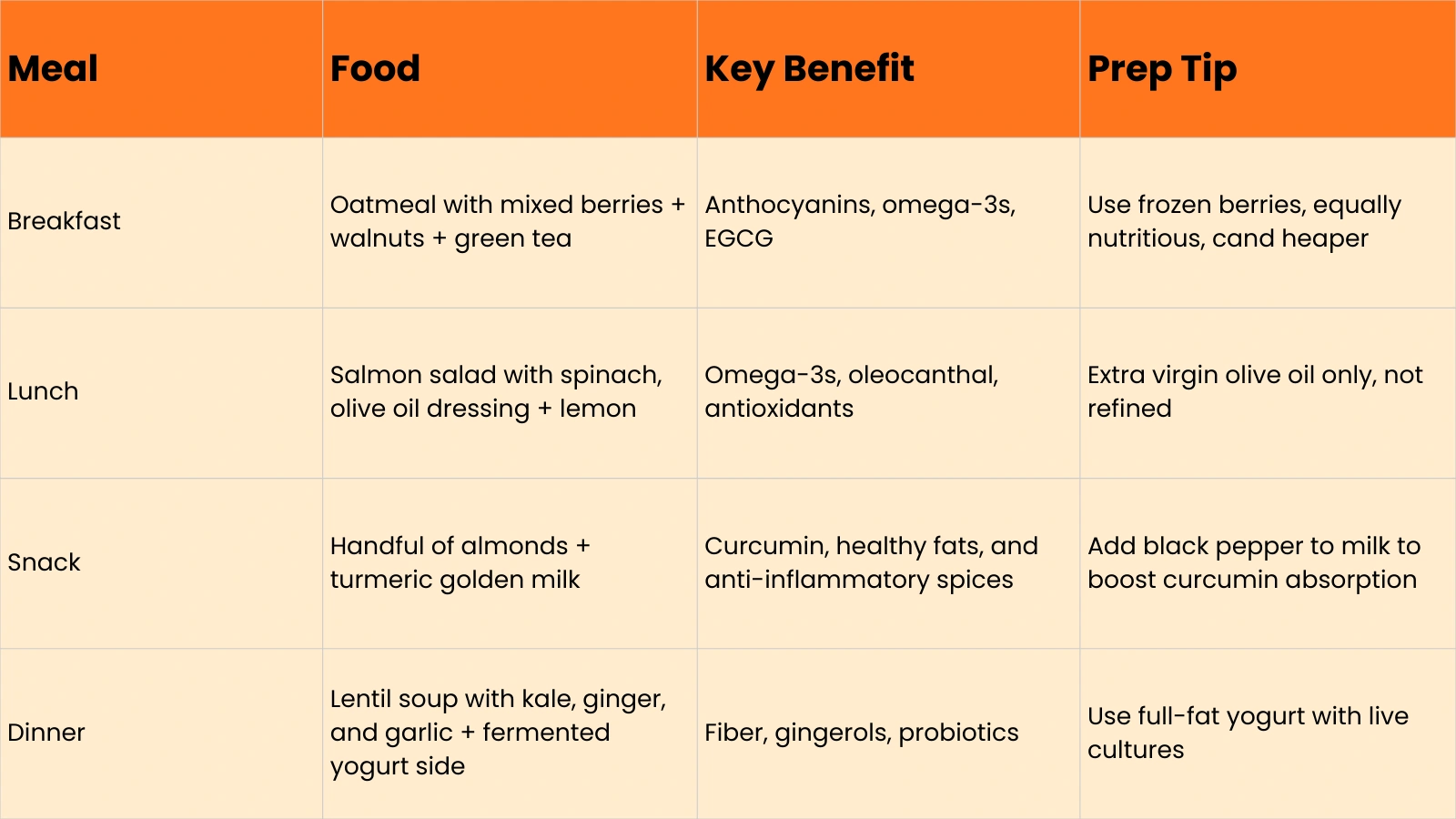
This day covers omega-3 fatty acids, polyphenols, curcumin (with black pepper for absorption), fiber, antioxidant greens, and probiotic cultures, hitting the major anti-inflammatory bases without requiring significant cooking complexity.
Track Your Anti-Inflammatory Diet Progress
Eating the right anti-inflammatory foods is powerful. But consistency is what actually lowers inflammation over time. That’s where tracking becomes useful.
If you are serious about reducing inflammation, monitoring your daily food intake helps you see patterns clearly. Are you getting enough omega-3s? Enough fiber? Too much refined sugar? Small details add up.
One simple way to stay consistent is using Calorie Tracker Buddy, an easy-to-use online tool that helps you log meals, track nutrients, and understand your daily intake without complicated setup.
Why Use Calorie Tracker Buddy?
Track What You Actually Eat: It’s easy to think you are eating well. Tracking removes guesswork. You can see whether your meals truly include anti-inflammatory staples like leafy greens, fatty fish, nuts, and legumes.
Monitor Macronutrients and Calories: While inflammation is about food quality, total calorie intake and macronutrient balance still matter. Overeating processed carbohydrates or unhealthy fats can contribute to inflammatory signaling. Tracking helps you stay balanced.
Build Consistency Over Time: Chronic inflammation develops gradually and improves gradually. Seeing your daily habits recorded helps reinforce long-term change rather than short-term motivation.
Identify Hidden Triggers: Some people notice increased bloating, fatigue, or joint discomfort after certain foods. Logging meals makes it easier to spot patterns between what you eat and how you feel.
Support Weight Management: Excess body fat itself promotes inflammation through inflammatory cytokine release. Maintaining a healthy weight loss is one of the most evidence-supported ways to reduce systemic inflammation, and tracking intake helps support that goal.
Final Thoughts On Fighting Inflammation Through Diet
Chronic inflammation doesn’t develop overnight, and it doesn’t resolve overnight either. But diet is one of the most direct and well-evidenced levers available for managing it, and the foods in this guide are not obscure supplements or difficult-to-source ingredients. They’re foods that fit naturally into daily meals.
The most effective anti-inflammatory eating approach isn’t a rigid protocol; it’s a consistent pattern of prioritizing the foods above, reducing the most inflammatory dietary components, and giving the changes enough time to produce results. Most people notice meaningful improvements in energy, joint comfort, and digestive health within four to eight weeks of consistent dietary changes.
Start with two or three foods from this list that fit your current habits most easily, build from there, and focus on consistency rather than perfection. Small, sustained changes in diet have a larger cumulative impact on inflammation than any short-term intervention.
Frequently Asked Questions About Inflammation
What is inflammation in simple words?
Inflammation is the body’s defense response to injury, infection, or threat. In the short term, it’s protective; it helps the body heal and fight off pathogens. When it becomes chronic and persists without an acute cause, it gradually damages healthy tissue and contributes to serious diseases, including heart disease, diabetes, and arthritis.
How do I know if I have chronic inflammation?
Chronic inflammation rarely has obvious symptoms. Common signs include persistent fatigue, recurring joint pain or stiffness, frequent digestive issues, slow healing, and recurring infections. A blood test measuring C-reactive protein (CRP) and other inflammatory markers is the most reliable way to confirm elevated systemic inflammation. If you suspect chronic inflammation, speak with a GP who can order appropriate tests.
What is the fastest way to reduce inflammation in the body?
No single change eliminates chronic inflammation quickly, but the most impactful short-term steps are: eliminating processed foods and refined sugar, adding omega-3-rich fatty fish two to three times per week, getting seven to nine hours of sleep consistently, and adding turmeric with black pepper to daily meals. Most people see measurable reductions in inflammatory markers within four to eight weeks of consistent dietary changes.
Are anti-inflammatory foods proven by science?
Yes, for the foods covered in this guide, the evidence base is solid. Fatty fish, berries, leafy greens, extra virgin olive oil, turmeric, ginger, green tea, and fermented foods all have peer-reviewed research demonstrating measurable reductions in established inflammatory markers, including CRP, interleukin-6, and TNF-alpha. The effect sizes vary; turmeric and omega-3s tend to show the strongest and most consistent results in clinical trials.