

Most people don’t question their measuring cup. It’s been in the kitchen for years. It feels precise. It feels responsible. So, when weight loss slows down, measurement is rarely the first thing they examine.
Instead, they assume it’s their metabolism. Or motivation. Or genetics.
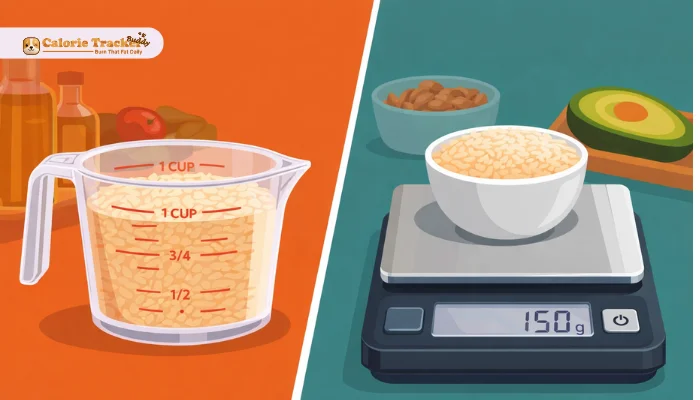
But the difference between using a measuring cup and using a food scale can quietly shift your calorie intake, especially when you’re not following a structured recipe. And those small shifts, repeated daily, matter more than we like to admit.
Let’s look at this in a realistic way, not in a baking-class scenario, but in everyday cooking.
In a hurry? Listen to the blog instead!
Why Small Measurement Errors Can Slow Fat Loss
Weight loss ultimately comes down to energy balance. If you consistently eat slightly more than you think, progress slows. Not dramatically at first. Just subtly.
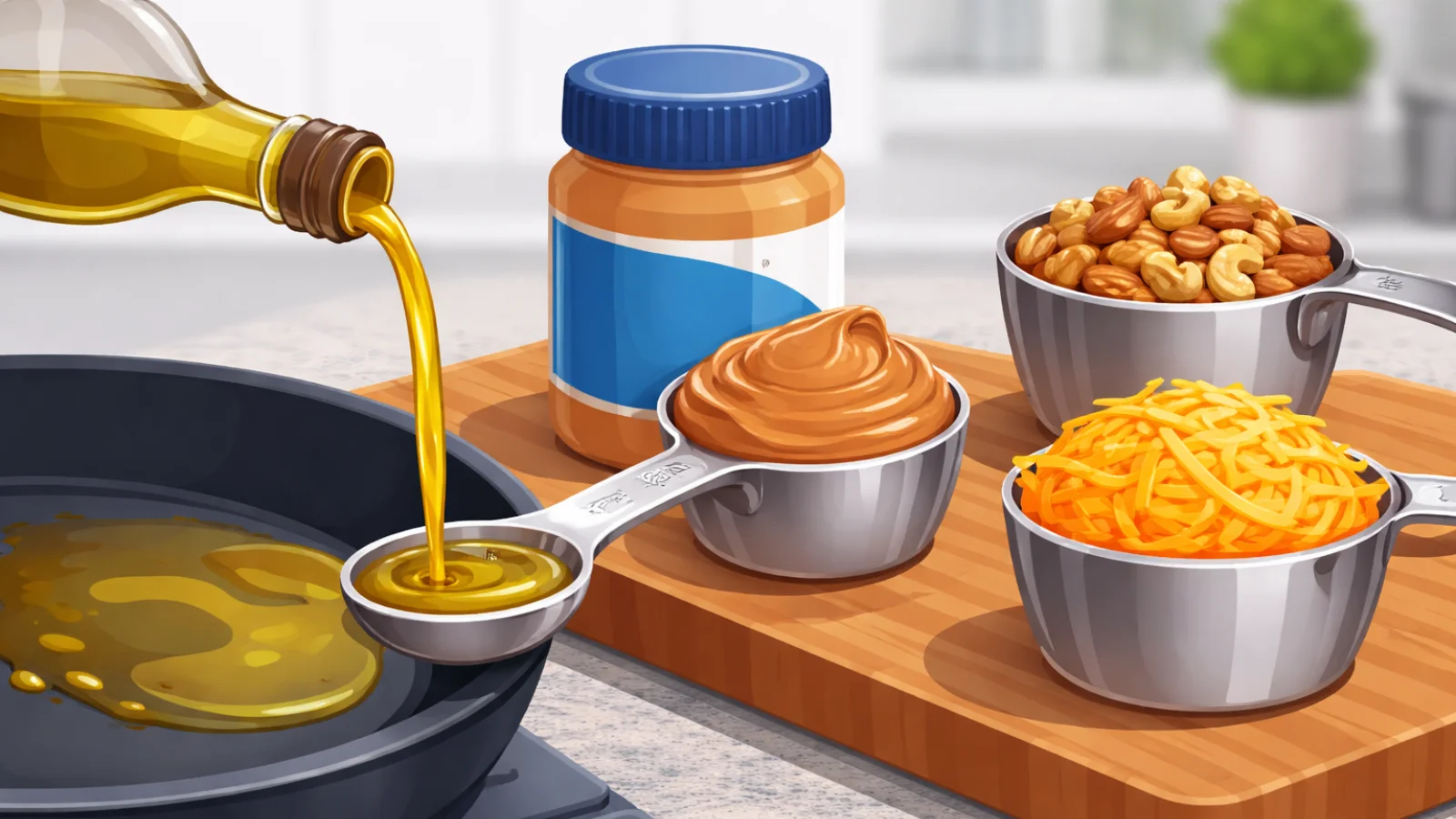
A small overpour of olive oil can add 40 to 60 calories without you noticing. A slightly generous scoop of peanut butter might add another 30.
On their own, those numbers feel insignificant. But when that happens every day, the math changes.
That’s why the conversation around food scale vs. measuring cup keeps resurfacing. It’s not about being obsessive. It’s about removing blind spots.
How Volume Measurement Actually Works
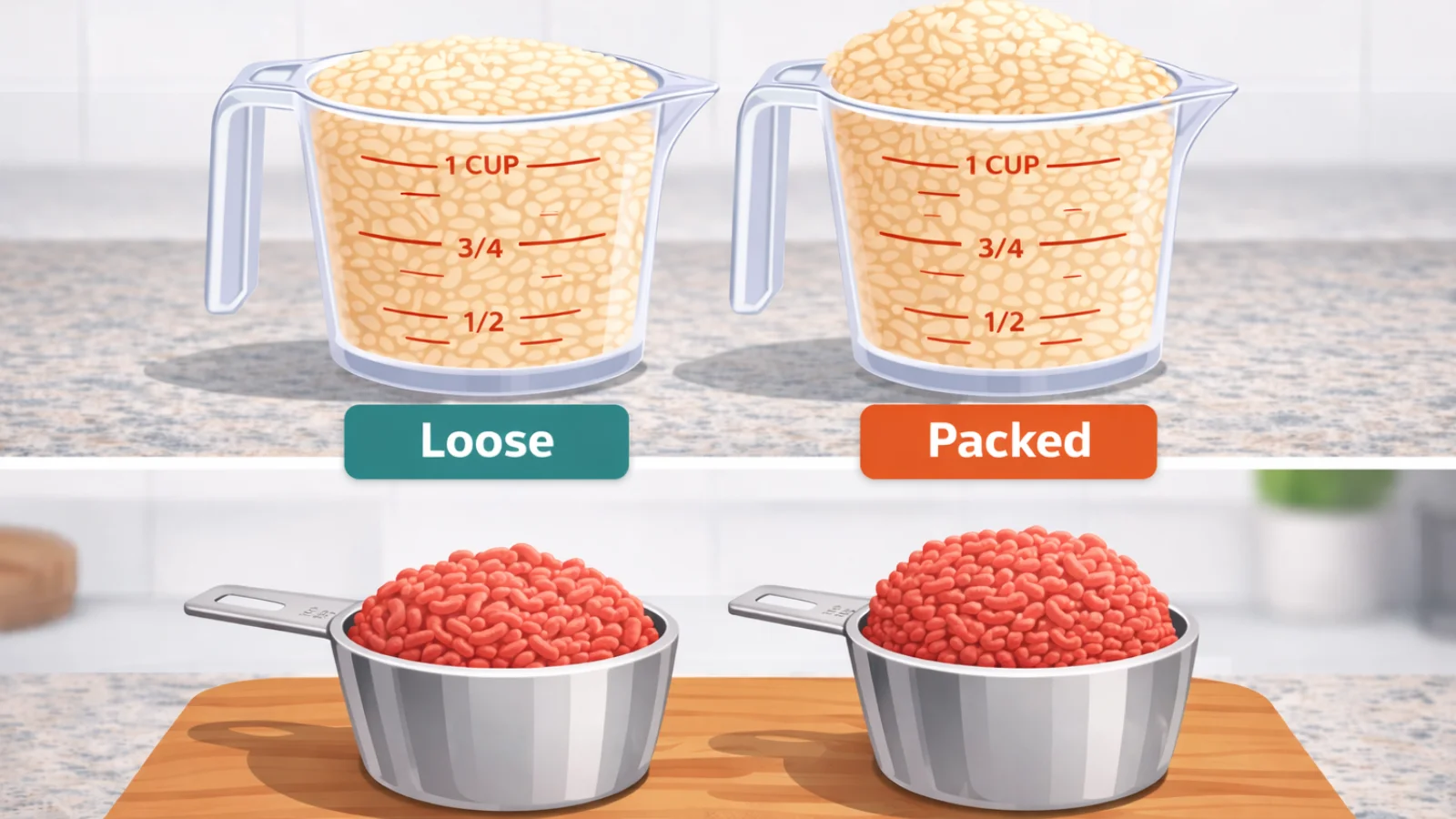
Cup measurement calculates volume. In simple terms, it measures how much space something occupies. For liquids like milk or broth, this works well. The density is predictable. The measurement is fairly consistent.
The problems start with foods that compress, fluff, or vary in texture. Think about:
- Rice
- Pasta
- Shredded cheese
- Ground meat
- Nut butters
If you scoop loosely one day and press down the next, the calorie difference can be meaningful. The tool itself isn’t broken. It’s just sensitive to how it’s used.
And humans aren’t perfectly consistent.
Where Real-World Habits Interfere
Most people don’t level ingredients carefully every single time. Many people scoop directly from the bag.
Often, they eyeball it.
They adjust slightly based on what “looks right.”
And when you aren’t following a recipe, consistency becomes even harder. You might add “about a cup” of rice today. Tomorrow, that same portion looks slightly different. It still feels correct.
Over time, those small variations accumulate. You won’t notice it in one meal. You might notice it after a few weeks.
What Makes a Food Scale Different
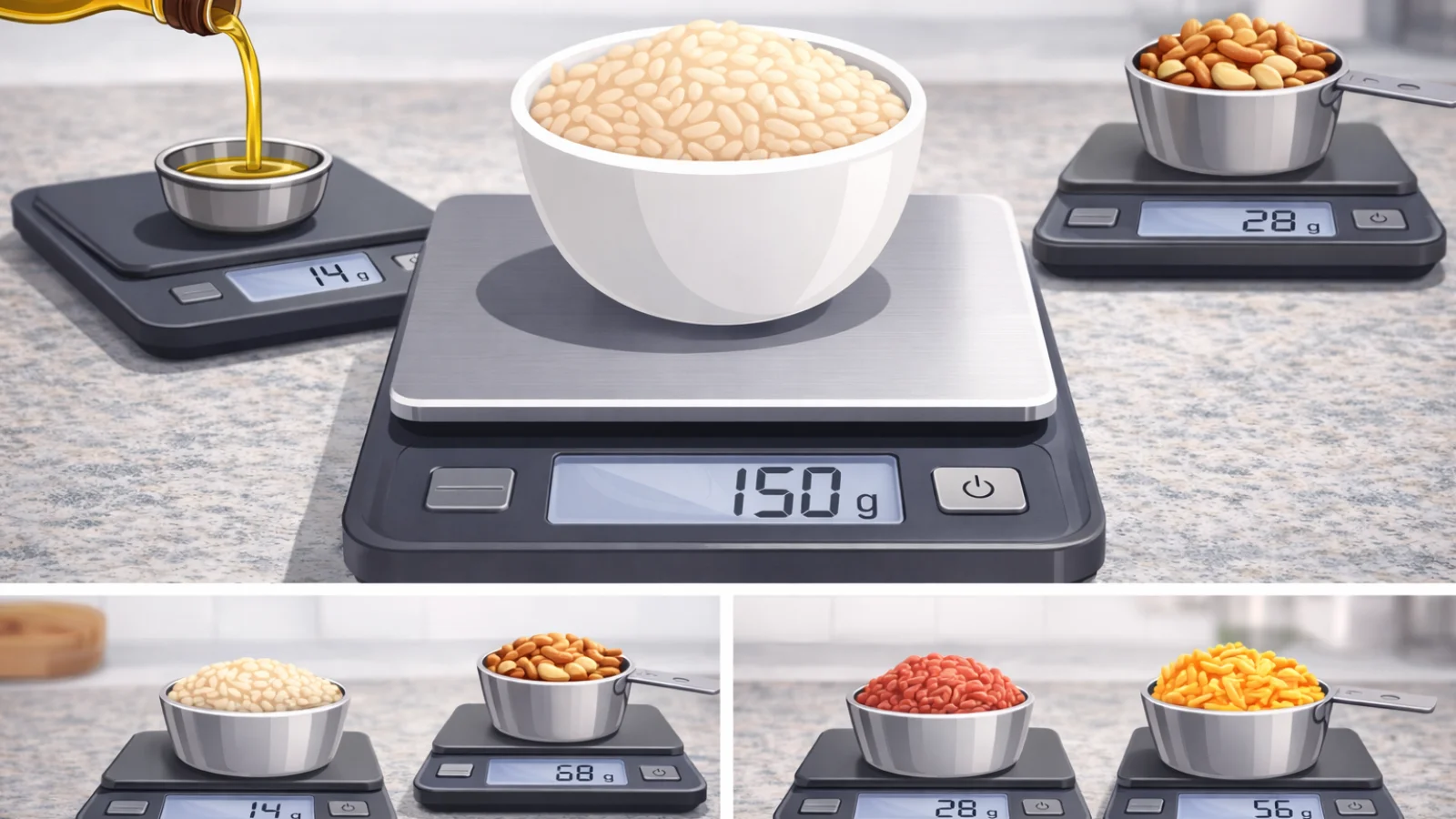
A food scale measures weight instead of volume, usually in grams.
Weight doesn’t change based on air gaps or packing pressure. Thirty grams of peanut butter is always thirty grams. It doesn’t matter how it looks in the bowl.
This is where a scale often outperforms a measuring cup, especially with calorie-dense foods.
For example:
- The label lists 32 grams of peanut butter as 190 calories.
- If your volume measurement accidentally gives you 40 grams, you’re adding roughly 50 extra calories.
One day isn’t a problem. Every day becomes a pattern.
Food Scale vs. Measuring Cup: Where the Difference Shows
When comparing food scale vs. measuring cup, the biggest gap shows up with dense, high-calorie foods.
Consider:
- Oils
- Nuts
- Seeds
- Cheese
- Rice
- Pasta
A small misjudgment of volume with these foods can mean 20 to 30 percent more calories than intended.
On the other hand, measuring spinach or lettuce with a cup won’t make a noticeable impact. The calorie difference is minimal either way.
So precision isn’t equally important for everything. It depends on what you’re measuring.
That nuance often gets lost in the debate.
Cooking Without a Recipe Changes the Game
Most comparisons focus on baking. But most people aren’t baking daily. They’re cooking.
Sometimes, you throw ingredients into a pan. Then you taste. Next, you adjust. You add a little more oil because it looks dry.
You divide portions unevenly. This is where measuring cups vs. food scales becomes more practical than theoretical.
When cooking without a recipe:
- Oil gets poured freely
- Portions aren’t evenly split
- Ingredients cook down and shrink
- Final servings vary
In these situations, weight-based measurement adapts better.
A Simple Tracking Method That Works
If you cook freestyle, you don’t need to overcomplicate things.
Try this:
- Weigh each ingredient before cooking.
- Track the total calories.
- Weigh the finished dish.
- Divide by portion weight when serving.
That’s it.
You don’t need to measure every spice or vegetable perfectly. Focus on calorie-dense ingredients first. While it may appear detailed at first, many people find the process becomes manageable with repetition.
When a Measuring Cup Is Completely Enough
You do not need a food scale to lose weight. Plenty of people lose fat successfully using a measuring cup consistently.
It works well when:
- You follow structured recipes.
- You mostly measure liquids.
- You eat similar meals often.
- You focus on general portion awareness.
If your progress is steady, predictable, and aligned with your expectations, there may be no reason to change anything. Tools should support your lifestyle, not complicate it.
The Psychology Behind Portion Sizes
There’s another factor people overlook perception. Humans consistently underestimate portions. Larger plates lead to larger servings. Deep bowls distort how much food is inside them.
Using a measuring cup reduces visual guessing. A scale reduces it even further. If you tend to underestimate portions—and most of us do—reducing that bias can improve consistency.
If you already have strong portion awareness, the practical difference may feel smaller.
A Balanced Approach: You Don’t Have to Choose One
The discussion around measuring cups vs food scales often turns into a rigid debate. It doesn’t need to be.
Many experienced calorie trackers use both tools strategically.
A practical hybrid approach might look like this:
- Weigh oils, nuts, cheese, rice, and pasta
- Use measurements for vegetables.
- Weigh proteins for consistency
This keeps precision where it matters most without turning meal prep into a science experiment.
A Realistic Example: The Rice Bowl
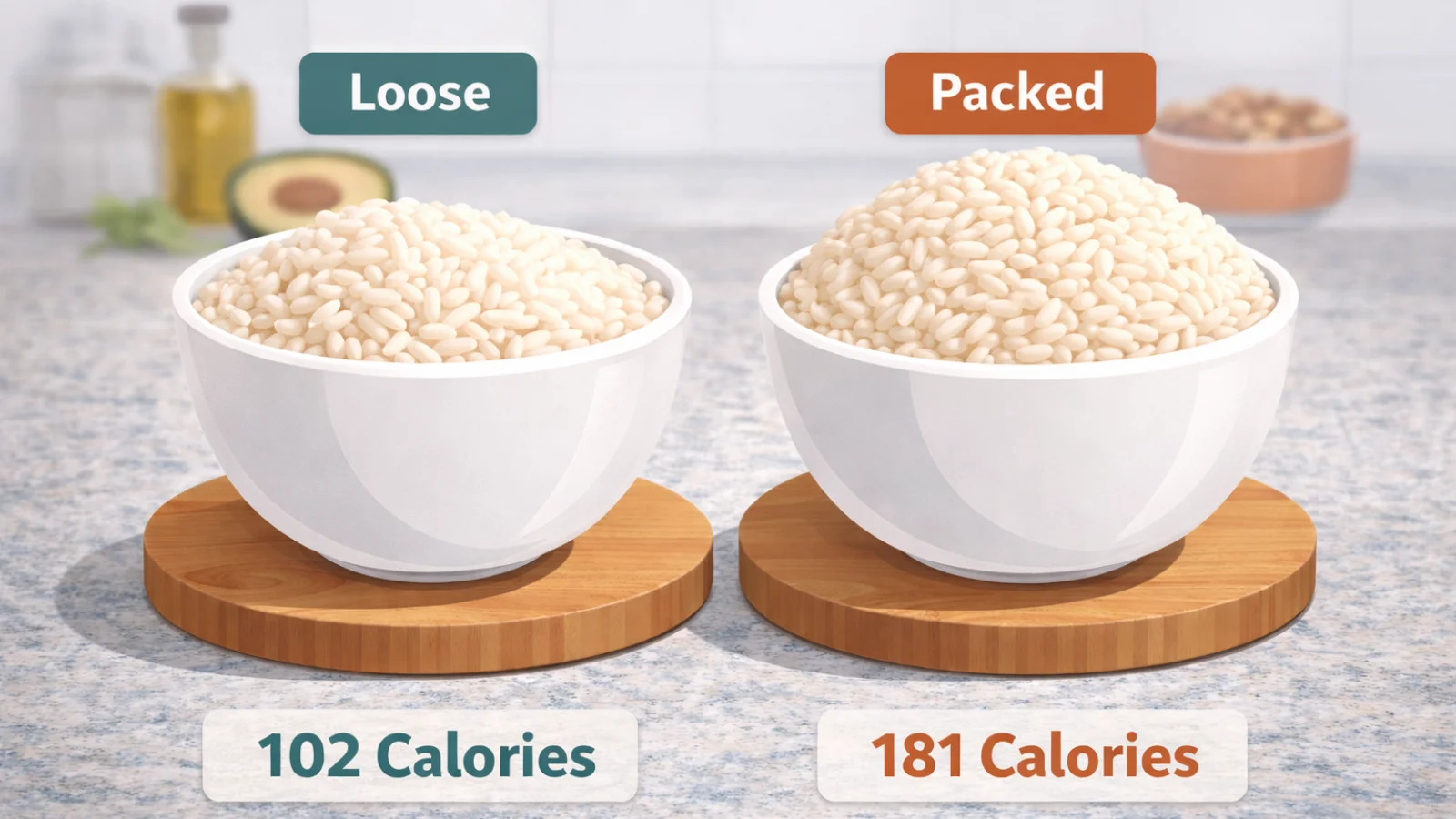
Let’s make this concrete. You prepare a rice bowl with:
- Rice
- Chicken
- Avocado
- Olive oil
Using volume measurement:
- One cup of rice varies based on how it’s scooped
- Half an avocado varies in size
- Oil is often estimated visually.
Using a scale:
- 180 grams of rice
- 150 grams of chicken
- 70 grams of avocado
- 10 grams of olive oil
The difference can easily reach 80 to 100 calories in a single meal. Across three meals per day, that gap becomes significant. Over time, cumulative differences in calorie intake may influence overall weight trends.
Do You Need Maximum Precision?
Not always.
When your goal is gradual, sustainable fat loss, small inconsistencies may not derail you.
However, you are cutting aggressively or tracking macros closely, precision becomes more valuable.
If you are stuck despite feeling consistent, measurement error is worth examining.
How Tracking Apps Fit Into This
Measurement is only half the equation. Logging is the other half. Digital tracking apps eliminate manual math. Instead of dividing totals yourself, you enter ingredients once and let the system calculate everything.
Many calorie tracking apps like Calorie Tracker Buddy allows you to log ingredients individually, calculate totals automatically, and divide meals into portions. This can simplify tracking when cooking without a structured recipe.
If you measure by volume loosely, your data reflects that. If you weigh ingredients carefully, your numbers become more reliable.
What Calorie Tracker Buddy Helps You Do
- Log individual ingredients clearly
- Automatically calculate calories and macros
- Save custom recipes for repeated meals
- Divide total cooked weight into accurate servings
- Adjust portions by grams or serving size
- Track protein and macro goals
- View daily and weekly trends
- Organize homemade meals efficiently
Using a food scale generally improves measurement precision, while consistent volume measurement can still provide reliable results when applied carefully.
Digital tools can make logging easier, but measurement accuracy ultimately depends on how ingredients are measured during preparation.
Long-Term Sustainability Matters Most
Some people buy a scale and stop using it because it feels tedious. Others rely on volume measurements for years and make steady progress.
The best system is the one you’ll continue using six months from now.
If weighing everything feels overwhelming, start with high-calorie foods. Leave vegetables to volume measurement. Over time, you’ll build stronger portion awareness. You may rely less on tools altogether.
Read More!
Do I Need to Weigh My Food to Count Calories? (Pros vs. Cons) – Calorie Tracker Buddy
Weight Loss Tips for People Who Hate Cooking – Calorie Tracker Buddy
So, which one wins?
When comparing a food scale vs. a measuring cup, a food scale typically provides greater measurement precision than volume-based tools. When comparing simplicity, volume measurement often feels easier.
If you cook without recipes and want tighter control, a scale offers clarity. If you value ease and your results are consistent, volume measurement may be enough.
There isn’t a universally correct answer. There is only the method that helps you stay consistent.
Using cups is accessible and simple. A food scale is precise and dependable. Both can support weight loss. Consistency, not perfection, is what turns either tool into results.
FAQ
- Is a measuring cup accurate enough for weight loss?
Yes, it can be. For liquids and low-calorie foods, a measuring cup works well. Accuracy becomes more important with dense, high-calorie ingredients.
- Why does a food scale reduce calorie errors?
A food scale measures weight directly, removing variability caused by packing pressure or inconsistent scooping.
- Can I lose weight without weighing food?
Absolutely. Many people succeed without a scale. However, weighing food can help if progress stalls or precision is necessary.
- Does cooking change measurement accuracy?
Yes. Cooking changes volume and moisture. Weight-based tracking adapts more reliably to these changes than volume-based measurement.
- Should beginners start with a measuring cup or a scale?
Beginners can start with either. If you want faster accuracy and clearer data, a scale may shorten the learning curve.