

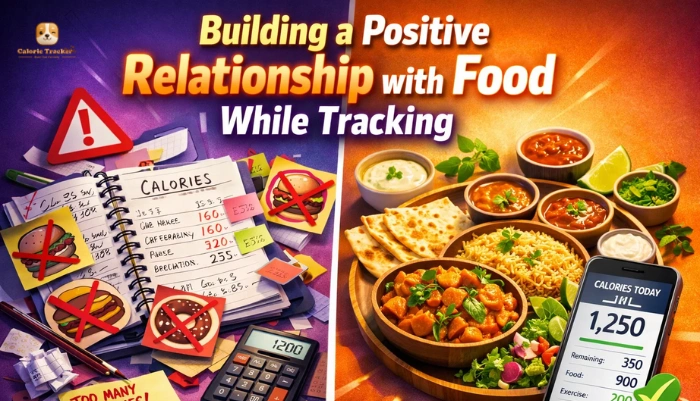
Food should not feel like a daily math problem. Yet for many people today, every bite comes with doubt, guilt, or second-guessing. When numbers, diet rules, and social pressure take over, your relationship with food can quietly become stressful and confusing.
Across India, conversations around eating disorders are finally increasing. Still, many people overlook the warning signs. Skipping meals, overeating during stress, or feeling anxious after eating often gets brushed off as “normal dieting.” It isn’t. These patterns can slowly harm both physical health and mental peace.
Tracking what you eat can be a smart move. It builds awareness and helps you stay consistent with your goals. But without the right mindset, tracking can turn rigid and overwhelming. The focus should always be progress and balance, not perfection.
A positive relationship with food means trusting your body, enjoying meals without fear, and using tracking as a supportive tool, not a strict judge. When done mindfully, you can stay on track while still feeling free around food.
In this blog, you will discover simple, expert-backed ways to track wisely and protect your wellbeing. If you or someone close to you shows signs of an eating disorder, this is the right moment to take action.
Listen To The Podcast Now!
Why Your Relationship with Food Matters More Than Your Calorie Count?
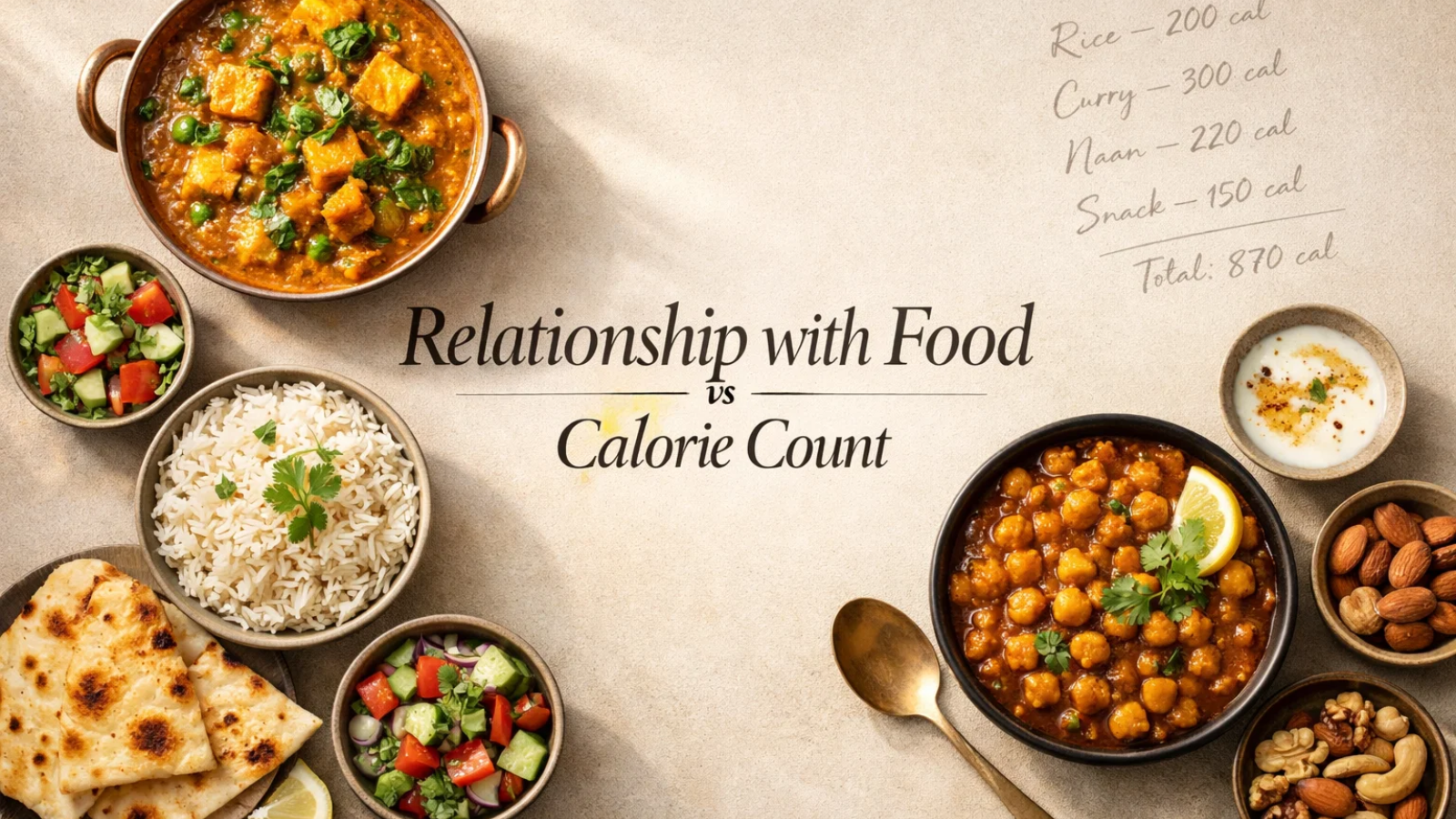 Food anxiety is quietly rising across India. More people are downloading calorie trackers, obsessing over macros, and skipping family meals just to “stay on plan.” But here’s the truth: how you feel about food matters just as much as what you eat.
Your relationship with food shapes your habits, your mental health, and your long-term results. Calorie tracking, when done right, is a powerful tool for awareness. But when done wrong, it can fuel guilt, fear, and even eating disorders.
Research consistently shows that a damaged relationship with food is one of the strongest risk factors for conditions like anorexia, bulimia, and binge eating disorder. The goal of tracking should never be control; it should be clarity.
🚩 Hidden Signs Your Food Tracking Is Becoming Unhealthy
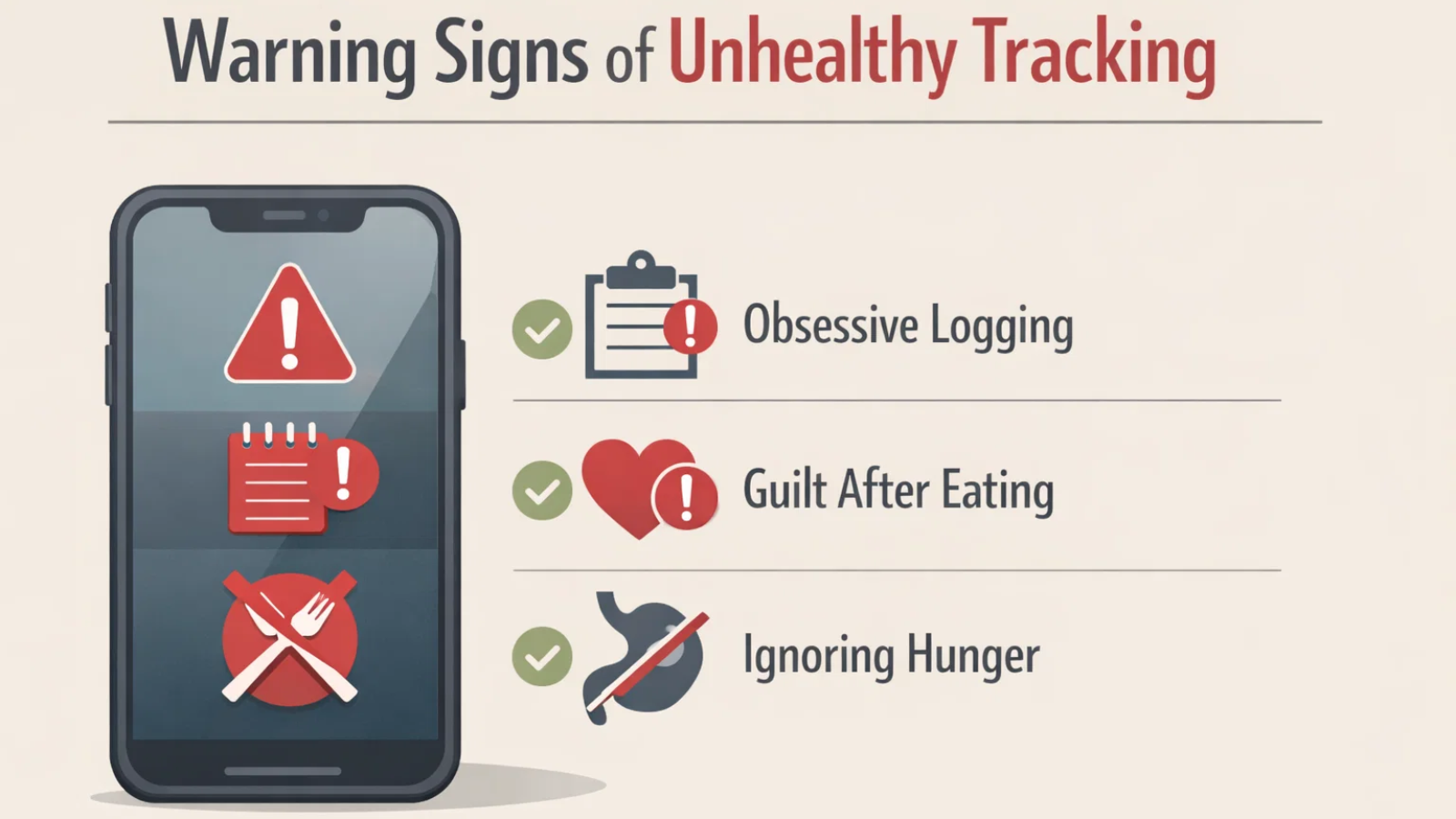
Not all damage looks dramatic. Sometimes, it creeps in quietly. Watch out for these red flags:
- Obsessive calorie checking — You can’t eat anything without logging it first, even a single biscuit.
- Guilt after eating “off-plan” — One unplanned meal ruins your entire day mentally.
- Ignoring hunger signals — You eat by the numbers, not by how your body feels.
- Tracking causes stress — The app that was supposed to help you is now making you anxious.
- Avoiding social meals — You skip dinners with friends or family because you can’t log the food accurately.
If any of these sound familiar, your relationship with food may need more attention than your calorie count does.
Mindful Tracking vs. Obsessive Tracking: Know the Difference
There’s a fine line between using data to learn and using data to punish yourself. Here’s how to tell the difference:
| Mindful Tracking | Obsessive Tracking |
| Builds awareness | Creates anxiety |
| Flexible and forgiving | Rigid and stressful |
| Supports hunger cues | Overrides hunger cues |
| Celebrates progress | Focuses only on “failures” |
| Used as a guide | Feels like a rulebook |
Quick self-check: Ask yourself, does logging food make you feel empowered or ashamed? Your answer tells you everything.
A healthy relationship with food includes the ability to eat a meal without calculating it to the last calorie. Tracking is a tool. It should work for you, not against you.
The Smart Way to Track Without Ruining Your Relationship with Food
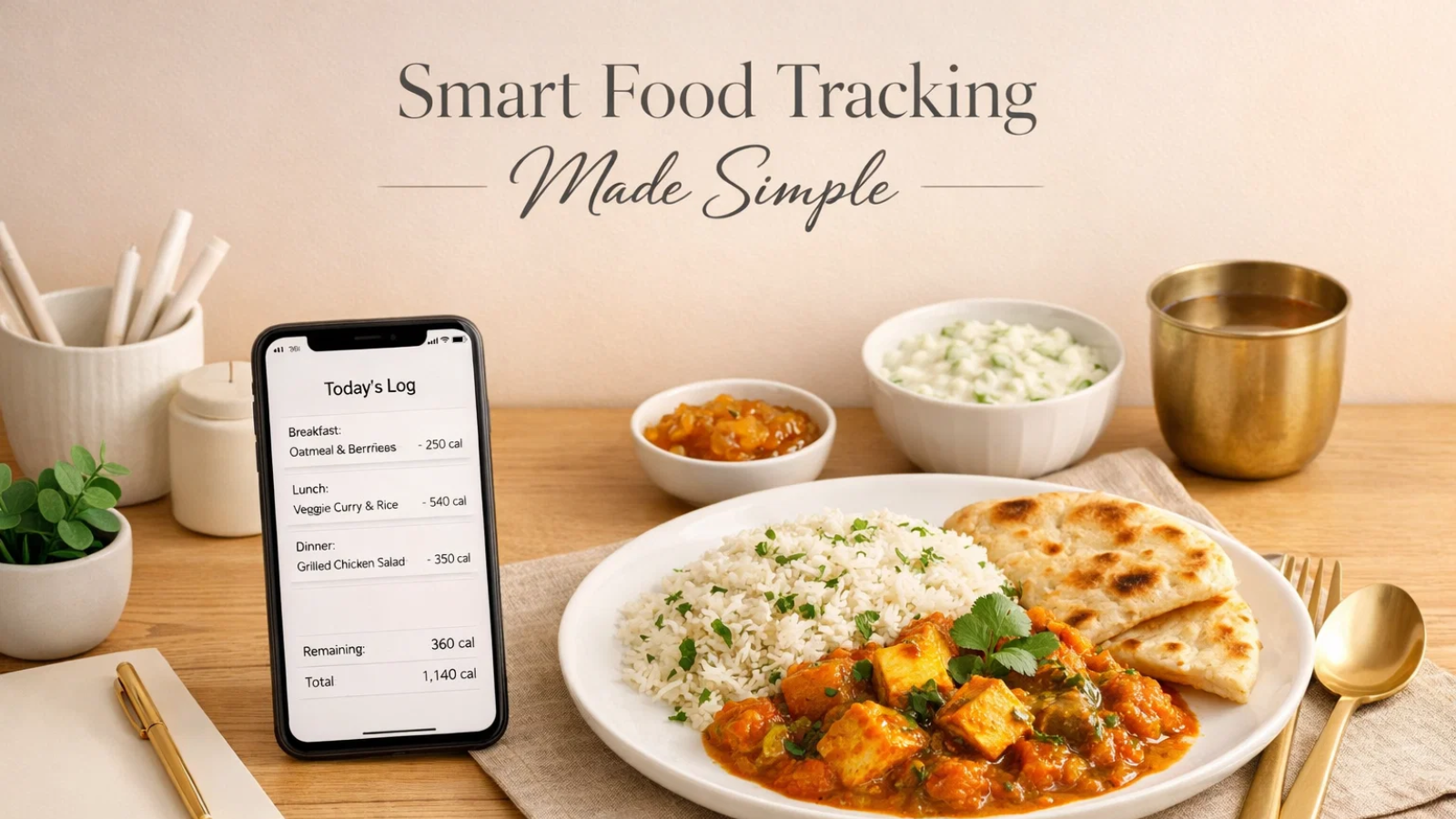
✅ Focus on Awareness, Not Perfection
The point of tracking is to understand your patterns — not to achieve a perfect score every day. Miss your protein goal? Note it and move on. The data is information, not a verdict on your worth.
✅ Stop Labelling Foods as “Good” or “Bad”
Dal makhani is not a “cheat meal.” A piece of mithai at a festival is not a failure. When you stop moralising food, your relationship with food naturally improves. No single food makes or breaks your health.
✅ Track Patterns, Not Punishments
Look at your week, not just your day. One heavy meal doesn’t undo seven days of good choices. Use your data to spot trends, like always overeating when stressed, or skipping meals when busy and address those root causes.
✅ Keep Flexibility in Your Routine
Plan for the unplanned. Family gatherings, late-night cravings, travel days, life happens. Build in a buffer. Healthy tracking is sustainable tracking.
💡 Pro Tip: Using a smart app like Calorie Tracker Buddy makes this whole process much simpler. It’s designed to help you log meals without turning it into a stressful exercise.
📲 Meet Calorie Tracker Buddy: The Best Food Tracking App for a Balanced Mind
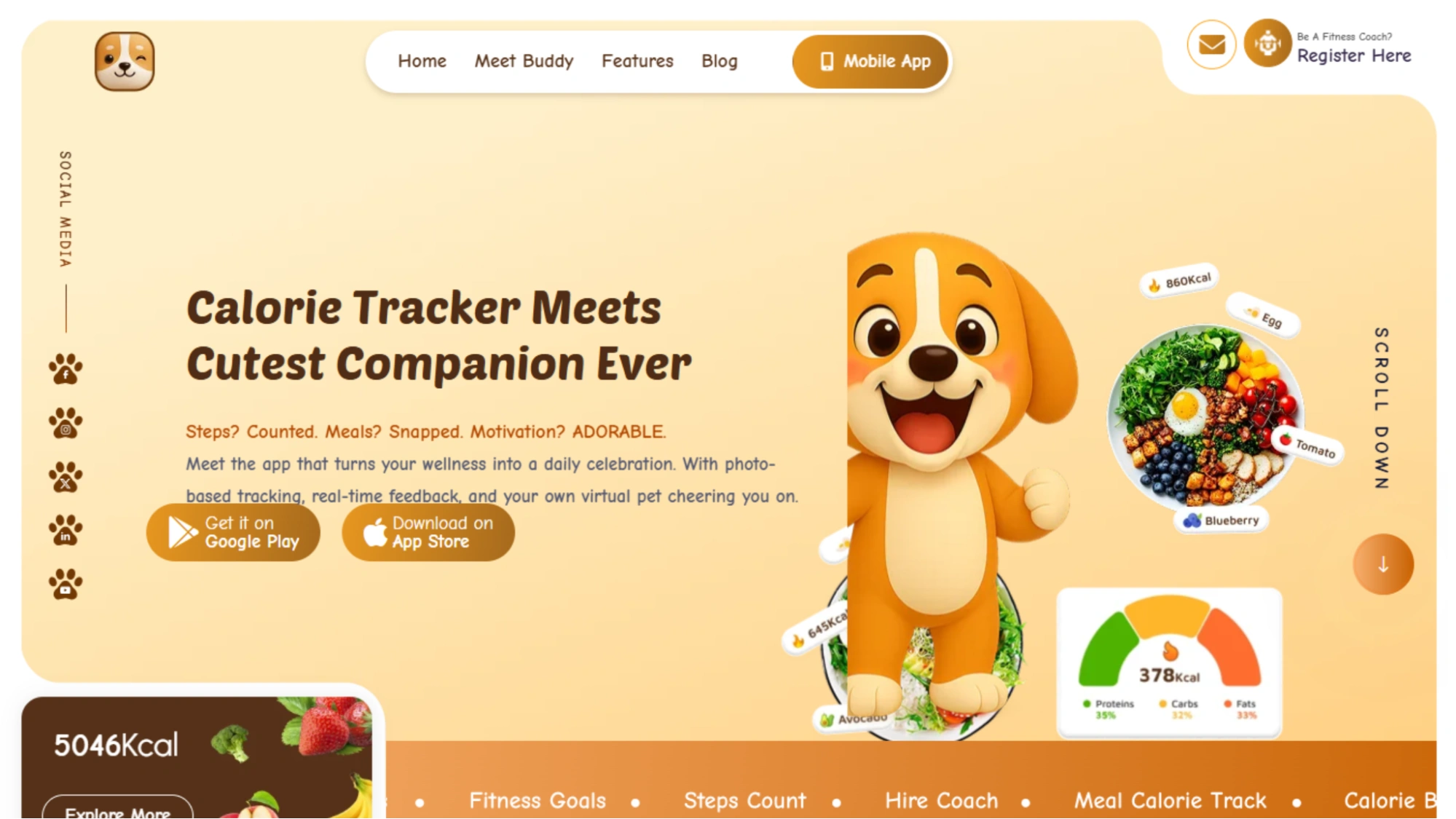 If you’re looking for the best food tracking app that actually supports your mental wellness and not just your macros, Calorie Tracker Buddy is built for you.
Here’s what makes it different:
- 🍛 Built for Indian foods: Log your dal, roti, poha, idli, and biryani without guesswork. The database understands Indian meals.
- 🔔 Gentle reminders, no pressure: No guilt-tripping notifications. Just friendly nudges to stay consistent.
- 📊 Habit-focused progress insights: See how your patterns are improving over time, not just whether you hit a calorie number.
- 🧘 Supports a balanced relationship with food: The app is designed around awareness, not restriction. It helps you understand your body, not punish it.
Whether you’re learning how to build a healthy relationship with food eating disorders recovery journey, or simply trying to eat more mindfully, Calorie Tracker Buddy meets you where you are.
👉 Want stress-free tracking? Try Calorie Tracker Buddy today and track smarter, not harder.
The 80/20 Rule That Nutrition Experts Swear By
Here’s a principle that can completely change how you think about food: eat nutritiously 80% of the time, and enjoy freely for the remaining 20%.
This means that if you eat 21 meals a week, roughly 17 should be balanced and nourishing, and 4 can be whatever you love. A samosa. A dessert at a wedding. A cheat Sunday.
Indian eating culture already supports this naturally. Dal, sabzi, roti, rice, our traditional meals are largely balanced. The problem arises when we abandon this foundation in favour of extreme dieting or obsessive tracking.
The 80/20 rule is not permission to eat recklessly. It’s permission to be human. And that’s exactly what a healthy relationship with food looks like.
Read More:
Emotional Eating Triggers Most Indians Ignore
Understanding why you eat is just as important as what you eat. Emotional eating is one of the most common and most overlooked barriers to a healthy relationship with food.
Common triggers in the Indian context:
- Stress eating: A hard day at work leads to mindless snacking in the evening.
- Late-night binge cycles: Skipping meals during the day and overeating at night.
- Social and family pressure: “Have one more serving” is hard to say no to without feeling rude.
- Boredom eating: Reaching for snacks because there’s nothing else to do.
Quick fixes that actually work:
- Keep a simple emotion-food journal alongside your calorie log.
- Pause for 5 minutes before eating outside of mealtimes.
- Identify your top 2–3 trigger situations and plan alternatives.
Expert-Backed Habits to Build a Positive Relationship with Food
Nutritionists and psychologists agree here’s what genuinely helps:
Mindful eating basics: Eat slowly. Sit down. Put your phone away. Taste your food. These simple acts reconnect you with the experience of eating.
Hunger-fullness awareness: Before eating, rate your hunger on a scale of 1–10. Stop eating at 7. This alone can transform your relationship with food over time.
Nutrition by addition approach: Instead of removing things from your diet, focus on adding more vegetables, more protein, and more water. This creates a positive, growth-oriented mindset.
Self-talk that reduces guilt: Replace “I ruined today” with “One meal doesn’t define my journey.” Language matters. Compassionate self-talk is not weakness; it’s the foundation of lasting change.
When to Seek Help for Eating Disorders
Sometimes, the struggle with food goes beyond habits, and that’s okay to acknowledge. Knowing how to build a healthy relationship with food eating disorders awareness is the first step.
Warning signs you shouldn’t ignore:
- Extreme fear of gaining weight
- Skipping meals regularly or eating in secret
- Feeling out of control around food
- Physical symptoms like fatigue, hair loss, or dizziness related to eating habits
- Severe guilt or shame after nearly every meal
If these resonate with you or someone you know, please reach out to a registered dietitian or mental health professional. Healing your relationship with food is possible, and professional support makes that journey significantly easier and safer.
You are not weak for needing help. You are brave for seeking it.
Final Thoughts
Your calories do not define your worth. Your body is not a problem to be solved. Food is not the enemy.
A healthy relationship with food is one where you can eat with joy, track with curiosity, and live without constant guilt. That’s the real goal, not a perfect number on an app.
Use tracking as a mirror, not a judge. Learn from your data. Celebrate small wins. Be kind to yourself on hard days.
And if you’re ready to start tracking in a way that actually feels good, download Calorie Tracker Buddy today. It’s the smarter, gentler way to understand your food, build better habits, and finally make peace with eating.
👉 Start your free journey with Calorie Tracker Buddy because you deserve to feel good about food every single day.
Frequently Asked Questions
❓ Can calorie tracking actually damage your relationship with food?
Yes, when done obsessively. Over-focusing on numbers can create guilt, anxiety, and rigid eating habits. The key is mindful tracking that supports awareness, not perfection or punishment.
❓ What are the early warning signs of eating disorders most people miss?
Common red flags include constant food guilt, skipping meals to save calories, anxiety around eating out, and obsessive food logging. Catching these signs early can help prevent serious eating disorders.
❓ Is it possible to lose weight without obsessively counting calories?
Absolutely. Many people see better long-term results by focusing on balanced meals, hunger cues, and consistent habits instead of strict calorie math alone.
❓ How does the Calorie Tracker Buddy app make tracking less stressful?
The Calorie Tracker Buddy app simplifies meal logging, offers gentle insights, and focuses on habit trends, helping you stay consistent without feeling overwhelmed by numbers.
❓ When should you seek professional help for eating disorders?
If food thoughts control your day, meals trigger strong guilt, or your eating patterns feel out of control, it is wise to consult a healthcare professional early for proper support.