


If you’ve ever tried to count calories, you’ve probably asked yourself, “Do I really need to weigh everything?” For many people, the idea of pulling out a food scale at every meal feels exhausting. Others worry they’ll never see results unless they track with extreme precision.
As a nutritionist, I want to reassure you: counting calories does not have to feel obsessive to be effective. The real goal is clarity, not perfection. Understanding when weighing helps and when it’s unnecessary can remove a lot of stress from the process.
Let’s talk honestly about it.
Listen To The Blog Post!
What Does “Counting Calories” Actually Mean?
To count calories simply means being aware of how much energy you’re consuming and comparing it to your goal, whether that’s fat loss, maintenance, or muscle gain. It’s not about micromanaging every bite. It’s about patterns.
When learning how to count calories in food, think of it as gathering useful information rather than chasing perfection. When you count calories, you’re collecting data that helps you understand why your weight is changing or staying the same. Without some form of tracking, it’s very easy to underestimate how much you’re eating, especially with calorie-dense foods. Modern tools make this easier than ever.
Apps like Calorie Tracker Buddy simplify the process by calculating totals automatically, storing frequent meals, and scanning barcodes so you don’t have to do manual math. The goal is to reduce friction, not create more of it.
Meet Calorie Tracker Buddy: Making It Simple to Count Calories
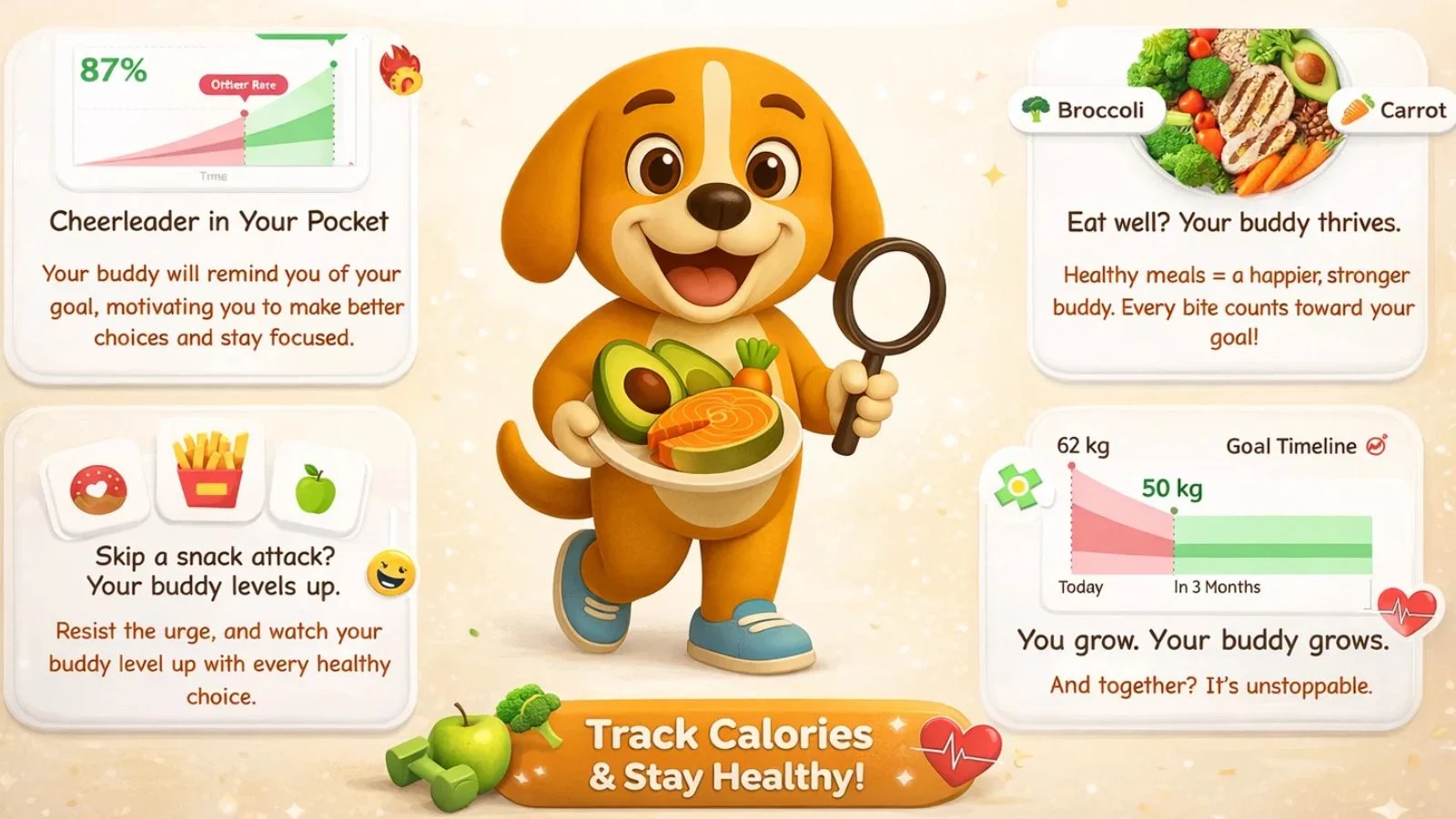
If weighing food feels intimidating, the right app can make it far less stressful. Calorie Tracker Buddy is designed to help you count calories with clarity, speed, and motivation, without turning the process into a burden. Instead of complicated spreadsheets or constant manual calculations, it gives you smart automation and real-time feedback.
Key Features:
- Snap the Meal – Point your camera, tap once, and your meal is scanned for calories, nutrients, and balance.
- Calorie Burn Tracker – Tracks daily activity, from workouts to everyday movement, and shows calories burned.
- Calorie Intake Tracker – Log meals in seconds and instantly see how they align with your goals.
- Goal Predictions – Understand how each meal, snack, and sip impacts your progress.
- Buddy Motivation – A virtual pet grows with your healthy habits, keeping you engaged.
- Social Sharing – Share meals, streaks, and progress with your community for support.
It turns calorie tracking into something sustainable, visual, and encouraging.
How Accurate Is Eyeballing Portion Sizes?
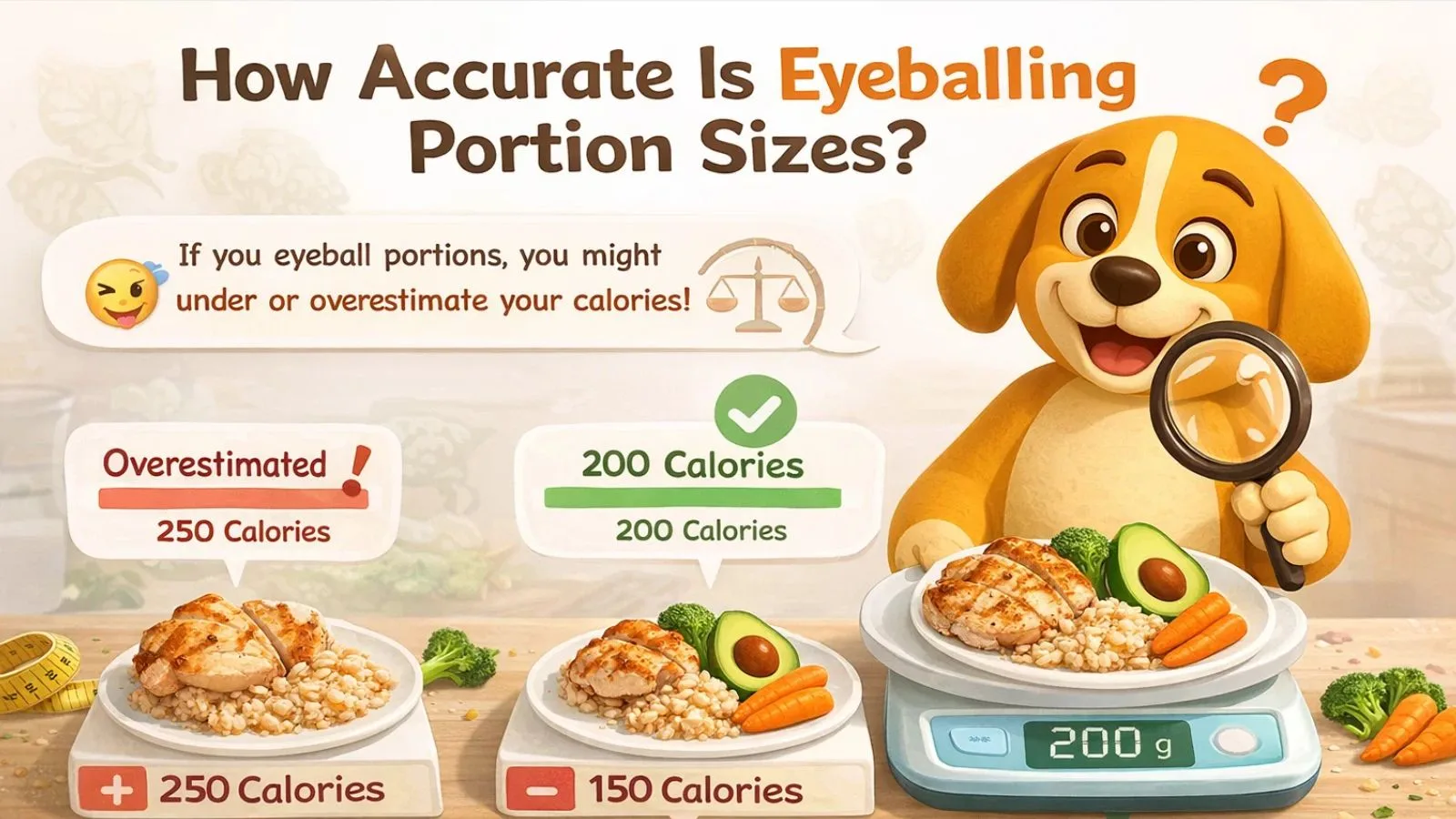
Here’s the uncomfortable truth: most people are not good at estimating portions. Even experienced eaters consistently underestimate foods like rice, peanut butter, cooking oil, and nuts. What looks like one serving often turns out to be one and a half or even double.
This doesn’t mean you’re bad at tracking. It simply means our brains are wired to misjudge portions, especially when we’re hungry or distracted. If you’re trying to count calories but not seeing progress, inaccurate estimation is often the hidden reason.
However, that doesn’t automatically mean you must weigh food forever. It means that learning accurate portions at least once can be incredibly valuable.
Pros- The Case for Weighing Your Food
-
Weighing food gives you precision, especially when fat loss progress has stalled and small inaccuracies start adding up.
-
An extra tablespoon of oil each day can mean hundreds of unnoticed calories per week, and a scale removes that guesswork.
-
It is particularly helpful in the beginning stages of trying to count calories.
-
Weighing rice, oats, chicken, or snacks a few times helps you understand what a true serving actually looks like.
-
That awareness builds confidence and improves estimation over time.
-
After a few weeks, many people can estimate portions more accurately without always using a scale.
-
Weighing is useful during plateaus when tighter accuracy can reveal hidden calorie gaps.
-
It is also beneficial for medical or performance goals where precision matters more, such as metabolic conditions or competition prep.
But it’s still a tool, not a lifestyle requirement.
Cons- The Case Against Weighing Your Food
-
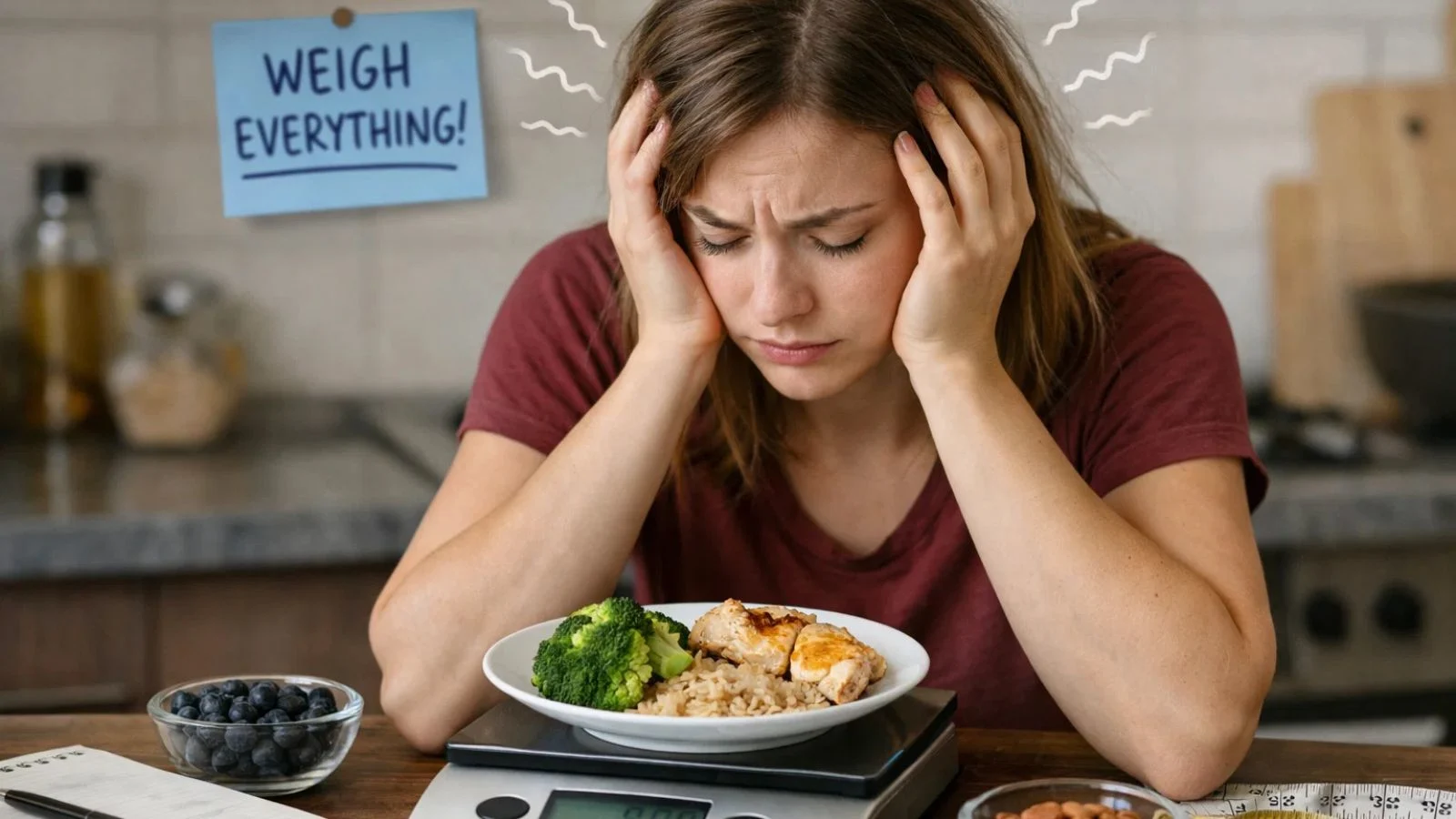
Weighing everything can feel overwhelming and increase anxiety around food.
-
If measuring makes meals stressful or rigid, it may do more harm than good.
-
It isn’t realistic in many situations like restaurants, social gatherings, or travel.
-
Life requires flexibility, and your tracking method should allow for that.
-
If weighing feels like a chore, you’re less likely to stay consistent.
-
Consistency matters more than perfect accuracy.
-
For weight maintenance with stable habits, extreme precision is often unnecessary.
-
Structured app logging combined with portion awareness is usually enough to count calories effectively.
When Should You Weigh Food?
The best time to weigh food is when you need clarity. If you’re new to tracking, stuck in a plateau, or unsure why results aren’t happening, a few weeks of weighing can provide valuable insight.
If you’re in maintenance, eating out frequently, or feeling mentally fatigued by numbers, you can scale back. Many people use a hybrid approach. They weigh calorie-dense foods like oils, peanut butter, or rice but estimate vegetables and lean proteins.
The goal is to use precision strategically, not obsessively.
Are There Alternatives to Weighing?
Yes. Hand portion guides, measuring cups, and consistent meal repetition can all help. Over time, repeating similar breakfasts and lunches reduces decision fatigue and improves consistency.
Digital tools also make estimation easier. Calorie Tracker Buddy allows you to adjust portions quickly, save common meals, and review trends over time. This gives you a bigger picture view rather than focusing on a single imperfect day. When you count calories with a supportive system, you reduce stress and improve adherence.
Does Weighing Food Actually Help You Lose Weight?
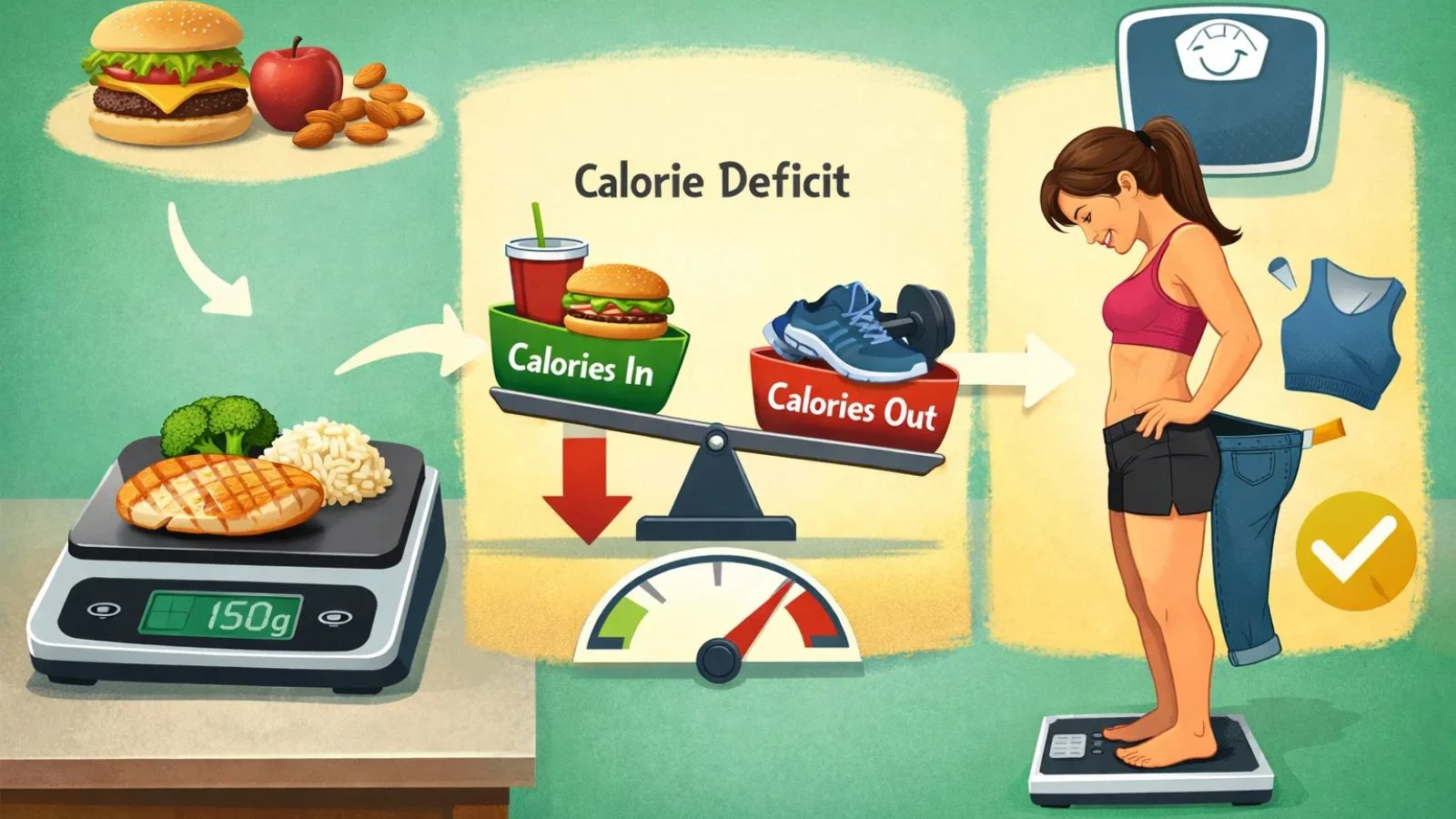
Weighing food does not directly cause weight loss. A calorie deficit does. But weighing improves accuracy, and accuracy makes it easier to maintain a deficit consistently.
If you’re trying to understand how to count calories without second-guessing yourself, using a scale can remove much of the uncertainty. For some people, that added precision becomes the difference between guessing and progressing, while for others it’s unnecessary once habits are firmly established.
If weighing helps you feel informed and in control, it’s a powerful tool. If it makes you feel restricted or anxious, it’s completely fine to rely on structured tracking, steady habits, and growing portion awareness instead.
Also Read!
Final Thoughts: Find What Works for You
You do not need to weigh every bite forever to count calories successfully. What you need is consistency, awareness, and a method you can sustain.
If you’re unsure where to start, try weighing food for two to four weeks. Learn what real portions look like. Then gradually transition to estimation while continuing to count calories through an app that simplifies the process.
Sustainable fat loss isn’t built on perfection. It’s built on repeatable habits. Use tools like Calorie Tracker Buddy to support your journey, not control it. The best approach is the one that fits your lifestyle and protects your relationship with food while still moving you toward your goals.
FAQs
- Do I weigh food before or after cooking?
You can do either, but consistency matters. Raw and cooked foods have different weights because cooking changes water content. Always match your measurement style to the database entry you’re using when you count calories. If the app lists “raw chicken,” weigh it raw. - Should I weigh everything, including spices and condiments?
Not necessarily. Low-calorie spices don’t need strict measuring. However, calorie-dense condiments like oil, butter, mayonnaise, and salad dressings are worth weighing, especially if you’re in a fat-loss phase. Small amounts can add up quickly when you count calories daily. - What if I forget to weigh a meal?
Don’t panic. Estimate as accurately as possible and move on. One imperfect entry will not ruin your progress. Long-term consistency matters far more than one missed measurement when you count calories. - Can I stop weighing food once I see results?
Yes, many people transition away from weighing once they develop portion awareness. After a few weeks of consistent tracking, you’ll better understand serving sizes and can estimate more confidently while continuing to count calories effectively.