


Have you been tracking your food? Cut back on portions? Maybe even exercised more than ever, and yet the scale hasn’t moved?
So, you end up thinking:
“I’m in a calorie deficit… So why am I not losing weight?”
First- Let’s take a breath.
This is one of the most common (and fixable) fat-loss problems. Most cases are not due to having a ‘broken’ metabolism, but rather due to a few predictable causes that can easily be modified.
In this guide, we’ll cover:
- What is meant by calorie deficit
- How do you calculate calorie deficit properly
- Why does weight loss sometimes become a stalled process sometimes
- 5 common reasons you may not be losing weight
- How can you fix each of them
- A smarter way to track your progress without burning out physically and mentally
Let’s start with the basics.
In a hurry? Listen to the blog instead!
What Is Meant By Calorie Deficit?
Before we jump into the problem-solving phase, let’s understand what a calorie deficit actually is.
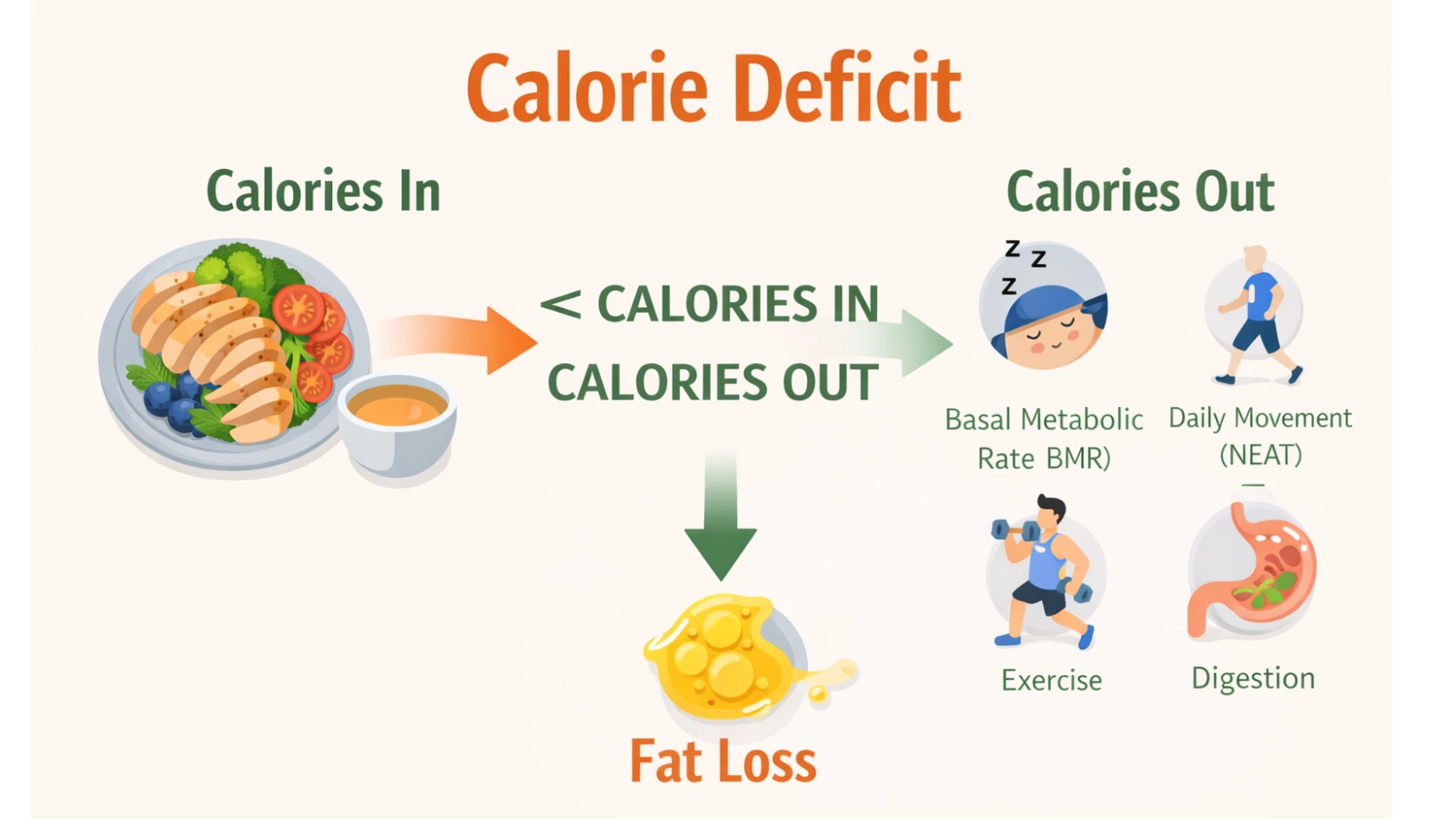
A calorie deficit is consistently consuming fewer calories than your body burns.
Your body burns calories through:
- Basal Metabolic Rate (BMR) – energy you use to stay alive
- Daily movement (NEAT) – walking, chores, posture
- Exercise – hit workouts, sports
- Digestion – breaking down food
If a person burns 2,200 calories per day and eats 1,800, then they are in a 400-calorie deficit.
With time, that deficit forces your body to use stored energy (fat) to make up the difference.
This is how a calorie-deficient diet works for weight loss.
So if the formula is simple, then why does the scale sometimes refuse to cooperate?
Let’s break it down.
1. You’re Not Actually in a Calorie Deficit
One of the most common reasons is not actually having a calorie-deficient diet- and it’s not a failure on your part.
Many people underestimate the amount of food they eat and overestimate how much they burn.
Even small tracking gaps can erase a deficit.
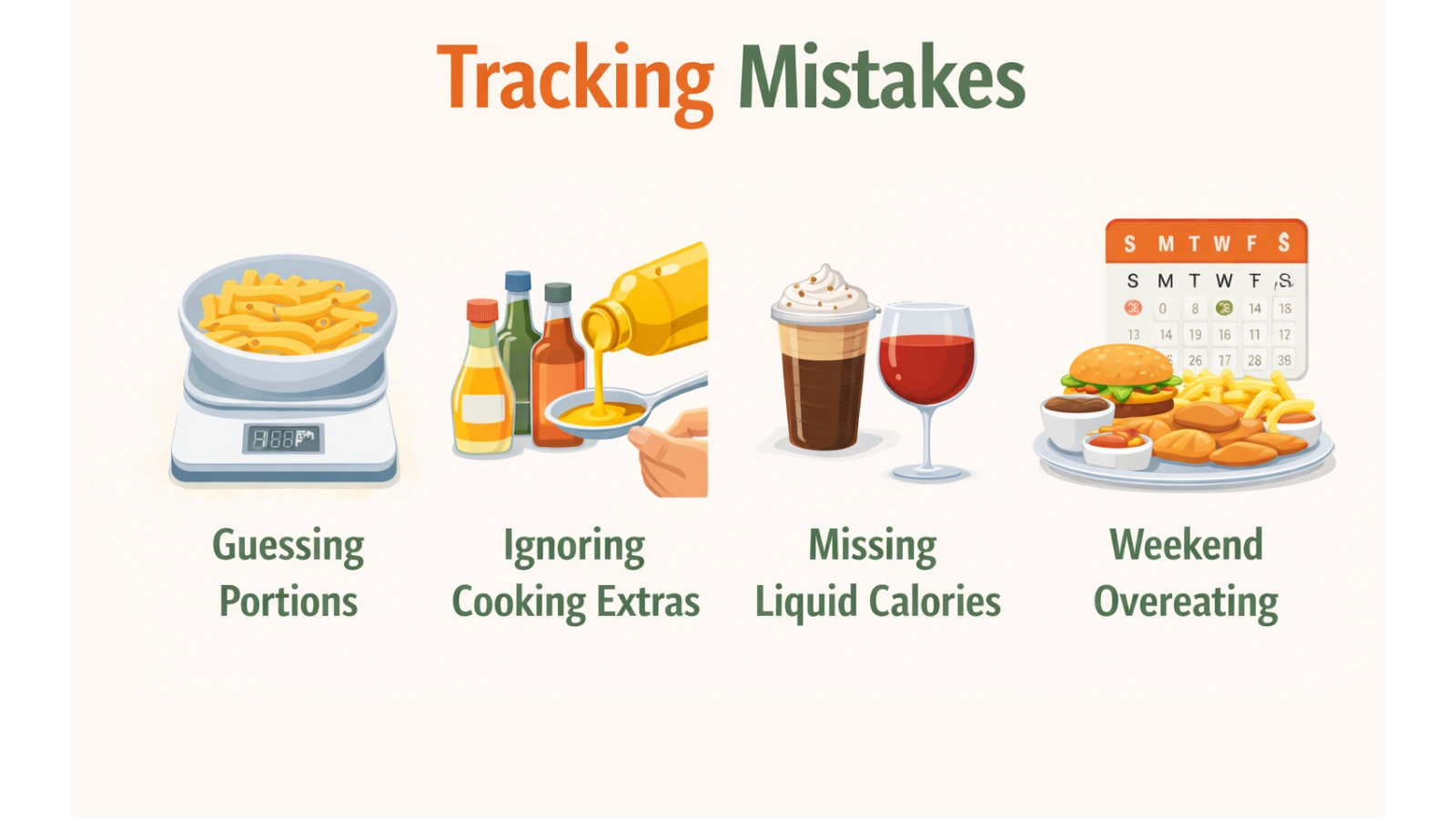
A few common mistakes:
- Assuming and eyeballing portions instead of weighing
- Not paying attention to what cooking oils, sauces, and dressings are being used
- Not logging small snacks or bites
- Underestimating liquid calories (coffee drinks, alcohol)
- Weekend overeating that cancels weekday discipline
Research consistently shows people can oftentimes underestimate intake by 20–50%.
That’s enough to mess up a calorie deficit. To solve this issue:

Make Tracking Simpler (So You Stay Consistent)
One major issue for people not being able to track their calorie deficit properly is tracking fatigue.
Logging every ingredient manually can feel exhausting. And when tracking becomes stressful, accuracy drops.
That’s where having the right system matters.
Here’s how to make tracking easier and more accurate — without obsessing over it:
- By using a food scale for at least 2–3 weeks. Portion awareness is crucial.
- Pre-log meals earlier in the day. This can help you in staying within your calorie target.
- Track consistently — not perfectly. If you’re unsure about something, estimate and move on.
- Be mindful of calorie-dense extras like oils, dressings, nut butters, and drinks.
- Focus on weekly averages, not single days.
When tracking feels manageable, consistency improves, and consistency is what actually creates a calorie deficit over time.
Instead of guessing or skipping logs, tools like Calorie Tracker Buddy simplify the process. You can snap your meals, monitor daily targets, and much more.
Also Read!
Calorie Counting Vs. Intermittent Fasting: Which Is Right For You?
2. You’re Overestimating Calories Burned
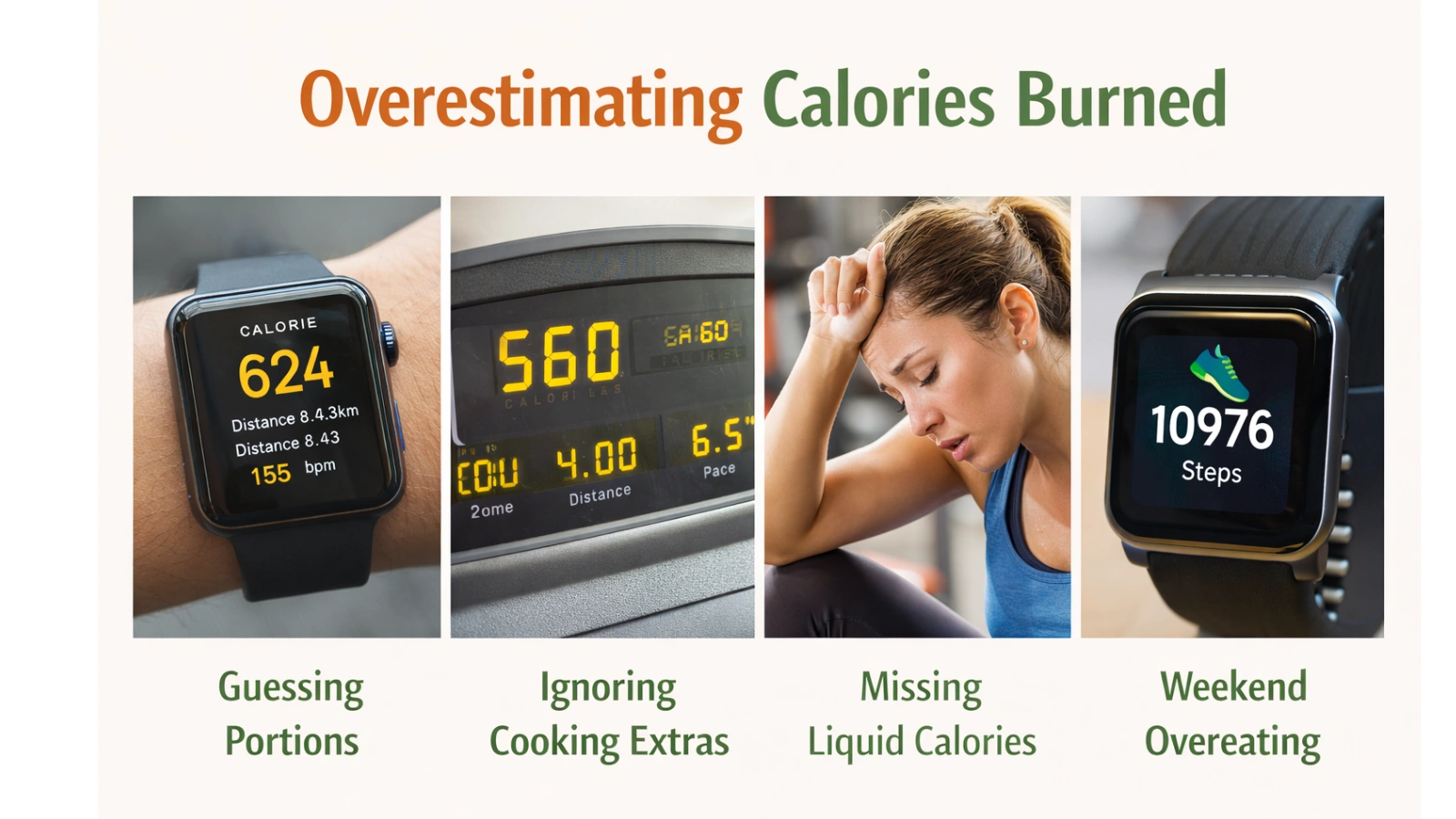
Fitness tools such as watches and cardio machines are helpful, but they are not perfectly accurate.
You might see:
“You burned 600 calories!”
In reality, it may be closer to 350-400.
If you have the food worth those “burned” calories, your deficit disappears.
Another hidden issue: compensation
When people increase exercise, they often start:
- Moving less outside workouts
- Feeling hungrier and eating more
- Rewarding themselves with extra food
What to do for this issue:
- Be careful while counting exercise calorie estimates. Don’t rely too much on calorie burn numbers.
- Avoid automatically eating back burned calories.
- Focus on consistent daily steps (8,000–10,000+ if realistic)
Exercise is powerful for health, but diet plays an important role in fat loss.
3. Water Retention Is Masking Fat Loss
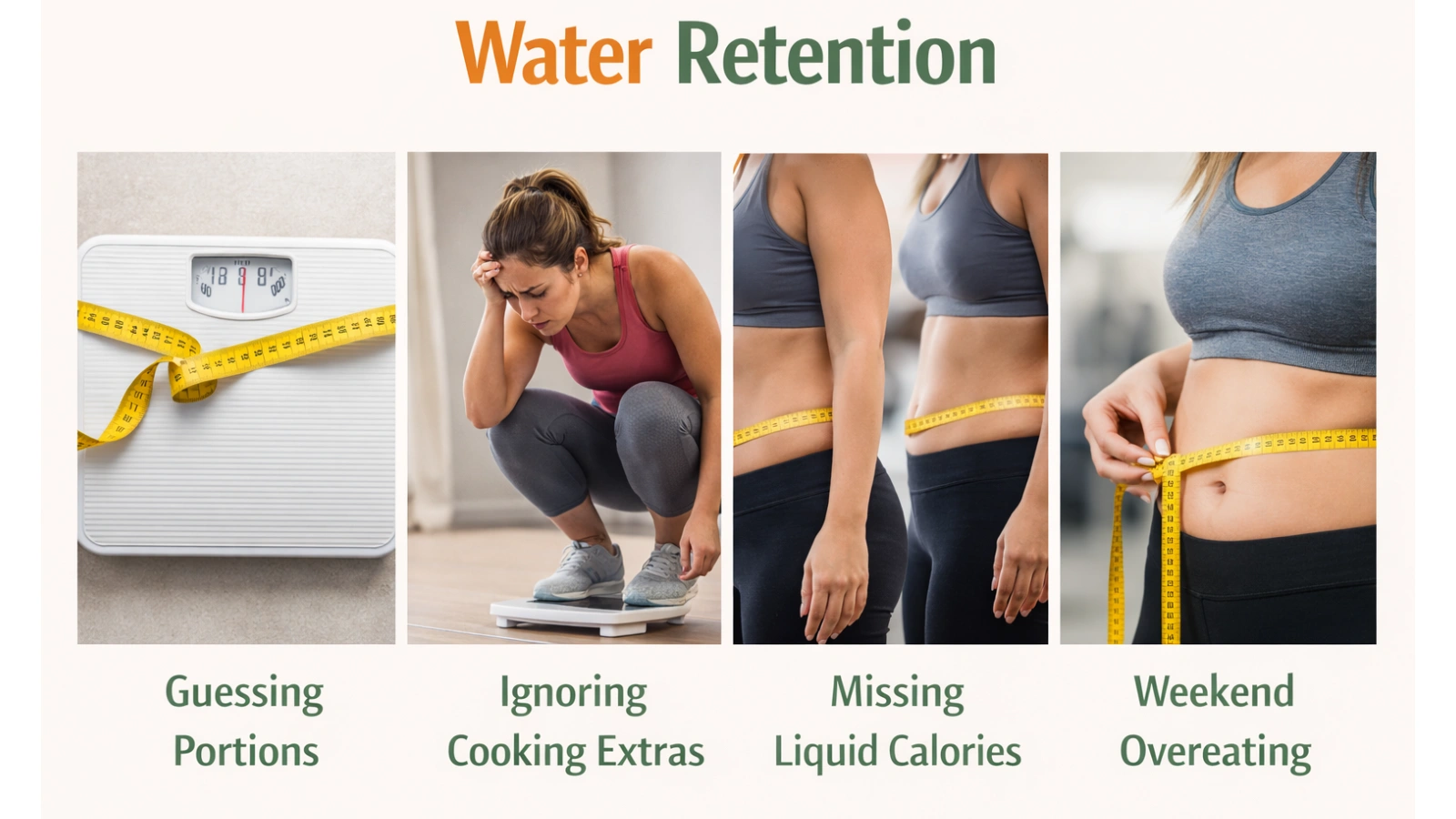
A fact that most people don’t realize is :
You can be true to your calorie-deficient diet and still not see the scale move.
Why?
Water.
A human body holds onto black water for many reasons:
- Increased sodium intake
- Hormonal fluctuations
- Stress and lack of sleep
- Increased carb intake
- Starting a new workout routine
As you lift weights, your muscles retain water during repair. This can temporarily mask fat loss.
Fat loss is not linear
You might lose 1 pound of fat — but gain 1 pound of water. This makes the scale appear steady.
That doesn’t mean nothing is happening.
What to do:
- Track weekly weight averages
- Take waist measurements
- Use progress photos
- Stay consistent for 3-4 weeks before making changes
Sometimes a sudden effect happens – the scale suddenly drops after holding steady.
4. Your Maintenance Calories Have Changed
As you progress in weight loss, your body requires fewer calories.
That means the calorie deficit that worked at the beginning may no longer be enough.
For example:
- Starting maintenance: 2,300 calories
- You ate 1,800 → strong deficit
- After losing 15 pounds, maintenance drops to 2,000
- Now 1,,800 is only a small deficit
This might slow down the progress, not because your metabolism is broken, but because your body adapted to the current calorie deficit.
How to Calculate Calorie Deficit Properly
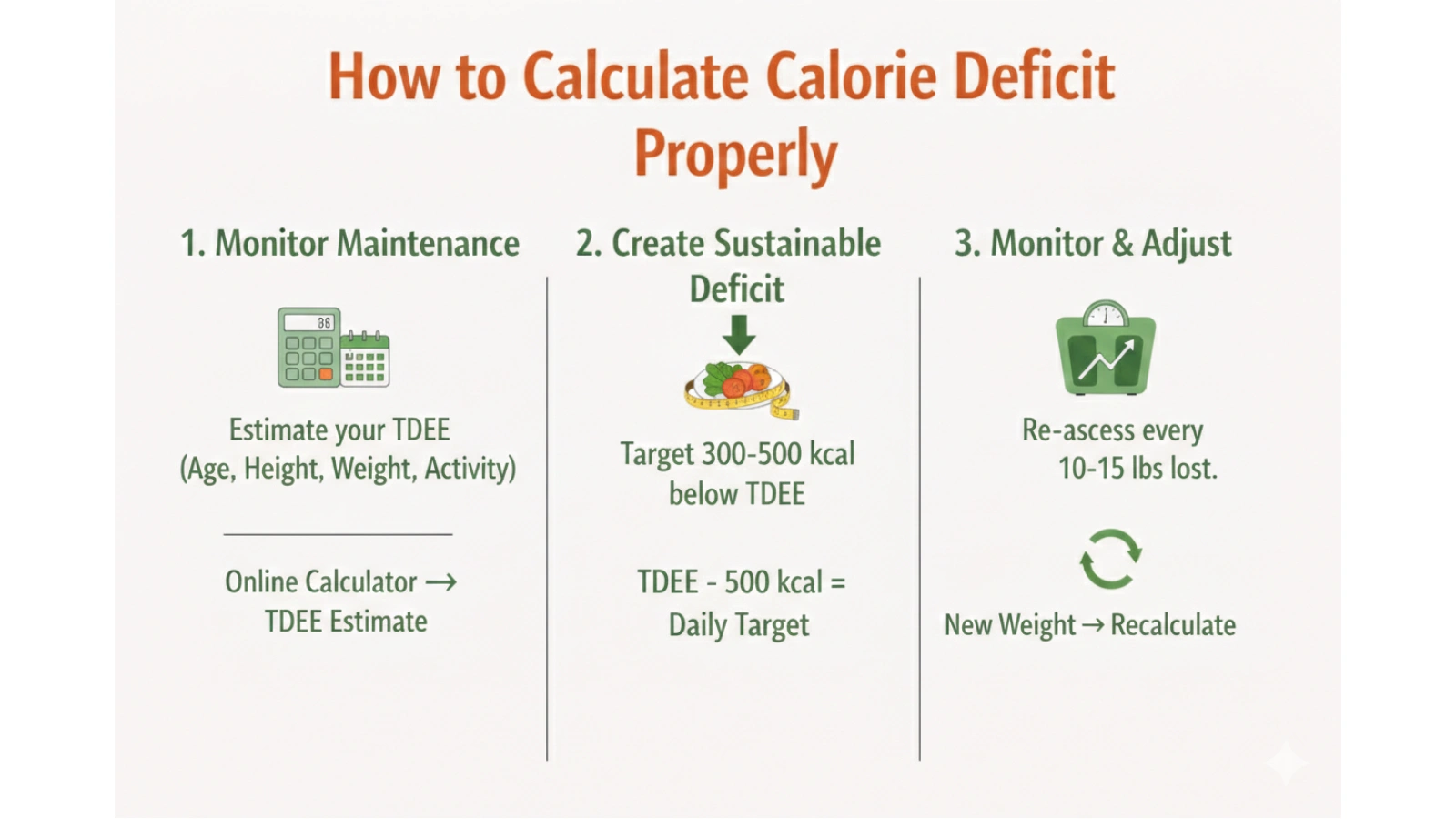
If you’re unsure where your numbers should be, here’s a simplified approach:
Step 1: Monitor Maintenance Calories
Use a reliable calorie deficit calculator to estimate your total energy spent.
This considers:
- Age
- Height
- Weight
- Activity level
Step 2: Create a Sustainable Deficit
A good starting point:
- 300–500 calories below maintenance for steady fat loss
- 500–750 for more aggressive fat loss (harder to maintain)
You should avoid extreme cuts and diets unless supervised by a professional.
Step 3: Monitor After Every 10–15 Pounds
As the body changes, it needs to change and adapt calorie intake too. Keep re-adjusting your calorie deficit and align it with your current weight. You can use calorie tracking apps like Calorie tracker Buddy to track and manage your calories actively and efficiently without having to do everything manually.
5. You’re Gaining Muscle While Losing Fat
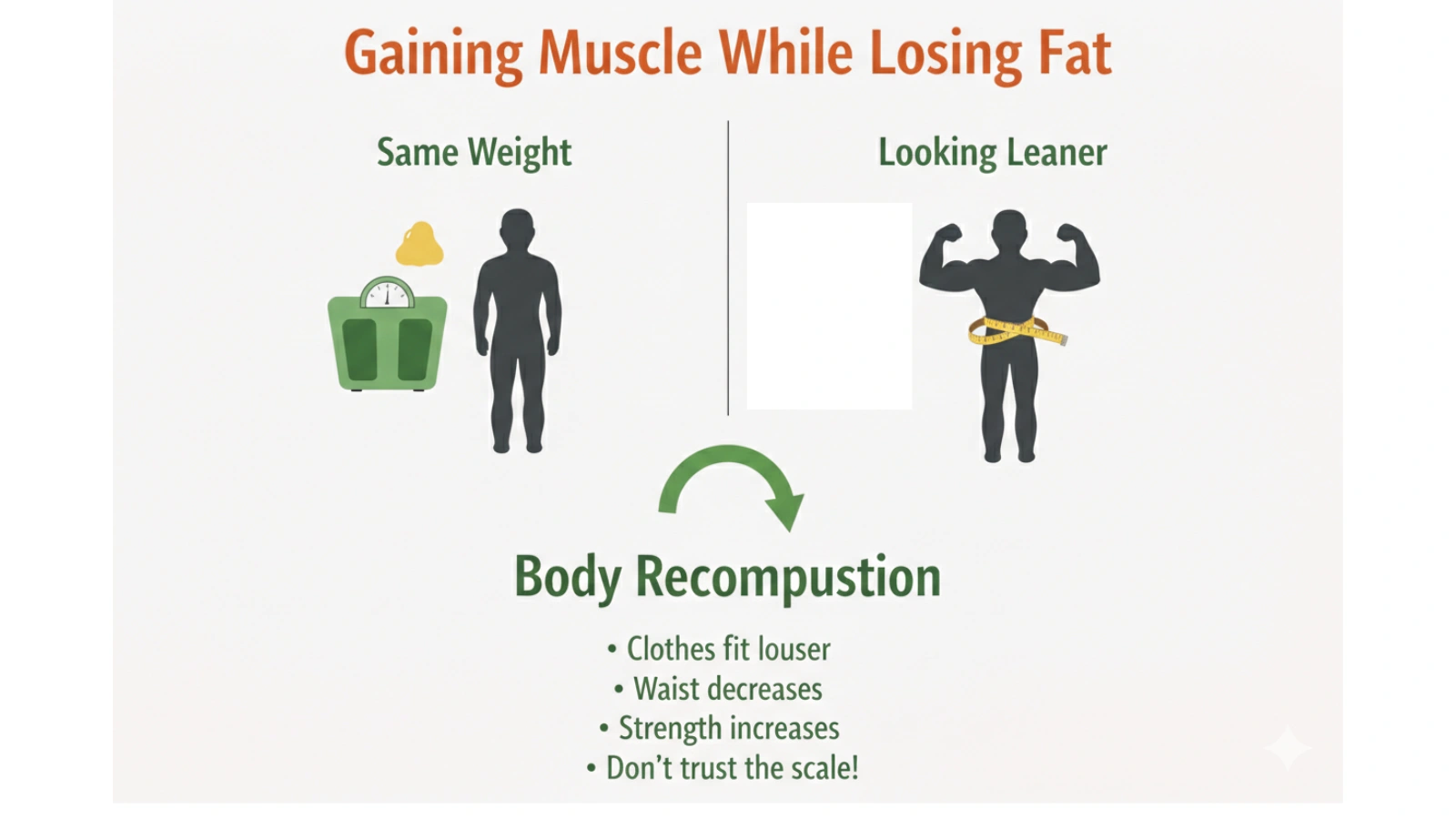
Adding strength training might actually be good news.
Especially for beginners, it’s possible to:
- Lose fat
- Gain muscle
Muscles are denser than fat. That means:
- The scale might stay the same
- But your body composition improves
Signs this is happening:
- Clothes fit looser
- Waist measurement decreases
- You look leaner
- Your strength increases
The scale is one metric, not the only one.
Making a Calorie Deficit Easier to Manage
Understanding what a calorie deficit is and how to calculate a calorie deficit properly is one thing.
Applying it in a consistent manner is another.
Tracking calories, monitoring activity, and adjusting intake as your weight changes can feel overwhelming. This makes it hard to manage manually.
Having a simple system comes in handy here.
Instead of switching between different tools, guessing portion sizes, or forgetting to log meals, using an app like Calorie Tracker Buddy can make the process more practical and less overwhelming.
It allows you to:
- Track meals quickly
- Monitor daily calorie targets
- Keep an eye on activity levels
- Stay aware of your progress trends
The goal isn’t to obsess over numbers.
It’s to stay aware enough to remain consistent.
And when tracking feels simple, sticking to a calorie deficit becomes much more realistic in a long-term period.
Final Thoughts
If you feel like you’re in a calorie deficit but not losing weight, don’t think you’ve failed or that your body is working against you.
Most probably, the issue comes down to one of a few common factors:
- Tracking inaccuracies
- Overestimating calories burned
- Water retention masks fat loss
- Changing maintenance needs
- Inconsistency over time
Once you understand what a calorie deficit is, and more importantly, how to calculate a calorie deficit correctly, you regain control of the process.
Fat loss doesn’t require perfection and extreme methods. It requires awareness, small corrections, and consistency.
Calculating numbers manually, using a calorie deficit calculator, or relying on a tool like Calorie Tracker Buddy to simplify tracking, the key to effective calorie deficit is having a system you can stick to long-term.
Because having continuous progress isn’t about doing everything perfectly.
It’s about doing the right things consistently, long enough for the results to show.
FAQs
How do I know if I’m actually in a calorie deficit?
The most reliable way to know is by tracking your calorie intake and comparing it to maintenance calories (the amount burned by the body daily). If your weight trend is gradually decreasing over several weeks, you are likely in a calorie deficit. Using a calorie deficit calculator can help estimate your starting numbers.
How long does it take to see results from a calorie deficit?
For most people, the changes are visible within 2–4 weeks when they are consistent in a calorie deficit. However, daily weight fluctuations are normal. It’s better to track weekly averages and body measurements rather than relying on day-to-day scale changes.
Can you be in a calorie deficit and still gain weight?
Yes, temporarily. Even after being on a calorie deficit, your body weight can increase due to water retention, hormonal changes, increased sodium intake, or digestive fluctuations. True fat gain only happens when you consistently consume more calories than you burn over time.
Is a calorie deficit safe for everyone?
A deficit in caloric intake is safe when maintained correctly and responsibly. However, sick/ill people (injured) who are malnourished, consuming too many calories, or not consuming enough calories, or mothers who are pregnant/breastfeeding would be advised to consult a medical/provider to determine what an appropriate caloric intake should be for them.