


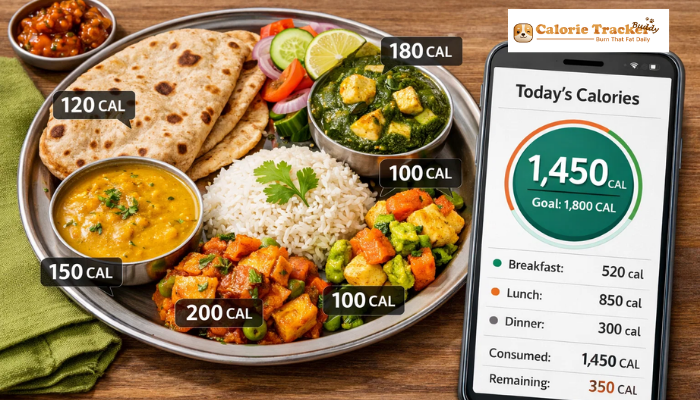
Indian meals offer comfort, diversity, and deeply satisfying flavors that form an essential part of daily life. From simple home-cooked dishes to festive spreads, food plays a central role in routine, culture, and well-being. However, generous portion sizes, varied cooking methods, and frequent use of oil or ghee can quietly increase calorie intake without notice. This makes mindful eating more important than ever.
People who aim to manage weight, improve energy levels, or maintain fitness often struggle with estimating calories in everyday meals. Guesswork leads to confusion and inconsistent results. Understanding how to track Calories in indian foods brings clarity and control. It allows people to enjoy familiar meals while staying aware of their intake. With the right approach, calorie tracking becomes a supportive habit rather than a restriction, helping individuals make informed food choices without giving up taste or tradition.
Listen To The Podcast Now!
Why Tracking Calories In Indian Foods Is Important?
Food habits shape energy levels, body weight, and overall health. Indian meals often combine grains, lentils, vegetables, dairy, and fats on one plate. Without tracking, calorie intake rises unknowingly. Many people eat healthy foods, but still struggle with results due to portion mismatch.
Tracking Calories in indian foods builds clarity. It helps people match food intake with lifestyle goals. It also supports better food decisions without stress or restriction.
Understanding Calories In Indian Foods
Calories show how much energy food provides. Every ingredient adds a certain calorie value. Rice, wheat, oil, ghee, sugar, and dairy all contribute differently. Indian cooking often blends many items in one dish, which raises calorie variation.
Understanding Calories in indian foods requires attention to ingredients and quantities. A plain roti differs greatly from butter naan. A simple dal differs from dal makhani. Knowledge removes guesswork and improves control.
Common Mistakes People Make While Tracking Food Calories
Tracking food calories often fails due to small but frequent errors. These mistakes reduce accuracy and slow progress.
- Assuming home-cooked food is always low in calories
- Ignoring oil, ghee, butter, or sugar used during cooking
- Relying on rough calorie estimates instead of actual values
- Skipping portion measurement
- Overeating healthy foods without tracking quantity
- Not accounting for snacks, sauces, or sides
- Inconsistent tracking of daily meals
Accurate tracking of Calories in indian foods needs consistency, measurement, and awareness rather than assumptions. This approach brings clarity and better control over daily intake.
What Is An Indian Food Calorie Chart And Why Does It Matter?
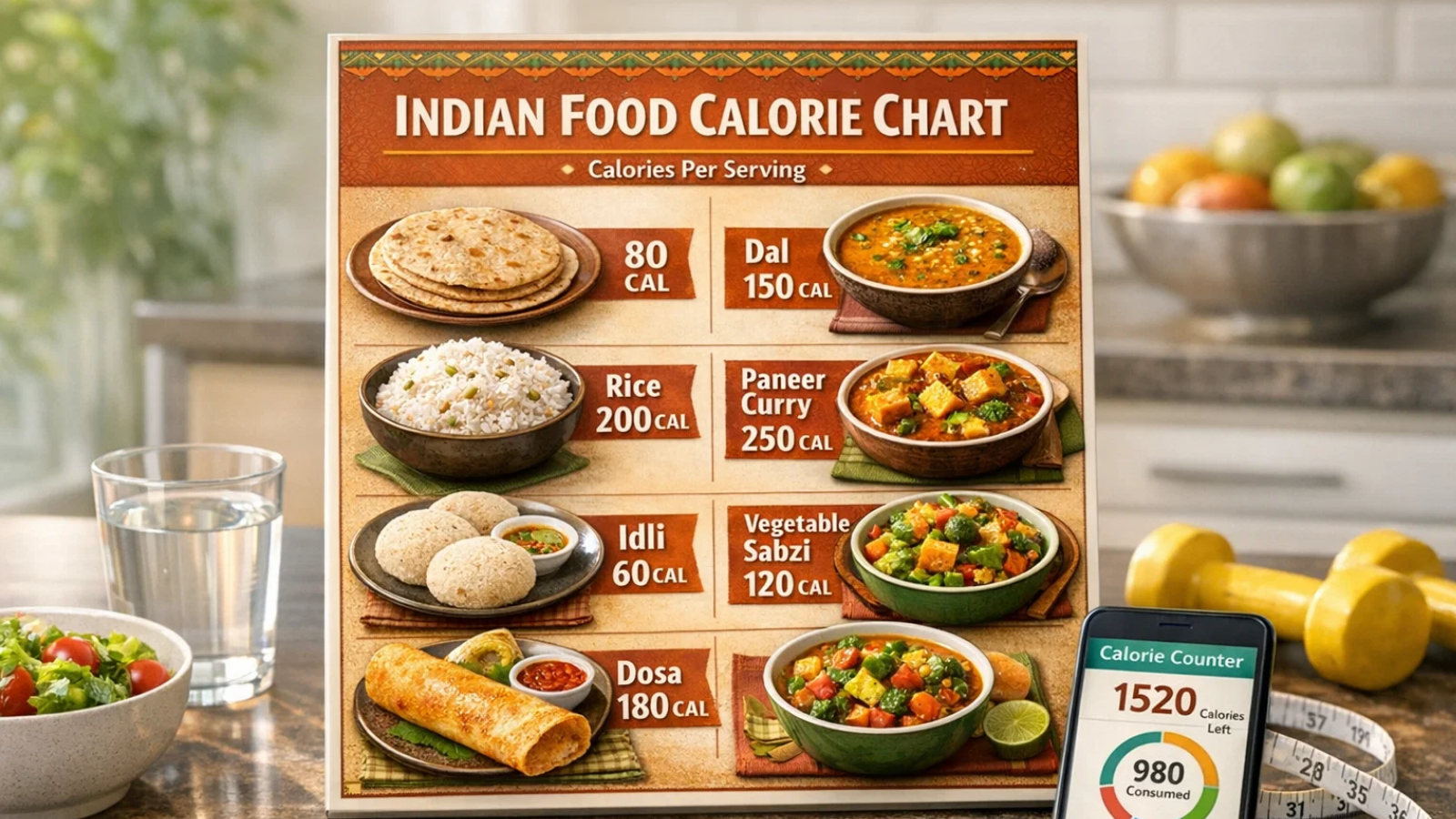
An Indian food calorie chart shows calorie values for common dishes and ingredients. It provides clarity for daily meals. This chart helps people compare food options easily.
Using an Indian food calorie chart removes confusion from meal planning. It allows quick checks before eating. It also supports consistency across days and weeks.
Indian Food Calorie Chart For Everyday Meals
Every day, Indian plates combine grains, lentils, vegetables, and dairy, and each component contributes differently to total calorie intake. A single meal may look simple, yet small choices change calorie totals quickly.
Flatbreads such as chapati usually contain fewer calories per serving than a full bowl of cooked rice, especially when prepared without added ghee. Rice portions raise calorie intake faster, mainly when served in larger quantities.
Vegetable dishes show a wide variation because the use of oil plays a major role. Lightly cooked vegetables remain low in calories, while deep-cooked or heavily tempered sabzi raises the count sharply. Lentil dishes also differ, as plain boiled dal stays moderate, while added oil or ghee increases calories noticeably.
Curd adds nutrition with moderate calories, but full-fat versions contribute more energy than low-fat options. Chutneys and sides may seem small, yet coconut, peanuts, or oil-based ingredients add hidden calories.
An Indian food calorie chart organizes these values clearly. It allows better control of Calories in indian foods by guiding portion size and preparation choices rather than forcing strict eating rules.
Food Calories List Per 100g: Why Standard Measurements Matter
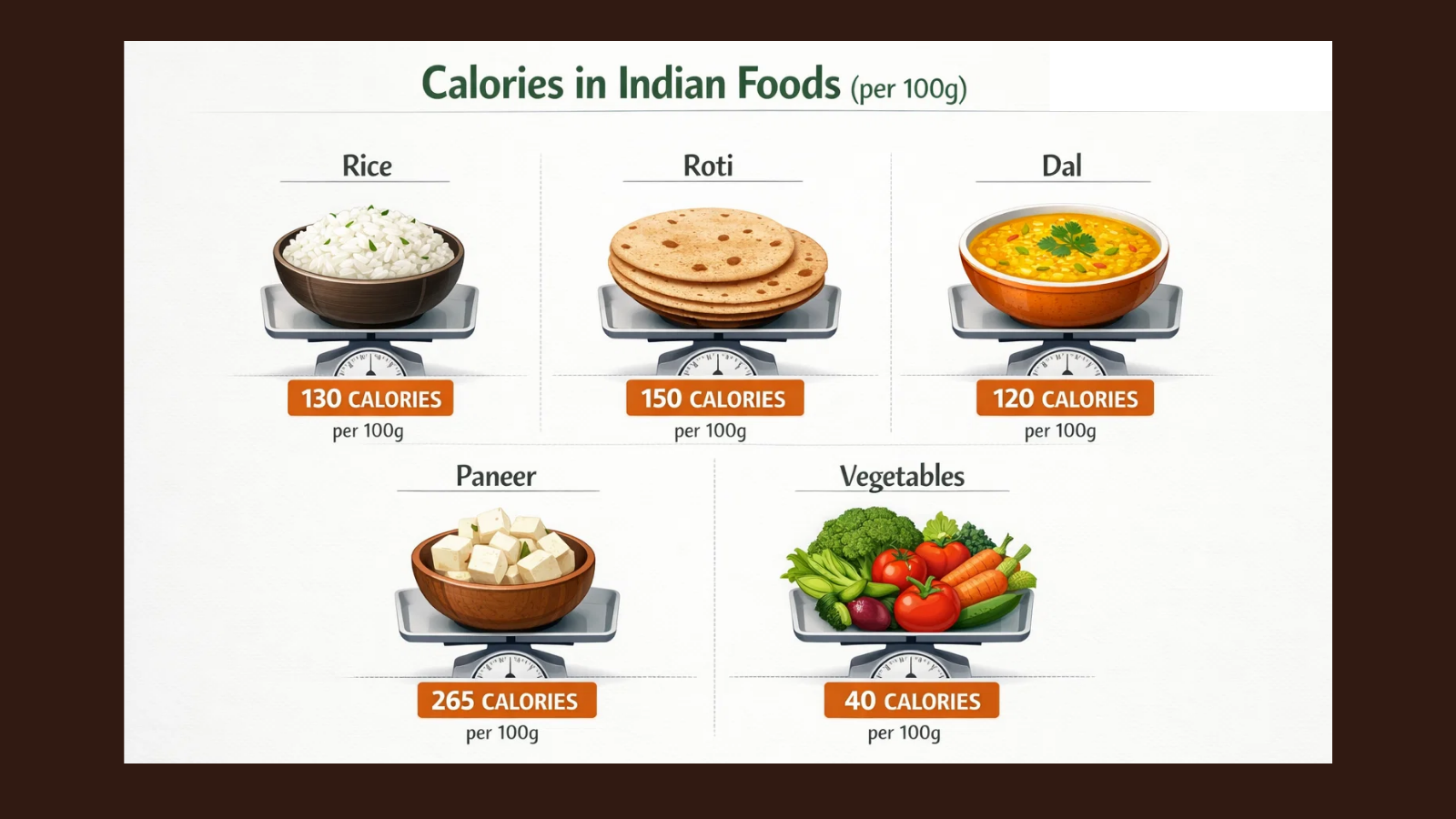
Understanding calorie intake becomes easier when food is measured using a fixed standard. A food calories list per 100g removes uncertainty and helps track meals with accuracy across different Indian dishes.
Key Reasons Standard Measurement Works Best
- Measuring 100g of cooked rice provides about 120 calories, allowing better portion planning without relying on bowl size.
- 100g paneer contains nearly 250–260 calories, showing why dairy portions need careful control.
- 100g boiled potato offers roughly 85–90 calories, making it a lighter option compared to fried preparations.
- Standard measurement allows fair comparison between foods with different textures, densities, and serving styles.
- It simplifies calorie tracking for mixed meals, especially when ingredients get weighed before cooking.
- A food calories list per 100g improves daily intake calculations and reduces the underestimation of Calories in indian foods.
Using this method builds consistency and confidence. Over time, it supports healthier food choices and smarter meal planning without stress.
Indian Food Calorie Chart For Weight Loss Goals
Weight loss requires balance, not starvation. A food calorie chart for weight loss highlights foods that offer fullness with fewer calories.
Low-calorie, high-protein Indian options include:
- Boiled vegetables paired with paneer, tofu, or grilled mushrooms
- Plain dal, moong dal, or mixed lentil dal for steady protein
- Curd or Greek-style curd for higher protein and gut support
- Sprouts, chickpea, or mixed bean salads
- Egg whites or boiled eggs for lean protein
- Grilled chicken breast or tandoori chicken without skin
- Soya chunks or soya bean curry in moderate portions
- Paneer bhurji made with minimal oil
A food calorie chart for weight loss supports smart swaps instead of food fear. It helps control Calories in indian foods while keeping meals enjoyable.
Also Read:
Calorie Calculator: How Many Calories Should You Eat Daily?
Counting Calories For Weight Loss: Quick Way To Do It Right?
Portion Control: The Key To Accurate Calorie Tracking
Portion size decides calorie intake more than food type. Even healthy meals add excess calories when portions rise. Using bowls, cups, or hand measurements helps with consistency.
Controlling portions keeps Calories in indian foods within the target range. It also prevents overeating without hunger.
How Cooking Methods Change Calories In Indian Foods?
Cooking methods strongly influence calorie levels, even when ingredients remain the same. Oil use and preparation style make the biggest difference.
Common Cooking Method Comparisons
- Fried aloo absorbs oil, while boiled aloo stays naturally low in calories.
- Tadka dal contains added fat, whereas plain dal keeps calories moderate.
- Deep-fried puri holds more calories than dry-cooked roti.
- Vegetable pakoras carry more calories than steamed vegetables.
- Butter naan adds extra calories compared to plain tandoori roti.
- Fried rice increases calorie count versus plain steamed rice.
- Paneer butter masala contains more calories than grilled paneer.
- Coconut-based curries raise calories more than tomato-based gravies.
Understanding cooking impact improves awareness of Calories in indian foods without forcing major diet changes.
Eating Out Or Ordering Online: How To Estimate Calories
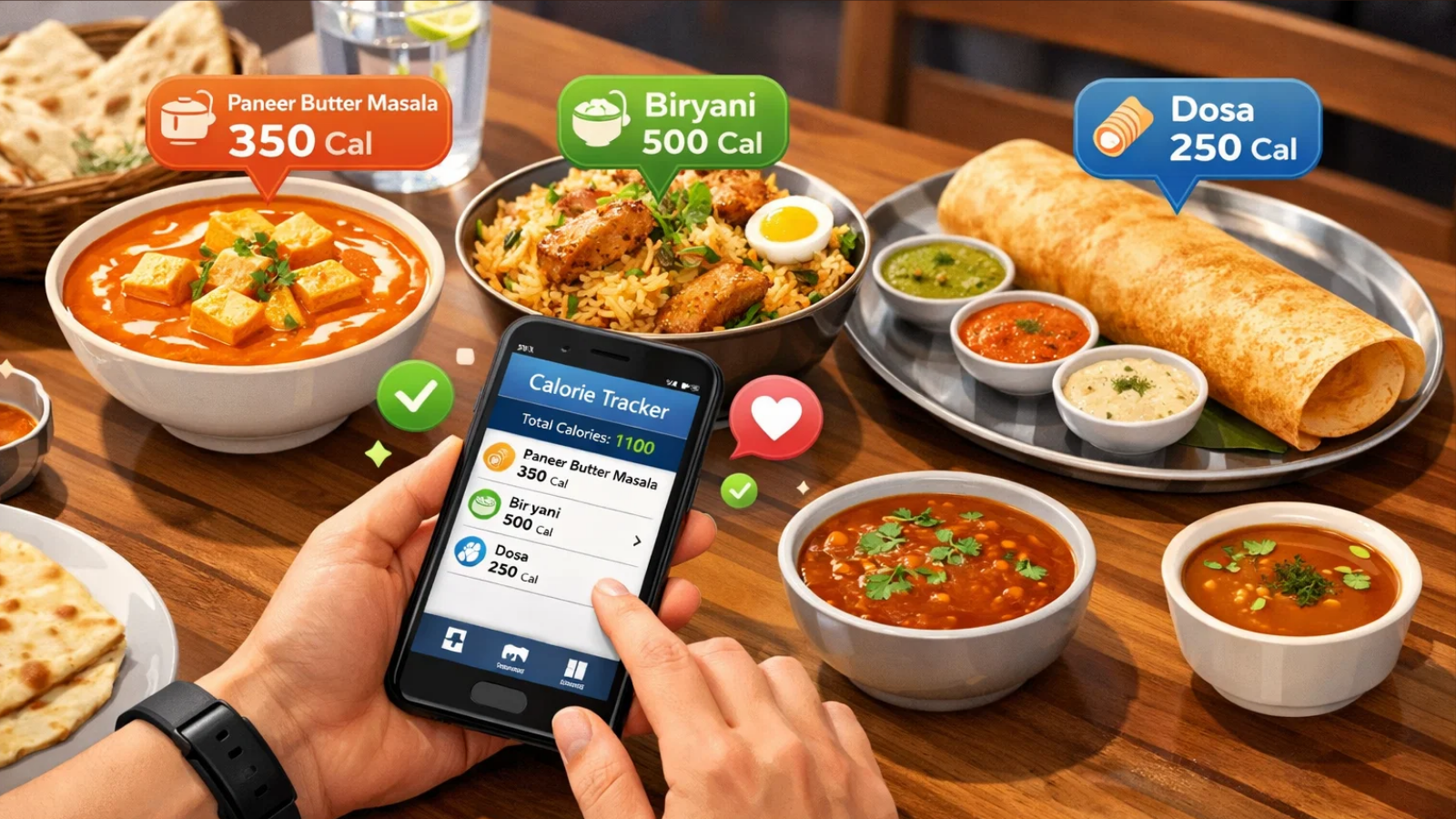
Restaurant meals often contain more oil and butter. Estimation becomes necessary. Choosing simple dishes helps accuracy.
Tips include:
- Avoid creamy gravies
- Choose tandoor items
- Share heavy dishes
A calorie tracking tool like Calorie Tracker Buddy helps log Indian meals accurately, even outside the home. It reduces guesswork, tracks portions, and supports better daily calorie control.
Introducing Calorie Tracker Buddy
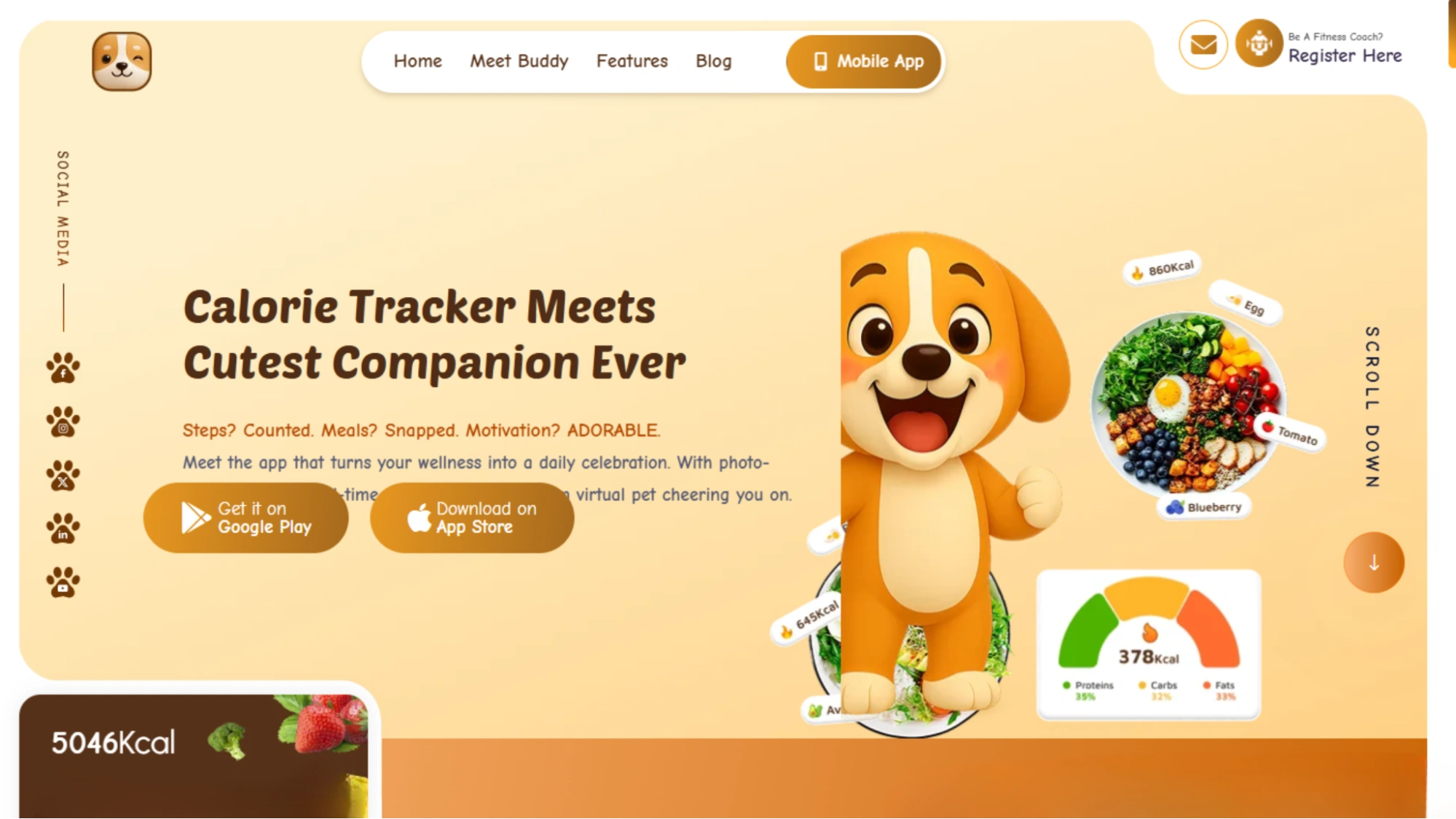
Among the many calorie tracking apps available, Calorie Tracker Buddy stands out for combining simplicity with powerful, practical features. Instead of overwhelming users with complex tools, it focuses on what matters most: accurate calorie counts, easy navigation, and personalized tracking options.
The app isn’t just a tracker; it’s designed to guide users toward mindful eating habits without feeling restrictive. Whether you cook at home, eat out, or try new recipes, Calorie Tracker Buddy adapts to your lifestyle, making daily calorie management effortless.
Let’s explore the features that make it one of the best apps for tracking Calories in indian foods and maintaining a healthy diet.
Features of Calorie Tracker Buddy
- Snap the Meal
Simply point your camera and tap once. The app scans your food and identifies calories, nutrients, and meal balance instantly, removing guesswork from tracking. - Calorie Burn Tracker
Track calories burned through daily activities, workouts, and movement. From exercise sessions to routine tasks, every step contributes to your progress. - Calorie Intake Tracker
Log what you eat in seconds and receive instant feedback on how each meal fits within your daily calorie goals. - Goal Predictions
See how meals, snacks, and drinks impact your journey. The app shows how close you are to reaching your goals, helping you plan smarter choices. - Buddy Motivation
A virtual pet grows with every healthy decision you make. This friendly companion delivers daily encouragement and keeps motivation high. - Social Sharing
Share meals, streaks, and progress with friends. Celebrate achievements, stay accountable, and feel supported through community engagement.
These features combine to create a streamlined experience that makes tracking calories simple, accurate, and sustainable without overwhelming the user with unnecessary functions.
Using Food Calorie Charts with a Daily Tracking Routine
Food charts work best with routine use. Checking values before meals builds a habit. Logging meals daily builds awareness.
Combining charts with apps keeps Calories in indian foods under control long term. Consistency creates results without pressure.
Who Should Use an Indian Food Calorie Chart Daily?
Many people benefit from daily tracking:
- Weight loss seekers.
- Fitness enthusiasts.
- Health-focused families.
An Indian food calorie chart supports all age groups. It brings clarity to everyday food choices.
Tips To Stay Consistent While Tracking Calories
Consistency matters more than perfection. Simple habits help:
- Track meals at fixed times
- Eat similar breakfasts
- Use the same portion tools.
These habits support control over Calories in indian foods without stress.

Final Thoughts
Food awareness leads to better health decisions. Tracking Calories in indian foods does not remove joy from meals. It adds control and confidence.
With tools like an Indian food calorie chart, a food calories list per 100g, and a food calorie chart for weight loss, anyone can manage daily intake smartly. Calorie Tracker Buddy strengthens this process through simple tracking and clarity.
Balanced food choices, proper portions, and consistency lead to long-term success without extremes.
FAQs
- Why is tracking calories in Indian foods important?
Tracking calories in Indian foods helps manage portion size, supports weight control, and improves daily food choices. - What is an Indian food calorie chart?
An Indian food calorie chart lists calorie values of common dishes, making meal planning easier and more accurate. - How does a food’s calorie list per 100g help?
A food calories list per 100g allows fair food comparison by removing confusion caused by varying portion sizes. - Is an Indian food calorie chart useful for weight loss?
Yes, a food calorie chart for weight loss helps identify low-calorie foods while maintaining balanced Indian meals. - Can calorie-tracking apps help with Indian foods?
Yes, apps like Calorie Tracker Buddy simplify logging Indian meals and improve consistency in calorie tracking.