

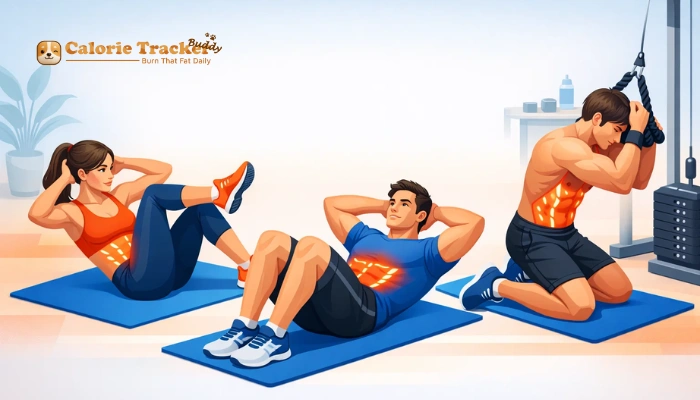
Crunches are one of the most popular exercises for building core strength and targeting the abdominal muscles. You will see them in home workouts, gym routines, and beginner fitness plans because they are simple and easy to adjust.
But not all crunches are the same. Different crunch variations can change how your abs are increased in difficulty or reduce strain on the neck and lower back.
In this guide, we break down 15 crunch variations and show you how to do each one correctly, along with their pros and cons.
If you are a beginner looking to learn proper form or someone searching for advanced crunch exercises to challenge your core, this article will help you choose the right crunches for your fitness goals and perform them safely for better results.
In a hurry? Listen to the blog instead!
What Are Crunches?
Crunches are a classic core-strengthening exercise that primarily targets the abdominal muscles. They involve a small, controlled movement where you lift your shoulders off the floor by contracting your abs, rather than sitting all the way up. This shorter range of motion is what separates crunches from exercises like sit-ups.
The main purpose of crunches is to isolate and strengthen the rectus abdominis, the muscle responsible for the “six-pack” appearance. Because the movement is controlled and focused, crunches place less stress on the lower back compared to full sit-ups when performed with proper form.
Crunches are popular because they are:
- Easy to learn
- Suitable for beginners
- Highly adaptable with different variations
- Effective for building core strength
By adjusting body position or changing the angle of movement, crunches can be modified to target different parts of the core or increase difficulty. This is why there are many types of crunches, each with its own benefits and limitations.
Muscles Worked During Crunches
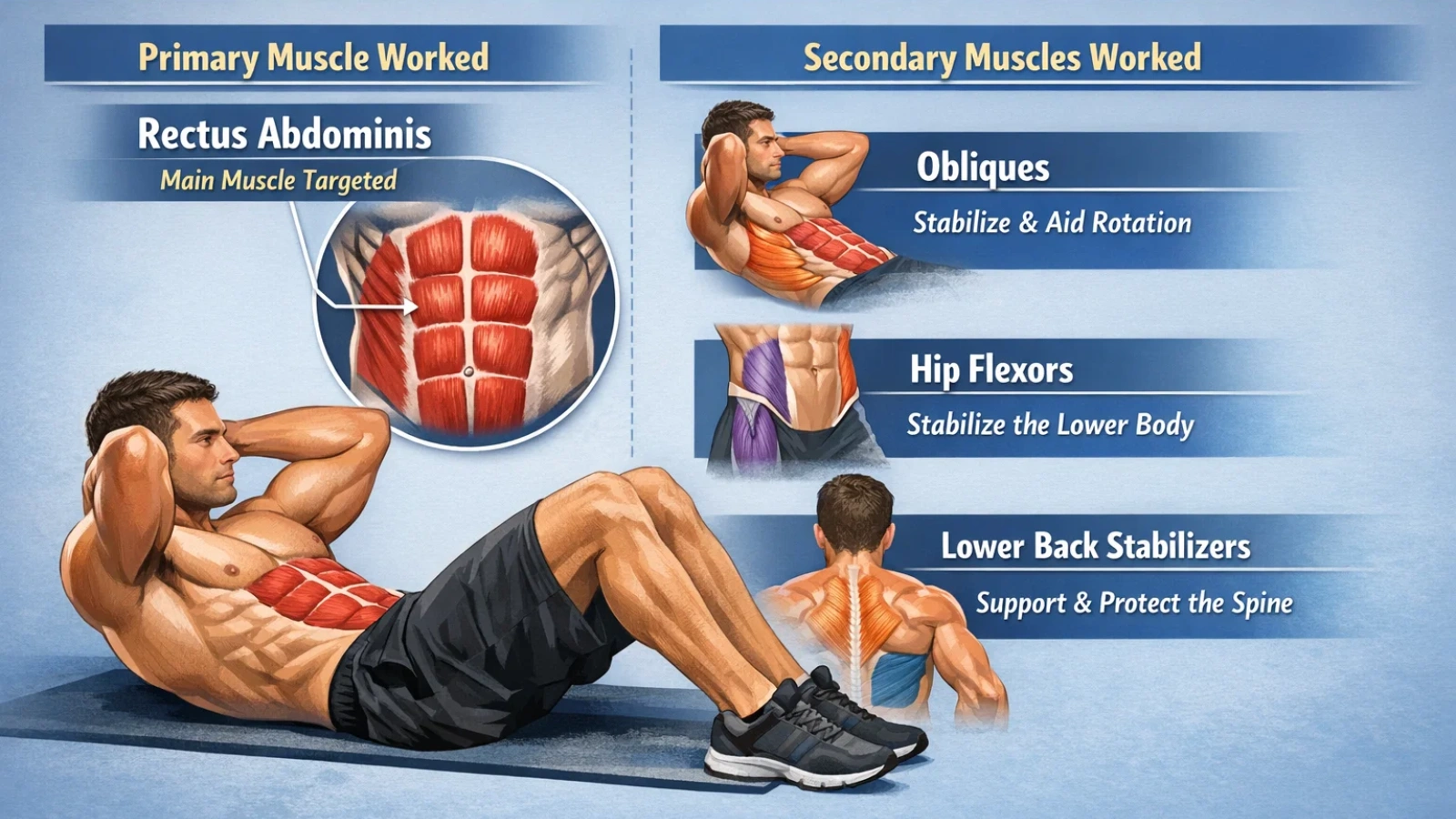
Crunches primarily target the abdominal muscles, making them one of the most effective exercises for building core strength. While the movement looks simple, several muscles work together to stabilize the body and control the motion.
Primary Muscles Worked
The main muscle used during crunches is the rectus abdominis. This muscle runs down the front of your torso and is responsible for spinal flexion, which is the movement of bending the upper body forward. Strong activation of the rectus abdominis is what helps develop visible abs.
Secondary Muscles Worked
In addition to the main abdominal muscles, crunches also engage:
- Obliques – These muscles assist with stability and help with rotational or side-to-side crunch variations.
- Hip flexors – They help stabilize the lower body, especially during advanced crunch variations.
- Lower back stabilizers – These muscles work to support proper posture and protect the spine during movement.
How Crunch Variations Change Muscle Activation
Different crunch variations focus on specific areas of the core. For example:
- Bicycle and oblique crunches increase oblique engagement
- Reverse crunches place more focus on the lower abs
- Weighted or cable crunches increase overall muscle tension and strength
By using a mix of crunch variations, you can train your core more effectively and avoid muscle imbalances.

How To Do Crunches Correctly (Proper Form Guide)
Using proper form is essential to get the most out of crunches while avoiding neck or lower-back strain. A well-performed crunch focuses on controlled movement and core engagement rather than speed or momentum.
Step-by-Step Guide to Performing a Basic Crunch
- Lie flat on your back on an exercise mat with your knees bent and feet flat on the floor.
- Place your hands lightly behind your head or cross them over your chest. Avoid pulling on your neck.
- Engage your core by tightening your abdominal muscles.
- Slowly lift your shoulders off the floor, keeping your lower back pressed into the mat.
- Exhale as you crunch upward and pause briefly at the top.
- Lower yourself back down in a controlled manner while inhaling.
Breathing Technique
Breathing correctly during crunches helps improve muscle activation. Exhale as you lift your shoulders off the ground and contract your abs. Inhale as you lower back to the starting position.
Key Form Tips for Safe and Effective Crunches
- Keep your chin slightly tucked to avoid neck strain
- Focus on lifting with your abs, not your head or arms
- Move slowly and avoid using momentum
- Keep your lower back stable against the floor
Mastering proper crunch form creates a strong foundation for performing advanced crunch variations safely and effectively.
15 Crunches Variations
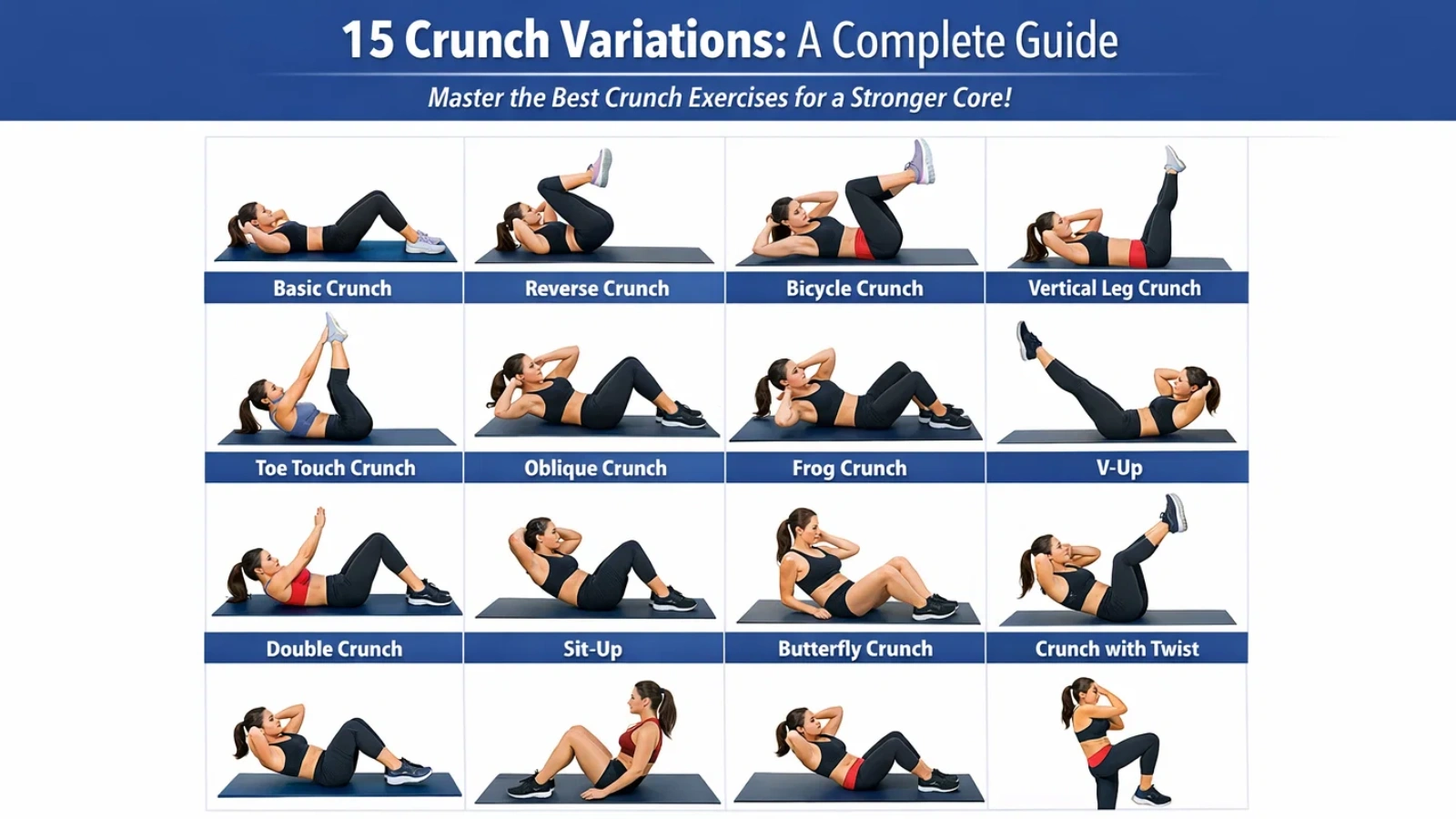
Crunches can be modified in many ways to increase difficulty, target different areas of the abs, or reduce strain on the neck and lower back.
Below are 15 effective crunch variations, each explained with how to do them, along with their pros and cons, so you can choose the right option for your fitness level and goals.
1. Basic Crunch
The basic crunch is the foundation of all crunch variations. It focuses on controlled abdominal contraction with minimal movement.
How to Do It
- Lie on your back with knees bent and feet flat on the floor
- Place your hands behind your head or across your chest
- Engage your core and lift your shoulders off the floor
- Pause briefly at the top, then lower slowly
Pros
- Beginner-friendly
- Easy to perform anywhere
- Effectively targets the upper abs
Cons
- Limited range of motion
- Can become ineffective without progression
- Poor form may cause neck strain
2. Bicycle Crunch
The bicycle crunch is one of the most effective crunch variations for engaging both the upper abs and obliques through a twisting motion.
How to Do It
- Lie flat on your back with your hands lightly behind your head
- Lift your shoulders and legs off the floor
- Bring your right elbow toward your left knee while extending the right leg
- Switch sides in a controlled, pedaling motion
Pros
- Strong activation of the obliques
- Engages multiple core muscles at once
- Great for improving coordination
Cons
- Easy to lose proper form
- Can strain the neck if rushed
- Requires good core control
3. Reverse Crunch
Reverse crunches redirect the focus to the lower portion of the abdominal muscles by lifting the hips rather than the shoulders.
How to Do It
- Lie on your back with arms at your sides
- Bend your knees and lift your feet off the floor
- Engage your abs and lift your hips slightly off the ground
- Lower your hips slowly with control
Pros
- Targets the lower abs effectively
- Reduces strain on the neck
- Suitable for people with limited upper-body mobility
Cons
- Harder to control for beginners
- Can engage the hip flexors if done incorrectly
- Limited difficulty without progression
4. Oblique Crunch
The oblique crunch targets the side abdominal muscles and helps improve core rotation and stability.
How to Do It
- Lie on your back with knees bent
- Place one hand behind your head and the other on your side
- Lift your shoulders and rotate your torso toward one side
- Return slowly and repeat before switching sides
Pros
- Targets the oblique muscles
- Improves core definition on the sides
- Simple variation with minimal equipment
Cons
- Limited range of motion
- Improper rotation can strain the neck
- Less effective if rushed
5. Standing Oblique Crunch
The standing oblique crunch is a beginner-friendly alternative that places less pressure on the lower back.
How to Do It
- Stand with feet shoulder-width apart
- Place one hand behind your head
- Lift the knee toward the same-side elbow while crunching sideways
- Lower slowly and repeat on the other side
Pros
- Low impact and back-friendly
- Improves balance and coordination
- Suitable for beginners
Cons
- Less abdominal tension than floor crunches
- Can become cardio-focused if rushed
- Limited resistance without added weights
6. Decline Crunch
The decline crunch increases difficulty by placing your body on an angled bench, which adds more resistance to the movement.
How to Do It
- Secure your feet at the top of a decline bench
- Lie back and place your hands behind your head or across your chest
- Engage your core and lift your shoulders upward
- Lower slowly with control
Pros
- Greater resistance for stronger abs
- Helps build abdominal strength faster
- Ideal for intermediate to advanced users
Cons
- Higher strain on the lower back if form is poor
- Requires gym equipment
- Not suitable for beginners
7. Stability Ball Crunch
Stability ball crunches increase range of motion and core activation by forcing your abs to work harder to maintain balance.
How to Do It
- Sit on a stability ball and walk your feet forward
- Lean back until your lower back rests on the ball
- Place your hands behind your head or across your chest
- Crunch upward while keeping balance
Pros
- Greater range of motion
- Improves balance and core stability
- Reduces lower-back pressure
Cons
- Requires good balance
- Harder to control for beginners
- Needs access to a stability ball
8. Cable Crunch
The cable crunch adds external resistance, making it one of the most effective crunch variations for building stronger abs.
How to Do It
- Attach a rope handle to a high cable pulley
- Kneel facing the machine and hold the rope beside your head
- Engage your core and crunch downward
- Slowly return to the starting position
Pros
- Allows progressive overload
- Builds strong and defined abs
- Easy to adjust resistance
Cons
- Requires gym equipment
- Can strain the lower back if over-weighted
- Not ideal for beginners
9. Resistance Band Crunch
Resistance band crunches provide adjustable tension and are a great alternative to cable machines.
How to Do It
- Secure a resistance band overhead
- Kneel and hold the band near your head
- Crunch downward by engaging your abs
- Return slowly with control
Pros
- Portable and versatile
- Adjustable resistance
- Joint-friendly
Cons
- Less resistance than cables
- Bands may lose tension over time
- Setup can be inconvenient
10. Ab Machine Crunch
The ab machine crunch provides guided resistance, making it easier to maintain proper form while adding weight.
How to Do It
- Sit in the ab machine and adjust the seat and weight
- Grip the handles and engage your core
- Crunch forward by contracting your abs
- Return slowly to the starting position
Pros
- Controlled movement path
- Easy to increase resistance
- Helpful for beginners learning weighted crunches
Cons
- Limited core stabilization
- Machine availability varies by gym
- Less functional than free movements
11. Tuck Crunch
The tuck crunch combines upper- and lower-body movement, increasing overall core engagement.
How to Do It
- Lie on your back with arms extended overhead
- Lift your shoulders and bring your knees toward your chest
- Crunch inward by contracting your abs
- Extend back slowly to the start
Pros
- Engages the entire core
- Increases time under tension
- No equipment required
Cons
- Challenging for beginners
- Hard to maintain control
- Can strain the lower back if rushed
12. Cocoon Crunch
The cocoon crunch is an advanced variation that fully contracts the abs by bringing the upper and lower body together.
How to Do It
- Lie on your back with arms extended overhead and legs straight
- Lift your shoulders and legs at the same time
- Bring your knees toward your chest while reaching forward
- Lower slowly back to the starting position
Pros
- Maximum abdominal contraction
- Works the upper and lower abs together
- Great for advanced core strength
Cons
- Very challenging for beginners
- Requires strong core control
- Can strain the lower back if the form breaks
13. Single-Leg Crunch
The single-leg crunch increases core activation by creating an imbalance that your abs must stabilize.
How to Do It
- Lie on your back with one knee bent and the other leg extended
- Perform a standard crunch while keeping the extended leg off the floor
- Complete reps, then switch legs
Pros
- Improves core stability
- Adds difficulty without equipment
- Helps correct strength imbalances
Cons
- Harder to balance
- Less effective if rushed
- Requires good coordination
14. Overhead Crunch
The overhead crunch increases abdominal tension by extending the arms, which creates a longer lever and more resistance.
How to Do It
- Lie on your back with knees bent
- Extend your arms straight overhead
- Engage your core and lift your shoulders off the floor
- Lower slowly with control
Pros
- Increases core tension without weights
- Improves shoulder and core coordination
- Easy progression from basic crunches
Cons
- Puts more strain on the shoulders
- Requires good core control
- Not ideal for beginners
15. Balance Trainer Crunch
The balance trainer crunch (often performed on a BOSU ball) challenges stability while strengthening the abs.
How to Do It
- Sit on a balance trainer and walk your feet forward
- Rest your lower back on the dome
- Place your hands behind your head or across your chest
- Crunch upward while maintaining balance
Pros
- Improves balance and core stability
- Engages stabilizer muscles
- Greater range of motion
Cons
- Requires balance equipment
- Difficult for beginners
- Risk of poor form if balance is lost
Read More!
Are Crunches Safe? Tips To Prevent Back & Neck Pain
Crunches are generally safe when performed with proper form, but poor technique or excessive volume can lead to discomfort in the neck or lower back. Understanding how to protect your body will help you get the benefits of crunches without unnecessary strain.
Who Should Be Careful with Crunches
People with existing lower-back pain, neck issues, or spinal conditions should approach crunches with caution. If you experience pain during the movement, it’s best to stop and consider alternative core exercises.
Tips to Prevent Back and Neck Pain
- Keep your chin slightly tucked and your neck relaxed
- Focus on lifting with your abs, not your head or shoulders
- Maintain control throughout the movement
- Avoid overextending or arching the lower back
Safer Crunch Modifications
- Perform crunches with hands crossed over the chest instead of behind the head
- Reduce the range of motion if full crunches cause discomfort
- Choose controlled variations like stability ball or reverse crunches
When to Choose Alternatives
If crunches consistently cause discomfort, core exercises such as toe taps, bird dogs, or planks may be better options. These movements strengthen the core while placing less stress on the spine.
Crunches vs Other Core Exercises
Crunches are effective for isolating the abdominal muscles, but they are not the only way to build a strong core. Understanding how crunches compare to other popular core exercises can help you choose the right option for your fitness goals.
Crunches vs Sit-Ups
Crunches use a smaller range of motion and focus mainly on the abs, while sit-ups involve the hips and lower back more. This makes crunches a safer and more targeted option for many people, especially beginners.
Crunches vs Planks
Crunches are a dynamic movement that trains the abs through flexion, whereas planks are a static exercise that builds overall core stability. Crunches are better for isolating the abs, while planks strengthen the entire core, including the lower back and shoulders.
When to Choose Crunch Alternatives
If your goal is improved stability, posture, or back support, exercises like planks, bird dogs, and toe taps may be more effective. Crunches work best when combined with these movements as part of a balanced core routine.
How Many Crunches Should You Do for Results?
The number of crunches you should do depends on your fitness level, goals, and overall workout routine. Quality matters more than quantity, so proper form should always come first.
For Beginners
If you’re new to crunches, start with:
- 2–3 sets of 10–15 reps
- Focus on slow, controlled movement
- Rest 30–60 seconds between sets
This helps build core strength without overloading the lower back.
For Intermediate and Advanced Levels
Once your core gets stronger:
- 3–4 sets of 20–30 reps, or
- Add resistance using weights, cables, or bands
Increasing difficulty through variations is more effective than doing very high reps.
How Often Should You Do Crunches?
Crunches can be performed 2–4 times per week, depending on your recovery and overall training plan. Your abs, like any other muscle group, need time to recover to grow stronger.
Track Your Nutrition

Along with doing crunches and other core exercises, tracking what you eat plays a big role in getting results. That is why Calorie Tracker Buddy is the best choice.
Calorie Tracker Buddy is a simple online tool designed to help you track calories and daily nutrition without complicated setups. It’s especially useful if your goal is fat loss, muscle definition, or maintaining a healthy diet alongside your workouts.
Key Features of Calorie Tracker Buddy
Snap the Meal: Just point your camera and tap once. Your meal plan is instantly scanned for calories, nutrients, and overall balance, no manual entry needed.
Calorie Burn Tracker: Tracks calories burned from everyday activities like workouts, dancing, or even household chores, helping you see how active you really are.
Calorie Intake Tracker: Log what you eat in seconds and get instant feedback on how your meals fit your daily calorie and nutrition goals.
Goal Predictions: See how close you are to your goals. The tool shows how each meal, snack, or drink impacts your progress over time.
Buddy Motivation: A virtual pet grows as you make healthier choices, giving you daily motivation and making consistency more fun.
Social Sharing: Share your meals, streaks, and progress with friends. Get encouragement, stay accountable, and celebrate your wins together.
Why It Fits Well with Crunch Workouts
Crunches strengthen your core, but visible abs depend heavily on nutrition. Using a calorie tracking tool helps you stay mindful of your intake, making your workouts more effective over time.
Conclusion
Crunches remain one of the most effective and accessible exercises for building core strength when done correctly. From basic crunches to more advanced options like cable crunches, bicycle crunches, and reverse crunches, each variation offers unique benefits and challenges. By understanding what crunches are, how they work, and which muscles they target, you can choose the right variations based on your fitness level and goals.
The key to results is to focus on proper form, using a mix of crunch variations, and progressing gradually. Paying attention to safety, avoiding common mistakes, and combining crunches with other core exercises will help you build a stronger, more balanced core while reducing the risk of injury.
Finally, remember that visible abs are built through a combination of smart training and proper nutrition. Pairing your crunch workouts with mindful calorie Intake makes a big difference in long-term results. Stay consistent, train with intention, and use the right tools to support your journey. With the right approach, crunches can be a powerful part of an effective and sustainable fitness food routine.
Frequently Asked Questions
Can crunches be performed every day?
Crunches can be performed daily at low volume, but it is better to allow your core to recover. Performing crunches two to four times per week allows the abdominal muscles to repair and grow stronger, especially if weighted or advanced variations are used.
Are crunches better in the morning or at night?
There is no perfect time to do crunches. Morning workouts can boost energy and consistency, whereas evening workouts may allow better strength performance. The best time is when you can remain consistent and maintain good form.
Do crunches help improve posture?
Yes, when combined with other core and back-strengthening exercises, crunches can help improve your posture. A strong core supports the spine, but crunches alone are not sufficient. Balance these with exercises that strengthen the lower back and glutes.
Can beginners with weak core muscles start doing crunches?
Beginners can start with crunches, but should begin with basic or modified versions and focus on slow, controlled movements. If crunches feel too difficult, core stability exercises such as toe taps or dead bugs may be a better starting point.